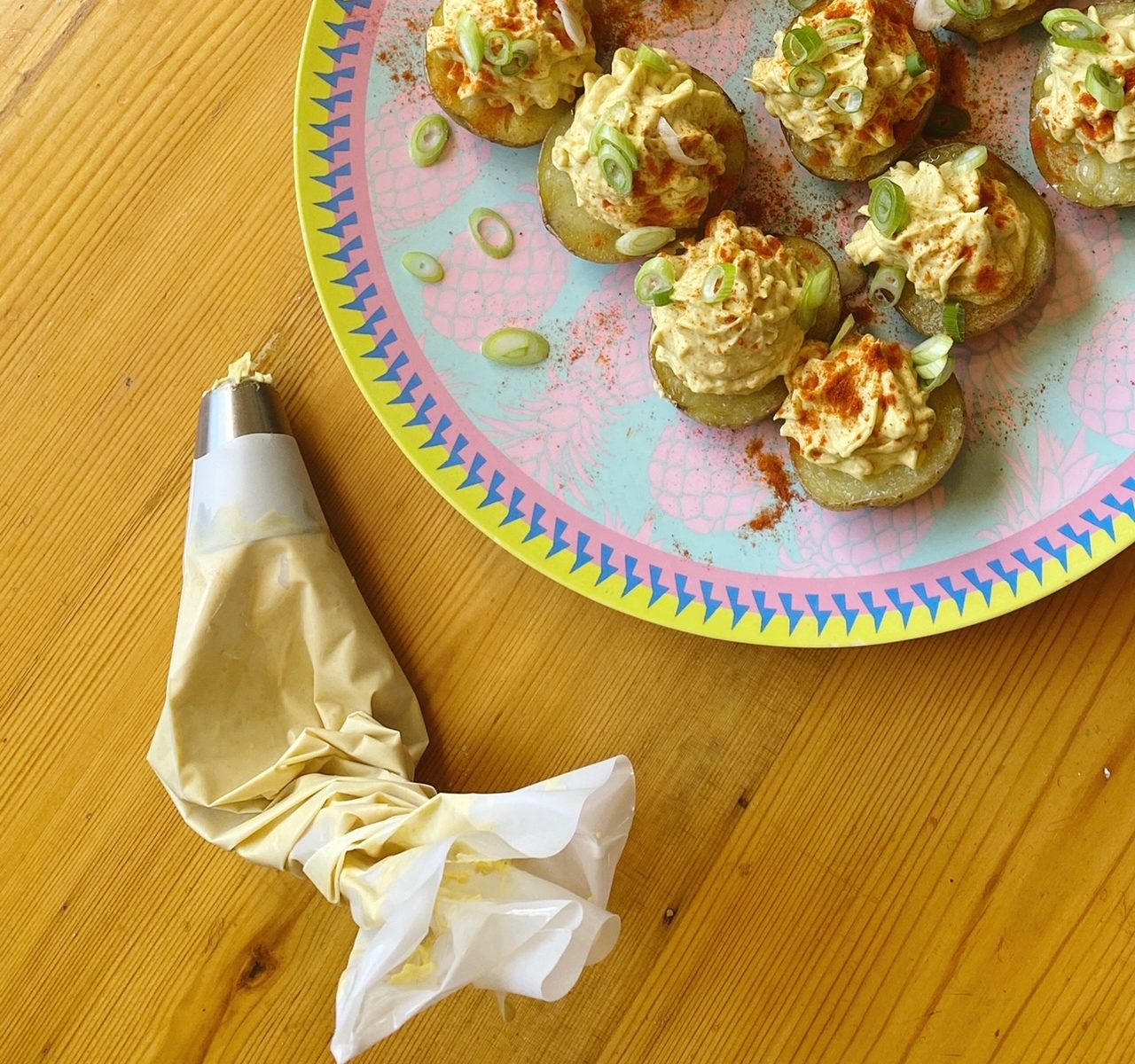
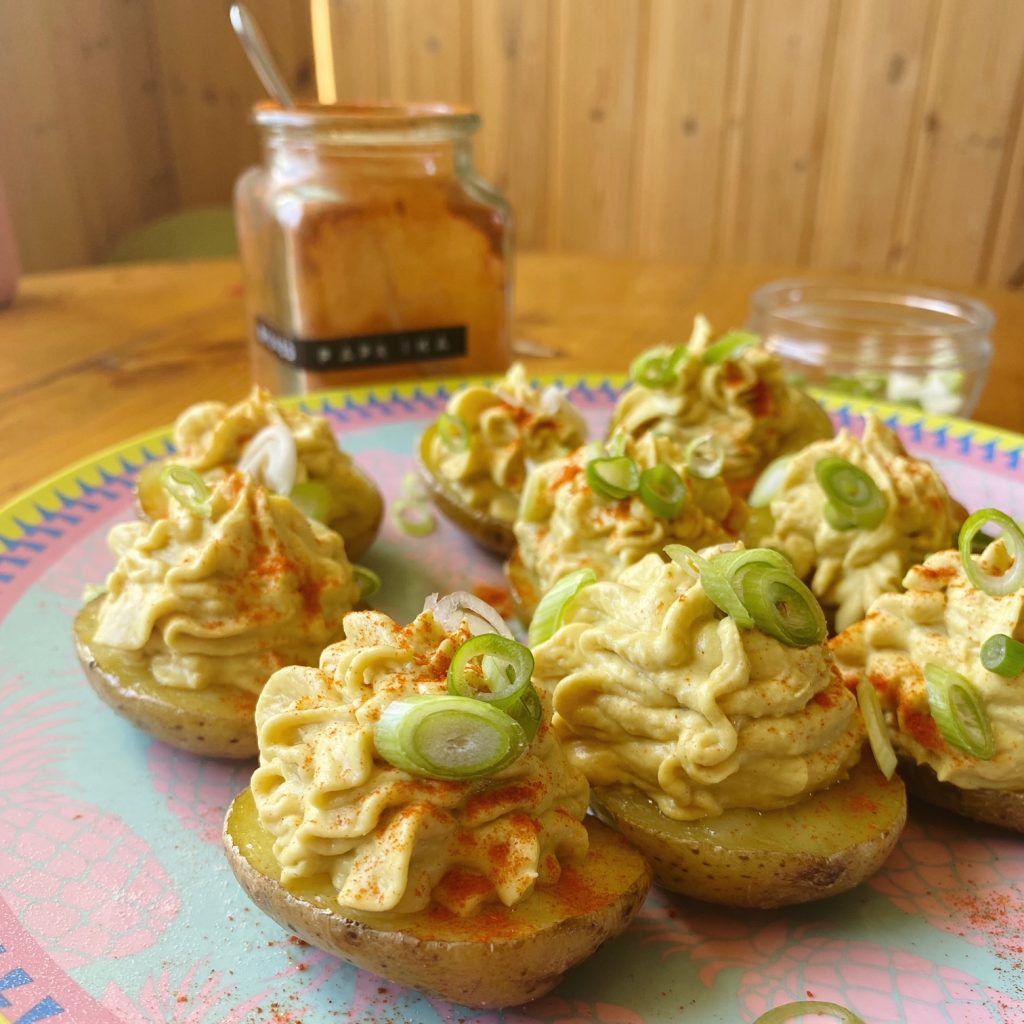
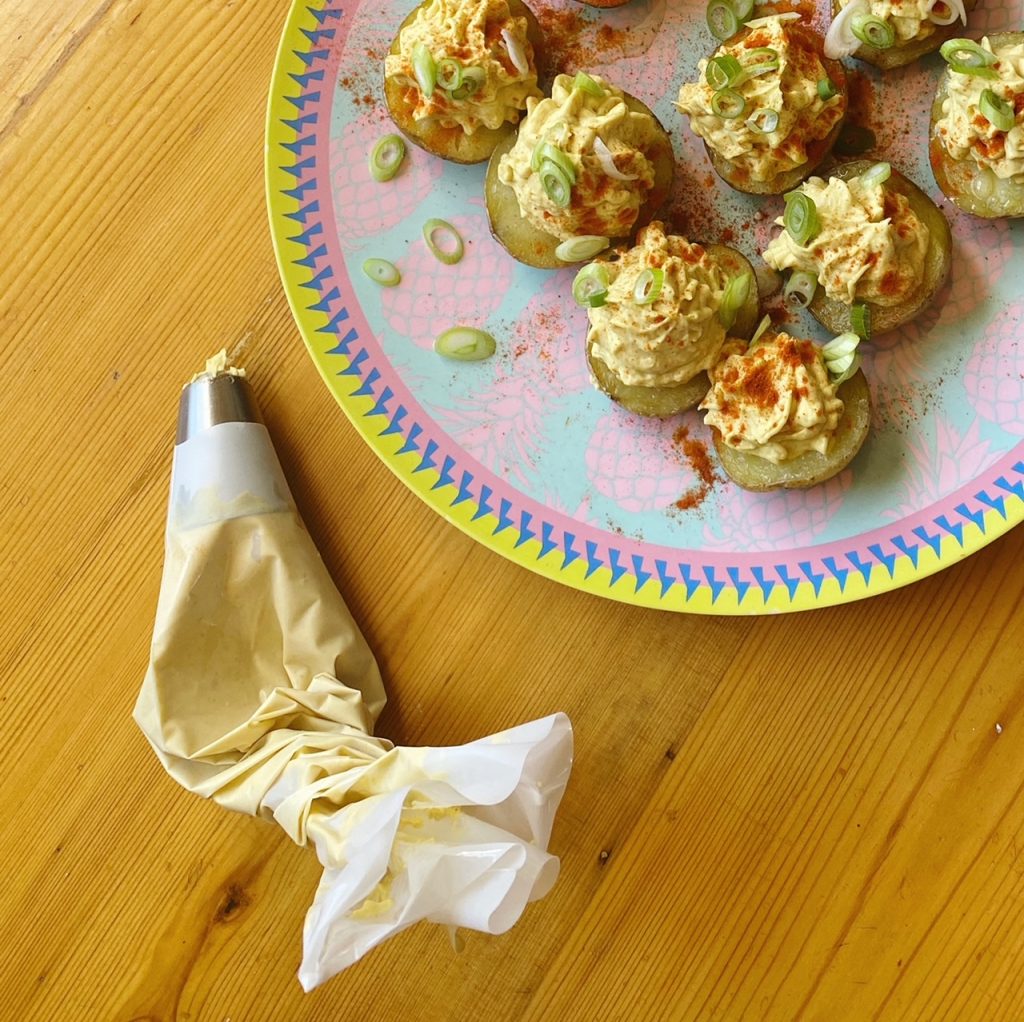
🐣Try these deviled potatoes filled with whipped chickpea ‘yolk’. They are sooooo delicious! The perfect Easter party food. Yum! You can cook the halved potatoes however you like of course, but we popped them in a roasting dish with a little oil and seasoning, covered with a lid and baked until tender. Serve as a fun starter, part of an easter buffet or as canapés with drinks. Happy Easter!
Liz x
Ingredients
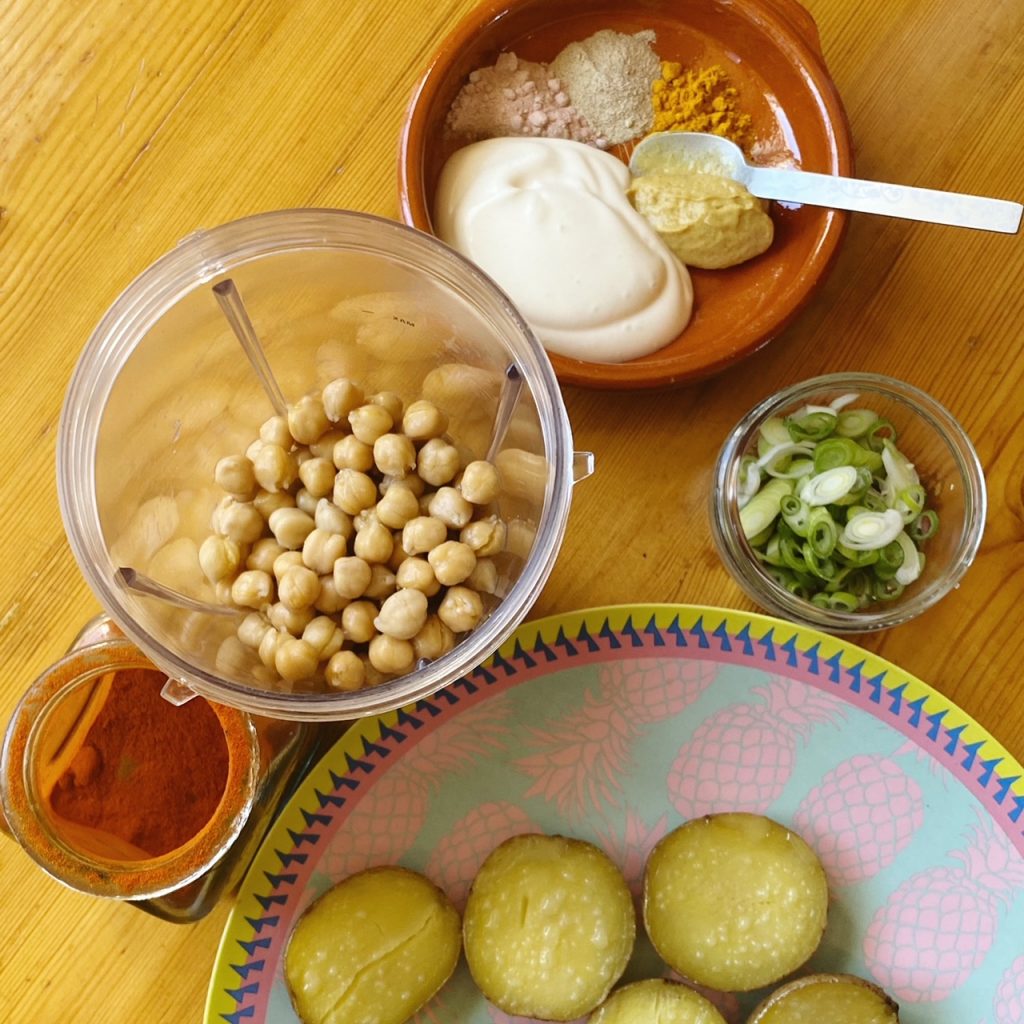
1 can of chickpeas, drained
1 tsp salt (if you can find kala namak aka black salt then you’ll get the eggiest flavour)
1 tsp white pepper
1/2 tsp turmeric
1 tbsp Dijon mustard
8 tbsp vegan mayonnaise
~ approx 14 cooked potato halves
~ paprika & chopped scallion to serve
Method
Put all the ingredients into a small blender and blend until creamy. If you like, add another spoon or two of mayo to get your desired texture.
Spoon into a piping bag and pipe generous dollops onto cooked, halved potatoes.
Decorate with a sprinkle of paprika and chopped scallions or chives. Cover and chill in the fridge until you are ready to serve.
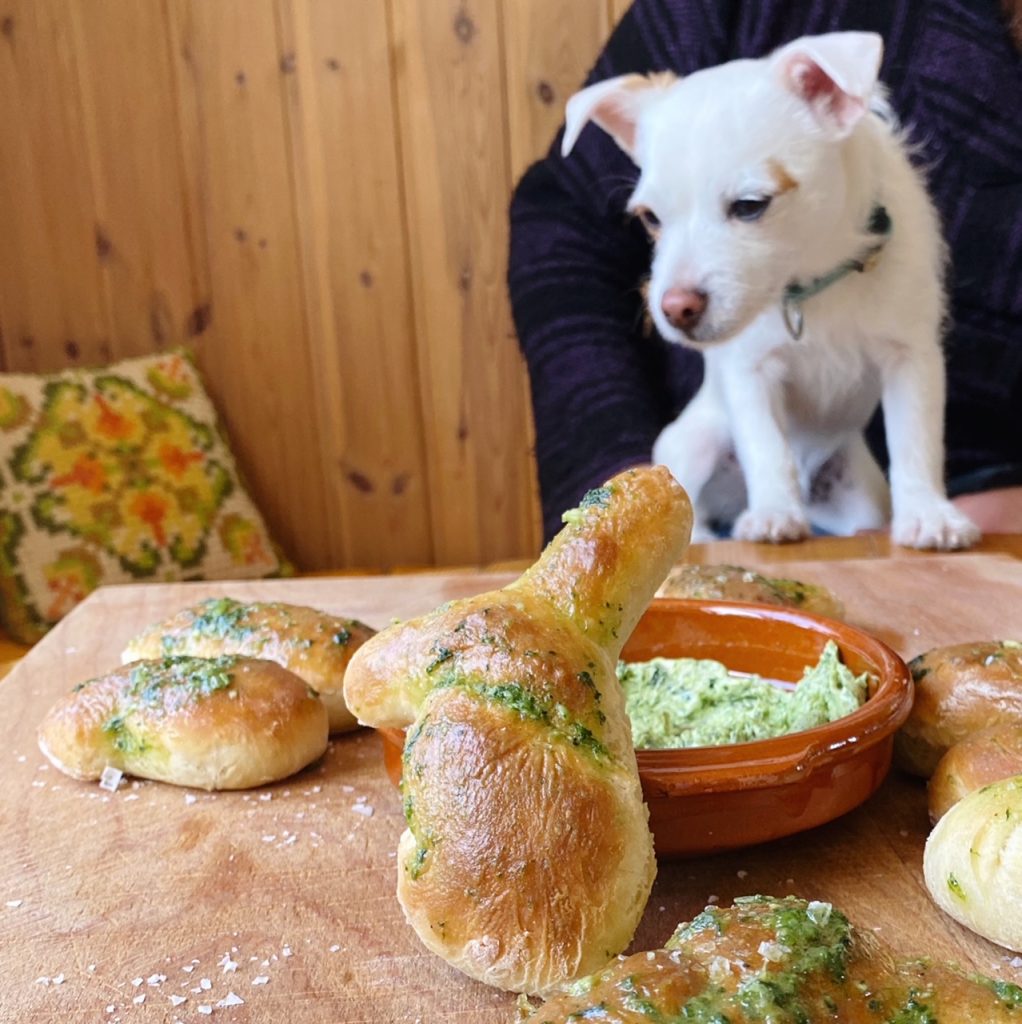
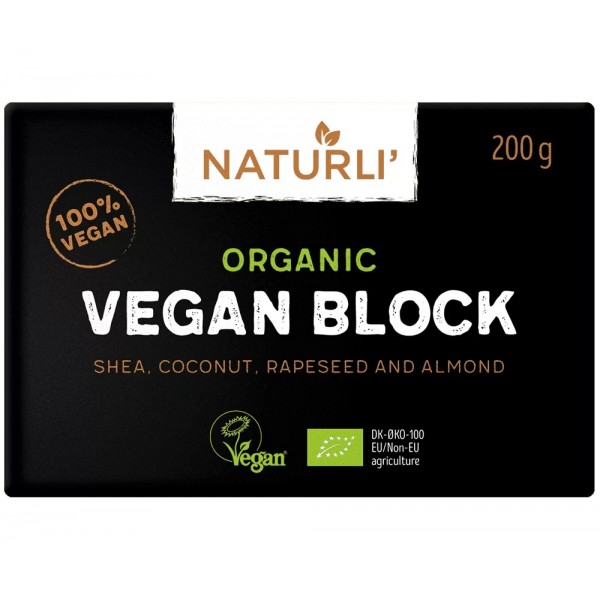
Save this recipe to make over Easter. It’s a crowd pleaser, fun as a starter or part of a buffet. These are so delicious and fun to make with kids. Brush with a blend of butter, parsley and garlic or if you are lucky enough to live near a patch of wild garlic, you could make wild garlic butter for an extra special seasonal treat. We use our favourite Naturli butter to keep it dairy free, have you tried it yet?
Liz x
Ingredients (makes 16)
Pizza dough:
450g flour
7g instant yeast
1 tsp salt
1 tbsp sugar
2 tbsp olive oil
350ml warm water
Garlic butter:
50g butter
2-3 garlic cloves
a handful of parsley
salt and pepper to taste
flakey salt to serve
Method
Start with the pizza dough, it will need time to prove. Measure all the ingredients into a mixing bowl and use a wooden spoon to combine and work into a sticky, stretchy dough. Scrape down the sides and cover the bowl with a tea towel. Leave somewhere warm until doubled in size (this takes around an hour).
When your dough is doubled in size, turn the oven to 200C and flour a clean work surface. Scrape the sticky dough out onto the floured surface and, using your hands as little as possible (this dough is sticky!), use a dough scraper to gather and turn the dough over into a ball. Use the dough scraper to cut the ball into 4 pieces. Then cut each quarter into four additional pieces. You should have 16 pieces of dough now.
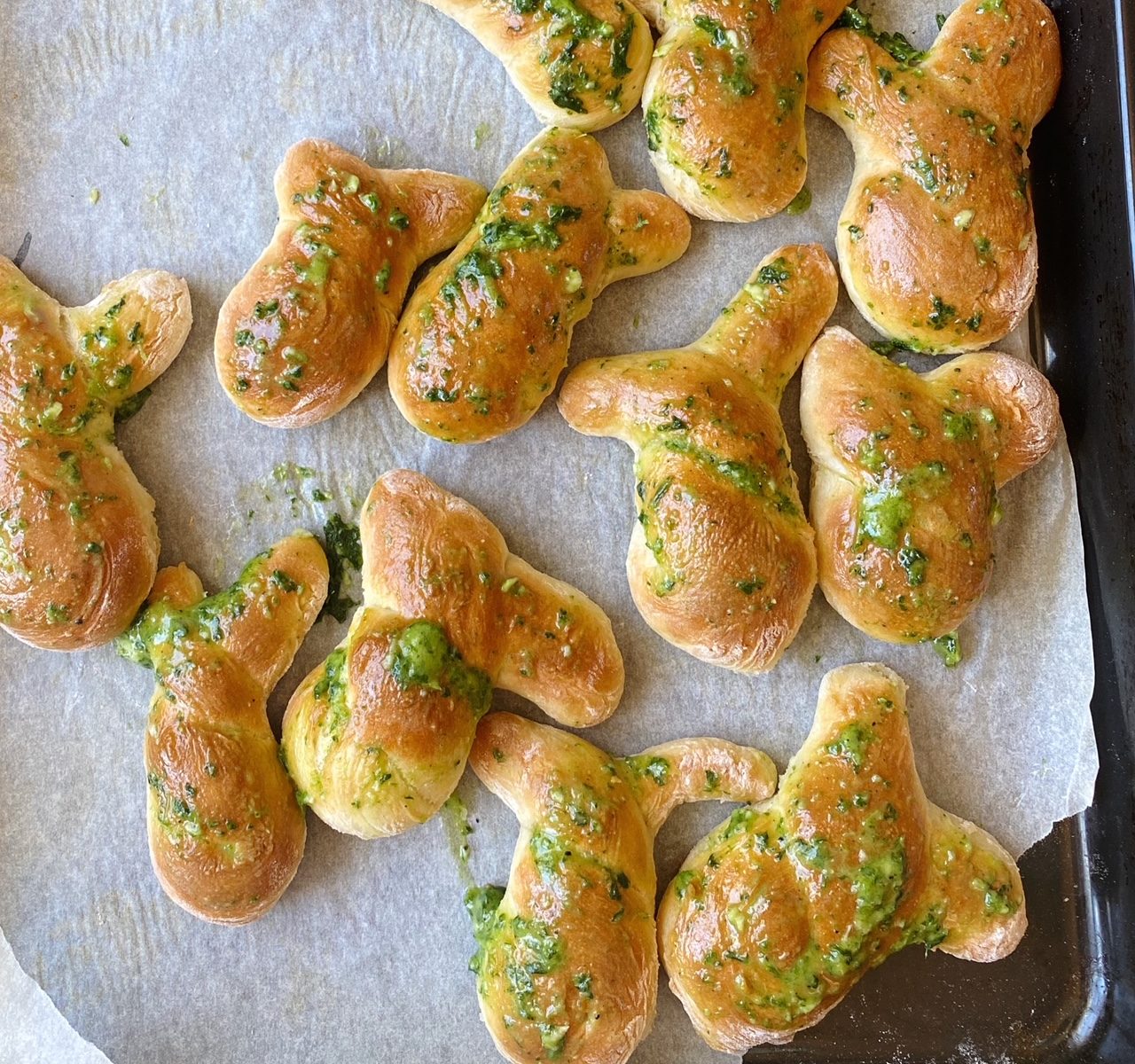
Roll each piece into a rope and then fold and twist into a bunny shape (see video). Place all the bunnies onto one or two large, lined baking sheets and cover with a clean tea towel. Leave to prove and almost double in size again in a warm spot.
When your bunnies are ready, pop them in the oven to bake until golden brown (around 15-20 minutes).
Meanwhile blend the garlic butter ingredients together in a small food processor. Or you can mince the garlic and parsley and stir into softened butter and season to taste.
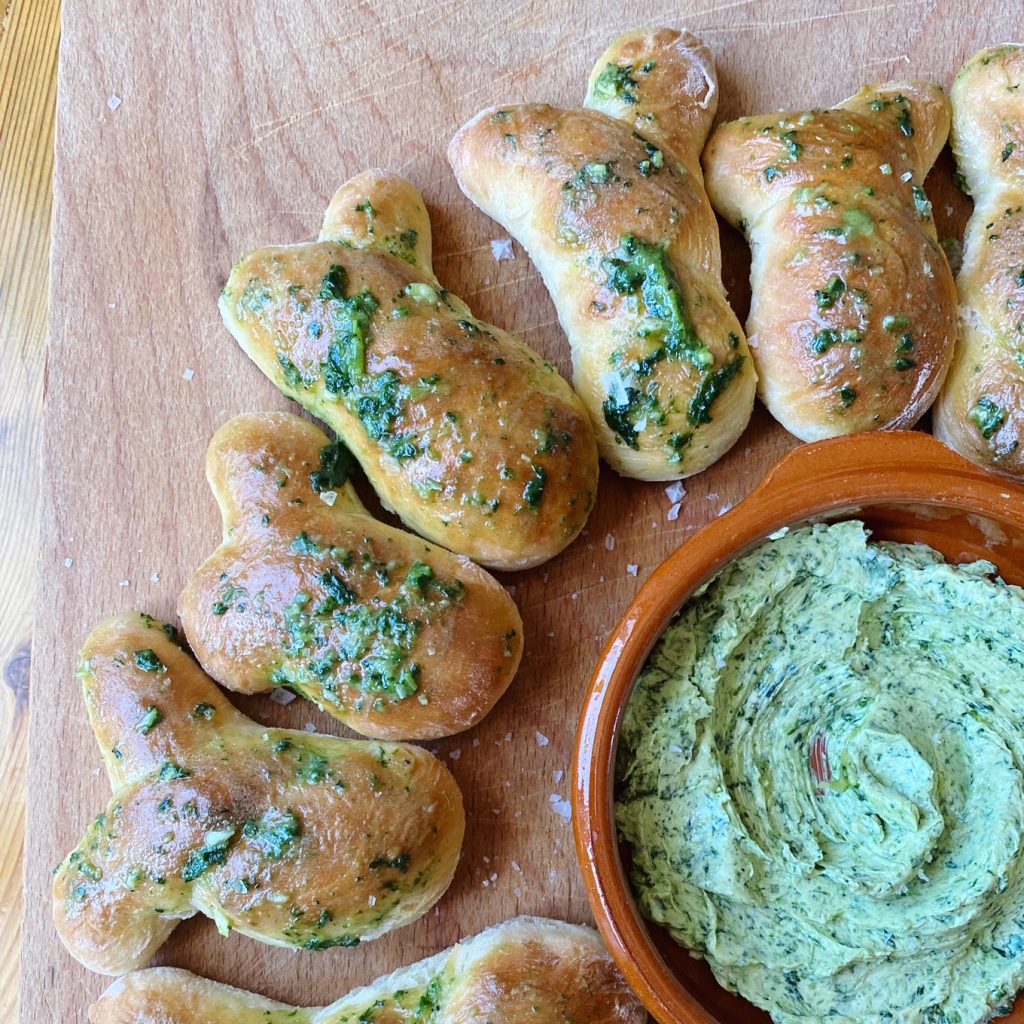
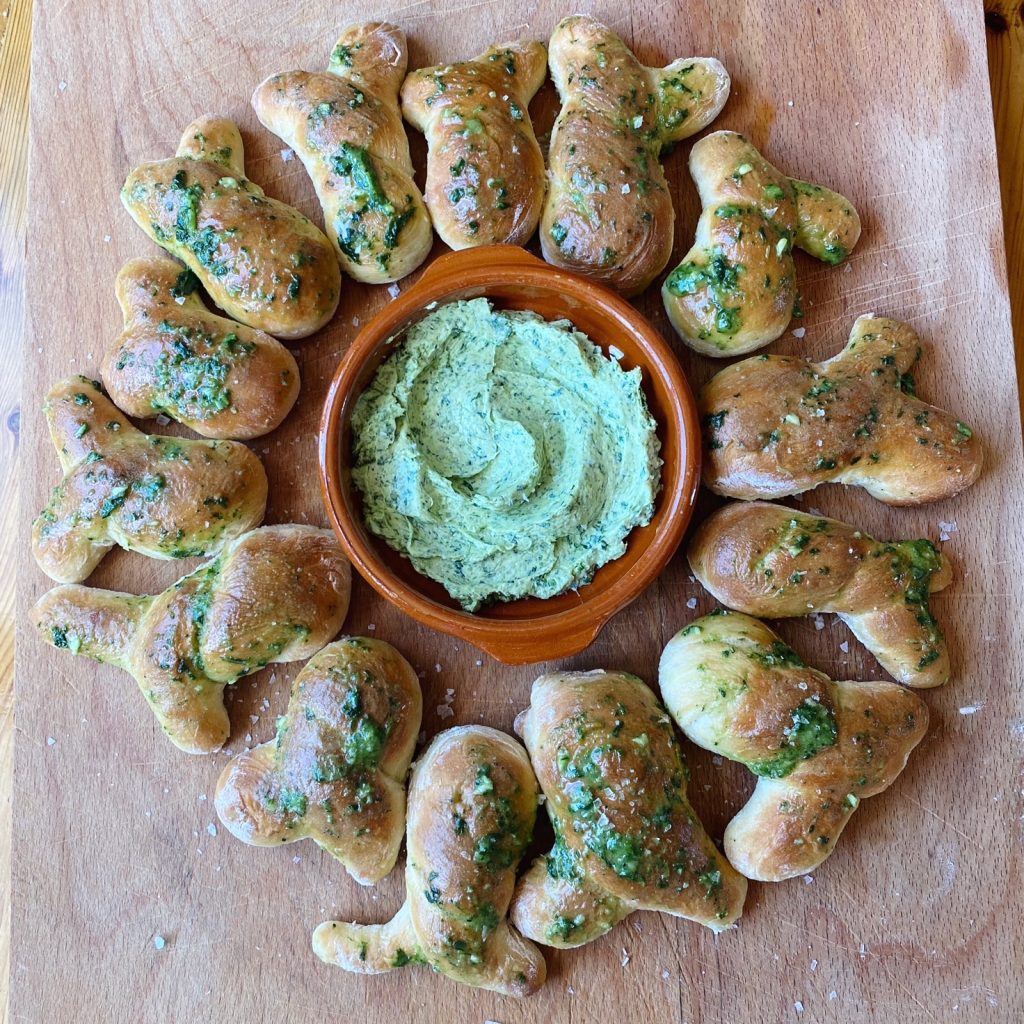
When the bunnies come out of the oven, spoon and brush over the garlic butter whilst it is still hot. Serve on a board or platter with the leftover butter and a sprinkle of flakey salt. Enjoy!
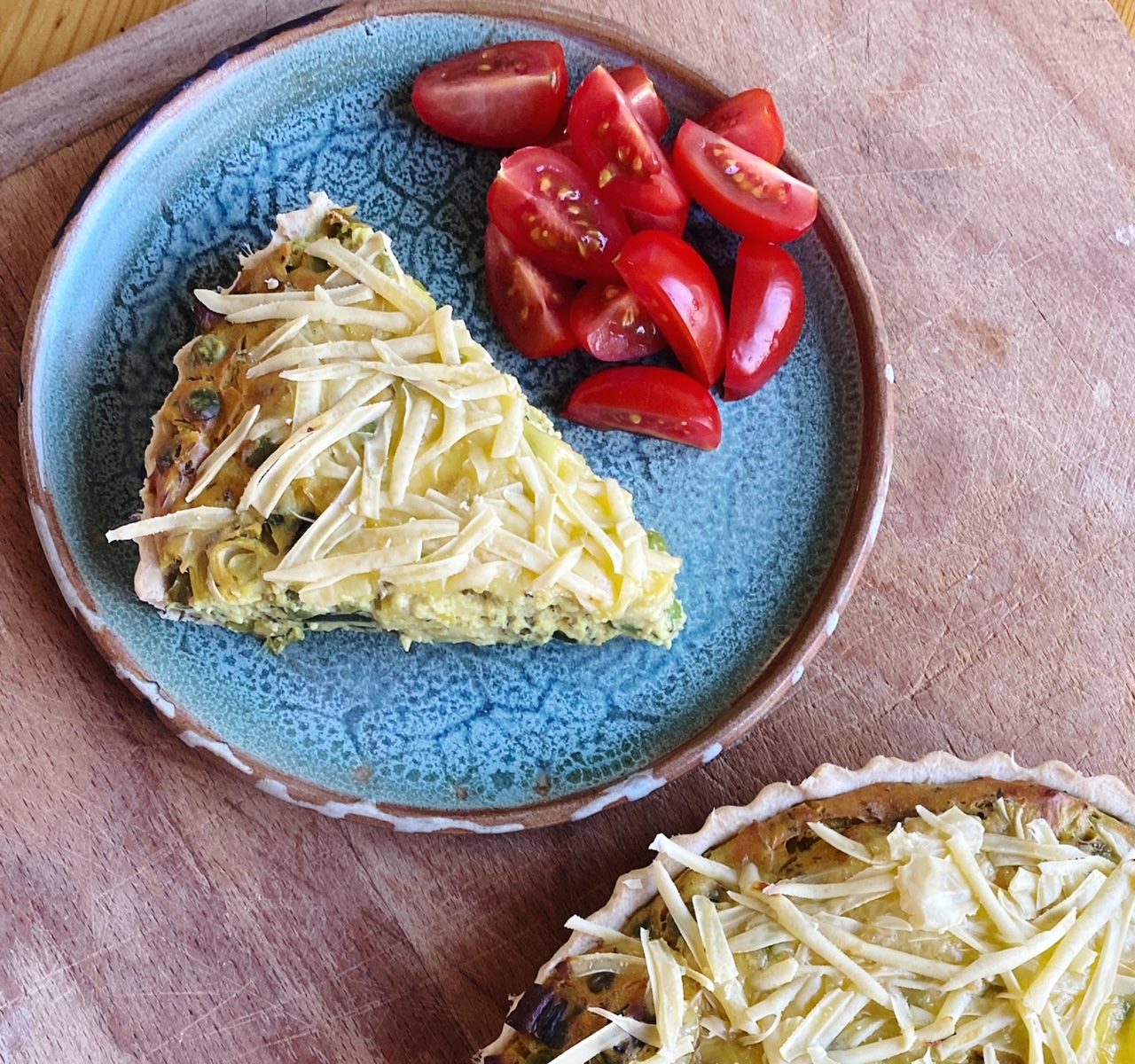
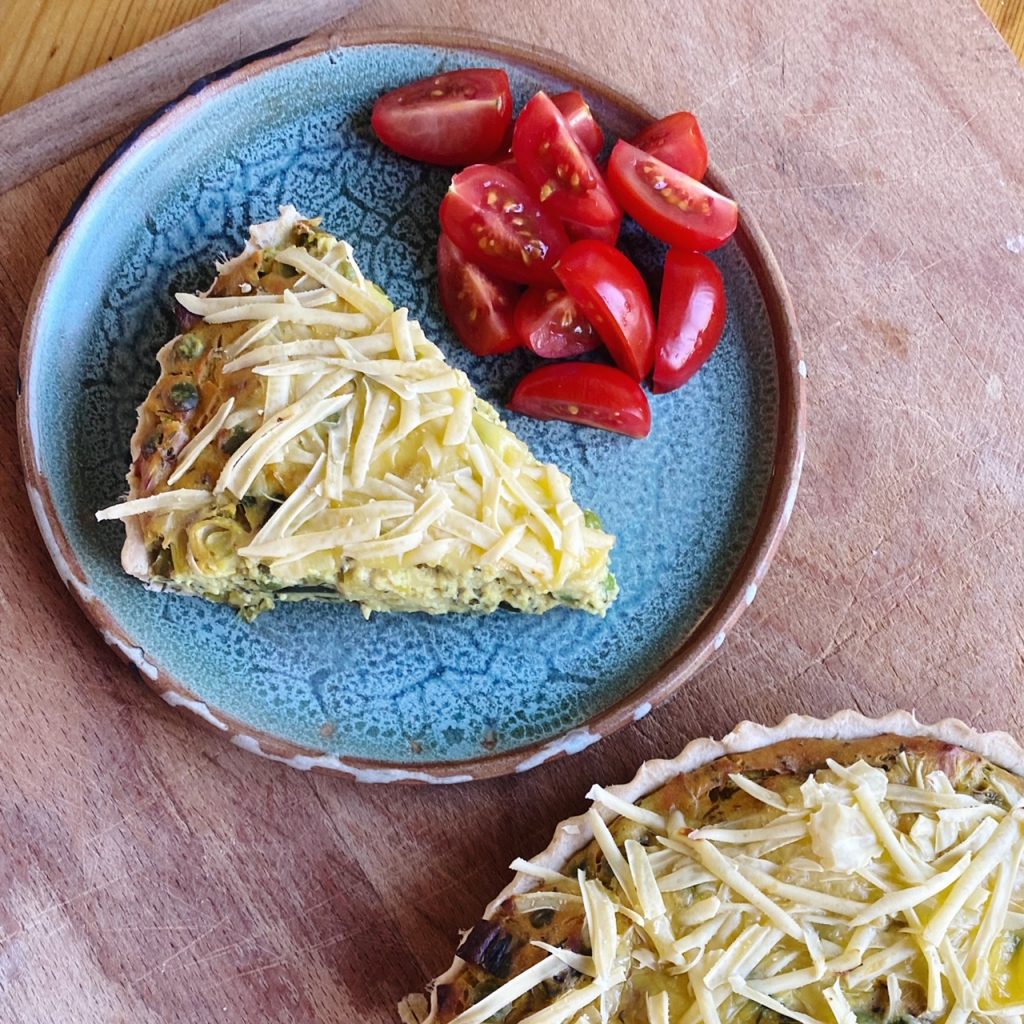
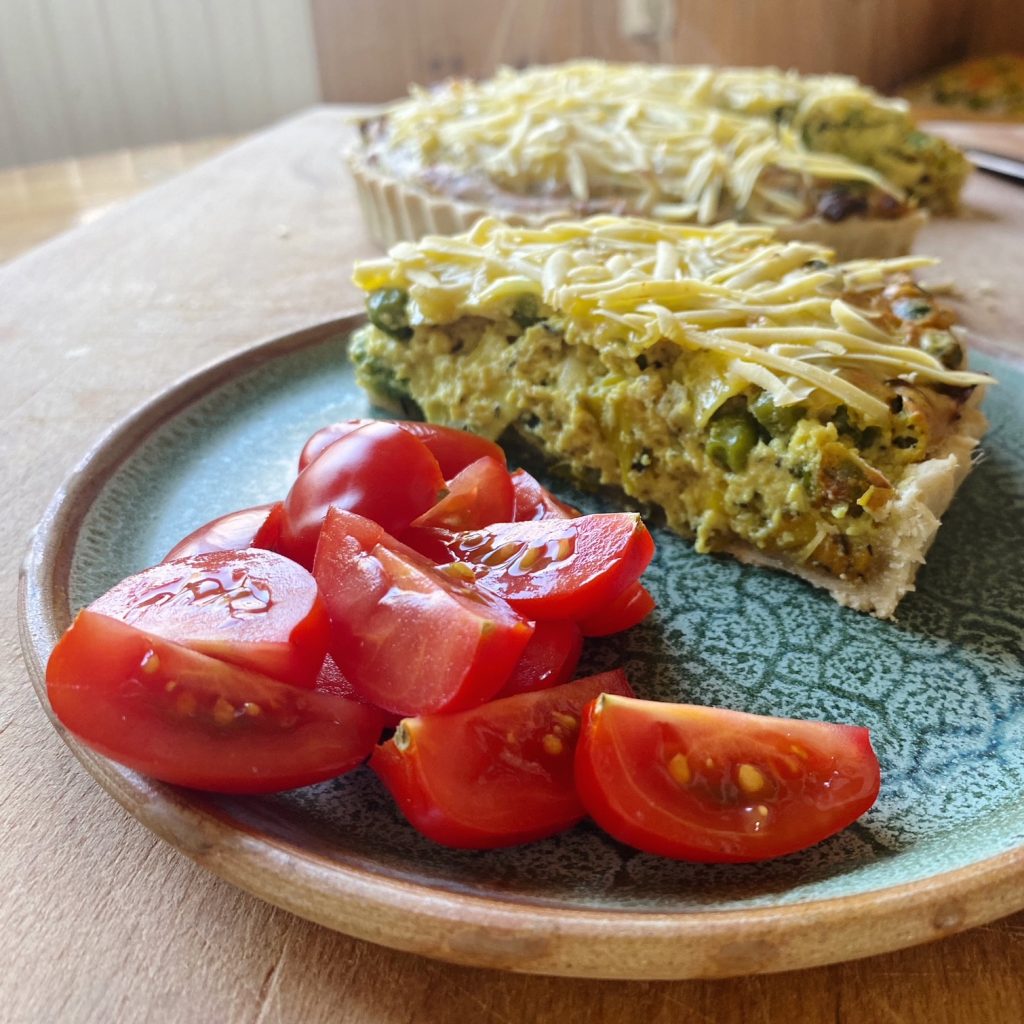
Got some guests coming for Easter who don’t eat eggs or dairy? This quiche is the perfect spring centerpiece. Serve with salad and/or roasted vegetables. It’s protein rich, satisfying and so delicious!
Liz x
Ingredients
Shortcrust pastry:
150g flour
75g dairy free butter
3 tbsp cold water
‘Egg’ mixture:
350g silken tofu
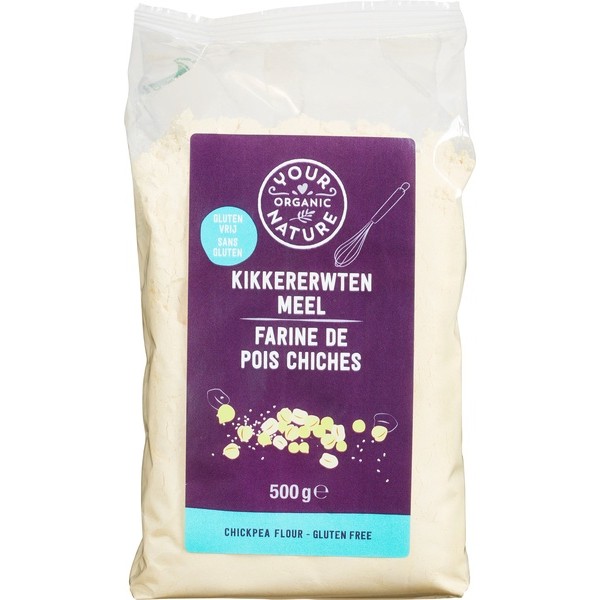
4 tbsp chickpea flour
150ml oat milk
3 tbsp nutritional yeast
1 tbsp Dijon mustard
1 tbsp thyme
1/2 tsp turmeric
1 tsp each salt & pepper
Vegetable filling:
1 tbsp olive oil
1 leek, washed & chopped
2 cloves of garlic, sliced
1 scallion, chopped
a mug of frozen peas
1 tsp dried thyme
salt & pepper to taste
grated vegan cheese to top
Method
Start with the pastry. Blend the butter and flour together until crumbly, then add the cold water and keep blending until the pastry comes together into a ball. Press evenly into a flan dish and chill for 20 minutes.
Meanwhile turn the oven on to 175C and prepare the fillings. Blend the ‘egg’ mixture into a smooth batter and sauté the leek with the olive oil, garlic, thyme and salt. Remove from the heat and stir through the scallion and peas. Once cool, mix in the ‘egg’.
Prick the chilled pastry with a fork and blind bake for 10 minutes to set the crust. Then fill with the veg and ‘egg’, top with cheese and bake for another 30-40 minutes until the quiche is set and golden brown on top.
Enjoy in large slices with salad and/or roasted vegetables. Change up the vegetables and herbs in the quiche for any combination you like.
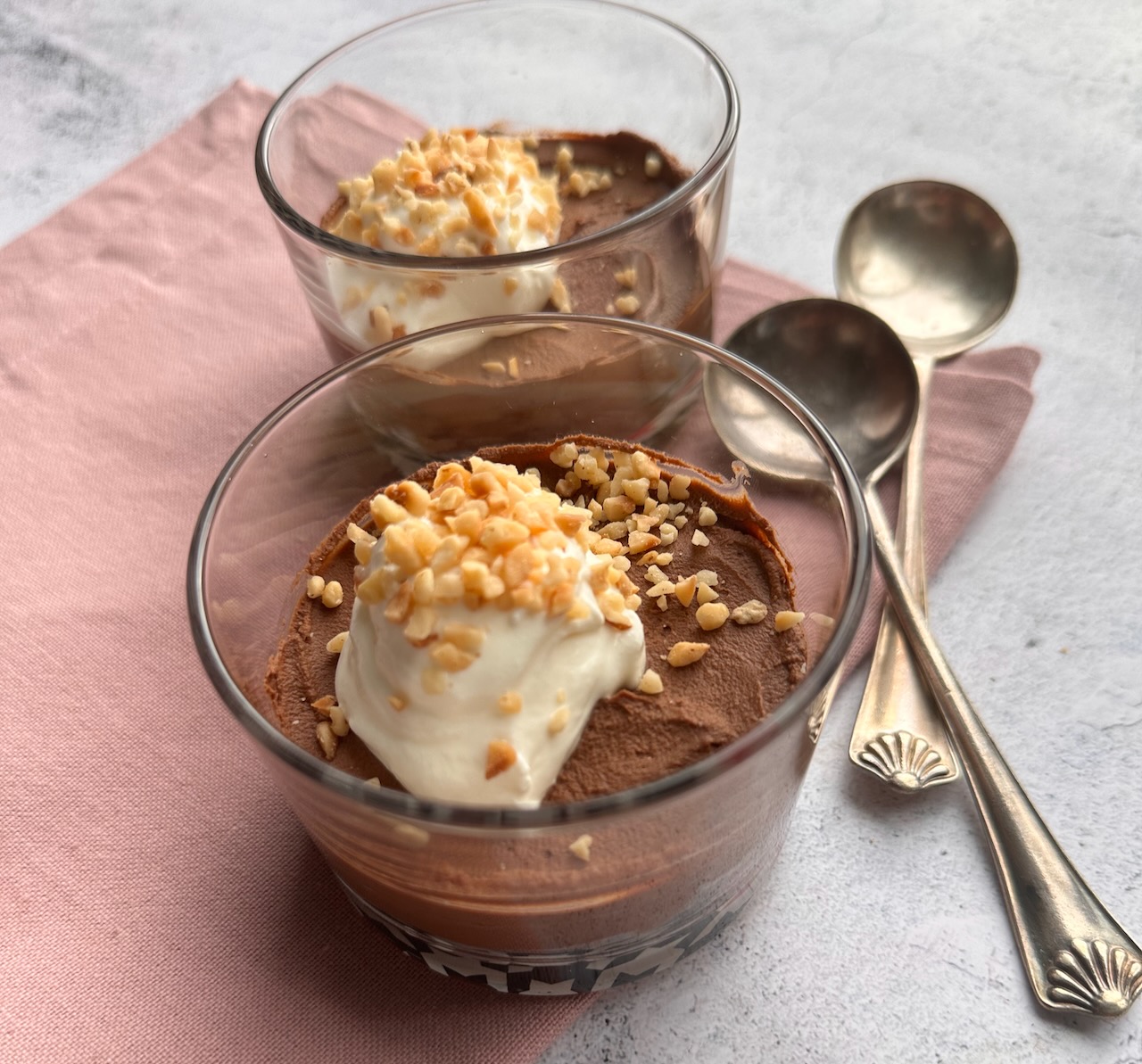
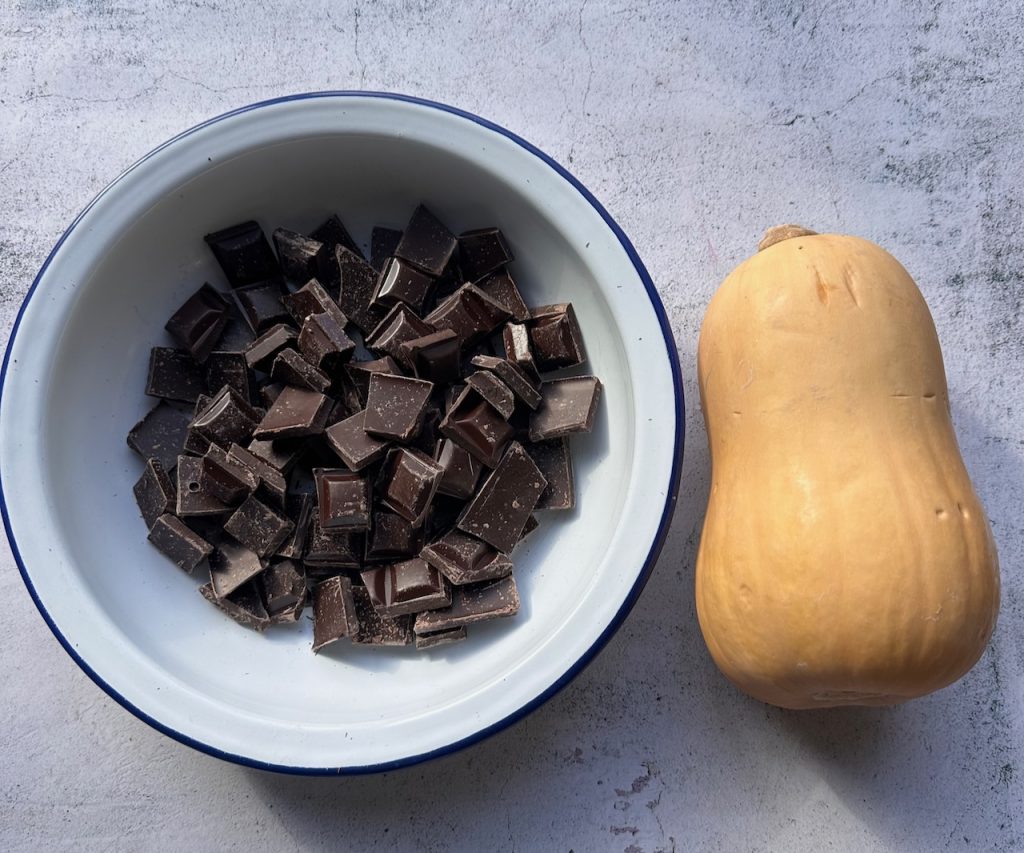
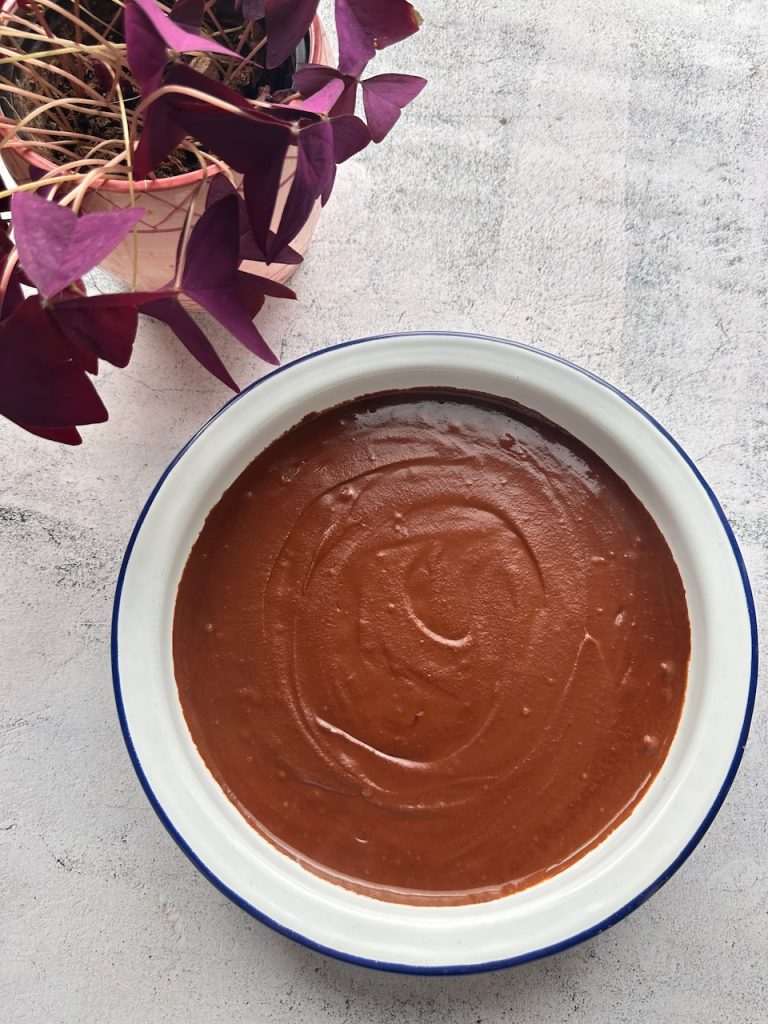
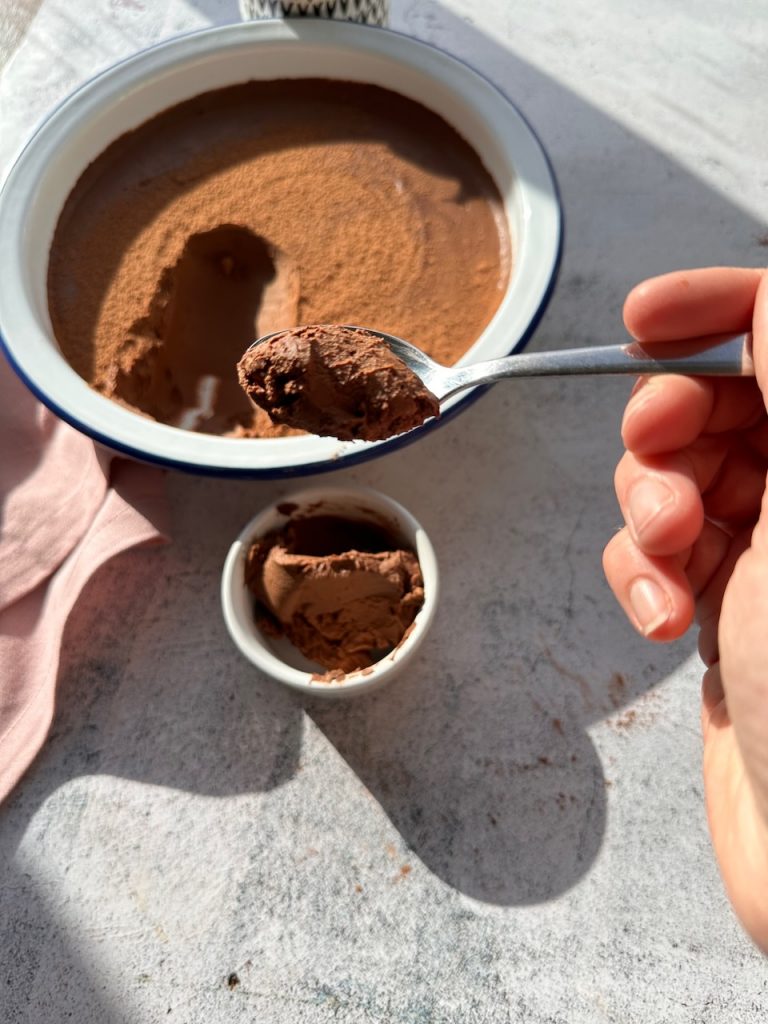
Chocolate mousse with hidden butternut squash, we couldn’t wait to try this one!! An indulgent chocolate mousse that is made mostly of healthy stuff sounds too good to be true.
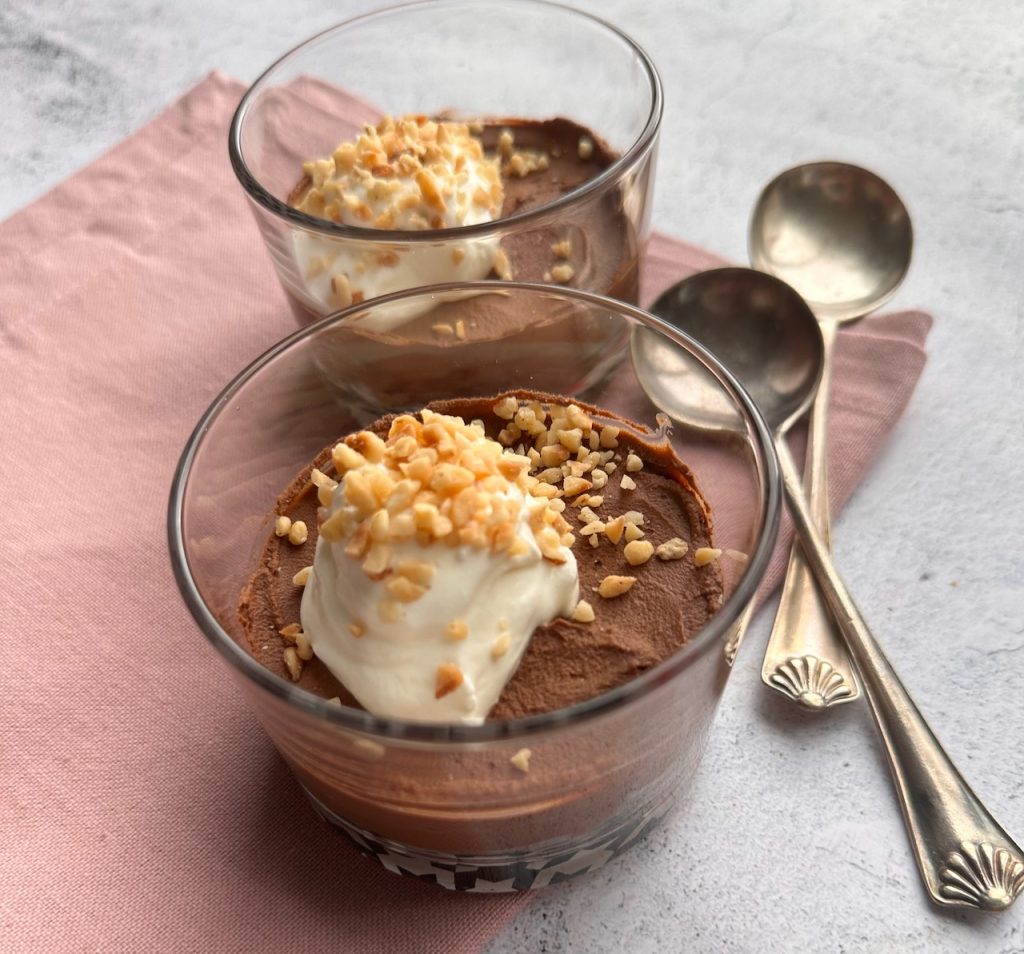
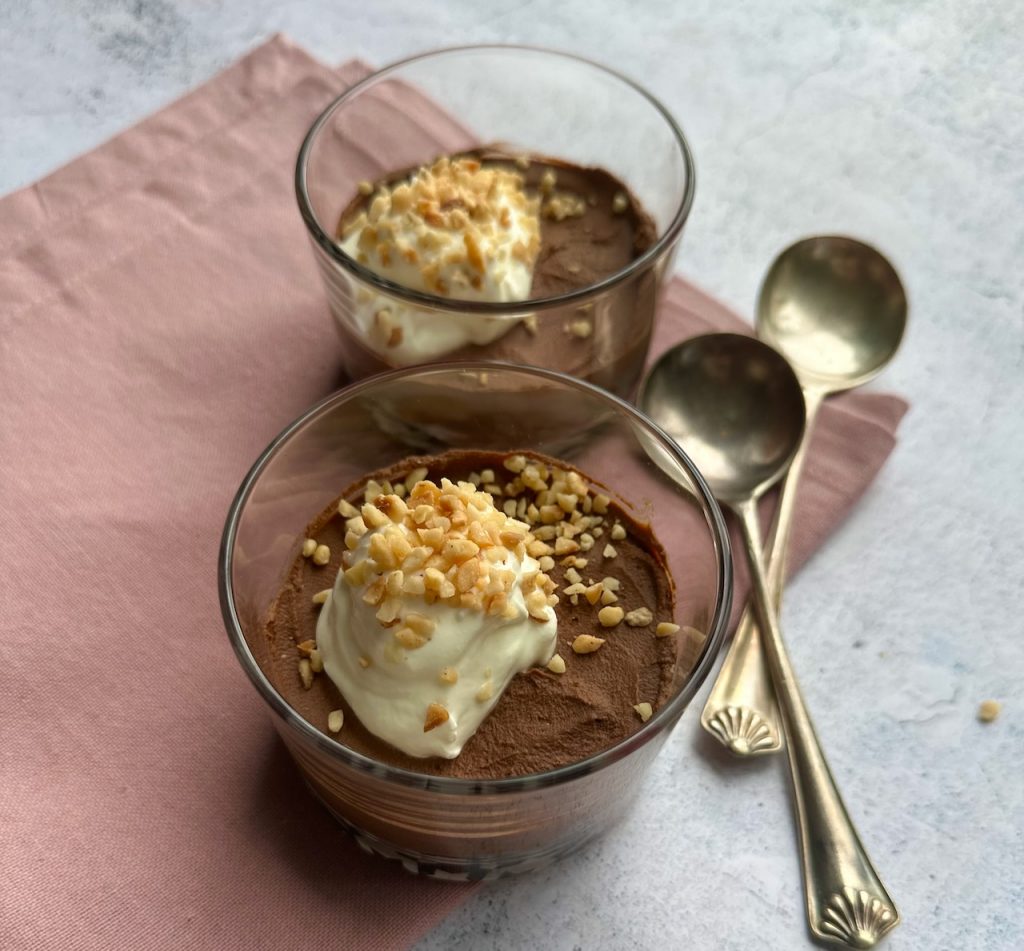
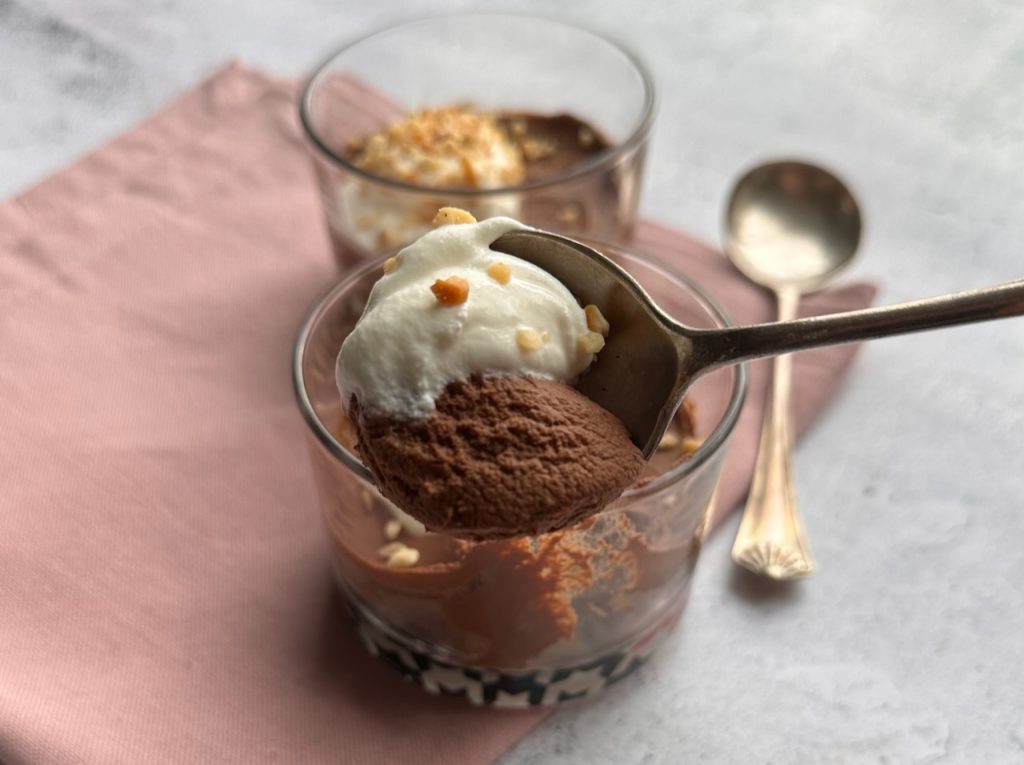
This one pass the test with my kids and the butternut squash went undetected! The mouse is delicious on its own but if you want to give it a lighter texture try folding whipped cream through it, this is how I served it to my kids.
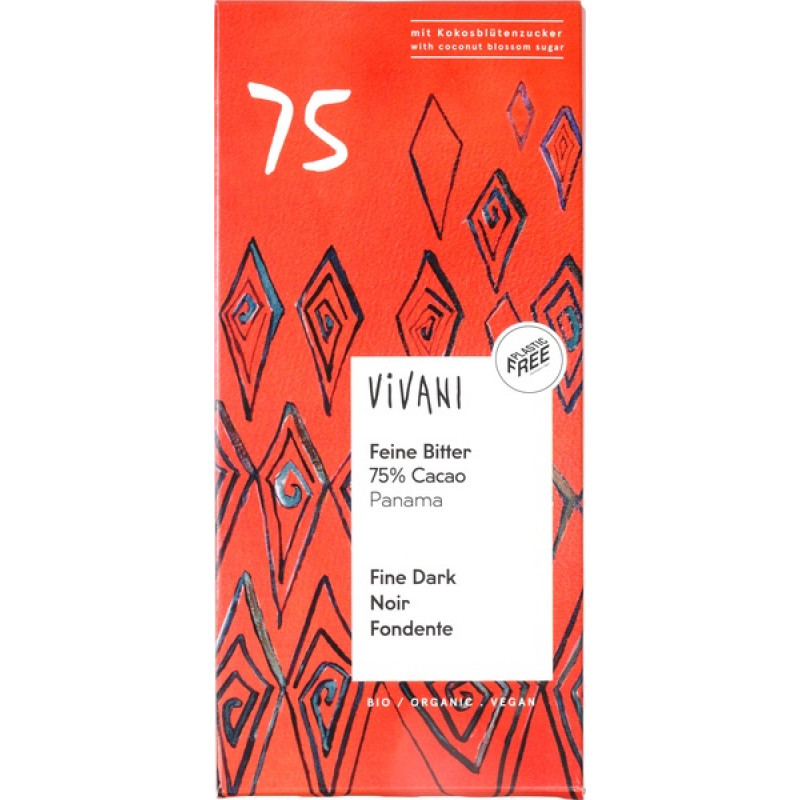
TIP: For a really tasty mousse its important to use a good quality chocolate.
Serve with a dusting of cacoa powder, whipped cream or cremé fraichê and toasted hazelnuts or almonds, banana or raspberries would be delicious too
Method:
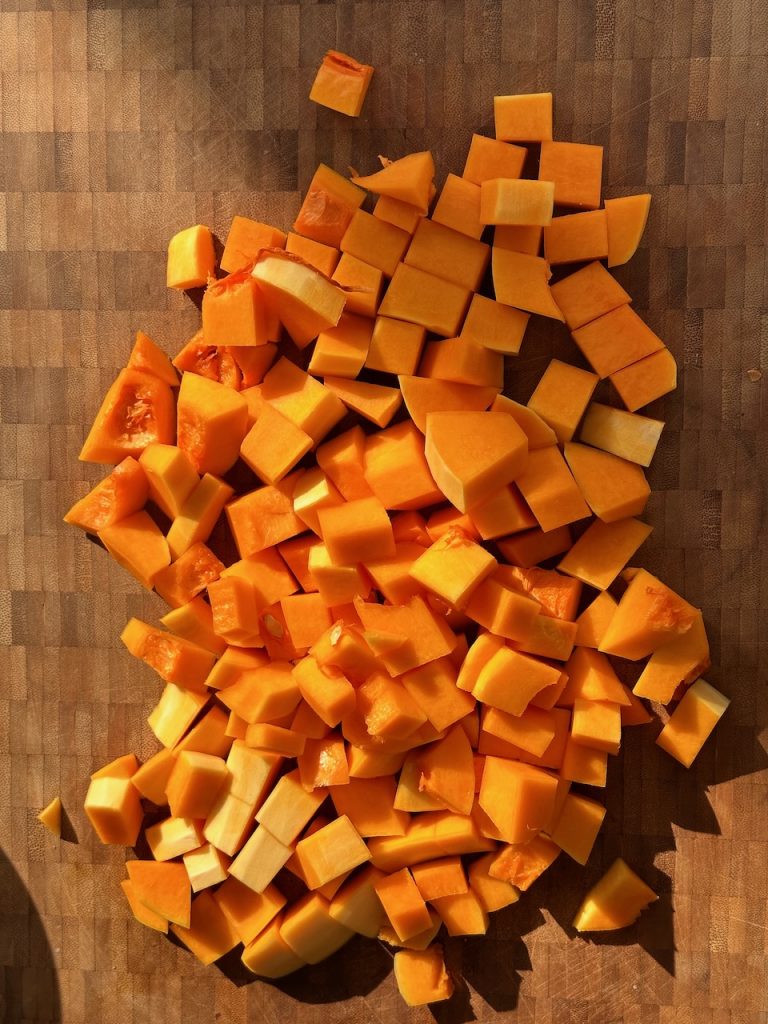
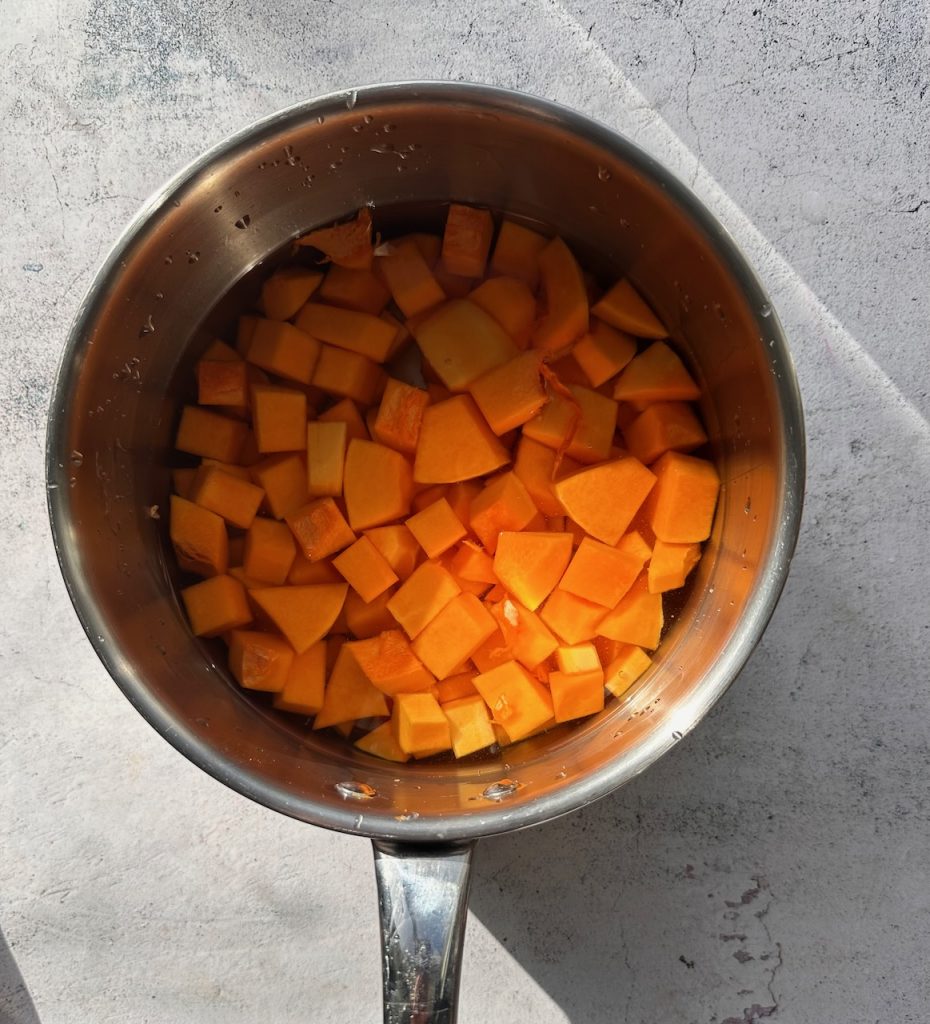
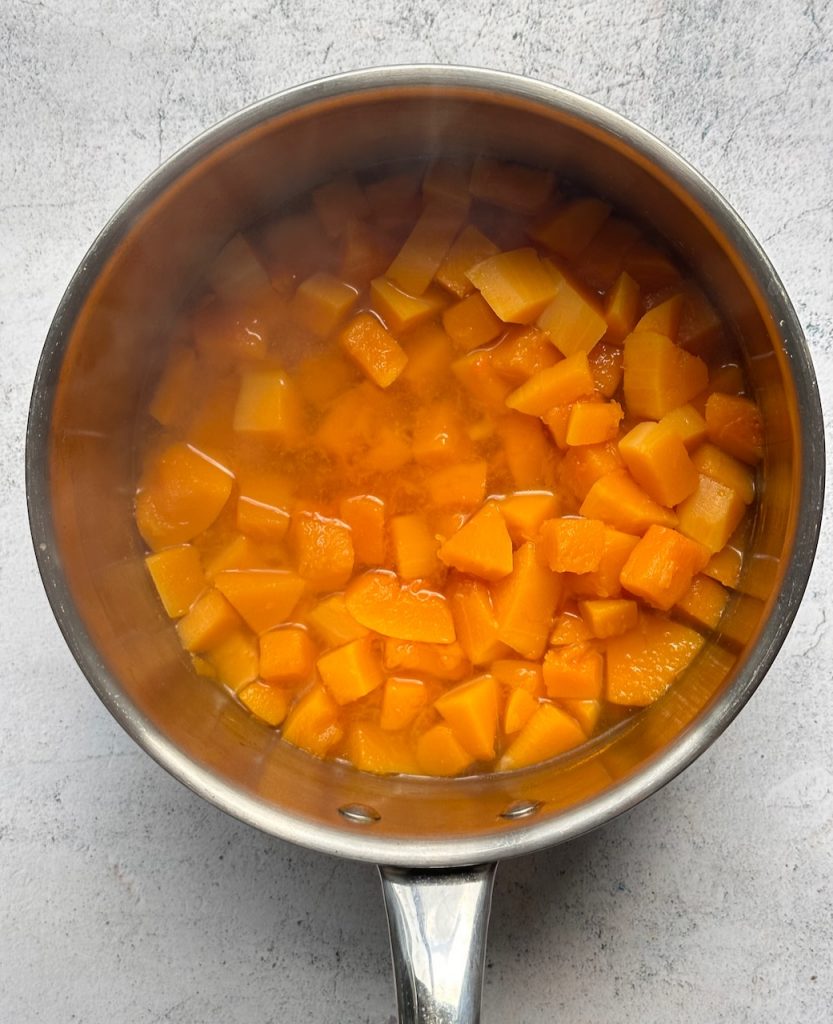
Peel, deseed and cube the butternut squash. Put it in a medium sized pot cover with cold water. Put on the hob, bring to a simmer and cook until completely soft, 20-30 mins.
Melt the chocolate in a microwave or on a double boiler on the hob.
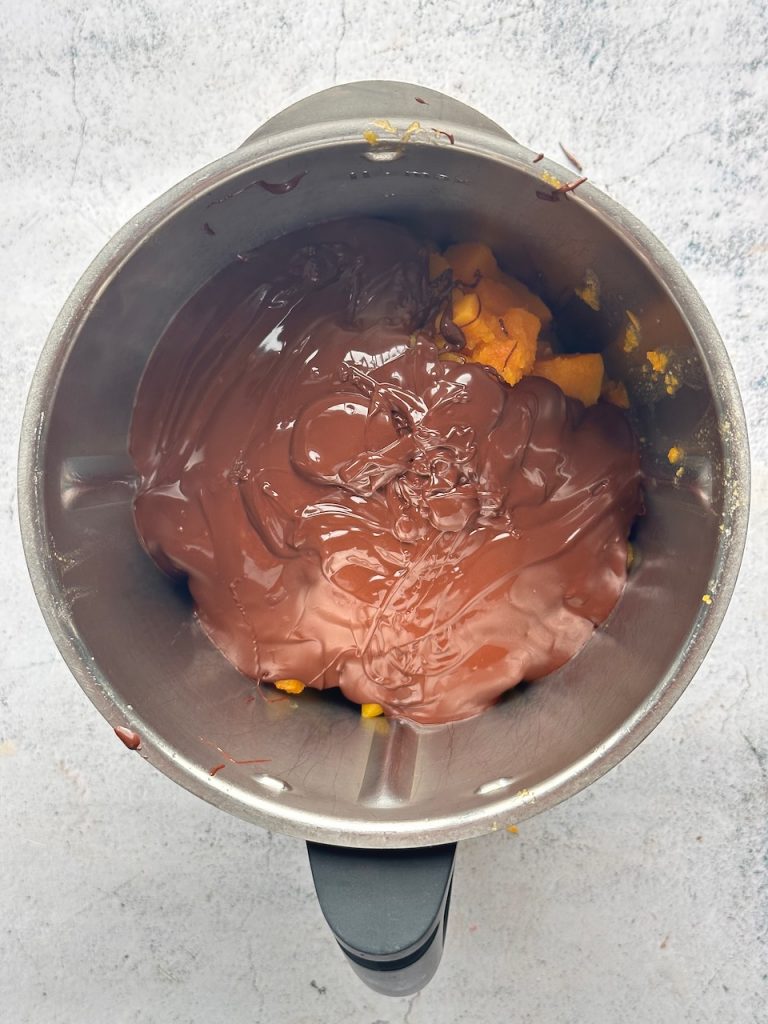
When the butternut squash is cooked, strain and add to a blender along with the melted chocolate.
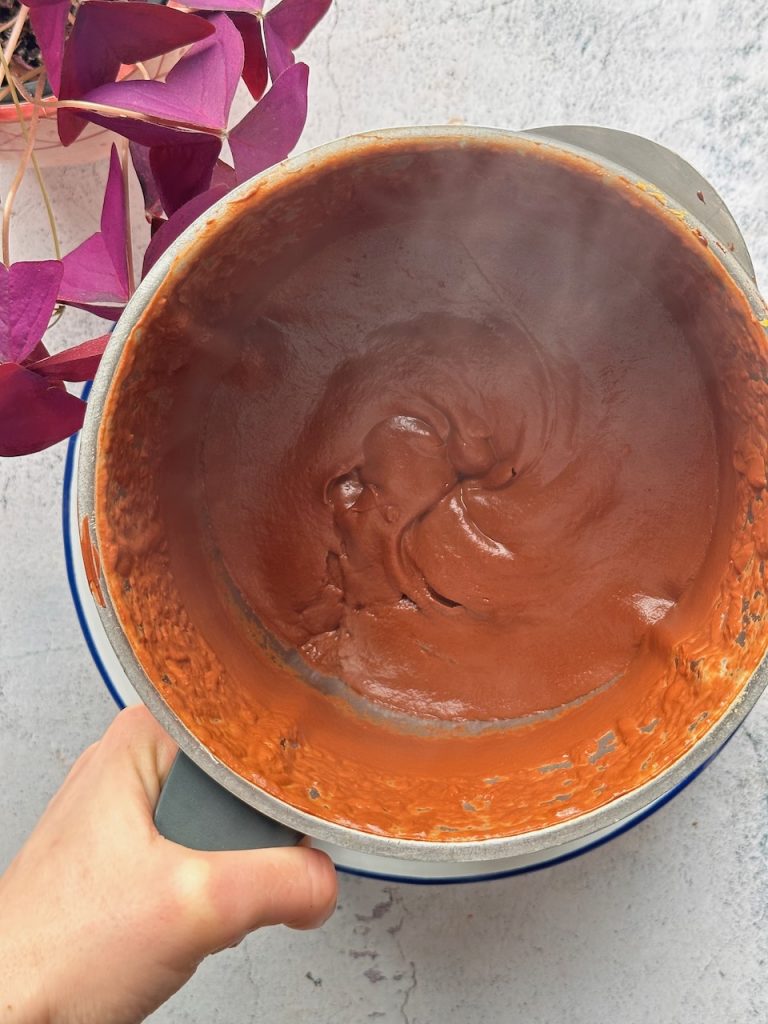
Blend until silky smooth.
Pour into a large bowl or individual bowls. Leave to cool on the worktop then transfer to the fridge to set for at least 4 hours, overnight if possible.
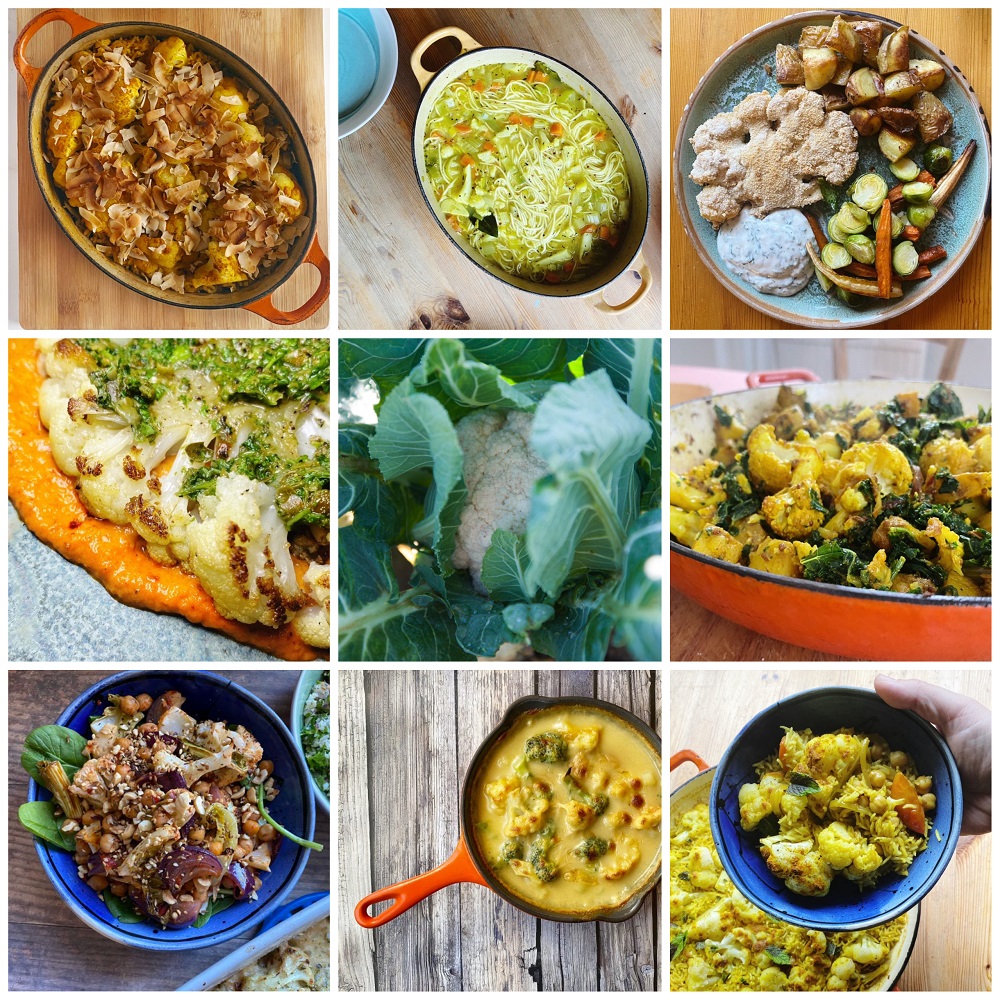
Cauliflower doesn’t just taste great, it’s also really good for you. It’s high in vitamins C and K, and is also a good source of folate, which supports cell growth and is essential during pregnancy. On top of that, it’s high in fiber, calcium and potassium.
Here are a few ideas if you’re unsure what to cook with cauliflower. Click on the bold part to go straight to the recipe.
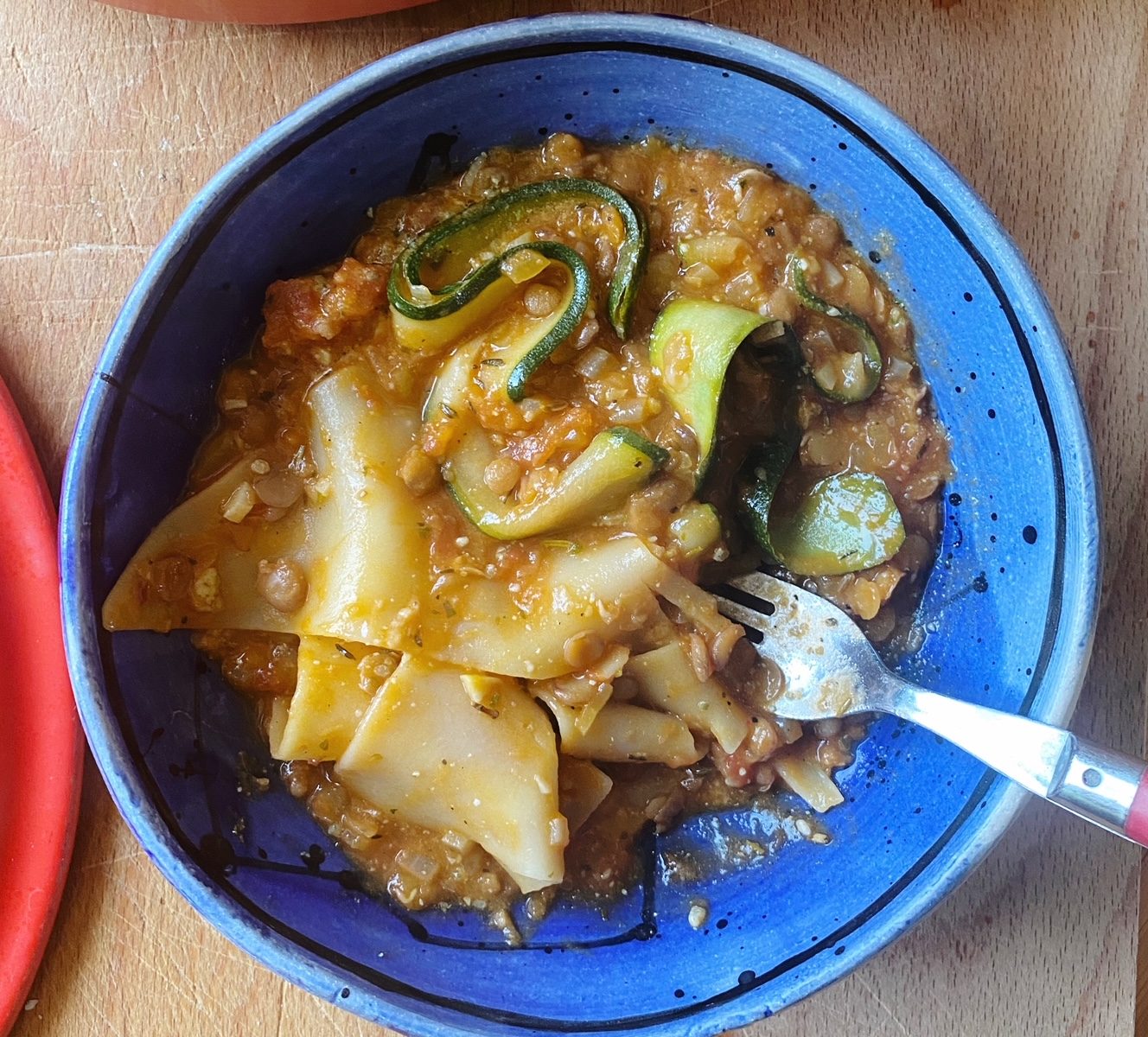
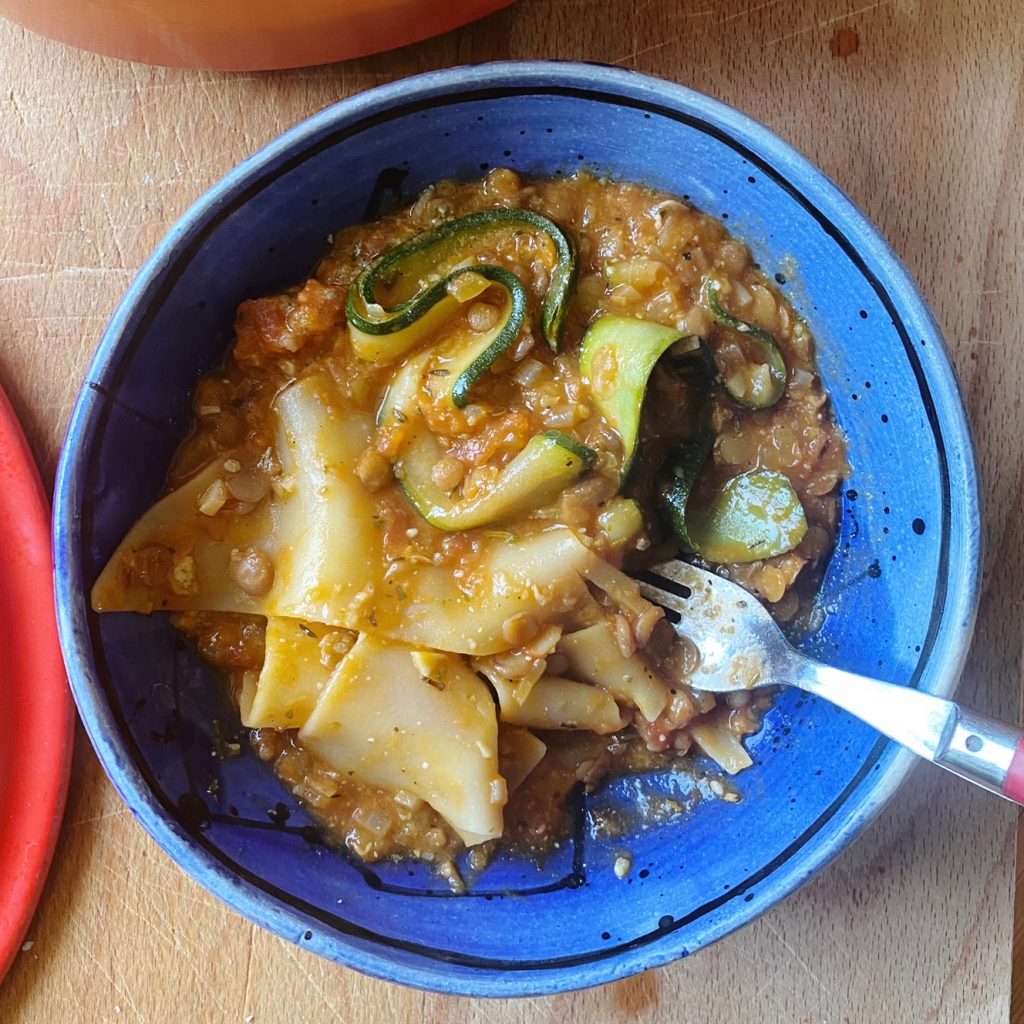
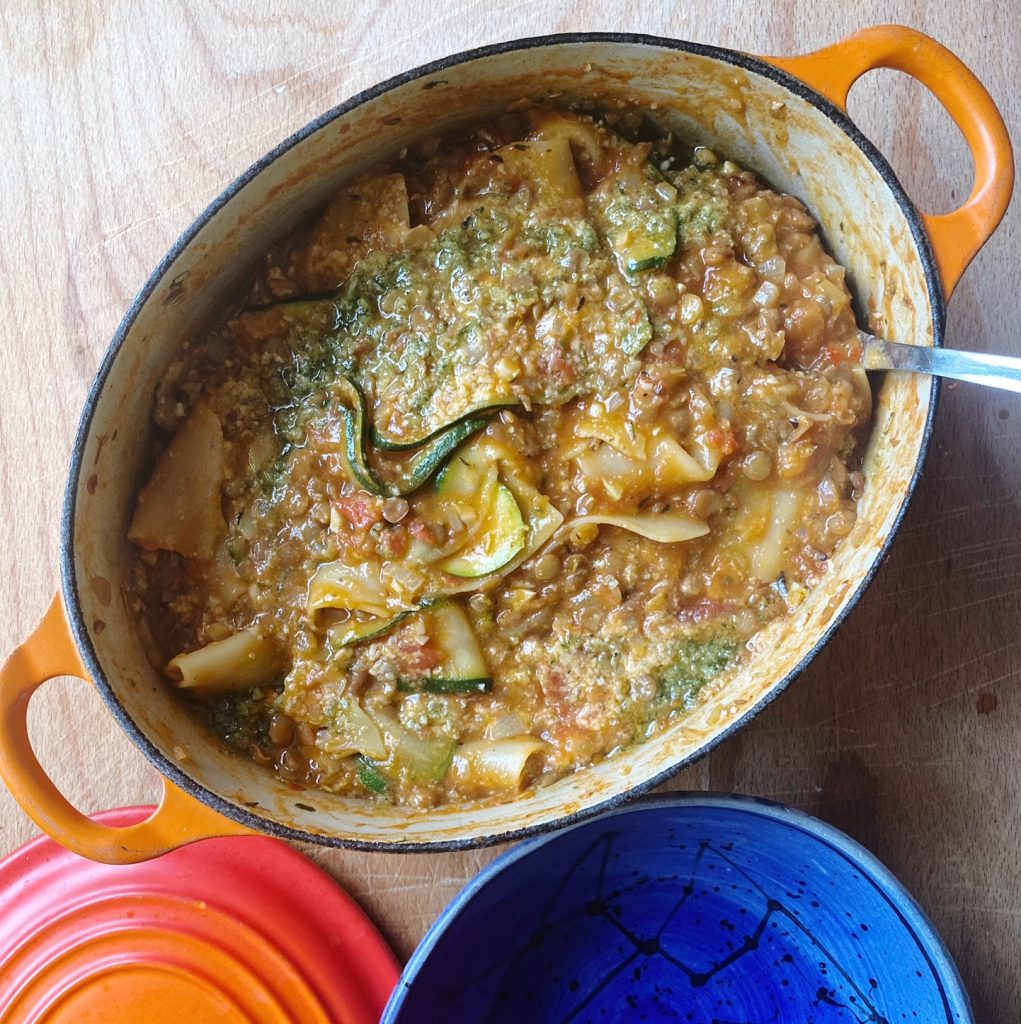
Craving lasagne but can’t be bothered with the faff? Make this speedy version all in one pan. It’s honestly so so delicious, and really hits the spot. We switch mince for nutritious, affordable, planet-friendly lentils and if we have a courgette in the fridge, it goes in in long thin slices to play along with the pasta sheets. We kinda like how organic and messy these bowls turn out. Want more creamy, béchamel-type sauce? Add swirls of cream cheese or creme fraiche just before serving.
Liz x
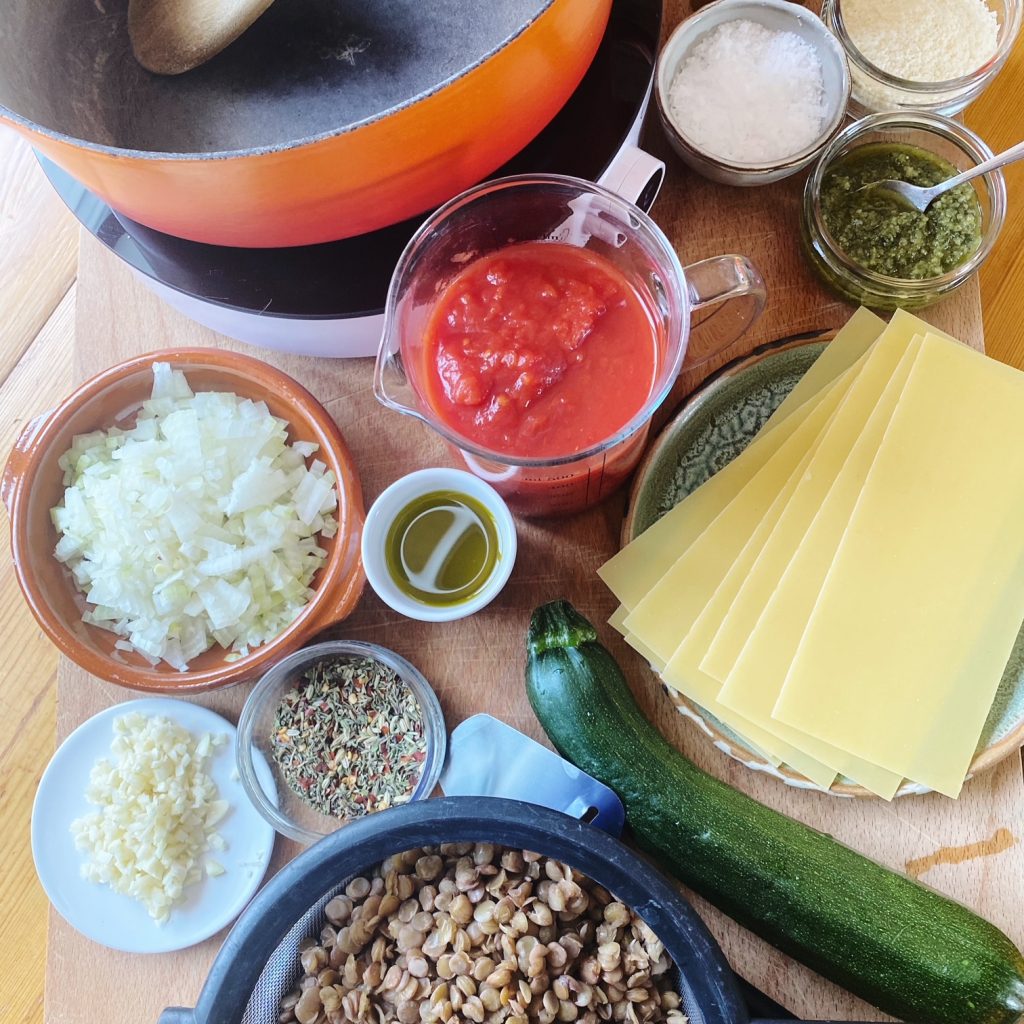
Ingredients (serves 4)
3 tbsp olive oil
1 diced onion
4 cloves of garlic, chopped
2 tbsp Italian seasoning (or a mix of herbs you like)
1 tin chopped tomatoes
1 tin lentils, drained
8 lasagne sheets, snapped
1 courgette, thinly sliced
salt & pepper to taste
cheese & pesto to serve
Method
In a sturdy pan, sauté the onion with the olive oil and a pinch of salt for 5-8 minutes or until it starts to soften.
Add the Italian seasoning, garlic and a generous grind of black pepper. Cook for another minute or two until very fragrant.
Pour in the tomatoes and lentils along with a tin of water. Then break in the lasagne sheets and stir in the courgette slices. Simmer, stirring regularly, for around 10 minutes. If needed, add a splash more water.
Taste and adjust the seasoning with more salt or pepper as you like, then when the pasta sheets are soft, sprinkle cheese and dollop pesto. Serve in bowls and dig in!
We all like to feel that we belong to something. At the very least we are all members of the human race, we have a nationality, we are from this county or that. There is of course much more to it than that, and on this day of all days, it seems relevant and right to speak about it.
The great Irish green wave can be seen far and wide on St Patrick’s day, a day when we celebrate being Irish and there are many things to celebrate, and food is certainly one of them.
Ireland is a nation of food producers; you would be forgiven then for asking the question why is it we import more than 70% of our vegetables. There are some pragmatic reasons for this. Next week we will come to the end of our Irish carrots, and we must import to fill the gap, the season is over. Seasonality is a major factor in supply. But when in season there should be no reason not to source Irish vegetables.
The Irish organic vegetable sector is a small niche within the overall Irish vegetable sector, which in itself is small. But there is something that makes the Irish organic sector special.
In my experience the Irish organic vegetable growers that I know are doing what they are doing because they believe in a better food system. They have no interest in putting chemicals on our food, they are interested and actively looking to improve conditions that help biodiversity thrive. They plant trees, they manage and look after their soil, they are interested in protecting our planet and ensuring that they are doing what they can to mitigate climate change and finally they all want to produce healthy happy food. This I think is a shared and common belief.
Because when it comes down to it, why on earth would anybody start growing vegetables on a small scale in Ireland? Why, when it is impossible to compete with supermarket prices, when it is hard work for little return, there must be a bigger guiding principle.
These growers are opting to take the path less travelled because they believe it is the right thing to do.
The same could be said for you, you may be sitting at home or in your car or wherever you are reading this, you too are choosing a different path. We know it is more convenient to pick up your produce in the supermarket, we know you take the time and make the effort to read our little posts and order from us, some weeks, every week or once in a while. This makes you part of a community of people that are taking action and making positive changes for our planet, because you value biodiversity and you value eating healthy food.
Earlier this year we planned out our farm, and I wrote about how we have cut back on growing certain crops. We have passed on the responsibility for producing these crops to others organic growers here in Ireland, we know too that they share our values. At the time this was a difficult decision but now as I look at this in a new light I realise that in essence we are stronger together and that hopefully this small step will lead to a better stronger more resilient Irish organic vegetable sector.
So for the day that is in it, I would like to raise a glass to you for your continued and appreciated support, and to all the other Irish organic vegetables farmers out there, grappling with exactly the same challenges as us, we are all in it together!
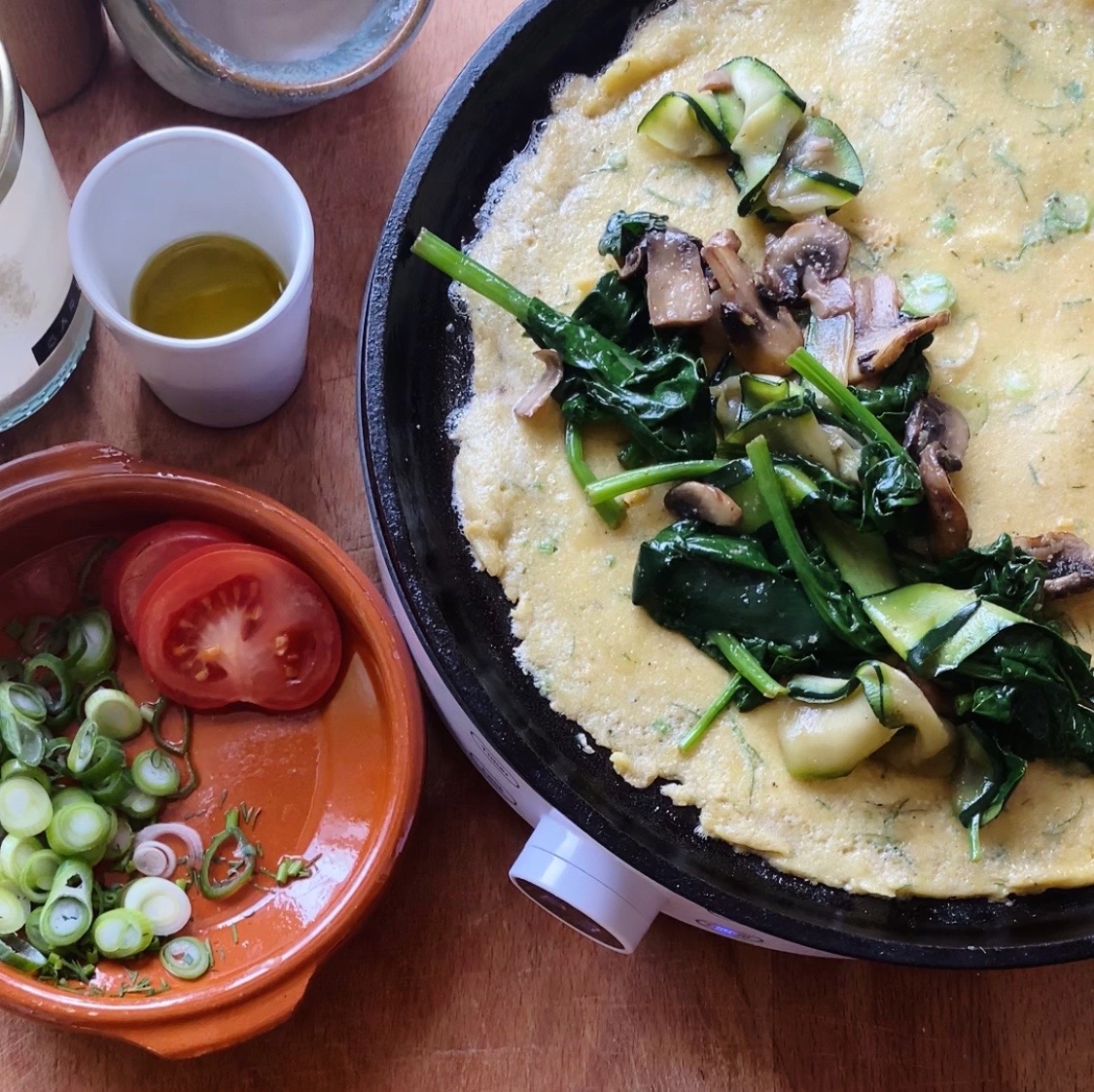
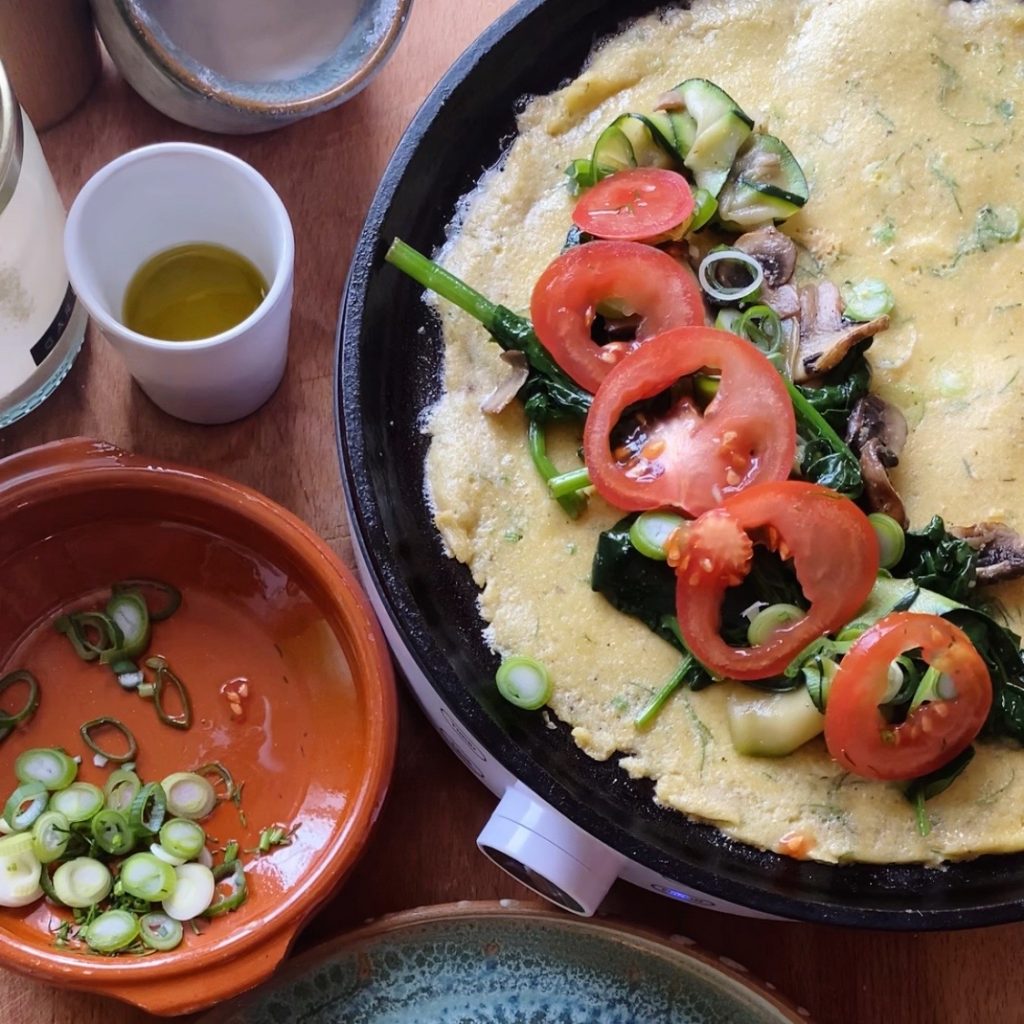
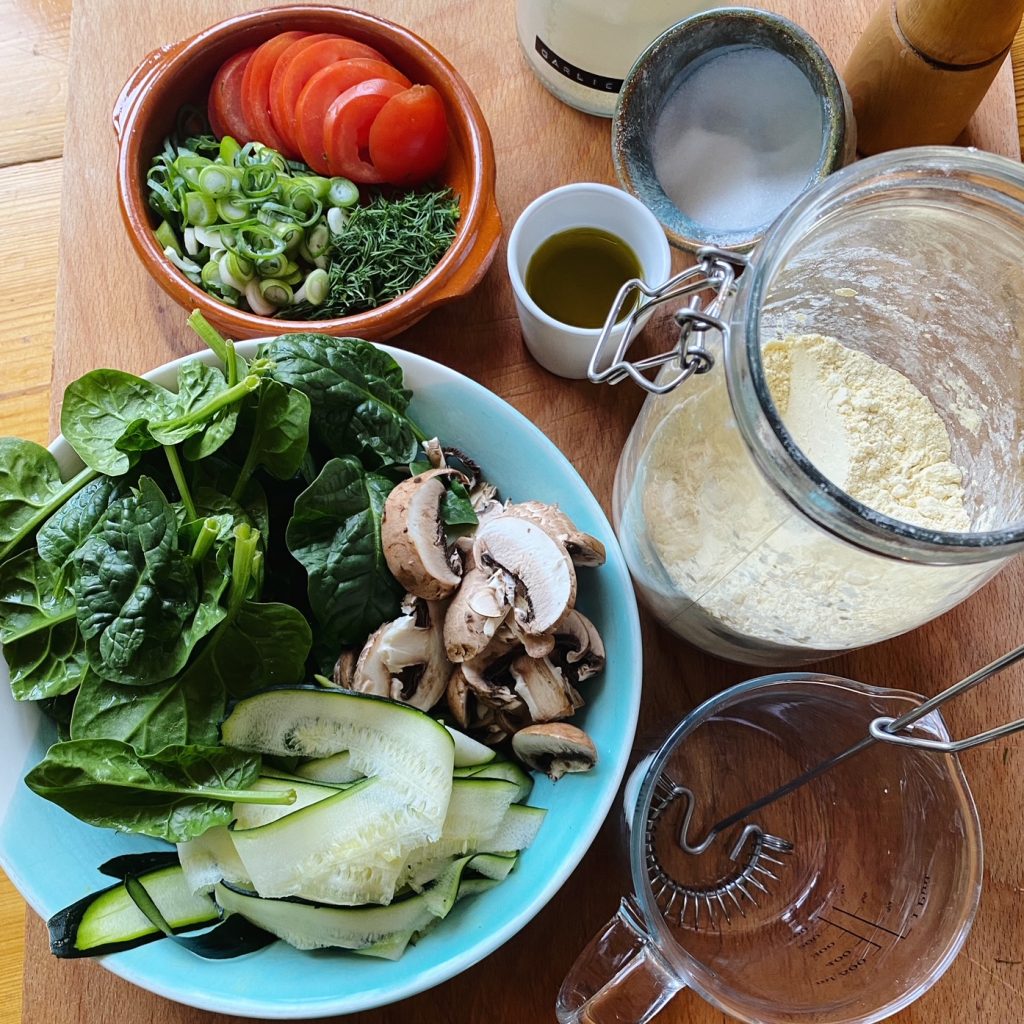
A simple mixture of chickpea flour, water and seasoning makes a really delicious batter that can be used to make egg free omelettes. Have you tried it yet? Delicious and so nutritious! Chickpea flour is high in protein, fibre and lots of vitamins and minerals. Stuff it with sautéed veggies and fresh herbs and you’ll be in brunch-heaven. Really you can make this recipe by eye and stuff it with whatever veg you like, but as a guide, here’s what I did to make two.
Liz x
Ingredients (makes 2)
70g chickpea flour
100ml water
2 tbsp olive oil
a handful of chopped dill
1 chopped scallion
salt and pepper to taste
6 chestnut mushrooms, sliced
1/2 tsp garlic powder
1/2 a courgette, sliced into ribbons with a peeler
2 large handfuls of spinach
1 tomato, sliced
2 tsp butter for cooking the omelette
Method
Start by whisking the chickpea flour with the water into a smooth batter. Season with a pinch of salt, a grind of pepper and a handful of chopped herbs and half the chopped scallion. Stir in 1 tbsp of good olive oil to enrich the batter. Set to one side while you prepare the filling.
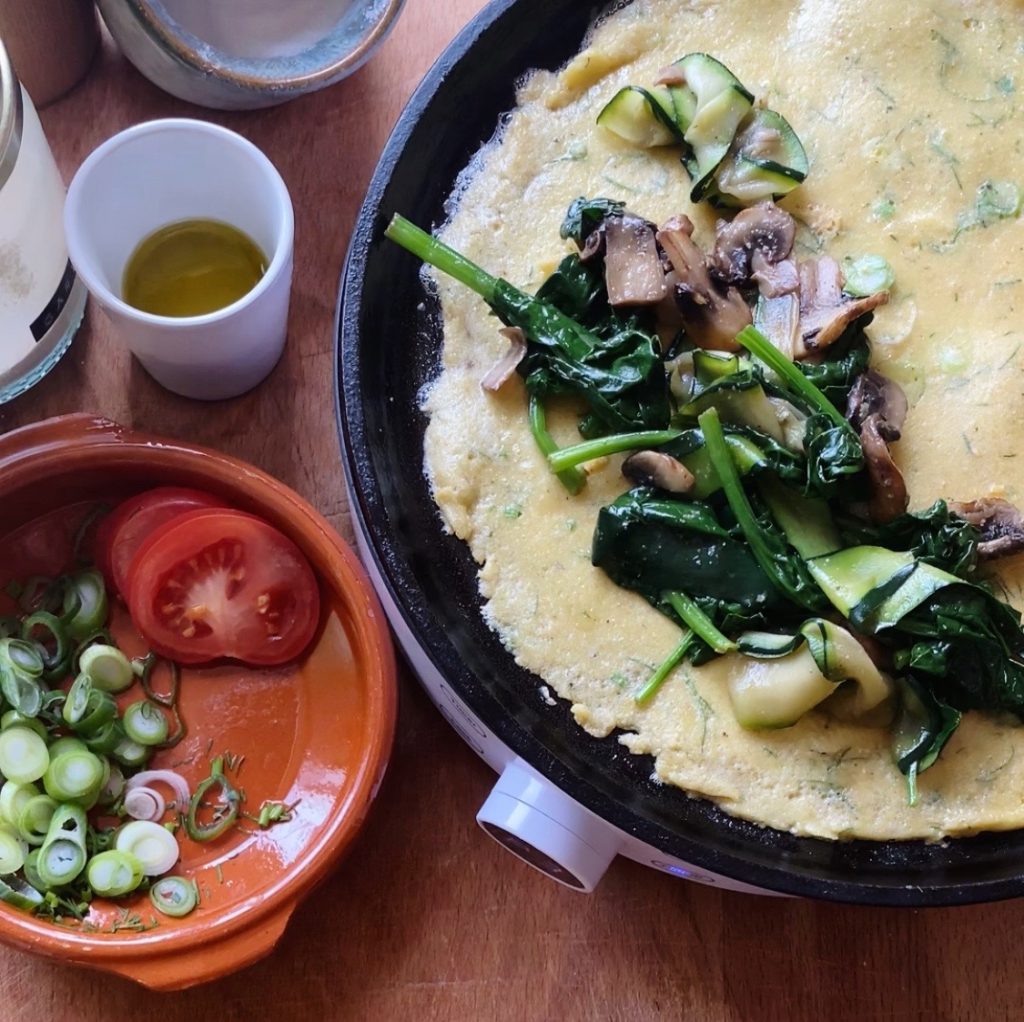
In a non-stick pancake pan, sauté the mushrooms with the other tbsp of oil and a pinch of salt and pepper. Add the garlic powder to the pan once the mushrooms start to sweat. Add the courgette strips and spinach and stir fry for a couple of minutes until the spinach has wilted. Move the filling off the pan into a bowl and put the pan back over a medium heat.
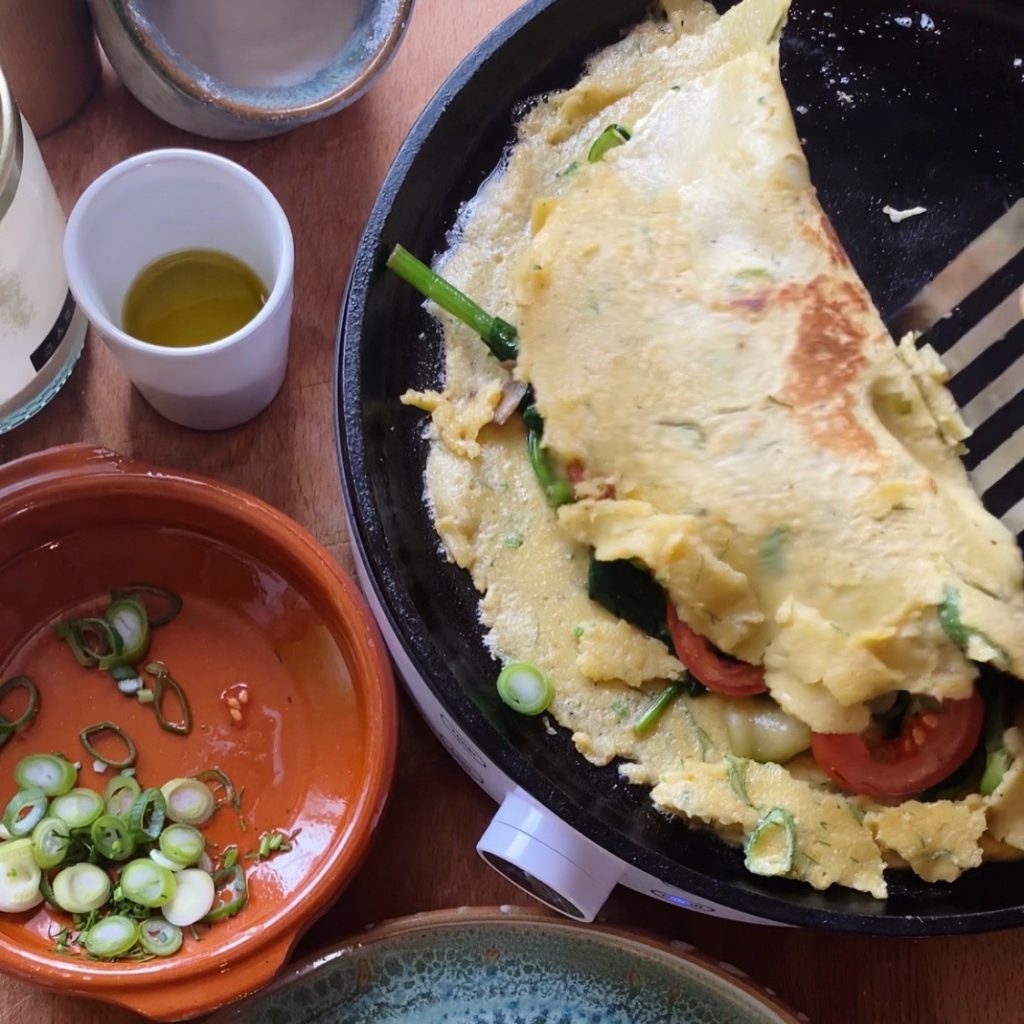
Now melt a tsp of butter in the pan and pour in half the batter. Swirl and cook the omelette slowly until it is set. Then put half the filling on half the omelette and arrange half the tomato slices on top. Fold the omelette and serve with a sprinkle of scallions.
Repeat with the other half of the batter and fillings and enjoy!
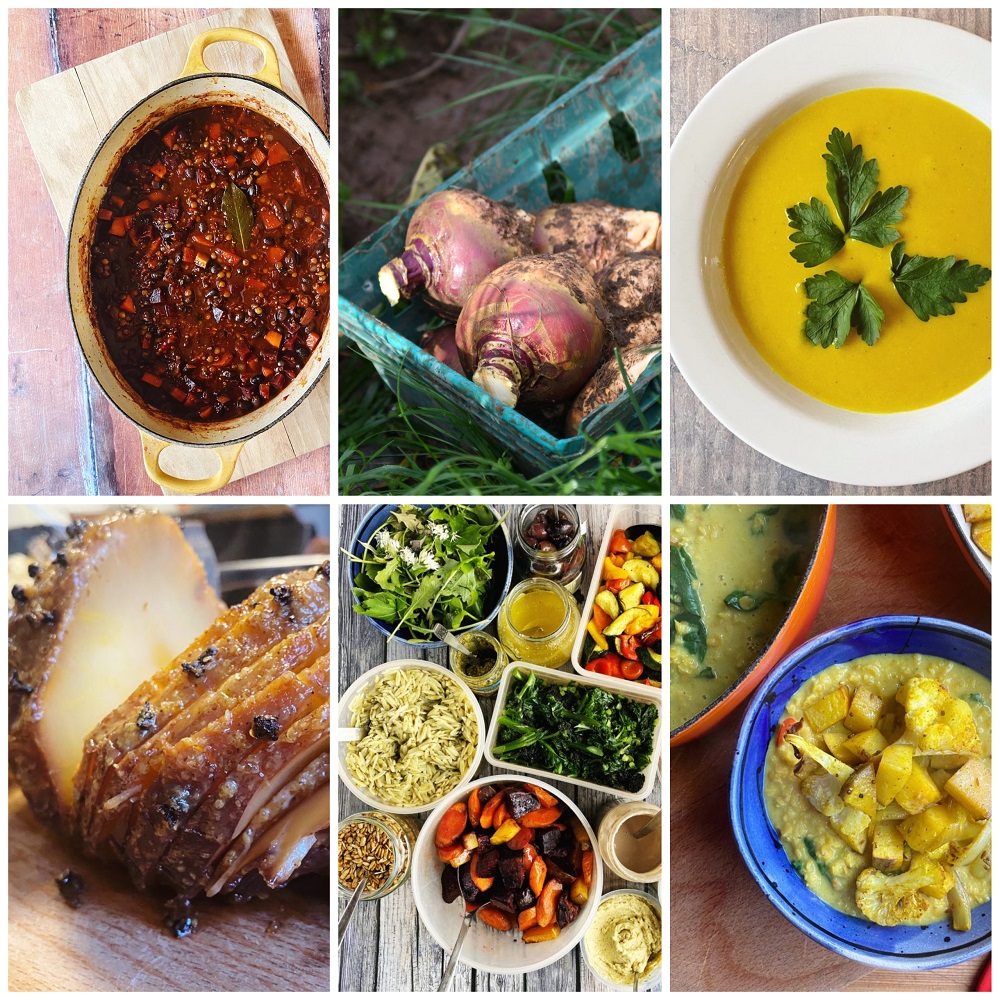
A beautiful winter root vegetable, yet often overlooked – the humble Swede! Swedes are an excellent source of potassium, calcium, magnesium, and vitamins E and C. They also contain a moderate amount of folate, a B vitamin that’s important for metabolism, protein synthesis, and DNA replication. So they’re not just versatile and tasty, but really good for you! We grow swede each year right here on our farm, from seed. It’s beautiful to see them grow.
Here’s our Swede recipes – klick on the bold parts to get directly to the recipe page.
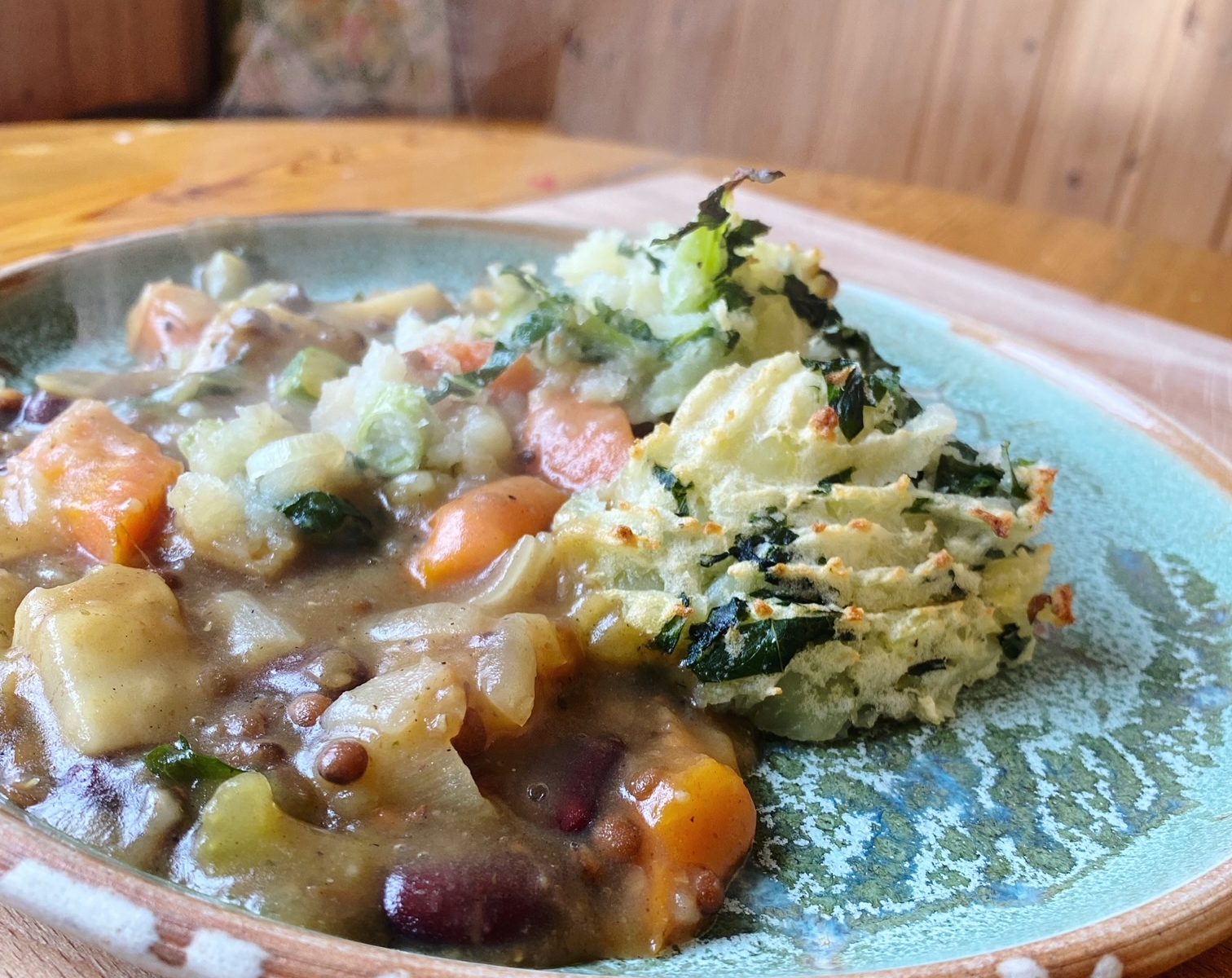
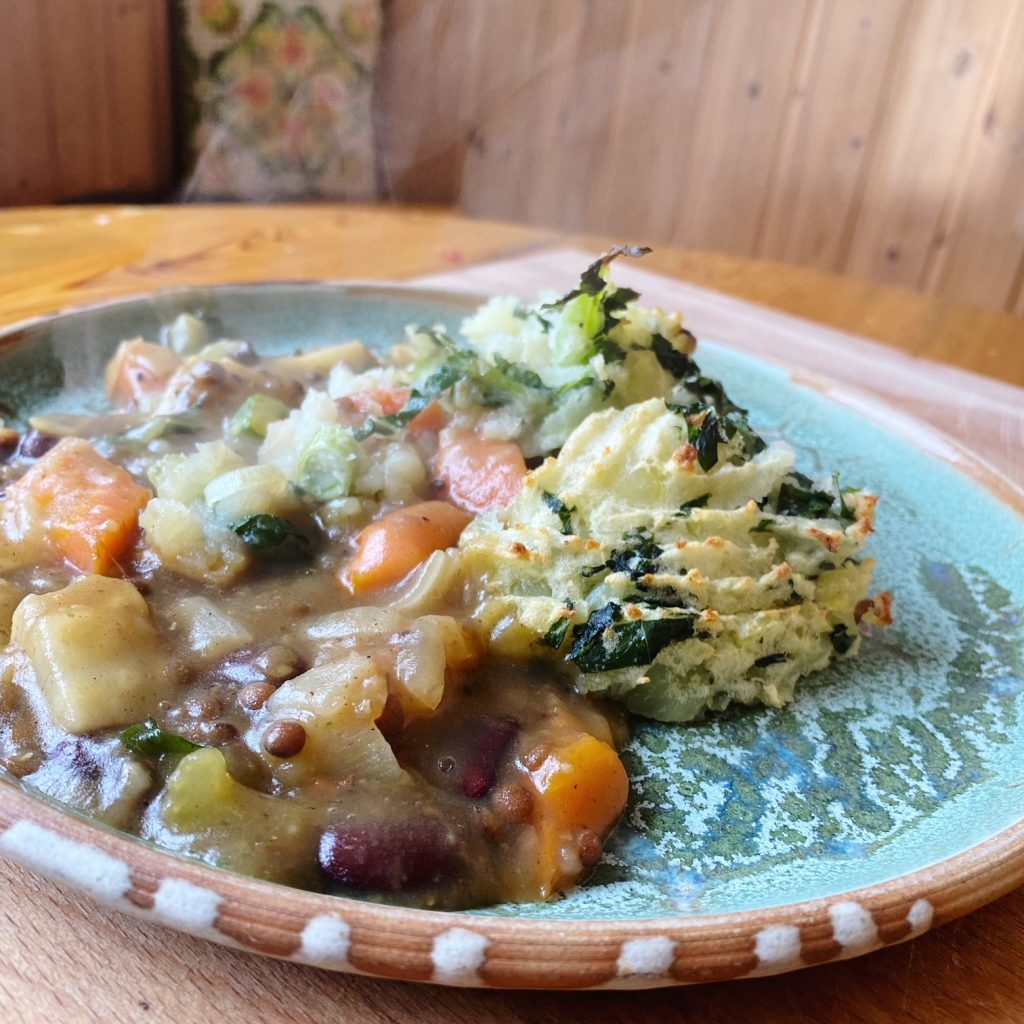
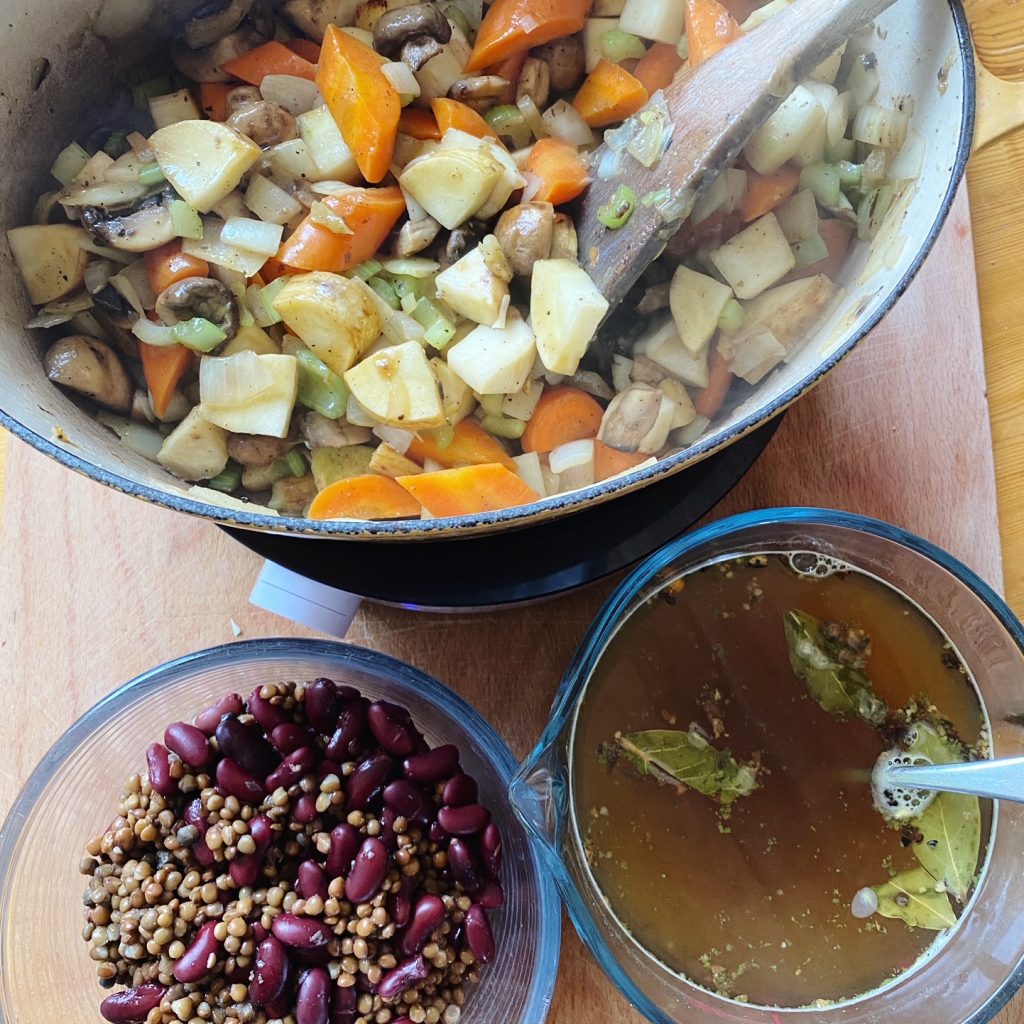
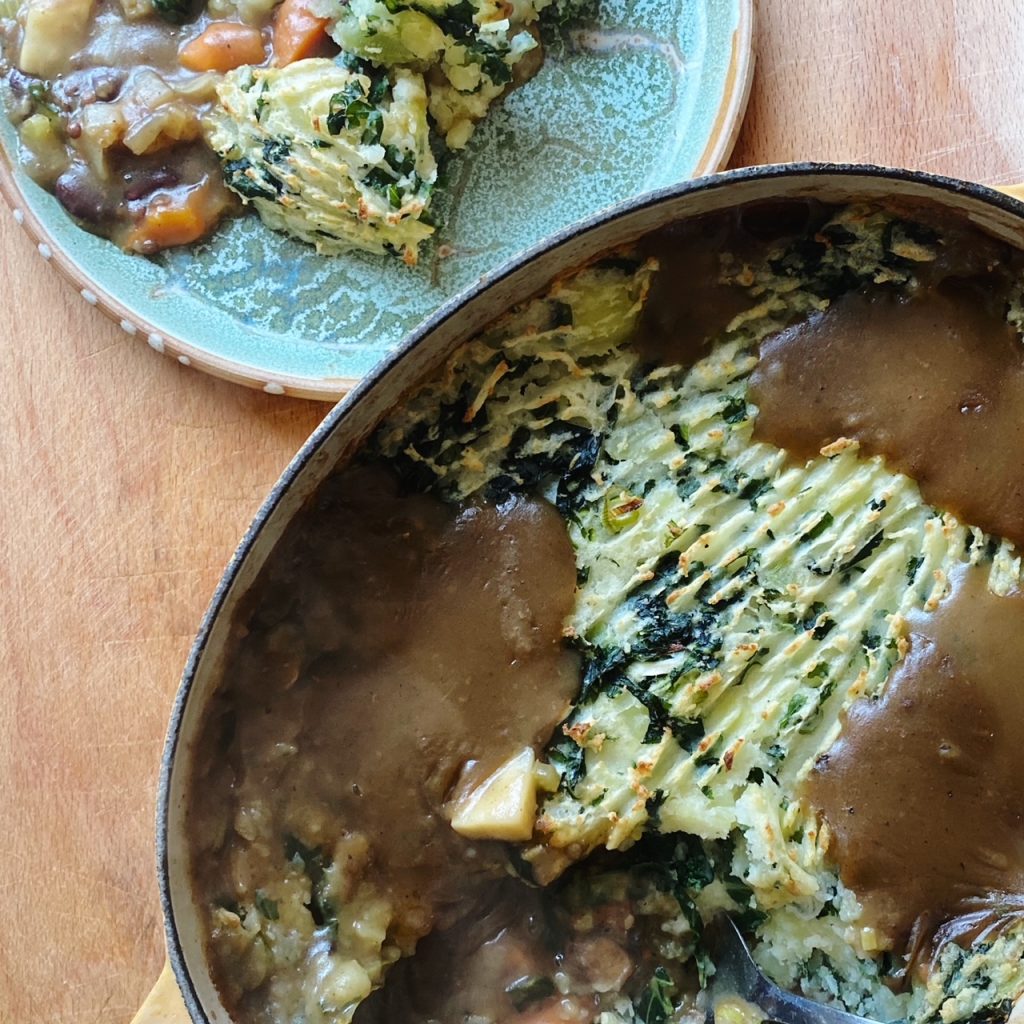
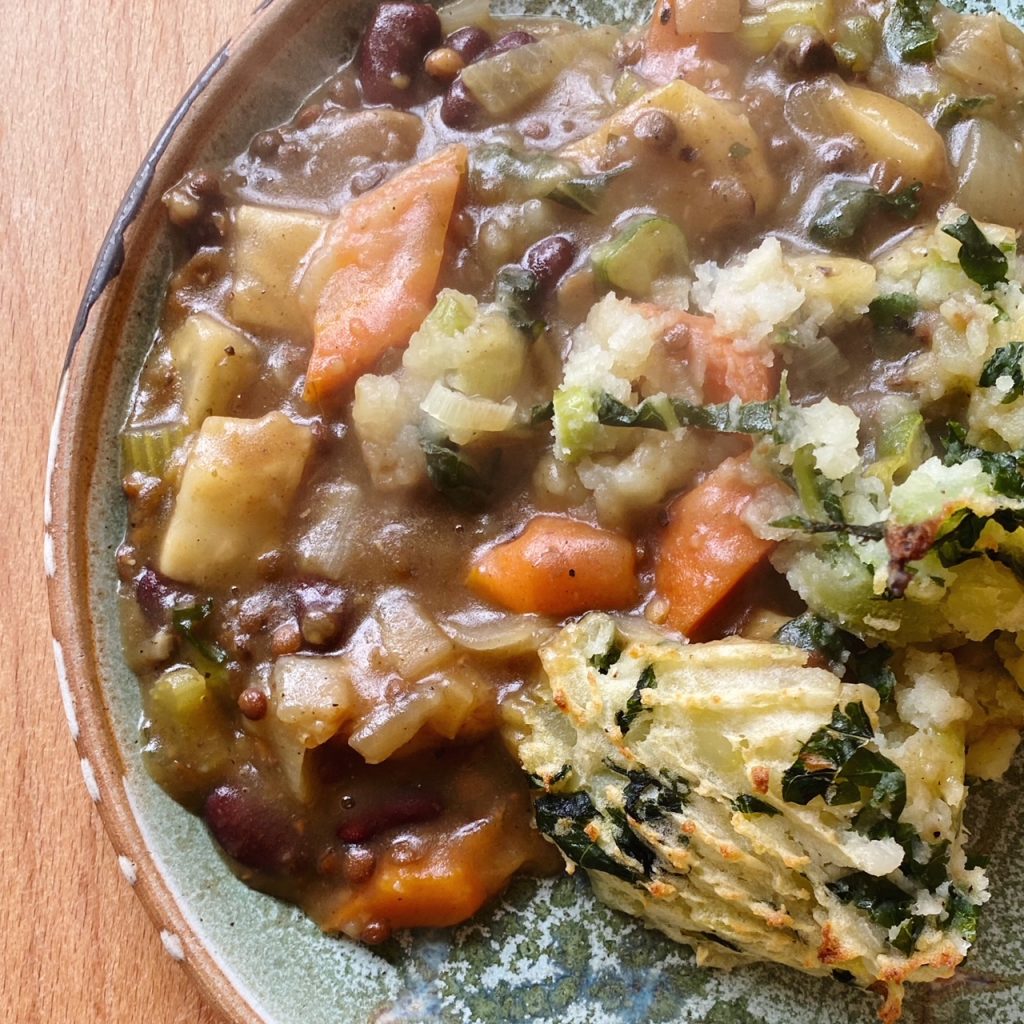
This is ultimate comfort food, and the perfect dish for a family feast. Our veggie version of the classic Irish stew is hearty with beans and lentils. Chunks of sweet root veg and meaty mushrooms simmer in a broth of bouillon, dried mushrooms and bay leaves. We’ve taken the potatoes out of the stew and put them on top in the form of colcannon. This pie is so so delicious, packed with healthy veg and heaps of flavour, you’ll be coming back to this again and again and again.
Liz x
Ingredients (serves 6)
For the stew:
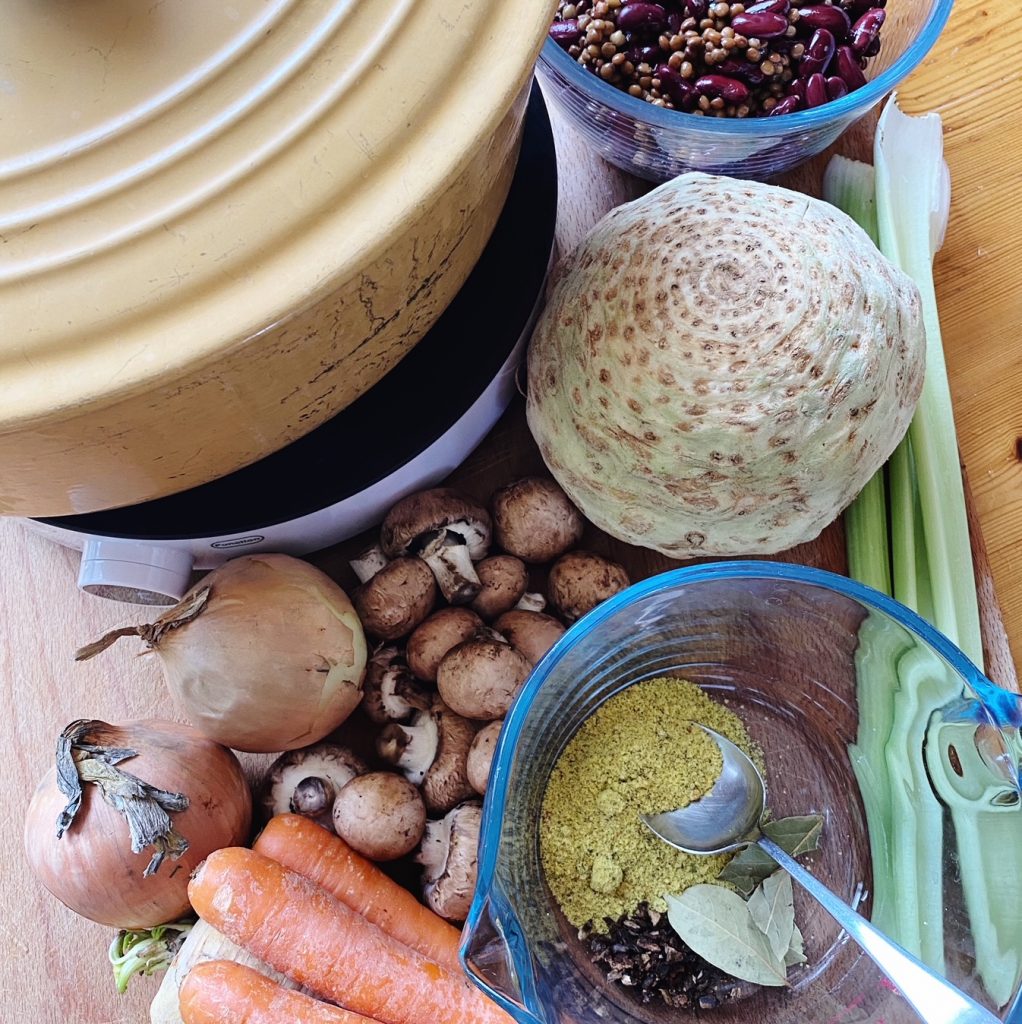
2 tbsp vegetable bouillon powder
1 tsp dried mushrooms
3 bay leaves
1 liter just-boiled water
a little oil or butter for sautéing
2 onions, roughly diced
3 carrots, cut into chunks
3 celery sticks, sliced
a couple of parsnips or a 1/4 of a celeriac, cut into bite sized chunks
200g chestnut mushrooms, halved
salt & pepper to taste
1 tin cooked lentils, drained
1 tin cooked beans, drained
3 tbsp cornstarch, mixed with enough cold water to make a slurry
For the colcannon:
10 or so potatoes, boiled
150g kale, thinly sliced
3 scallions, thinly sliced
butter, salt & pepper to taste
Method
Gather and prepare the vegetables, get the potatoes into salted water to boil and turn the oven on to 200C to warm up. Pop the kettle on.
Pour a liter of boiling water into a jug with the bouillon powder, dried mushrooms and bay leaves. Stir well, this is your broth.
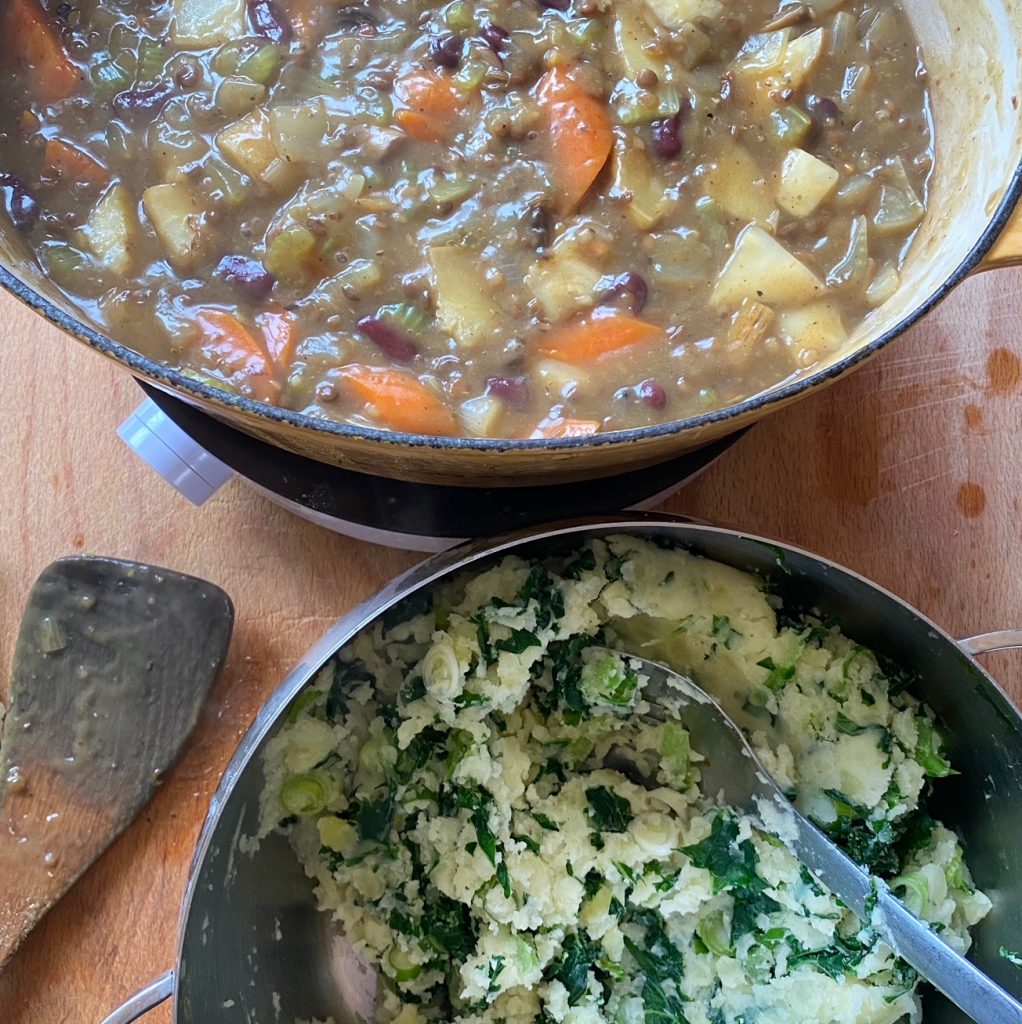
Then, in an oven and hob safe pot, sauté the chopped onion, carrot, celery, mushrooms and parsnips/celeriac with the oil and a little salt and pepper. Stir over a medium-high heat for around 7 minutes or until the vegetables take on some colour and start to soften and reduce. Now add the broth, beans and lentils to the pot and simmer the stew for around 10 minutes.
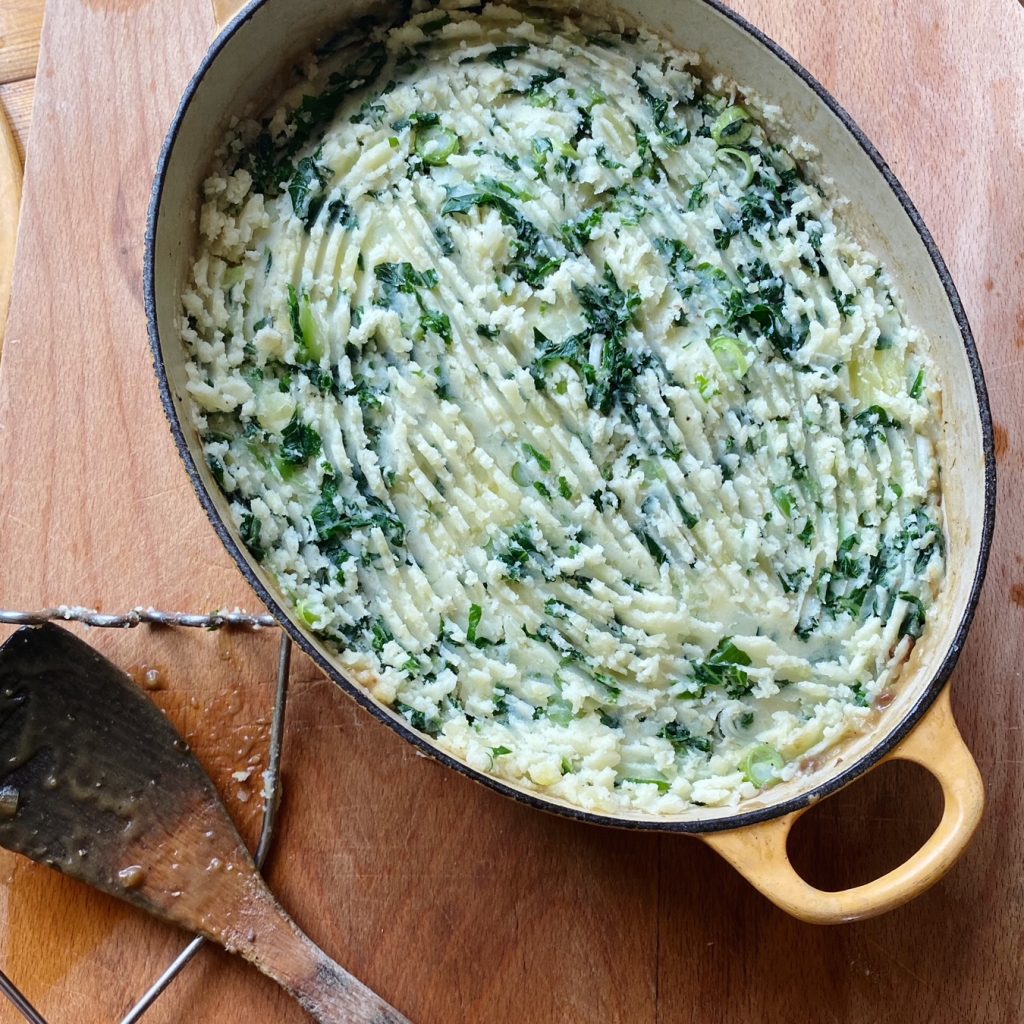
Meanwhile make the colcannon. Once the potatoes are boiled, tip the sliced kale into the pot and let it boil for just a minute. Drain and mash the potatoes and kale together with plenty of butter. Stir in the scallions and season to taste with salt and pepper.
The stew should be ready, now it will just need thickening. Pour the cornstarch slurry into the stew and stir over the heat until the stew has thickened up. Then top with the colcannon and run a fork over the top to even it out and rough it up.
Bake it a hot oven until the top has browned and crisped up a little and the stew is bubbling. This should take around 15-20 minutes if you get it in the oven whilst still hot. Enjoy!