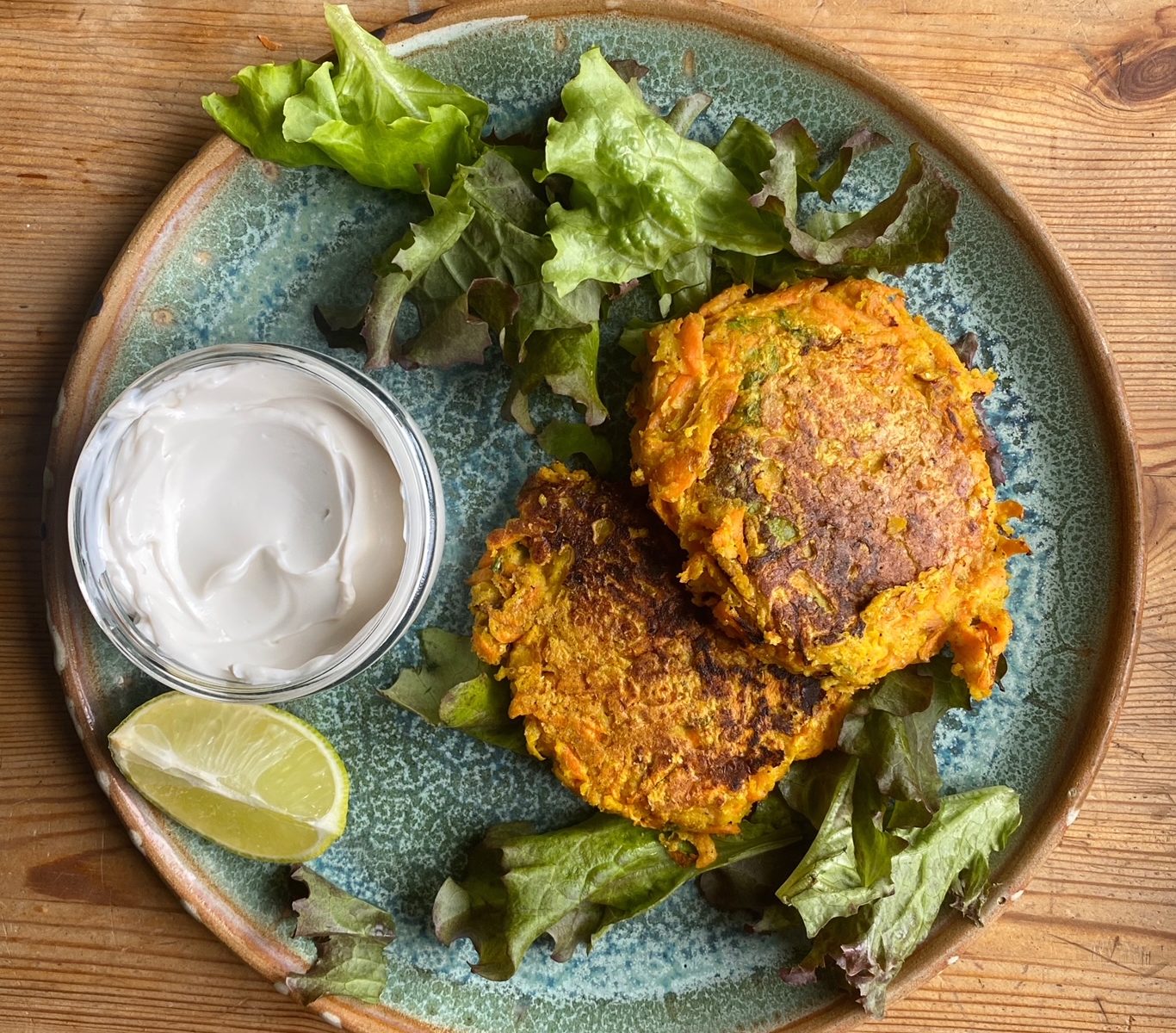
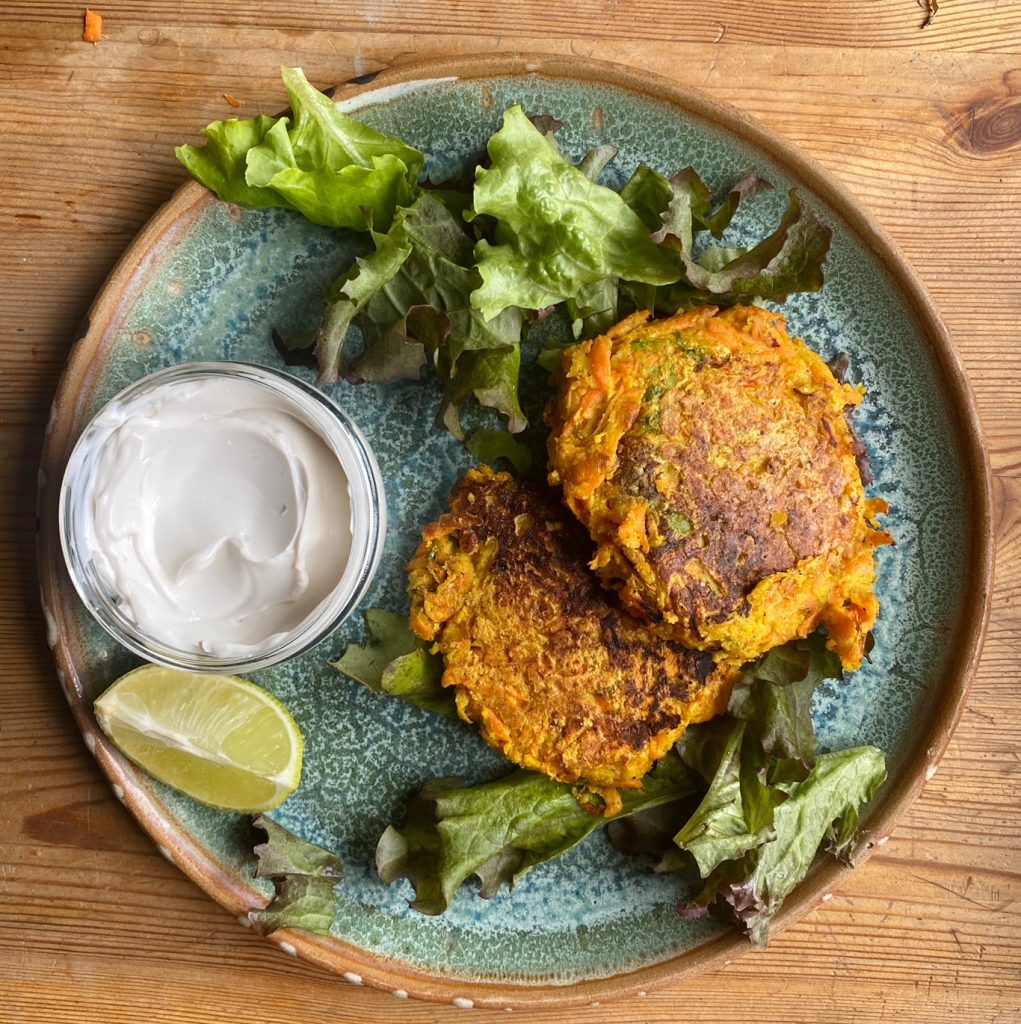
Carrot & Coriander Fritters

Chickpea flour (aka gram flour) is such a useful store-cupboard ingredient. Have you tried it yet? In Indian cuisine it is used to make savoury pancakes called dosas and to the make the batter for deep fried onion bhajis. At home we love to use it to make nutritious, delicious, protein-rich fritters all year round. Fritters are a great lunch option with a simple salad and a dip, or you can use them as sandwich fillers or burger alternatives. You can really make them your own with different vegetables and herbs/spices. Here’s one of our favourites, carrot and coriander.

Liz x
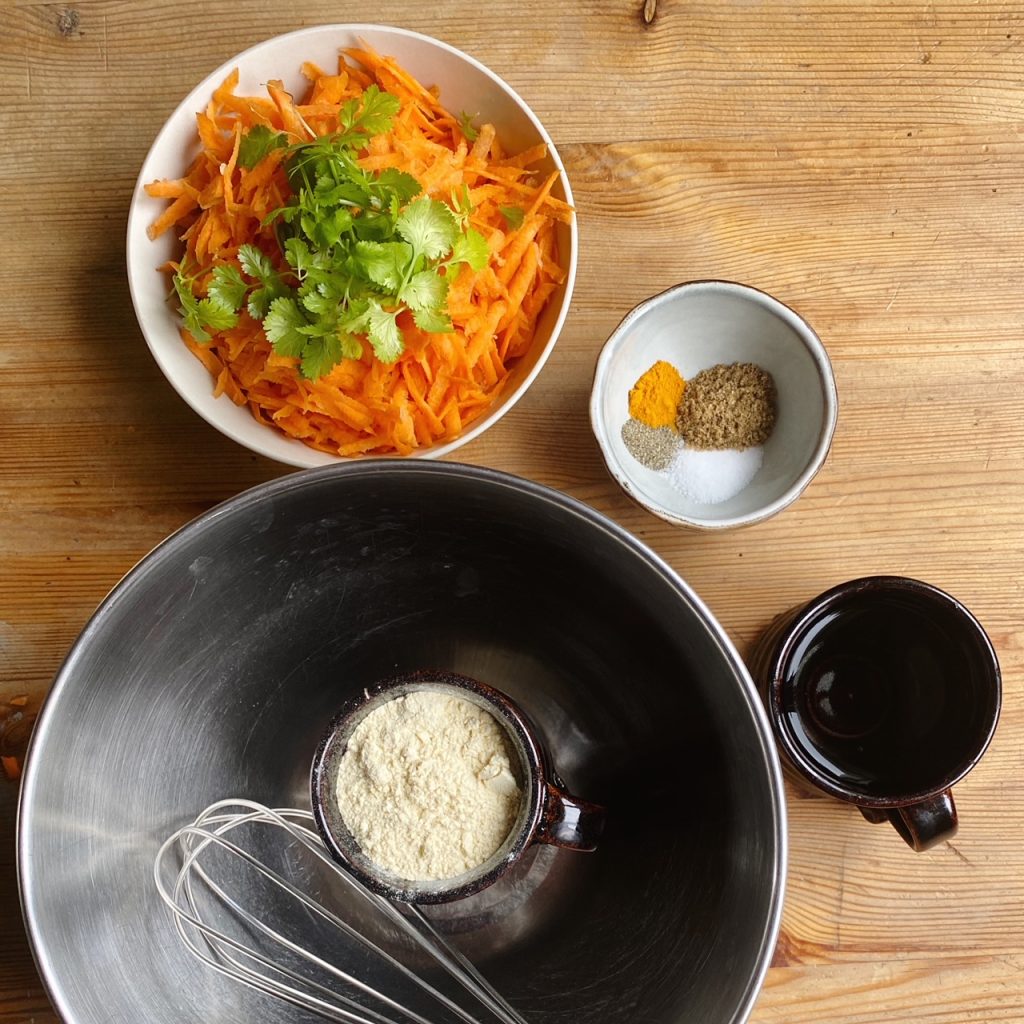
Ingredients (serves 2)

  • 1 espresso mug of chickpea flour (around 8 tbsp)
  • 1 espresso mug of water
  • 1/2 tsp salt
  • 1/2 tsp pepper
  • 1/4 tsp turmeric
  • 1 tsp ground coriander
  • 2 grated carrots
  • a handful of fresh coriander
  • around 2 tbsp vegetable oil for frying
  • natural yogurt, lime wedges and salad leaves to serve
Method

  1. Start with the batter. In a mixing bowl, whisk together the chickpea flour, seasoning and water into a smooth batter.
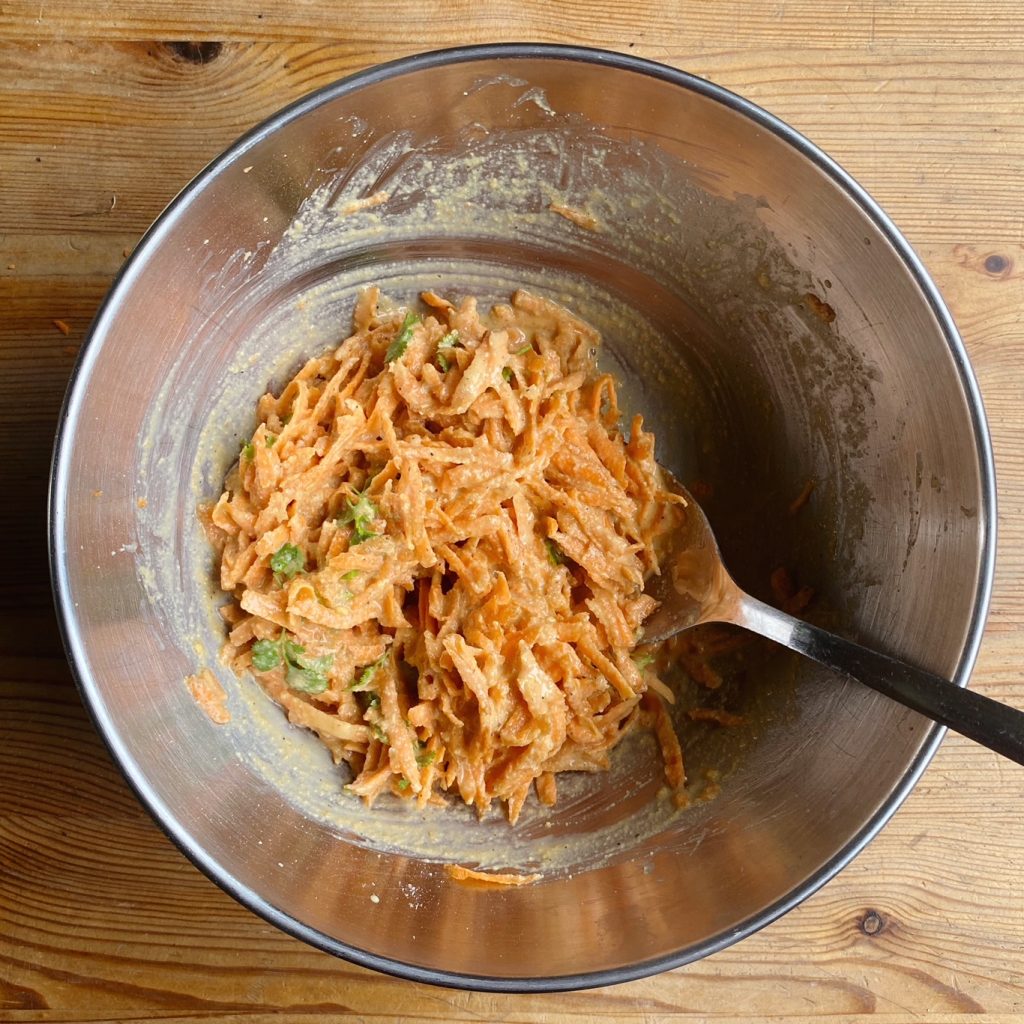
  2. Grate the carrots and add them to the batter along with the coriander leaves. Stir well to coat the veggies in the batter.
  3. Heat a frying pan to medium with the vegetable oil. Make sure your pan is not too hot, chickpea flour batter can taste a little bitter if it is not cooked through so you want to cook it slowly so it’s not burned on the outside and raw in the middle.
  4. Dollop the batter into the pan in four even scoops. Fry the fritters for 5 minutes or so on each side or until they are golden brown on the outside and firmed up and hot inside.
  5. Then serve with salad, natural yoghurt and a good squeeze of lime.
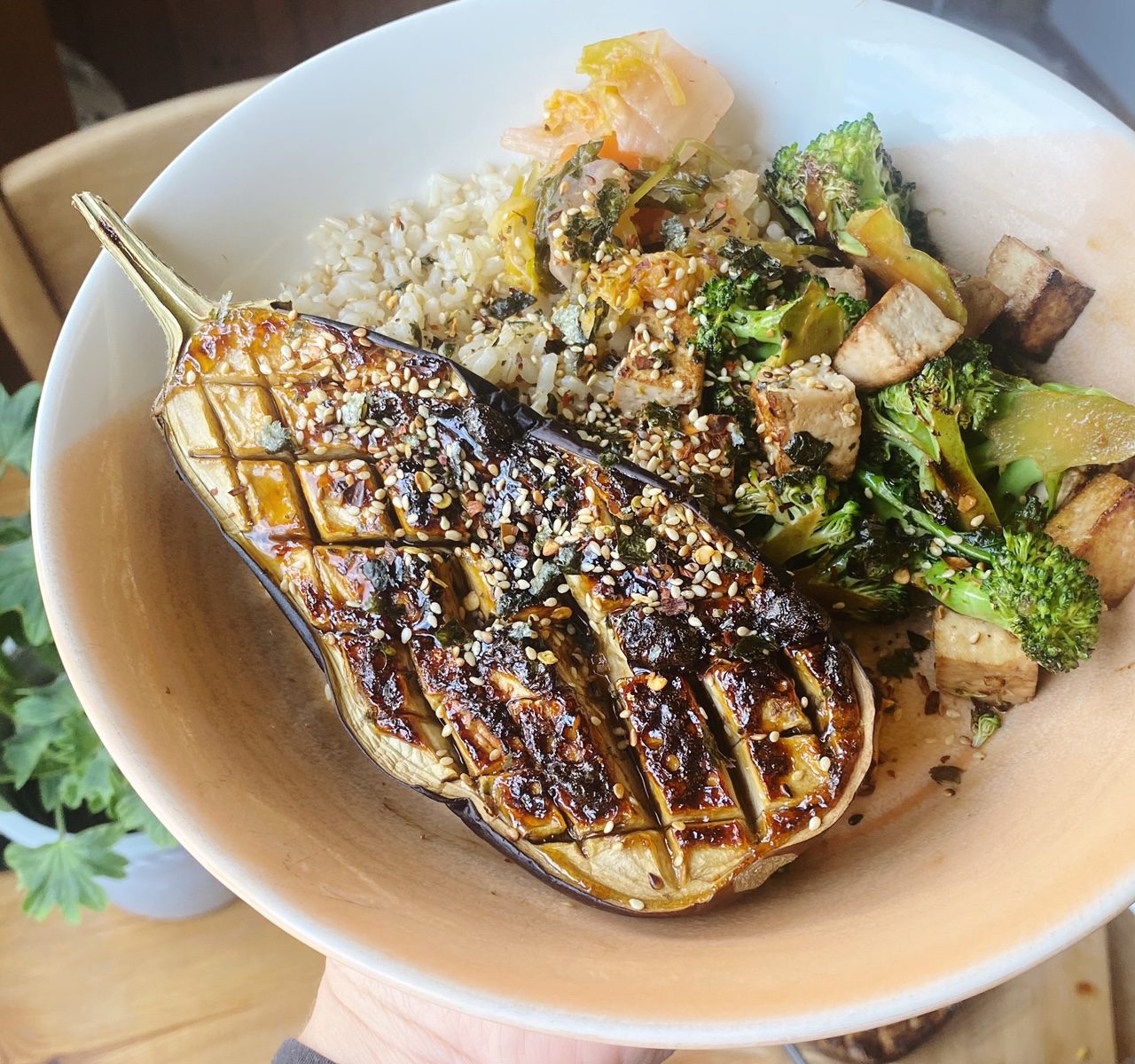
Teriyaki Aubergine Rice bowl

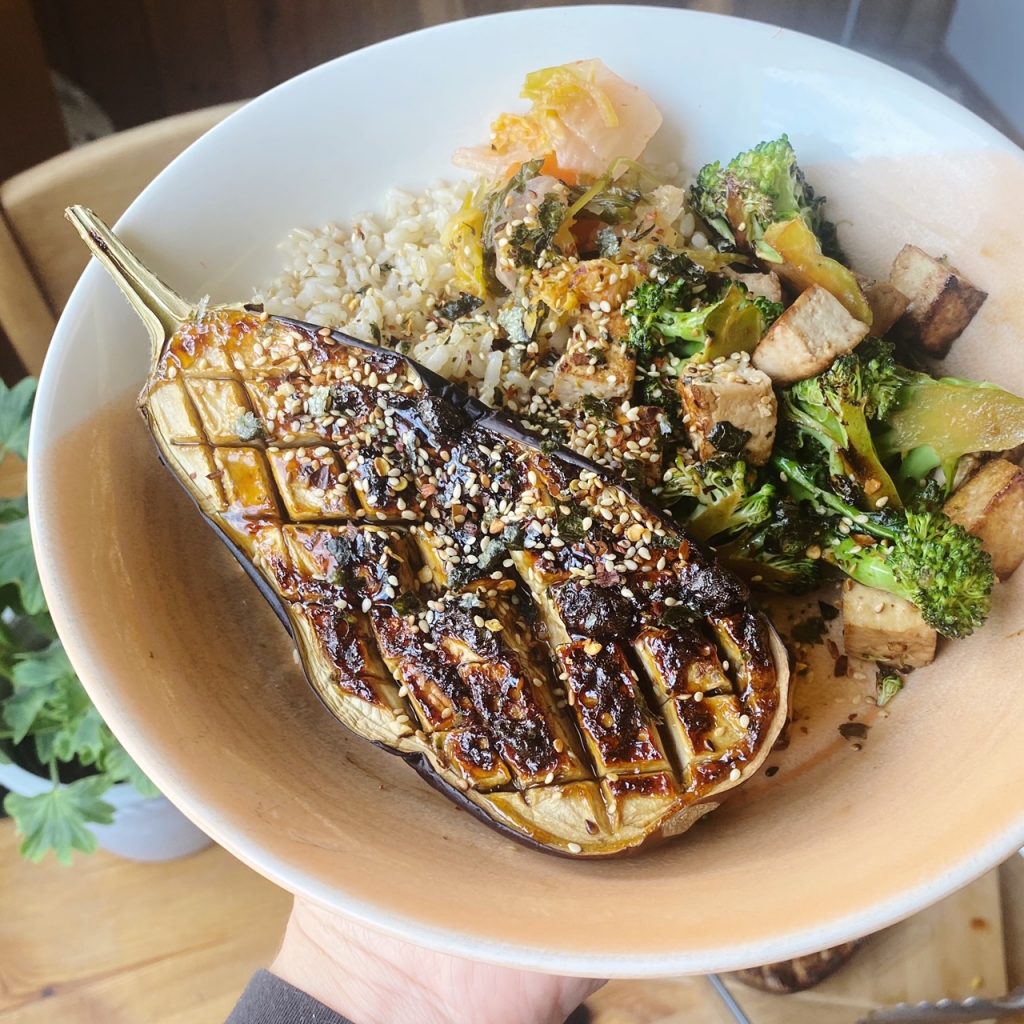
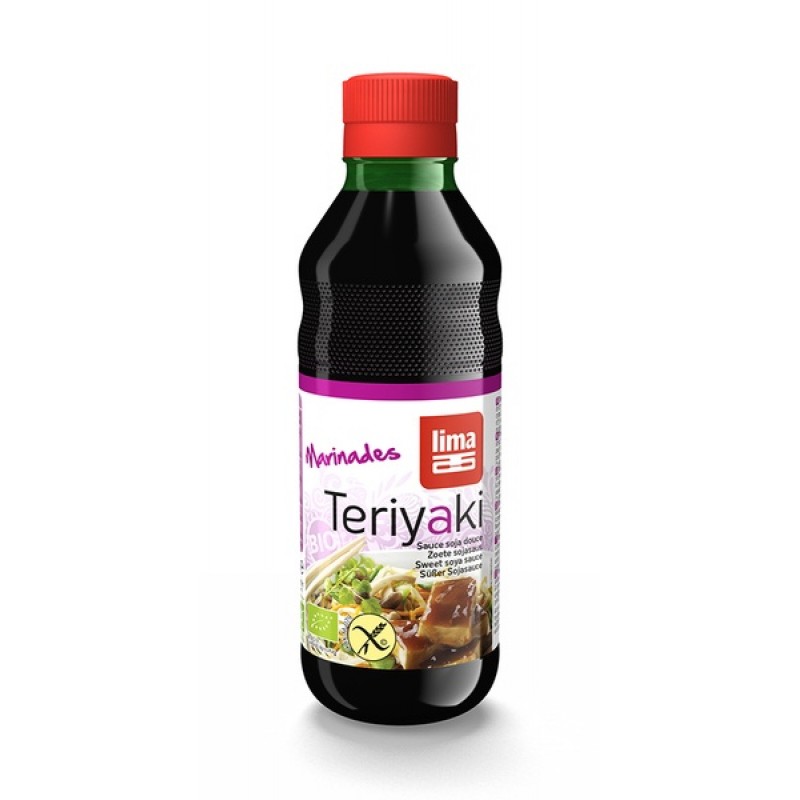
We have some new organic, Asian sauces on our list now to make your meals even easier (and more delicious!) We are currently obsessed with teriyaki. It is sweet and salty and so full of flavour. Use it to marinade veggies or tofu and bake or stir fry. Here’s how I made this delicious week-night supper.

Liz x

Ingredients (serves 2)

Method

  1. Turn your oven to 200C and find a small baking dish.
  2. Get your brown rice on to cook (brown rice takes longer than white so if you are using white rice, start it after the aubergine is in the oven). Rinse the cup of rice through a fine sieve then add it to a small pot. Add 2 small cups of water, put the lid on the pot and turn it onto the highest setting. As soon as it comes to a boil, turn it to the lowest setting and leave the lid on. Let the rice simmer, it should absorb all the water in around 30 minutes or so and be perfectly cooked through. Keep an eye on it.
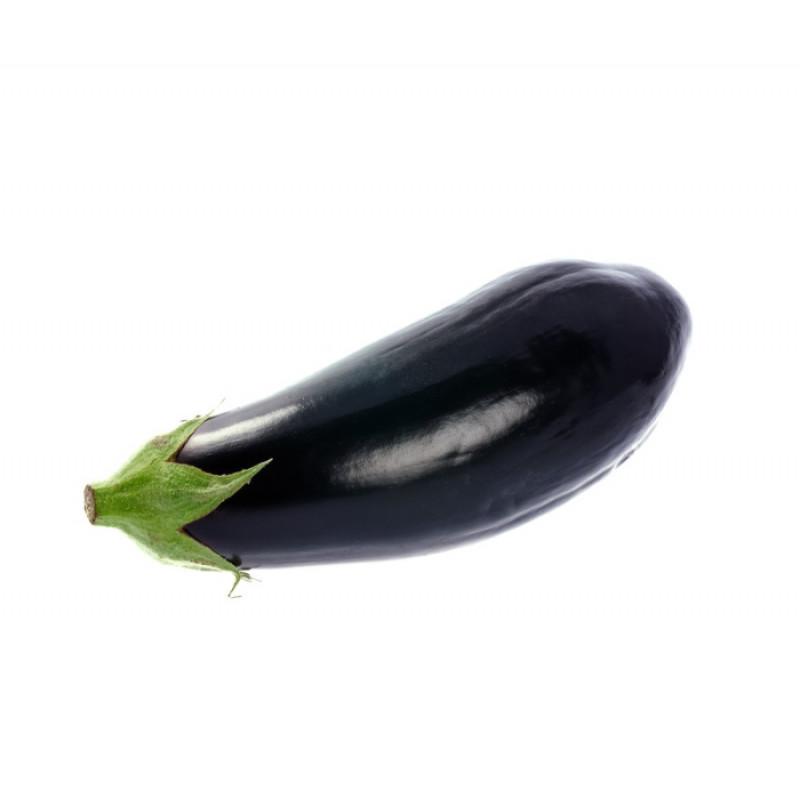
  3. Cut the aubergine in half, lengthways, then score the flat surface deeply with a small, sharp knife. Cut diagonal lines into the white, spongey flesh and then criss-cross the other direction. Careful not to cut too deeply.
  4. Spoon over the teriyaki sauce and, using the back of the spoon, rub it into the cuts to effectively marinade the aubergine. Place the aubergine, cut sides up, into the baking dish then bake until soft – this usually takes around 20-30 minutes depending on the size of your aubergine.
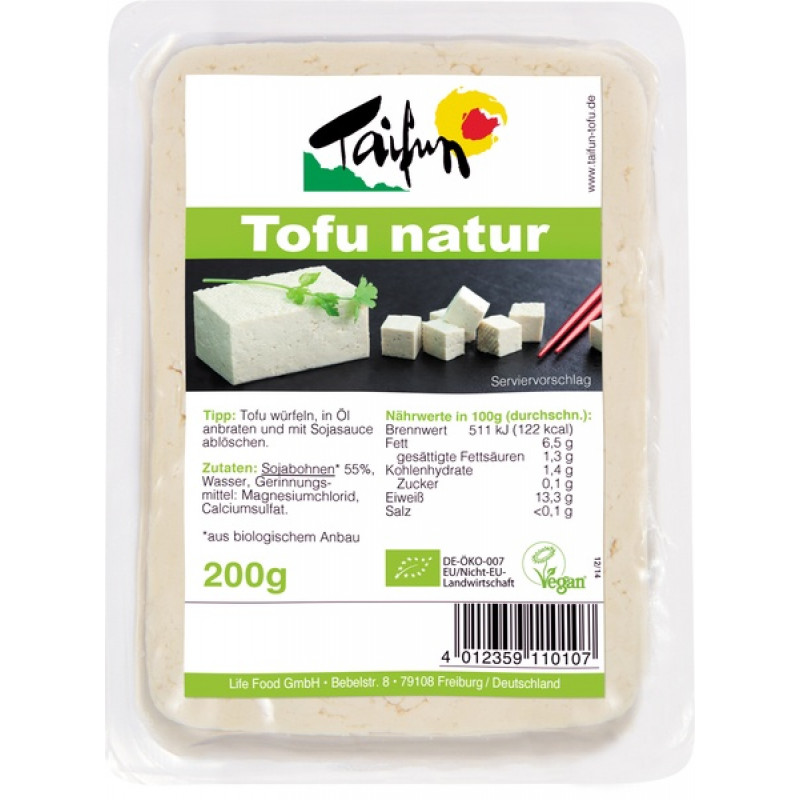
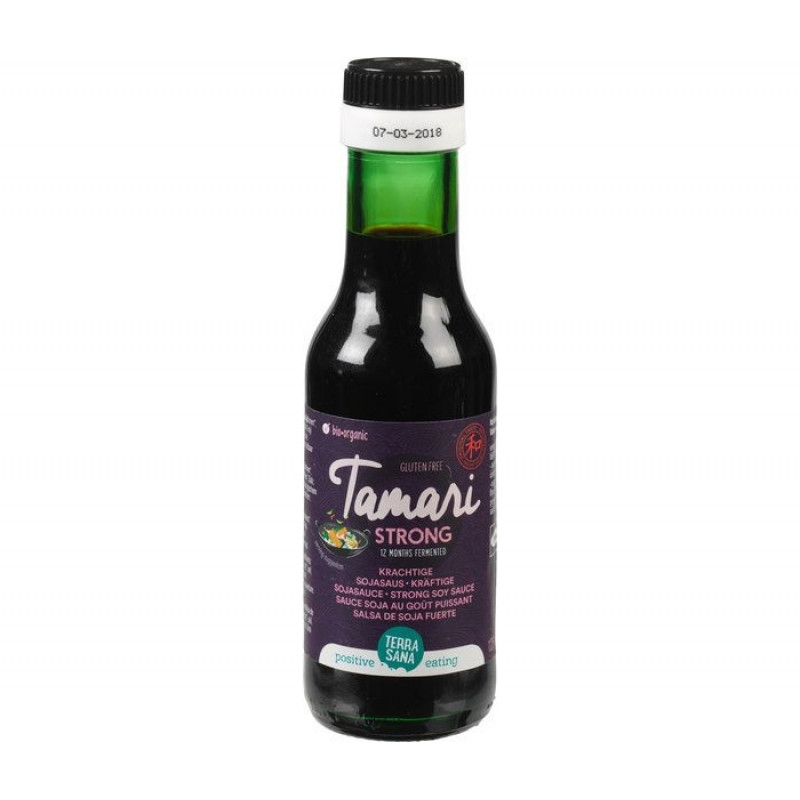
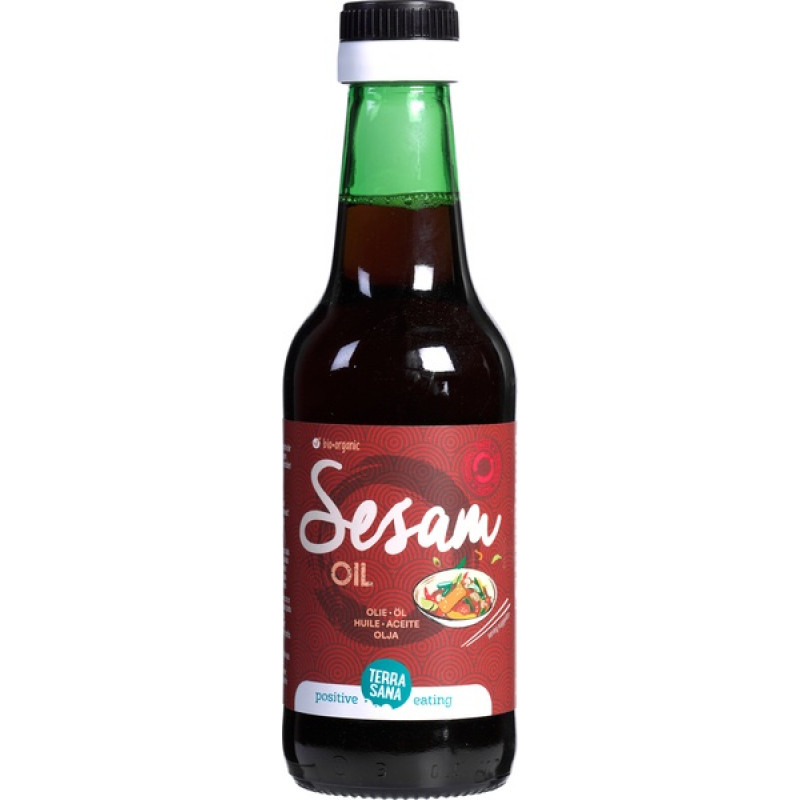
  5. Meanwhile stir-fry the broccoli and tofu together with the sesame oil and soy sauce/tamari.
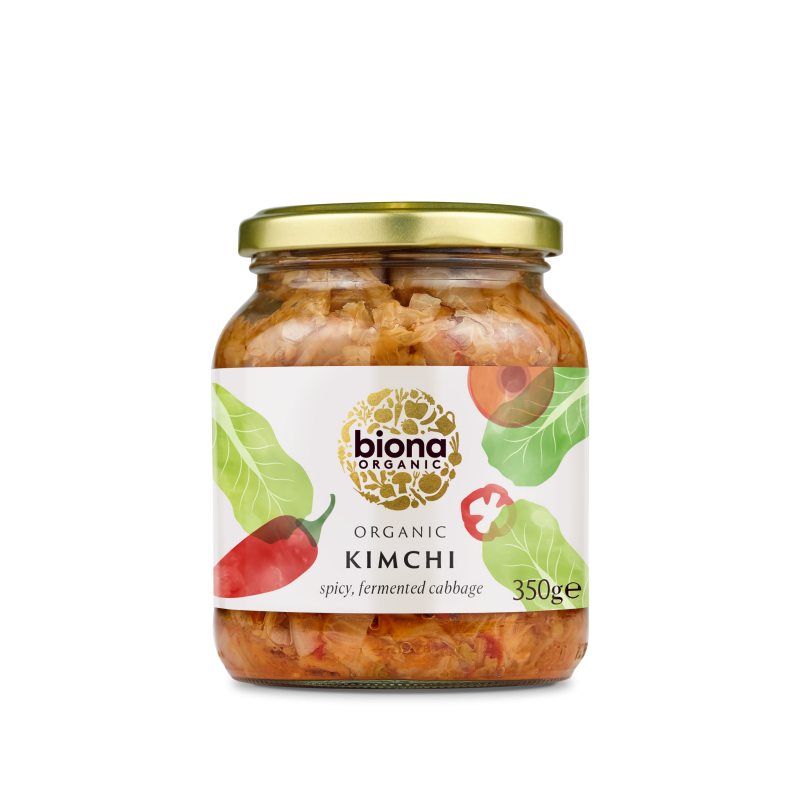
  6. Then plate up, divide the rice, stir fry and baked aubergine between two bowls. Top with sesame seeds, chilli flakes and kimchi as you like. I also added shredded nori seaweed and an extra drizzle of soy sauce to my bowl. Enjoy!

Greek Potato Bake

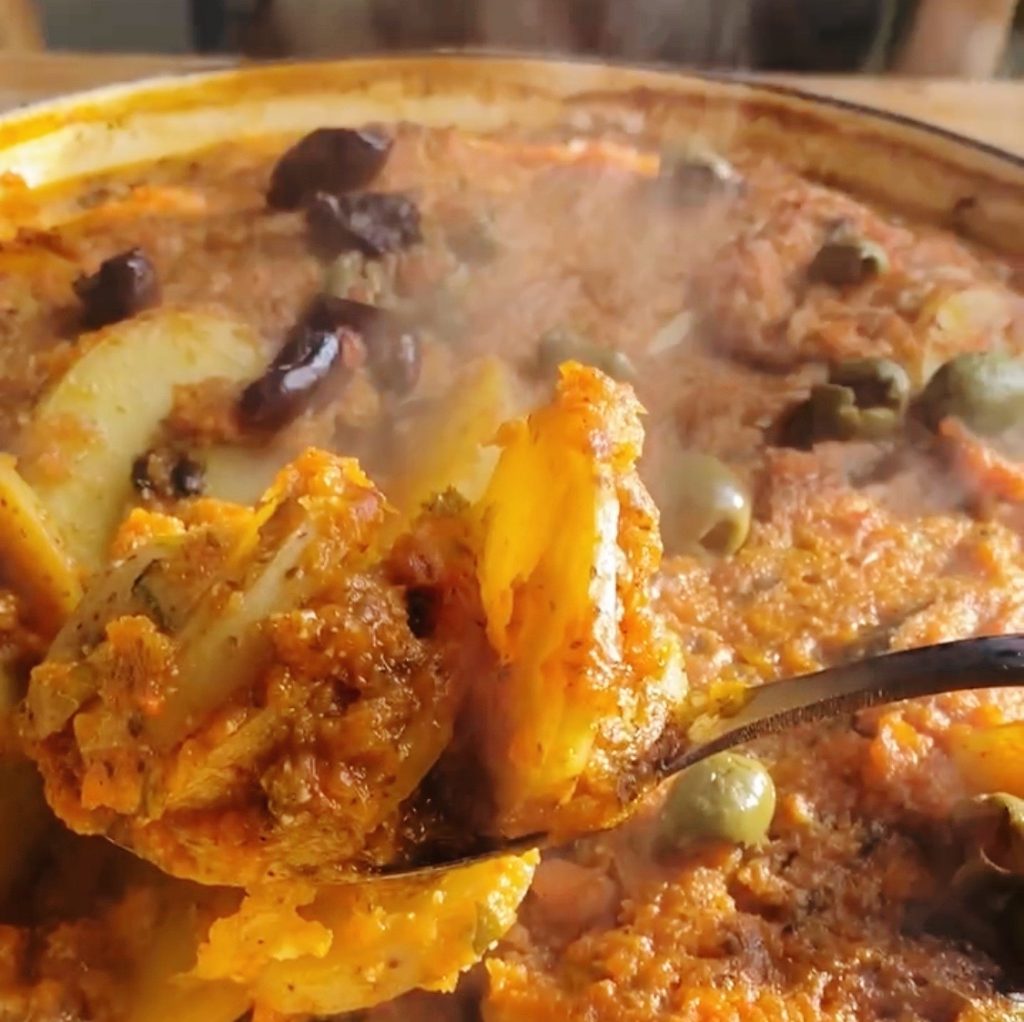
There are so many ways to cook potatoes – boiled, chips, mash, roasties, soups, stews, gratin, jacket potatoes… but this Mediterranean-style way is one of my favourites. The rich tomato sauce and fragrant herbs make the humble, comforting potato into a summery dish which sings with flavour. I usually top it with some of my vegan tofu-feta or just some salty olives and bake it with the lid off for a little extra colour and flavour. Serve with a simple greek salad and a glass of wine – that’s dinner sorted.

Liz x

Ingredients (serves 6)

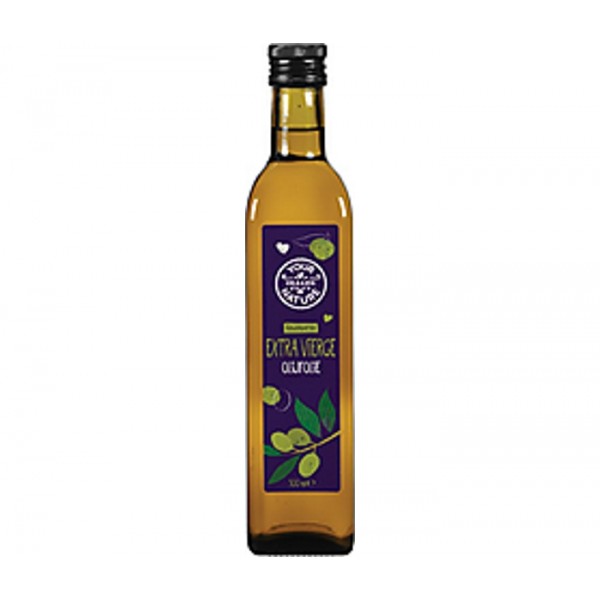
  • 4 tbsp olive oil
  • 1 large white onion, diced
  • 6 cloves of garlic, crushed
  • 2 tins chopped tomatoes
  • optional extra Med-veg eg courgette, peppers, carrots, aubergine
  • 10 medium potatoes
  • salt and pepper to taste
  • 1 tbsp each oregano, thyme, rosemary
  • olives/feta/capers
  • salad to serve

Method

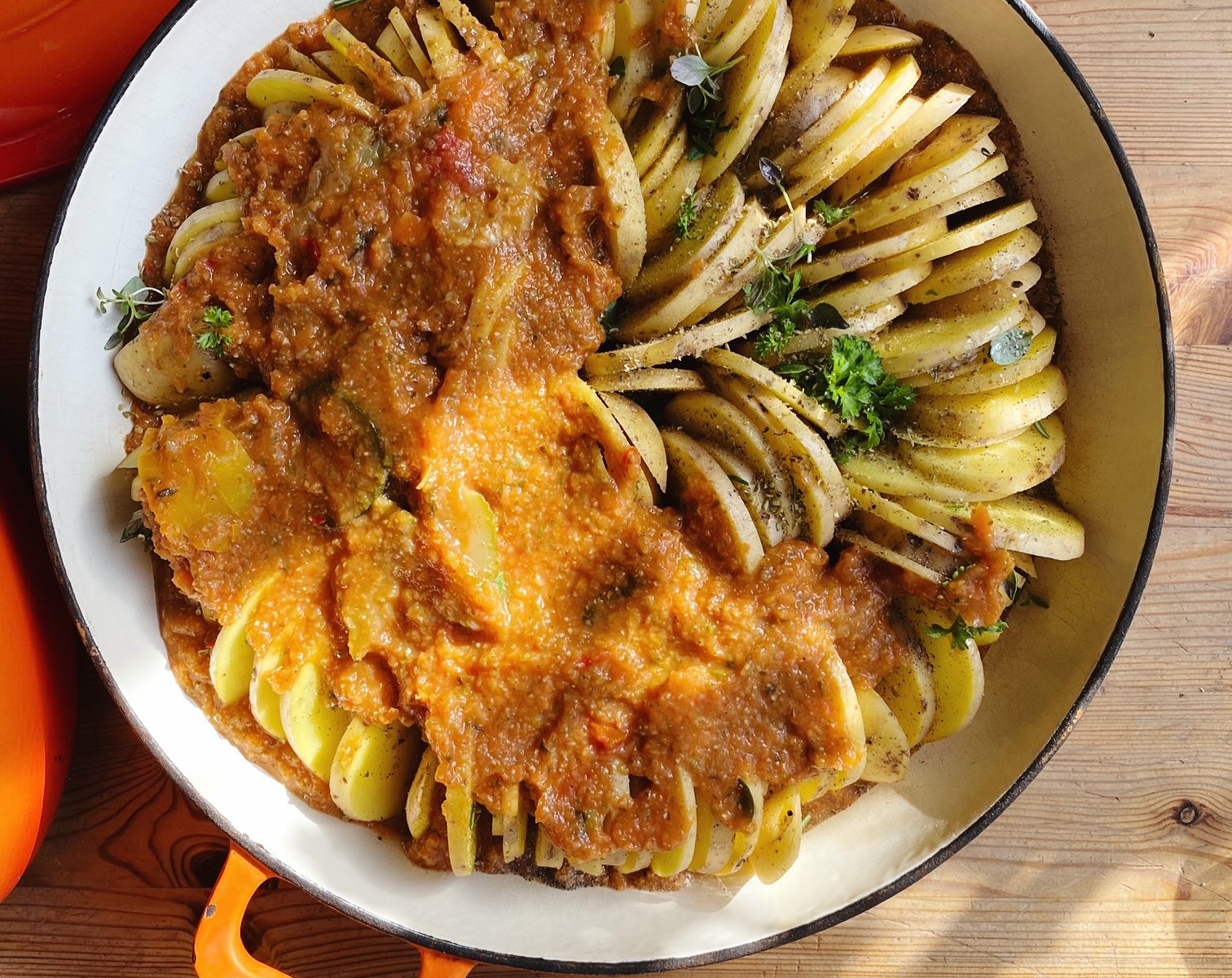
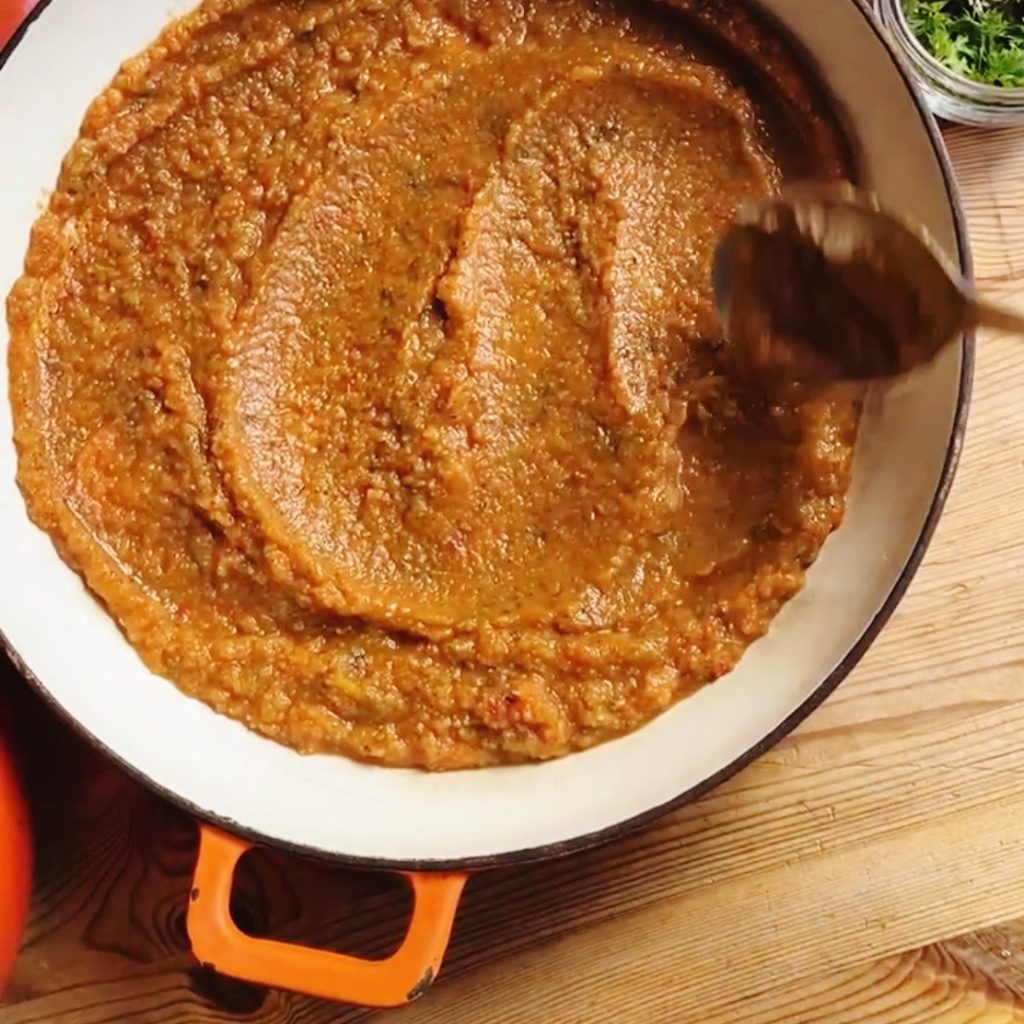
  1. Start by making a rich tomato sauce. This can be however you like it but I usually sauté the diced onion in 2 tbsp olive oil until soft and starting to colour, then add crushed garlic and if I want to bulk it out, some chopped veg like an aubergine, pepper or courgette, maybe a carrot or two? Add the tinned tomatoes and swirl out any juices left in the tins into the pot with a bit of water. Season well with salt, pepper and a pinch of oregano and simmer until the sauce is rich – around 15-20 minutes. Blend with a stick blender, taste and adjust the seasoning if needed with more salt or pepper.
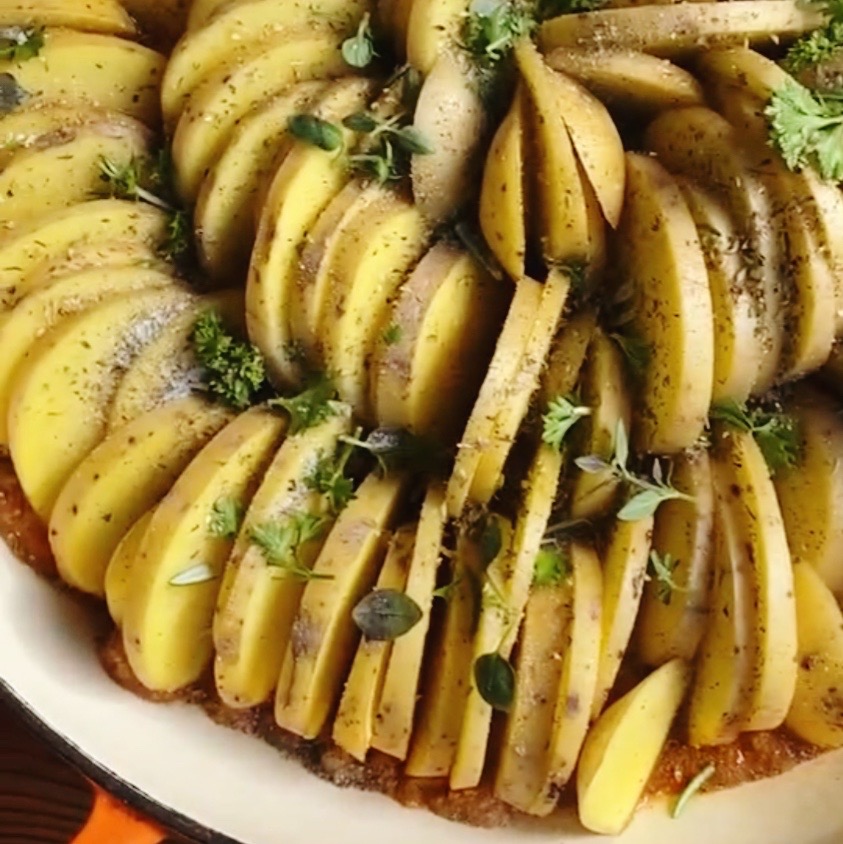
  2. Put the oven on to 200C and find an oven proof dish with a lid. Wash and thinly slice your potatoes into 3mm or so rounds.
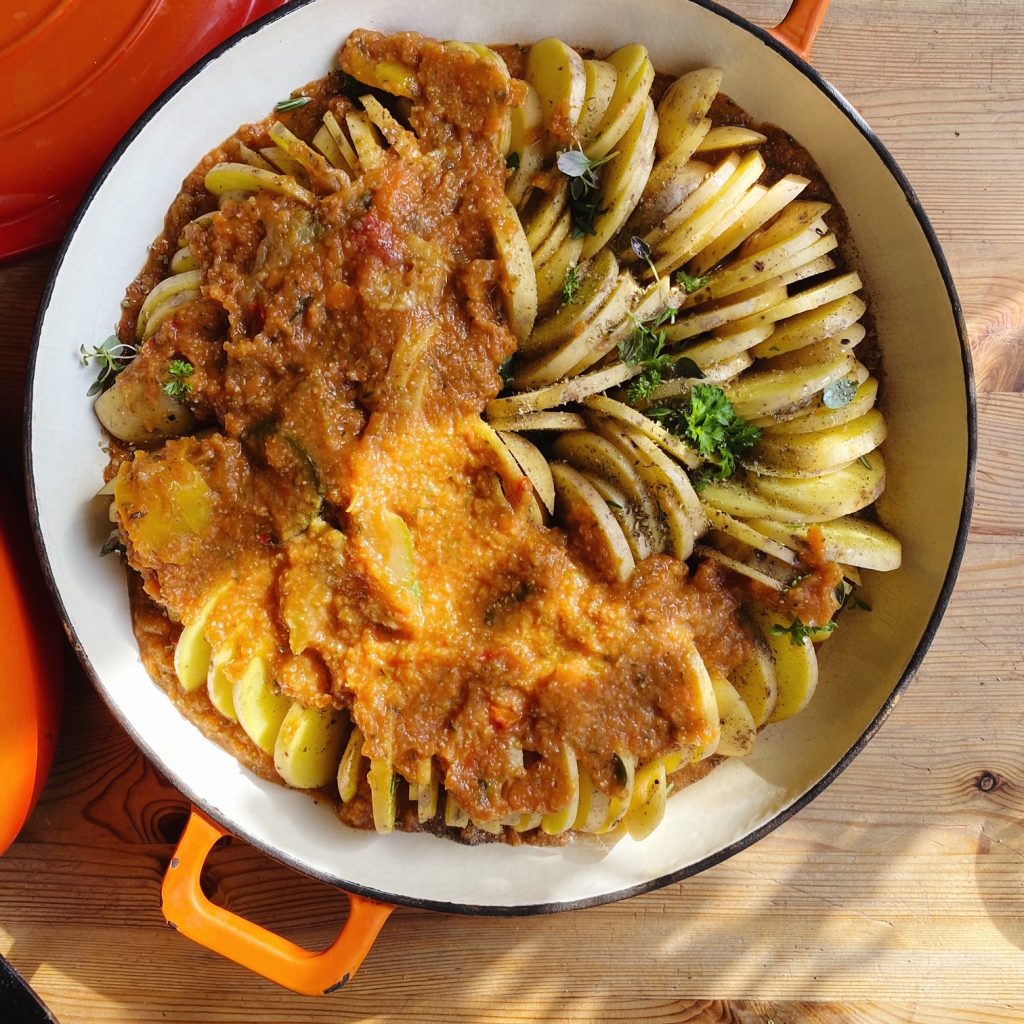
  3. Place 1/2 the tomato sauce into the dish then arrange the potato slices on top. Then season the potato layer with salt, pepper and the herbs. Drizzle over the remaining olive oil and then spoon over the remaining tomato sauce.
  4. Put the lid on and bake until the potatoes are soft. This usually takes at least an hour but check on it as ovens and potatoes vary.
  5. Once the potatoes are cooked through, remove the lid and scatter over your topping of choice. Feta, olives, capers… Return the dish to the oven with the lid off to caramelise and get a little colour – just 5-10 minutes, keep an eye on it.
  6. Enjoy with salads or as a side to your choice of protein and greens.

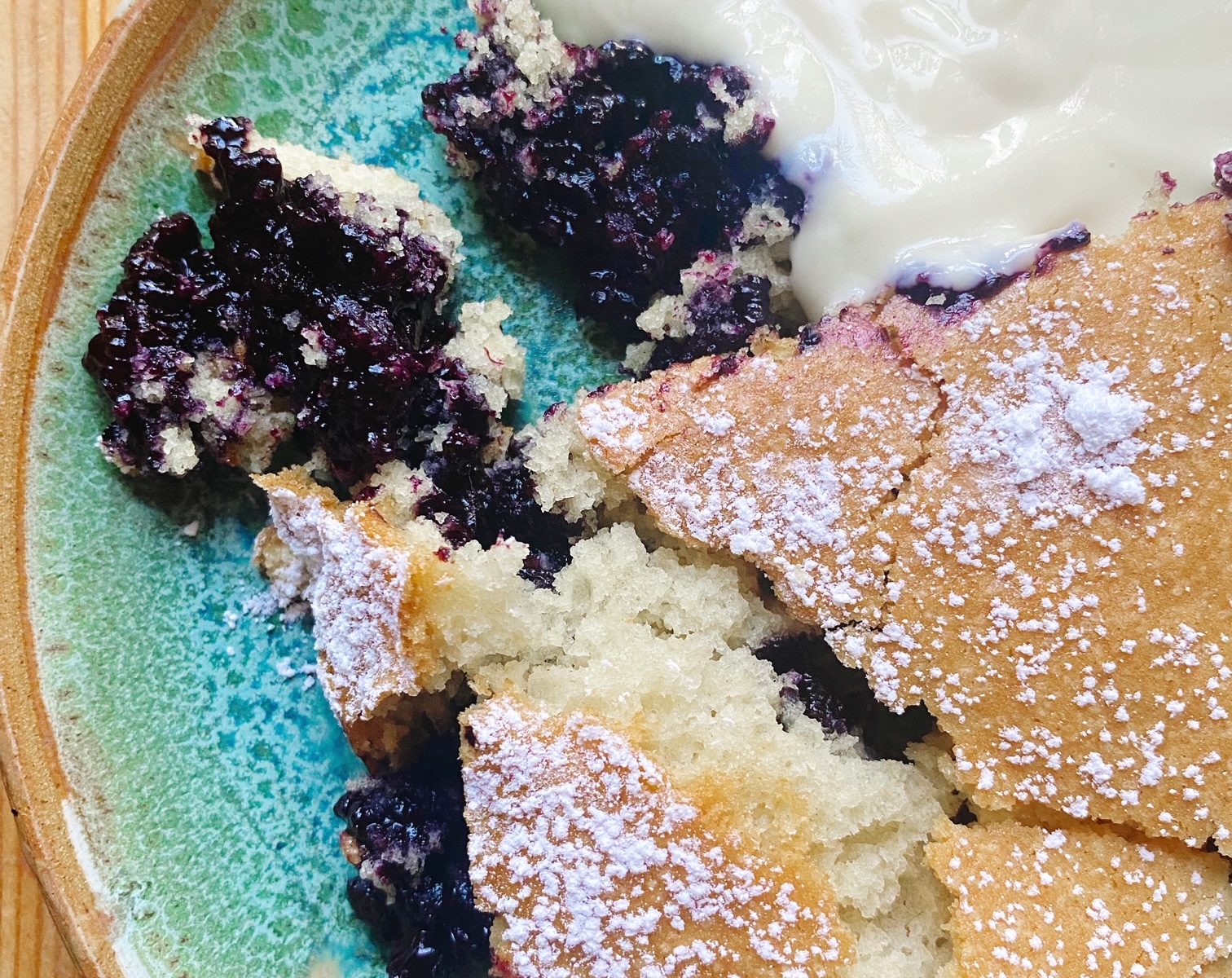
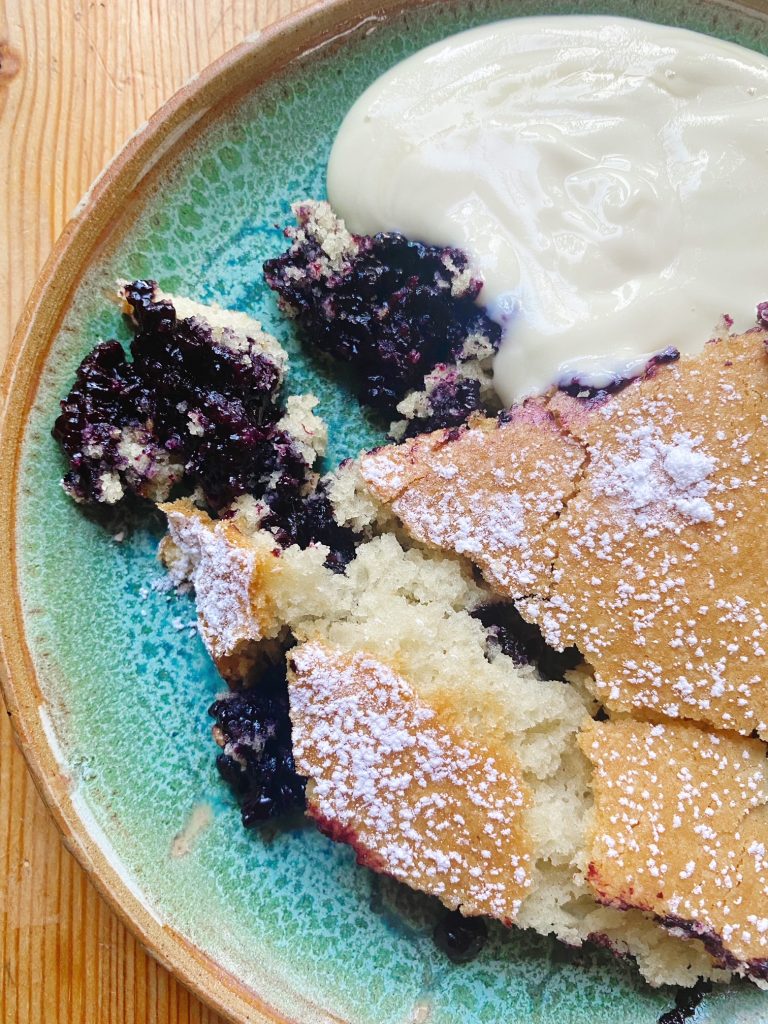
Blueberry Clafoutis

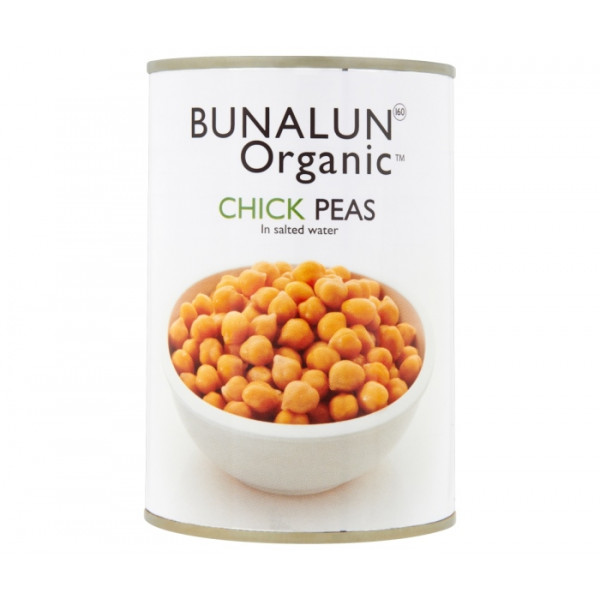
We make versions of this clafoutis as a quick pudding so often, I have this recipe down by heart now. A clafoutis is a classic French dessert, traditionally made with cherries. This is my vegan version which the whole family adores. It uses up the aquafaba from a tin of chickpeas, such a useful, free ingredient. Next time you make a chickpea curry or a batch of hummus, save the aquafaba and make this quick pud. You won’t be disappointed!

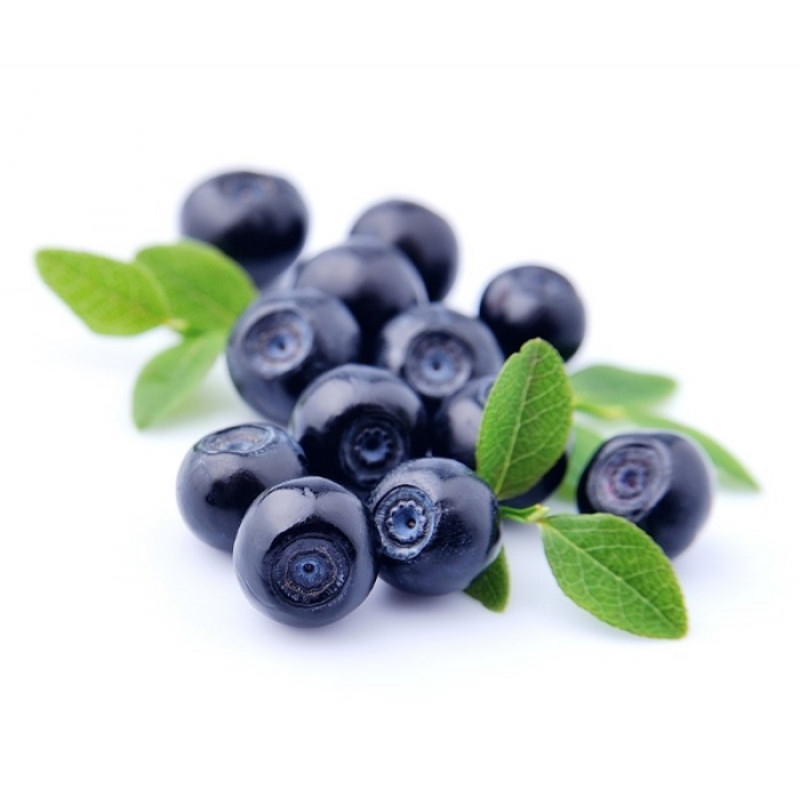
We try to always have organic blueberries on our list as we strongly believe including anthocyanin-rich purple foods in your diet regularly is important. We have some great ones in from Spain at the moment which come in clever compostable packaging! Eat them fresh or pop them in the freezer to use daily in your smoothies, porridge or desserts.

Liz x

Ingredients

  • aquafaba from one can of chickpeas (around 150ml)
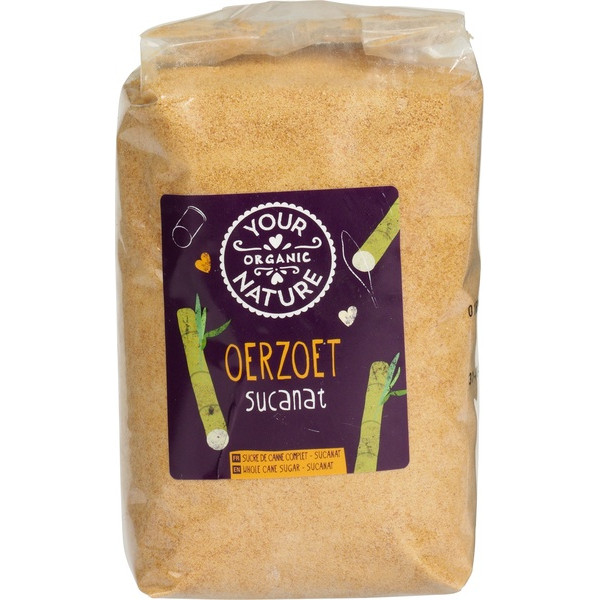
  • 1/2 mug sugar (around 100g)
  • 2 tsp baking powder
  • a pinch of salt
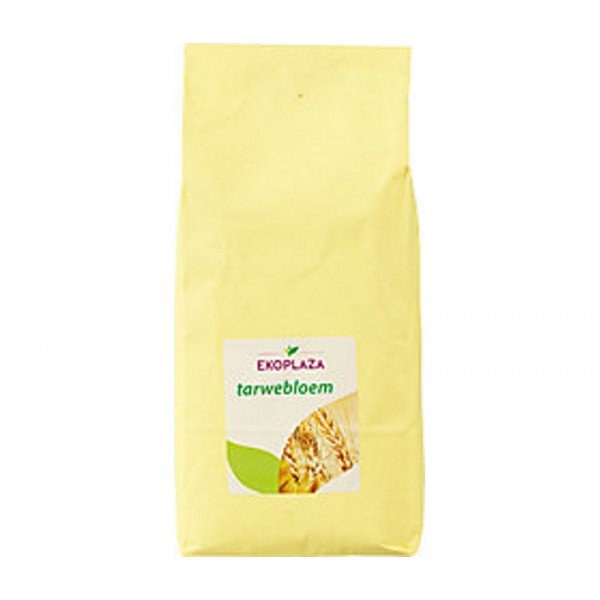
  • 1 mug of flour (around 200g)
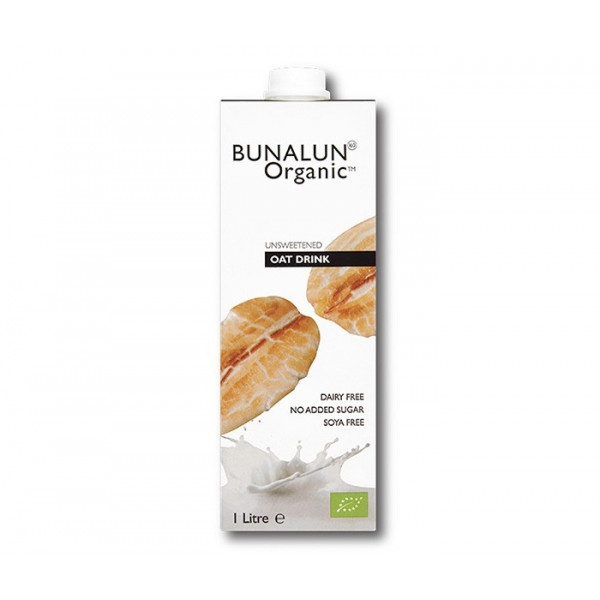
  • 3 tbsp oat milk
  • 4 tbsp olive oil
  • 2 mugs of blueberries (fresh or frozen)
  • a tsp of icing sugar to dust
  • plain yoghurt sweetened with maple syrup to serve

Method

  1. Turn your oven to 175C and find a flan dish, bowl, whisk and small mug for easy measuring.
  2. Pour the liquid from a can of chickpeas into the mixing bowl. It should be around 150ml but there’s no need to be too exact with this recipe. Whisk it until it froths. Then add 1/2 a mug of sugar and whisk again until you have a glossy, creamy mixture.
  3. Add the baking powder and salt and whisk for a minute to evenly distribute it before adding a mug of flour. Stir the flour in so you have a crumbly texture.
  4. Now add the milk and oil and stir until just combined into a smooth, thick batter. You can add a splash more oat milk if your batter is too dry. Careful not to over-mix to ensure a soft, tender crumb.
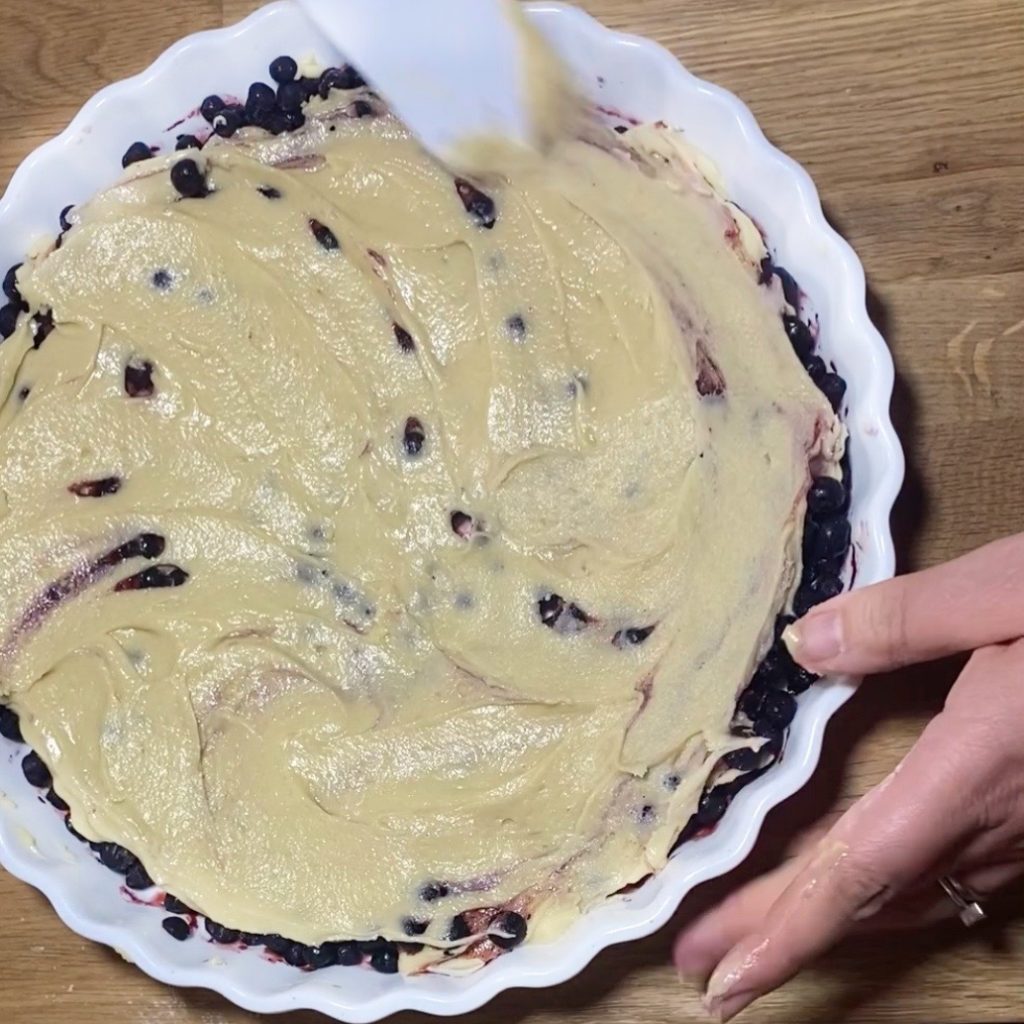
  5. Tumble the blueberries into the bottom of your flan dish and spread them out evenly. Then dot the batter on top and smooth it over. You may find it doesn’t reach the sides and looks a bit thin – don’t panic, it will grow and spread quite a lot in the oven.
  6. Bake until risen and golden – around 30 minutes but start checking after 20 in case you have a very efficient oven.
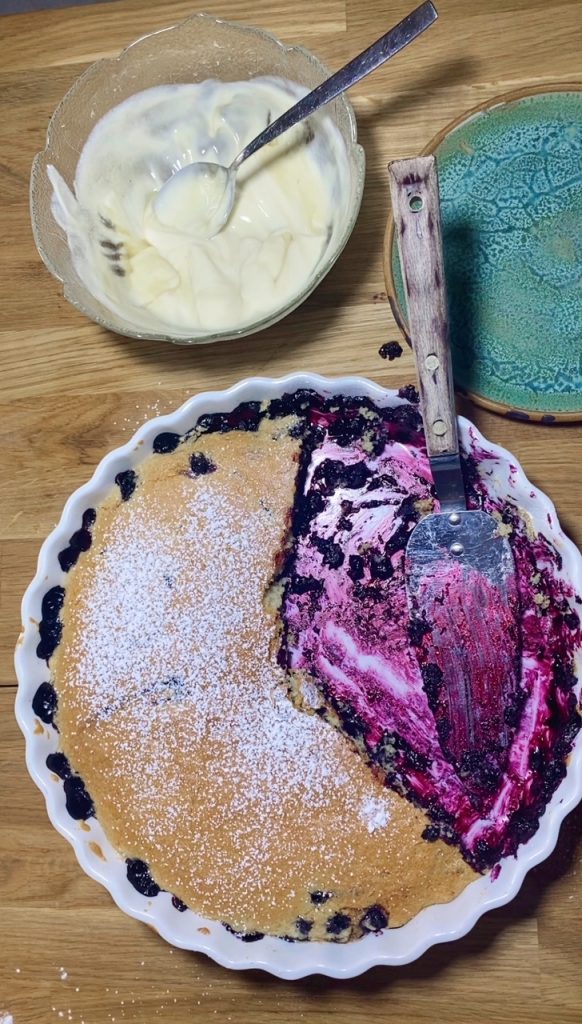
  7. Serve warm in scoops or messy slices with a dusting of icing sugar and a big dollop of yoghurt sweetened with maple syrup. Any leftovers are also delicious cold with a mug of tea or coffee. Enjoy!

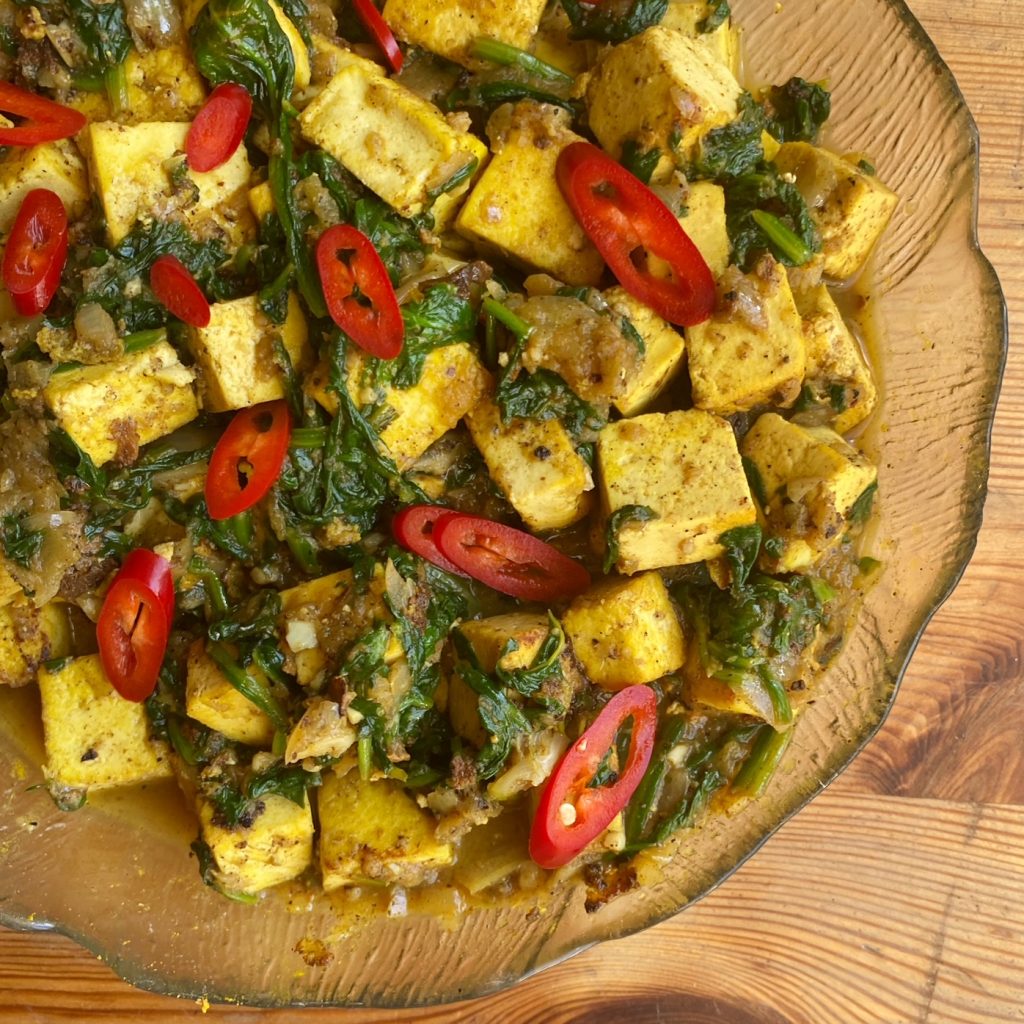
Spinach & Tofu Curry

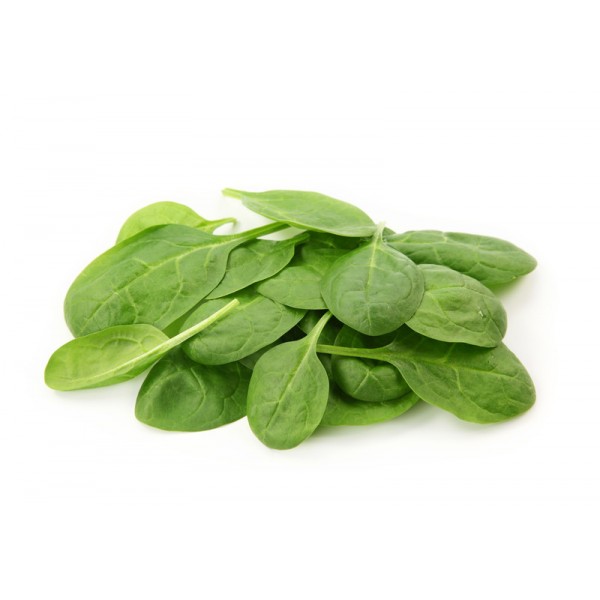
This plant based take on a saag paneer is so quick and easy, not to mention delicious and nutritious! Serve with rice and chutney for a midweek curry in a hurry or as a side with other curries. You can switch the spinach for our rainbow chard, just remove the stems, finely chop them and cook them along with the onion paste.

Liz x

Ingredients (serves 4 – or 8 as a side)

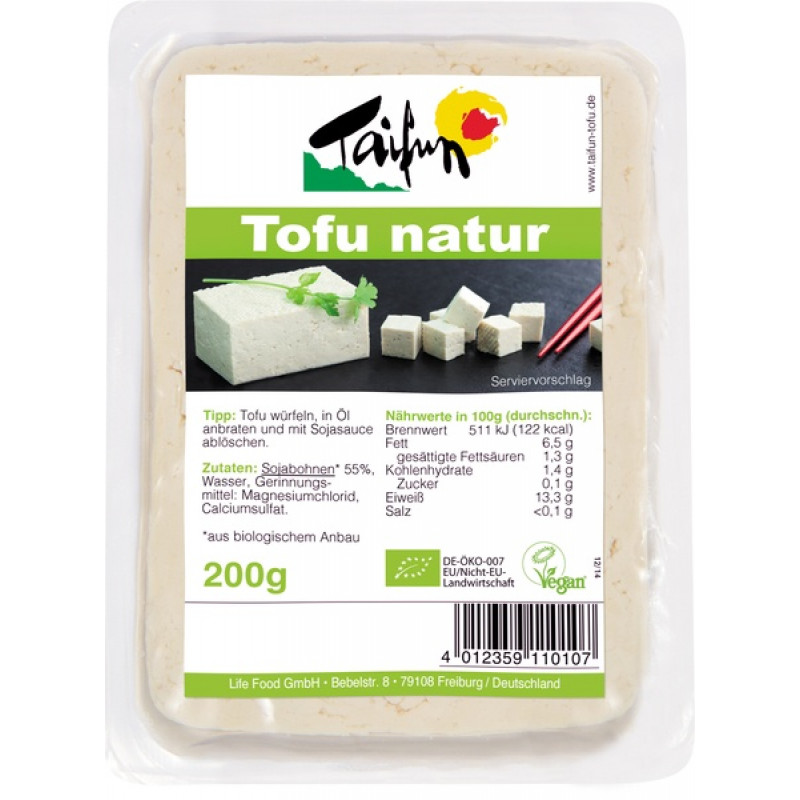
  • 2 blocks extra firm tofu (400g)
  • 1/2 tsp ground turmeric
  • 1 tsp salt (+ more if needed)
  • 1 tsp black pepper
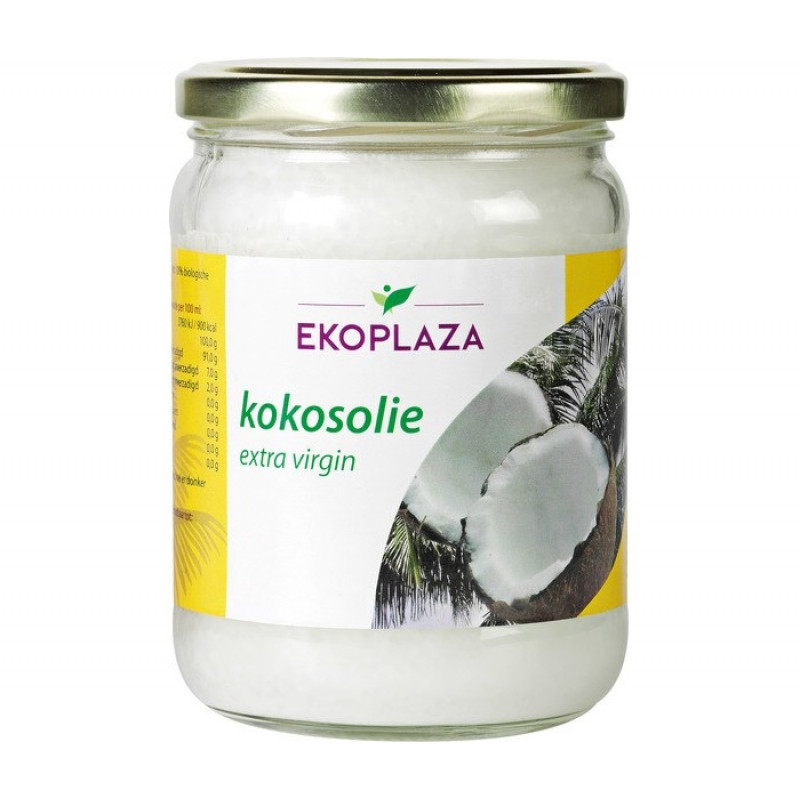
  • 2 tbsp coconut oil (heaped)
  • 1 onion
  • 4 cloves of garlic
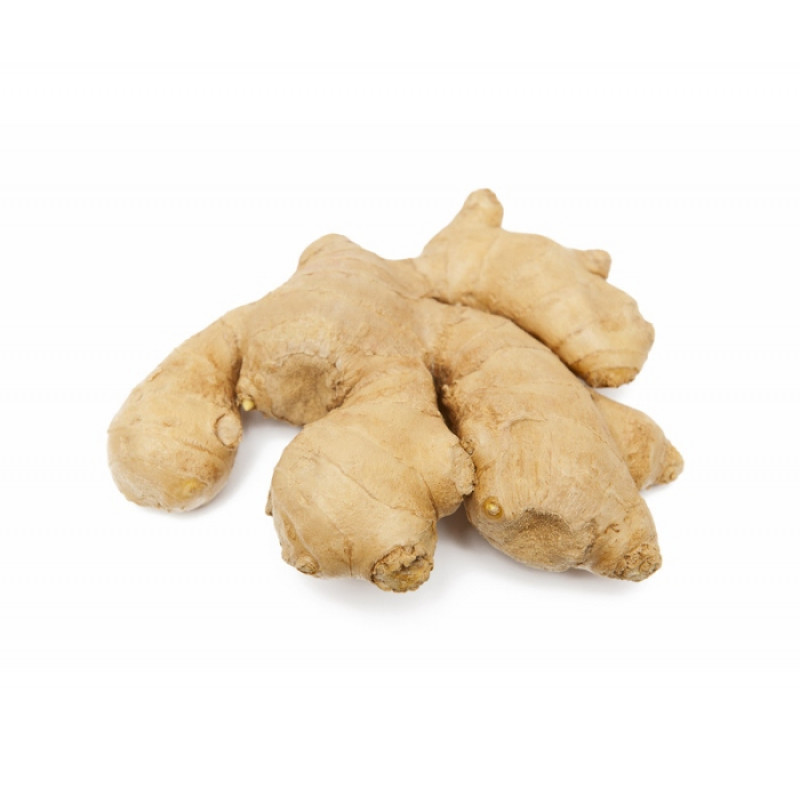
  • 1 thumb ginger
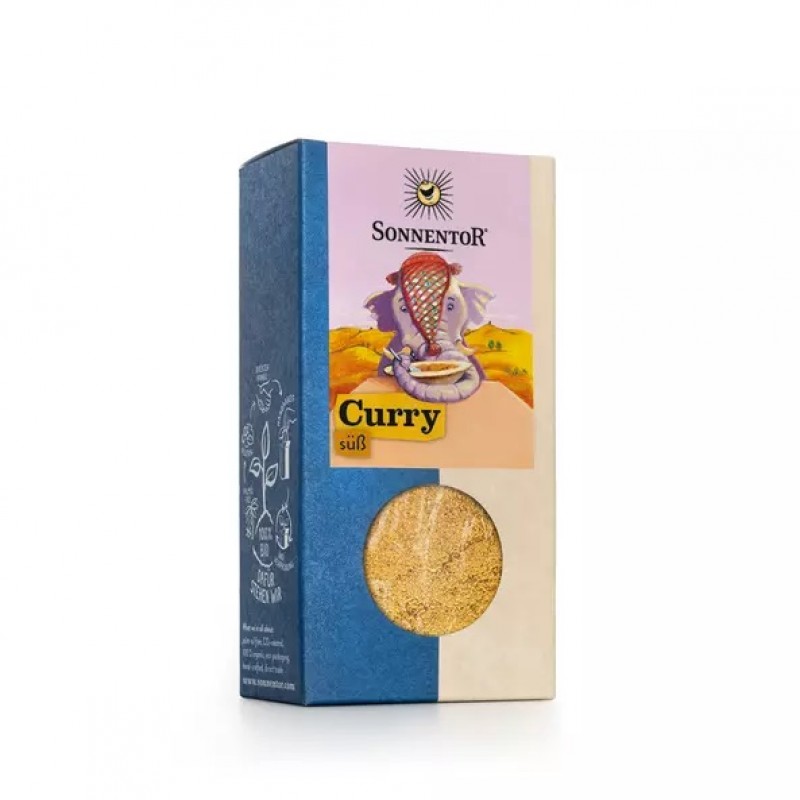
  • 2 tsp garam masala (or your favourite curry powder)
  • 200g spinach
  • the juice of 1/2 a lemon
  • fresh chilli to taste

Method

  1. Cut your tofu into cubes and season it with the salt, pepper & ground turmeric. Then fry it in 1 tbsp coconut oil until golden. Remove from the pan and keep to one side.
  2. Blend the garlic, onion and ginger into a paste, then fry until browned in the other tbsp of coconut oil. Add an extra pinch of salt during frying. Then add the garam masala (or whichever curry spice blend you prefer) and stir to toast and wake up the spices.
  3. Pour just-boiled water over the spinach in a colander to wilt it. Cool it with cold water then squeeze into a ball. Chop the wilted spinach and add it to the pan with a splash of water. Scrape the bottom of the pan to release all the flavourful spices and fried onion/garlic/ginger into the sauce.
  4. Return the tofu to the pan and warm through with the lemon juice. Perhaps add another splash of water if the pan is drying out too much. Taste and adjust the seasoning if needed with more salt or pepper.
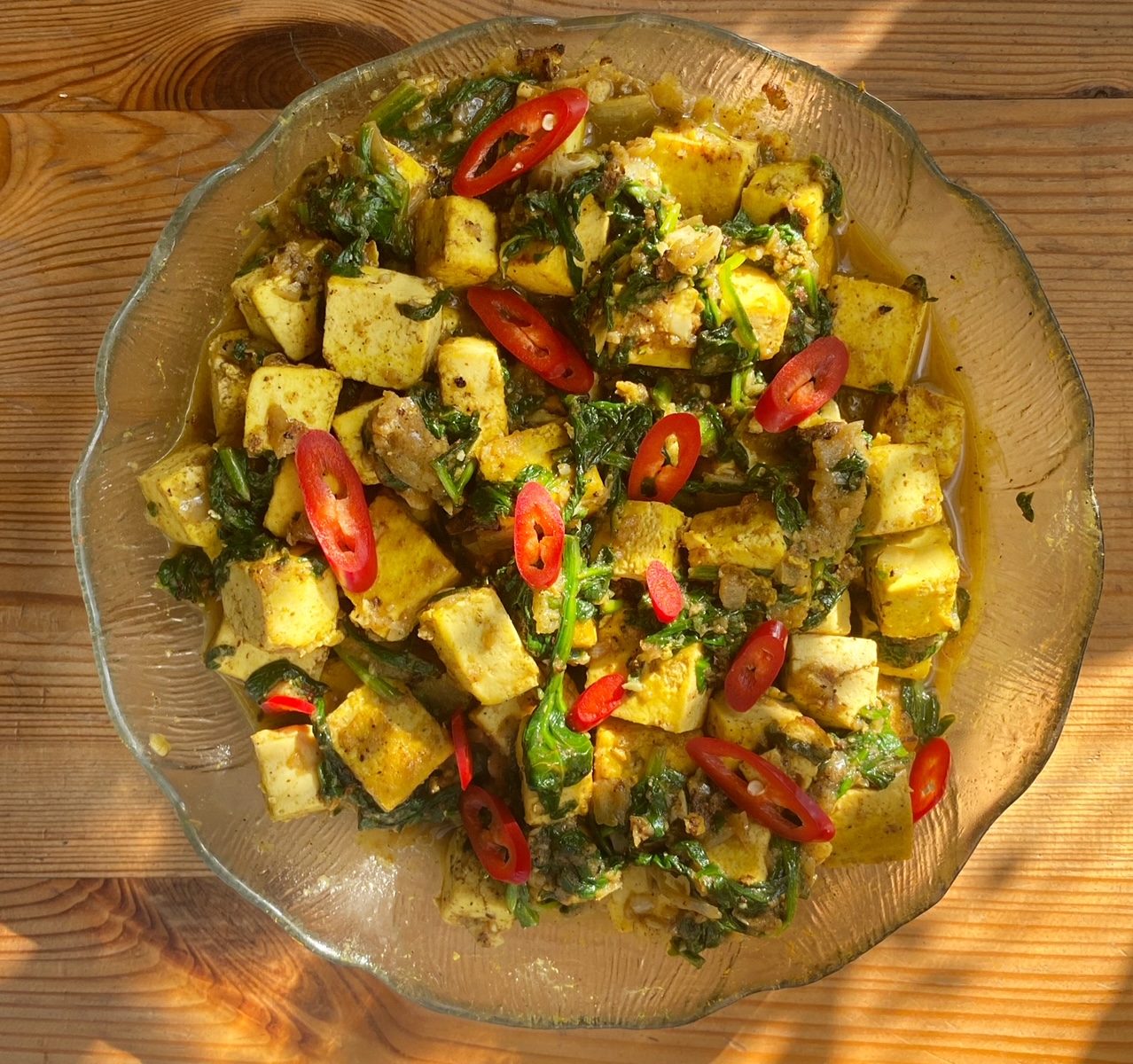
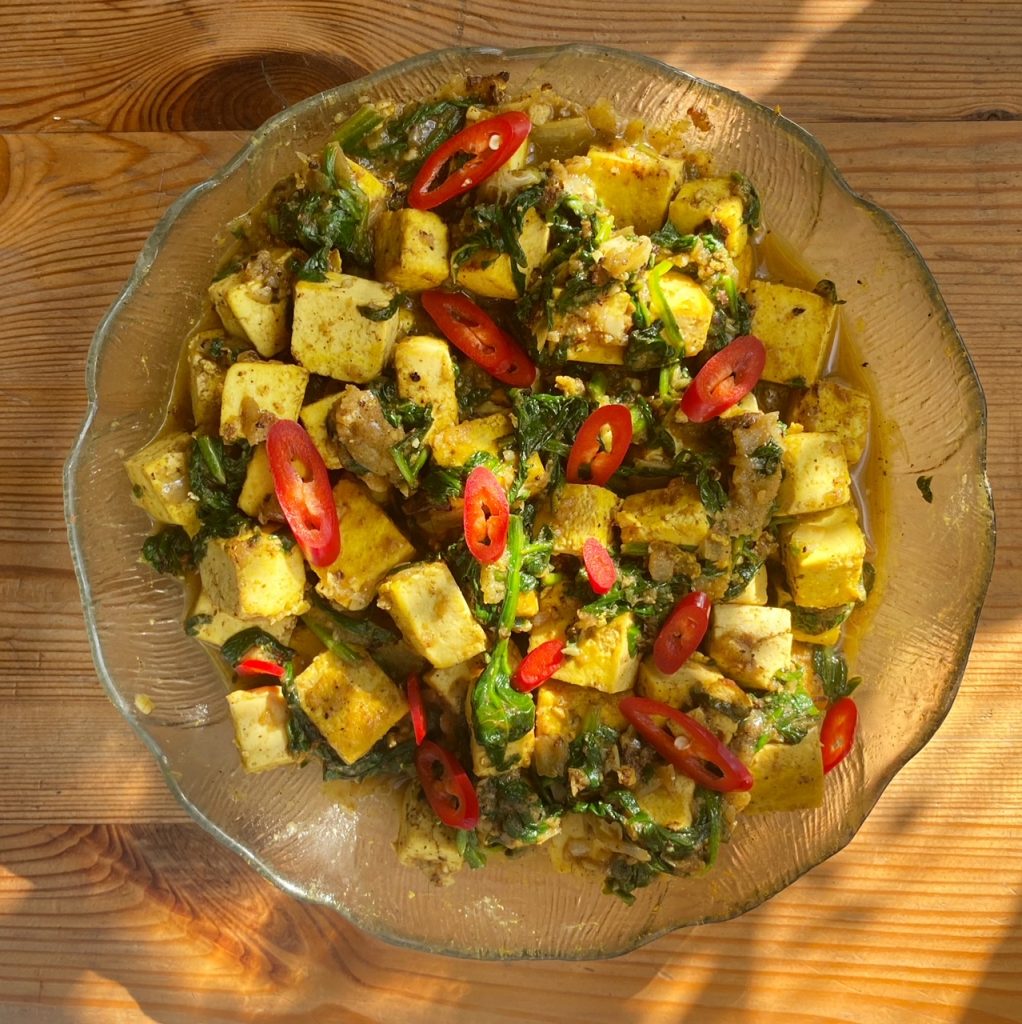
  5. Serve with fresh chilli slices as a side to other curries or as a meal in it’s own right with just rice and chutney.

Instant Vegan Cheese Sauce Powder

For mac’n’cheese, cauliflower/broccoli cheese, layers in lasagnes or moussakas, cheesy mushroom and leek pies and more… This instant powder is so useful to store in your pantry to whip up a quick mid-week meal. Just add oat milk and a little olive oil or melted vegan butter.

Liz x

Ingredients

Method

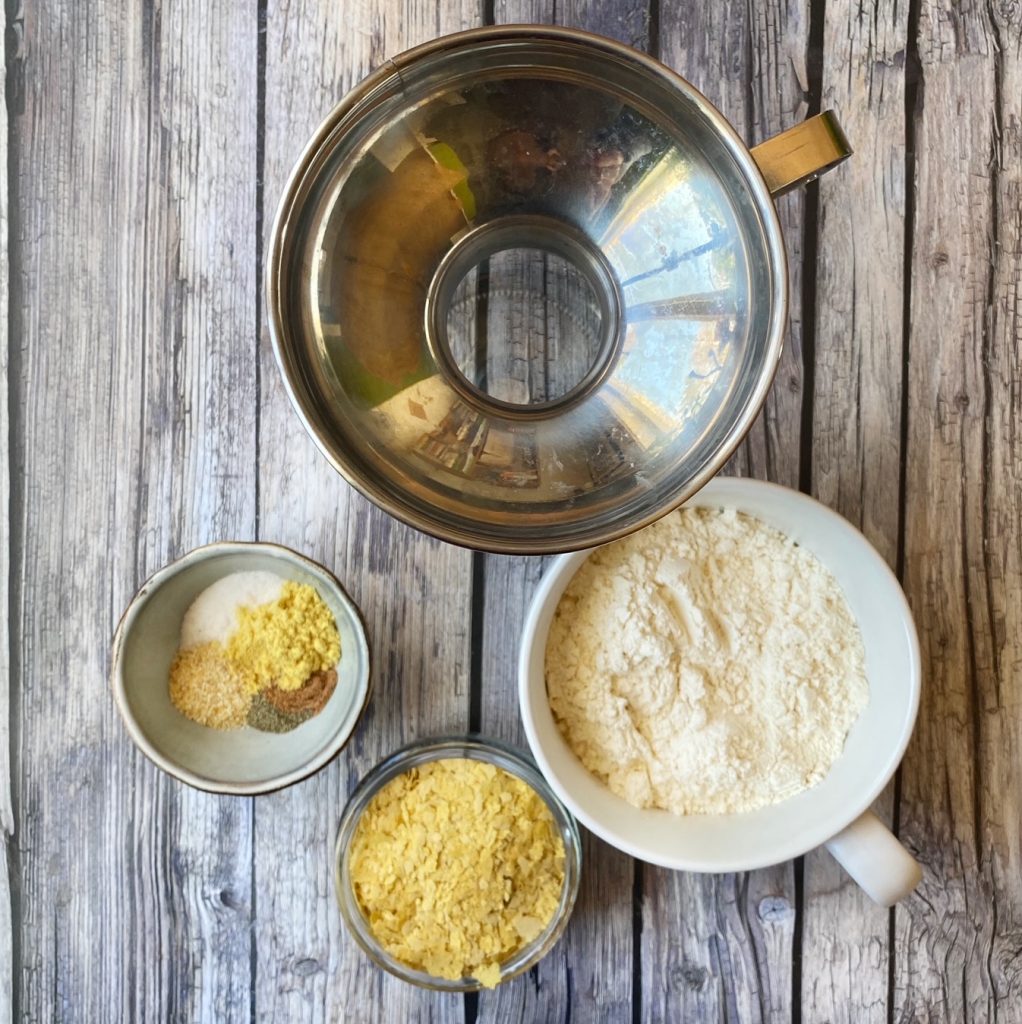
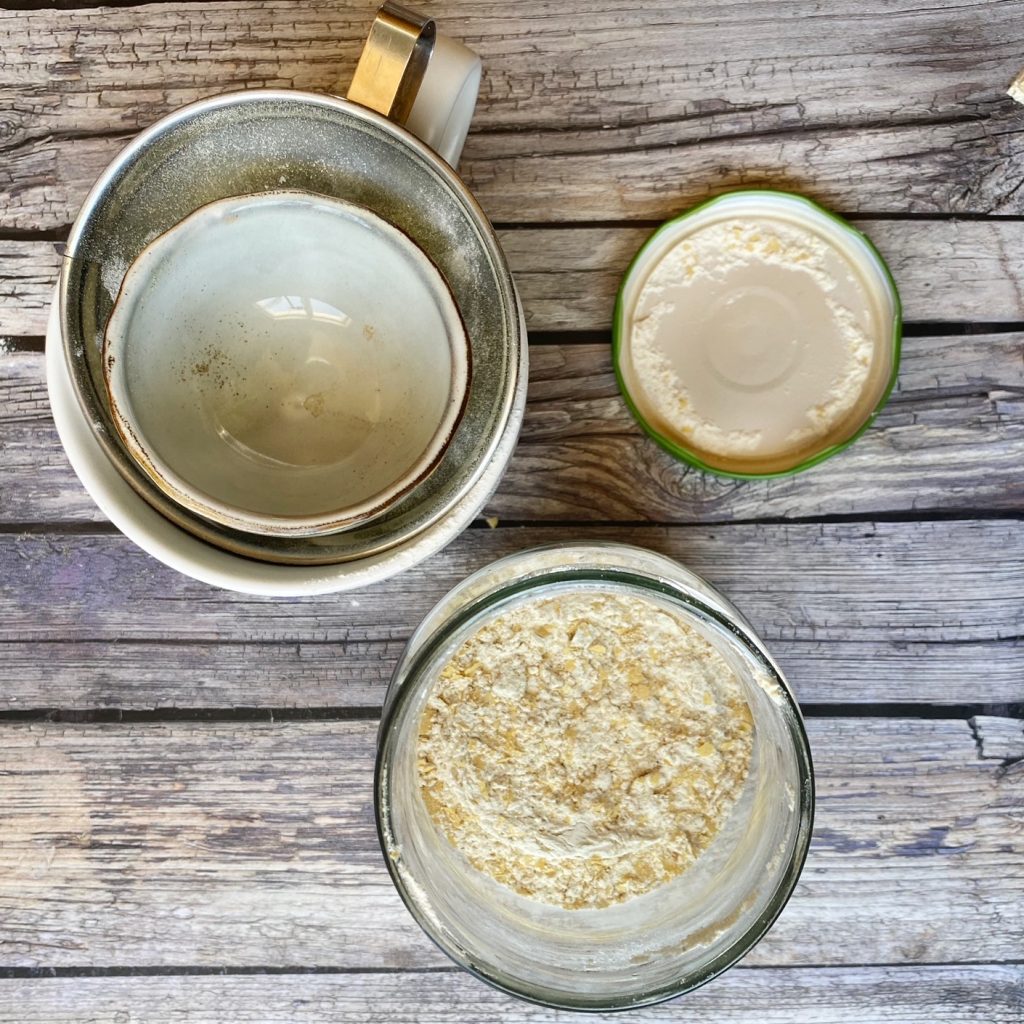
  1. Measure all the ingredients into a jar and give it a good shake to evenly mix into a powder. If you don’t have mustard powder then leave it out and add dijon mustard or whatever mustard you like in the wet stage described in the next step.
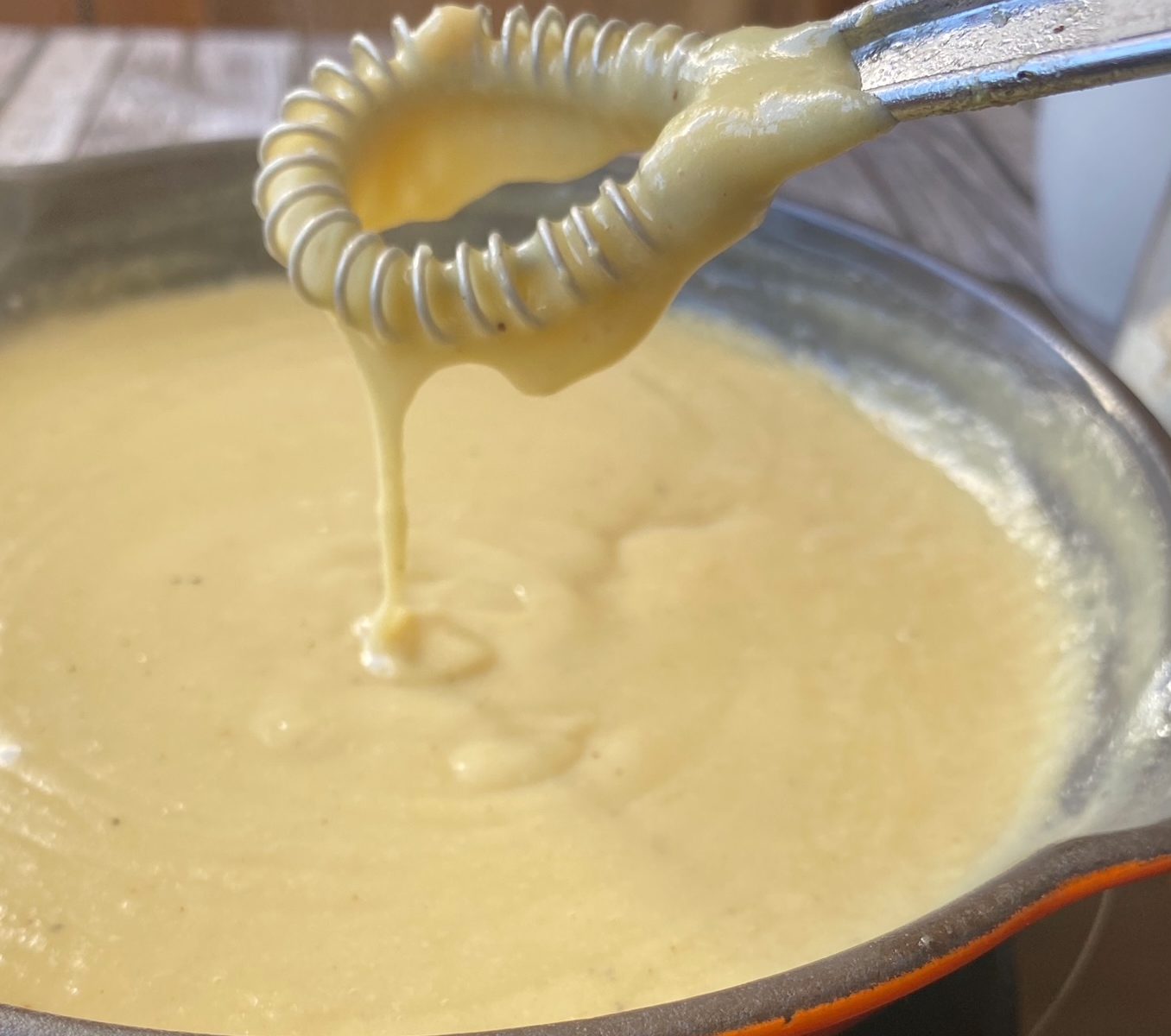
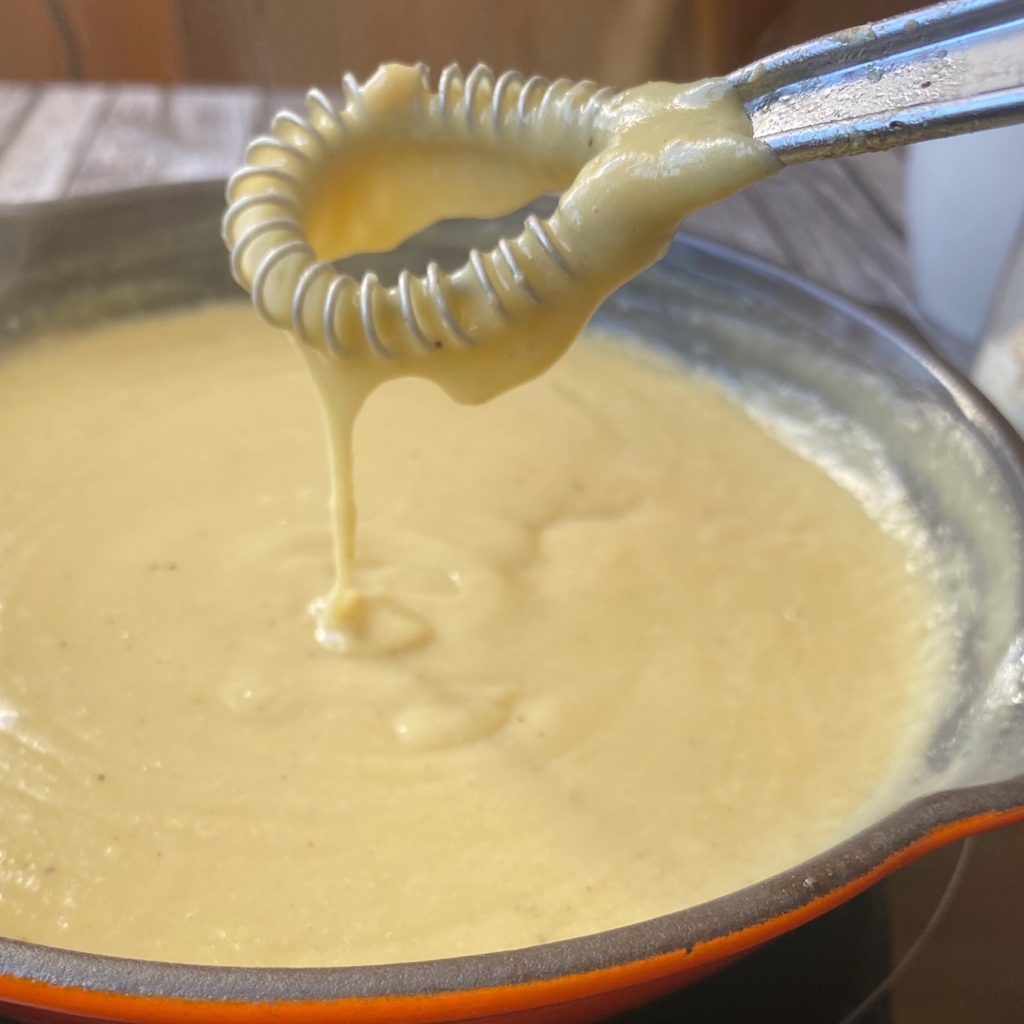
  2. In a measuring jug, pour 100ml of oat milk per person. Then whisk in 1 tbsp of the powder and 1 tbsp of good olive oil (or melted vegan butter) per person. If you mix doesn’t have mustard powder, add a tsp of Dijon mustard per person too.
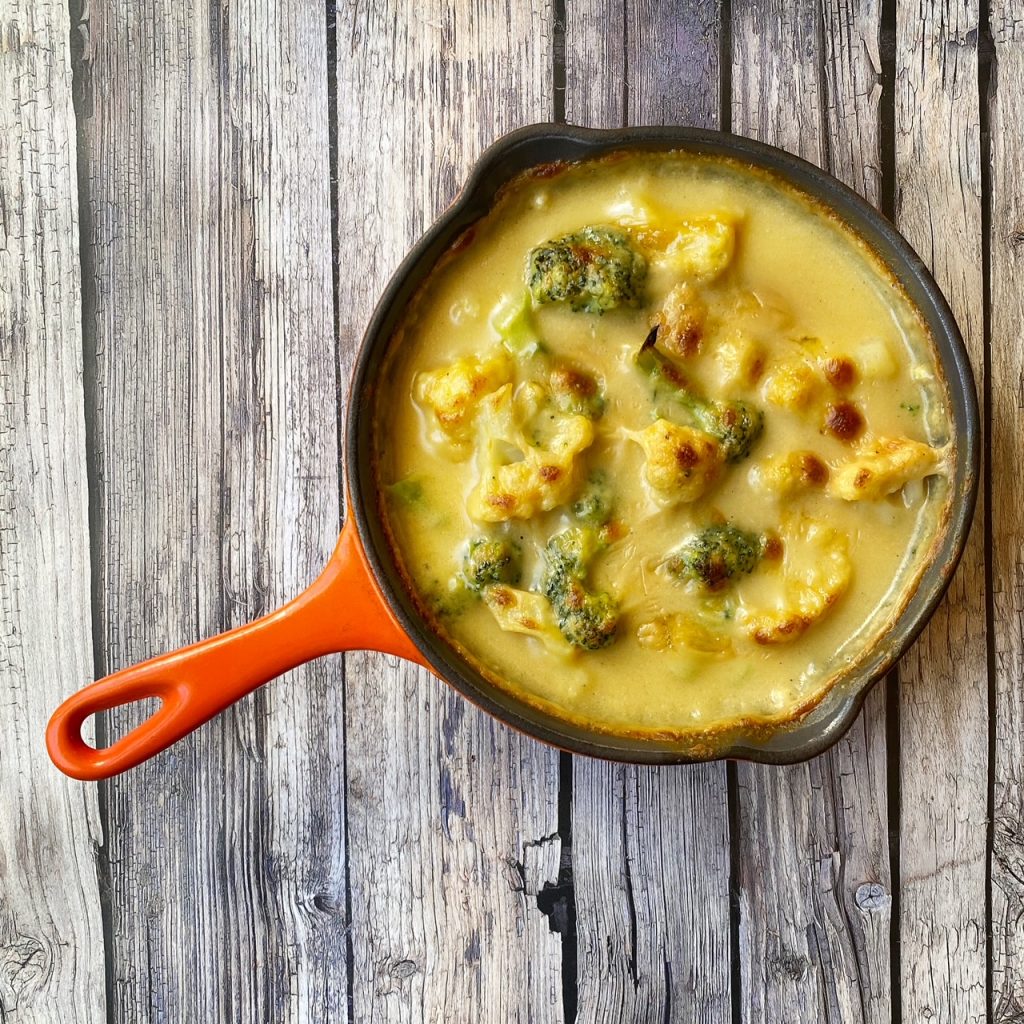
  3. Pour the mixture into a pot over a medium/low heat and whisk continuously until it is cooked through. It should be creamy, silky smooth and nice and thick. Taste and adjust the seasoning if you need to, then use the sauce however you like. Fold through cooked pasta, layer up in a lasagne or moussaka, pour over cooked mushrooms, leeks and butterbeans then top with pastry and bake… I always use this sauce for a cauliflower and broccoli cheese as part of our Sunday roast.

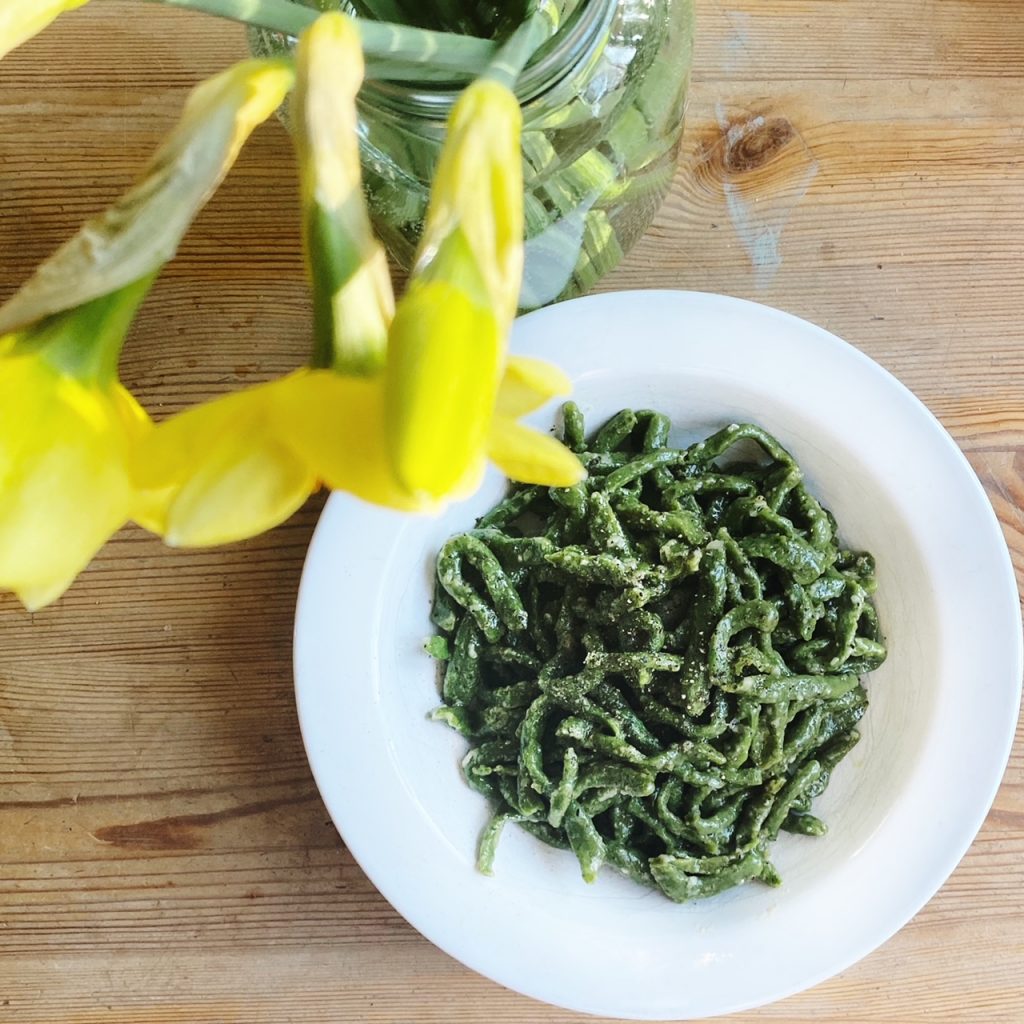
Spinach Pici Pasta

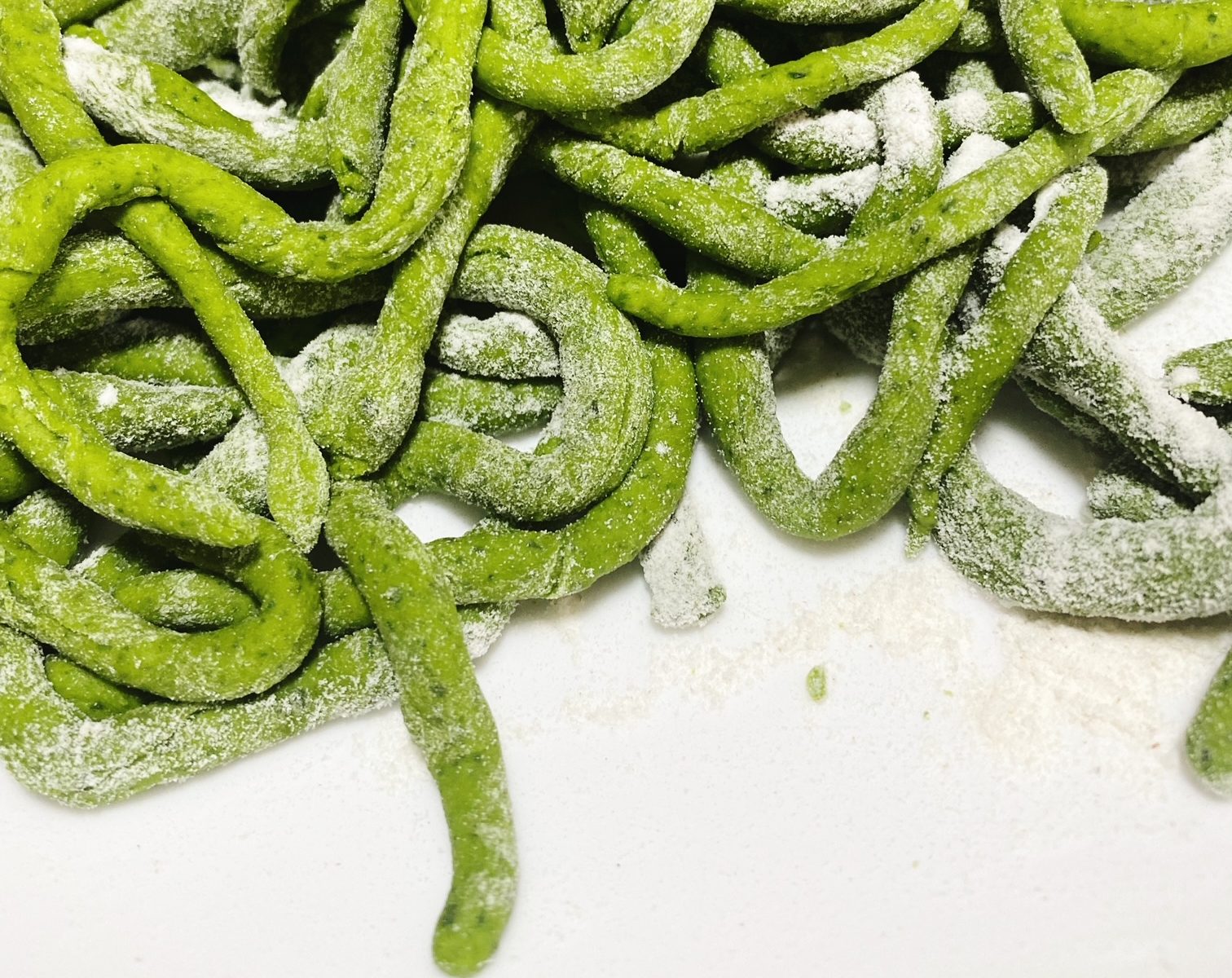
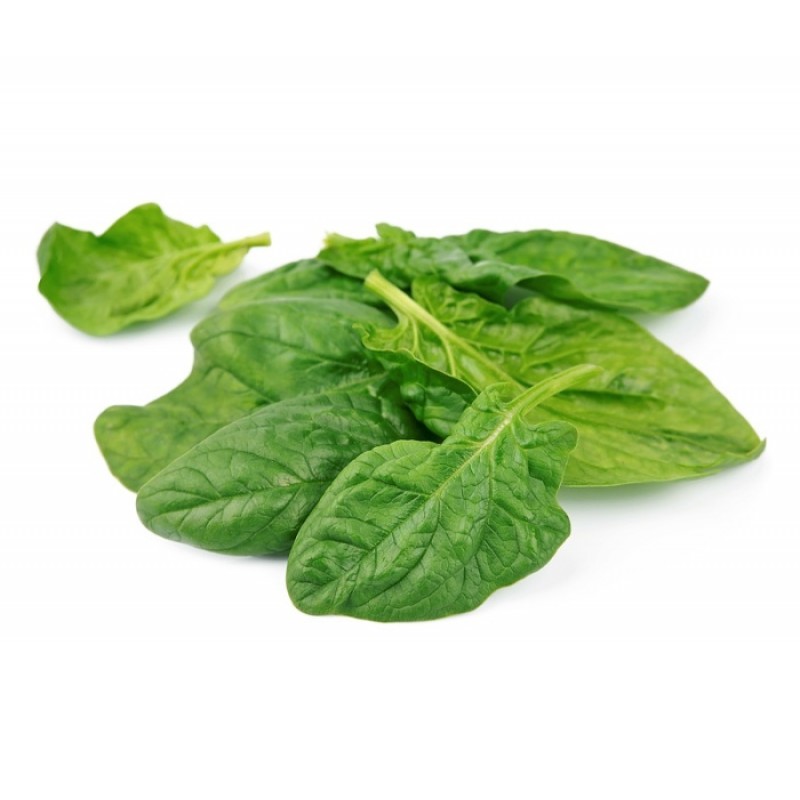
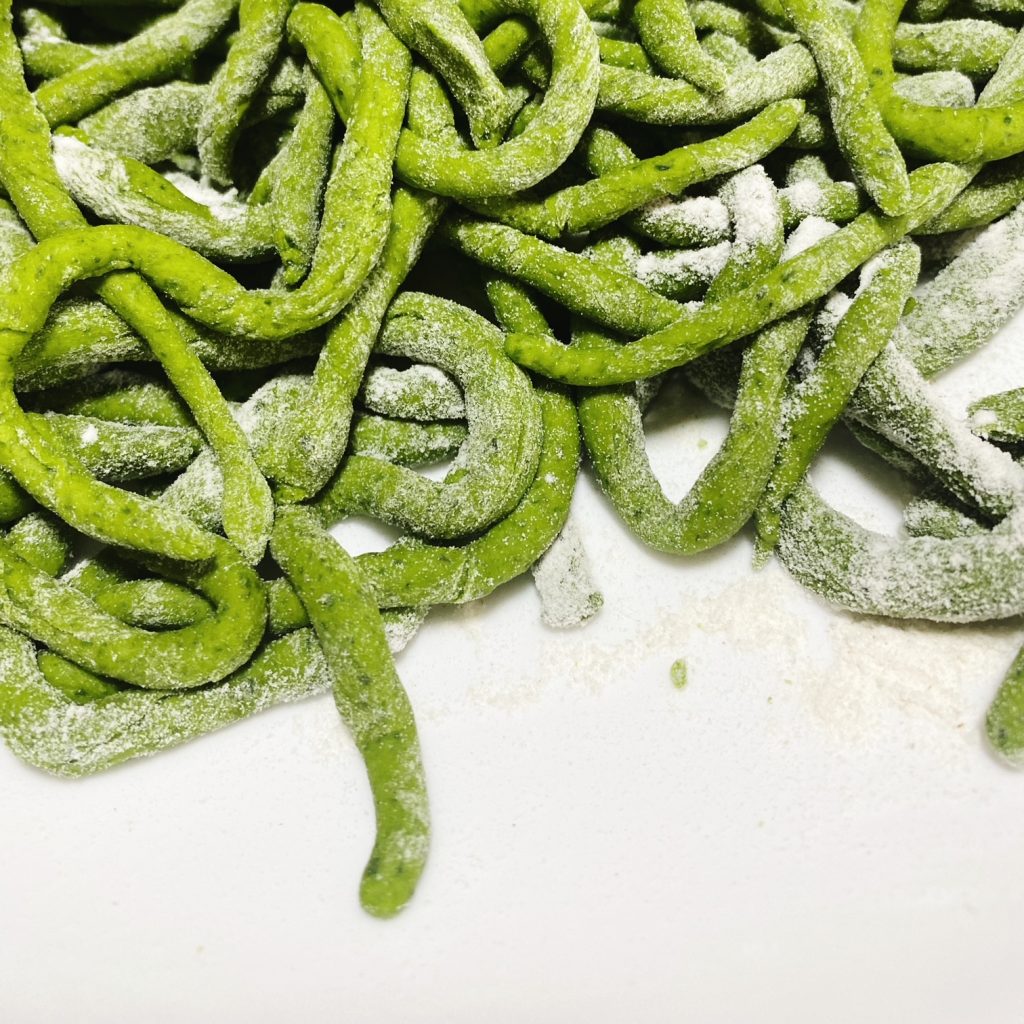
This is our new favourite way to eat spinach. Spinach is coming thick and fast out of our polytunnels now and we can’t get enough of this spring leafy green. Make your own easy pasta dough and marvel at the verdant green wriggly worms. It’s a fun recipe to make with kids over the Easter holidays too and if you have a fussy eater on your hands, this is a great way to get some greens into them. Serve with any pasta sauce you like – we love this with a simple buttery black pepper sauce, details below.

Liz x

Ingredients (serves 4)

for the sauce:

Method

  1. Put the flour, salt and spinach in a food processor with the S blade attachment. Blend into a green powder. Once it is evenly blended, keep the machine running and drizzle in the olive oil then a small splash of water. After a minute of blending the dough should form into a ball, if it is too dry and doesn’t ball up, add another small splash of water and keep blending.
  2. Tip the ball of bright, green dough out onto a floured work surface and knead for a few minutes. If your dough is accidentally too wet, add another sprinkle of flour and keep kneading until you have a smooth, soft green dough.
  3. Cut the dough in half and roll out to around 4mm or so thick. Cut the dough into thin strips then roll each strip into wriggly worms. You can cut them to whatever size you prefer. As you go, place them on a floured plate or tray and lightly dust with more flour to prevent them from clumping.
  4. Get a large pot of salted water on to boil then drop into the pici pasta and boil for just 4 minutes or so until tender. Drain through a colander then make the sauce in the pot.
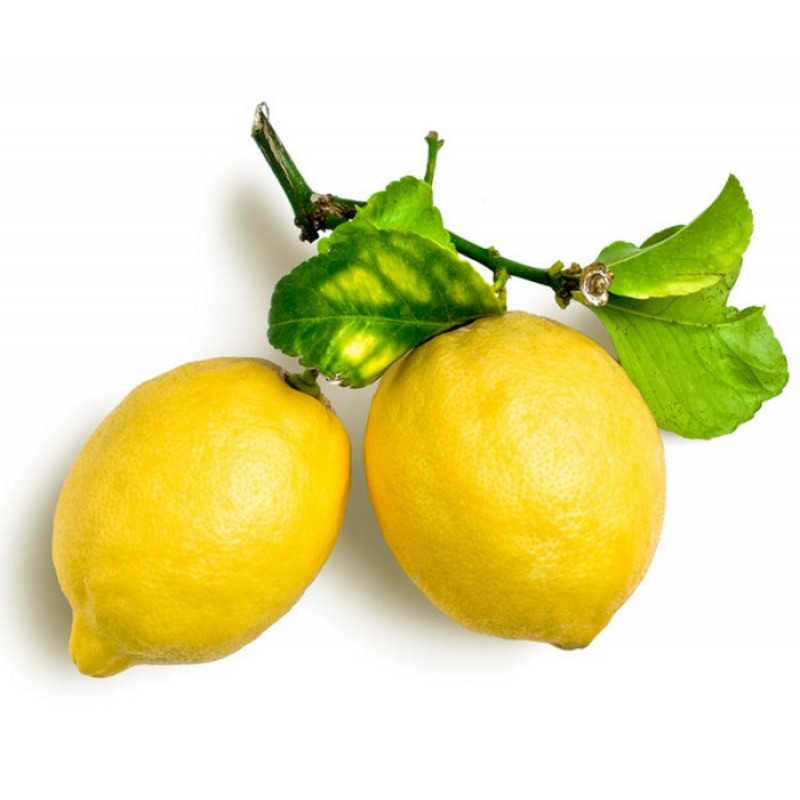
  5. Place the butter, oil, cheese, lemon juice and black pepper in the pot and allow it to melt over a medium heat. Then give it a quick stir and tip the pasta back into the pot. Stir to coat the pasta in the sauce and serve with extra black pepper and whatever sides you like eg protein, salads etc.

Rainbow Chickpea Balls

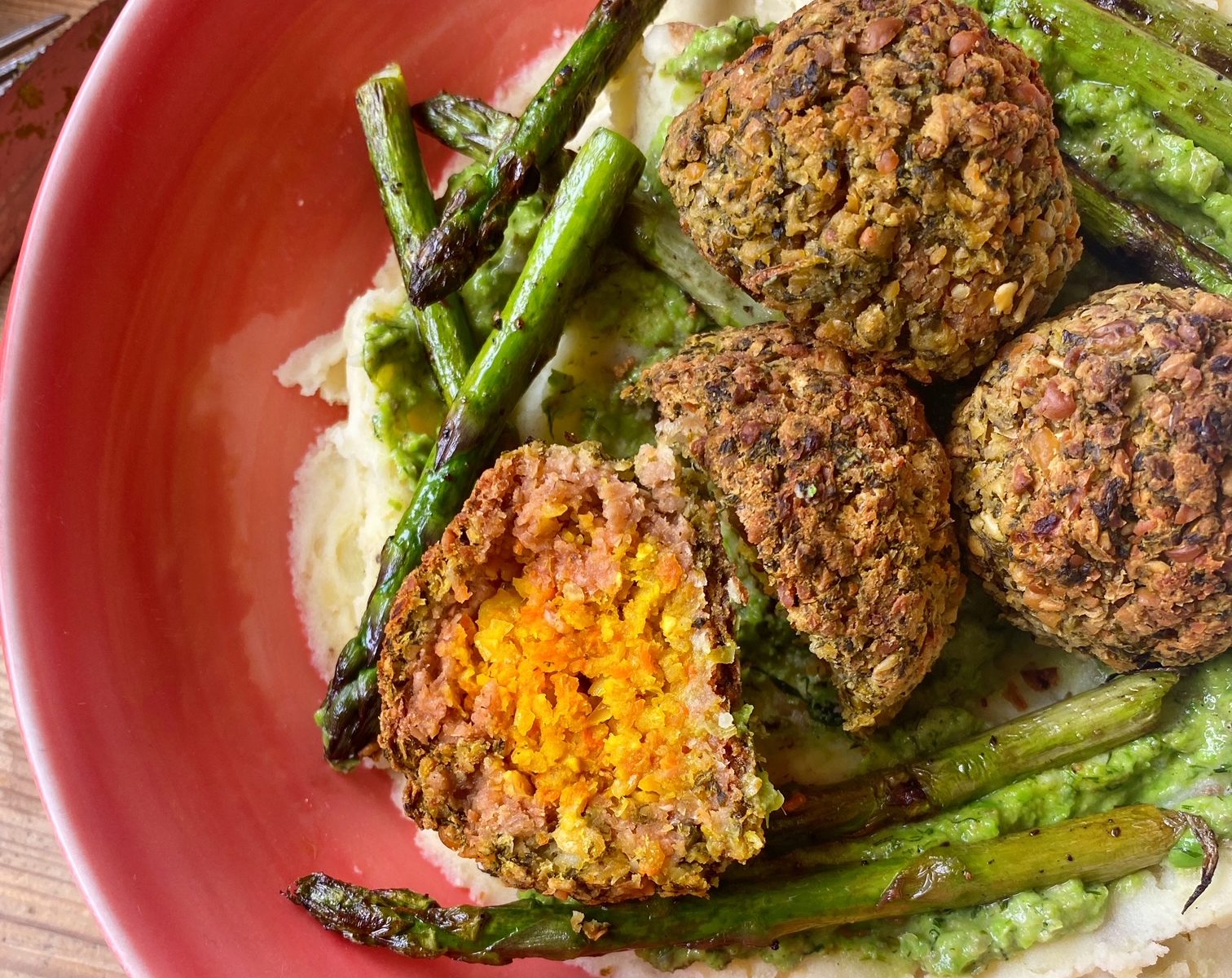
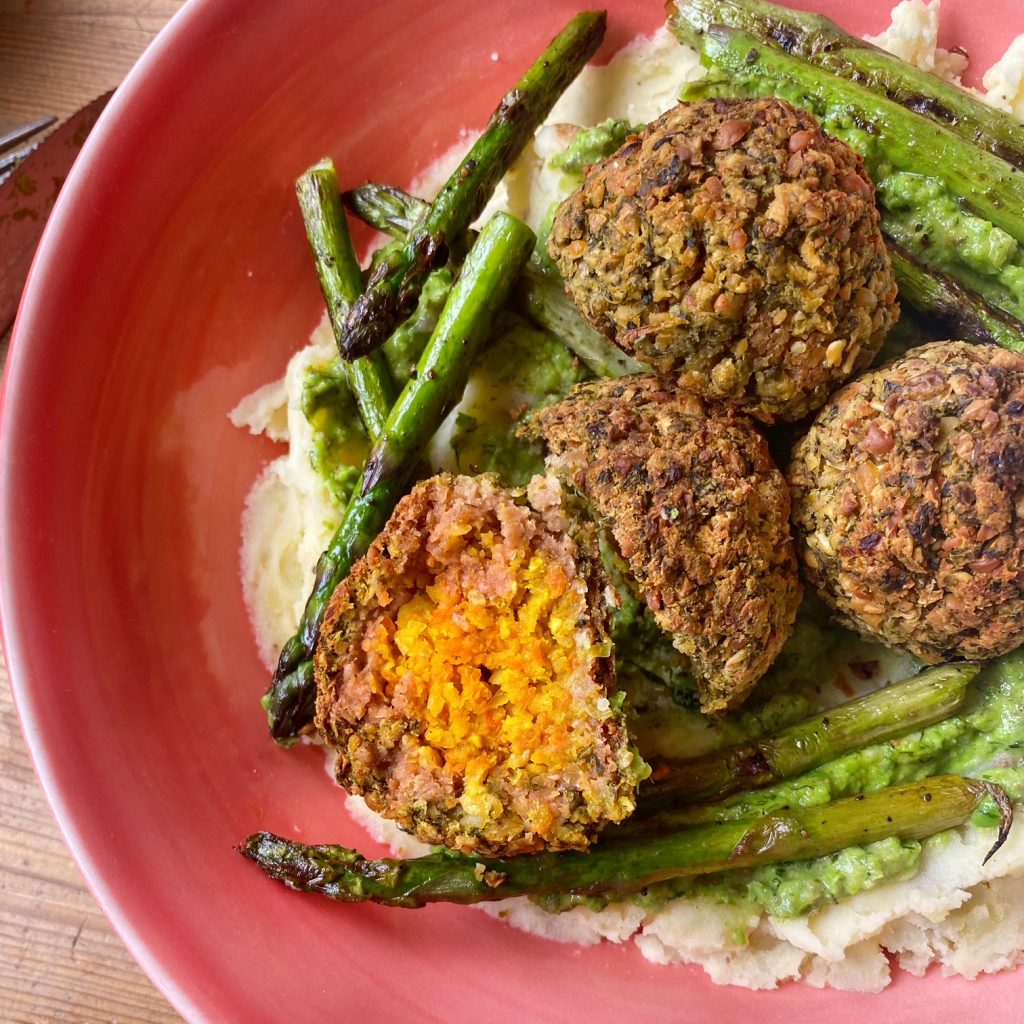
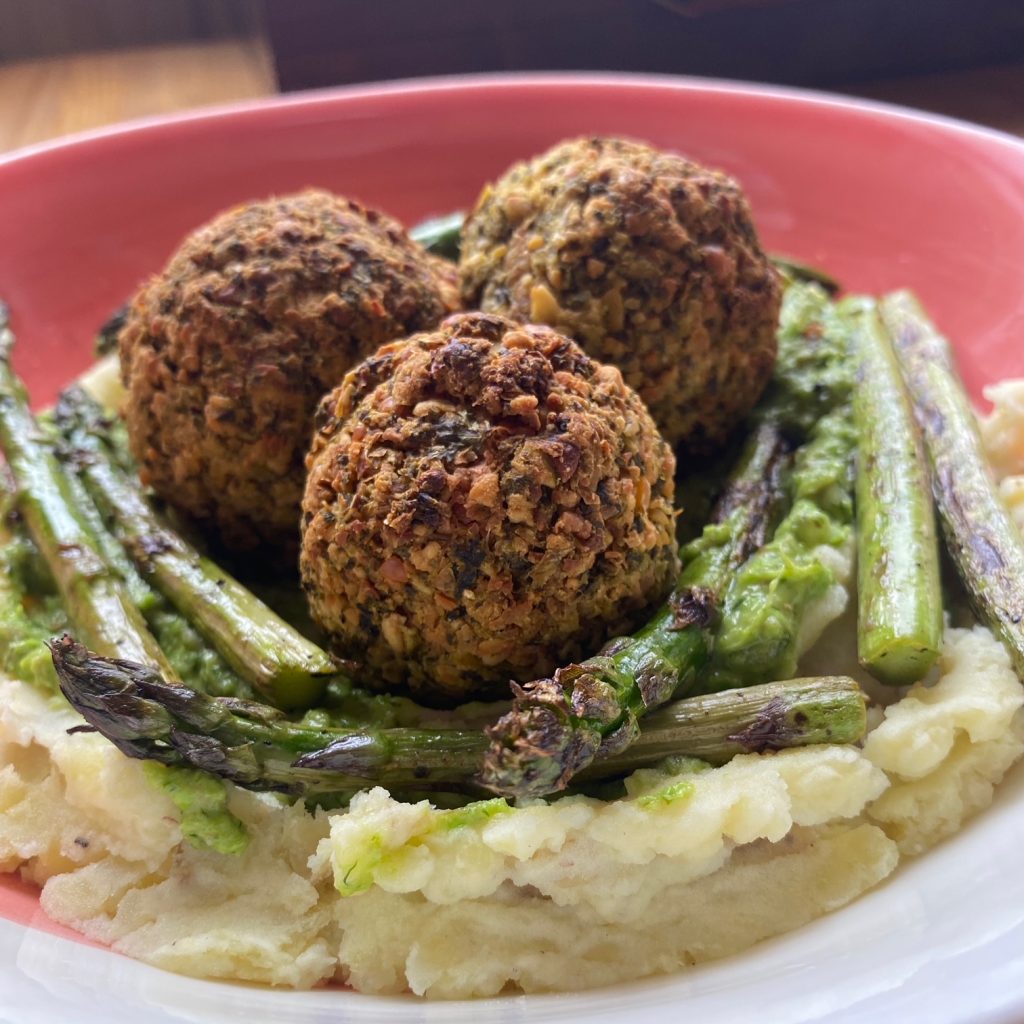
This nutritious, protein-rich, falafel-like mixture is so handy for making things like burgers and meatballs and of course it makes delicious fillings for wraps. You can flavour it with whatever herbs or spices take your fancy and colour it (and add sneaky veg) with any vegetables you like too. I felt like making some multicoloured balls as Easter ’eggs’ to have for a pastel coloured Easter lunch this week. Nestled in a bowl of creamy mashed potatoes and grilled asparagus and drizzled with a spring pea salsa. You could serve it with roast potatoes, gravy and trimmings for a Sunday roast too.

Liz x

Ingredients

  • 3 tins of chickpeas
  • 3 onions
  • 6 cloves of garlic
  • 3 tbsp olive oil
  • 12 tbsp porridge oats
  • 1 tsp turmeric
  • 3 tsp ground coriander (or any spice you prefer)
  • 2 cooked beetroots
  • 3 cooked carrots
  • 6 large kale leaves, chopped, cooked and squeezed to remove water
  • a couple of handfuls of parsley
  • salt and pepper to taste
  • extra olive oil for brushing and baking

Method

  1. Drain the chickpeas and tumble into 3 bowls. Add 4 tbsp of porridge oats to each bowl.
  2. Finely dice the onion and garlic and sauté until soft and golden with the olive oil. Divide amongst the three bowls.
  3. To each bowl, add a tsp of salt and grind black pepper to taste. Add a tsp of ground coriander to each bowl too if you like, or another spice or herb of your choice.
  4. Put the cooked carrot in one bowl (along with a tsp of ground turmeric for bright yellow colour), the cooked beetroot in one bowl and the kale and parsley in the last bowl. Now you are ready to blend the mixtures.
  5. In a food processor, first blend the yellow carrot mixture. Tip in the contents of the bowl with the carrots and pulse the mixture together until you reach a rough, sticky mixture. Scrape it out, back into the bowl, then repeat with the green kale mixture then the pink beetroot mixture. If any of the mixes seems a little wet, add an extra tbsp or so of oats and blend again. If it is too dry, add some olive oil or lemon juice to the mix or some extra vegetables.
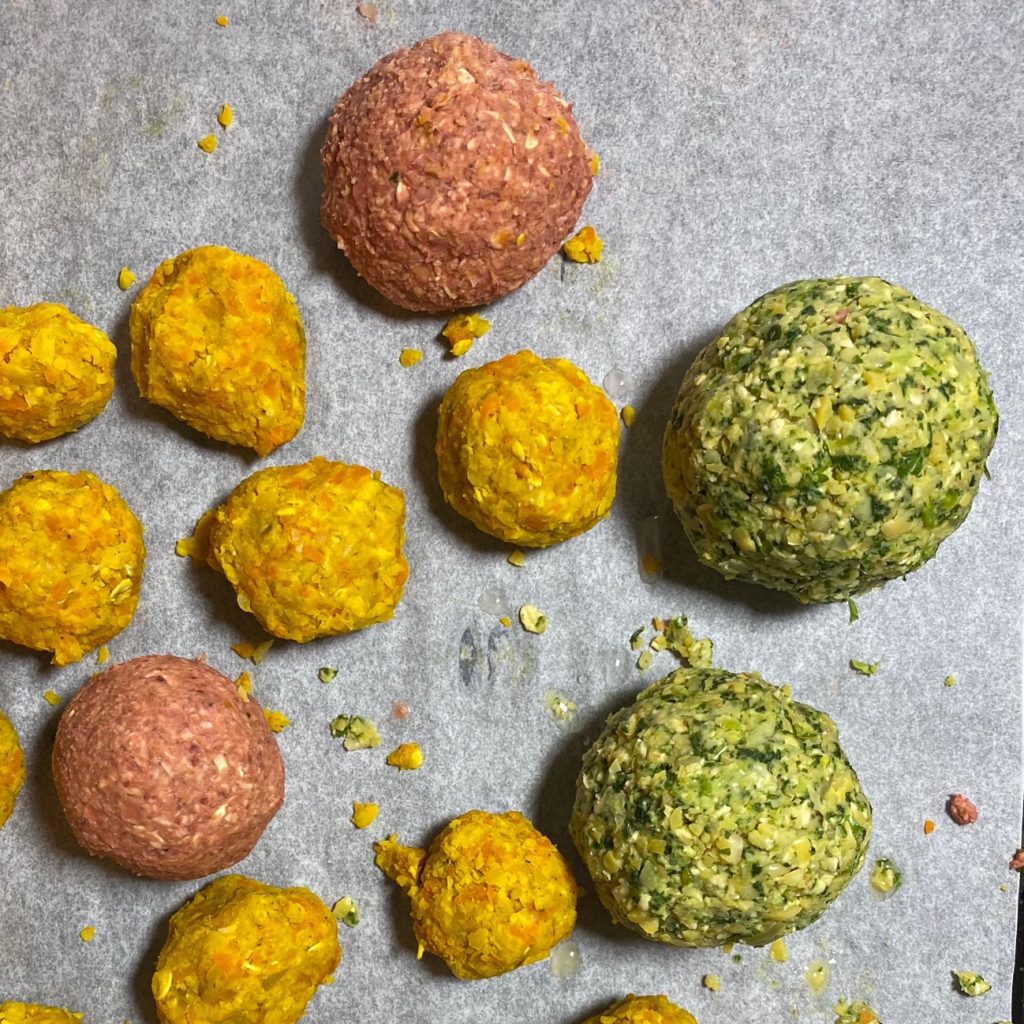
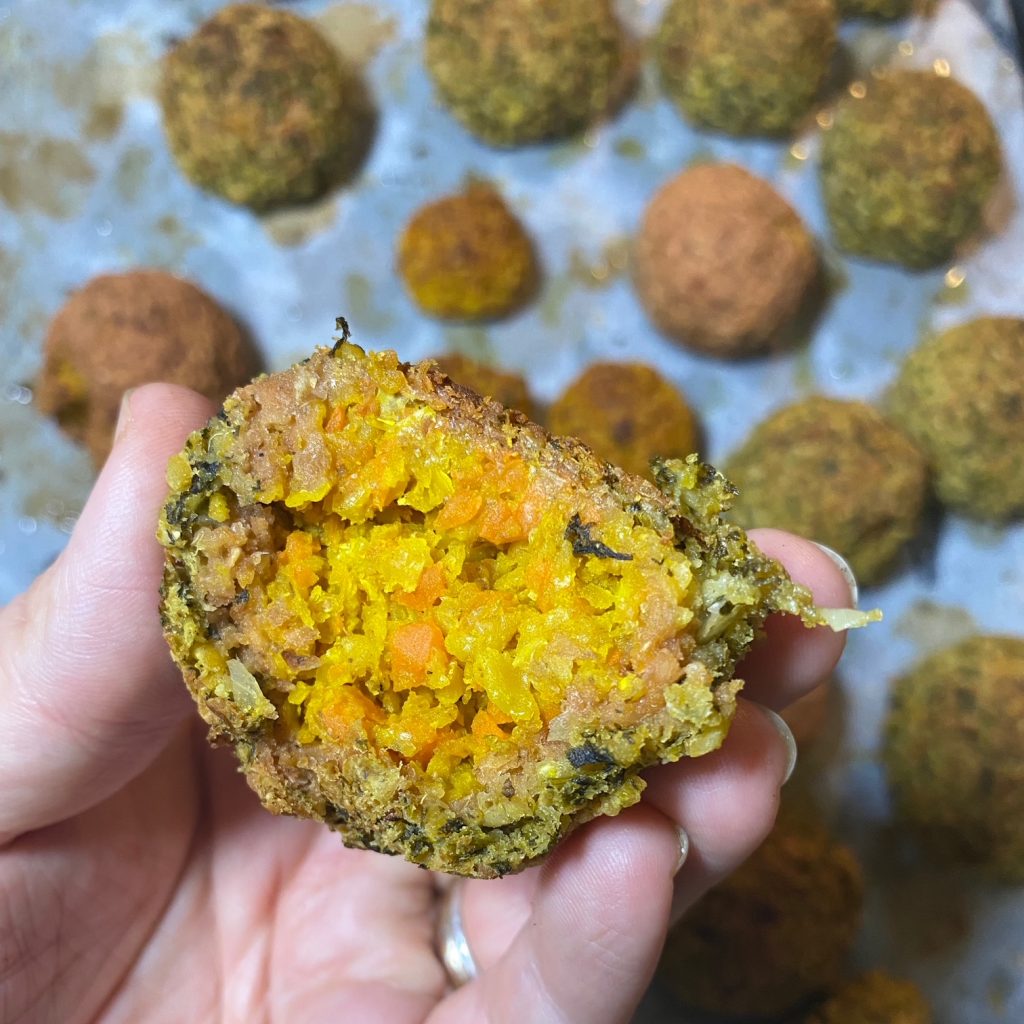
  6. Pre-heat your oven to 200C and line a large baking try with baking parchment. Then squish and roll the mixture into small, colourful balls – or make layered balls like I did with the yellow mix in the middle, then carefully wrap a layer of pink beetroot mix and finish off with the green outer layer. TOP TIP: use wet hands to avoid frustrating stickiness. just keep a bowl of warm water on the work bench and wet your hands when they start to get a bit sticky.
  7. Brush the balls with olive oil and put them in the oven to bake until hot through and golden and crispy on the outside. Timings will depend on the size of your balls so just keep an eye on them.
  8. Serve however you like but they definitely need a sauce or gravy. This time I served them with creamy mashed potatoes, grilled asparagus and a pea salsa (I just blended a mug of peas with about 4 tbsp of capers and a splosh of the caper vinegar, a handful of chopped dill and a generous drizzle of olive oil).

Easter Inspiration

Go green this Easter with some veggie meals and treats from our archives. Just click on the photos or the words in bold to be taken to the recipes. Happy cooking! Liz x

To Start

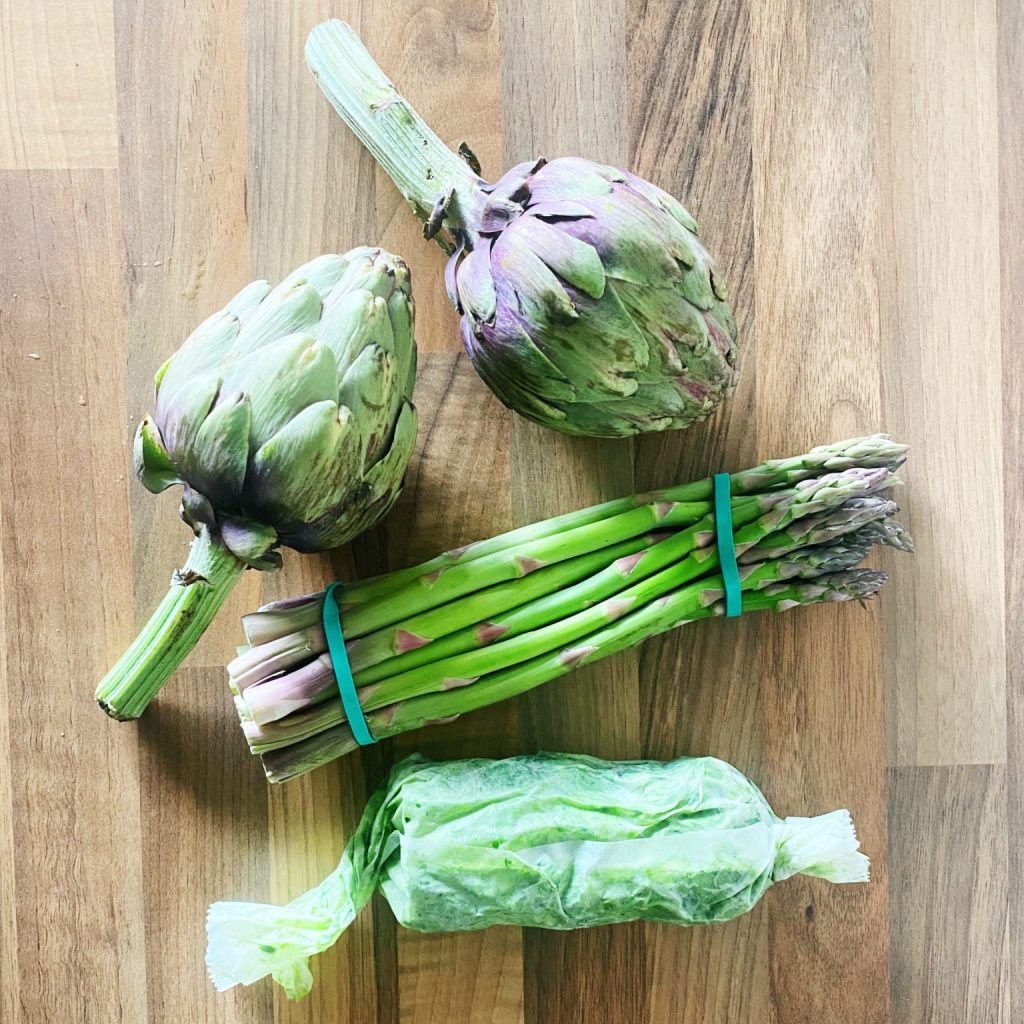
Try this steamed asparagus and artichoke dish with wild garlic butter. Asparagus, artichokes and wild garlic are all really special perennial vegetables, perfect at this time of year and such a treat.

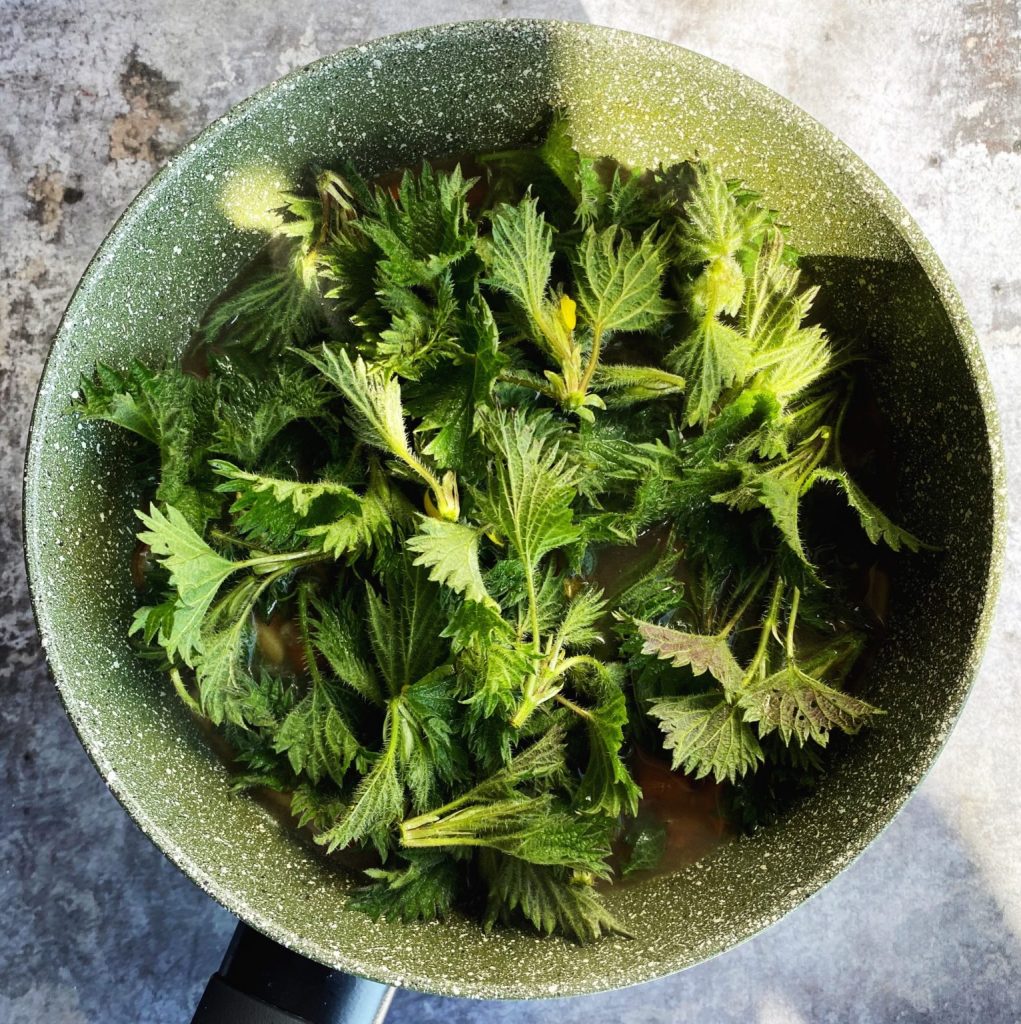
Or how about a soothing bowl of wild nettle soup? Use our organic vegetables as a base and add some locally foraged wild nettle tips from near you.

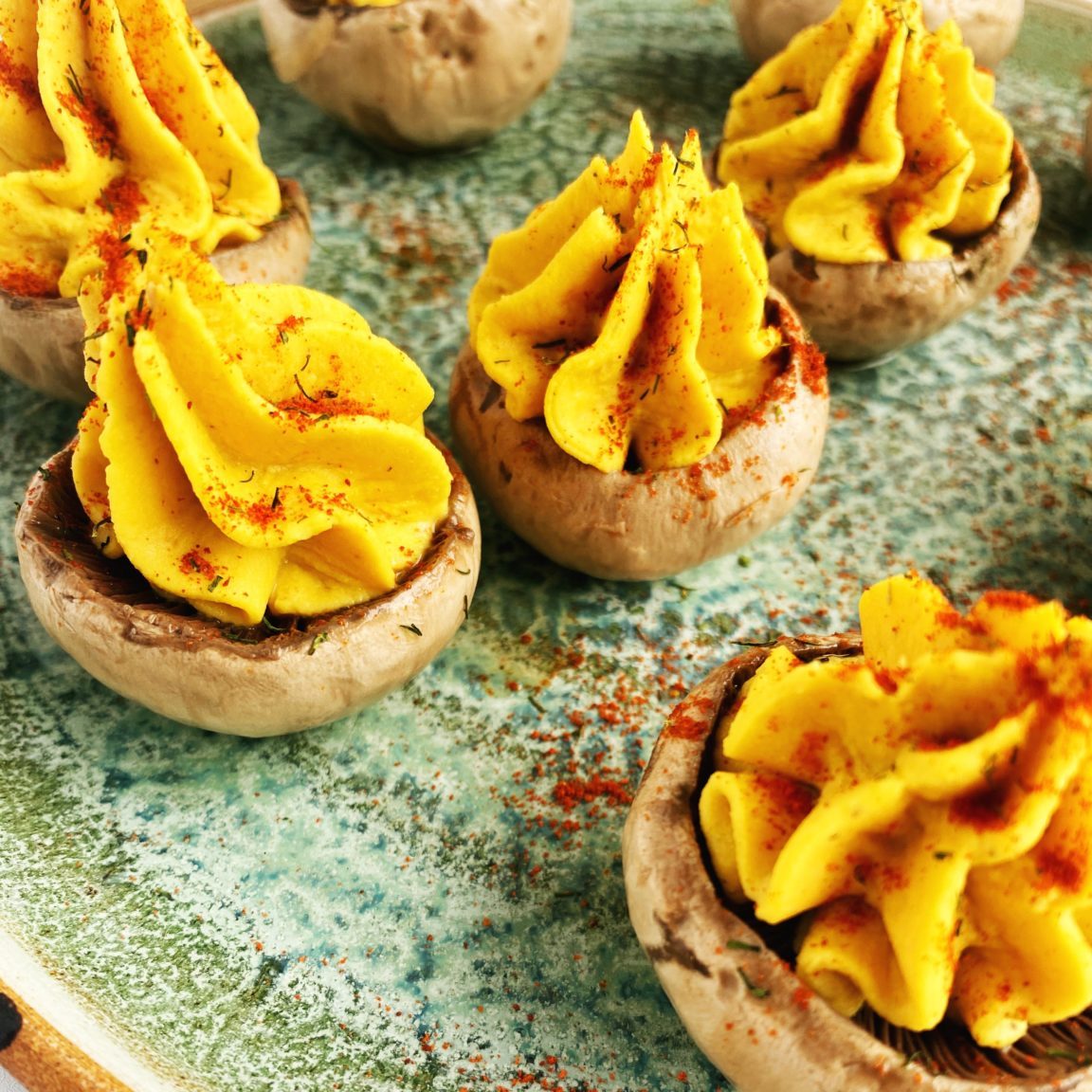
Or a platter of these vegan devilled eggs? A lightly pickled mushroom replaces the traditional egg white and the yolk is made from beautifully seasoned chickpea puree.

The Main Course

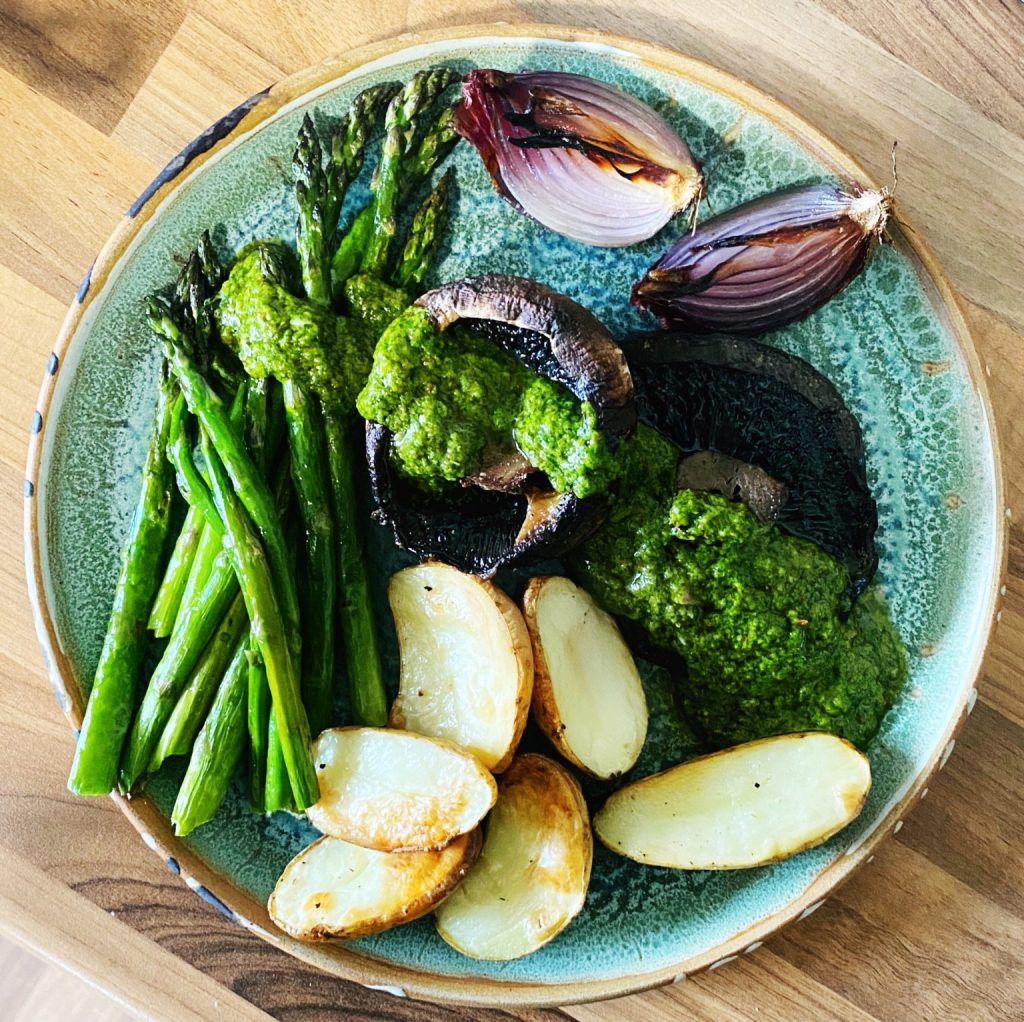
This easy, one-tray dish packs a lot of flavour. Try our portobello mushrooms steaks with roasted potatoes and asparagus, drizzle over some vibrant chimichurri to make the dish sing SPRING!

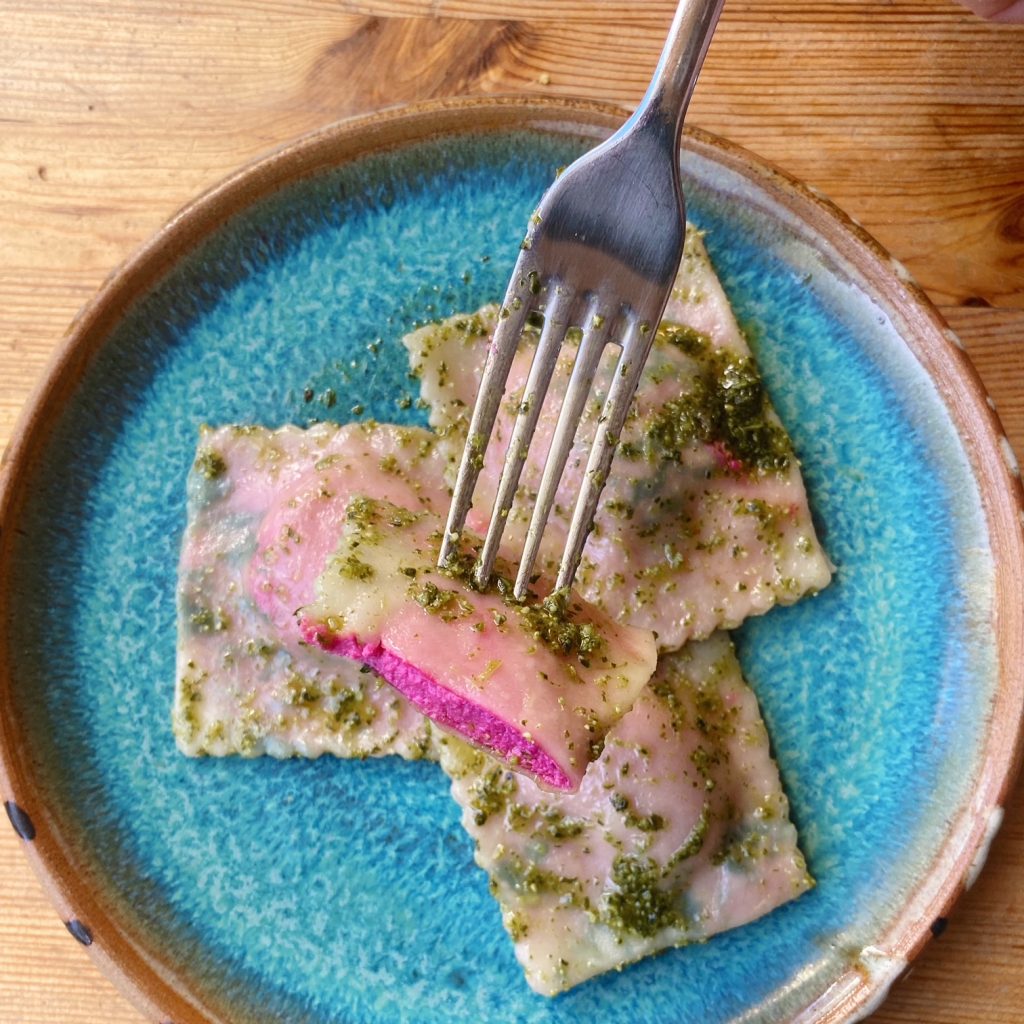
Try your hand at making a homemade pasta dish? Ravioli is easier to make than it looks and this beautiful beetroot ricotta is just what a spring lunch is calling for.

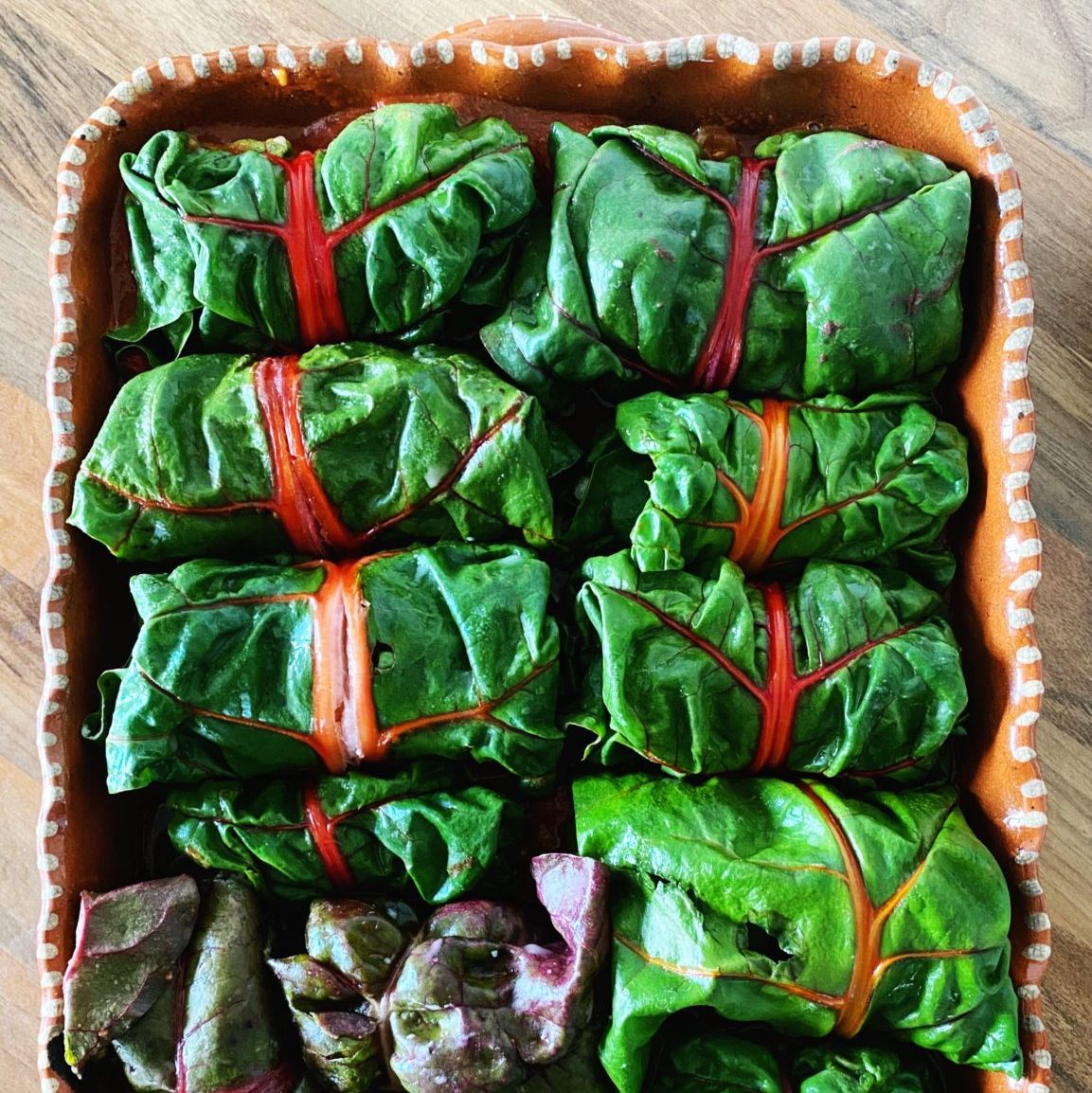
Rainbow chard parcels are so versatile and you can really make them your own with your favourite fillings. Here’s one way to enjoy this colourful leafy green.

Something Sweet?

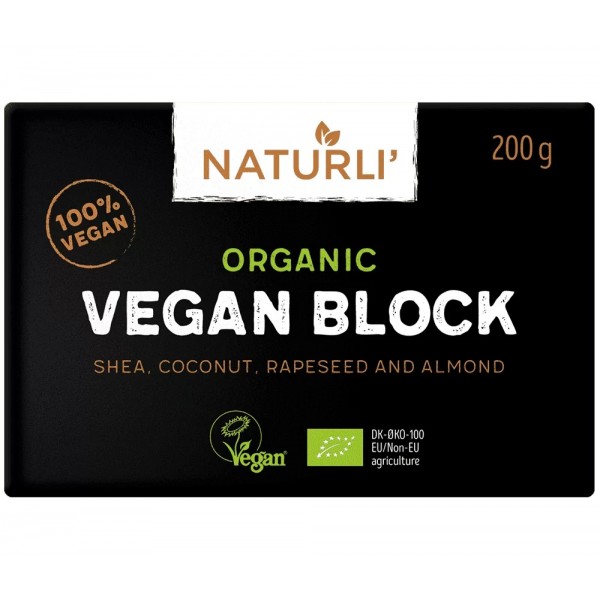
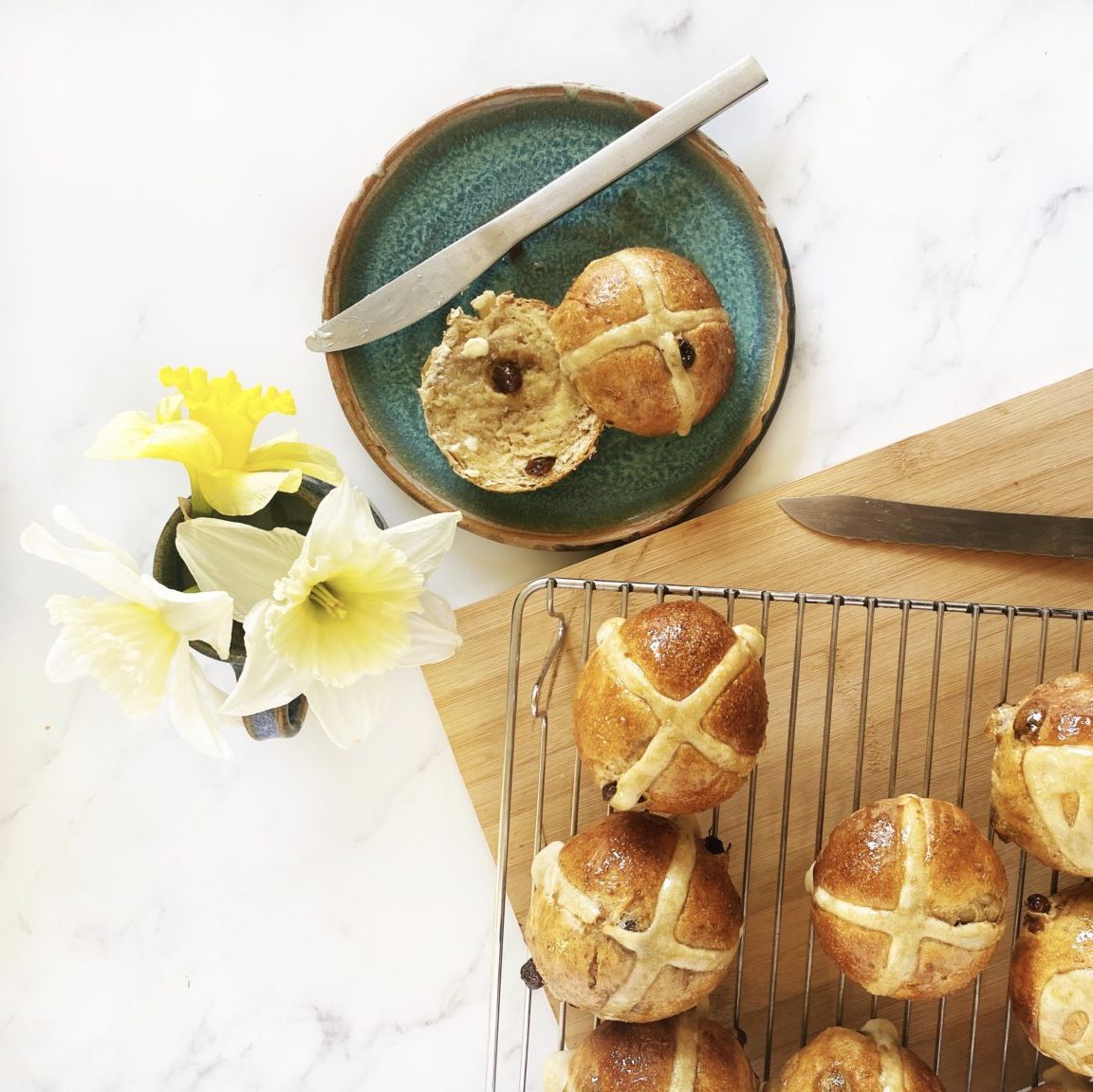
Easter isn’t Easter without hot cross buns. Try this easy vegan version. Keep it dairy free by toasting and slathering with our new vegan butter.

Make your own little Easter eggs with these dates stuffed with nut butter and coated in chocolate.

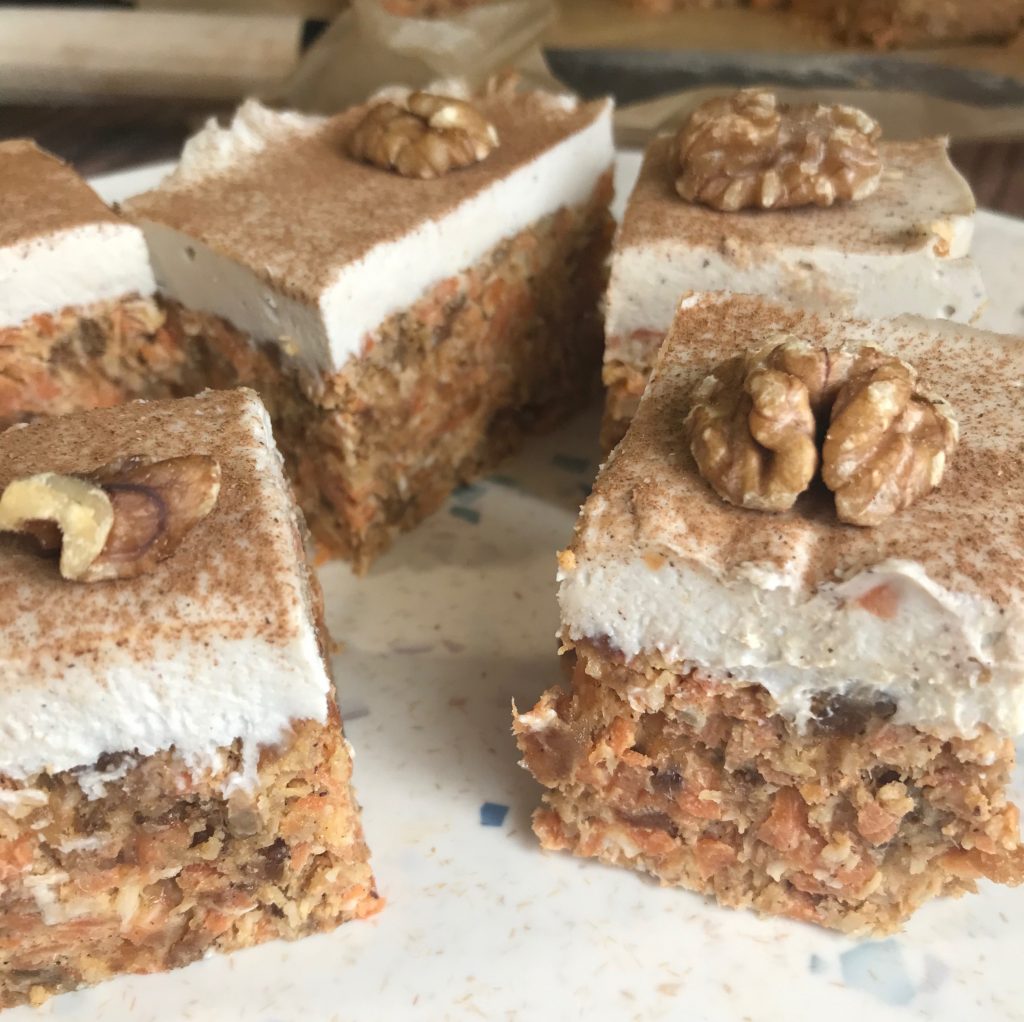
With a nod to the Easter bunny, make this very carroty raw carrot cake. It’s naturally vegan and gluten free, refined sugar free too, but tastes so so good.

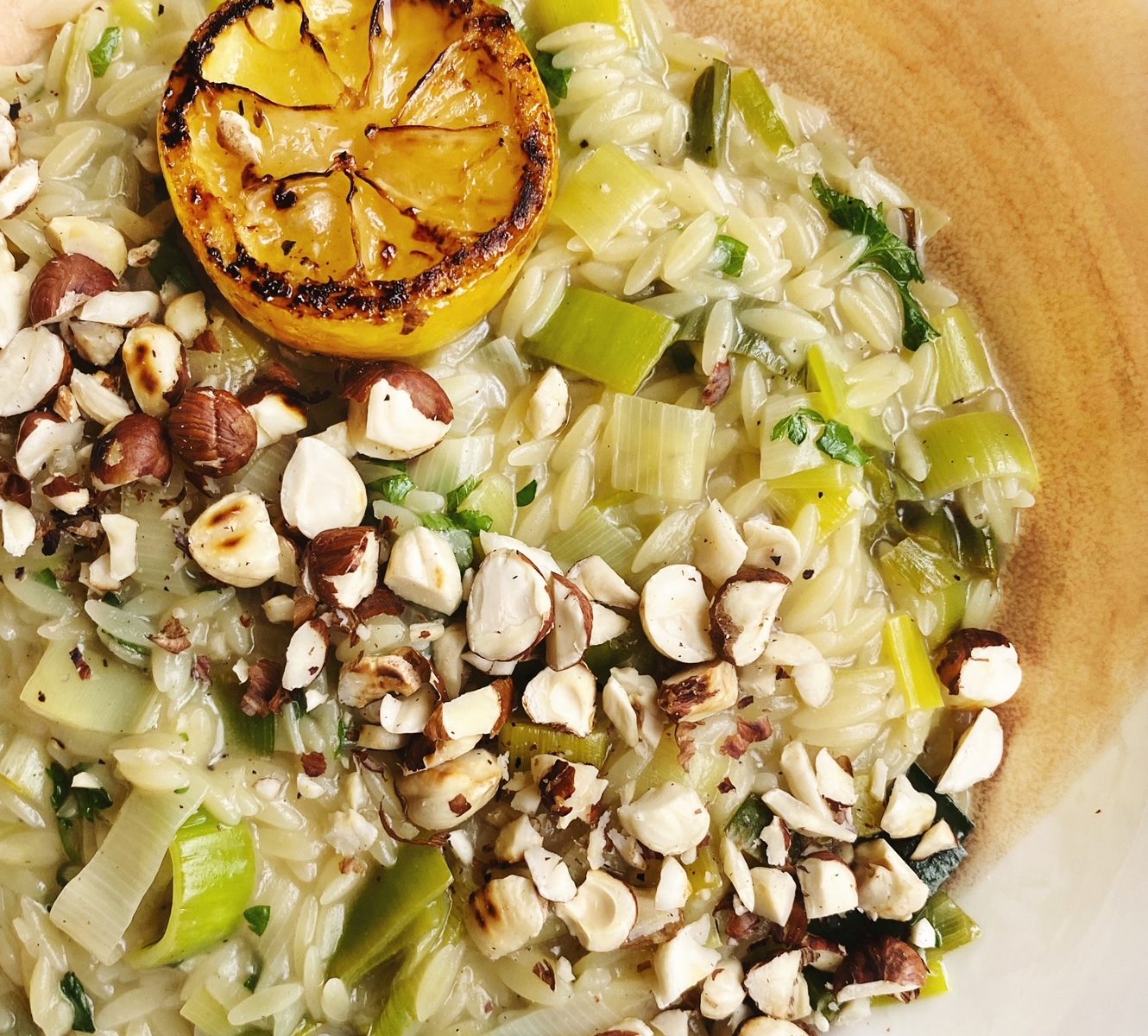
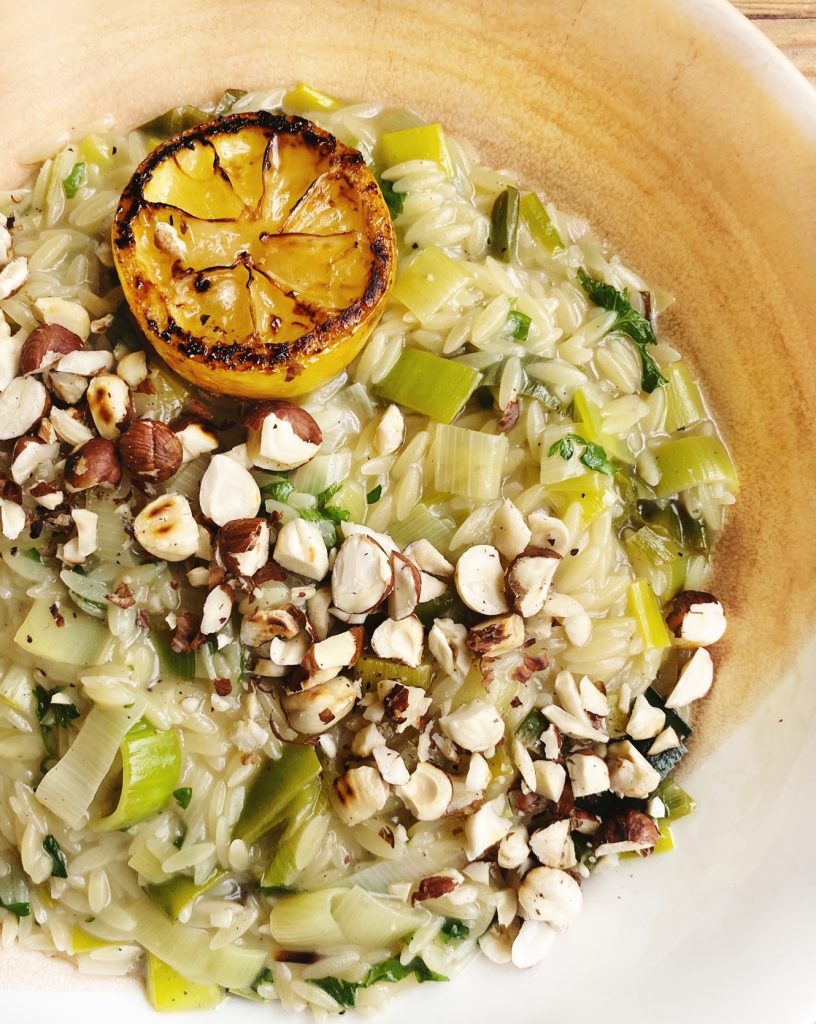
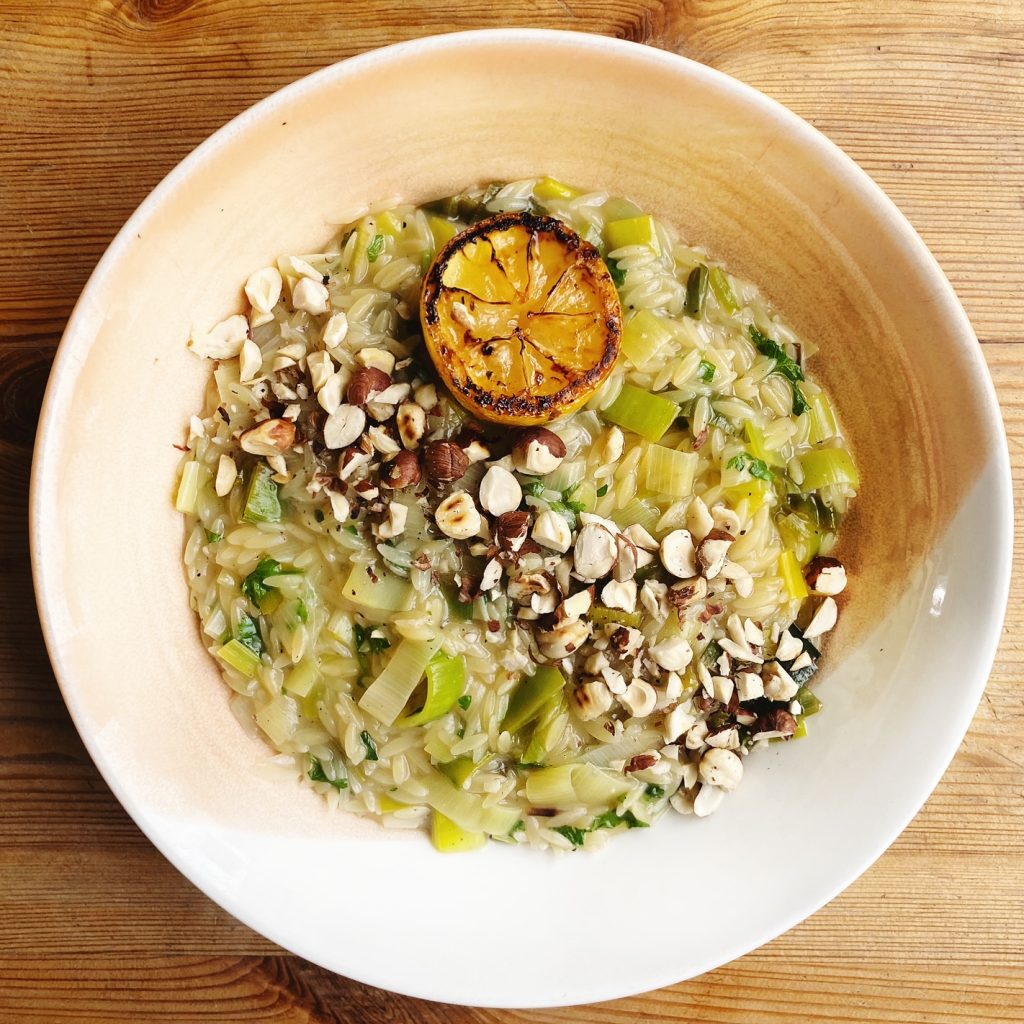
Leek & Lemon Orzotto with Hazelnuts

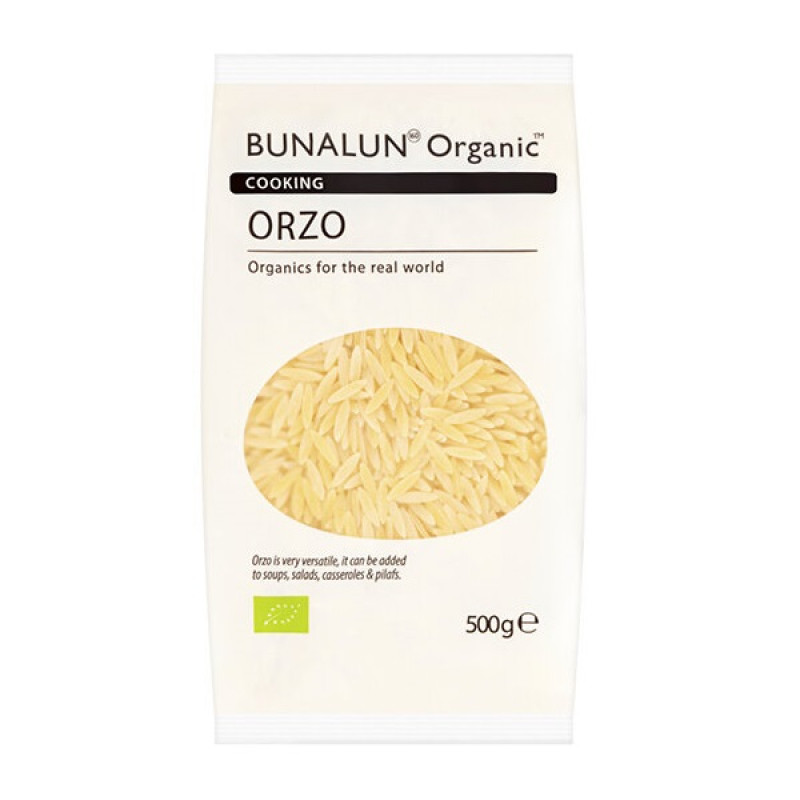
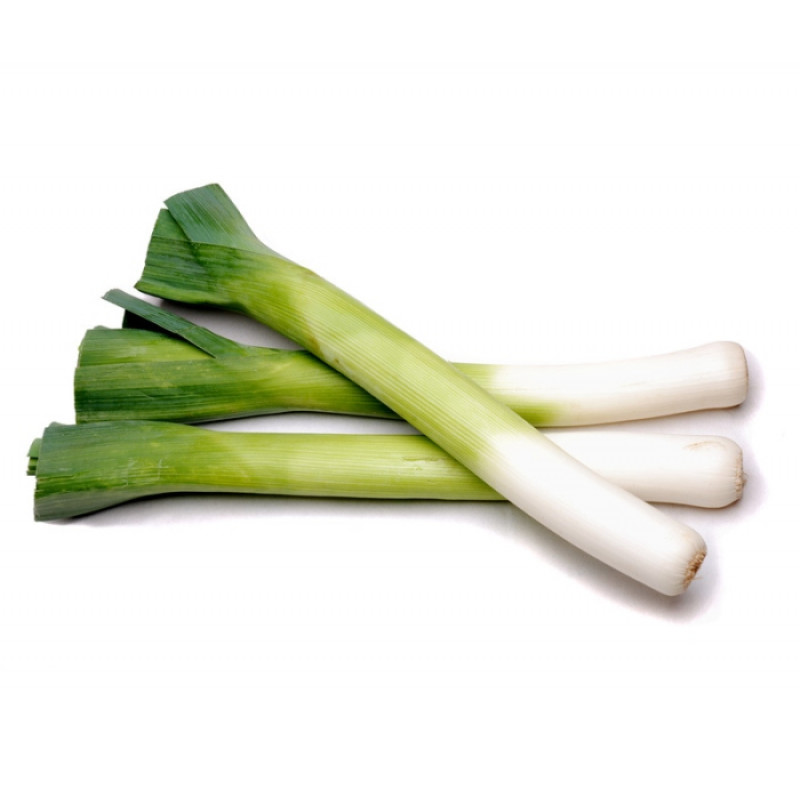
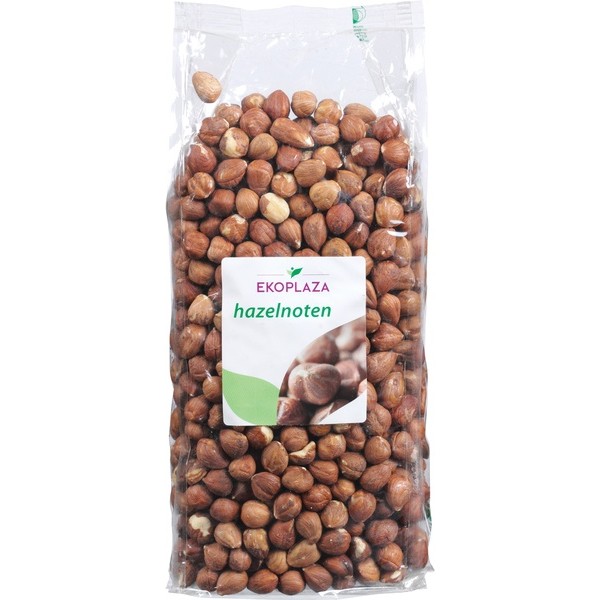
Leeks are one of our favourite vegetables. They are so delicious, I like to make them the star of the show when I cook with them. This simple, one-pot, spring dish is all about those luscious, soft and sweet leeks offset by toasty, crunchy hazelnuts (we stock organic hazelnuts in compostable bags here) and tangy caramelised lemon. Orzo is just rice shaped pasta which I love to cook like risotto rice, we stock an organic bag from Irish company, Bunalun. We love their store cupboard staples so much. Top quality, organic and affordable. Add some Bunalun groceries to your next fruit and veg order with us here. We deliver nationwide.

Liz x

Ingredients (serves 4 hungry people)

Method

  1. Find a large, deep, frying pan or pot. Start by toasting the hazelnuts in the dry pan. Just turn the heat to medium-high, tumble the hazelnuts into the pan and keep them moving around until they smell amazing and are deliciously toasty. Tip them into a bowl to cool a little then chop or crush into smaller pieces and save for finishing your dish at the end.
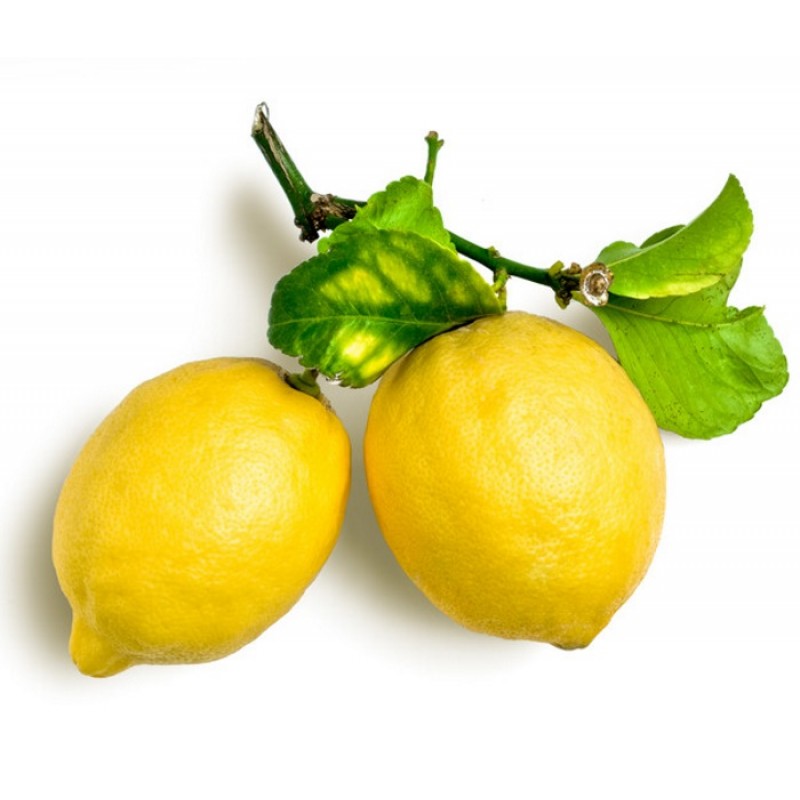
  2. Then, in the same pan, add the butter and oil. Place the lemons, cut side down, into the melted fat and let them cook until caramelised. Remove them to a bowl to finish your dish with later too. Caramelised lemon is so delicious. It makes the lemon softer, juicier and sweeter…and it looks pretty too.
  3. Tip the chopped leeks and garlic into the pan and season with salt and pepper. Stir fry until the leeks are starting to soften.
  4. Add the orzo and stock to the pan and simmer and stir until the pasta has absorbed the liquid and is cooked through. Taste and tweak the seasoning if needed with more salt and pepper.
  5. Stir the chopped parsley through, then serve in four bowls, each topped with a caramelised lemon half and a handful of chopped, toasted hazelnuts. Enjoy!