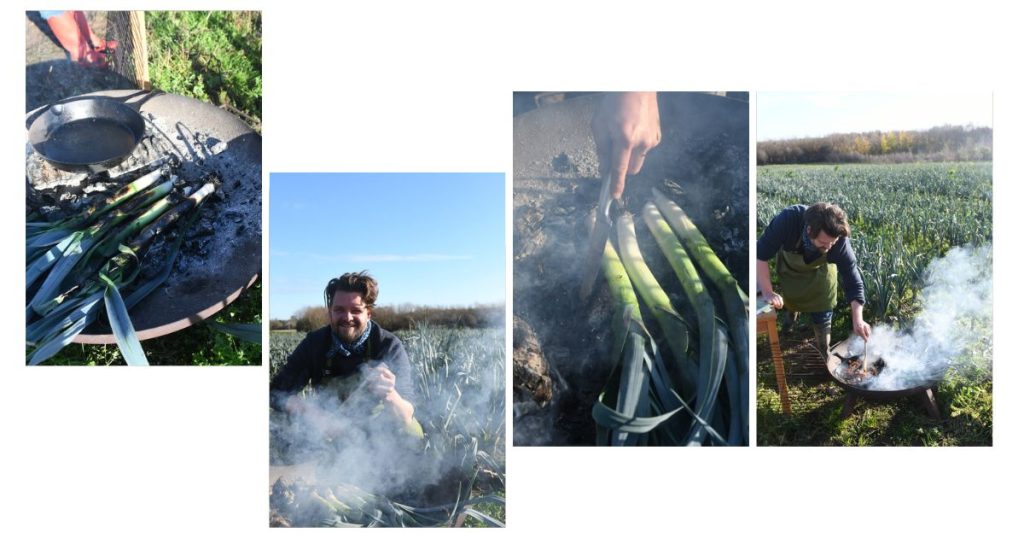
This smoky Catalan-style dish is all about the contrast of charred, sweet alliums and nutty, tangy romesco. Traditionally served with calçots, the sauce works beautifully with blackened leeks too – or with almost any grilled vegetable or fish. It’s so moreish you’ll want to spread it on toast.
Tom Hunt is an award-winning chef, food educator, writer, climate change activist and author. This recipe was first published in his book Eating for Pleasure, People & Planet. https://www.tomsfeast.com
Ingredients – serves 4
4–6 leeks (about 1 large or 2 small per person), trimmed
Light olive oil
Sea salt and black pepper
Romesco sauce
2 cloves garlic, finely chopped
1 red chilli, chopped and deseeded
50g almonds or other nuts
50g stale or dry bread, torn
1 shallot or ½ an onion, finely diced
1 tbsp smoked paprika
350g roasted red peppers (from a jar or freshly roasted)
1 tbsp sherry or red wine vinegar
100ml olive oil
Method
To cook the leeks, preheat a barbecue or grill to high. Rub the leeks lightly with olive oil and season.
Place them directly over the coals or under the grill, turning occasionally, until the outer layers are blackened and the insides are soft – about 10–15 minutes depending on their size. If cooking directly on the coals, brush off any ash before serving.
You can also roast them in a hot oven at 220C until tender and charred at the tips. Meanwhile, make the romesco sauce.
Warm a splash of olive oil in a frying pan and fry the. bread and almonds for a few minutes until golden. Add the garlic, chilli and onion and cook for another couple of minutes until fragrant, then stir in the smoked paprika.
Transfer the mixture to a blender with the roasted peppers and vinegar, then blend to a coarse paste. With the motor running, drizzle in the olive oil until you have a thick, spoonable sauce. Season with salt and pepper to taste.
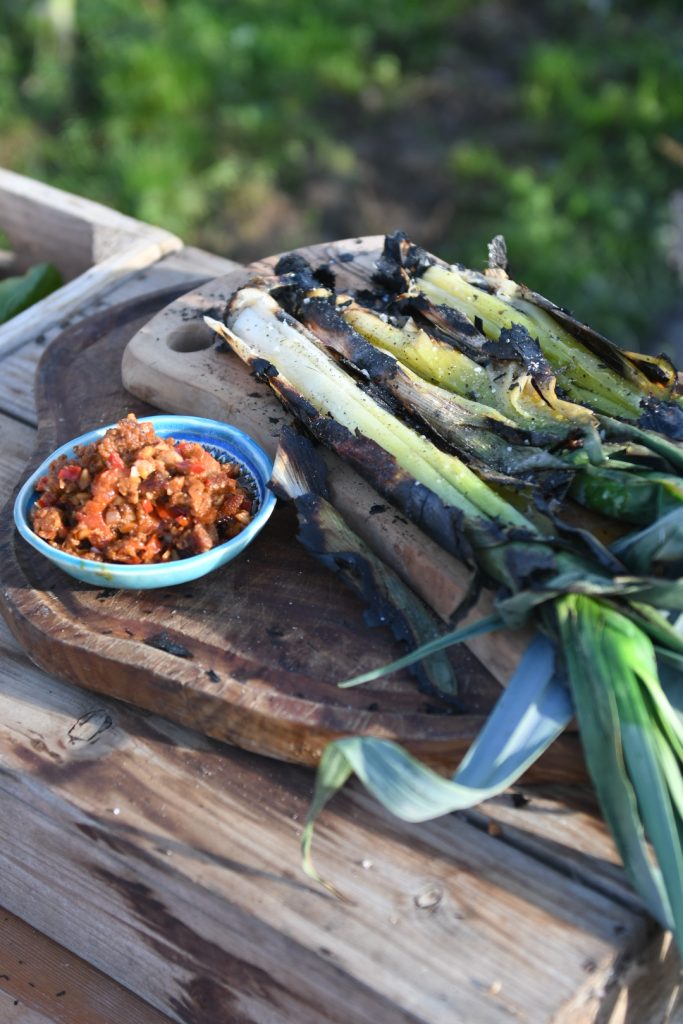
Serve the hot blackened leeks piled on a platter with the romesco spooned generously over the top or served alongside.
Storage
The sauce will keep well in the fridge for up to a week, or longer if pasteurised in the jar.