what a week

What a week. It has been full on, on so many levels. Life can be funny like that sometimes; it comes in waves. 

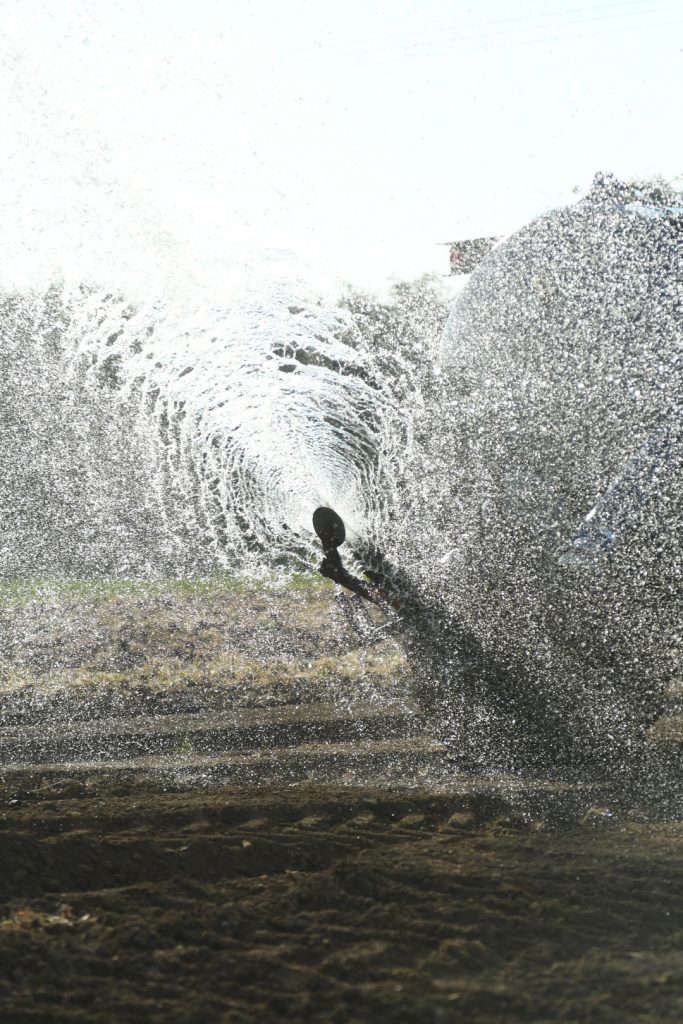
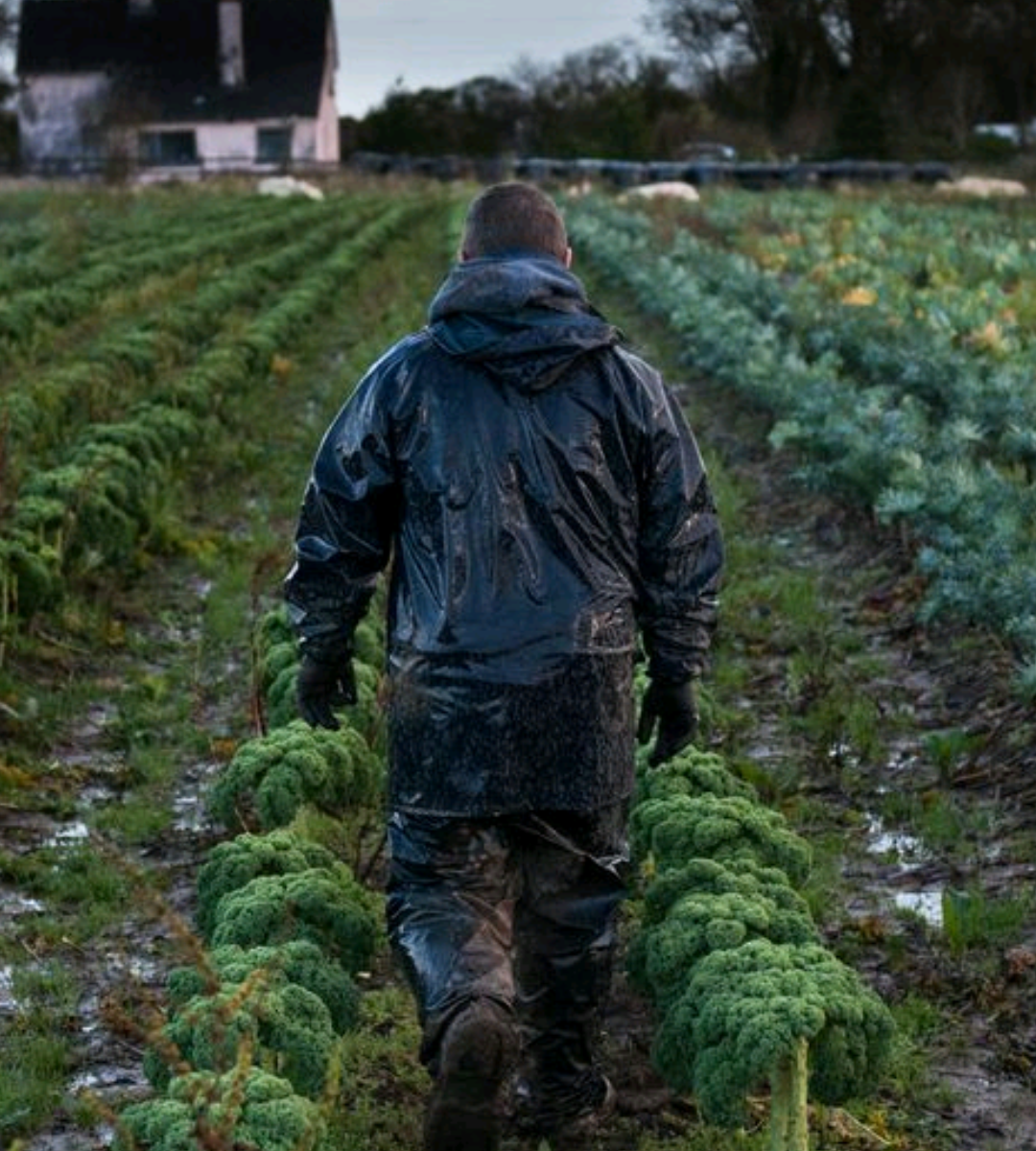
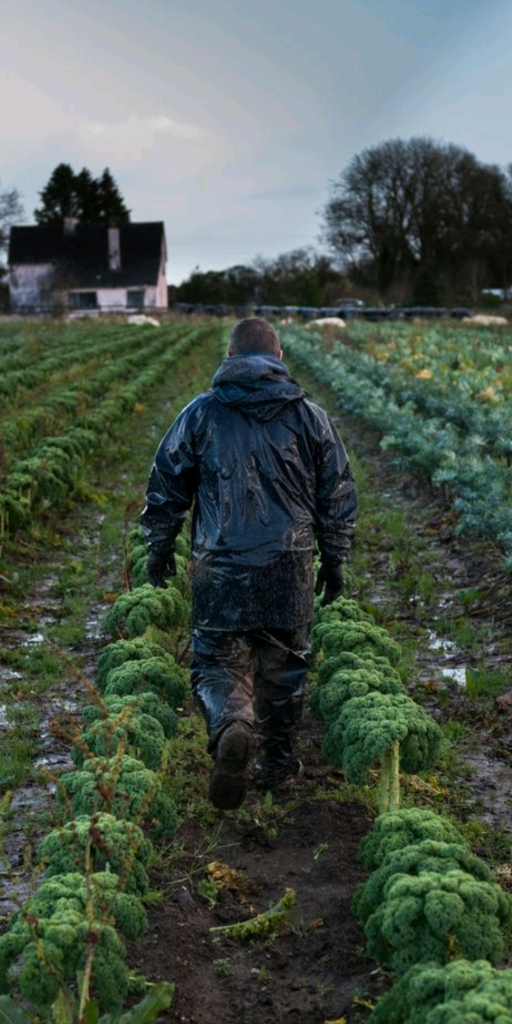
We have waited and waited for the weather, and it has finally arrived, so the farm has gone into overdrive and to be fair everybody has been putting in amazing effort and we have been busy. 

Busy in the fields and busy in the packing shed, and for that we are thankful. With the weather set to improve, it is one of the ironies of this business, that when the weather improves our orders disappear. 

As we head into a week of nice weather, I am delighted both for our collective Irish mental health and for our farm, but I am also very nervous because ironically this can have a deleterious effect on our orders, the life blood of our business.  

If you can remember us in your weekly plans for food, it makes a tremendous difference, we are not a large supermarket and are completely dependent on your orders. You make a difference.

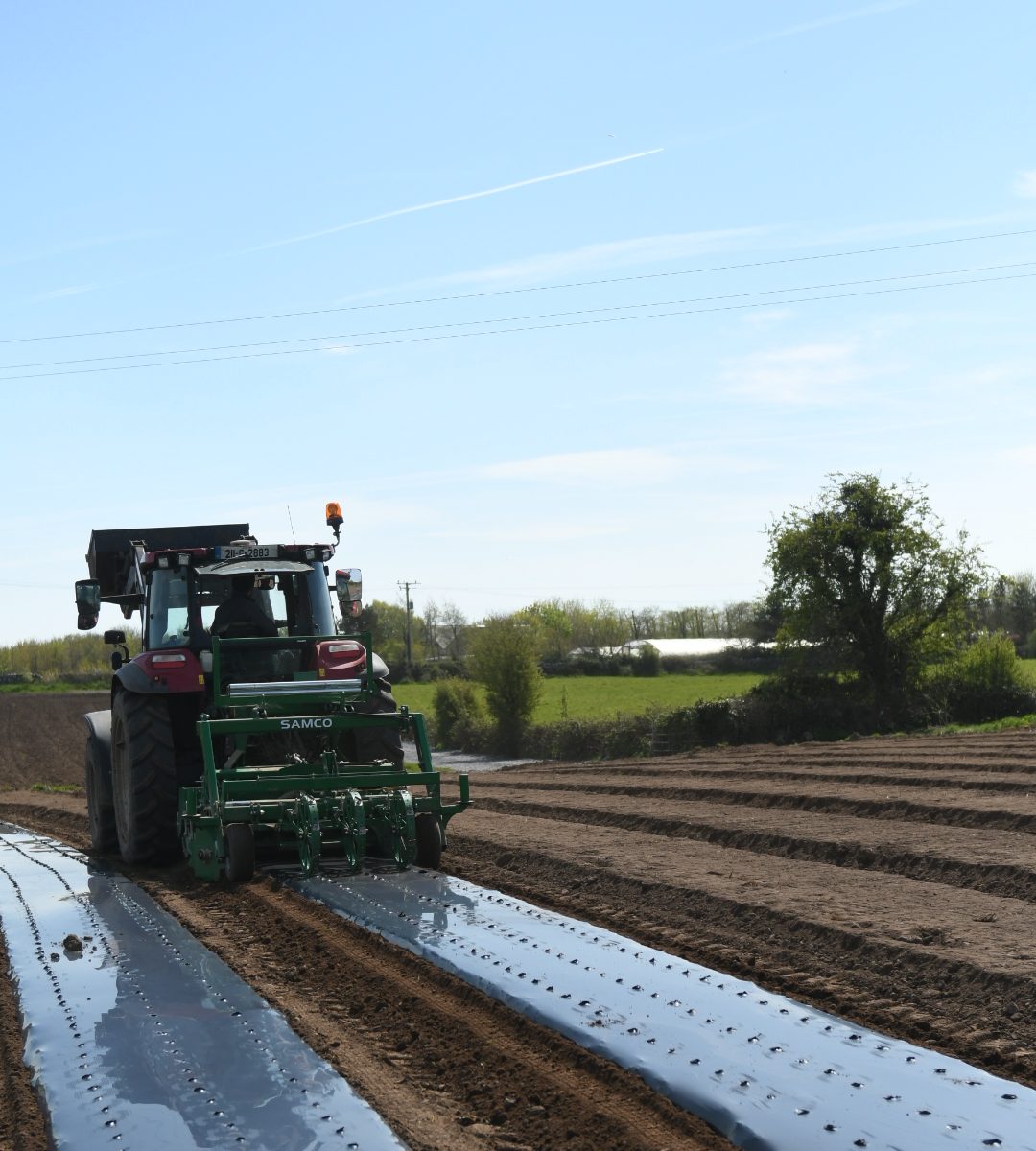
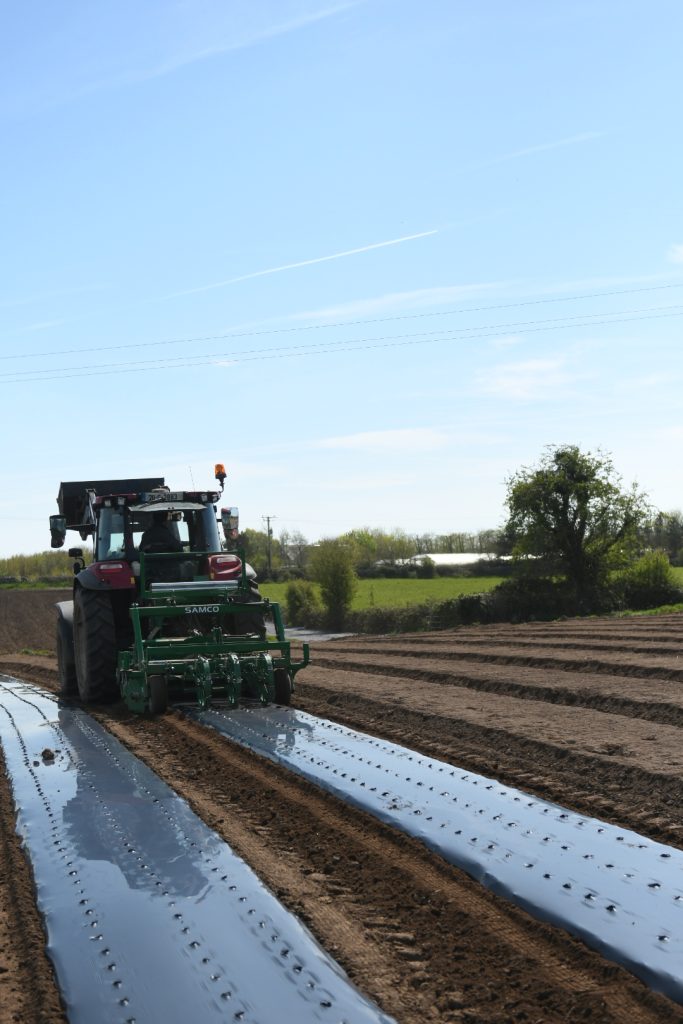
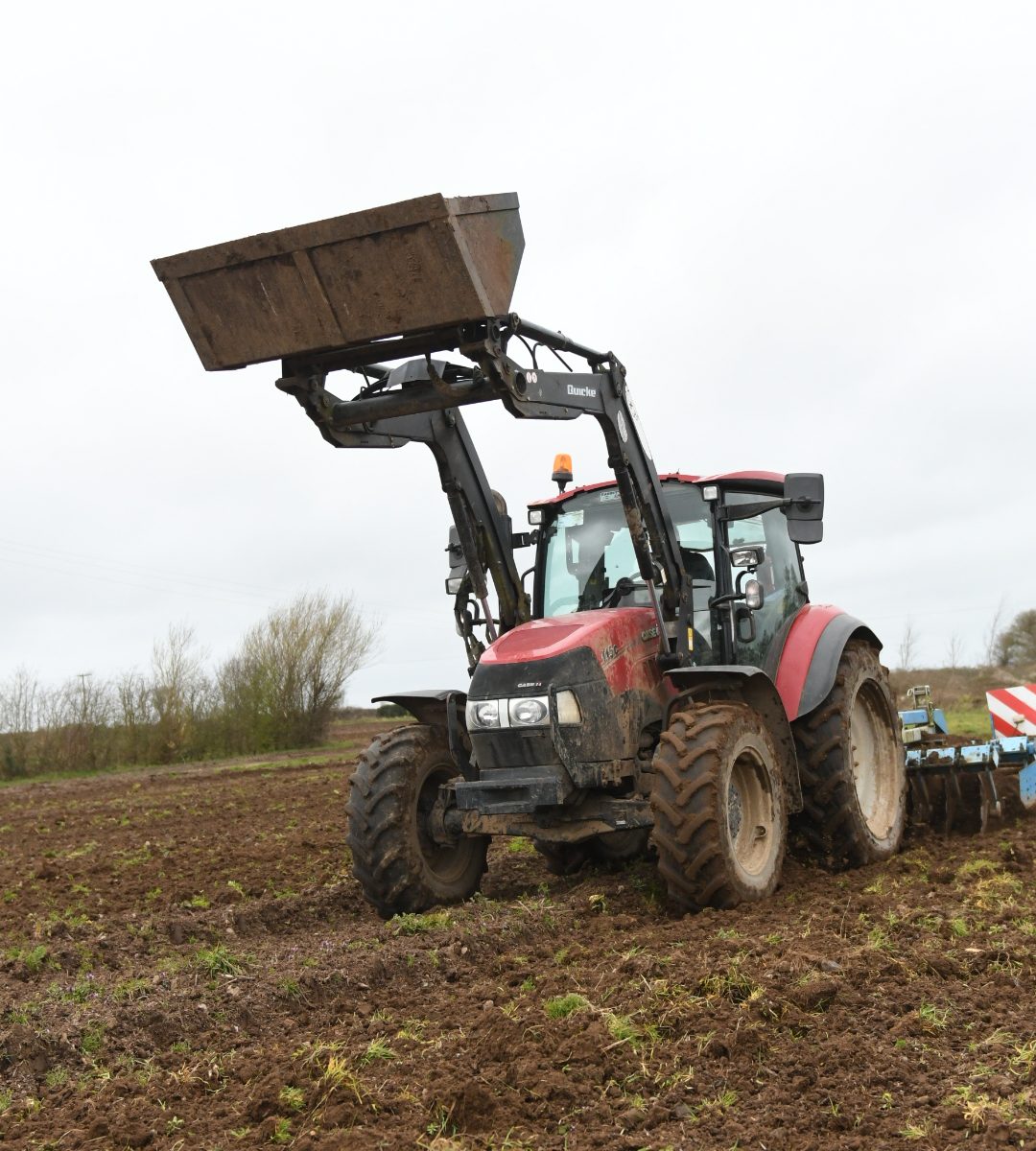
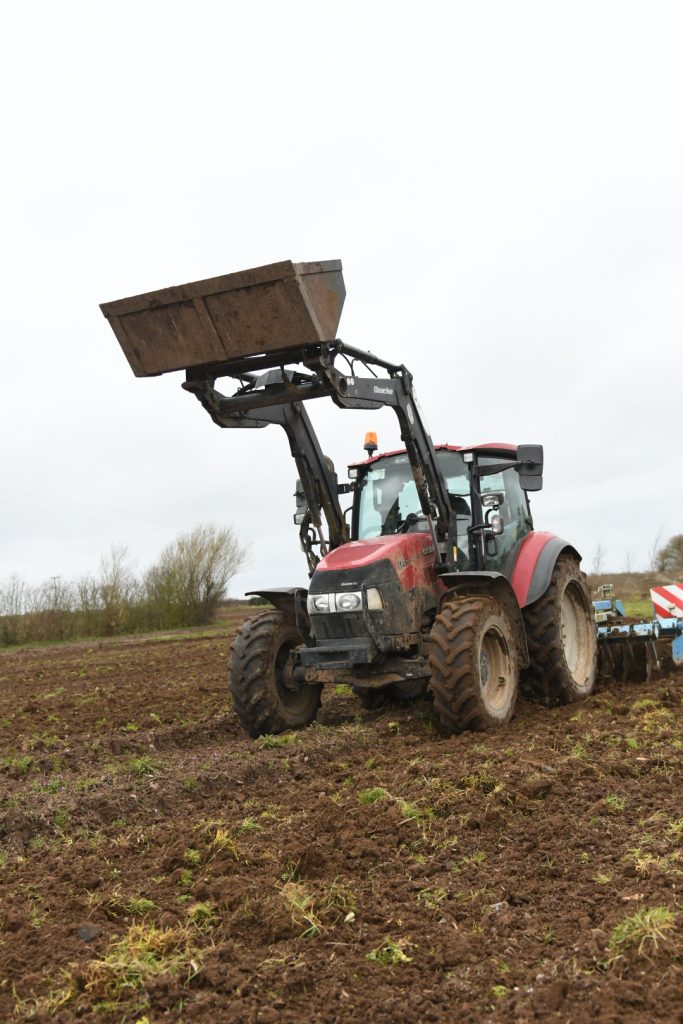
So, we have been busy, nearly 700 tomato plants are in the ground, and they will need their first side shooting next week, we have ploughed, tilled, and made the first beds on nearly 15 acres of ground, and the first outdoor plants, (later than anticipated) will go into the ground next week: the first new season kale, cabbage and broccoli, onions, lettuce, spinach, chard and beetroot. We have already planted thousands of plants in our tunnels, and they are nearly full now. 

On a harvest front, things are getting a little tight, the most exciting thing coming soon, is the first fresh garlic bunches, no Chinese garlic here. 

I heard a quote during the week that I really liked: “Bees need weeds” and this coincided with a victory by the residents of Cornwall in the UK, to stop the local council from reintroducing Glyphosate, Why oh why would the council even consider that? So well done to the people of Cornwall. 

But the other stark fact is that the use of Roundup in the UK is up 1000% since 1990 to 2,200 tonnes. In the US, 0.5kg of this probable carcinogen is applied for every person living in the US, enough to cause some serious health problems. 

In Ireland 30% of all sales of pesticides are for Glyphosate. And here is the thing that always get me, have you ever seen a field that has been sprayed with Roundup? Well I have and it leaves me feeling quite sad, it is dead, all plant life is dead (a caveat here, the first glyphosate resistant weeds have been found recently in the UK, and in the US they have to revert to more aggressive chemical concoctions to destroy the weeds, as plants are developing resistance to this herbicide).

When a field is sprayed there is no life left for the bees and as our bees are finally flying in full fettle, it would be sad to think that we have destroyed all their food, by spraying toxic chemicals on our land, I could never do it.

You can rest assured that the bees on our farm are safe happy and well fed, maybe in part because we have left our amazing flowering kale forest and also because there are so many (but not too many) weeds left to flower.

So please support us over the next couple of weeks, and in addition to getting amazing, gorgeous chemical free food dropped to your door, you will be helping to alleviate by anxiety about running this stressful business! So, I thank you in advance.

Kenneth

When people are fighting for survival, something must give…

A couple of weeks ago Micheál Martin was in the news for all the wrong reasons and ironically it may have been this time 20 years that he sowed the seeds of the discontent that was so visible last week and the beginning of the demise of the horticultural sector here in Ireland.

When I see a bag of carrots on a supermarket shelf for 29 cent, or a head of cabbage for 49 cent, something inside me tightens. If you are a grower, a farmer, or someone who has spent time working the land and growing food, you feel it deeply — it is demoralising.  

But where did all this start? How did we arrive at a place where fresh, Irish produce — some of the finest in the world — became a loss-leader, a price-war pawn, a way for billion-euro corporations to lure us through their doors at the expense of the primary producers? 

The answer traces back to one decision, made in 2006, by one minister: Micheál Martin.

He repealed the grocery order, imperfect as it was, it held a competitive norm in place across the entire market. When it went, the supermarkets turned to fresh produce as a loss-leader to drive footfall. It was perishable, visible, universally purchased, and — crucially — completely unprotected. Growers had no floor, no alternative buyers, and no leverage. The race to the bottom had found its favourite category.

“It would be cheaper to plough the vegetables back into the ground than to accept the prices supermarkets were offering.”— A carrot grower, recounted in the Oireachtas, 2026

This has left our horticultural sector in a critical condition. We import 83% of the fruit and veg we eat, and we export over 90% of the food we produce (dairy and meat), we are about as food secure as a barren rock in the middle of the Atlantic! The real threat to our food supply two weeks ago during the blockade had nothing to do with local food production and everything to do with the disruption to imports. 

But things could be better, we could grow more here. But to do that it cannot be a business with no margin, no fat in the system, nothing left on the table. When that is the model, all it takes is a fuel shock such as what we have seen last week to bring the house of cards crashing down. 

When costs rocket and you can’t get anymore for what you produce the end result is self-destruction. 

Of course we need to move beyond fossil fuel use, this is an absolute no brainer, and we now have a chance to transition to a clean green future (we have 30KW of solar energy on our packing shed and it is amazing). 

But in the meantime, for farmers and hauliers there really is very little alternative and when people are fighting for their survival something must be done. The irony of course is: if a fair price was paid for the food in the first place, then there would be enough leeway to absorb at least to some extent the price rises that have come over the last 20 years. 

As always only through your support can we continue to farm and support others that farm like we do.

Thank you

Kenneth

The Pesticide, the Darkside and the cover up

We thought we were finally emerging from a relentlessly wet spring. I don’t know why but I am always surprised by rain, you would imagine at this stage after 20 years of farming and living in the West of Ireland it wouldn’t come as such a shock!

This week we had rain that can only be described as monsoon like, giant water droplets that have again saturated the ground and delayed further progress on the farm. There is little doubt now that climate chang is impacting food production globally.

We are right in the middle of the hungry gap, and we import fruit and more veg at this time of the year, and we can see form talking to other farmers in Spain, France and Holland that the weather has put massive pressure on growing systems in these countries as well as our own and has delayed and reduced harvest, it is proving difficult to get produce at present from anywhere.

This, I think makes it even more urgent to have the discussion around our own food security especially with the closure of one of our largest carrot growers two weeks ago.

But back on the farm we have had a few days of sunshine and the three days of fine weather we got last weekend we took full advantage of. We have spread all our compost, ploughed the land and tilled some of it.

We are still harvesting on the farm too. The last of our own farm parsnips are still available, we are harvesting our own leeks and from the tunnels a bumper crop of rocket and spinach and chard, we will also be harvesting loads of green kale this week and this is the crop I wanted to talk about.

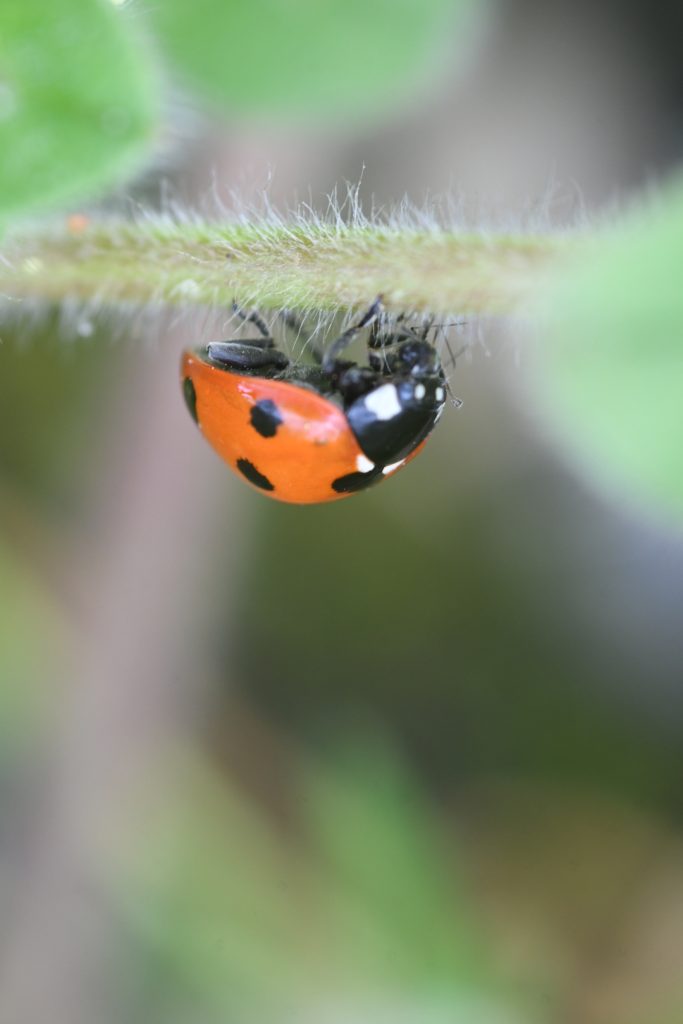
Some of the green kale is on the cusp of going to flower and if the temperature gets back to over 12C then we will have our native Irish honeybees flying all over the farm. The first place they will go is to these beautiful flowers, which we will leave until the first aphid infestation begins.

But here is a couple of facts you may be interested in. In conventional systems up until relatively recently many brassica plants were sprayed with neonicotinoid pesticides to destroy amongst other things, aphids.

These chemicals are thankfully now banned in the EU. 1 teaspoon of Thiamethoxam alone can decimate over 1.25 billion bees. But this is not the end of the story. These chemicals and this one in particular is still manufactured in the EU, in Belgium by Syngenta and is exported all over the world, it is hard to get accurate data but somewhere in the region of 10,000 tonnes of the stuff is exported to other countries. If you assume that one teaspoon is 3g, then is a lot of teaspoons, it is enough to wipe out the global population of honeybees and wild bees 10 times over.

Not only that, and here is the real dark side of this (as if it was not already dark enough) Syngenta knew and did not release data that their chemicals decimated bee population, they kept this from regulators knowing the damage these chemicals did.

So, when we are told by the companies that manufacture pesticides that they are safe, and where they stand to earn billions of dollars in profit. I error on the side of caution and tend not to put too much trust in what they say.

As always, your support, protects and supports a way of farming that keeps these toxic chemicals out of our food chain and helps protect biodiversity and in this instance our native Irish honey bee too.

Thank you.

Kenneth

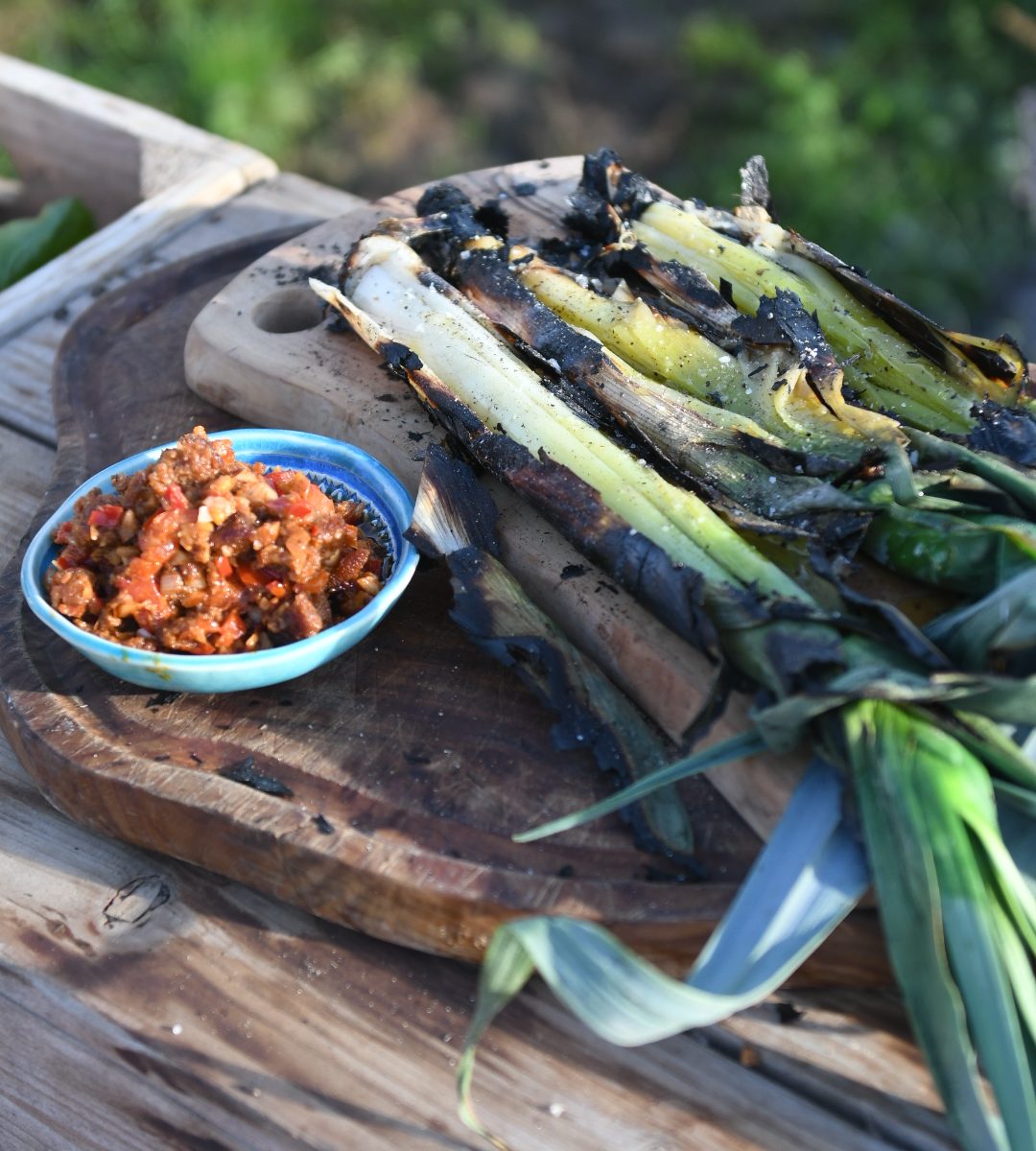
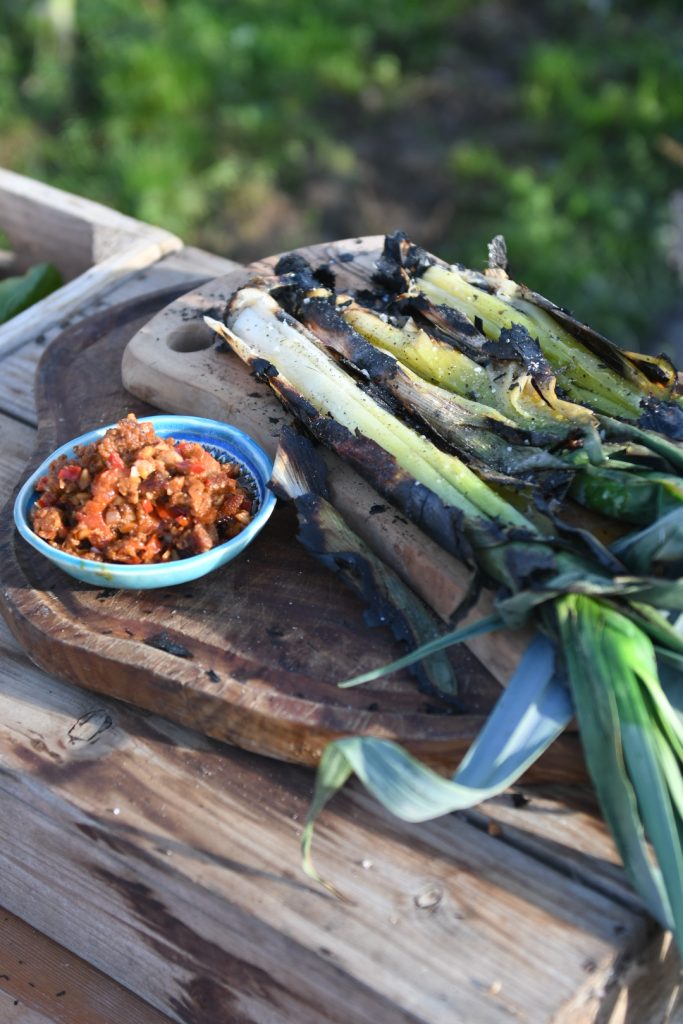
Cooking without Chemicals with Tom Hunt – Blackened Leeks with Romesco Sauce

This smoky Catalan-style dish is all about the contrast of charred, sweet alliums and nutty, tangy romesco. Traditionally served with calçots, the sauce works beautifully with blackened leeks too – or with almost any grilled vegetable or fish. It’s so moreish you’ll want to spread it on toast.

Tom Hunt is an award-winning chef, food educator, writer, climate change activist and author. This recipe was first published in his book Eating for Pleasure, People & Planethttps://www.tomsfeast.com

Ingredients – serves 4

4–6 leeks (about 1 large or 2 small per person), trimmed

Light olive oil

Sea salt and black pepper

Romesco sauce

2 cloves garlic, finely chopped

1 red chilli, chopped and deseeded

50g almonds or other nuts

50g stale or dry bread, torn

1 shallot or ½ an onion, finely diced

1 tbsp smoked paprika

350g roasted red peppers (from a jar or freshly roasted)

1 tbsp sherry or red wine vinegar

100ml olive oil

Method

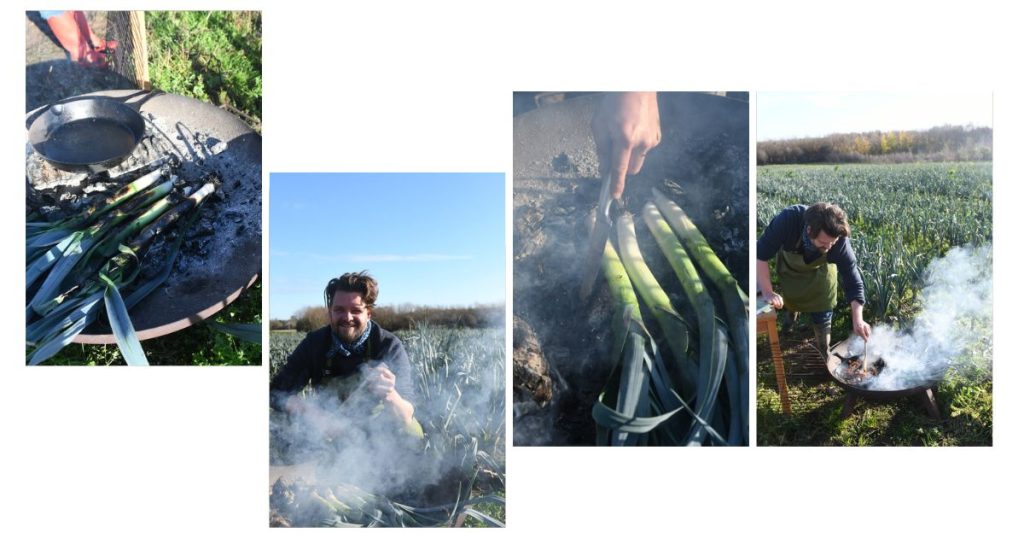
To cook the leeks, preheat a barbecue or grill to high. Rub the leeks lightly with olive oil and season.

Place them directly over the coals or under the grill, turning occasionally, until the outer layers are blackened and the insides are soft – about 10–15 minutes depending on their size. If cooking directly on the coals, brush off any ash before serving.

You can also roast them in a hot oven at 220C until tender and charred at the tips. Meanwhile, make the romesco sauce.

Warm a splash of olive oil in a frying pan and fry the. bread and almonds for a few minutes until golden. Add the garlic, chilli and onion and cook for another couple of minutes until fragrant, then stir in the smoked paprika.

Transfer the mixture to a blender with the roasted peppers and vinegar, then blend to a coarse paste. With the motor running, drizzle in the olive oil until you have a thick, spoonable sauce. Season with salt and pepper to taste.

Serve the hot blackened leeks piled on a platter with the romesco spooned generously over the top or served alongside.

Storage

The sauce will keep well in the fridge for up to a week, or longer if pasteurised in the jar.

Maybe we are not as smart as we think we are…

Honestly my grandad walked these fields, he farmed here with two farm horses one called Snowball, and he did not use chemicals. The idea struck me just before Christmas that we are the only species on the planet that will actively go out and cover our food with toxic chemicals to stop other living creatures from eating it and then eat it ourselves. That is an amazing forward jump for civilisation, don’t you think?

Using chemicals to ward off disease is as old as organised agriculture, and up until recently bluestone and washing soda, that is Cupper Sulphate and washing soda was used to help prevent blight on potatoes here in Ireland. This is now restricted under organic rules. My Grandad may have used it in the 1950s, and had it been available in the mid-1800s it may have saved millions of people from starvation during the great potato famine, using it would have been the right thing to do.

The key difference today is the scale, the toxicity and the ubiquity of pesticide use. Yes, the EU have been restricting the use of certain pesticides, but it very much looks like their ambition to clean up chemicals in our food will be put on hold for now.

There is also the argument that the dose makes the poison and for something like copper of course if you consume too much of it is toxic, in fact it is more toxic than Glyphosate, this may seem surprising.

But here are two key differences.

1. The use of Glyphosate worldwide is estimated to be 800,000 tonnes annually. For Copper sulphate reliable date does not exist but use is probably around the 10,000-50,000 tonnes mark. (note it is now severely restricted under EU organic standards). Glyphosate is everywhere.

2. Glyphosate is systemic, Cupper is not. Glyphosate gets into the plant and stays there; Copper sits as a barrier on the outside and is easily washed off.

Things are never as black and white as we may want them to be, the famine and the use of copper to protect the potato crop is a good example, if the option was there at the time it would have been the right thing to do to use it.

But today there are clear alternatives to chemical use in vegetable production. For weeding, mechanical and flame weeding are clear chemical free ways to control weeds. Using crops that are more disease resistant is a no brainer, and new varieties are constantly being bred (not GMO, but using natural techniques), take the potato “Connect” which has exceptional blight resistance and tastes great (the earlier Sarpo varieties had great blight resistance, but nobody wanted to eat them!).

For pests, well some crops will succumb that is the nature of nature!

We are often asked how we deal with slugs on our farm, and whilst at times we do use an organic approved slug pellet it is rare and we have virtually no problems. The ecosystem on our farm may be in balance and provides natural protection, as with any balanced system it just works.

So as always without your support we would not be able to continue to fight the good fight, so thank you for standing by us, and Happy New Year.

Kenneth

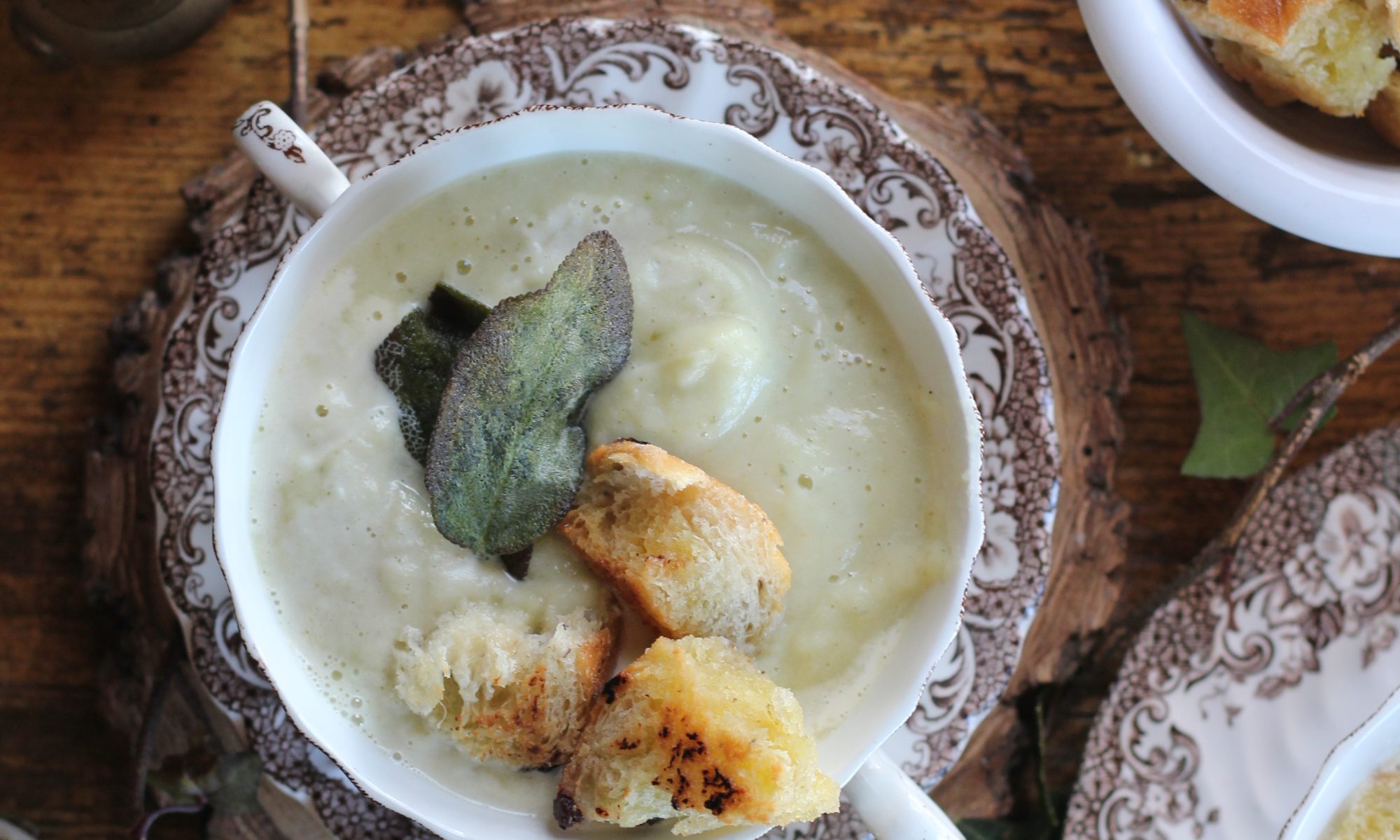
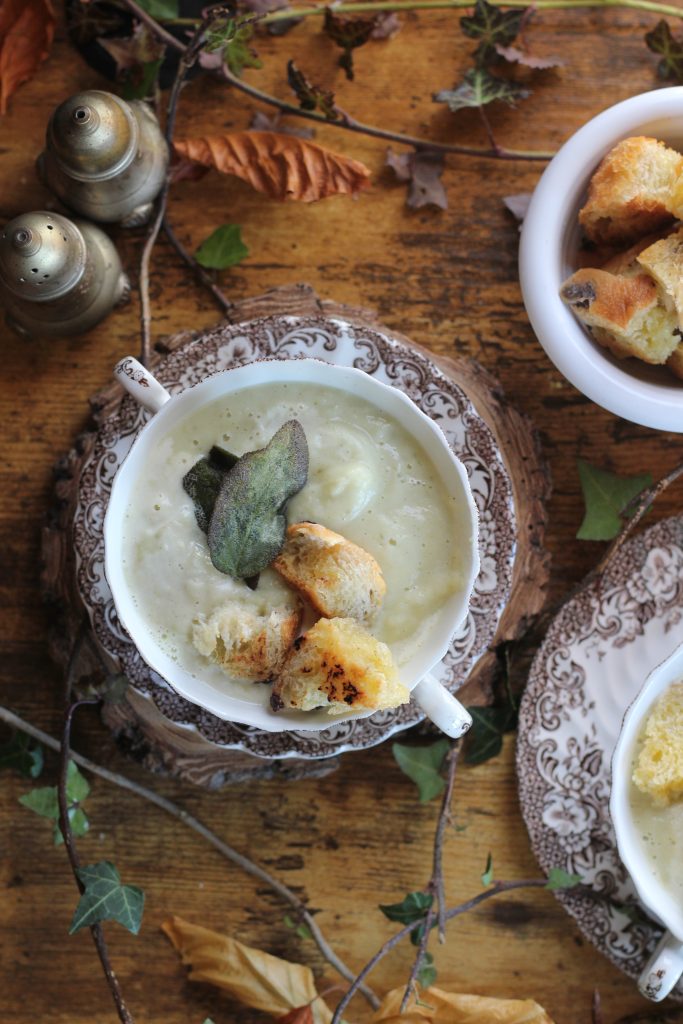
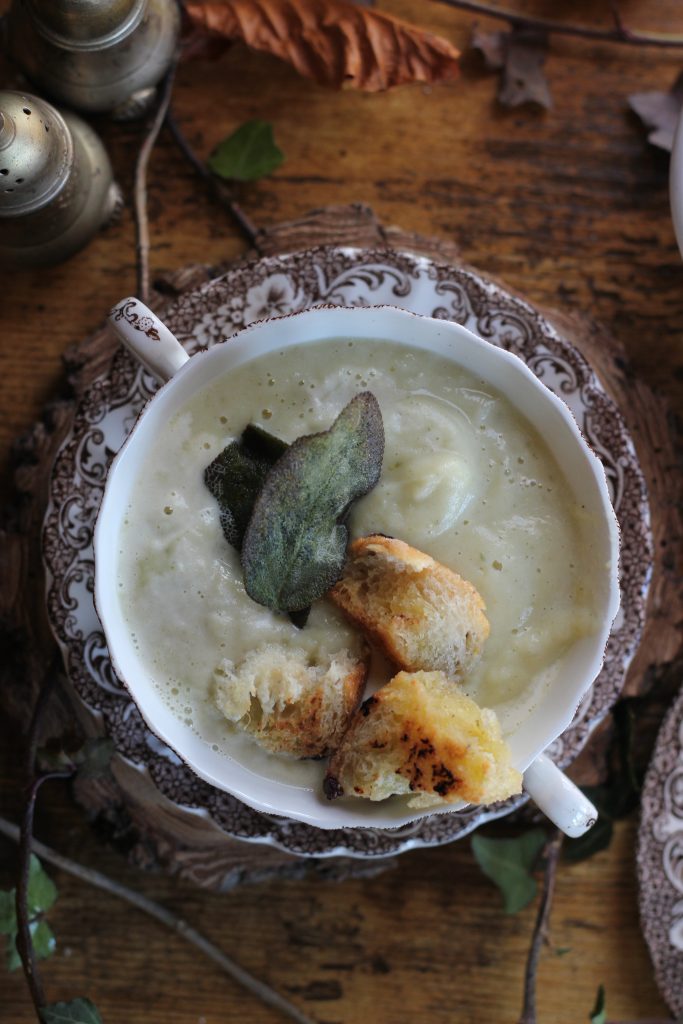
Celeriac & Sage Soup with Ciabatta Croutons

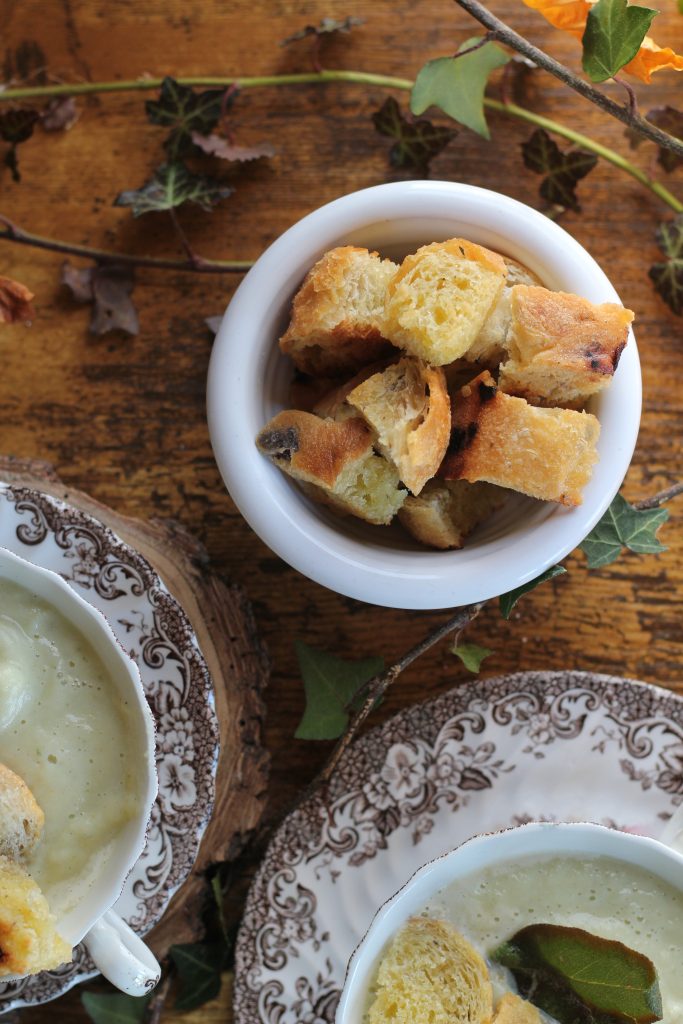
Delicious and comforting, this celeriac soup with golden ciabatta croutons is the perfect way to warm up on a chilly day. The subtle sweetness of the celeriac pairs perfectly with the crunchy croutons. The soup can be stored in an airtight container in the fridge for up to three days, but the croutons are best enjoyed soon after cooking.

Enjoy!

Nessa x

Celeriac & Sage Soup with Ciabatta Croutons

Serves 6

Ingredients

  • 50g butter
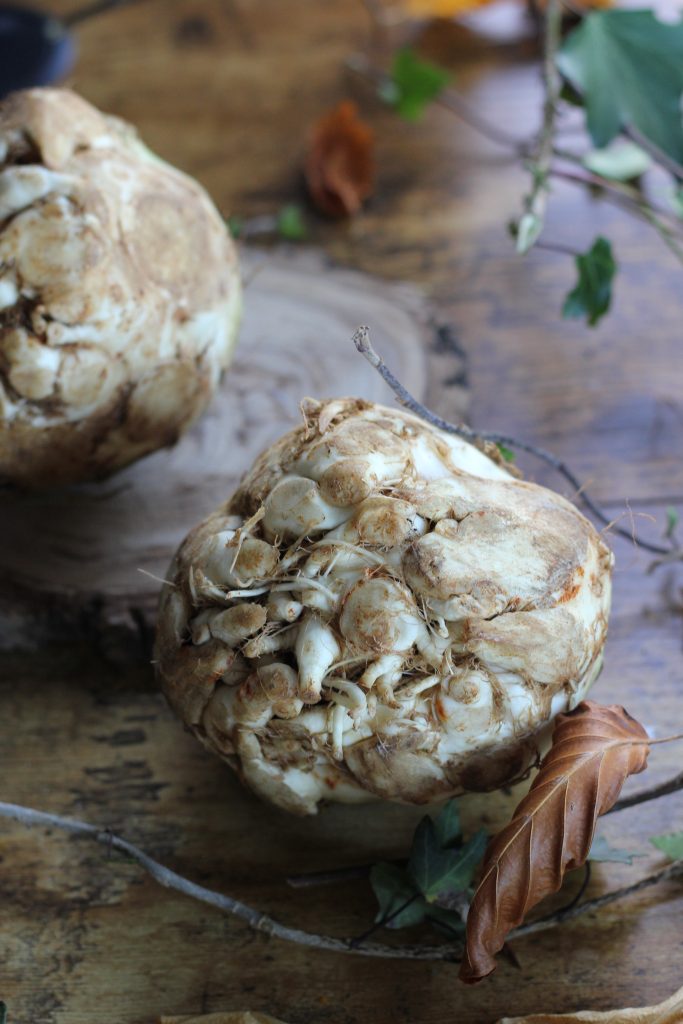
  • 600g celeriac, peeled and diced
  • 1 onion, roughly chopped
  • Salt and freshly ground pepper
  • Handful of sage, about 10 leaves, chopped
  • 750ml vegetable stock
  • 75ml milk
  • 75ml cream, plus 50ml extra for serving

Croutons

To serve

  • 1tsp olive oil
  • 10 sage leaves

Method

  1. Melt the butter in a large saucepan over a low heat. When it begins to foam add the celeriac and onion stir to combine with the butter.
  2. Sprinkle with a little salt, a few grinds of pepper. Place a butter wrapper or a piece of greaseproof paper over the vegetables, to help them sweat. Cover with the lid of the saucepan. Sweat over a low heat for about 10 minutes, making sure the vegetables don’t stick to the bottom of the saucepan.
  3. When the vegetables are soft but not coloured, and the chopped sage and stock, and continue to cook for another 15 minutes or until the vegetables are soft.
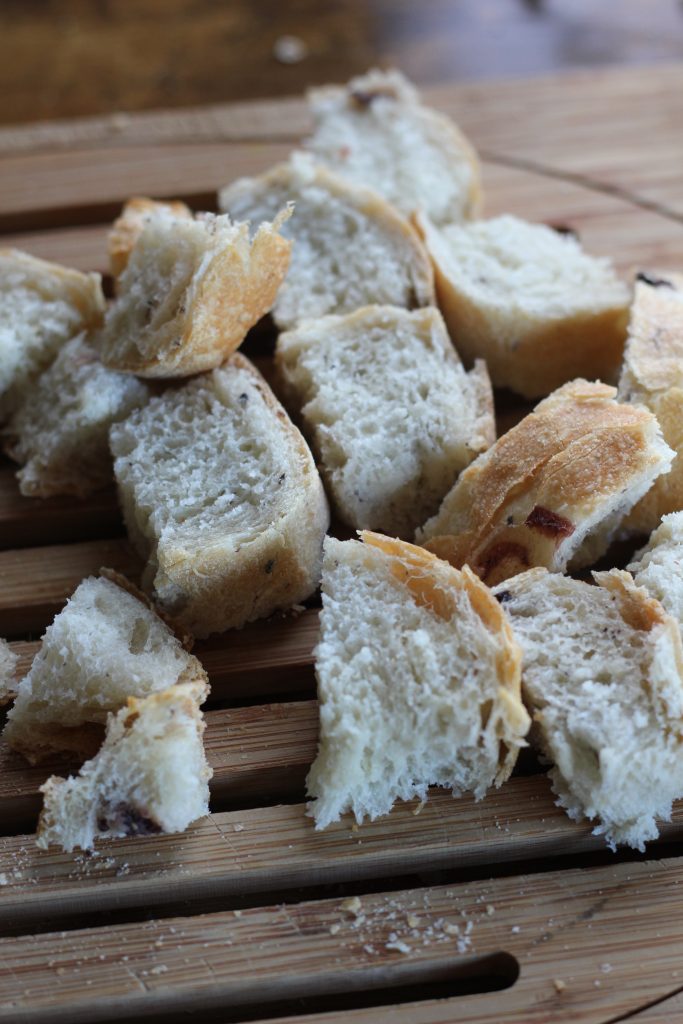
  4. While the soup is simmering, make the croutons by heating the olive oil on a large pan, when hot add the diced ciabatta and fry each side until golden. Remove and leave to cool.
  5. Using a hand blender or a food processor purée the soup until it is smooth. Taste and season, if necessary. Pour in the milk and cream and stir well to combine.
  6. Add a teaspoon of oil to a small frying pan. Once hot, add the sage leaves and fry gently on each side for a few seconds. Place the leaves on some kitchen paper, to drain off the excess oil.
  7. Pour the soup into serving bowls and garnish each with two sage leaves, a little drizzle of cream, and a few golden croutons. 

Oaty Apple Crumble

A crumble is by far one of the easiest desserts to make, and this recipe is incredibly versatile too, as any fruit of choice can be used as the base. I’m using a wholemeal fine ground flour, but plain flour can be used in its place. While I’m also adding oats to the topping, but finely chopped nuts can be easily substituted. I find a crumble is best enjoyed warm from the oven, with a good serving of hot custard, but ice-cream or softly whipped cream also make for delicious accompaniments. 

Enjoy!

Nessa x

Oaty Apple Crumble

Ingredients

Crumble

Base

Method

  1. Preheat the oven to 200°C/fan 180°C/Gas 6.
  2. To prepare the crumble, place the flour in a bowl. Add the butter and rub it into the mixture, followed by the oats, almonds, and sugar. Rub the mixture together until it resembles fine breadcrumbs. 
  3. Place the apple pieces in a large ovenproof dish. Add the orange zest and juice, sugar, and cinnamon. Stir to combine.
  4. Sprinkle over the crumble mixture and place the dish on a baking tray. Bake in the pre-heated oven for about 30 minutes, until the crumble topping is golden brown. Take from the oven, cover with some foil and bake for another 10 minutes. Serve with ice cream, softly whipped cream or custard.

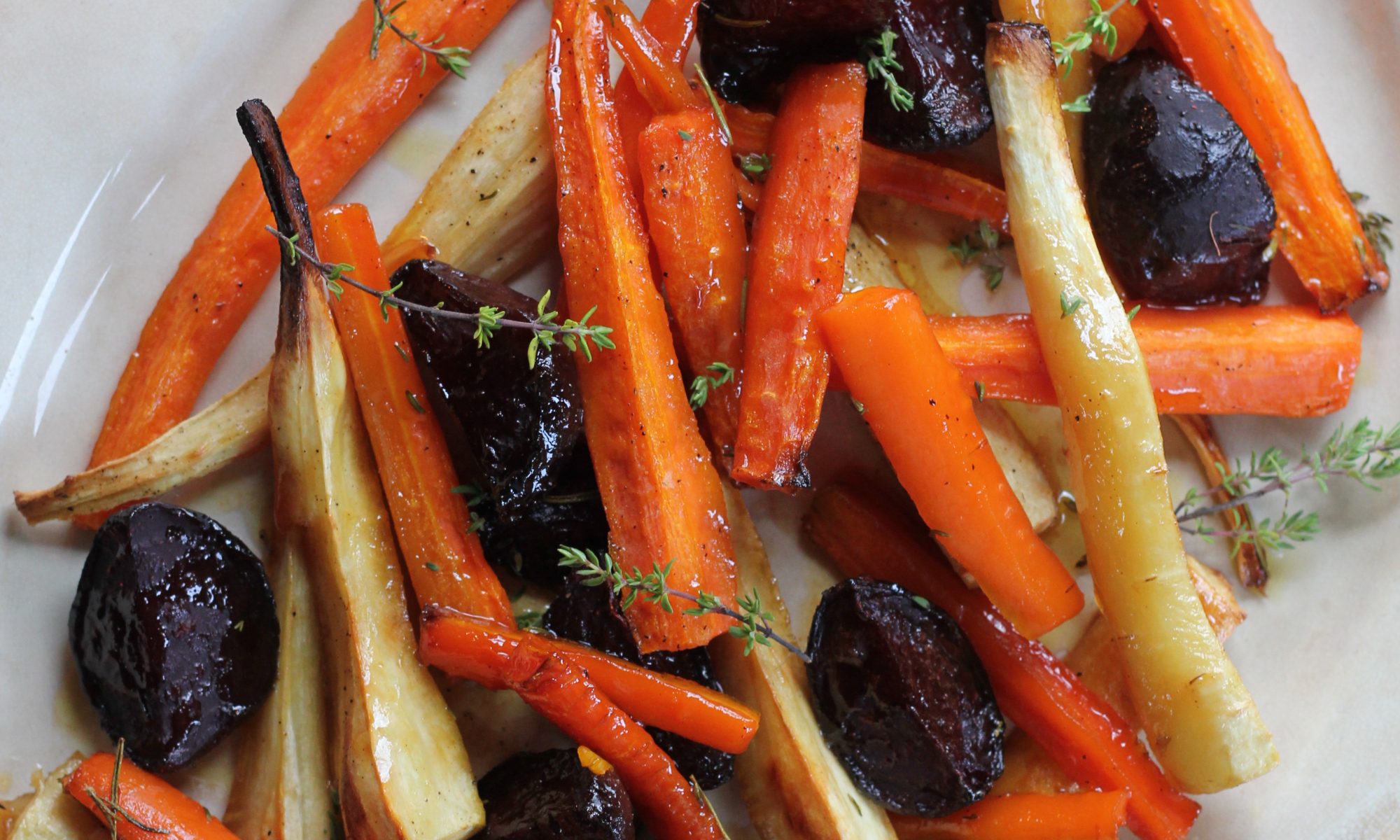
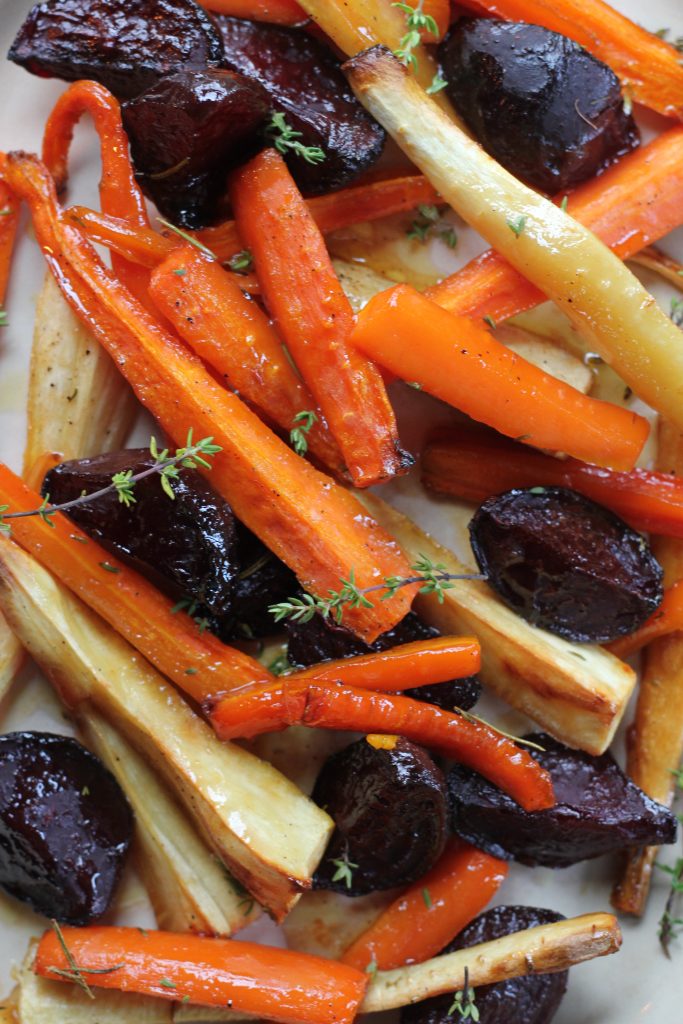
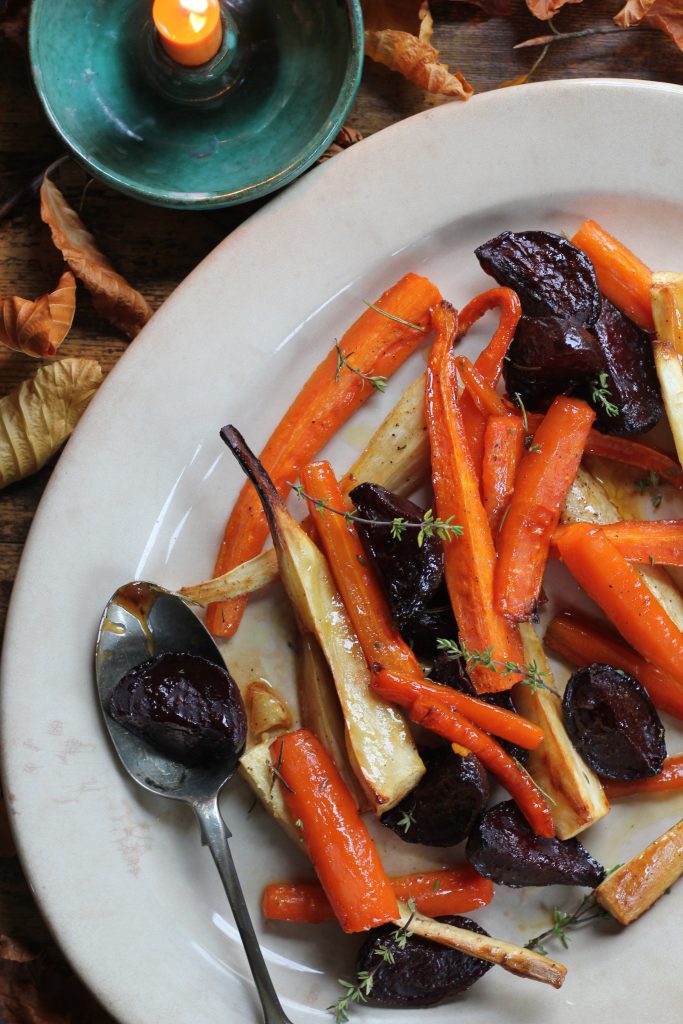
Maple Glazed Root Veg

Irish root vegetables are now in an abundance and there are so many ways to cook and enjoy these nutrient-rich vegetables. Carrots, parsnips, and beetroot bring a unique texture and depth of flavour when roasted. This Maple Glazed Root Vegetable recipe brings out their natural goodness with a touch of maple syrup and butter, making them caramelized and golden. They pair perfectly alongside any meal from a midweek dinner to a Sunday roast.

Enjoy!

Nessa x 

Maple Glazed Root Veg

Serves 4

Ingredients

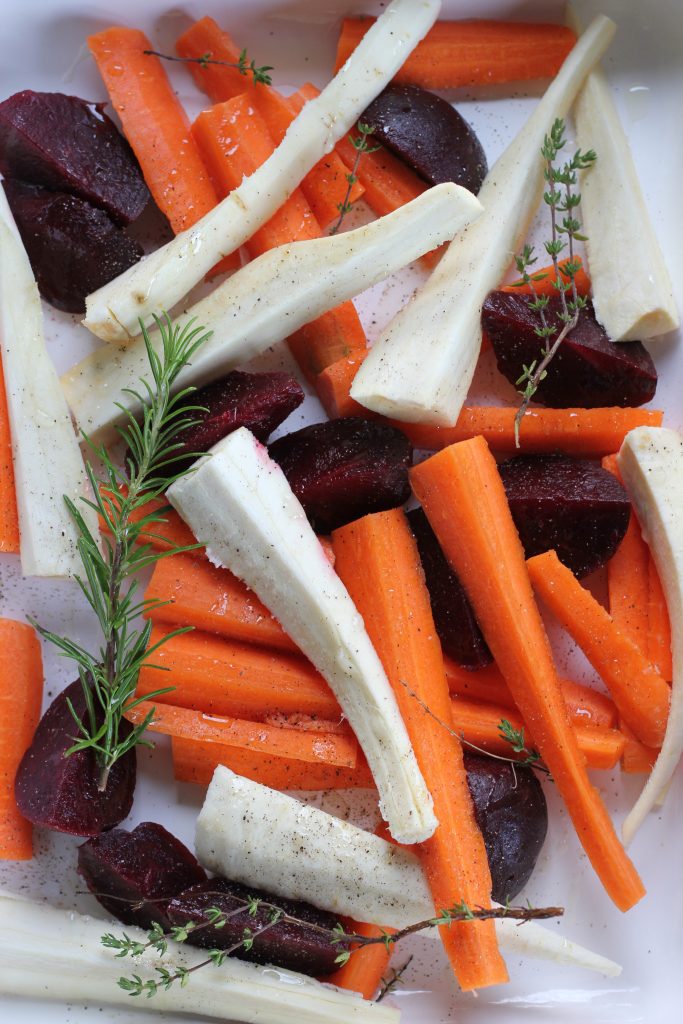
  • 3-4 raw beetroots, peeled and quartered
  • 3 carrots, peeled and quarters lengthways
  • 2 parsnips, peeled and quarters lengthways
  • 4 sprigs fresh thyme
  • 1 sprig rosemary
  • 2tbsp olive oil
  • Salt and freshly ground pepper
  • 4tbsp maple syrup
  • 50g butter
  • To serve – fresh thyme

Method

  1. Pre-heat the oven to 180°C/ fan 160°C/gas mark 4.
  2. Place the prepared vegetable on a large baking tray. Add the thyme and rosemary. Drizzle over the oil. Season with salt and pepper. Toss to combine.
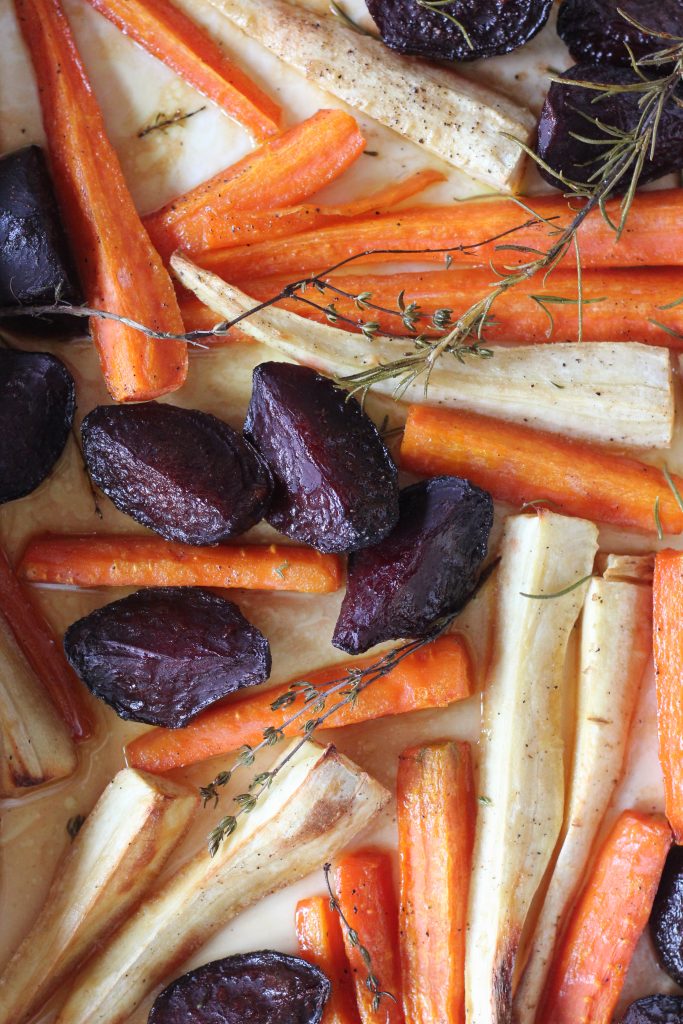
  3. Roast for 30 minutes, taking from the oven a couple of times during cooking to give everything a stir.
  4. Add the maple syrup and butter, and stir well to coat all the vegetables. Return to the oven for another 20-25 minutes. Serve hot from the oven with a sprinkling of fresh thyme. 

Squash & Leek Pie

This squash and leek pie, packed with in-season Irish vegetables, would make for an indulgent yet wholesome midweek meal. I’ve used butternut squash in this recipe, but any squash of choice can be used, even a little pumpkin, if you have one intact from your Halloween celebrations. The pie is topped with a pastry cap, but creamy mash would work equally well in its place. Serve with steamed greens, this is a delicious meal to try this week.

Enjoy!

Nessa x

Squash & Leek Pie

Serves 2

Ingredients

  • ½ roll puff pastry
  • 1 small or ½ large butternut squash, peeled & diced
  • 1tbsp olive oil
  • 25g butter
  • 1 leek, thinly sliced
  • Salt and freshly ground pepper
  • 5/6 sage leaves, finely chopped
  • 2 cloves garlic, crushed
  • 250ml vegetable stock, hot
  • 75ml cream
  • Egg wash/water

Method

  1. Take the puff pastry from the fridge about 30 minutes before using.
  2. Preheat the oven to 200°C/fan 180°C /Gas Mark 6.
  3. Place the diced squash on a large baking tray. Drizzle over the olive oil. Toss to combine. Place in the preheated oven for 25 minutes.
  4. While the squash is cooking, add the butter to a large frying pan over a medium heat. Once melted add the leek. Season with salt and pepper. Stir to combine and turn down the heat to low. Cook for about 10 minutes, stirring regularly.
  5. Stir through the sage and garlic and add the cooked squash to the pan. Add the stock and simmer for 5 minutes.
  6. Stir through the cream, simmer for a couple of minutes, before adding the mixture to a small-medium sized casserole dish.
  7. Cut the puff pastry to match the top of the casserole dish. Pinch the sides to press the pastry into place and make a small hole in the centre of the pie to allow steam to escape while cooking. Brush with either a little egg wash or water. 
  8. Place in the preheated oven for 25 minutes. 
  9. Serve hot with some steamed broccoli.

Mushroom Stroganoff

This is such a versatile recipe, as this creamy Mushroom dish serves well with potatoes, rice, pasta, and it’s even delicious served alongside some toast. Cooked mushrooms are a great source of B vitamins and antioxidants. When preparing mushrooms for cooking, avoid washing them with water, as their porous nature causes them to absorb moisture, which can negatively affect their texture and flavour during cooking.

Enjoy!

Nessa x

Mushroom Stroganoff

Serves 2

Ingredients

  • 25g butter
  • 450g mixed mushrooms, sliced
  • 1 onion, finely diced
  • 2 cloves garlic, crushed
  • 1tsp sweet paprika
  • 1tsp Dijon mustard
  • Squeeze lemon
  • 2 sprigs thyme, leaves only
  • Salt and freshly ground pepper
  • 500ml hot vegetable stock
  • 150ml cream

To serve

  • Chives, finely chopped
  • Mashed potato/rice/pasta/toast

Method

  1. Place a large frying pan over a medium heat. Add the butter. Once it starts to melt, add the mushrooms and onion. Stir to combine. Turn up the heat and cook for 5 minutes, stirring regularly.
  2. Add the garlic, paprika, mustard, lemon, and thyme to the pan. Season with a little salt and pepper. Stir to combine and add the stock. Simmer gently for 15 minutes.
  3. Stir though the cream and simmer for a further minute or two.
  4. Serve straightaway with a scattering of freshly chopped chives.