Upside-down Romanesco Tart – Cooking Without Chemicals with Tom Hunt, Season 2

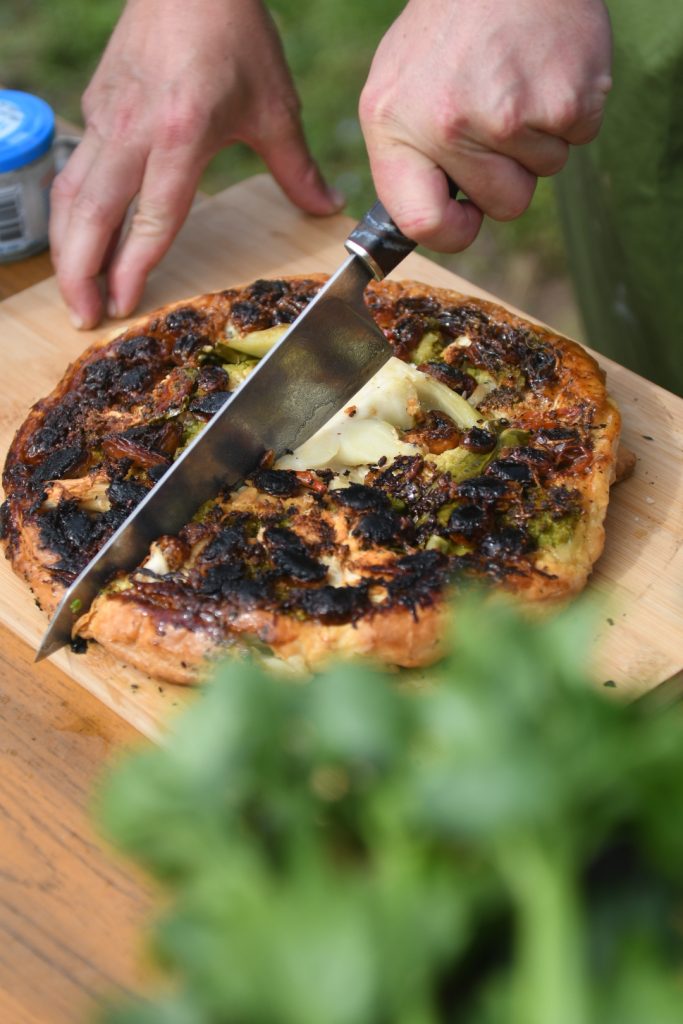
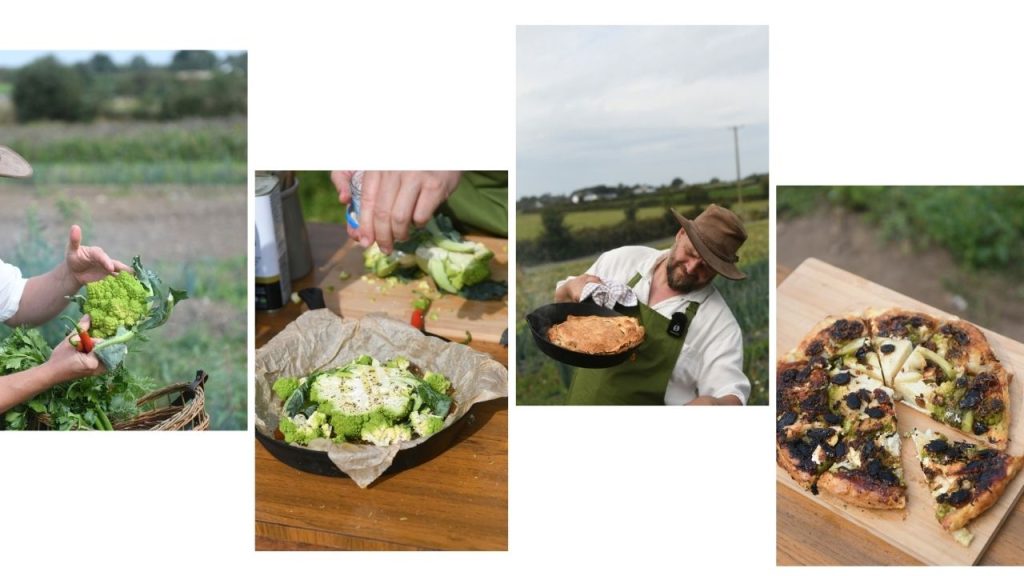
This upside-down tart honours the majestic Romanesco by transforming it into a showstopping centrepiece. Using the whole vegetable, leaves included, celebrates its nutty, caramelised flavour while reducing waste. The topping swaps in a brighter combination of cream cheese, toasted pine nuts, plump currants, chilli flakes and lemon zest, adding creamy, sweet-tart and citrusy layers that play off the naturally sweet Romanesco.

Tom Hunt is an award-winning chef, food educator, writer, climate change activist and author of Eating for Pleasure, People & Planet. https://www.tomsfeast.com
Ingredients

  1. 2–3 tbsp olive oil
  2. 2–3 tbsp honey or sugar (or maple syrup)
  3. 1 large Romanesco (or cauliflower), leaves included
  4. 4–6 tbsp cream cheese (plus extra for serving)
  5. 2–3 tbsp currants
  6. 2–3 tbsp pine nuts
  7. Pinch of chilli flakes
  8. Zest of 1 lemon, plus a squeeze of juice
  9. 30–40g pecorino Romano, finely grated
  10. 500g ready-rolled puff pastry
  11. Sea salt and black pepper

Method

  1. Preheat the oven to 190°C (fan) and line a large baking tray with parchment paper.
  2. Halve the Romanesco and cut two or three thick “steaks,” about 2–3cm thick, leaving some leaves attached for extra flavour and visual impact.
  3. Lay the steaks on the tray and lightly trace around them to mark their outlines. Remove the Romanesco and drizzle olive oil and honey (or your chosen sweetener) inside the traced areas. Season with salt and pepper, then scatter the currants, pine nuts and a pinch of chilli flakes.
  4. Place the Romanesco steaks back within their outlines and spread each with a generous spoonful of cream cheese. Sprinkle over the grated pecorino Romano and the lemon zest.
  5. Unroll the puff pastry and cut pieces that extend about 4cm beyond each Romanesco steak. Drape the pastry over the top, pressing gently around the edges. Brush lightly with a little extra cream cheese.
  6. Set the tray over a medium-low hob for 3–5 minutes, moving occasionally to allow the base to caramelise gently. Once the honey begins to bubble, transfer the tray to the oven and bake for 25 minutes, until the pastry is puffed and golden.
  7. Rest for five minutes, then carefully flip the tart onto a board to reveal the caramelised Romanesco. Finish with a squeeze of lemon juice and serve warm with an extra spoonful of cream cheese.
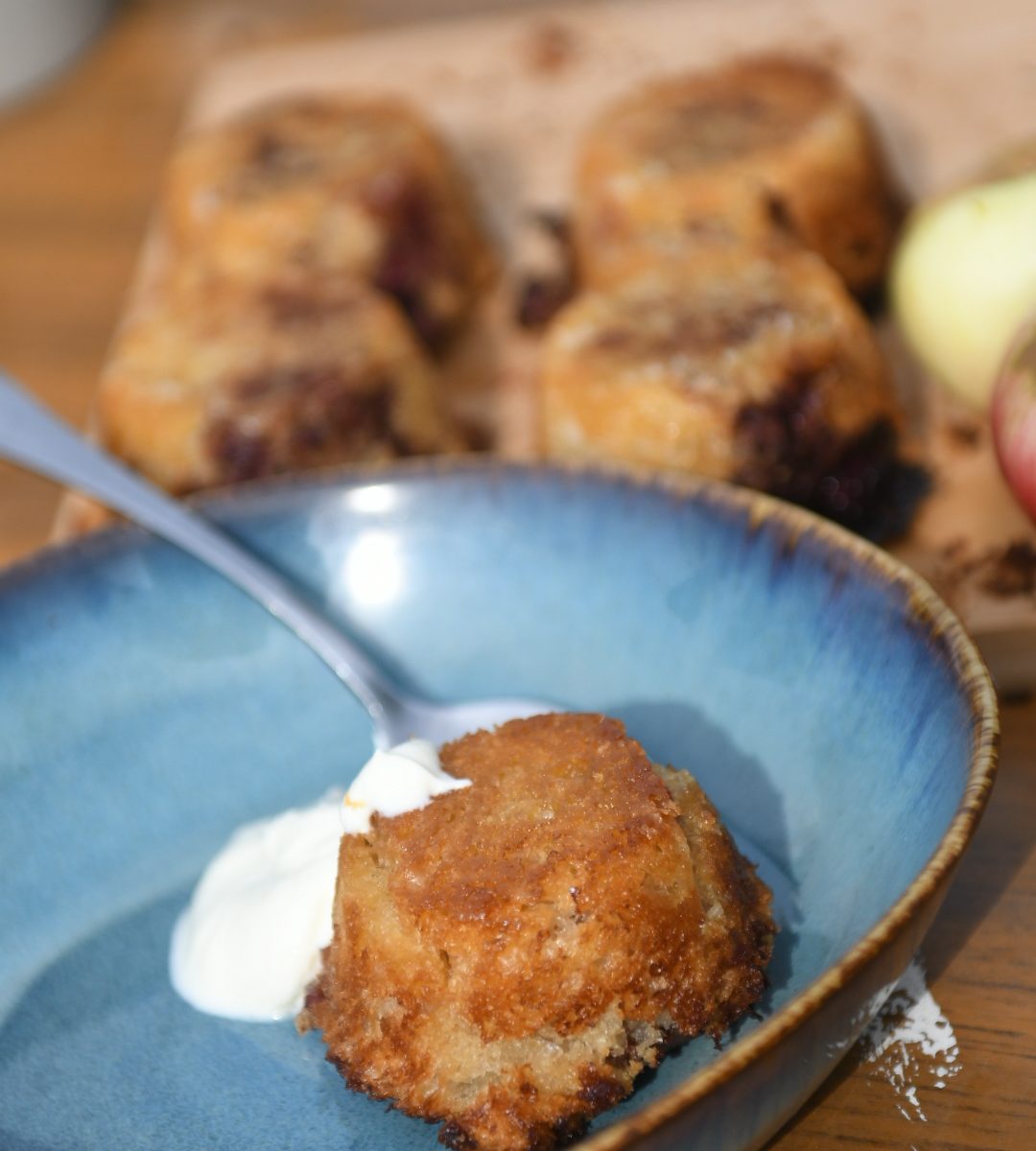
Cooking Without Chemicals with Tom Hunt – Apple, Blackberry and Chocolate Charlottes

As Wendell Berry says when we eat we are “farming by proxy”. We can only eat if land is farmed on our behalf. This empowering idea makes our responsibility to buy well farmed food, when we can, clear.

The quintessential English apple is a good example of how different food production can help or hinder our hinterland. Apple orchards are man made carbon sinks, that sequester carbon and promote biodiversity. That is until they are sprayed heavily with pesticides and fungicides to protect the cosmetic standard of a conventionally grown apple.

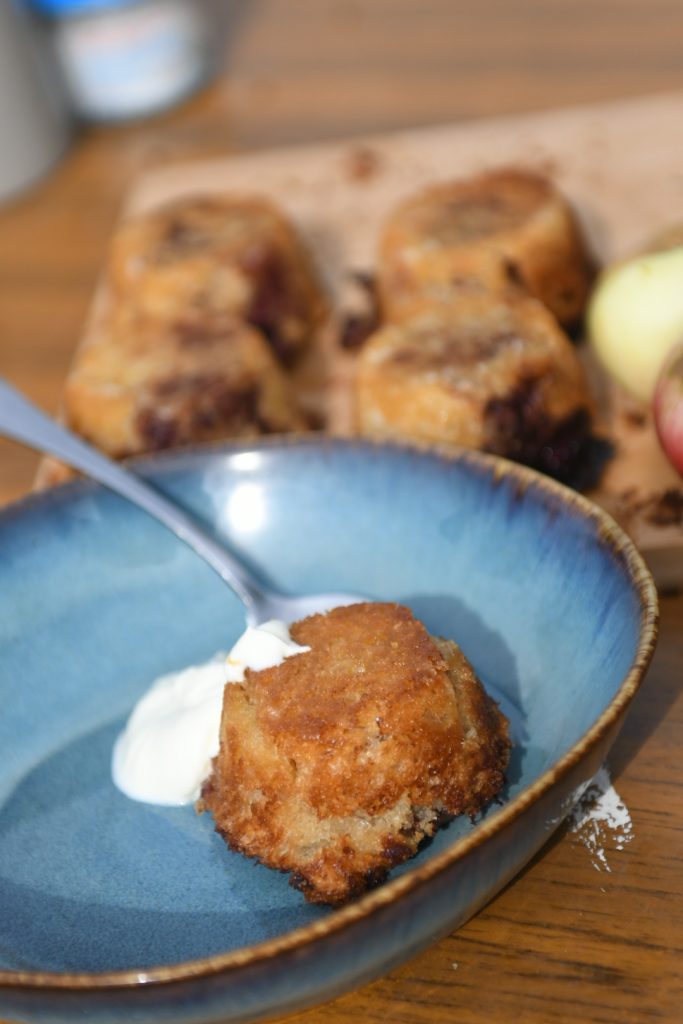
When you have a glut of apples, bar molds, no matter what condition they are in – bruised, shrivelled or just floury – these mini apple and chocolate charlottes will make the most of them and stale bread. Transforming what might otherwise be wasted into a real treat.

They are simple to make and keep well in the fridge for days. Perfect warmed through for breakfast, served with yoghurt. They also work well with other fruit that needs using up like brown bananas, chopped pineapple, and berries. I love the way the chocolate soaks up into the bread and becomes a little caramelised and crunchy.

Tom Hunt is an award-winning chef, food educator, writer, climate change activist and author of Eating for Pleasure, People & Planet. https://www.tomsfeast.com

Makes 4 · First published in Tom Hunt’s Guardian column, Waste Not

When you have a glut of apples, bar molds, no matter what condition they are in – bruised, shrivelled or just floury – these mini apple and chocolate charlottes will make the most of them and stale bread. Transforming what might otherwise be wasted into a real treat.

They are simple to make and keep well in the fridge for days. Perfect warmed through for breakfast, served with yoghurt. I love the way the chocolate soaks up into the bread and becomes a little caramelised and crunchy.

Ingredients

• 3 apples, core removed (about 400g prepared weight)

• 100g dark brown unrefined sugar (we used our farm honey instead)

• 30g chocolate, broken into pieces

• 30g butter (the method uses 50g — see note)

• 4 thin slices of stale bread

• Crème fraîche or yoghurt to serve

Method

1. Preheat the oven to 200C FAN.

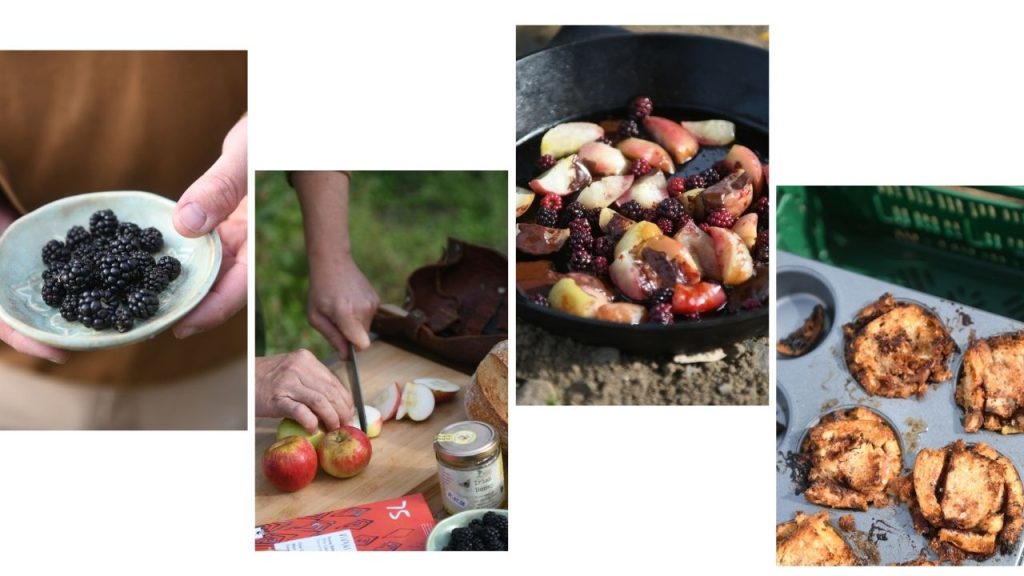
2. Place three roughly diced apples (skin on) in a small saucepan with 50g of dark brown sugar and a tablespoon of water on a medium heat with a lid on top, and cook for five minutes. Remove the lid and cook until the apples are soft, allowing excess water to evaporate. Allow to cool and mix with 30g of dark chocolate pieces.

3. Mix 50g butter with 50g dark brown sugar. Spread onto three thin slices of brown or white bread. Cut the bread to line the walls of four muffin moulds sticking the bread to the sides and bottom with the butter. Overlap the bread slightly and press together to form a seal. Cut tops with the leftover bread.

4. Fill each bread mould tightly with the apple and chocolate mixture, leaving space to finish with a bread top firmly pressed on top.

5. Bake in a hot oven at 200C (fan) for about 20 minutes until they bubble and become a bit crispy on top. Allow to cool or serve warm with crème fraîche or yoghurt.

Also works with brown bananas, chopped pineapple and berries.

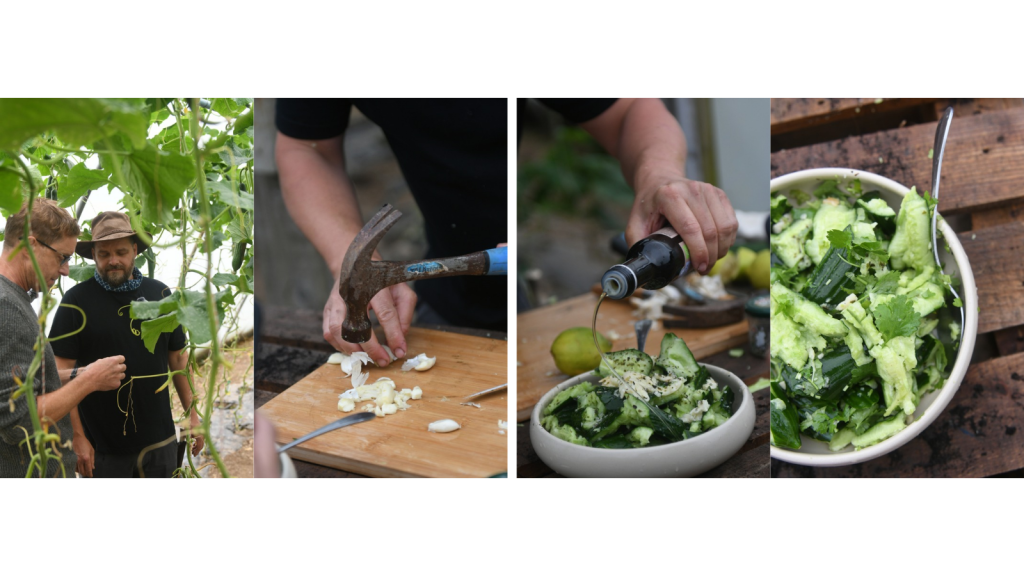
Smashed Cucumber Salad – Cooking without Chemicals with Tom Hunt, Season 2

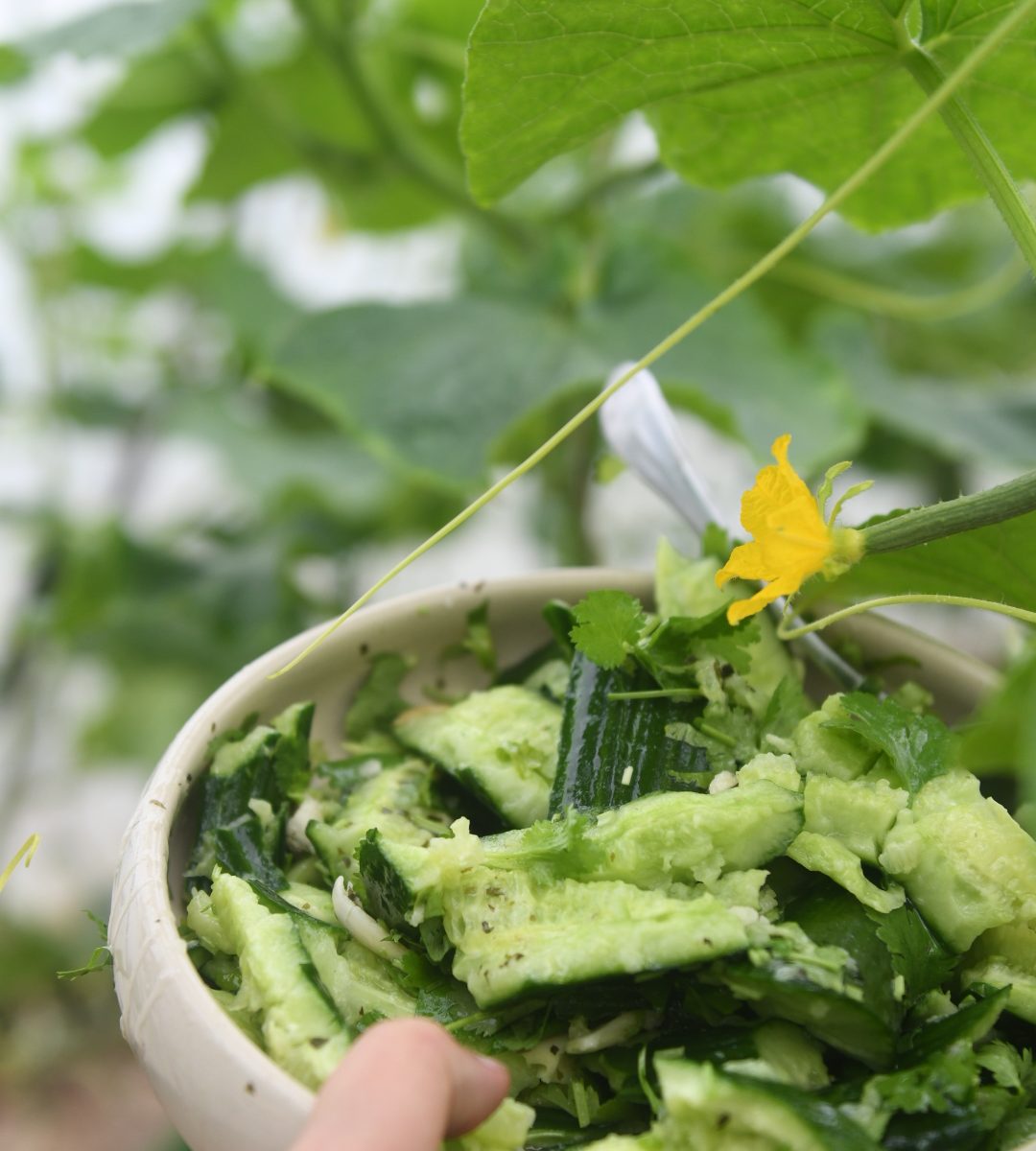
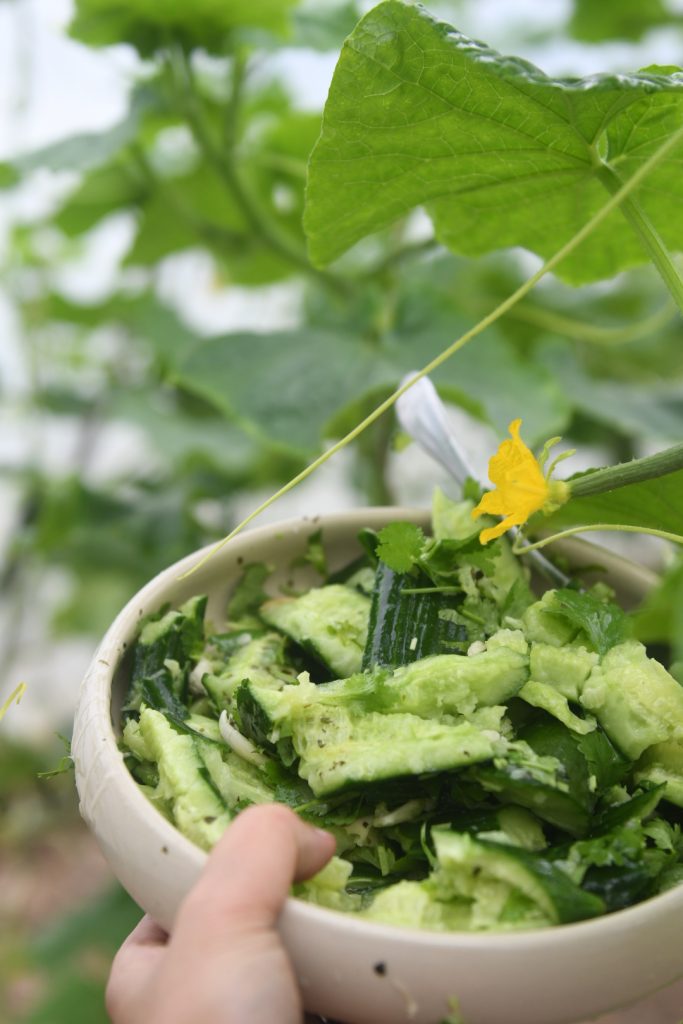
This salad is a super tasty way to transform a tired nub of cucumber into a quick and easy lip-smacking salad to enjoy as a refreshing snack or as part of a larger meal. This recipe originates from China but pairs well with many different meals.

Tom Hunt is an award-winning chef, food educator, writer, climate change activist and author of Eating for Pleasure, People & Planet. https://www.tomsfeast.com

This salad is a super tasty way to transform a tired nub of cucumber into a quick and easy lip-smacking salad to enjoy as a refreshing snack or as part of a larger meal.

Ingredients

• 150g cucumber

• Pinch sea salt

• Pinch sugar

• Pinch chilli flakes

• 1 tsp rice vinegar (white wine or cider vinegar)

• 1 clove garlic

• 1 tsp sesame oil or olive oil

• 1 tsp soya sauce

• Sprinkle sesame seeds, to taste, optional

• Sprig coriander, optional

Method

1. Take an end of cucumber (about 150g) and place it on a chopping board. Using a rolling pin or side or a large flat knife, carefully, smack the cucumber until it breaks open and is partially and evenly crushed. Chop into rough shapes and transfer to a colander. Place over a bowl and sprinkle with a generous pinch of sea salt. Toss together and place in the fridge for at least 30 minutes to crisp up.

2. Meanwhile, make the dressing by mixing together a pinch of sea salt, sugar and optional red chilli flakes with a teaspoon of rice, white wine or cider vinegar and one smashed clove of garlic. Add a teaspoon of sesame oil or olive oil and soya sauce and mix together.

3. When you are ready to serve, take your cucumbers from the fridge and toss with the dressing. Keep the juice to drink or add to the dressing if it is a small amount. Serve topped with an optional sprinkling of sesame seeds and sprig of coriander.

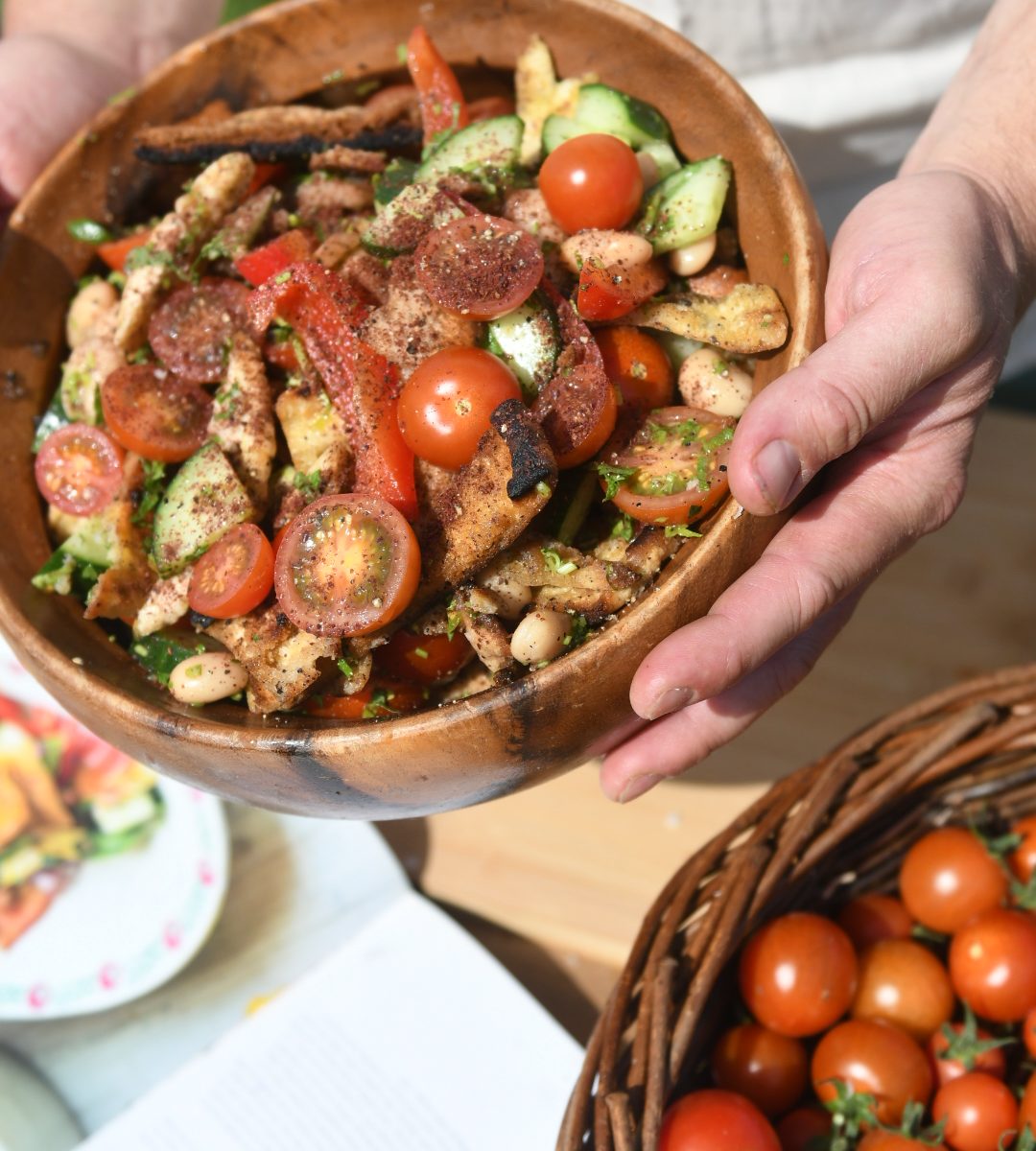
Fattoush – Cooking without Chemicals with Tom Hunt, Season 2

Fattoush is an Arabic recipe very similar to the Italian Panzanella salad. Both recipes use stale bread and are delightfully simple. This recipe is versatile and can change with the seasons, in Autumn and Winter try exchanging the tomatoes for cubes of cooked beetroot, the cucumber for pieces of celery and the red pepper for sliced pieces of red chicory.

The grilled stale pita or flatbread are delicious in their own right, especially when doused with oil and seasoned with salt and sumac. Eat them like chips and use to scoop up various dips from baba ganoush to hummus.

Tomatoes can either taste of nothing or be the most flavoursome, savoury-sweet rounded of flavours. So pick well. Buy in season and make sure they are ripe. If you can, grow your own in pots. A mix of varieties will give you a wonderful diversity of sweetness and colour.

Tom Hunt is an award-winning chef, food educator, writer, climate change activist and author of Eating for Pleasure, People & Planet. https://www.tomsfeast.com

Ingredients

• 1 large stale pita or flatbread

• Extra virgin olive oil to taste

• Pinch sumac

• 150g cherry tomatoes or other, cut into halves or rough cubes about 3cm

• 1 red pepper, cut into strips

• 100g cucumber, cut into 3cm cubes

• ½ small red onion, thinly sliced

• Small bunch mint, parsley and basil, stalks finely chopped, leaves roughly chopped

• 1 small lemon, juiced

Method

1. Place one stale pita or flatbread on a baking tray and drizzle with olive oil. Grill for 3–5 minutes or until it goes crispy. Slice into rough pieces about 3–5cm in size, then season with salt, pepper and a pinch of sumac.

2. Mix together 150g of roughly chopped tomatoes, 1 red pepper, deseeded and cut into strips, 100g of cucumber, cut into rough cubes and ½ small red onion thinly sliced, with a small bunch of mint, parsley and basil, stalks finely chopped, leaves roughly chopped or torn.

3. Finish by mixing in the crispy flatbread, season and dress with olive oil, and lemon juice to taste. Eat fresh or allow to sit and macerate for 15 minutes so the flavours mingle and the bread softens slightly.

What a week

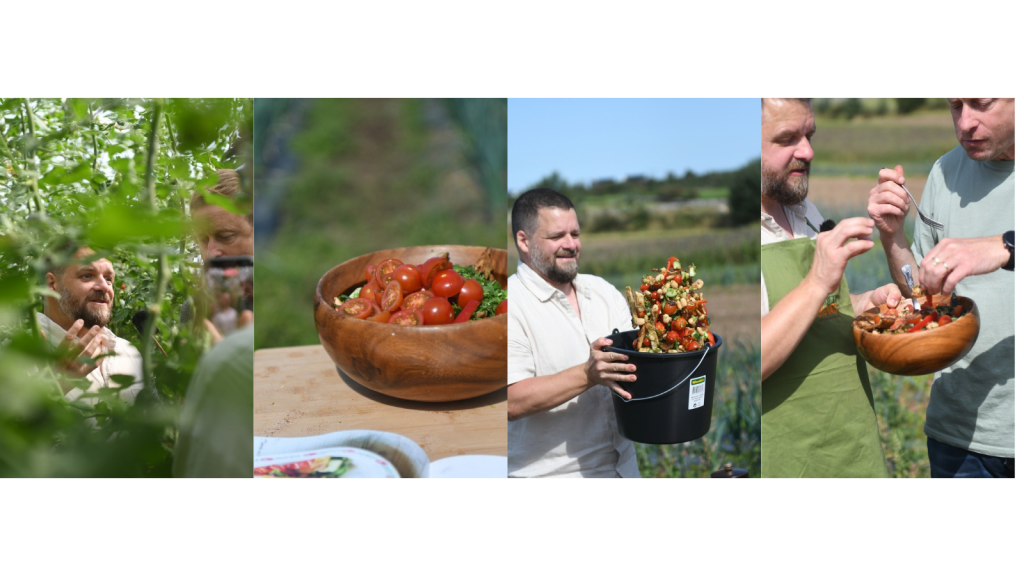
There has been loads happening on the farm this week. For one I don’t think I could have eaten finer food at a Michelin star restaurant. We have had Tom Hunt, Guardian recipe writer and eco warrior chef here for three days and wow did he cook some amazing food right out in the middle of our fields. Rustic and amazing on a wood fire, we can’t wait to share these amazing, seasonal, eco-recipes with you. They blew my taste buds away, all vegetarian, some vegan, and all 100% taste explosions. Keep an eye on our weekly recipes and on Instagram for more.

On top of that we had a national organic farm walk here on Tuesday afternoon and had an amazing group of people come along to talk and share information. You couldn’t write it though, on the button of 2.15pm as we were about to kick off the first drops of rain started to fall, (cue a little rain dance by all farmers in attendance) it then rained straight for the next 4 hours. You could tell that this was a seasoned crowd as the rain made no difference, in fact considering all the drought conditions it was more than welcome.

We had some of the farmers who supply us present as well as all the professional bodies, Bord Bia, Dept of Ag, Teagasc, IOA, and OGI. Thanks to everybody who came along it was I hope an informative and open discussion, in particular thanks to William Deacey of Teagasc for organising it.

Not to mention pallets of produce being harvested by Emmanuel and his farm team, from kale to the first carrots and parsnips, beetroot, spinach, salad, lettuce, tomatoes, courgettes, cucumbers, in fact today he told me 23 different crops were harvested this week, amazing.

We have also been very busy getting ready for our 20-year celebration festival.  A celebration of sustainable food and it promises to be an amazing day, there are still some tickets left, so if you haven’t gotten yours yet, please click here to reserve now, all the info can be found on that page.

It is a strange time though as if you are like us, we haven’t fully gotten back into routine yet, in fact as a family we are all over the place, between some bits of school started, some not just yet, having one girl going off to college, one starting in 5th year and our youngest just starting in secondary it is all change. Not sure I know whether we are coming or going. We have seen this reflected in our orders also, completely understandable. I think next week is when we will have to settle down and I am hoping it’s the same with many of you, our customers.

So, it really feels like autumn is beginning in earnest, like any change there is a little element of loss and sadness at its passing, loss of the long summer days and bright sunshine, but the swallows are still here, and if anything September can and has been in years gone by a beautiful month, fingers crossed that we have a good one.

As always thank you so much for your support, it keeps us growing, now really is the time of Irish seasonal plenty.

Kenneth

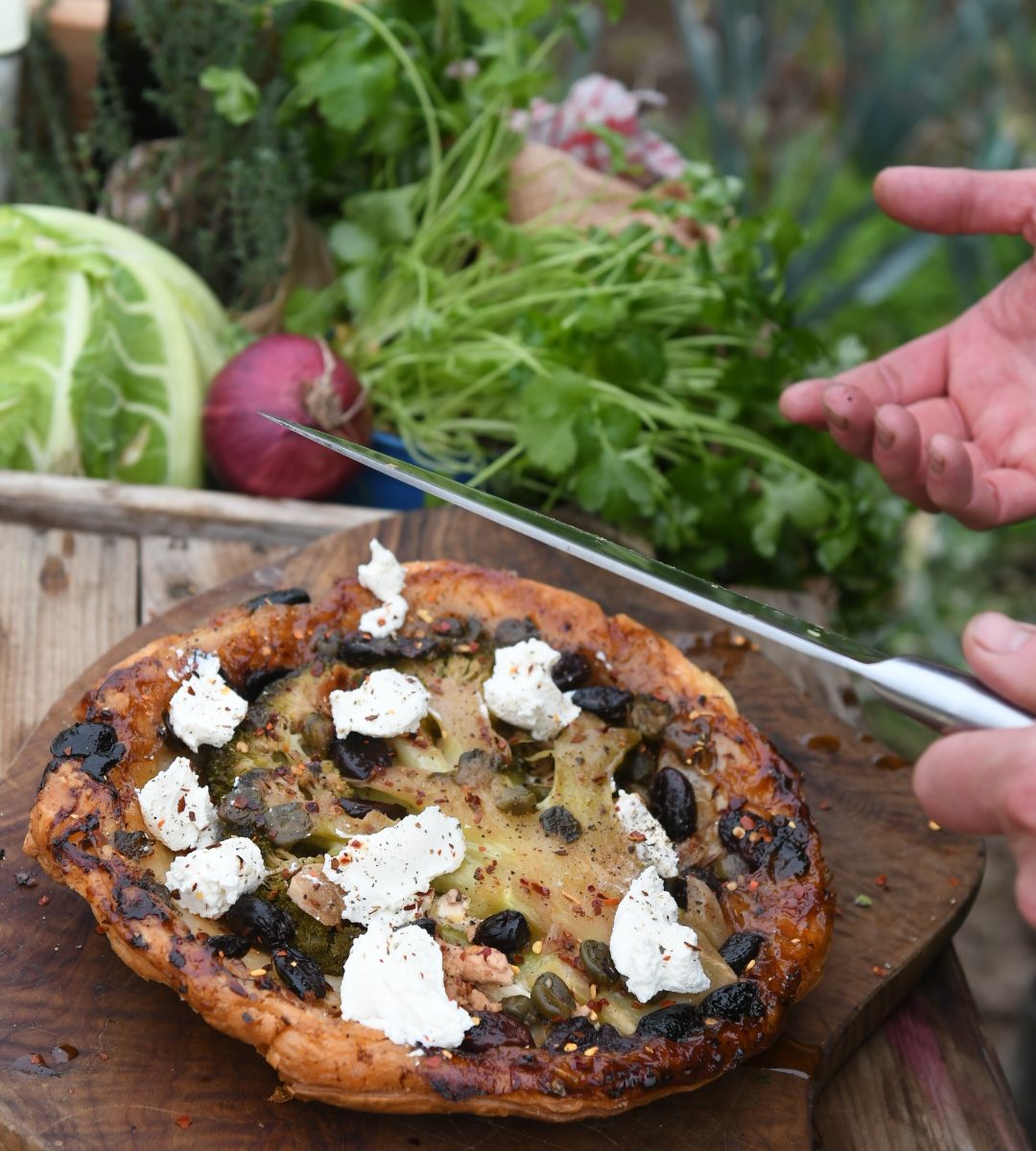
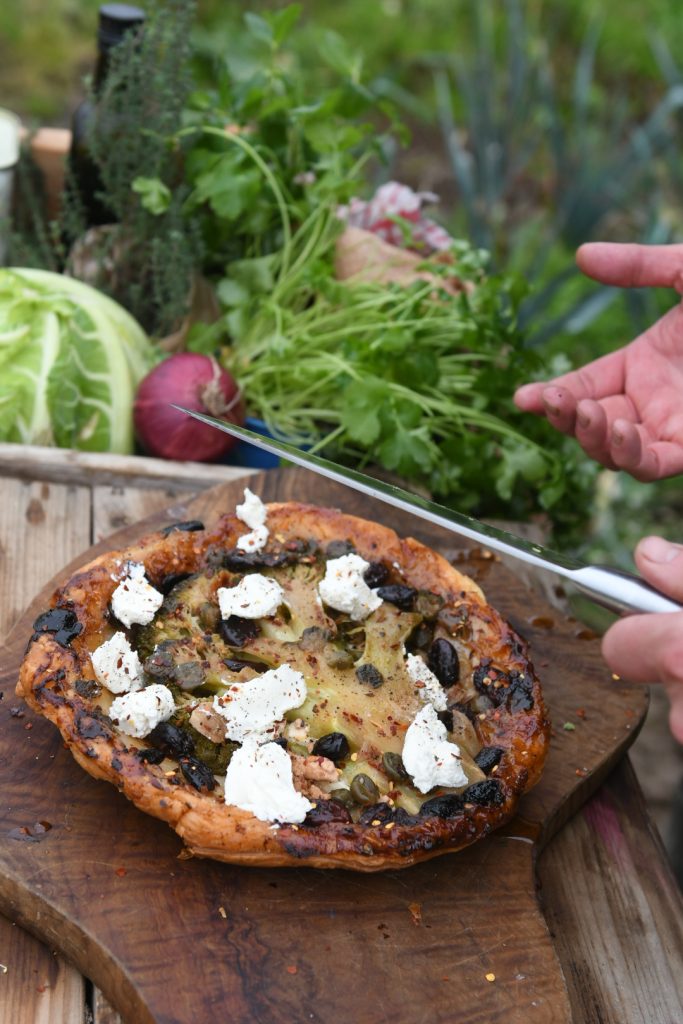
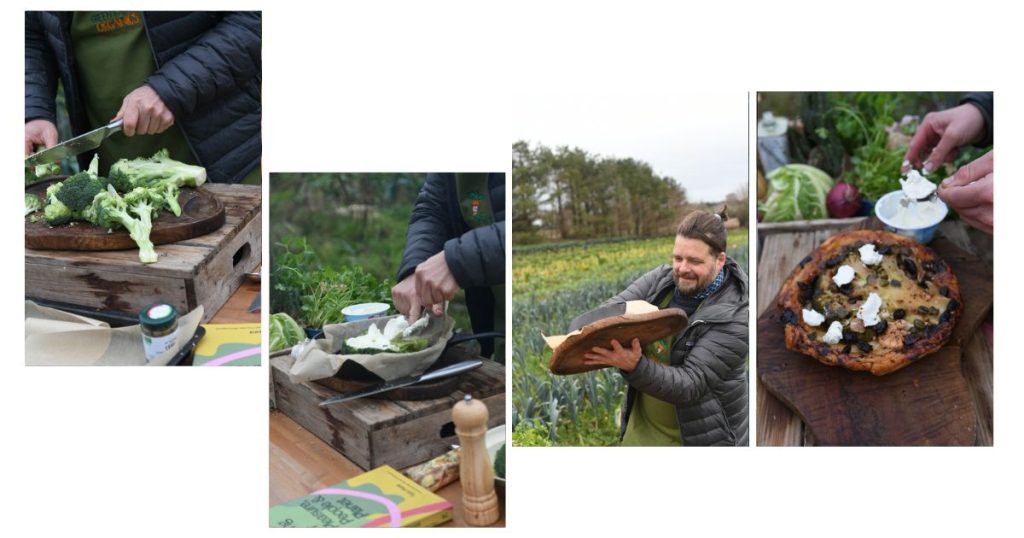
Cooking without Chemicals with Tom Hunt – Upside-down Broccoli Tart

This upside-down tart honours the humble broccoli by transforming it into a

showstopping centrepiece. Using the whole vegetable, leaves included, celebrates its nutty,

caramelised flavour while reducing waste. The topping is a classic Italian-inspired

combination of halved black olives, capers, chilli flakes, pecorino Romano, ricotta and fresh

mint, adding salty, creamy and herby layers that elevate the naturally sweet broccoli.

Tom Hunt is an award-winning chef, food educator, writer, climate change activist and author. This recipe was first published in his book Eating for Pleasure, People & Planet. https://www.tomsfeast.com

Ingredients (Serves 4 as a main or 8 as a starter)

2–3 tbsp olive oil

2–3 tbsp honey or sugar (or maple syrup)

1 large broccoli (or cauliflower)

4–6 tbsp ricotta (plus extra for serving)

2–3 tbsp capers

2–3 tbsp black olives, halved

Pinch of chilli flakes

30–40g pecorino Romano, finely grated

500g puff pastry (shop-bought or homemade)

Small handful of fresh mint leaves, roughly chopped

Sea salt and black pepper

Method

Preheat the oven to 190°C (fan) and line a large baking tray with parchment paper.

Halve the broccoli and cut two or three thick “steaks”, about 2–3cm thick.

Lay the steaks on the tray and lightly trace around them to mark their outlines.

Remove the broccoli and drizzle olive oil and honey (or your chosen sweetener) inside the traced areas.

Season with salt and pepper, then scatter the capers, halved black olives and a pinch of chilli flakes.

Place the broccoli steaks back within their outlines and spread each with a generous spoonful of ricotta.

Sprinkle over the grated pecorino Romano.

Roll out the puff pastry on a lightly floured surface and cut pieces that extend about 4cm beyond each broccoli steak.

Drape the pastry over the top, pressing gently around the edges. Brush lightly with a little extra ricotta.

Set the tray over a medium-low hob for 3–5 minutes, moving occasionally to allow the base to caramelise gently.

Once the honey begins to bubble, transfer the tray to the oven and bake for 25 minutes, until the pastry is puffed and golden.

Rest for five minutes, then carefully flip the tart onto a board to reveal the caramelised broccoli. Scatter over the fresh mint and serve warm with an extra spoonful of ricotta.

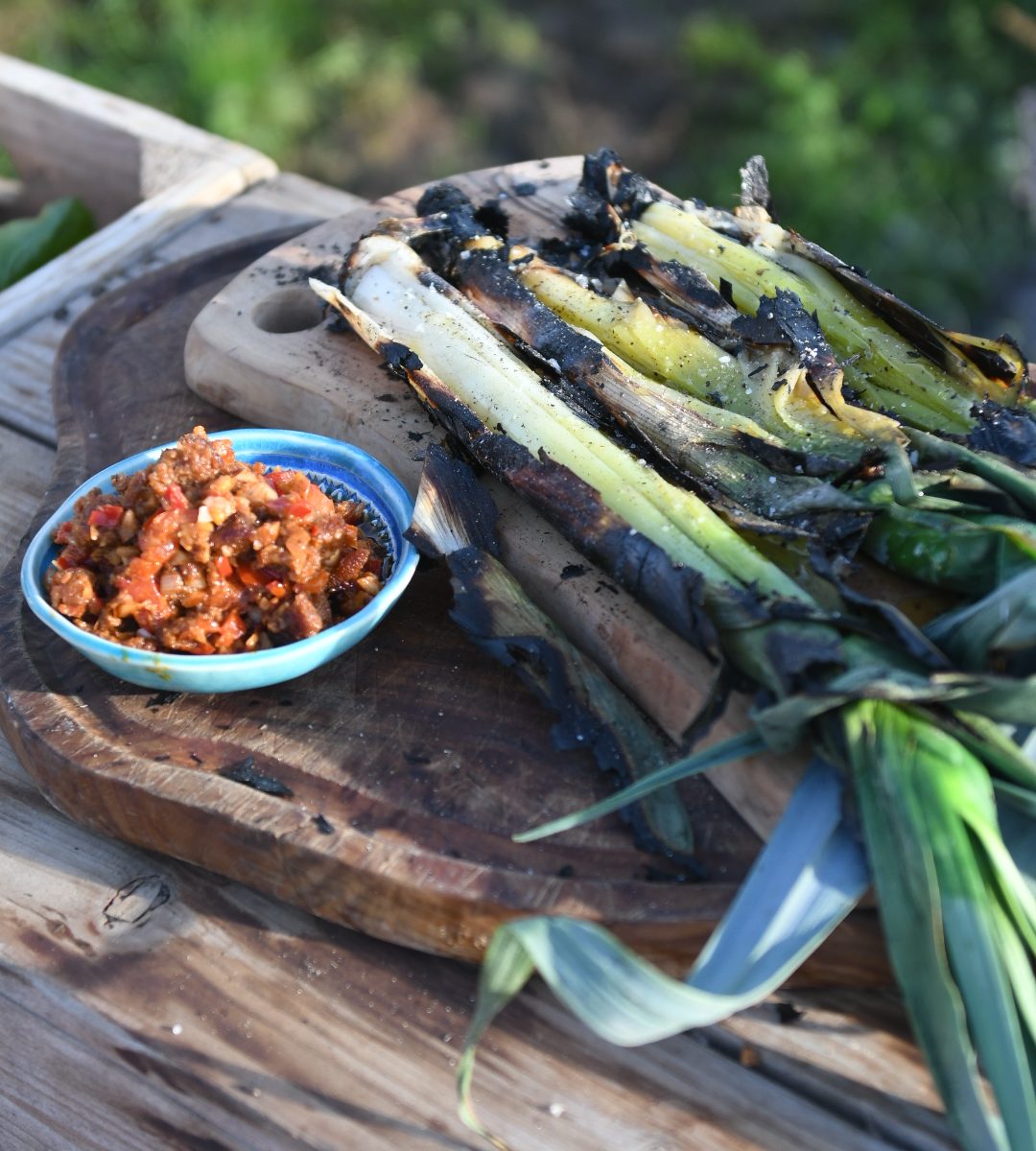
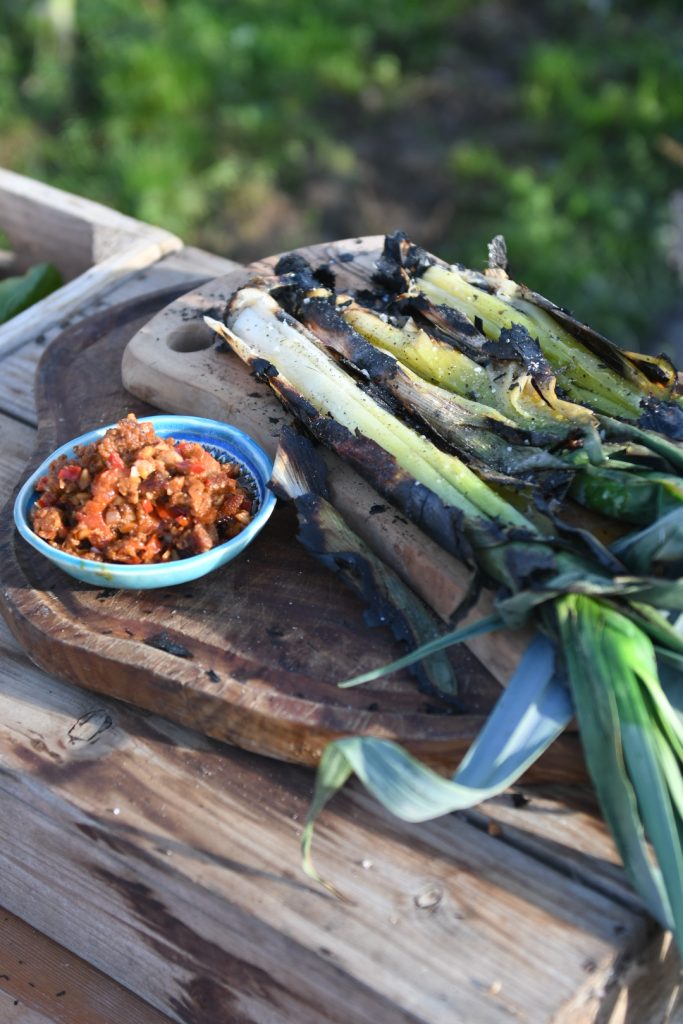
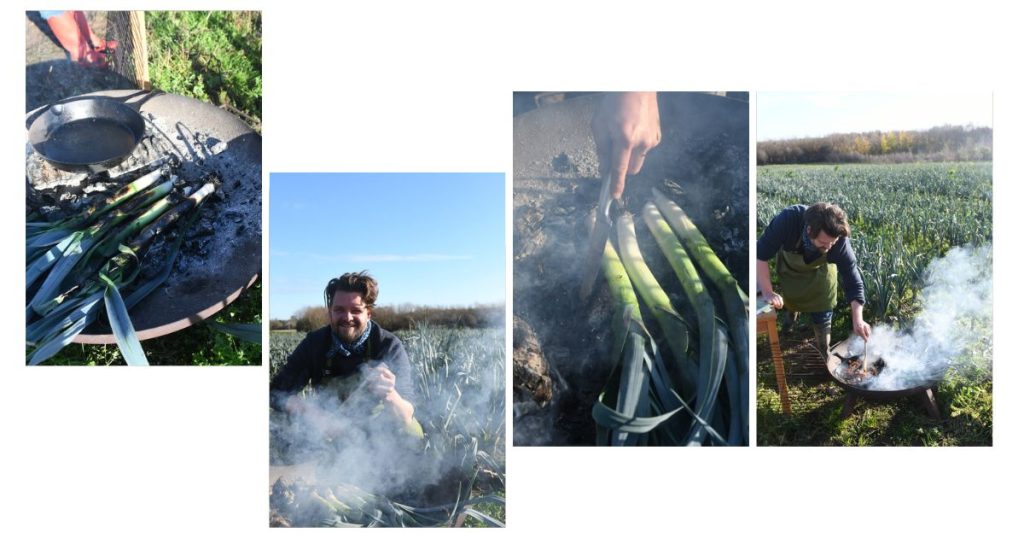
Cooking without Chemicals with Tom Hunt – Blackened Leeks with Romesco Sauce

This smoky Catalan-style dish is all about the contrast of charred, sweet alliums and nutty, tangy romesco. Traditionally served with calçots, the sauce works beautifully with blackened leeks too – or with almost any grilled vegetable or fish. It’s so moreish you’ll want to spread it on toast.

Tom Hunt is an award-winning chef, food educator, writer, climate change activist and author. This recipe was first published in his book Eating for Pleasure, People & Planet. https://www.tomsfeast.com

Ingredients – serves 4

4–6 leeks (about 1 large or 2 small per person), trimmed

Light olive oil

Sea salt and black pepper

Romesco sauce

2 cloves garlic, finely chopped

1 red chilli, chopped and deseeded

50g almonds or other nuts

50g stale or dry bread, torn

1 shallot or ½ an onion, finely diced

1 tbsp smoked paprika

350g roasted red peppers (from a jar or freshly roasted)

1 tbsp sherry or red wine vinegar

100ml olive oil

Method

To cook the leeks, preheat a barbecue or grill to high. Rub the leeks lightly with olive oil and season.

Place them directly over the coals or under the grill, turning occasionally, until the outer layers are blackened and the insides are soft – about 10–15 minutes depending on their size. If cooking directly on the coals, brush off any ash before serving.

You can also roast them in a hot oven at 220C until tender and charred at the tips. Meanwhile, make the romesco sauce.

Warm a splash of olive oil in a frying pan and fry the. bread and almonds for a few minutes until golden. Add the garlic, chilli and onion and cook for another couple of minutes until fragrant, then stir in the smoked paprika.

Transfer the mixture to a blender with the roasted peppers and vinegar, then blend to a coarse paste. With the motor running, drizzle in the olive oil until you have a thick, spoonable sauce. Season with salt and pepper to taste.

Serve the hot blackened leeks piled on a platter with the romesco spooned generously over the top or served alongside.

Storage

The sauce will keep well in the fridge for up to a week, or longer if pasteurised in the jar.

Cooking without Chemicals with Tom Hunt – Biodiversity-boosting Kale Kimchi

Tom Hunt is an award-winning chef, food educator, writer, climate change activist and author. This recipe was first published in his book Eating for Pleasure, People & Planet. https://www.tomsfeast.com

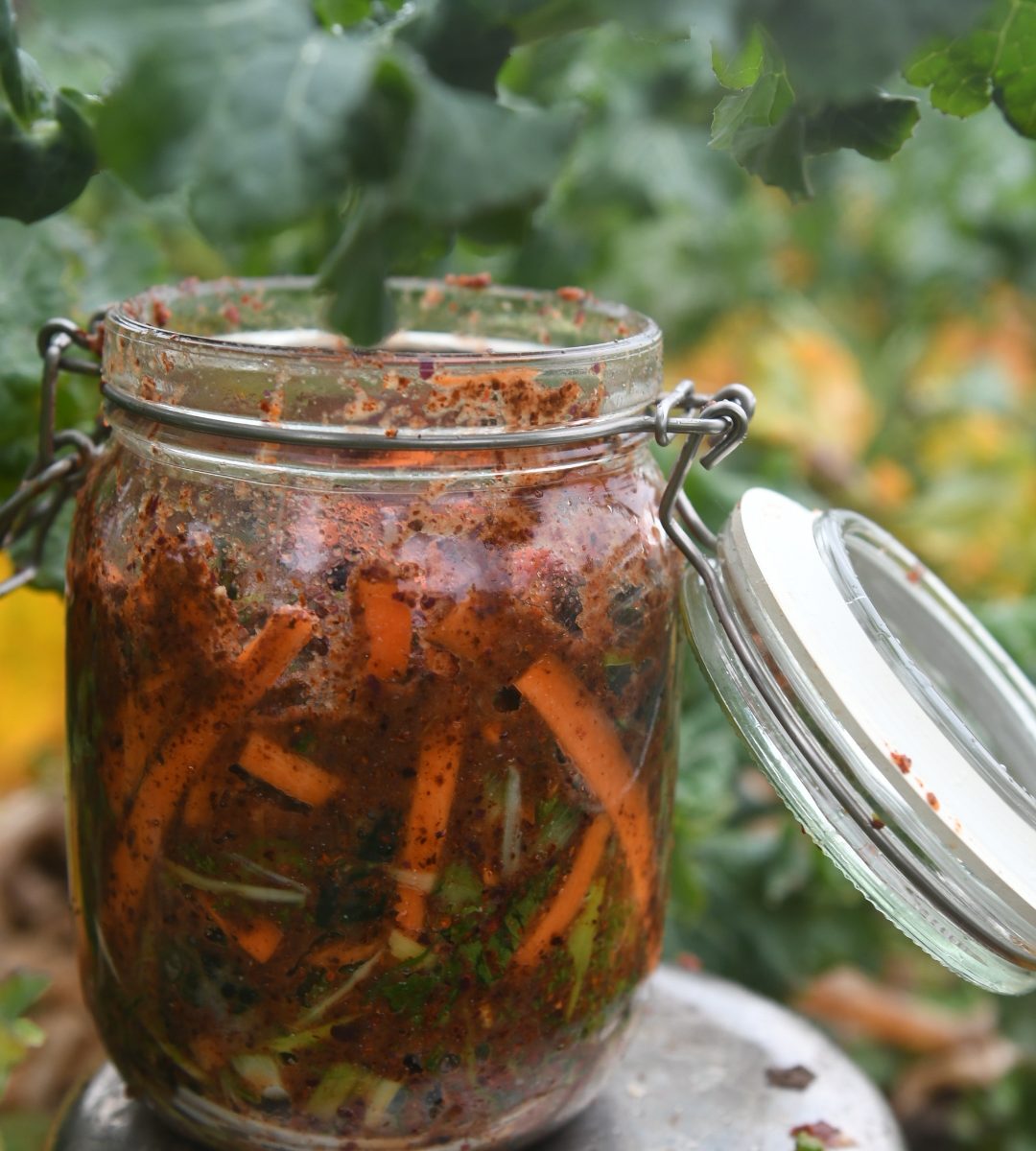
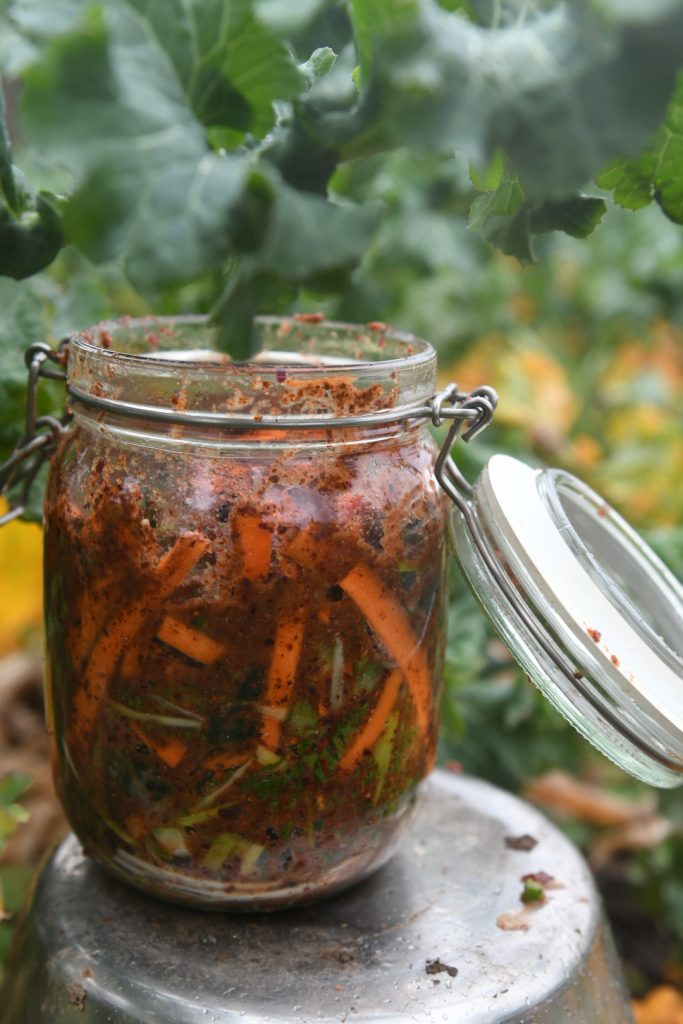
We all know how good fermented foods are for us. Bursting with beneficial bacteria and so so good for our gut microbiome. But did you know that by making this stunning farm fresh vegan kale kimchi you’re not only supporting your health, but also supporting biodiversity? Organic farms boast up to 50% more biodiversity compared to conventional farming setups. And by supporting small farmers who do their part in protecting our environment such as not using pesticides, growing hedgerows and leaving the kale to flower in the spring, your gut-healing kimchi is much more than the sum of it’s parts.

Ingredients
300g mixed colourful kale and greens
65g carrot, cut into thin batons
50g spring onions, cut into thin batons
30g cloves garlic, peeled
50g onion, peeled, roughly chopped
150g apple
6 tablespoons Korean chilli powder or other to taste
Pinch hijiki seaweed

Method
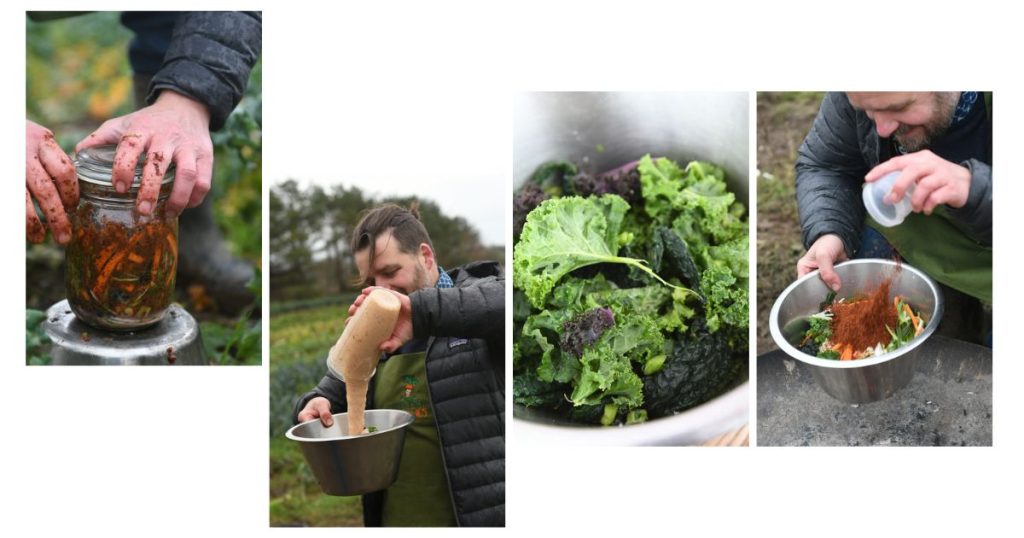
Gather 250g of raw vegetables, the majority of which should be leafy greens.
Cut hard vegetables, leafy green stalks and brassica stalks into matchsticks, cut brassica florets into bite sized pieces and rip leafy greens into large pieces.
Wash everything well and drain in a colander.
Massage one teaspoon of sea salt into the mixture.
Leave for 30 minutes then pour off any excess liquid.
Blend the garlic, onion, apple, pear and chilli powder to a puree with 120ml of water.
Pour the garlic mixture over the greens, add the hijiki seaweed and mix thoroughly.
Pour into a clean jar and press down, packing it in tightly.

Cooking Without Chemicals with Tom Hunt – Ghee-spiced roasted root vegetables with fresh coriander

Tom Hunt is an award-winning chef, food educator, writer, climate change activist and author. This recipe was first published in his book Eating for Pleasure, People & Planet. https://www.tomsfeast.com

Ghee is thought of as sacred in India. And it’s easy to see why. Whilst it bubbles on the stove it gives off the most delicious aromas of caramel and toasty nutty-ness. Once clarified the ghee looks like nectar, golden yellow in colour. Ghee is thought to be purifying and vital for our health within ayurveda – India’s holistic medicine. It has a high smoke point which means it can be used for roasting, sautéing or even deep fat frying. The warm spices in this recipe combined with the ghee create a comforting dish, delicious served alongside other plain vegetables or as part of an alternative roast dinner.

– Serves 4 as a side dish

50ml organic ghee

1tsp cumin seeds

2tsp coriander seeds

1 level tsp turmeric or ideally turmeric root to grate

2cm piece ginger, finely grated

1 tbsp honey

200g parsnips, cut in half or quarters lengthways

200g carrots, cut in half or quarters lengthways

250g turnips or Jerusalem artichokes (or a mix of both), cut into halves or quarters

2 shallots, cut in half lengthways

6 sprigs fresh coriander and/or mint, leaves roughly chopped, stalks finely chopped

Yoghurt to serve (optional)

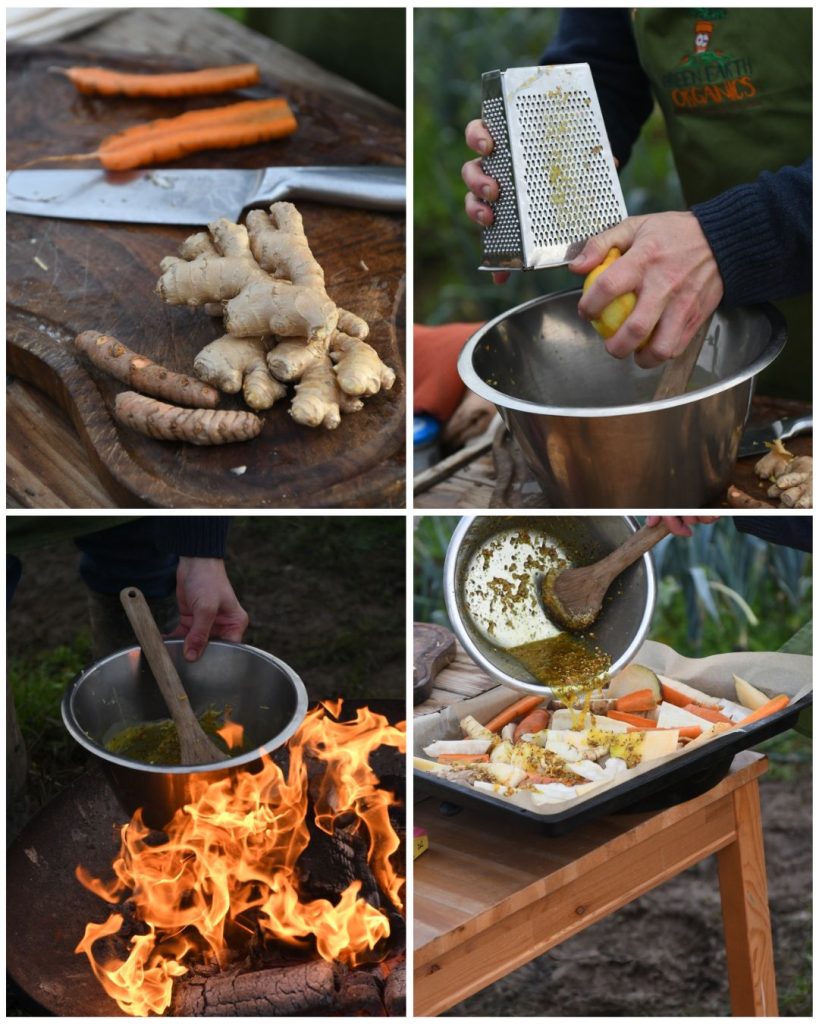
To roast the root vegetables: preheat the oven to 180c. Mix 50ml of ghee with the

cumin, coriander, turmeric, grated ginger, honey and a teaspoon of salt. Place the root

vegetables in a roasting tray and pour the spiced ghee mixture over the top. Turn the

vegetables in the mixture until evenly coated. Cover with a piece of parchment or foil and

place in the oven for 20 minutes. Remove the foil or parchment and return to the oven for a

further 25 minutes or until the vegetables are soft and slightly caramelised. Finish with the

fresh coriander and/or mint and blob of yoghurt on the side if you fancy.

Farm to Table Soup – Cooking without Chemicals with Chef Tom Hunt

Tom Hunt is an award-winning chef, food educator, writer, climate change activist and author. This recipe was first published in his book Eating for Pleasure, People & Planet. https://www.tomsfeast.com

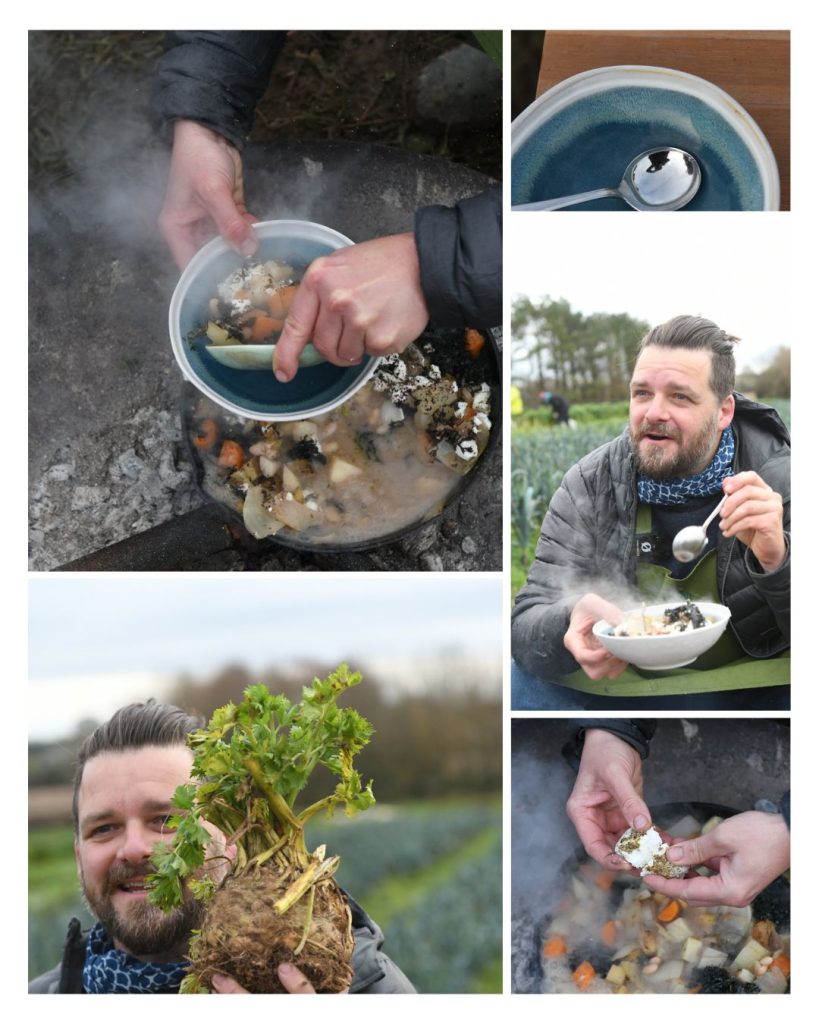
This soup is the farm in a bowl. Adapt the ingredients to use what you have, what’s in season and what’s in your veg box.

Serves 4

2 tbsp ghee or olive oil, plus extra to serve

1 celeriac, trimmed, cleaned, diced – skin left on

3 carrots, roughly chopped – skin left on

1 onion, very roughly chopped

4-6 cloves garlic, peeled

3 sprigs thyme

Sea salt and pepper, to taste

Pinch of dulce seaweed, optional

100-150g kale, stalks finely chopped, leaves roughly chopped

1 can white beans, including the aquafaba

Method

Heat a thick based pan over a medium heat with the fat. Add the onion and whole cloves of garlic. Cook for a few minutes then stir in the celeriac and carrot. Sauce for a few more minutes. Season with plenty of sea salt and freshly cracked black pepper and optional dulce seaweed flakes. Cover with water and bring to a simmer. Add the kale and white beans including their liquor. Once tender serve topped with optional crumbled goat’s cheese and extra ghee or olive oil. Enjoy!