
1 teaspoon of the neonicotinoid Thiamethoxam can kill 1.25 billion bees, that is more than all the bees in North America! The “Insect Apocalypse” is already underway, some areas, like German nature reserves, have seen insect biomass drop by 75% in 30 years.
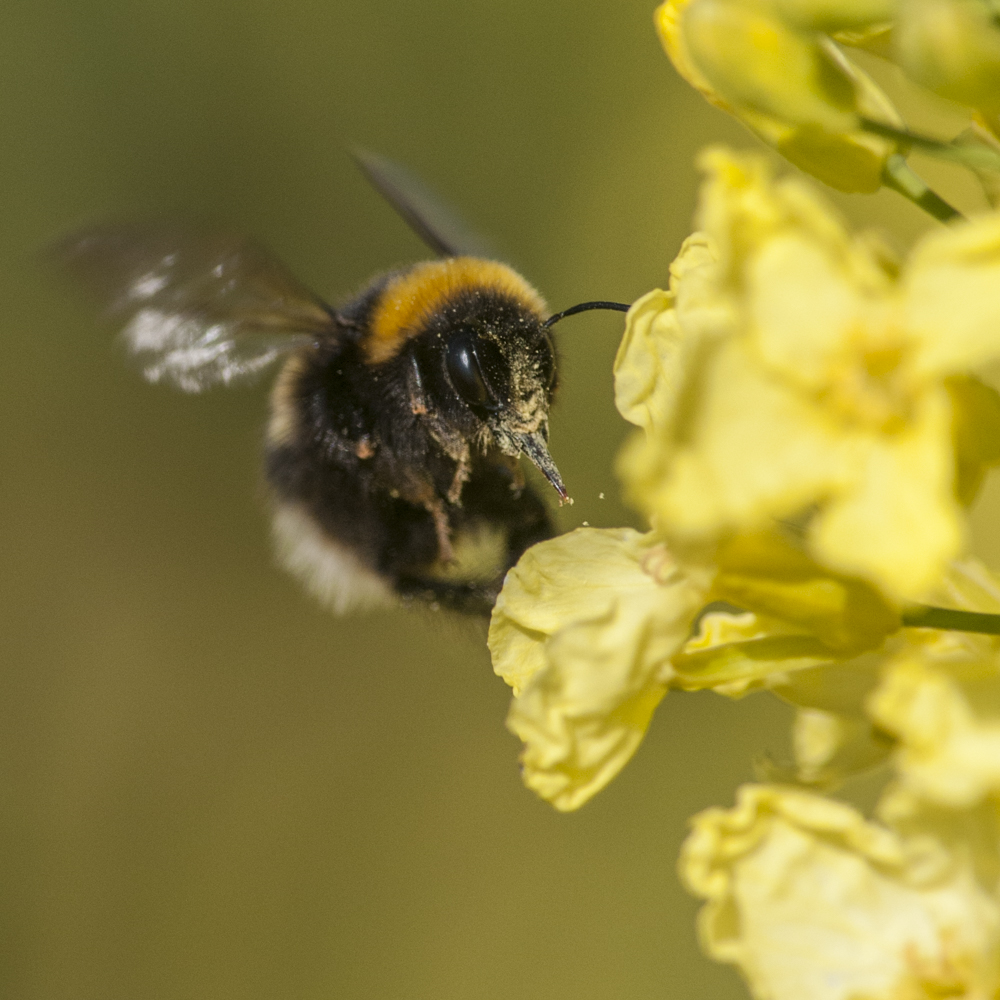
“If all insects were to disappear it is thought that all life on earth would end within 50 years, if all human beings were to disappear within 50 years all forms of life would flourish.” – Jonas Salk.
It is impossible to picture our farm without insects, the bees, the flies and the butterflies, it would be empty, over the last couple of weeks with the amazing weather they have been out in abundance. Insects are crucial to life on earth, and pesticides and climate change are having a massively negative impact on them.
When a farmer or a gardener goes and sprays glyphosate on the land, they kill all plants. Have you ever seen a bright yellow field that has been sprayed with Roundup, it is not pleasant. This herbicide in one fell chemical swoop destroys all biodiversity that would have been home to millions of our little insect friends. Conventional agricultural nearly always starts with Roundup.
Have you ever noticed “tram lines” in cereal fields, these lines are there to allow the tractor to follow the same path to prevent damage to the crop. They are used so the conventional farmer can spray chemicals on his crop multiple times. These include, fungicides, growth promotors to prevent cereals from lodging (falling over), pesticides and herbicides and they can be sprayed several times in one season.
So, removing chemical from our food supply is critical to the health of our pollinators and we need our insect friends because if they disappeared, we would have a few very serious problems:
1. Pollination Collapse
About 75% of global crops depend at least in part on pollinators, Without insect pollination, yields of fruits, vegetables, nuts, and many oilseeds would plummet.
2. Food Web Disruption
Insects are the base of many food chains. Birds, amphibians, reptiles, and many mammals depend on insects for food. A collapse in insect populations would cause cascading extinctions, weakening ecosystems and agriculture alike.
3. Decomposition and Soil Fertility
Insects like beetles, ants, and flies are crucial decomposers. Without them, dead organic matter would accumulate, slowing nutrient cycling, degrading soil health, and impacting plant growth.
4. Pest Control
Many insects prey on crop pests. If all insects vanished, pest populations (like mites and some plant diseases) could explode without natural enemies, further devastating crops.Insects are not just pests—they’re fundamental to life on Earth. Their disappearance would trigger a slow-motion ecological and agricultural collapse.
Organic may not be a perfect system, but it at least give biodiversity a fighting chance and keeps chemicals out of our food chain.
As always thank you for your support, without it we would not be here.
Kenneth