Clean Dirt

What is hiding in our food? 

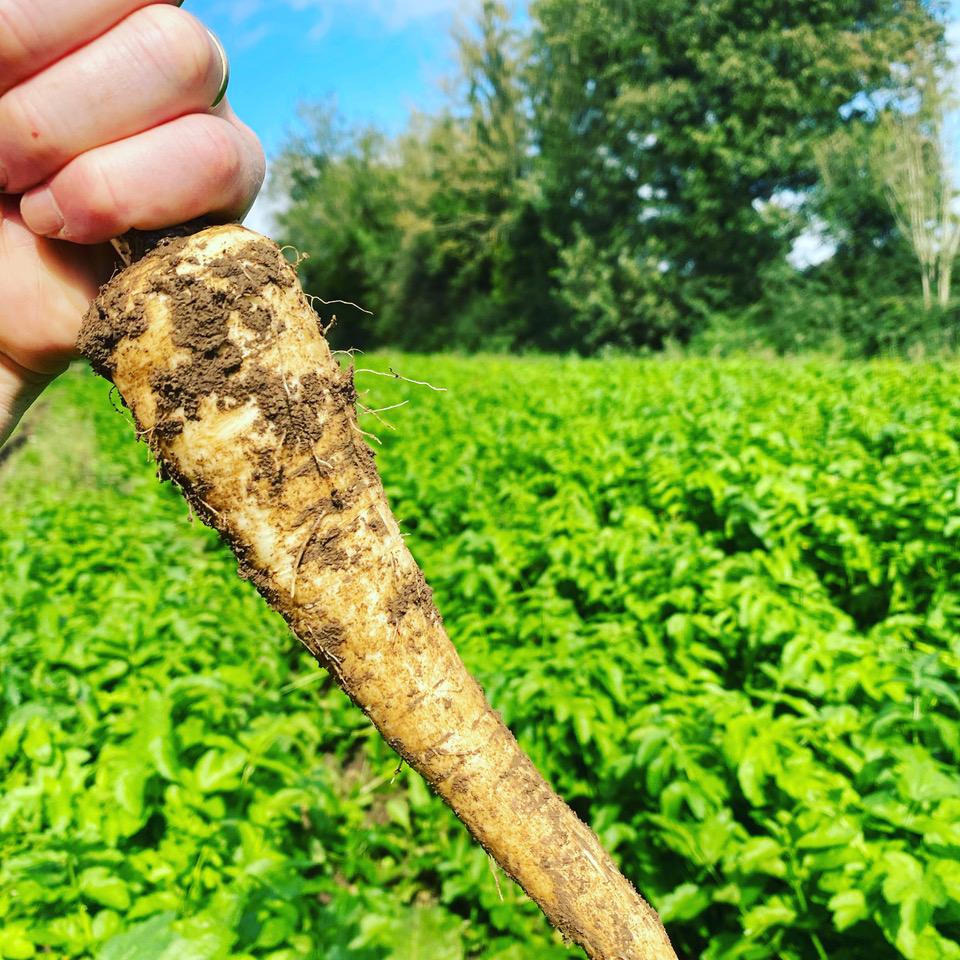
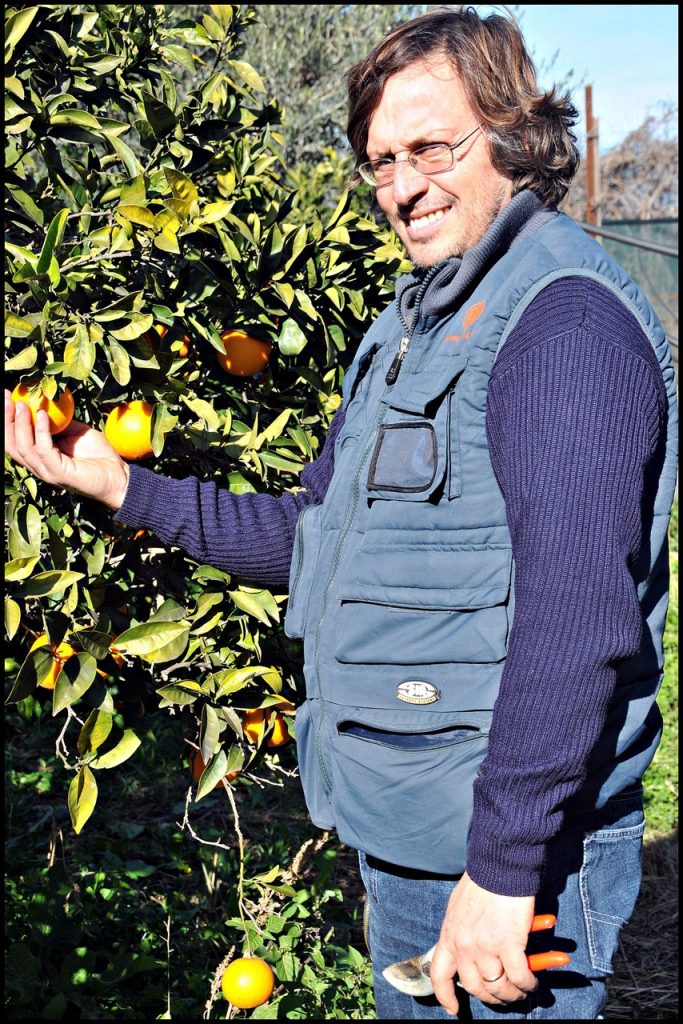
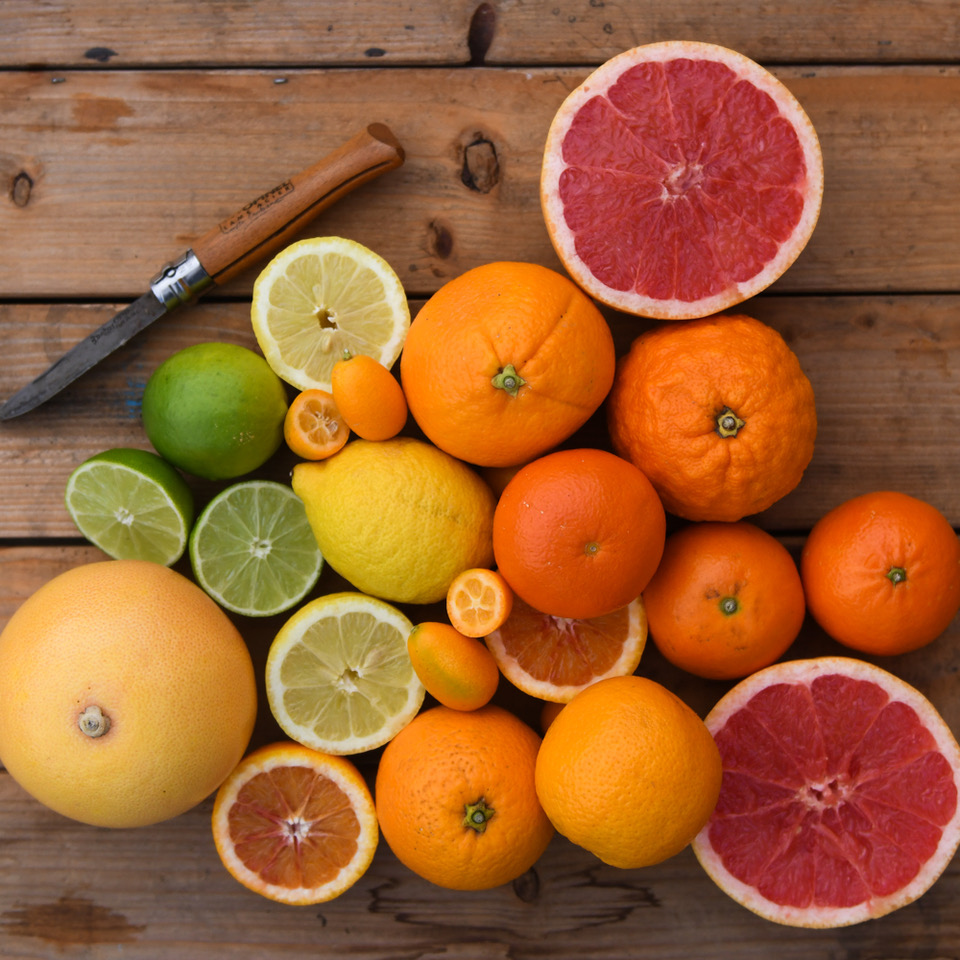
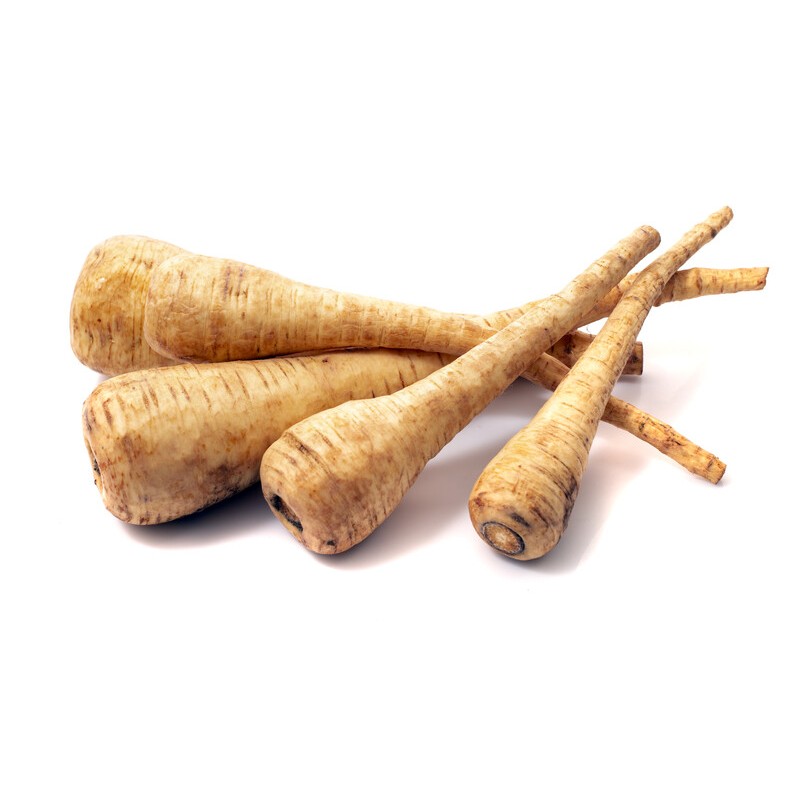
Simone’s oranges picked in Italy contain nothing but a good helping of Italian sunshine and healthy nutrients from his soil. Our parsnips contain nothing but a good helping of Irish rain and the healthy nutrients from our soil. What then about their conventional cousins? Hmm well as it turns out, the story there is very different.

Dirt, clay soil the stuff that gets stuck under your fingernail is good for us. It is actually pretty healthy to get it on your hands, in fact research has shown that getting your hands stuck in clay may actually ease depression. (Mycobacterium vaccae the bacterium is found in soil and may stimulate serotonin production is currently under study)

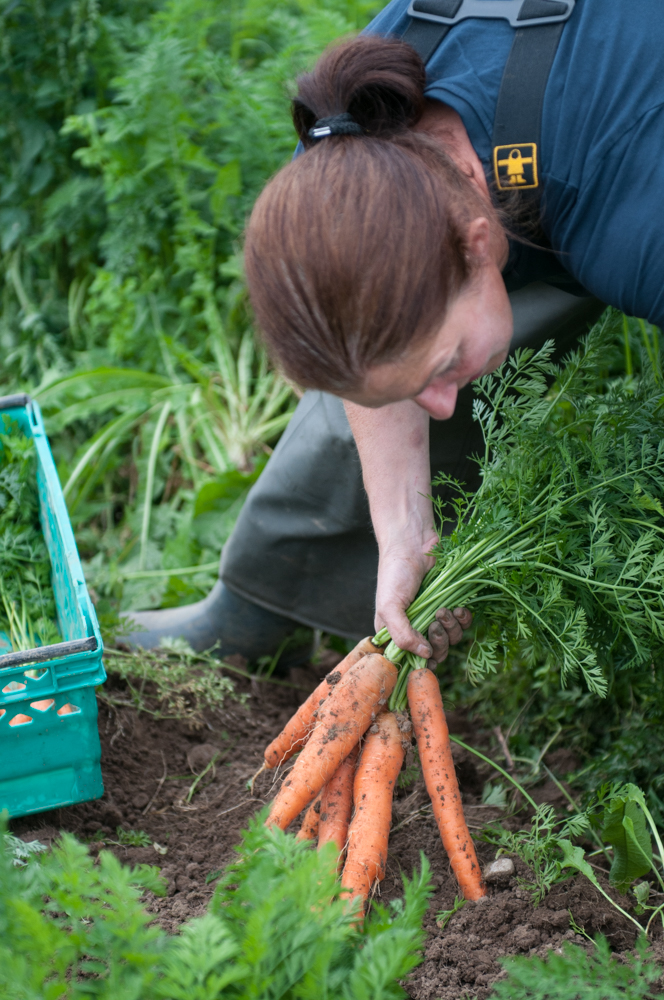
Some of our produce comes with dirt on it and we are pretty proud of that, we know it takes a little more effort in the kitchen and time can be in short supply, we know when you have a busy household the last thing you want to do is to wash dirty carrots or parsnips. We get that, I know the feeling and sometimes I reach for that bag of washed carrots and am just thankful they are washed!

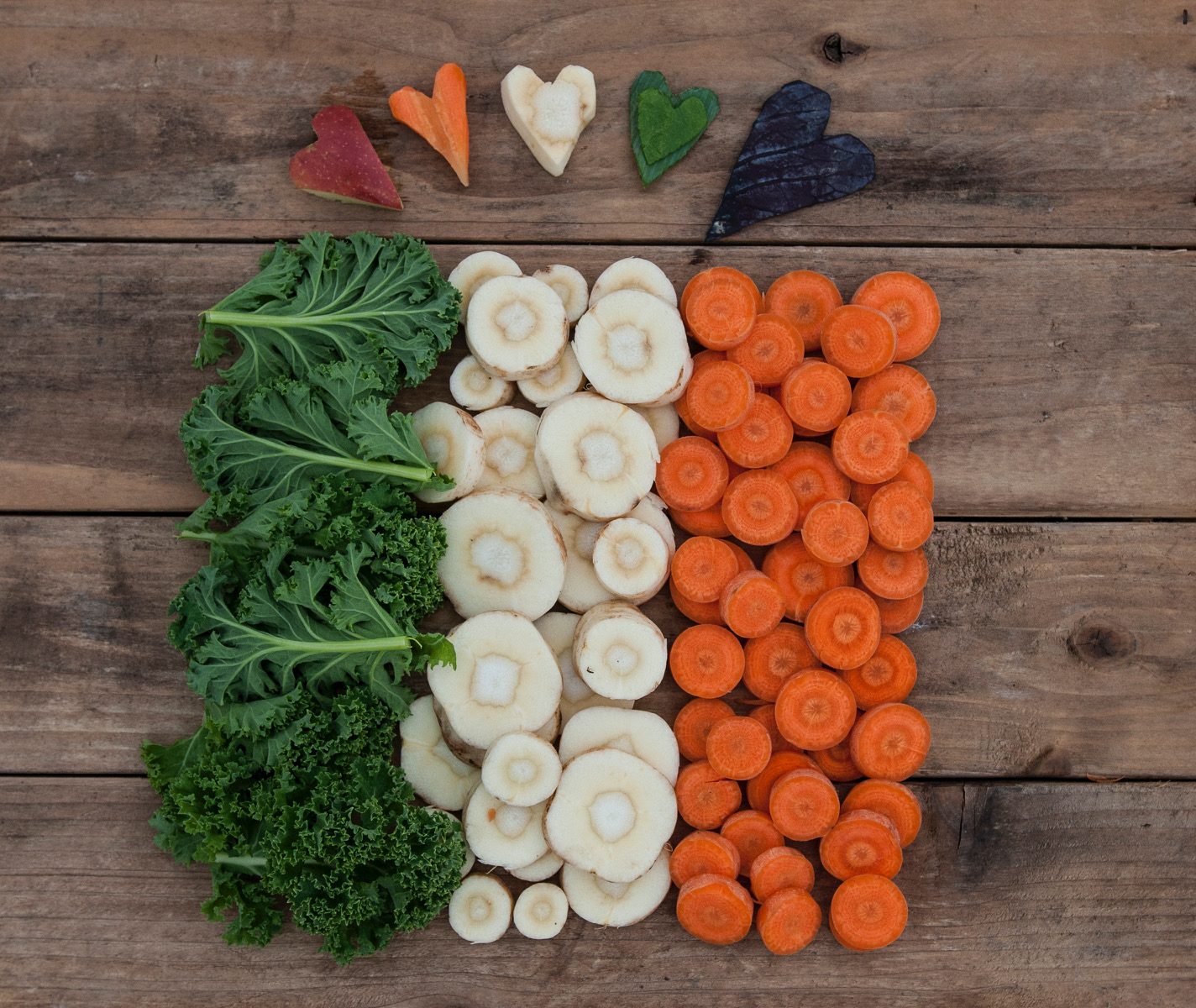
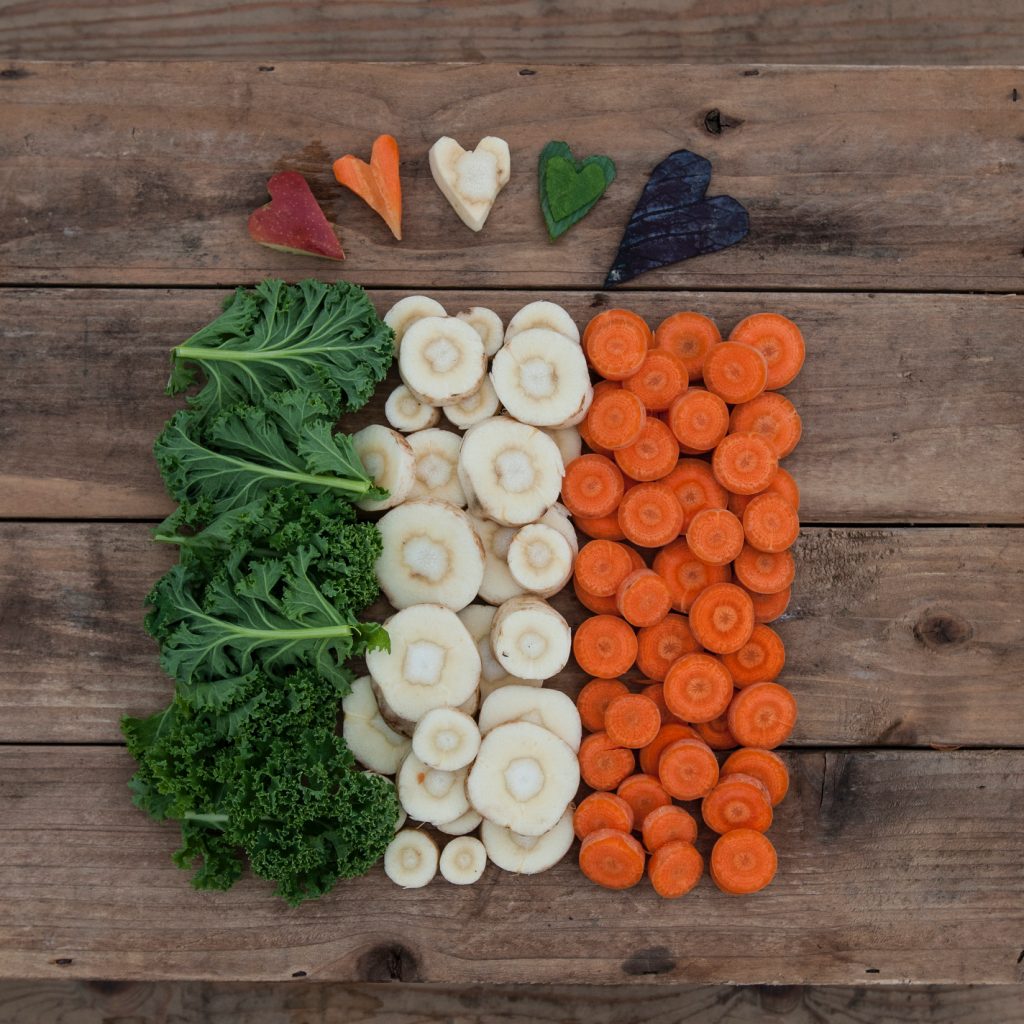
But here’s the thing we are not hiding anything, you can see the dirt and it has a very important function. It is a natural preservative, it keeps the veg fresh, it keeps the flavour in. You can smell the freshness when you wash one of our dirty parsnips. Crucially leaving dirt on your veg actually helps reduce food waste!

The great thing of course about soil is it can be washed off.

This unfortunately is not the case with chemicals. Many are systemic in nature, (simply put they get inside the plant or food and stay there). 

Some chemicals are applied to the skins of fruits and vegetables to preserve them. The most commonly known ones are the fungicides mixed into the waxes and applied to citrus fruit. 

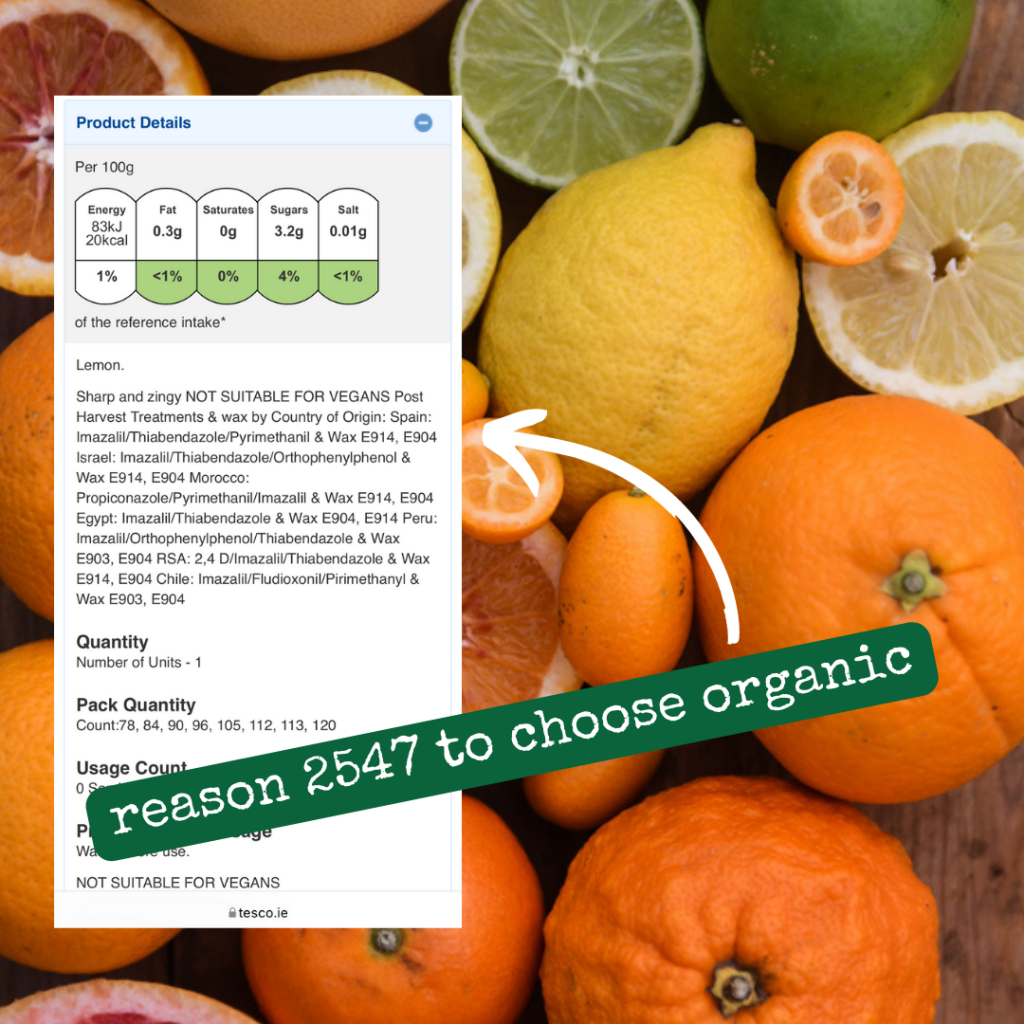
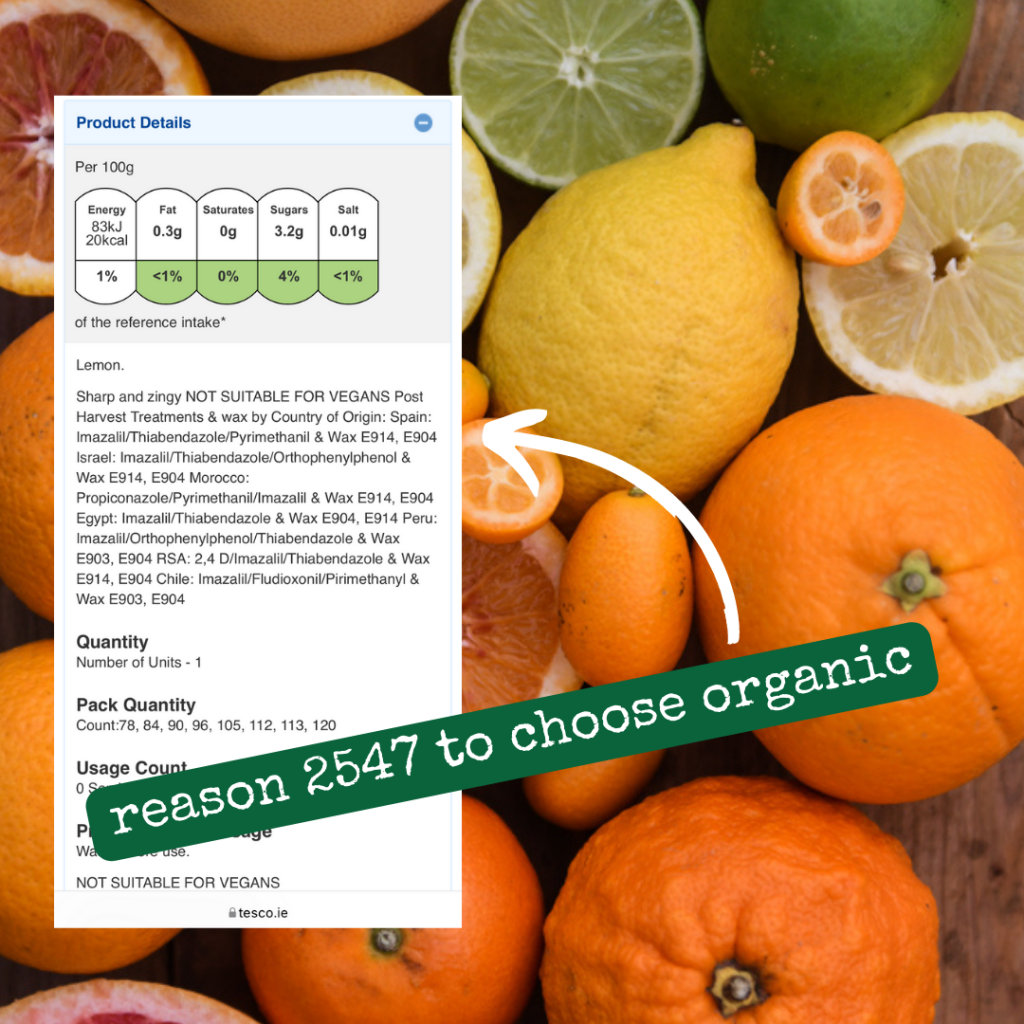
We stumbled upon some pretty eye-watering facts during the week. It turns out that one of the big supermarkets are now kindly putting the names of the chemicals mixed in with the waxes on their loose citrus fruit on their website. Have a look see for yourself. (Check out the description on loose lemons on this retailer’s website. I’ll give you a hint the name of the multinational supermarket begins with T.)

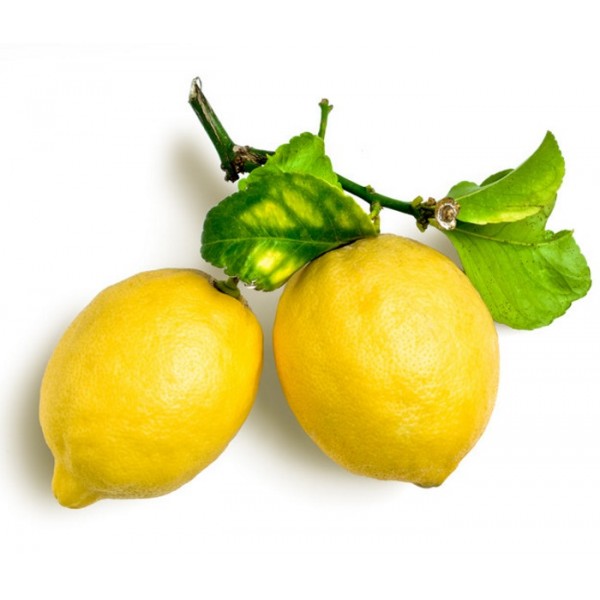
This is what is found on your conventional (Non organic) LEMONS:

Here is the list we found (Depending on country of origin, the treatment varies)

Spain: Imazalil/Thiabendazole/Pyrimethanil & Wax E914, E904 

Morocco:  Propiconazole/Pyrimethanil/Imazalil & Wax E914, E904 

Egypt: Imazalil/Thiabendazole & Wax E904, E914 

RSA: 2,4 D/Imazalil/Thiabendazole & Wax E914, E904 

And if you were wondering what these wonderful preserving chemicals may do to us unsuspecting humans here are some fun facts:

Imazalil is a suspected carcinogen and a probable endocrine disrupter (compounds that mimic or inhibit the body’s hormones, generally not good for us)

Thiabendazole is a probable endocrine disrupter 

2,4-D falls into a class of compounds called endocrine-disrupting chemicals. 

Here is another fun fact, the amount allowed in a piece of fruit is set by something called the MRL (Maximum residue limit) and this is generally set by what works to kill a pest and not what is safe for human consumption. (Recently The EU proposed reducing the MRL for Imazalil to 0.01mg/kg  for citrus from 4mg/kg, but this was overturned by growers, so what is the safe limit?)

So, unlike the dirt on our parsnips which is harmless, and could be argued is actually improving our health, extending shelf life, locking in flavour and can be seen, these hidden compounds reside on much of the conventional fruit that is purchased in supermarkets and is bad for our health. It is refreshing to see at last that there is some transparency creeping into our food supply chain. 

Kenneth

https://www.ewg.org/foodnews/citrus.php

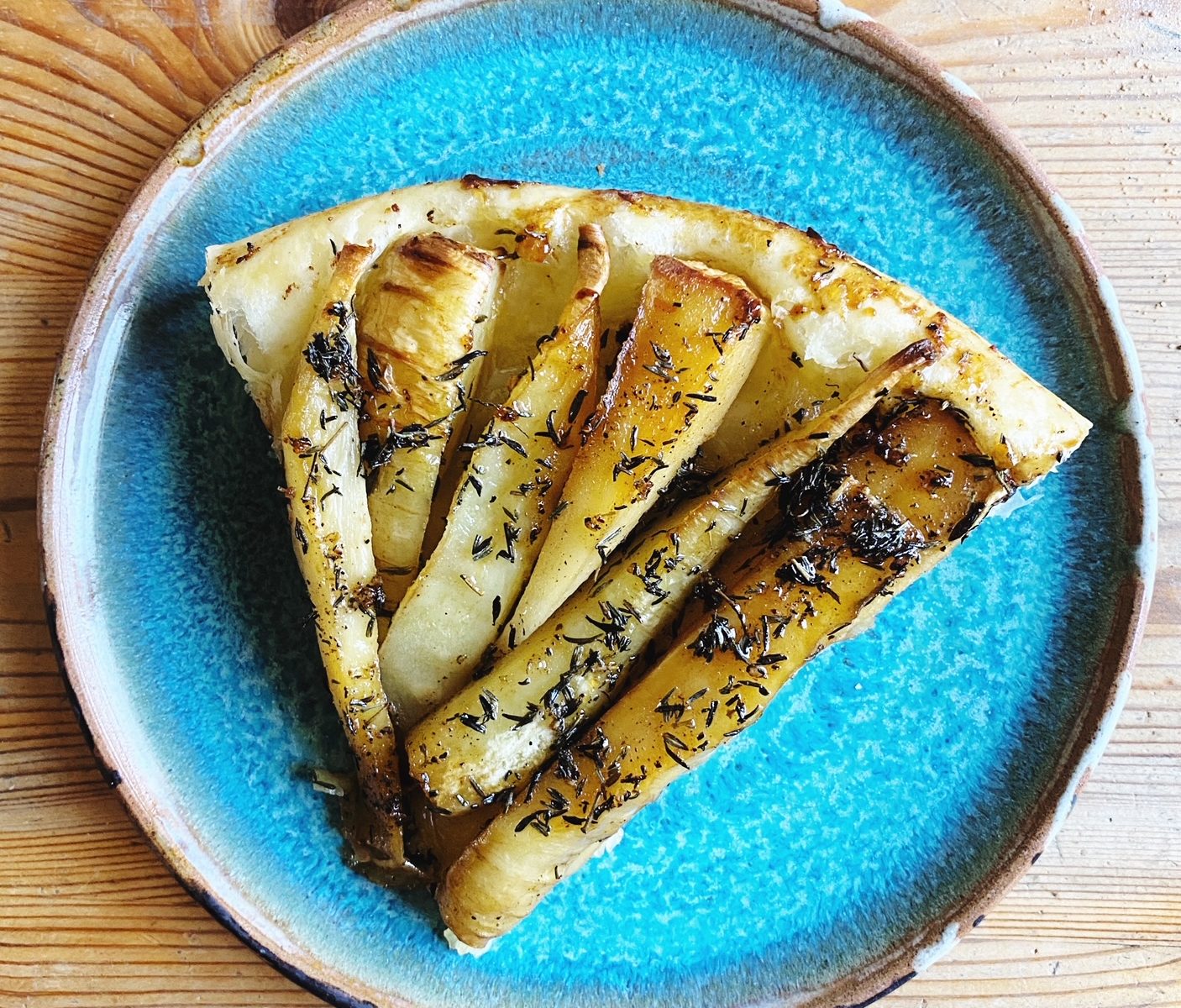
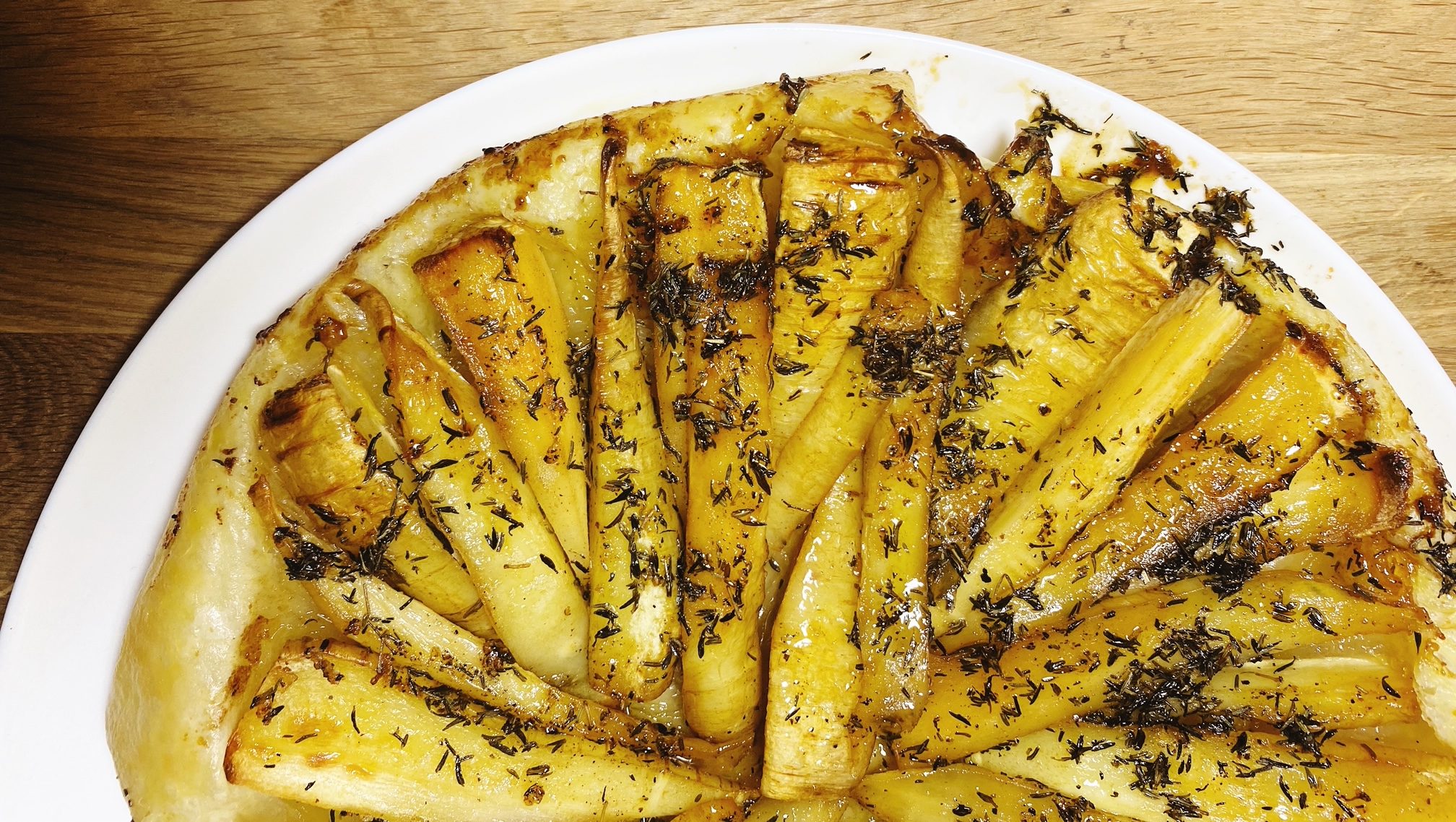
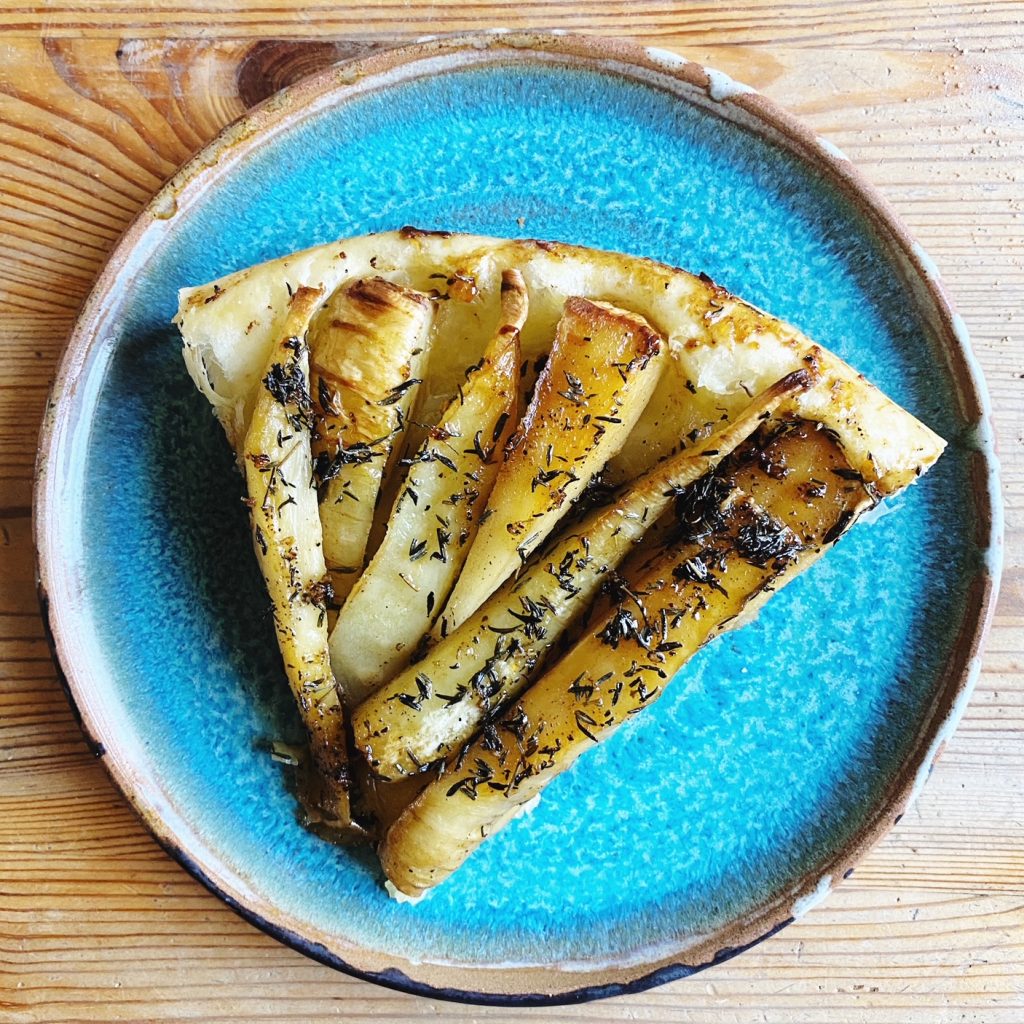
Parsnip Tarte Tatin

A tarte tatin is traditionally made with apples as a dessert, but we love making savoury versions too. It’s a great way to showcase a seasonal vegetable and make it the star of your meal. The result looks fancy and tastes amazing, but the secret is it is sooo easy to do. Serve with some fresh salad and a zingy dressing, with some cheese, nuts, seeds or beans scattered on top for a little protein and you’ve got a wonderful, balanced, plant based meal ready to share with friends or family.

Liz x

Ingredients (serves 6 -8 depending on sides)

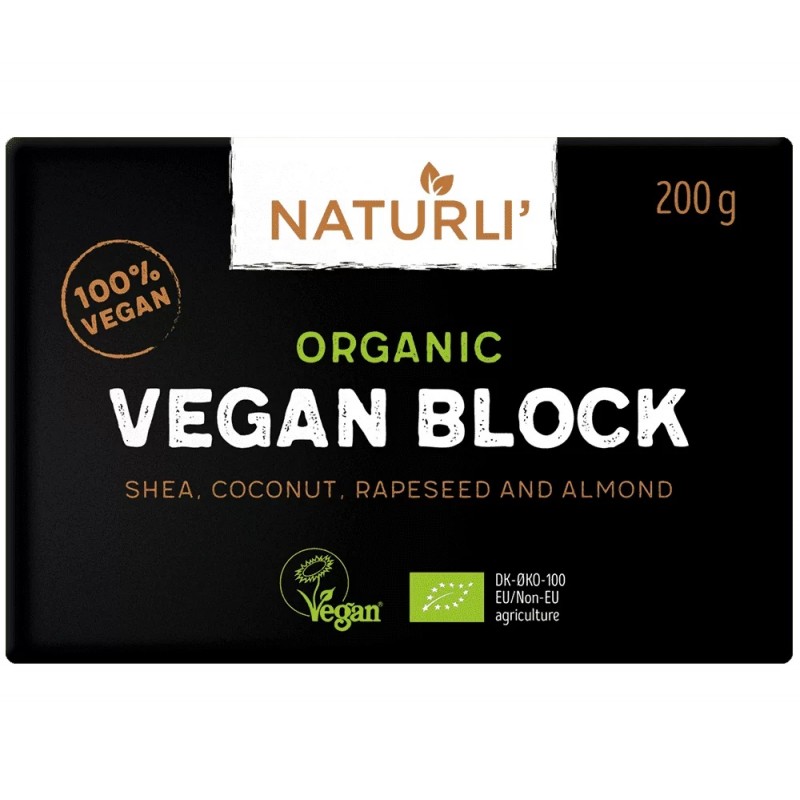
  • 50g butter (we love our new Naturli vegan butter) – chopped into small pieces
  • 2 tbsp olive oil
  • 1 tsp sugar
  • 1 tsp salt (or to taste)
  • 2 tsp thyme leaves (fresh or dried)
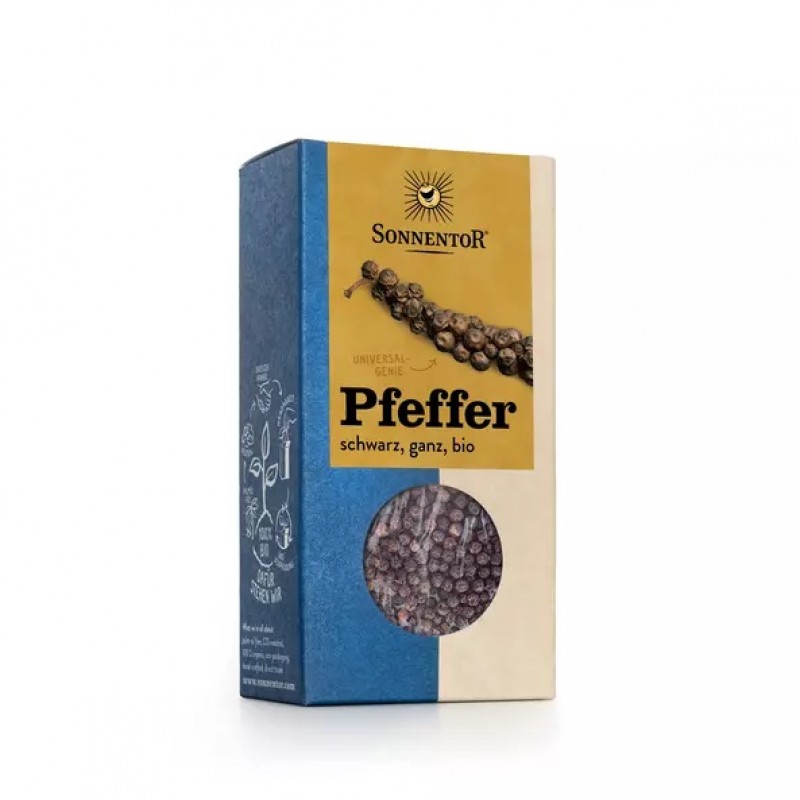
  • black pepper to taste
  • 2 large parsnips sliced into finger sized wedges (enough to tightly cover the base of your dish)
  • a sheet of puff pastry (check the ingredients, many are made dairy free now – or make your own)

Method

  1. Pre-heat the oven to 200C and find a large, round oven proof dish. Or you can use a square/rectangular dish too of course, anything that your sheet of pastry will fit in comfortably.
  2. Dot half the butter around in the base of your dish. Drizzle over half the olive oil and then evenly sprinkle the sugar, half the salt, half the thyme and a good grind of black pepper.
  3. Arrange the slices of parsnips over the butter and seasoning. Aim for complete coverage and one tight layer.
  4. Dot over the remaining butter and drizzle the oil, sprinkle the rest of the salt, thyme and another grind of pepper.
  5. Place the dish in the oven until the parsnips are soft and starting to caramelise. This should take around 30 minutes but keep an eye on them as ovens vary.
  6. Remove from the oven then quickly and carefully place the sheet of pastry over the hot parsnips and put the dish back in the oven right away.
  7. After 15 minutes or so, the pastry should be risen and golden brown. Remove the dish from the oven and place a large, heat proof plate or chopping board over the dish.
  8. Then use oven gloves to carefully, but very quickly, flip the plate/board and dish over. Still using gloves, pick the now upside down dish up off the plate/board and you should be left with a beautiful parsnip tarte tatin!
  9. Slice and serve whilst still warm with salads. It’s delicious cold too, so if you have any leftovers, eat for lunch the next day.

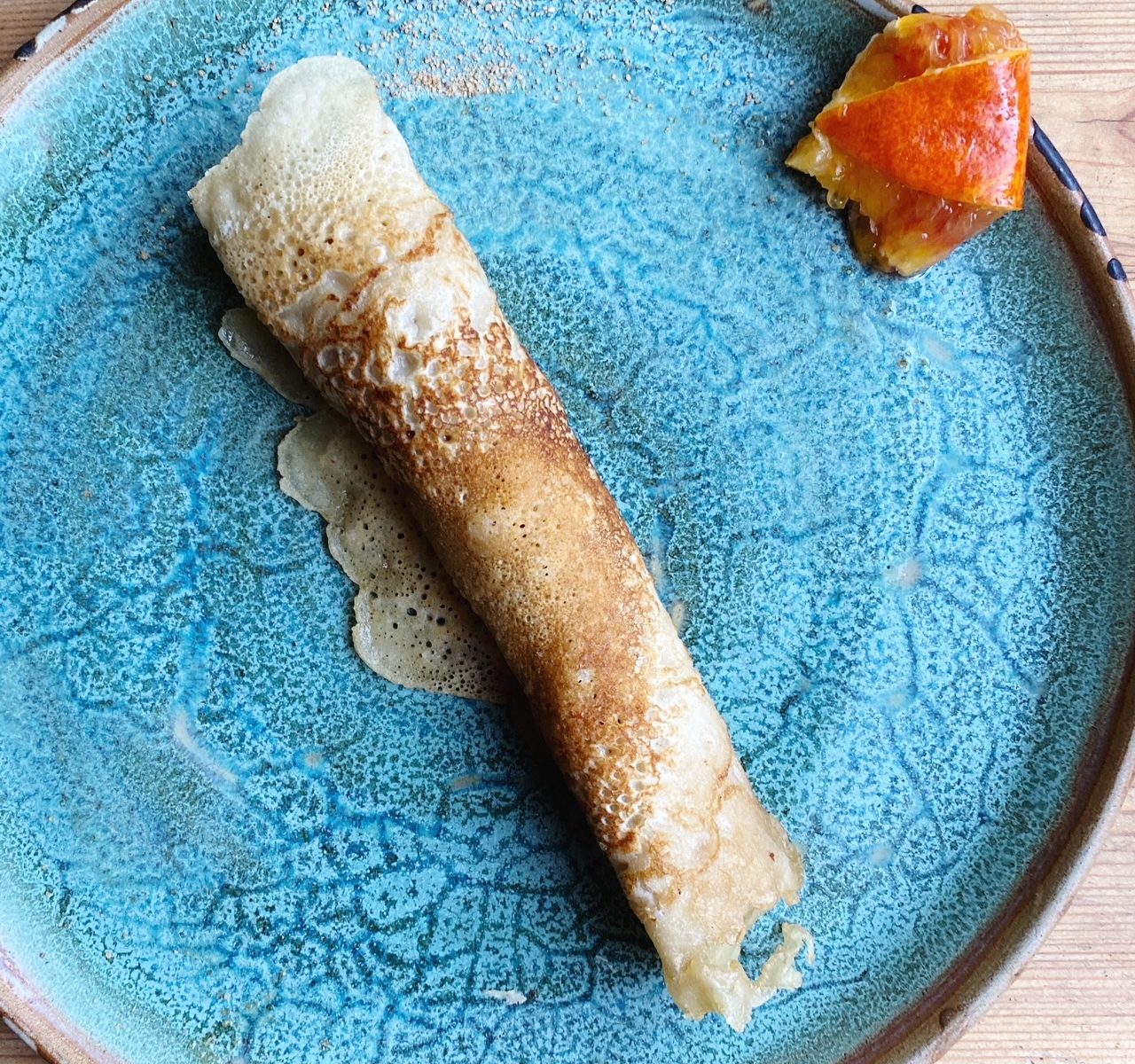
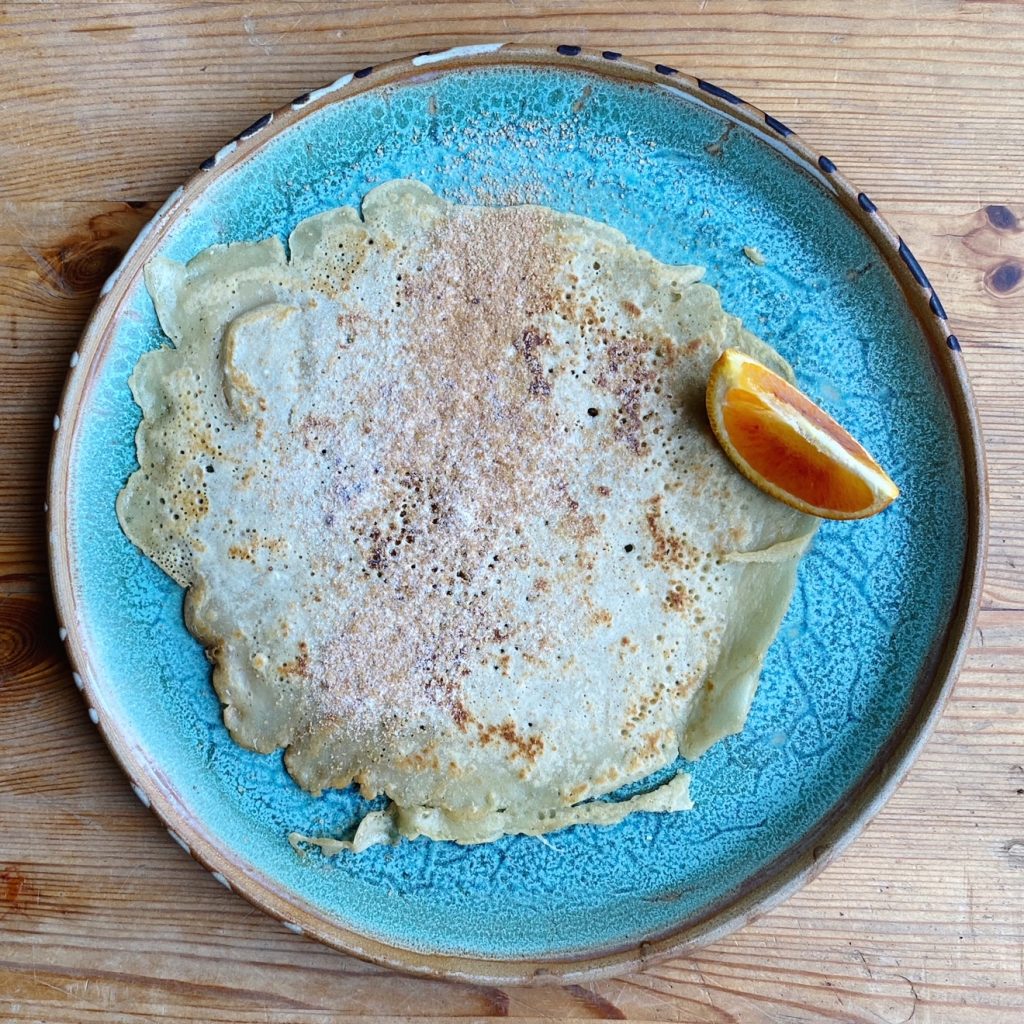
Vegan Pancakes

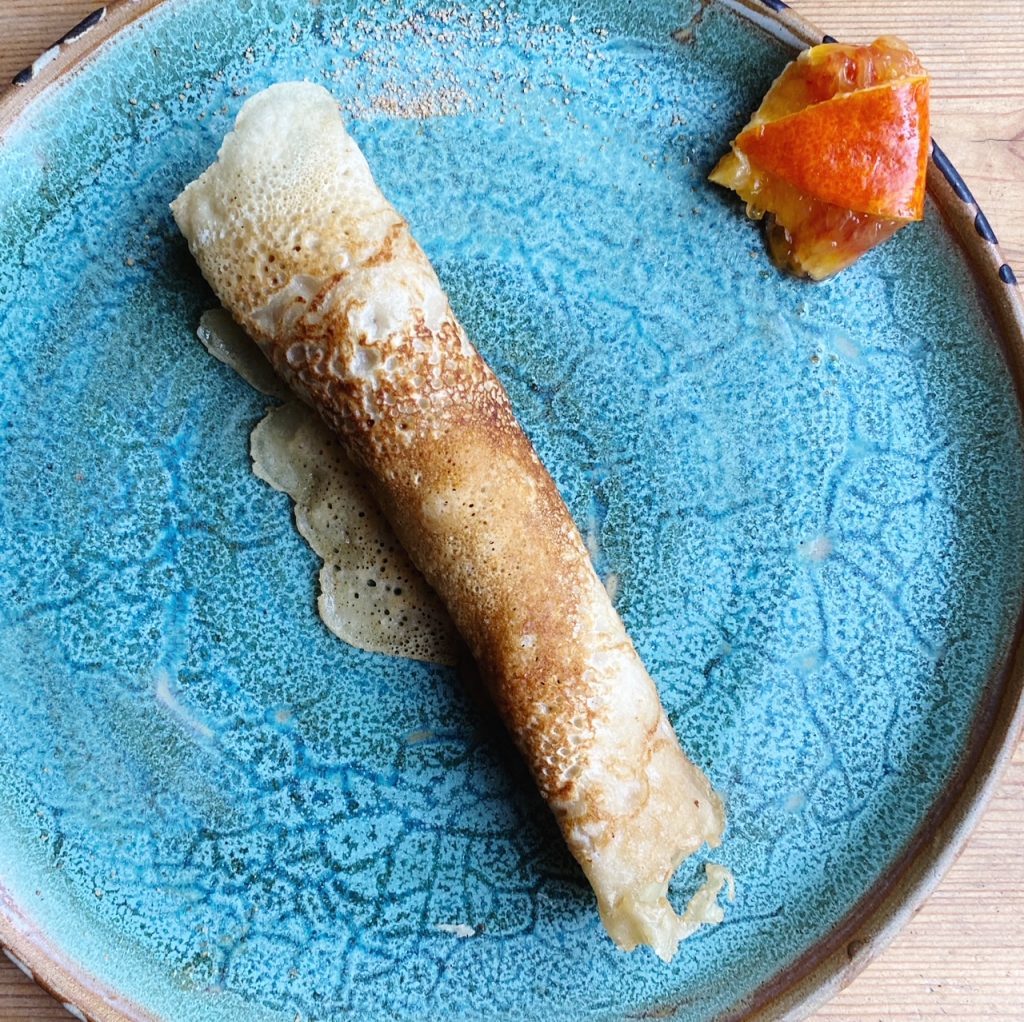
Is pancake day is the best day of the year? How do you like yours? The classic lemon and sugar? Rolled up with chocolate spread? Or filled with something savoury like wilted spinach and cheese. We love this simple crepe recipe that happens to be egg and dairy free.

Liz x

Ingredients (serves 4)

  • 1 mug of flour
  • 1 tsp sugar
  • 1 tsp baking powder
  • a pinch of salt
  • 2 tsp olive oil
  • 1 & 1/2 mugs oat milk
  • dairy free butter for frying
  • fillings of your choice

Method

  1. Measure the flour, salt, sugar, baking powder and olive oil into a mixing bowl.
  2. Whisk whilst slowly pouring in the milk until you have a smooth batter. Let the batter rest for 20 minutes before frying or you can even make it the night before and keep it in the fridge overnight.
  3. Use a cast iron or non stick pancake pan for best results. Heat the pan to medium-high and add a tsp of butter. Let the butter melt and tilt the pan back and forth to spread the butter evenly around the base. Add a ladle of the batter to the pan and tilt it again to swirl the batter into a thin, even layer.
  4. Cook on the first side for a couple of minutes or until golden brown underneath. Then carefully flip the pancake and cook on the second side for another minute.
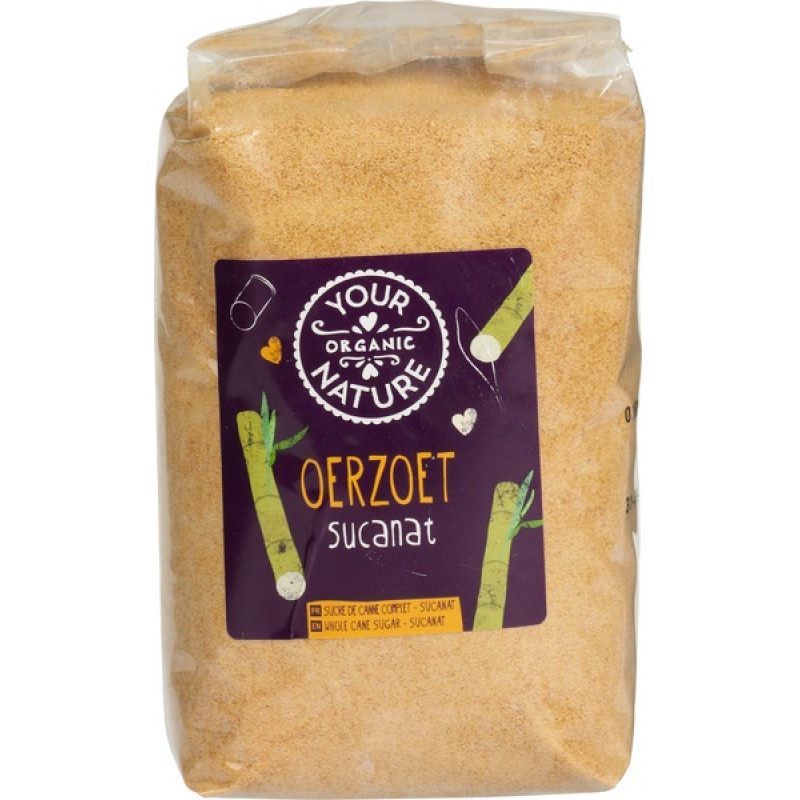
  5. Repeat until you have used all the batter and enjoy with your choice of fillings. Our favourite? A squeeze of fresh, organic lemon or blood orange and a small sprinkle of raw cane sugar.

Food Waste & Fussy Pigs

Food waste has always upset me and I think I get that from my mum.  Pre-covid my mum was a regular in our packing shed, salvaging any waste produce for a variety of charities, she was the ultimate food waste champion. 

Her generation was not one to waste anything. 

It wasn’t until the plastic clad, sell more, always on, supermarket culture took over did we as a generation decide it was ok to dump food. Or was it really our decision? I think not. It was the supermarkets that decided for us and made it ok to waste food and to grade out perfectly good produce based on how something looks.

In our business we try really hard to keep food waste to a minimum. It can be challenging as we are dealing with so many different fresh items, and we have harvests and deliveries arriving everyday. We run 5 different cold rooms, and we run some at different temperatures to ensure the optimum temperature is maintained to keep produce fresh.  We have also committed to not using plastic.  

(Incidentally, just this week it has been shown that despite the Supermarkets railing on about it, plastic does not actually reduce food waste, it can actually increase it!)

But back to our story, we need to make sure you our customer gets the most amazing quality.  Everything piece of produce gets inspected, and while sometimes the odd one gets through,  we work really hard to deliver on our promise of only delivering amazing quality produce to your door.

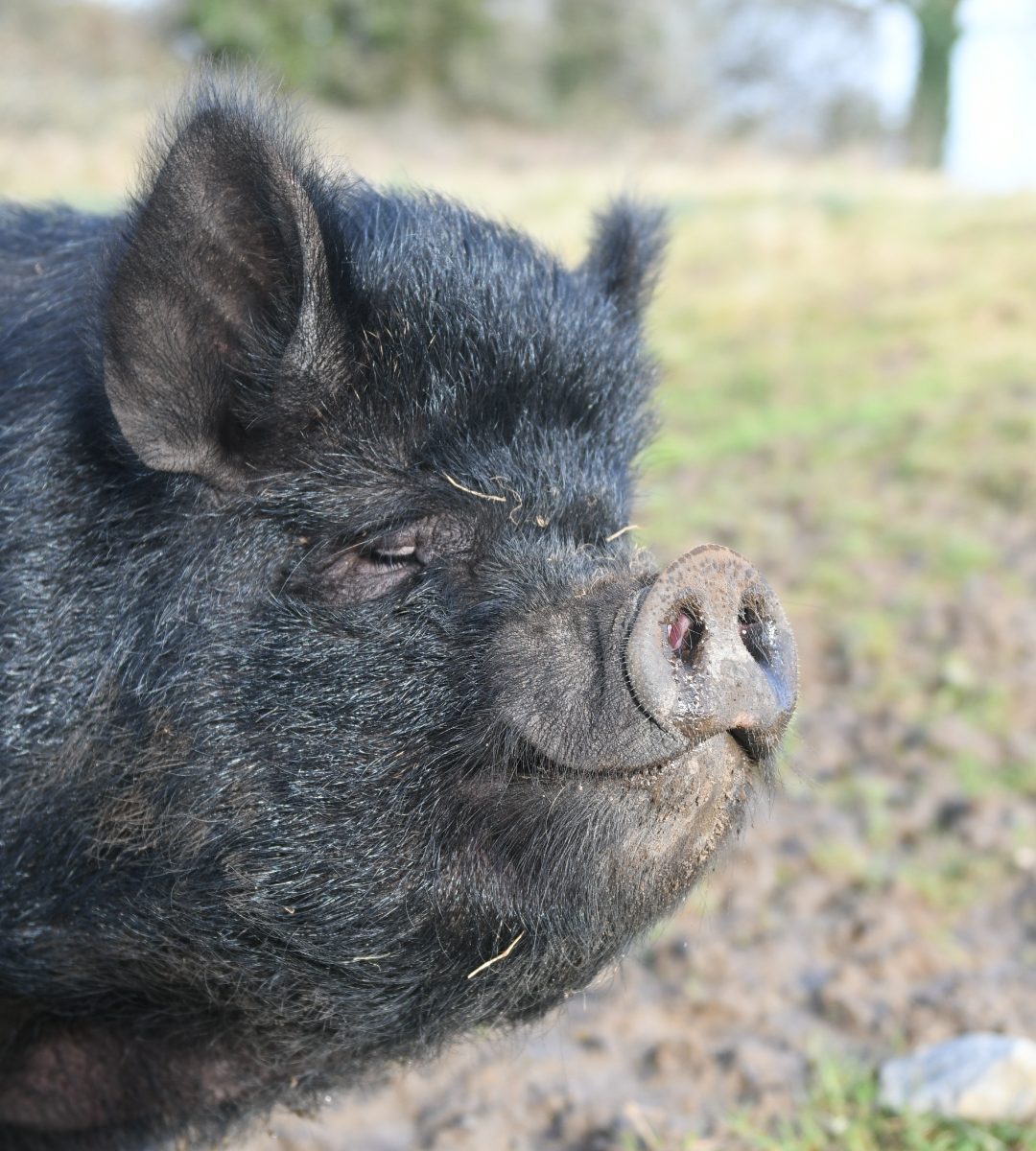
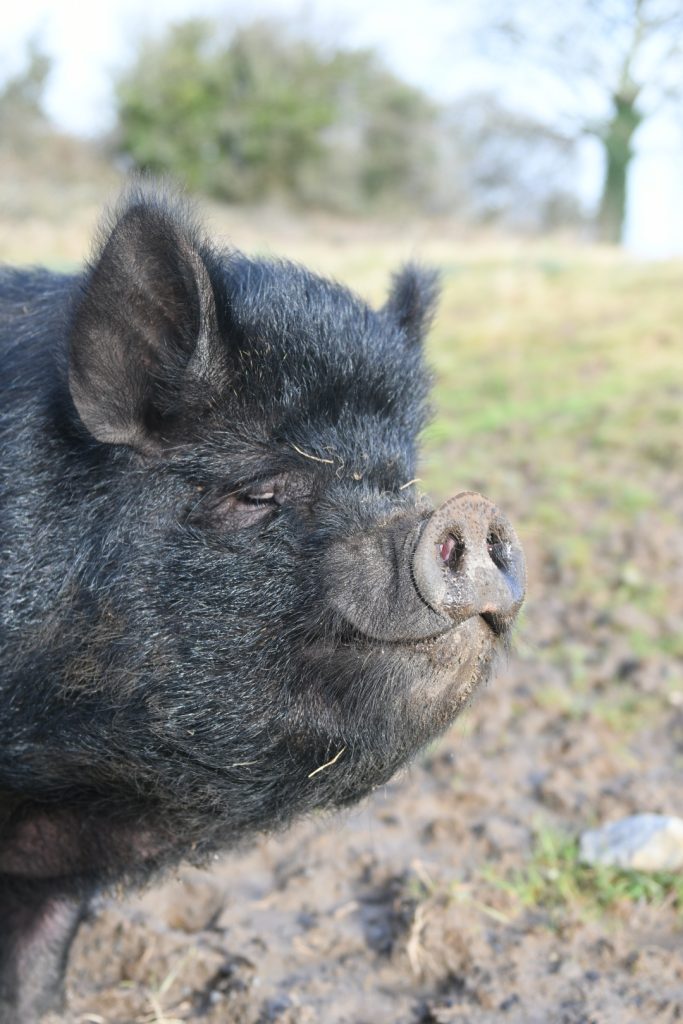
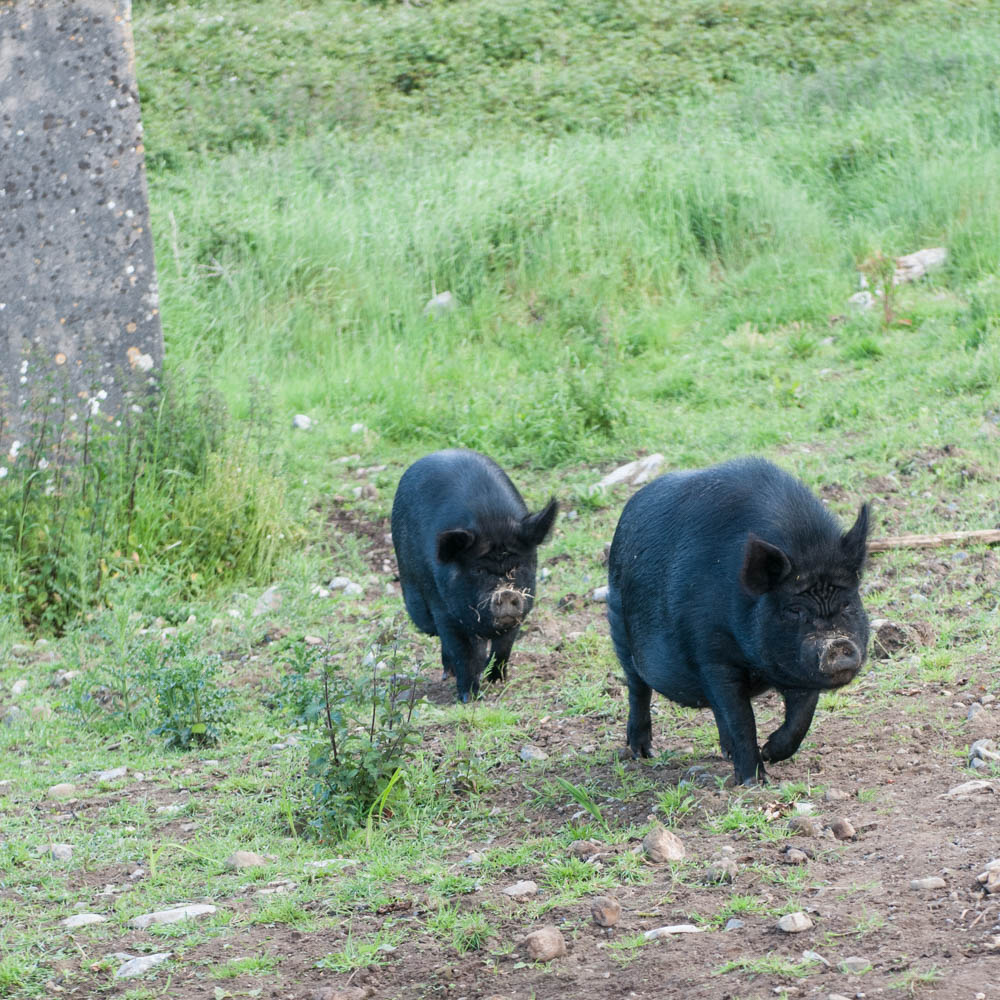
“Grade outs” : produce that we know will not make it to you our customers in first class condition, are left on a shelf in our packing shed and are generally used to make staff boxes and our team can help themselves. Finally, what is left, the stuff that we don’t eat ourselves usually ends up in Florence and George’s bellies (our rescue pigs!)

I always thought pigs would eat anything. As it turns out I was wrong. Pigs do indeed have some serious food preferences. I know because just over a year ago we took charge of two rescue pigs George and Florence. They have the run of an acre of mostly forested land and will live out their long and leisurely lives here on our organic farm. (Incidentally pigs can live until they are 20!).

Who would have known that pigs are fussy eaters? Well, I can tell you that they will not eat broccoli or kale, they are not partial to courgettes and apparently mushrooms do not tickle their palettes either.

It would seem then that they know what they like and what they don’t like. But when it comes to wonky shapes, and blemished skin they see only food. 

I don’t know that supermarkets take food waste seriously.  A couple of years ago, a person who would know told me about 12 pallets of pineapples that were dumped as a result of a supermarket quality inspection failing them because of some blemishes. This happens.

Maybe being that little bit more mindful of our food can go along way in reducing our food waste, and the funny thing is it can actually end up saving us quite a bit of money too.

Here’s to less food waste!

Kenneth

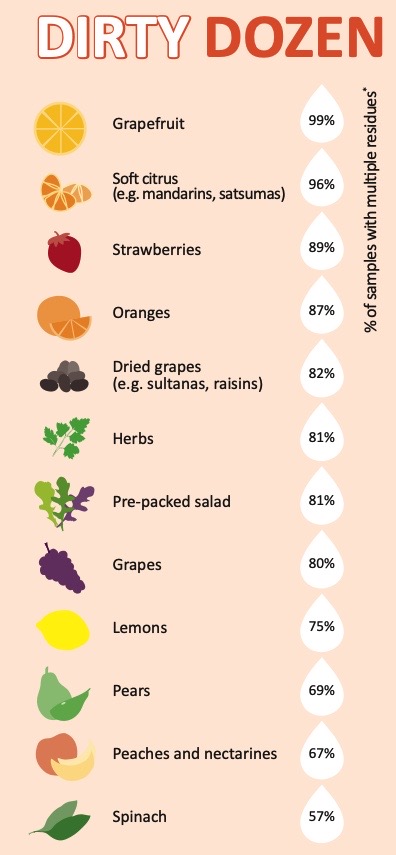
The Dirty Dozen

Have you heard of ‘The Dirty Dozen’?

The Dirty Dozen is a list of 12 fruits and vegetables which have been found to contain the highest levels of pesticides. The aim of these lists, which are updated yearly, is to inform consumers about which fruits and vegetables to prioritise when buying organic. Of course we dream of a future where everything in our shopping carts is organic, but we know that right now, not everyone has access to organic foods. We work very hard here in Ireland to make organic food accessible to as many people as possible. Please take a look at what we can convieniently deliver to your door here.

Dirty Dozen lists are fascinating and highlight the danger of the cocktail of chemicals found in our food. Unfortunately you won’t find a list of the pesticides used on most fresh fruit and veg. However we found it very interesting looking at this label on lemons from a popular online supermarket here in Ireland. Although it is shocking to see, at least it is upfront and evident and we hope that labelling like this will soon become the norm so that consumers can make informed choices. What do you think?

For a ‘Dirty Dozen’ list most relevant to us here in Ireland we’ve been looking at PAN-UK. Pesticide Action Network (PAN) is a network of over 600 participating nongovernmental organisations, institutions and individuals in over 90 countries working to replace the use of hazardous pesticides with ecologically sound and socially just alternatives. Here’s a screenshot from their website on the latest list:

Fruits (especially citrus) and salads seem to be the biggest culprit. But it’s important to remember that these are just the top 12 fruits and vegetables containing pesticide residue, almost all non-organic foods will contain pesticides. Unfortunately washing or peeling your fruit and veg will not be totally effective in removing the pesticides. Many pesticides are systemic, meaning they are absorbed by the plant and can be found throughout, not just on the surface.

There is a growing body of evidence that pesticides can become more harmful when combined and the ‘cocktail effect’ has long-been recognised as an area of concern. Despite this, little has been done to understand or prevent the human health impacts that may occur due to long-term exposure to pesticide cocktails. Find out more about the cocktail effect.

Let us make it easy for you to avoid the cocktail of chemicals found in your supermarket trolly. Order a box from us today, we deliver to every address in Ireland and Northern Ireland and we would love you to join the Green Earth Organics family.

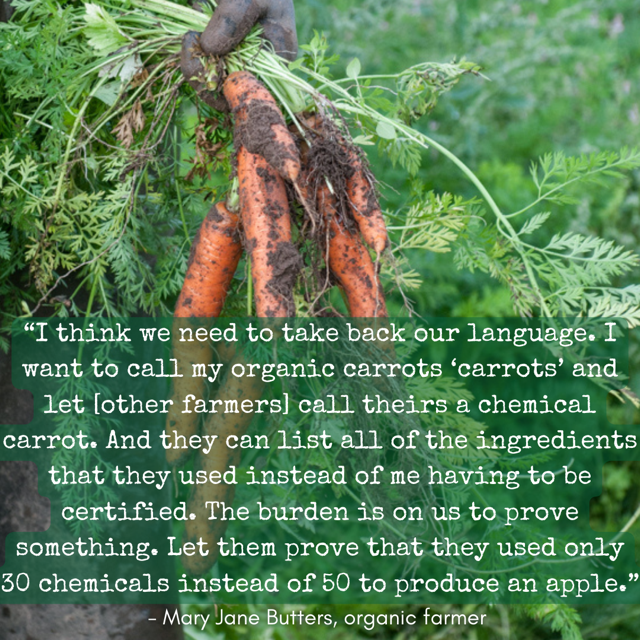
What are your thoughts on organic farming versus the over-use of pesticides on most (but not all of course) non-organic farms? Do you think pesticides are essential to produce enough food for a growing population? Or is there a better way with tried and tested organic systems? We’d love to chat in the comments. We’ll leave you with this quote we love from Mary Jane Butters.

Banana Skin Recipes

Are these bananas over-ripe? Or are they perfectly ripe?

Who knew you could eat the skins of a banana? It’s amazing what we have been conditioned into discarding as not edible isn’t it? The amount of delicious and healthy fruit and vegetable offcuts – skins, leaves, stalks…that we just throw away is actually quite shocking. We could make our weekly food shop go so much further if we re-learn what is edible and what isn’t. Lack of dietary fibre is a big health issue here in the west. It’s so important to eat enough roughage to help your digestive system move, for bowel health, and to balance your blood sugar and lower cholesterol. Dietary fibre is found in fruits, vegetables, wholegrains, nuts, seeds and legumes.

Eating banana skins is not just about increasing your fibre intake. Banana skins are rich in potassium (amazing for your heart health), magnesium (helps your muscles and nerves work properly, maintains protein, bone and DNA, levels blood sugar and pressure), B6 (which improves your sleep) and B12 (keeps your blood and nerve cells happy, helps make DNA), Vitamin A (great for eyesight), antioxidants (lowers cancer risk) and more!

So here are a couple of ways to cook banana skins. Always choose organic to avoid nasty pesticides/herbicides and give your bananas a good rinse. Riper banana skins are softer and sweeter. If you don’t fancy making a meal out of banana skins, you can always blend some into your smoothie or next batch of banana bread too.

Liz x

Save Your Banana Skin ‘Bacon’

Rescue your ripe banana skins from heading to the bin by putting them in a box in the fridge to add to smoothies – or make this vegan bacon. Yes, this recipe is a bit of a gimmick, but it is surprisingly delicious. It’s all about the smokey bacon marinade of course (which you can use to marinade strips of aubergine, mushrooms, courgette, carrots etc to make whatever plant-based bacon you desire). Banana skins bring a light banana flavour to the party along with a deliciously chewy texture. Definitely worth a go!

Ingredients

  • 1 tbsp olive oil
  • 2 tbsp soy sauce
  • 1 tbsp sugar or maple syrup
  • 1 tsp garlic granules/powder
  • 1 tsp nutritional yeast flakes
  • 1 tbsp smoked paprika
  • 3-4 ripe banana skins, washed

Method

  1. Mix all the ingredients (except for the banana skins) in a container that will hold 3 or 4 banana skins. I use a sandwich box with a lid.
  2. Chop the tough ends off of 3-4 banana skins and tear them into strips (a banana skin should naturally tear into 3 or 4 strips). Use a spoon to scrape off the phloem bundles – that’s the name for the soft, stringy bits of banana stuck to the inside of the skins. These can be added to smoothies or banana bread.
  3. Place the scraped banana skins into the marinade and mix well ensuring each piece is coated in the marinade. Leave to soak up the flavour for at least 20 minutes. You can even prepare this the night before and pop in the fridge, then cook the bacon for breakfast in the morning.
  4. Fry the strips of banana skin with a little oil in a medium-high frying pan on both sides until sizzling and crispy. Enjoy as a side of your cooked breakfast plate or in a sandwich. Crumble over pasta or eat wherever you would like a sweet and salty, smokey bacon-like flavour.

Whole Banana & Coconut Curry

You need to really like banana to like this curry. It’s sweet, creamy, mild and absolutely delicious! I like it just as it is so I can really enjoy the flavour and texture of the banana skin and flesh with some simple rice, chilli flakes and coriander. But I often bulk it out with roasted cauliflower or squash or a drained tin of chickpeas too.

Ingredients (per person)

  • 1 tsp vegetable oil
  • 1 tsp cumin seeds
  • 1 tsp brown mustard seeds
  • a pinch of fresh curry leaves will take this curry to the next level
  • 1/2 a white onion, peeled and thinly sliced
  • 2 cloves of garlic, peeled and sliced
  • 1 very ripe banana
  • 1 tsp ground/grated ginger
  • 1 tsp ground/grated turmeric
  • 1 tsp curry powder
  • 1/2 tsp salt – or to taste
  • black pepper to taste
  • 1/4 tin coconut milk
  • rice, fresh coriander, chilli flakes, lime wedges to serve

Method

  1. Get your rice on to cook then heat up a pan with your vegetable oil to medium-high. Add the cumin and mustard seeds and cook them until they start to crackle and pop. They should get very fragrant. If you can get fresh curry leaves where you are, add a pinch of them now too and swoon at the gorgeous fragrance.
  2. Then add the sliced onion with a pinch of salt and sauté until soft and starting to turn golden brown. Add the sliced garlic and stir for a couple of minutes.
  3. While the onions and garlic cook, slice the tough ends off your banana and peel it. Cut the skin widthways into three roughly pinky-finger length chunks, then cut those chunks lengthways into nice thin strips. Add the banana skin to the pan and stir.
  4. Add the turmeric, ginger and curry powder and stir well. The curry will be quite dry now so add a splash or two of water and cook for around 5 minutes, stirring regularly and adding more water as needed until the banana skins have softened.
  5. Slice the banana flesh into thin, diagonal ovals and add them to the pan with the salt and pepper. Stir gently for a couple of minutes to warm up the banana, add another splash of water if needed.
  6. Add the coconut milk and turn the heat down to simmer. Taste the curry and adjust the seasoning if needed with more salt or a squeeze of lime if acidity is called for.
  7. Serve piled next to rice. Add a sprinkle of fresh coriander and some chilli flakes/slices for heat if you wish and enjoy!

Learning From the Past

So much has changed in one generation. A couple of years ago a customer sent me a paper clipping from 1939 featuring an article on seasonal vegetables. Imagine back then, there was diet and health advice: “Fresh green or root vegetables….should be the staple part of every family dinner”.

But the food back then was different to our food today in so many ways. It was fresher, it was local, it was plastic free and it was free from chemicals. Can you imagine if our food today was produced without artificial fertilisers, without toxic chemicals, not wrapped in plastic and was produced locally.

Our ancestors did not contribute to the mass of plastic pollution choking our planet. Plastic didn’t exist. My grandad would have grown his own veggies, and if he didn’t grow it, he would have bought them in the local market or in a green grocer. Supermarkets didn’t exist back then. There was no such thing as Roundup the food was clean. Fresh produce was highly valued, it was not discounted, loss leading was not a thing and as we have seen today this is sending Irish farmers out of business.

Today we live in a world of everything and anything all the time. It is amazing to have such choice, but there is a cost, a cost hidden behind the plastic: the chemicals, the exploitation of workers, the clearing of rainforests, the destruction of habitats, the pollution of our oceans. The list goes on.

THE SUPERMARKET MODEL OF FOOD PRODUCTION IS THE ROOT CAUSE OF ALL THESE PROBLEMS, A MODEL WE ALL RELY ON AND YET ONE THAT NEEDS TO CHANGE. HOW CAN A BAG OF CARROTS COST 49C? COST LESS THAN THE ADDITIONAL OF AN EXTRA ESPRESSO TO OUR COFFEES?

Life seemed much simpler in my grandad’s day, life was certainly tougher, food was scarce at times, but the food was clean, healthy and did not leave a trail of pollution behind. We don’t need to return to a land of scarcity, but maybe a mindset change to see value in fresh food again would be a good thing, it is after all the building block that we put into our bodies every single day.

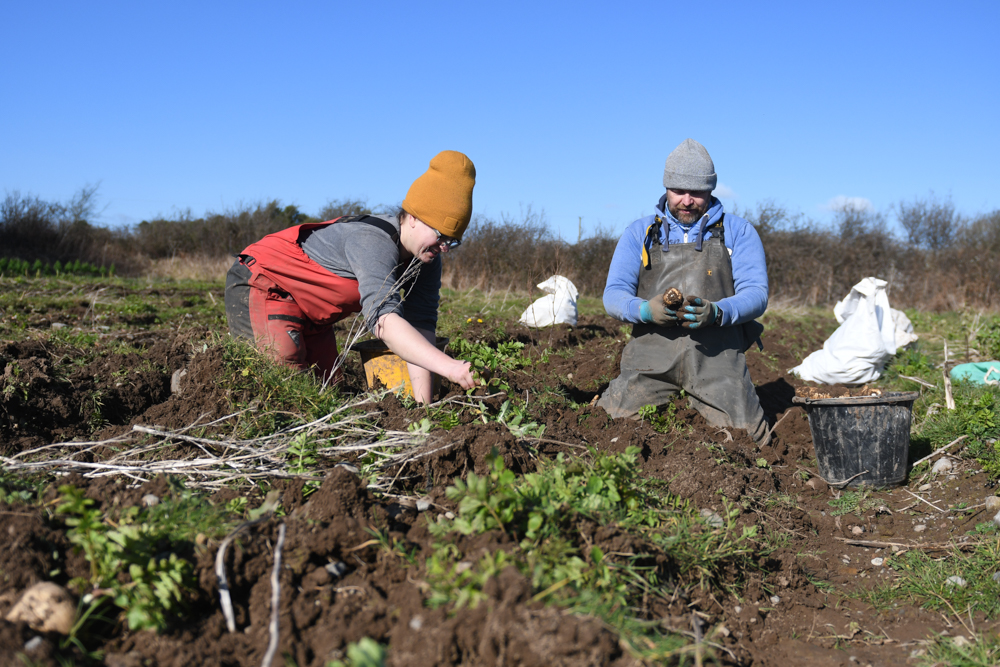
Being out in the rain and wind, harvesting leeks and pulling parsnips, is no fun, and it takes a certain caliber of person to persist with this work well into the winter. But this is seasonal food, this is the reality of local food production. The smell of freshly harvested parsnips, is quite frankly amazing, covered in muck they feel alive and real and you get the feeling that just by holding them in your hand you are doing something positive for the planet!

Producing good clean food, while respecting the ground beneath our feet that gives us so much deserves to be valued. Because if we don’t value and respect the earth then there will not be much left for the next generation to enjoy.

I THINK FOOD PRODUCTION HAS SUCH POTENTIAL TO CHANGE OUR LIVES, TO CHANGE THE WAY WE EAT, TO CHANGE HOW WE WORK, TO CHANGE OUR WORLD.

Here’s to learning from the past!

Kenneth

When It’s Gone It’s Gone

If Joe, or Ella or Hannah take on the vegetable growing gene, that will make us 5th generation vegetable growers here in the West of Ireland. We are lucky, our model of growing and distributing food protects us, to an extent at least.

“When it’s gone it’s gone” the words of Cathal Lenehan the second biggest brussel sprout grower in the country as he calls a halt to his farming career for good this week. As prices in supermarkets continue to erode any chance of vegetable farmers in this country surviving, Cathal has put a call out, a plea for them to recognise that farmers just can’t survive on what they are receiving from supermarket buyers.

In 2006 the last of the sugar beet farms closed in Ireland. A whole industry disappeared overnight, the skills, the experience, the infrastructure disappeared, lost forever. As we face down the inevitable pressure of producing more food for more people from the same land area, it seems extremely short sighted that there are not adequate supports put in place now to ensure farmers such as Cathal are protected.

Cheap imports undercut the market. Supermarkets devalue our fresh food, they use them as loss leaders. It is all about the bottom line. Supermarkets are in the food supply industry, they have a responsibility to mind their suppliers, pushing them to the edge in the short term, in the long term will not yield stability, resilience or loyalty. Ultimately this will lead as with the sugar beet industry to devastation for the fresh vegetable industry in this country, farms that have been growing vegetables for generations will suddenly disappear.

How sad would that be? Losing the art of being able to produce our own food, the art and skill of taking care of the land, of being able to produce viable healthy food on a commercial scale. That is not something you can just make happen overnight, it is learned over time and passed down from generation to generation.

I have never had any time for the supermarket model of procurement (buying). In 2016 we said good-bye to supermarket supplying for good. We were told one Monday out of the blue we needed to decrease our prices, and collect any unsold produce from the supermarket and reimburse the supermarket for it. We were told there would be no order that week until we complied, they were our single biggest customer, they had all the power. Well so they thought.

We were one of the lucky ones we had our home delivery business to fall back on, and although it was a major financial hit and in the short-term things were very shaky it was the best decision we ever made.

The good news is you made that decision possible. Your support means more than you know. It means we can breathe a little, it means we can plant trees, it means we can rest the ground and allow it to recover between crops, it means we can support biodiversity on our farm. It means we can give the attention to producing healthy happy food for you.
Thank you.

Kenneth

Who We Are

We (Jenny & Kenneth Keavey) started Green Earth Organics in 2006. Our organic farm is situated 8 miles from Galway City. Originally the land was Kenneth’s grand-father’s and then his father’s and finally we took over the farm 14 years ago. We put the farm into conversion for organic status in 2004.

Currently we are farming on 40 acres of organically certified land. Another 10 acres is split between a wild life biodiversity area, native woodland forestry (7000 trees) and red clover/grassland. We are certified organic by the IOA (Irish Organic Association) – please note that EVERYTHING we sell is organic.


You can order online direct from us. We deliver to every county in Ireland – click here for more details about the ordering deadline and delivery days. 

Our Commitment to Sustainability 

Our aim at Green Earth Organics is to minimize the impact of our farm on the environment. We do this by growing our produce in an organic and sustainable way, by generating our own electricity using solar panels, and by harvesting the West of Ireland rainwater to wash the freshly picked veg and to water the plants in our tunnels.

As a business, we are striving to be carbon neutral and we’re actively looking for ways to reduce and eliminate the small amount of plastic packaging remaining in some of our boxes (this is mostly from grocery items – we are always looking to expand our plastic free grocery options so keep checking back on those).

All our set boxes are PLASTIC FREE, we use compostable bags for salads and greens.
All of our other fresh produce is packed either loose or in brown paper bags which we take back and re-use every week. 

We also have a box that contains 100% Irish Veg which you can order here. Thank you for your support – we really appreciate it. 

Currently there are 45 employees in total across the farm, packing team and administration team. We also take on students and interns and employ seasonal workers at certain times of the year. You can check out our vacancies here.


We have 6 polytunnels and grow a wide range of crops both indoors and in the field. Over the course of a year, a typical seasonal box will contain 80% local, organic produce.
We buy produce from other Irish suppliers and we also import organically certified veg and fruit in order to be able to offer a full selection of produce year round. We never use airfreight!

At Green Earth Organics, we care deeply about the environment and believe that people should be able to choose foods that are grown as nature intended, taste fantastic and add to their wellbeing.

Sustainability and health is at the centre of all business decisions we take.

Do Small Changes Make a Difference?

When I was younger, I believed that by convincing my parents to recycle glass bottles and joining Green Peace that we would make a difference, I was utterly convinced, I never doubted it for a second, I knew the planet was precious and that our changes made a difference.

All young children have a connection with nature and they believe they can do anything, what happens as we grow up? Why do we lose that sense of value for the natural world that we had as children? 

When we started the farm, I believed growing sustainable food would change the planet, and that all we needed was a tractor, some seeds and we would have a successful farm. 

At times on this journey, there has been disillusionment, pressure and stress, the fighting to do the right thing when it seemed it was all going against us. But ultimately, we stayed the course and stuck to our principles. 

I am not sure how long it normally takes, but it took (and continues to take) a long time to realise that no one change in isolation changes anything. Real change and success is built on lots and lots of little things done consistently over time.

This is as true for building a new habit as it is for fixing the planet.

So maybe one by one and little by little all our changes taken together can effect real change. Maybe your choice to plant a tree, to avoid weed killer, or to tell your kids about biodiversity and educate them in the beauty and preciousness of nature contribute to real positive change.

By buying from us you are effecting real change, you are choosing a different way to eat and are supporting serious changes behind the scenes. You are supporting your health, and the planet, sustainable food production and a new system of growing and selling food.

Your choice to support us means you are one of a community that are choosing a new and better way to eat, you are supporting farming and food for a better planet.

Does it matter? Does it matter that you support a zero-waste circular economy, a sustainable means of growing food and a better food future, does that matter?

Well in my book that does matter it matters a lot.

“Never doubt that a small group of thoughtful, committed, citizens can change the world. Indeed, it is the only thing that ever has.”
― Margaret Mead 

Thank you for your support.

Kenneth

PS We deliver nationwide, explore our range here.