Colcannon

This St Patrick’s Day favourite combines the two best vegetables of all time – potatoes and kale. Don’t let anyone tell you these humble vegetables are nothing less than extraordinary!

Potatoes (especially when you leave the skin on) are a delicious source of fibre, energy giving carbohydrates, antioxidants, potassium (more than a banana!) and magnesium. They also contain vitamin C, calcium, folate and vitamin B6.

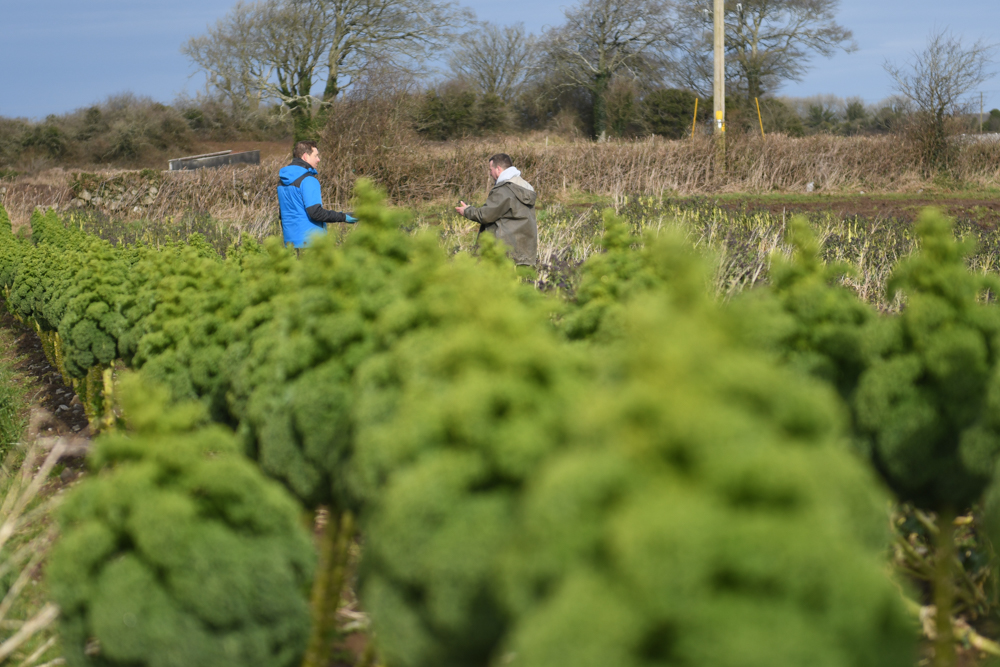
Kale is well known for being a superfood. The humble kale, grown right here on our farm in Galway, is one of the most nutrient dense foods on the planet and contains well over 100% of your daily needs for Vitamins A, C and K as well as a whole host of other vitamins, minerals, antioxidants, fibre and even an omega 3 fatty acid!

So we say this dish is not just for St Patrick’s Day, make colcannon regularly as a side dish or as a topping for your pies.

Liz x

Ingredients (per person)

  • 1 large or a couple of smaller potatoes, scrubbed and chopped into even chunks
  • 3 kale leaves, rinsed, tough stems removed (save the stems, they are delicious finely chopped and added to stir fries, stews, soups etc)
  • 1 scallion, sliced
  • 1 tbsp butter
  • salt and pepper to taste

Method

  1. Get your potatoes boiling in a large pot of water. Meanwhile tear up your kale leaves into small pieces and place them in a steaming basket or metal colander.
  2. When the potatoes are nearly cooked through, place the steaming basket/colander of kale over the pot and put the lid on. Let the kale steam until wilted and soft – this only takes around 3 minutes so keep an eye on it.
  3. Remove the kale and drain the soft potatoes, then tumble them back into the warm pot. Mash the potatoes with the butter and season with salt and pepper to your taste. Then stir through the wilted kale and chopped scallions.
  4. Serve with an extra dollop of butter as a side dish. It’s also delicious as a shepherd’s pie topping, baked in the oven to crisp up – see pic below.

Dairy-free Soda Bread

Soda bread is so easy to make and a delicious Irish classic. You’ve got to try a fresh, homemade loaf for St Patrick’s Day! Perfect for breakfast with sweet or savoury toppings or for lunch with a bowl of soup. We make versions of this loaf at least once a week, sometimes with a handful or two of dried fruit in the mix for a sweet version, and it’s the perfect loaf to make with kids as it’s so quick and simple.

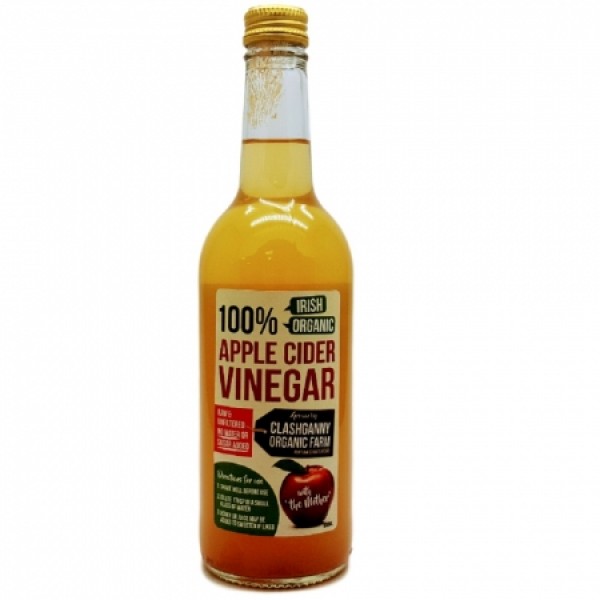
Traditional Irish soda bread contains buttermilk so it’s easy to make a dairy free version with oat milk and a little apple cider vinegar to make it acidic. The baking soda needs something acidic to react with otherwise it will not rise, so don’t be tempted to skip the vinegar. I promise, you can’t taste it in the bread. We choose creamy, Irish oat milk and raw apple cider vinegar from Clashganny organic farm. Here’s our easy recipe.

Liz x

Ingredients

  • 300ml oat milk
  • 2 tbsp vegetable oil
  • 2 tbsp apple cider vinegar
  • 400g white flour
  • 100g wholemeal flour
  • a handful of porridge oats (optional)
  • 1 tsp salt
  • 2 tsp baking soda
  • a handful of optional seeds or dried fruit

Method

  1. Turn your oven on to 200C and line a baking tray with baking parchment.
  2. In a mixing jug, mix the milk, vinegar and oil and let it sit for a few minutes while you prepare the dry ingredients. This is your vegan buttermilk.
  3. In a large mixing bowl, measure the flours, oats (if using), salt and baking soda and mix well with a wooden spoon. Make a well in the middle. You can also add dried fruit or seeds at this stage if you would like to.
  4. Then pour the ‘buttermilk’ into the well and stir with the wooden spoon until the ingredients come together into a rough, sticky dough.
  5. Now use one hand to turn and squash the dough together in the bowl. You may find it is too sticky to handle and needs an extra handful of flour. Careful not to add too much flour though, the dough should be slightly sticky otherwise the loaf will come out too dry and crumbly. Tip the dough out onto a floured surface and knead briefly, just for a minute or two at the most.
  6. Shape the dough into a disc that is around 3 cm high and place it on the lined baking tray. Using a large knife or bread knife, cut a deep X into the top of the dough, around 1 cm deep. Dust with a little flour or an optional sprinkle of seeds or porridge oats.
  7. Bake in the oven until risen and golden – around 30-40 minutes. The loaf should sound hollow when you tap it. Enjoy warm or cold slathered in butter (we stock a really good vegan butter here if you need).

Hope for the Future

What a week it’s been. It seems wrong to feel you are struggling with everyday issues when there are such terrible things going on in the world, and yet life goes on. We still need to get up and do our jobs and get on with all the other things that life brings to our door.

As we push on into 2022 it is hard to know which way to look to understand what kind of a year it will be. A few weeks back there was plenty of reasons to be optimistic, finally we were emerging from a dark period and there was a sense of relief and hope for the future, much of that now seems to have changed.

Our heart here on the farm has gone out to the people of Ukraine, and there have been some emotional discussions, and discussion too about what we can do as a small business to help. We decided there certainly were things we could do, easily and quickly, so we did them. We have changed our donation box to the “Ukraine donation box” it is €30 and we are topping up the value by an extra €10 for each box. We are also donating €1 for each delivery we make this week (and next). All of the money raised will be given to UNICEF Ireland. We have decided to keep the appeal going for another week and we have already raised close to €3000! So, thank you so much to all who have bought a donation box or received a delivery this week.

I have found at times this week as the real pressures of business bear down and the cost of living and the inflationary pressures increase that there is no where to turn to. We seem to be caught in a perfect storm, we are in the food production and delivery business, the cost of everything has gone up so much, it is eye watering as I am sure most of you are feeling these cost of living pressures too.

We have been looking at this issue every which way you can imagine and have been trying to keep things on an even keel. We are doing what we can, if you look in the special section of our website you will see discounts on some of the staple products, it may not be much but it is a start and hopefully a help. Remember too we deliver to your door and if that means you save a trip in car not only are you helping the planet now you will also be saving money.

While all of these things are flying around in my head I find that there is always one thing that gives me an unequivocal feeling of progress, hope and optimism for the future and that is the farm. The season is starting again we have ploughed our first fields, we have sown our first crops, we are planting our first plants the week after St. Patricks week. The earth smells wonderful, the birdsong is amazing and the break in the clouds to give us the most amazing blue skies with a frosty farmscape have been intoxicating.

So, whenever things are getting that little bit too much, remember you have been one of the people that have contributed to nearly €3000 for people who need it much more that we do, and the fresh air, the blue sky and the earth beneath our feet are always there we just need to stop and look.

Here’s to a great St Patrick’s week ahead.

Kenneth
PS There is also a 15% off all of our orders for next week just use the code “STPADDYS” when you order.

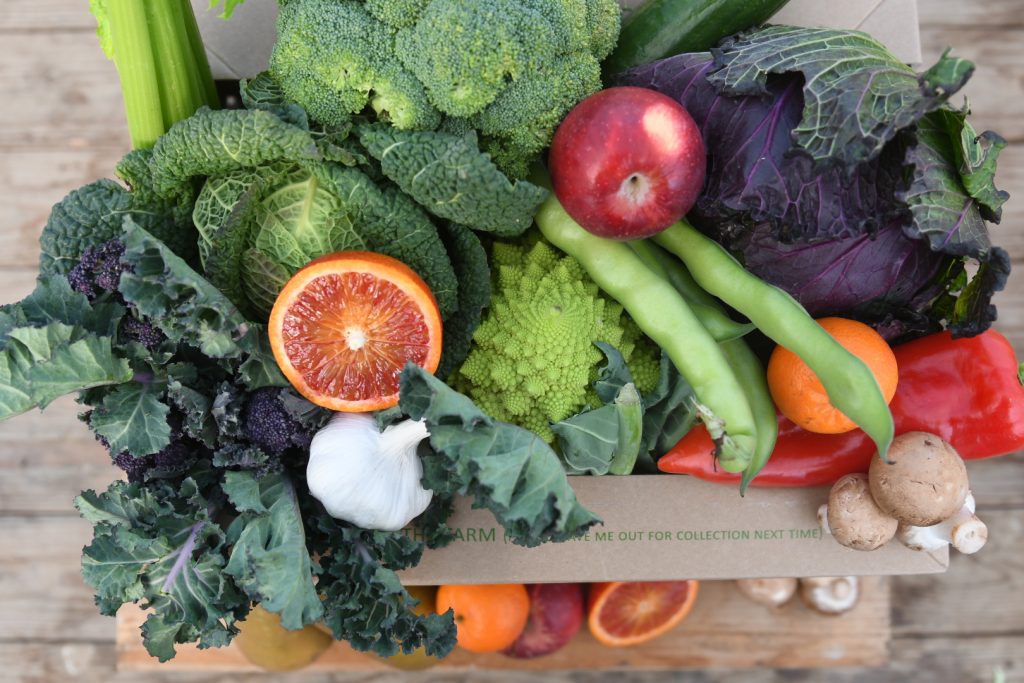
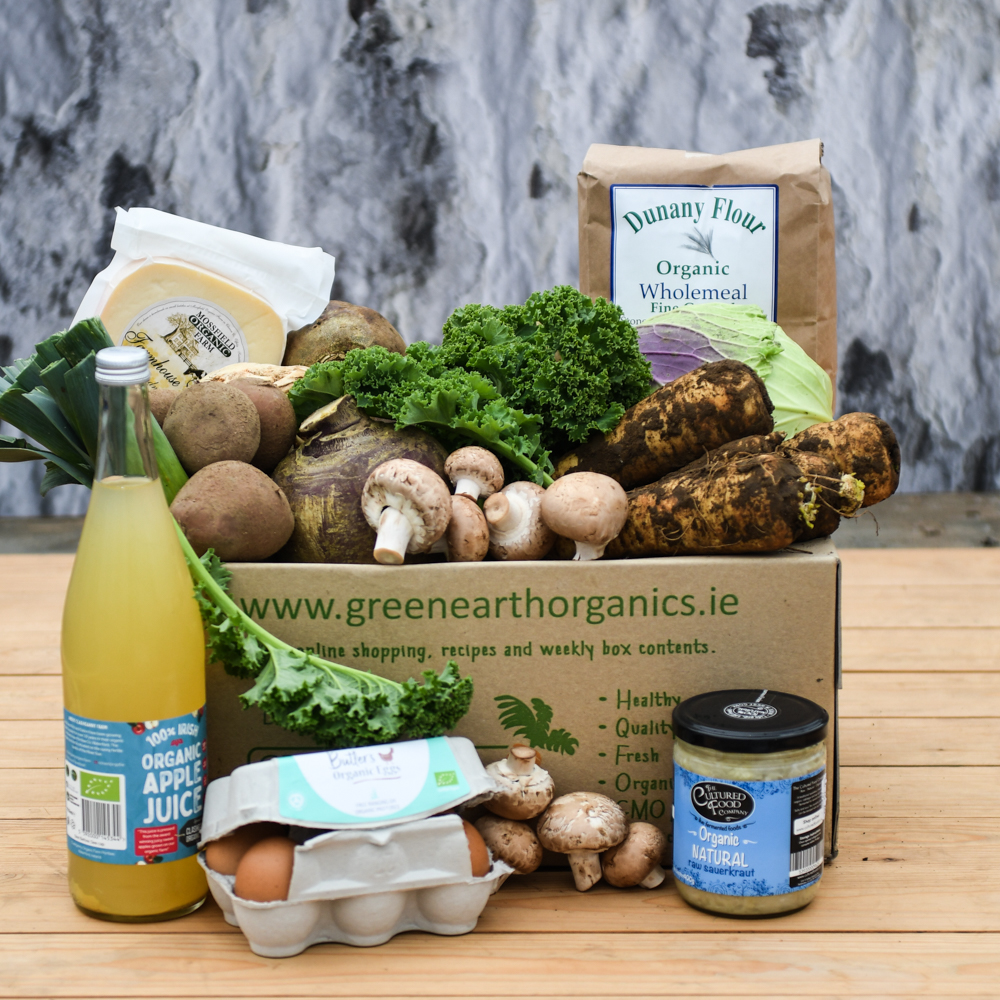
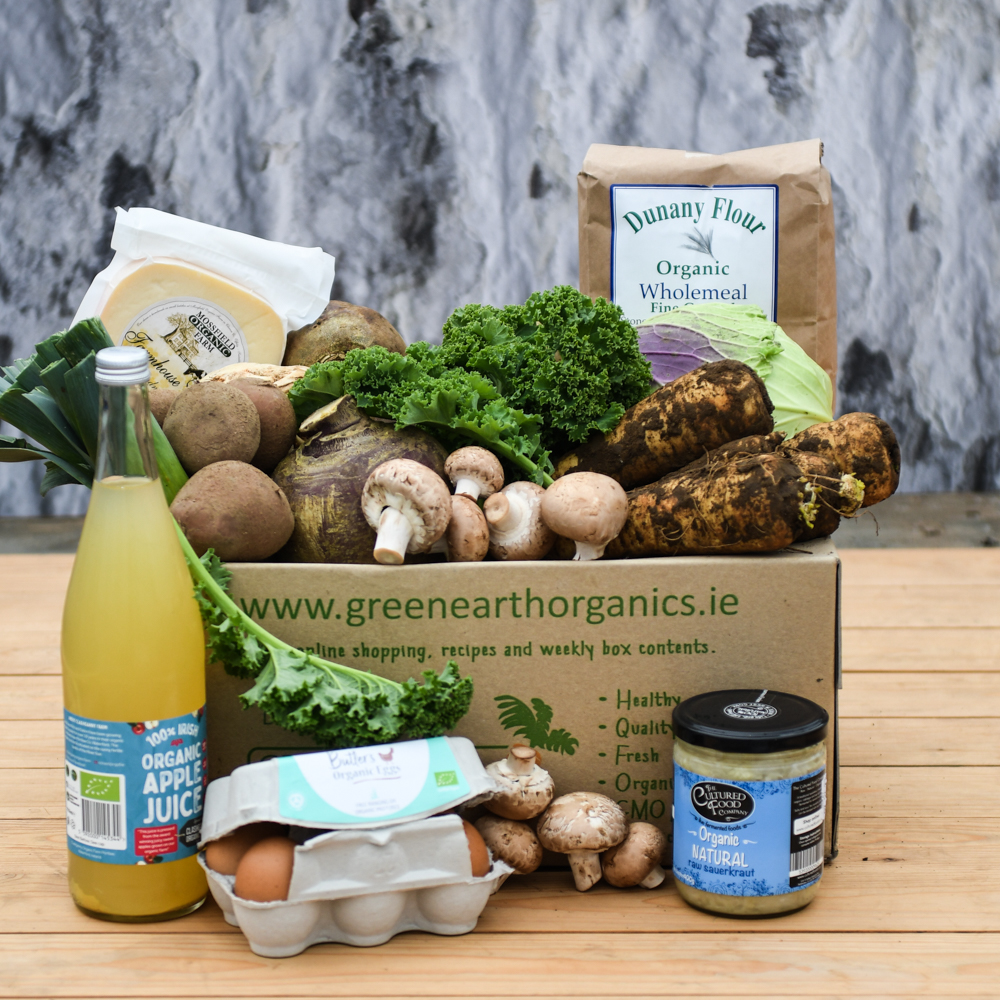
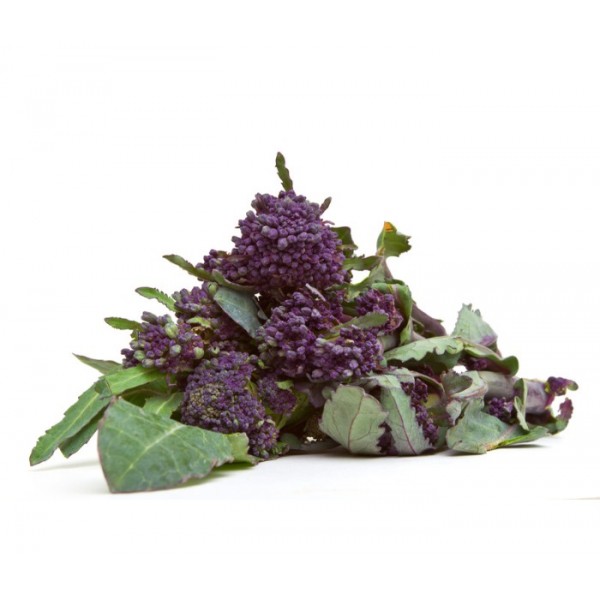
From the farm or IRISH this week: Potatoes, leeks, spinach, kale, mushrooms, parsnips, cabbage (3 types), purple sprouting broccoli, celeriac, swede and chard.

Also Remember we are not delivering by courier next week as DPD are not operating on Thursday or Friday.

The Benefits of Buying Local

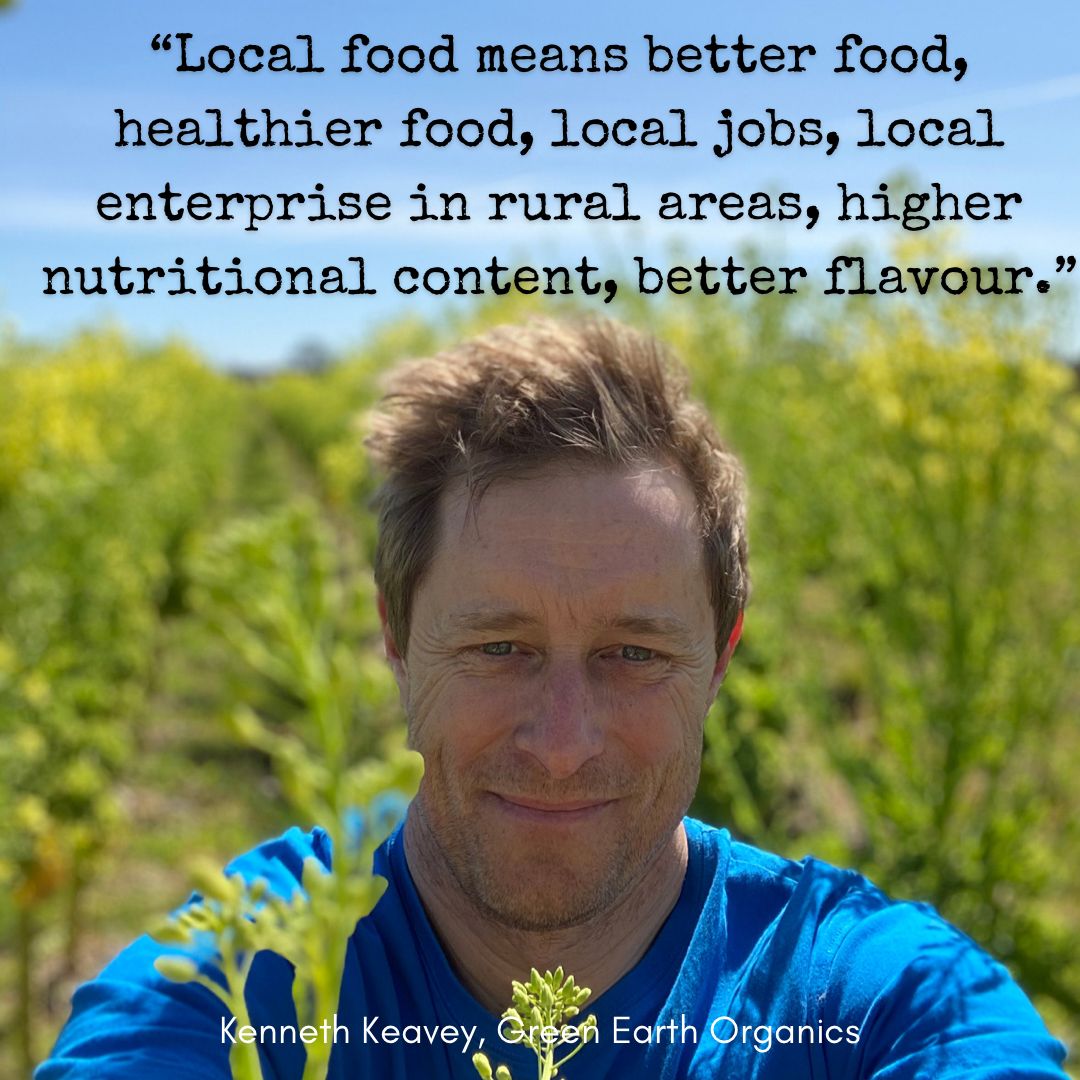
With recent world events, it has become startlingly clear how important being self sufficient as a country can be. Don’t get us wrong, we love to trade with the world, we all love oranges, olives, wine, tea, coffee, chocolate etc. Keeping our fridges full with a healthy variety of fresh fruits and vegetables year round means importing from our organic farming connections around the world (by the way, we never use airfreight). Trading with the world is a positive thing, being friendly with our neighbours and part of unions benefits us all – nutritionally and to promote peace and prosperity. But, it’s also important to us to support local and buy local food as much as possible. Food security is a real issue and supporting local farmers and paying them fair prices (we’re looking at you supermarkets!) is always going to be an important topic that we will talk about regularly. So this week, with St Patrick’s Day on the calendar, we are celebrating all things local and Irish.

Good for You

Local food is fresh, more flavoursome and even more nutritious than food that has travelled! When there has been less time between harvest and your home, there are more nutrients. Did you know that as soon as a fruit or vegetable is picked it starts to loose nutrients? So the quicker it gets to your plate, the better. Locally grown food intended for local consumers will be picked when it is ripe too, so you’ll be getting the best flavour as well as avoiding waxes and preservatives found on food that has travelled a long way.

Good for the Planet

Buying locally produced food, of course means less food miles. ‘Food miles’ is the term for the distance food is transported from the time of its making until it reaches the consumer. Choosing local food requires less transport, therefore less fuel/energy is used to get the food to your plate – so local food has a smaller carbon footprint because it produces less transport related emissions. Less transport usually means less need for packaging too. We use as little packaging as possible to get our food to you, and where we do use packaging we choose paper or compostable bags over plastic.

Good for your Community

Supporting local food producers means more work and more money in your community. Spending money with Irish business will mean more Irish jobs, more Irish tax and therefore better services for everyone. Shopping locally strengthens the local economy too. Local businesses are more likely to recirculate the money locally – not just on wages and taxes, but also on local suppliers and services. This leads to a stronger financial foundation for our neighbours and communities and a more recession-resilient local economy.

Will you support the local economy and help Ireland build better food security by buying a box of organic fruit, vegetables and groceries from us today? We deliver nationwide. Have a look at all we can deliver to your door here.

Ukrainian Mushroom & Barley Broth

Here’s another Ukrainian recipe inspired by Olia Hercules. If you love mushrooms, you’ll love this broth. It packs a mighty umami punch and is dark and delicious. I serve is as it is for a lighter meal or for a more filling meal, with these stuffed buns or with creamy mashed potatoes. If you add a spoon of soured cream or crème fraiche when you serve, the flavour is really reminiscent of a stroganoff, and of course, these flavours of umami rich mushrooms, onions, pepper, dill and cream are popular in Eastern European and Scandinavian countries, post-Soviet states, Russia and more. We all have so much more in common than what separates us, and food is one of those things where we can clearly see our commonalities.

Buckwheat is a highly nutritious, gluten free whole-grain, a great source of protein, fibre, potassium, magnesium and energy. We sell the whole grain in compostable bags here (and also useful buckwheat flour and flakes). As well as extra nutrients, buckwheat brings a bit of body and texture to the broth but you can switch it with noodles, pasta or rice as you like. Happy cooking!

Liz x

Ingredients (serves 4)

  • 200g buckwheat groats
  • 3 bay leaves
  • 2 tbsp crumbled dried mushrooms
  • 1 litre of boiling water
  • salt and pepper to taste
  • 2 tbsp sunflower oil
  • 3 white onions, roughly diced
  • 3 carrots, chopped chunkily
  • 500g chopped mushrooms (a mix with some wild mushrooms is always more interesting, but chestnut mushrooms work well too)
  • a large handful or two of chopped dill
  • sour cream, yoghurt or creme fraiche to serve
  • mashed potatoes/cooked noodles/pasta/rice to serve or toast or stuffed buns…

Method

  1. Start by making a mushroom stock. Put the bay leaves and dried mushrooms in a glass measuring jug and boil the kettle. Pour a litre of just-boiled water in and let the stock brew.
  2. Next toast the buckwheat groats in your soup pot. Put the pot onto a medium high heat and tumble in the buckwheat. Stir or shake the pot regularly until the buckwheat is perfectly toasted. Then tip all the grains into a bowl to use later.
  3. Now, in the same pot, add the oil and onion. Sauté with a big pinch of salt until the onions start to colour and soften. Then add the mushrooms and carrots, more seasoning and sauté again for another 5-10 minutes until the vegetables are cooked to your liking.
  4. Add the mushroom stock and the toasted buckwheat and simmer with the lid on until the buckwheat is cooked through but still has some bite. Taste and adjust the seasoning as needed with more salt and pepper.
  5. Just before serving, add the dill. Enjoy as is in bowls with a dollop of cremè fraiche or with toast, buns, mashed potatoes, pasta or anything you like.

Clean Dirt

What is hiding in our food? 

Simone’s oranges picked in Italy contain nothing but a good helping of Italian sunshine and healthy nutrients from his soil. Our parsnips contain nothing but a good helping of Irish rain and the healthy nutrients from our soil. What then about their conventional cousins? Hmm well as it turns out, the story there is very different.

Dirt, clay soil the stuff that gets stuck under your fingernail is good for us. It is actually pretty healthy to get it on your hands, in fact research has shown that getting your hands stuck in clay may actually ease depression. (Mycobacterium vaccae the bacterium is found in soil and may stimulate serotonin production is currently under study)

Some of our produce comes with dirt on it and we are pretty proud of that, we know it takes a little more effort in the kitchen and time can be in short supply, we know when you have a busy household the last thing you want to do is to wash dirty carrots or parsnips. We get that, I know the feeling and sometimes I reach for that bag of washed carrots and am just thankful they are washed!

But here’s the thing we are not hiding anything, you can see the dirt and it has a very important function. It is a natural preservative, it keeps the veg fresh, it keeps the flavour in. You can smell the freshness when you wash one of our dirty parsnips. Crucially leaving dirt on your veg actually helps reduce food waste!

The great thing of course about soil is it can be washed off.

This unfortunately is not the case with chemicals. Many are systemic in nature, (simply put they get inside the plant or food and stay there). 

Some chemicals are applied to the skins of fruits and vegetables to preserve them. The most commonly known ones are the fungicides mixed into the waxes and applied to citrus fruit. 

We stumbled upon some pretty eye-watering facts during the week. It turns out that one of the big supermarkets are now kindly putting the names of the chemicals mixed in with the waxes on their loose citrus fruit on their website. Have a look see for yourself. (Check out the description on loose lemons on this retailer’s website. I’ll give you a hint the name of the multinational supermarket begins with T.)

This is what is found on your conventional (Non organic) LEMONS:

Here is the list we found (Depending on country of origin, the treatment varies)

Spain: Imazalil/Thiabendazole/Pyrimethanil & Wax E914, E904 

Morocco:  Propiconazole/Pyrimethanil/Imazalil & Wax E914, E904 

Egypt: Imazalil/Thiabendazole & Wax E904, E914 

RSA: 2,4 D/Imazalil/Thiabendazole & Wax E914, E904 

And if you were wondering what these wonderful preserving chemicals may do to us unsuspecting humans here are some fun facts:

Imazalil is a suspected carcinogen and a probable endocrine disrupter (compounds that mimic or inhibit the body’s hormones, generally not good for us)

Thiabendazole is a probable endocrine disrupter 

2,4-D falls into a class of compounds called endocrine-disrupting chemicals. 

Here is another fun fact, the amount allowed in a piece of fruit is set by something called the MRL (Maximum residue limit) and this is generally set by what works to kill a pest and not what is safe for human consumption. (Recently The EU proposed reducing the MRL for Imazalil to 0.01mg/kg  for citrus from 4mg/kg, but this was overturned by growers, so what is the safe limit?)

So, unlike the dirt on our parsnips which is harmless, and could be argued is actually improving our health, extending shelf life, locking in flavour and can be seen, these hidden compounds reside on much of the conventional fruit that is purchased in supermarkets and is bad for our health. It is refreshing to see at last that there is some transparency creeping into our food supply chain. 

Kenneth
https://www.ewg.org/foodnews/citrus.php

Parsnip Tarte Tatin

A tarte tatin is traditionally made with apples as a dessert, but we love making savoury versions too. It’s a great way to showcase a seasonal vegetable and make it the star of your meal. The result looks fancy and tastes amazing, but the secret is it is sooo easy to do. Serve with some fresh salad and a zingy dressing, with some cheese, nuts, seeds or beans scattered on top for a little protein and you’ve got a wonderful, balanced, plant based meal ready to share with friends or family.

Liz x

Ingredients (serves 6 -8 depending on sides)

  • 50g butter (we love our new Naturli vegan butter) – chopped into small pieces
  • 2 tbsp olive oil
  • 1 tsp sugar
  • 1 tsp salt (or to taste)
  • 2 tsp thyme leaves (fresh or dried)
  • black pepper to taste
  • 2 large parsnips sliced into finger sized wedges (enough to tightly cover the base of your dish)
  • a sheet of puff pastry (check the ingredients, many are made dairy free now – or make your own)

Method

  1. Pre-heat the oven to 200C and find a large, round oven proof dish. Or you can use a square/rectangular dish too of course, anything that your sheet of pastry will fit in comfortably.
  2. Dot half the butter around in the base of your dish. Drizzle over half the olive oil and then evenly sprinkle the sugar, half the salt, half the thyme and a good grind of black pepper.
  3. Arrange the slices of parsnips over the butter and seasoning. Aim for complete coverage and one tight layer.
  4. Dot over the remaining butter and drizzle the oil, sprinkle the rest of the salt, thyme and another grind of pepper.
  5. Place the dish in the oven until the parsnips are soft and starting to caramelise. This should take around 30 minutes but keep an eye on them as ovens vary.
  6. Remove from the oven then quickly and carefully place the sheet of pastry over the hot parsnips and put the dish back in the oven right away.
  7. After 15 minutes or so, the pastry should be risen and golden brown. Remove the dish from the oven and place a large, heat proof plate or chopping board over the dish.
  8. Then use oven gloves to carefully, but very quickly, flip the plate/board and dish over. Still using gloves, pick the now upside down dish up off the plate/board and you should be left with a beautiful parsnip tarte tatin!
  9. Slice and serve whilst still warm with salads. It’s delicious cold too, so if you have any leftovers, eat for lunch the next day.

Vegan Pancakes

Is pancake day is the best day of the year? How do you like yours? The classic lemon and sugar? Rolled up with chocolate spread? Or filled with something savoury like wilted spinach and cheese. We love this simple crepe recipe that happens to be egg and dairy free.

Liz x

Ingredients (serves 4)

  • 1 mug of flour
  • 1 tsp sugar
  • 1 tsp baking powder
  • a pinch of salt
  • 2 tsp olive oil
  • 1 & 1/2 mugs oat milk
  • dairy free butter for frying
  • fillings of your choice

Method

  1. Measure the flour, salt, sugar, baking powder and olive oil into a mixing bowl.
  2. Whisk whilst slowly pouring in the milk until you have a smooth batter. Let the batter rest for 20 minutes before frying or you can even make it the night before and keep it in the fridge overnight.
  3. Use a cast iron or non stick pancake pan for best results. Heat the pan to medium-high and add a tsp of butter. Let the butter melt and tilt the pan back and forth to spread the butter evenly around the base. Add a ladle of the batter to the pan and tilt it again to swirl the batter into a thin, even layer.
  4. Cook on the first side for a couple of minutes or until golden brown underneath. Then carefully flip the pancake and cook on the second side for another minute.
  5. Repeat until you have used all the batter and enjoy with your choice of fillings. Our favourite? A squeeze of fresh, organic lemon or blood orange and a small sprinkle of raw cane sugar.

Food Waste & Fussy Pigs

Food waste has always upset me and I think I get that from my mum.  Pre-covid my mum was a regular in our packing shed, salvaging any waste produce for a variety of charities, she was the ultimate food waste champion. 

Her generation was not one to waste anything. 

It wasn’t until the plastic clad, sell more, always on, supermarket culture took over did we as a generation decide it was ok to dump food. Or was it really our decision? I think not. It was the supermarkets that decided for us and made it ok to waste food and to grade out perfectly good produce based on how something looks.

In our business we try really hard to keep food waste to a minimum. It can be challenging as we are dealing with so many different fresh items, and we have harvests and deliveries arriving everyday. We run 5 different cold rooms, and we run some at different temperatures to ensure the optimum temperature is maintained to keep produce fresh.  We have also committed to not using plastic.  

(Incidentally, just this week it has been shown that despite the Supermarkets railing on about it, plastic does not actually reduce food waste, it can actually increase it!)

But back to our story, we need to make sure you our customer gets the most amazing quality.  Everything piece of produce gets inspected, and while sometimes the odd one gets through,  we work really hard to deliver on our promise of only delivering amazing quality produce to your door.

“Grade outs” : produce that we know will not make it to you our customers in first class condition, are left on a shelf in our packing shed and are generally used to make staff boxes and our team can help themselves. Finally, what is left, the stuff that we don’t eat ourselves usually ends up in Florence and George’s bellies (our rescue pigs!)

I always thought pigs would eat anything. As it turns out I was wrong. Pigs do indeed have some serious food preferences. I know because just over a year ago we took charge of two rescue pigs George and Florence. They have the run of an acre of mostly forested land and will live out their long and leisurely lives here on our organic farm. (Incidentally pigs can live until they are 20!).

Who would have known that pigs are fussy eaters? Well, I can tell you that they will not eat broccoli or kale, they are not partial to courgettes and apparently mushrooms do not tickle their palettes either.

It would seem then that they know what they like and what they don’t like. But when it comes to wonky shapes, and blemished skin they see only food. 

I don’t know that supermarkets take food waste seriously.  A couple of years ago, a person who would know told me about 12 pallets of pineapples that were dumped as a result of a supermarket quality inspection failing them because of some blemishes. This happens.

Maybe being that little bit more mindful of our food can go along way in reducing our food waste, and the funny thing is it can actually end up saving us quite a bit of money too.

Here’s to less food waste!

Kenneth
The Dirty Dozen

Have you heard of ‘The Dirty Dozen’?

The Dirty Dozen is a list of 12 fruits and vegetables which have been found to contain the highest levels of pesticides. The aim of these lists, which are updated yearly, is to inform consumers about which fruits and vegetables to prioritise when buying organic. Of course we dream of a future where everything in our shopping carts is organic, but we know that right now, not everyone has access to organic foods. We work very hard here in Ireland to make organic food accessible to as many people as possible. Please take a look at what we can convieniently deliver to your door here.

Dirty Dozen lists are fascinating and highlight the danger of the cocktail of chemicals found in our food. Unfortunately you won’t find a list of the pesticides used on most fresh fruit and veg. However we found it very interesting looking at this label on lemons from a popular online supermarket here in Ireland. Although it is shocking to see, at least it is upfront and evident and we hope that labelling like this will soon become the norm so that consumers can make informed choices. What do you think?

For a ‘Dirty Dozen’ list most relevant to us here in Ireland we’ve been looking at PAN-UK. Pesticide Action Network (PAN) is a network of over 600 participating nongovernmental organisations, institutions and individuals in over 90 countries working to replace the use of hazardous pesticides with ecologically sound and socially just alternatives. Here’s a screenshot from their website on the latest list:
Fruits (especially citrus) and salads seem to be the biggest culprit. But it’s important to remember that these are just the top 12 fruits and vegetables containing pesticide residue, almost all non-organic foods will contain pesticides. Unfortunately washing or peeling your fruit and veg will not be totally effective in removing the pesticides. Many pesticides are systemic, meaning they are absorbed by the plant and can be found throughout, not just on the surface.

There is a growing body of evidence that pesticides can become more harmful when combined and the ‘cocktail effect’ has long-been recognised as an area of concern. Despite this, little has been done to understand or prevent the human health impacts that may occur due to long-term exposure to pesticide cocktails. Find out more about the cocktail effect.
Let us make it easy for you to avoid the cocktail of chemicals found in your supermarket trolly. Order a box from us today, we deliver to every address in Ireland and Northern Ireland and we would love you to join the Green Earth Organics family.

What are your thoughts on organic farming versus the over-use of pesticides on most (but not all of course) non-organic farms? Do you think pesticides are essential to produce enough food for a growing population? Or is there a better way with tried and tested organic systems? We’d love to chat in the comments. We’ll leave you with this quote we love from Mary Jane Butters.