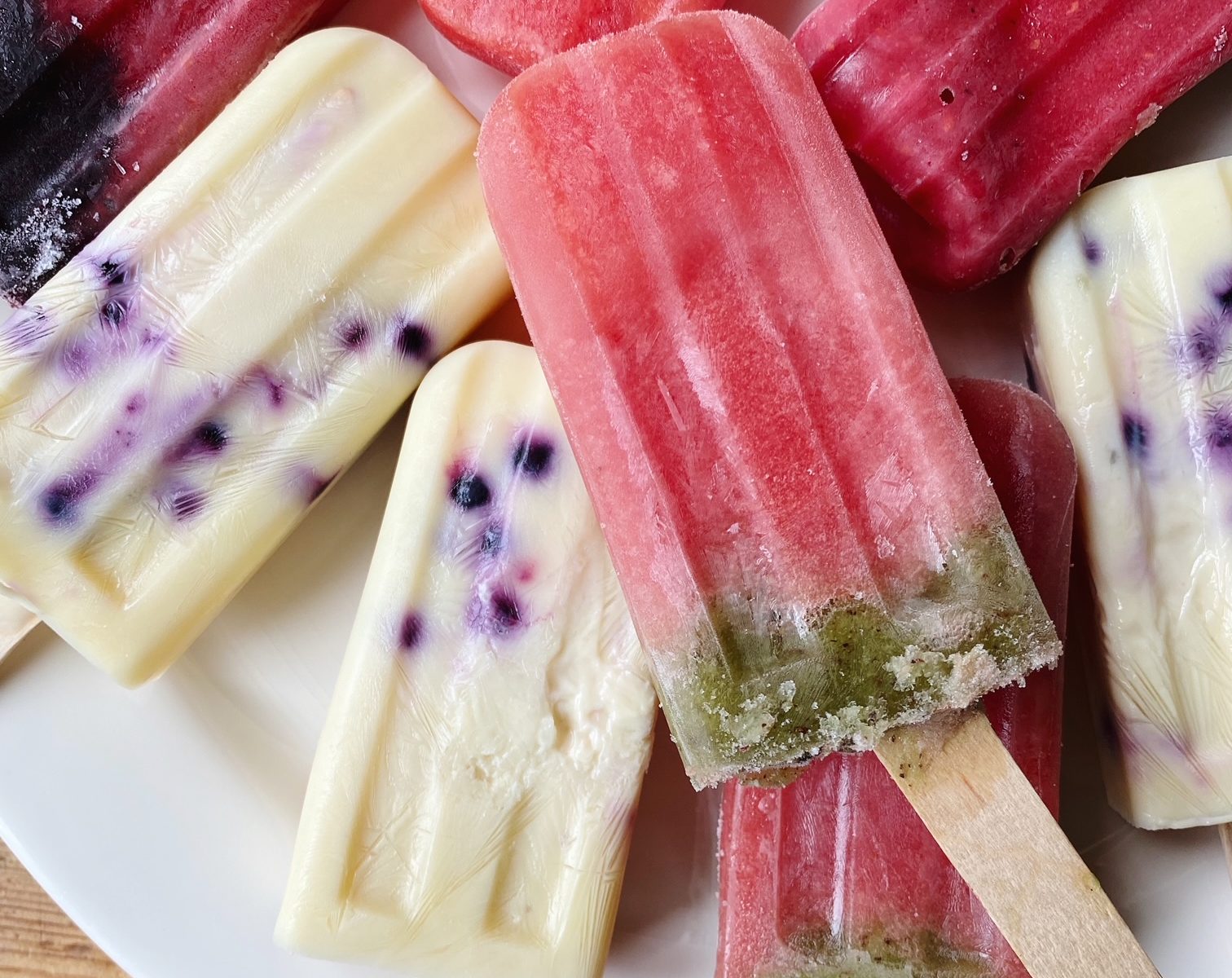
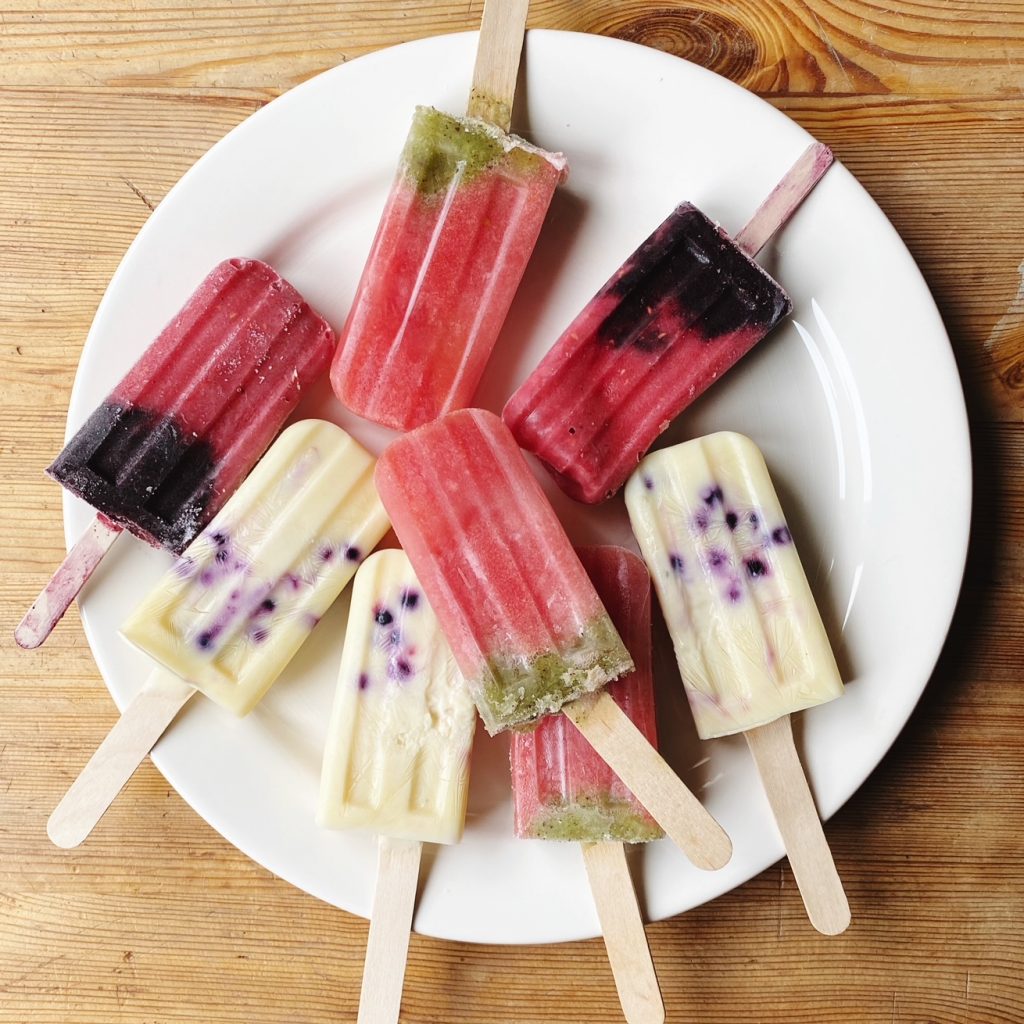
Phew it’s been hot! Anyone else overdosing on ice cream? We have started making our own, healthier ice lollies as we are getting through so many and we are trying to avoid the packaging and intense sugar levels of shop bought ones. Here are our two currant favourite flavours. We would love you to share your favourite flavours in the comments please. Always looking for inspiration. Apart from simply freezing our favourite smoothies, we are thinking of doing some more ’grown up’ ones too involving coffee… and maybe a gin, tonic, cucumber & mint one?
We invested in a silicon ice lolly mould this year, but in the past have used saved yoghurt tubs and water cups. You can buy lolly sticks in craft shops or use wooden takeaway cutlery. Any other ice lolly hacks are very welcome! Don’t forget to stock up on our wide range of organic fruits, they’re the perfect healthy sweet and refreshing treat.
Liz x
Watermelon Ice Lollies
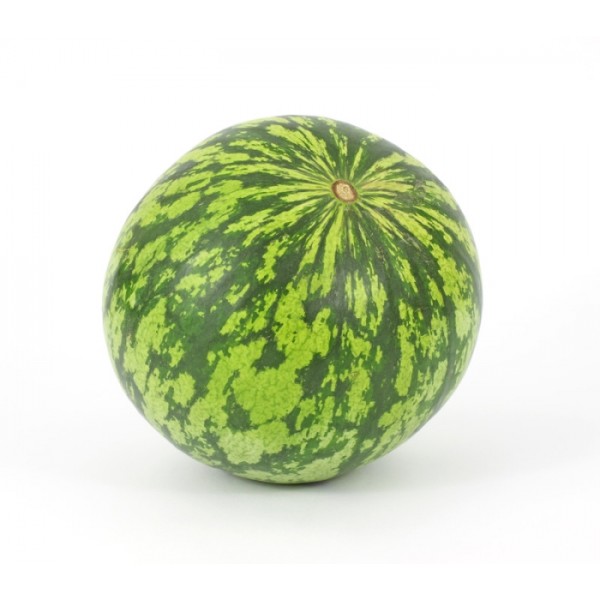
watermelon
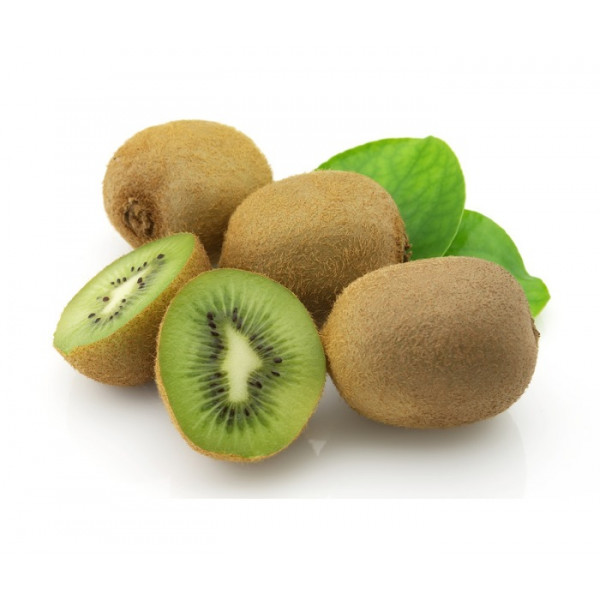
kiwi
Method:
Slice a mini watermelon and remove the pips and rind. Blend then pour into ice lolly moulds leaving a couple of cm space. Freeze for 30 minutes then insert a stick.
Halve kiwis and scoop out the flesh with a spoon. Blend then carefully top the watermelon moulds to imitate the green part of the watermelon and freeze until solid (at least 4 hours).
Remove the lollies from their moulds and store in the freezer in a large plastic box. For best flavour, eat within a couple of weeks.
Yoghurt, Maple & Blueberry Ice Lollies
natural yoghurt, any one you like
maple syrup to taste
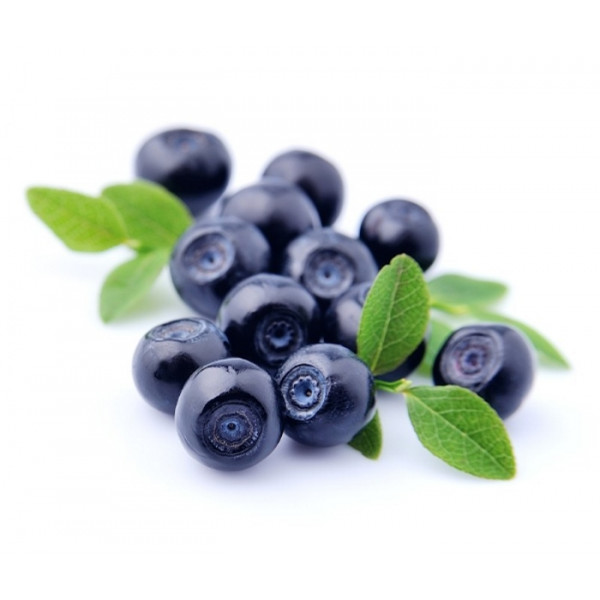
blueberries – fresh or frozen
Method:
Mix maple syrup into yoghurt to sweeten to your taste. Then pour into ice lolly moulds halfway up.
Add a tbsp or so of blueberries then top up with more sweetened yoghurt.
Insert the lolly sticks and freeze until solid. Enjoy!
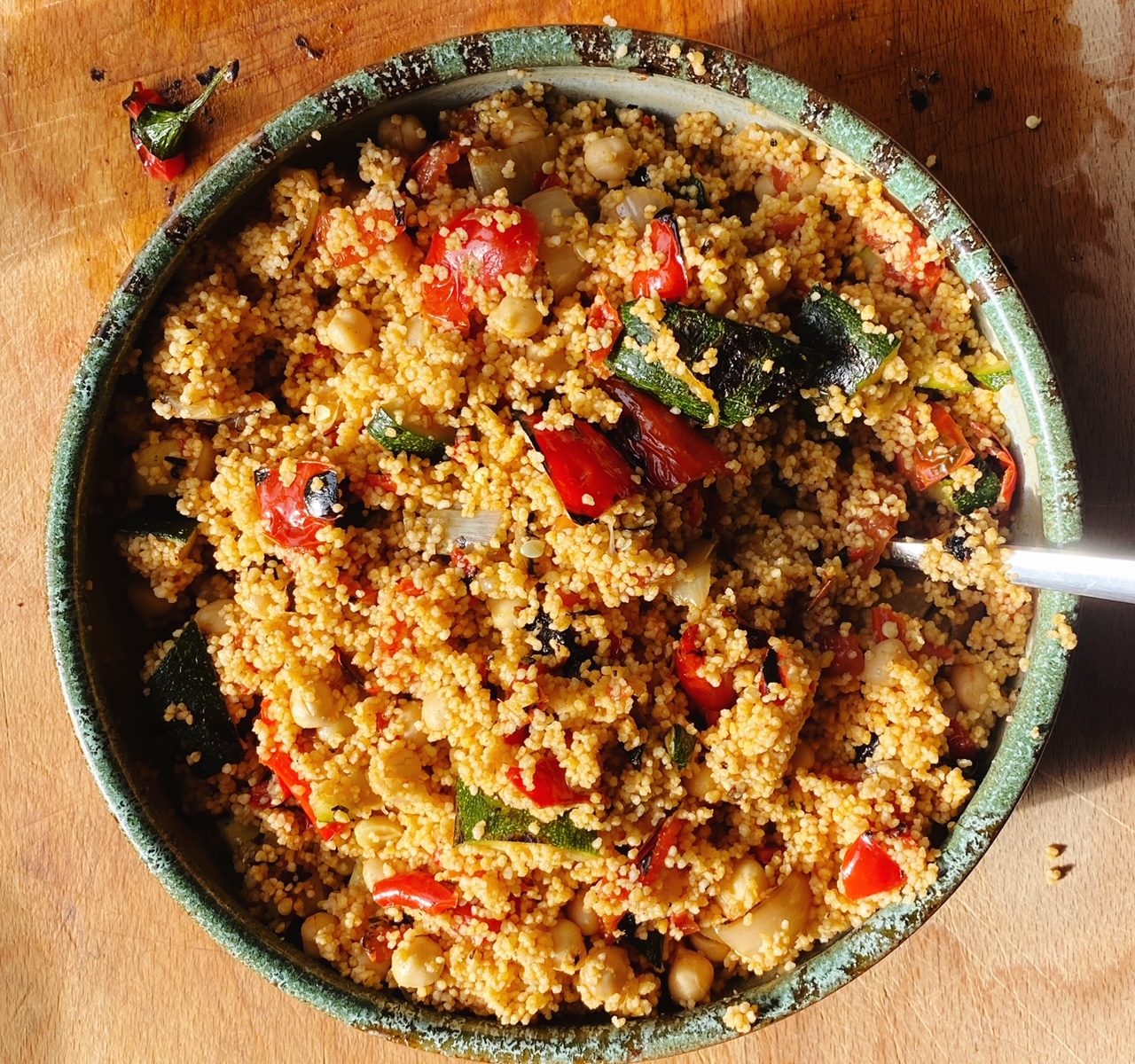
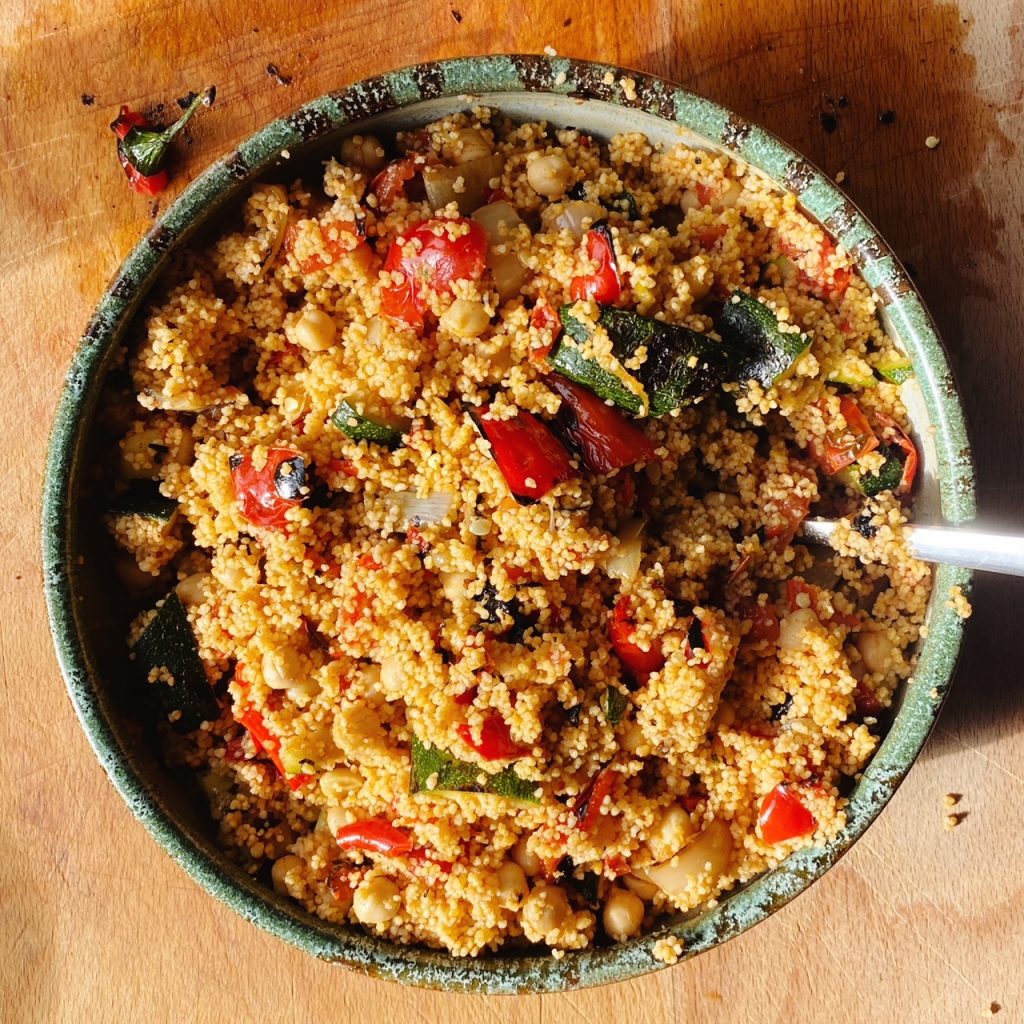
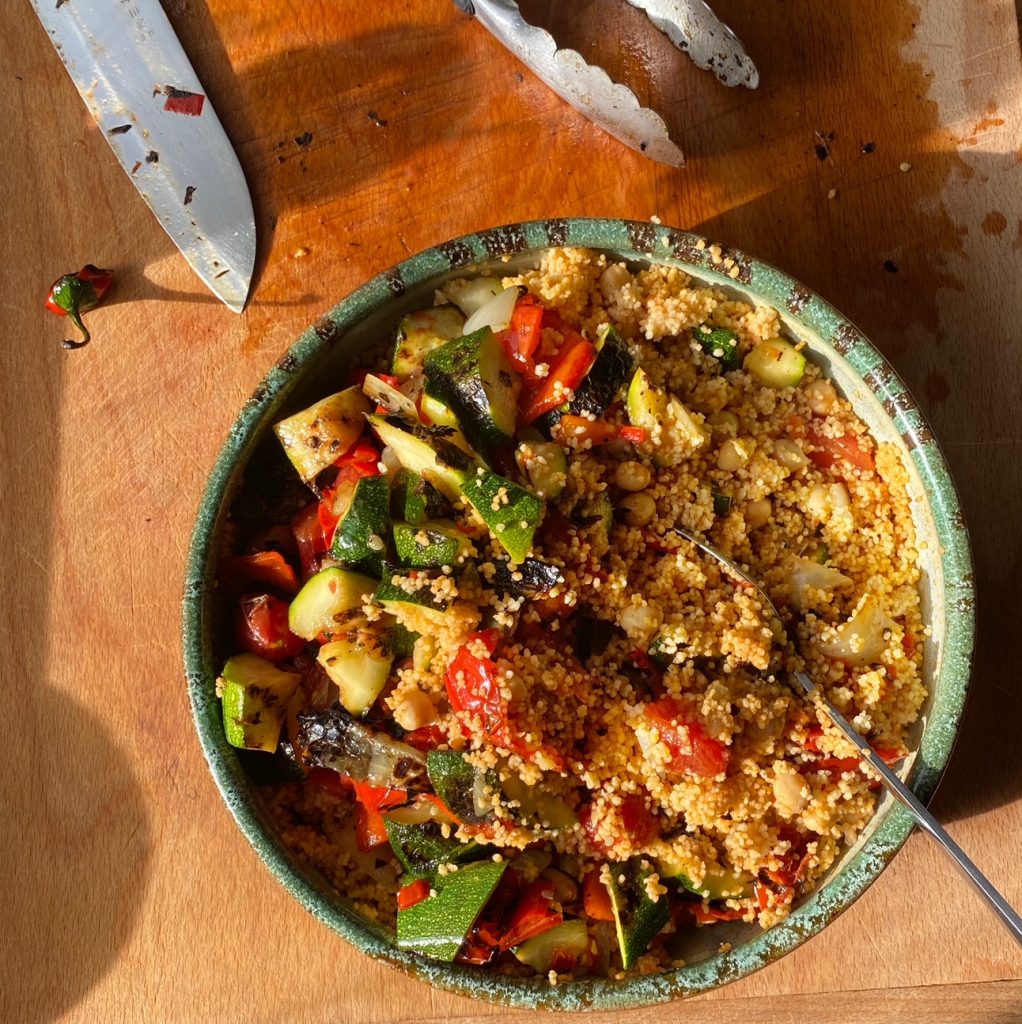
This is our new favourite way to serve barbecued vegetables right now. It’s quick and simple but so so delicious! Serve as a meal in it’s own right or as a side to your usual barbecued things and salads.
Did you know that we stock organic cous cous (and many more dry goods) in clever compostable bags? When you empty your cous cous into a storage jar, pop the bag into your home compost or your council compost bin and it will break down in 12 weeks. We have loads more than just fruit and vegetables on our website for you, and we deliver to every address in Ireland and Northern Ireland. Don’t forget to stay hydrated and find shade over this heatwave lovely people!
Liz x
Ingredients (serves 6)
For the cous cous:
1 mug of cous cous
1 tin chickpeas, drained
1 tsp each: salt, pepper, ground cumin, smoked paprika, garlic granules (or season to your own taste)
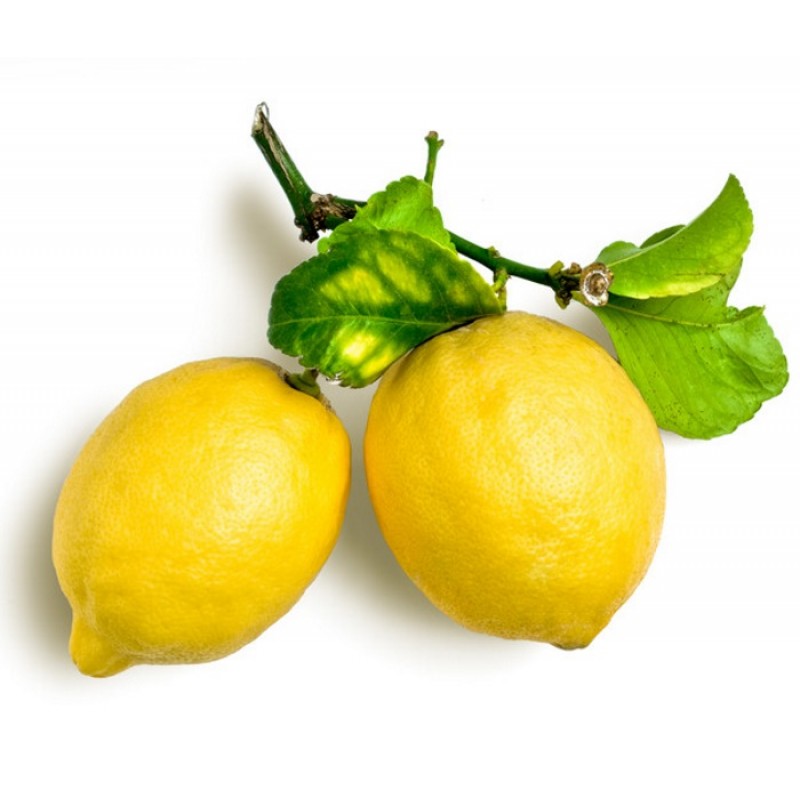
the juice of 1/2 a lemon
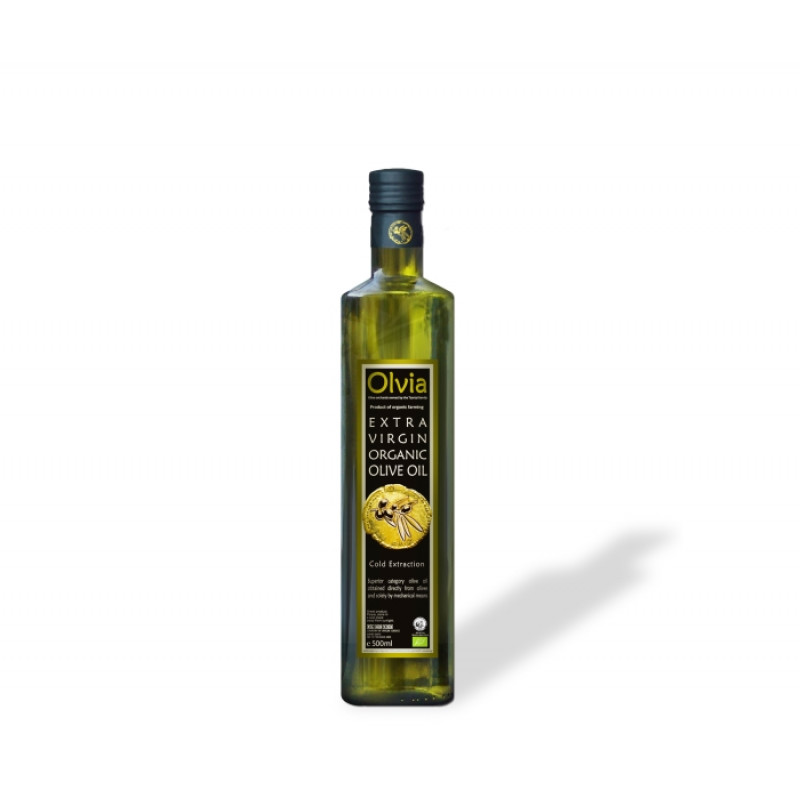
2 tbsp olive oil
1 & 1/4 mugs boiling water
For the barbecued vegetables:
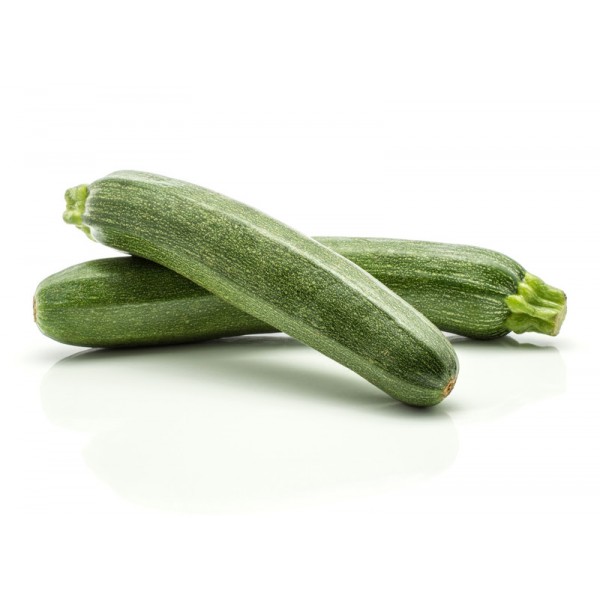
1 courgette
2 red peppers
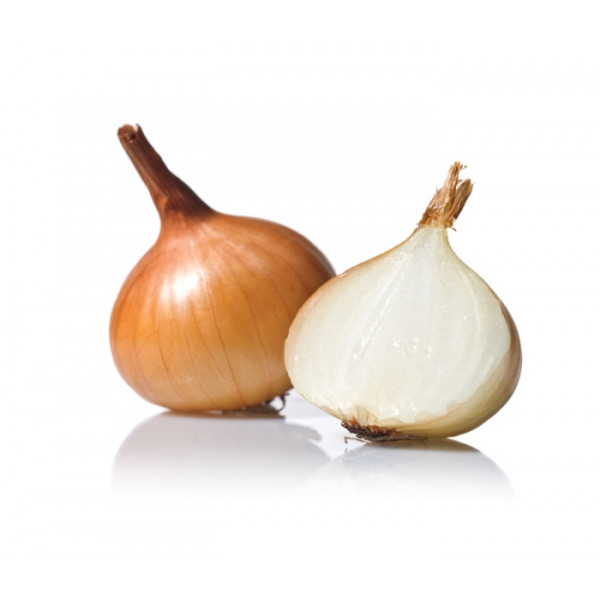
2 onions
1 fresh chilli
10 cherry tomatoes
2 tbsp olive oil
salt and pepper to taste
Method
Light the barbecue and prepare the vegetables for grilling. Cut the courgette into large chunks and the peppers in half and remove stems and seeds. Cut the onions in half and remove the skin. Keep the tomatoes and chilli whole. Place the vegetables in a bowl, drizzle with the oil and sprinkle with salt and pepper. Keep aside in the bowl until the barbecue coals are ready.
Meanwhile prepare the cous cous. Measure the cous cous into a large, heat proof salad bowl. Add the chickpeas, seasoning, lemon juice and olive oil. Add the just-boiled water and stir to combine then place a large plate over the bowl and let the cous cous absorb the water for 5 minutes.
Remove the plate and fluff up the cous cous with a fork. The barbecue coals should be ready to get grilling now.
Cook the vegetables on the barbecue until they are beautifully blackened and soft. As they become ready, use tongs and place them back into the bowl. When they are all cooked through, smokey and delicious, tip onto a large chopping board and chop into bite sized pieces. Scrape the barbecued vegetables, along with all their juices into the bowl of cous cous and stir.
Serve with salad and sauces or with your other usual barbecue items. Enjoy!
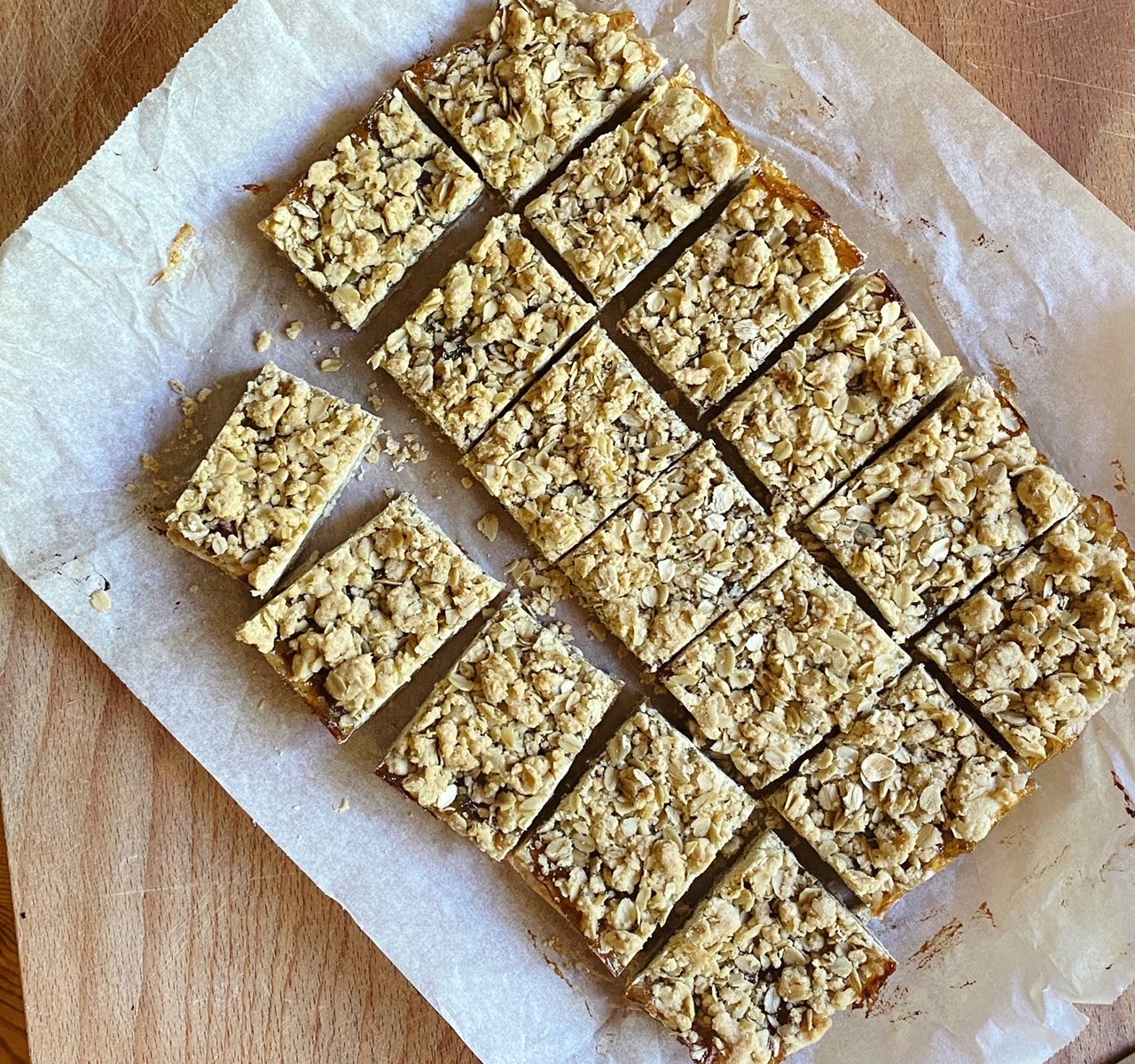
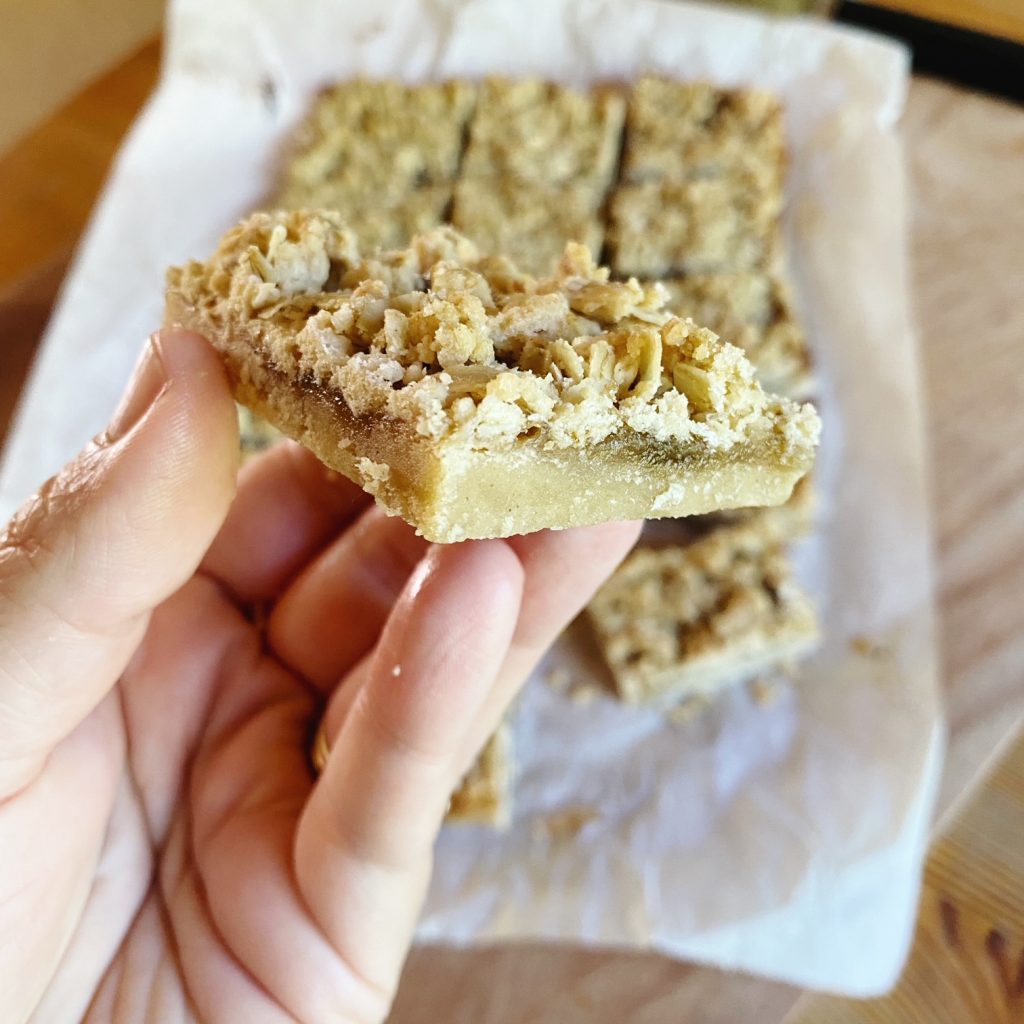
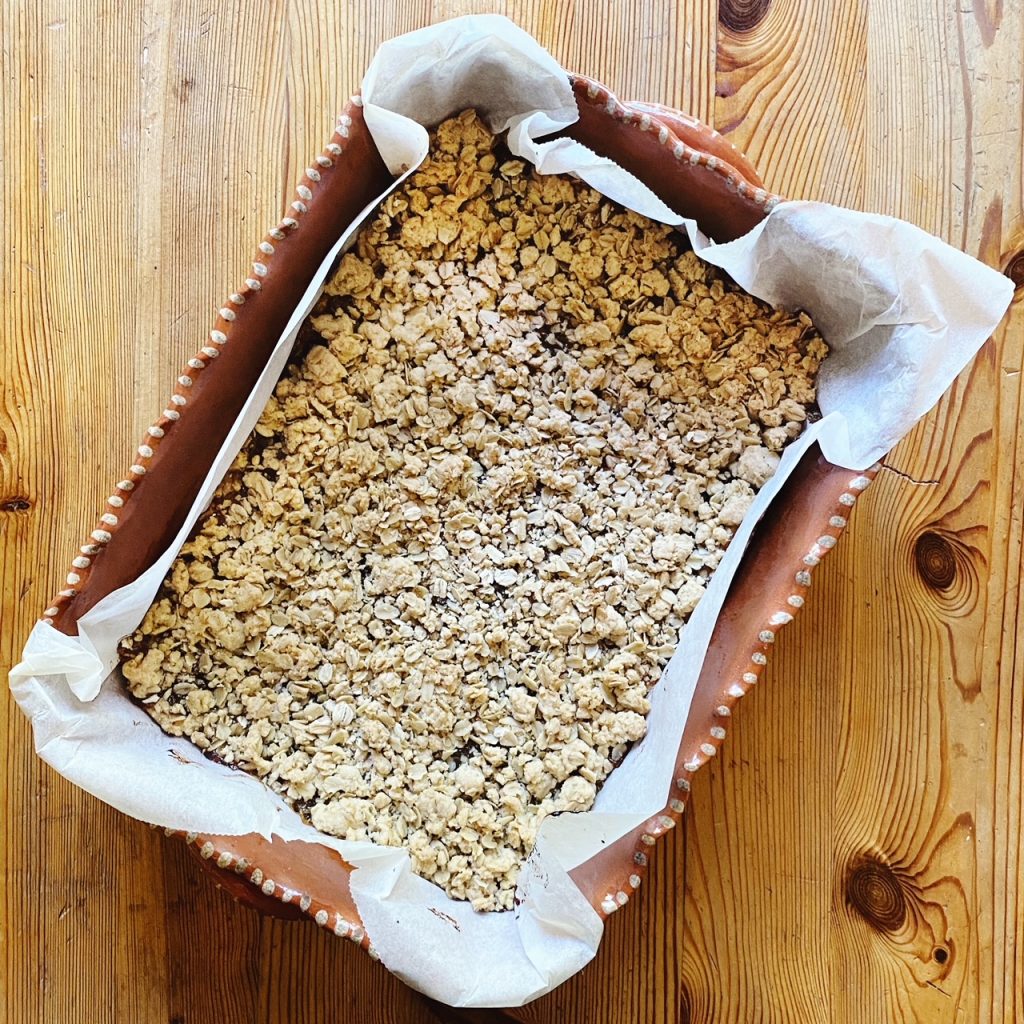
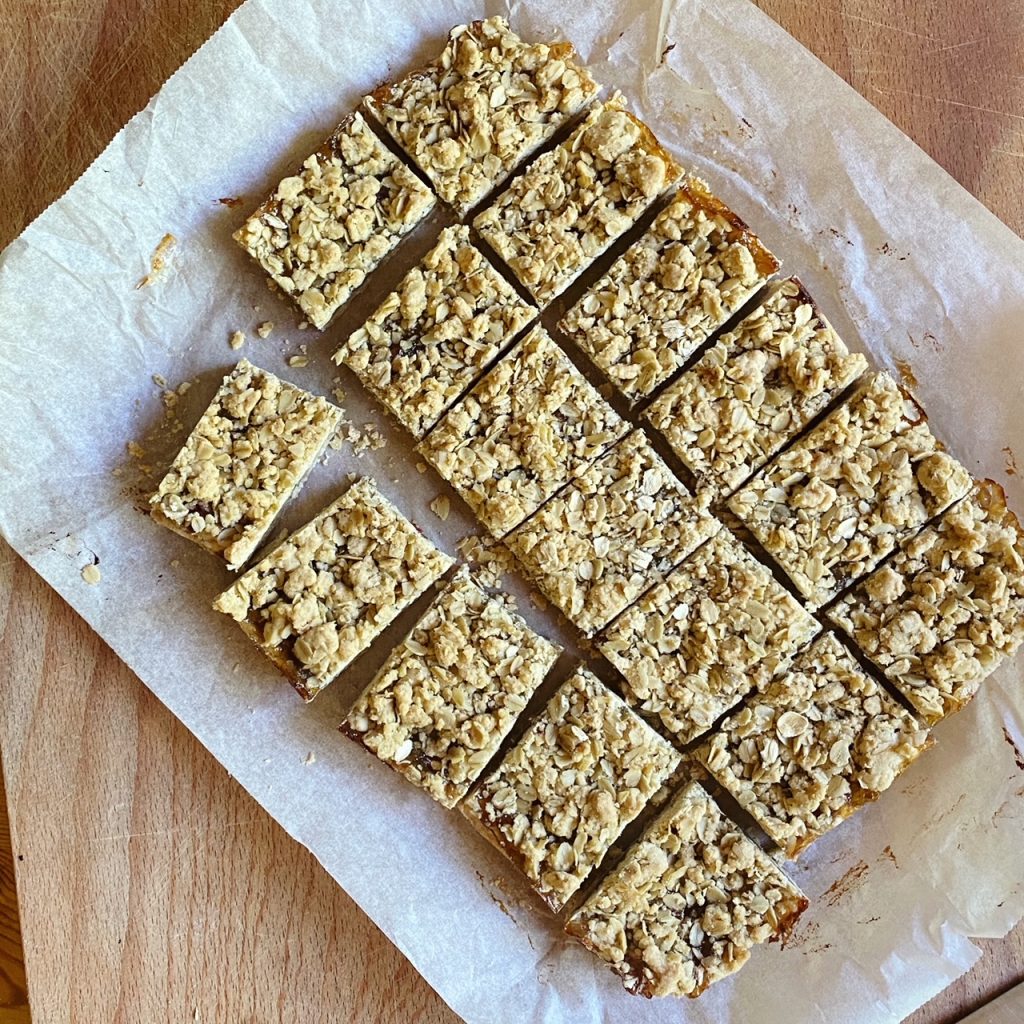
These are wonderful treats. A beautiful, buttery shortbread base, a layer of jam (we used our rhubarb and rose jam from last week) and an oaty crumble top. So delicious! Pack up slices to take out on a picnic or over to a friend for tea. You’ll be amazed at how simple the recipe is too. Once you have the 1,2,3 method in your head (100g sugar, 200g butter, 300g flour), perfect biscuits are never far away.
Liz x
Ingredients (makes 18 slices)
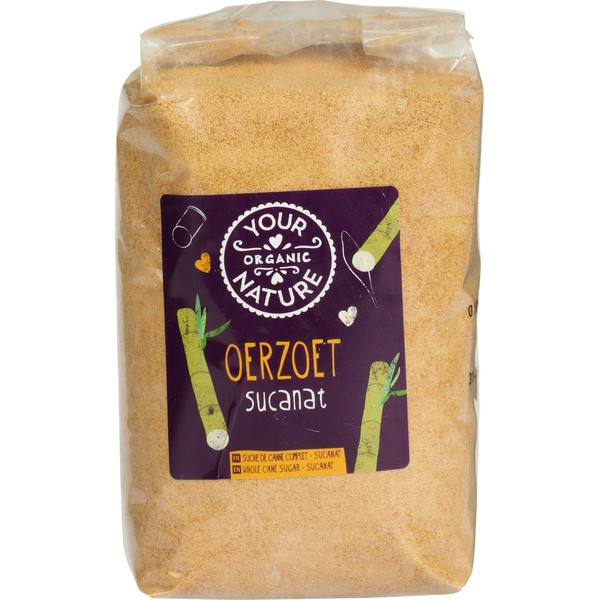
100g sugar
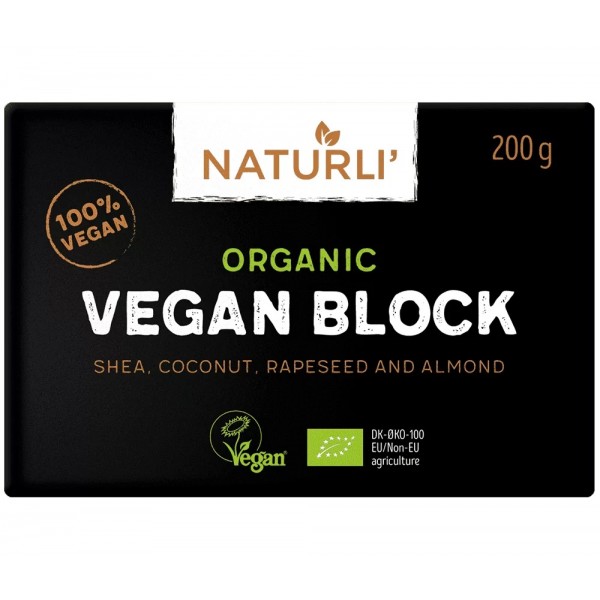
200g butter, chopped
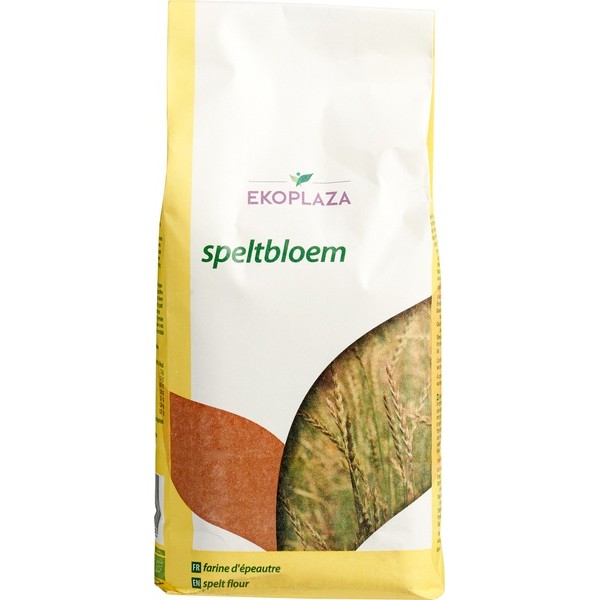
300g flour (plain with no raising agents!)
a large handful of porridge oats
3 or 4 heaped tbsp jam
Method
Pre-heat the oven to 175C and line a medium baking dish with baking parchment.
Measure the sugar, butter and flour into a food processor or mixing bowl. If using a food processor, blend until the mixture resembles wet, crumbly sand. If you are using a mixing bowl, use the tips of your fingers and rub the ingredients together into an even, crumbly texture.
Take out a large handful or so of the mixture and move it to another bowl to reserve for the crumble topping. With the rest of the mixture, bring it together into a ball either with your hands (in the mixing bowl) or by blending a little longer until it comes together into a ball (in the food processor).
Press the ball into the lined baking dish into an even layer. Use a fork to prick holes over the base then bake in the oven for around 8 minutes or until just starting to take on some golden colour.
Meanwhile add a large handful or so of porridge oats to the reserved crumbly dough and mix together with your hands into the crumble topping.
Remove the shortbread base from the oven and spread with jam then sprinkle with the crumble topping and bake again until golden on top. This should only take another 8 minutes or so but ovens vary so keep a close eye on yours.
Remove from the oven and allow it to cool completely (I like to let it cool and set overnight) before pulling out onto a chopping board and slicing. This keeps fresh in an airtight container in a cool place for 4 days.
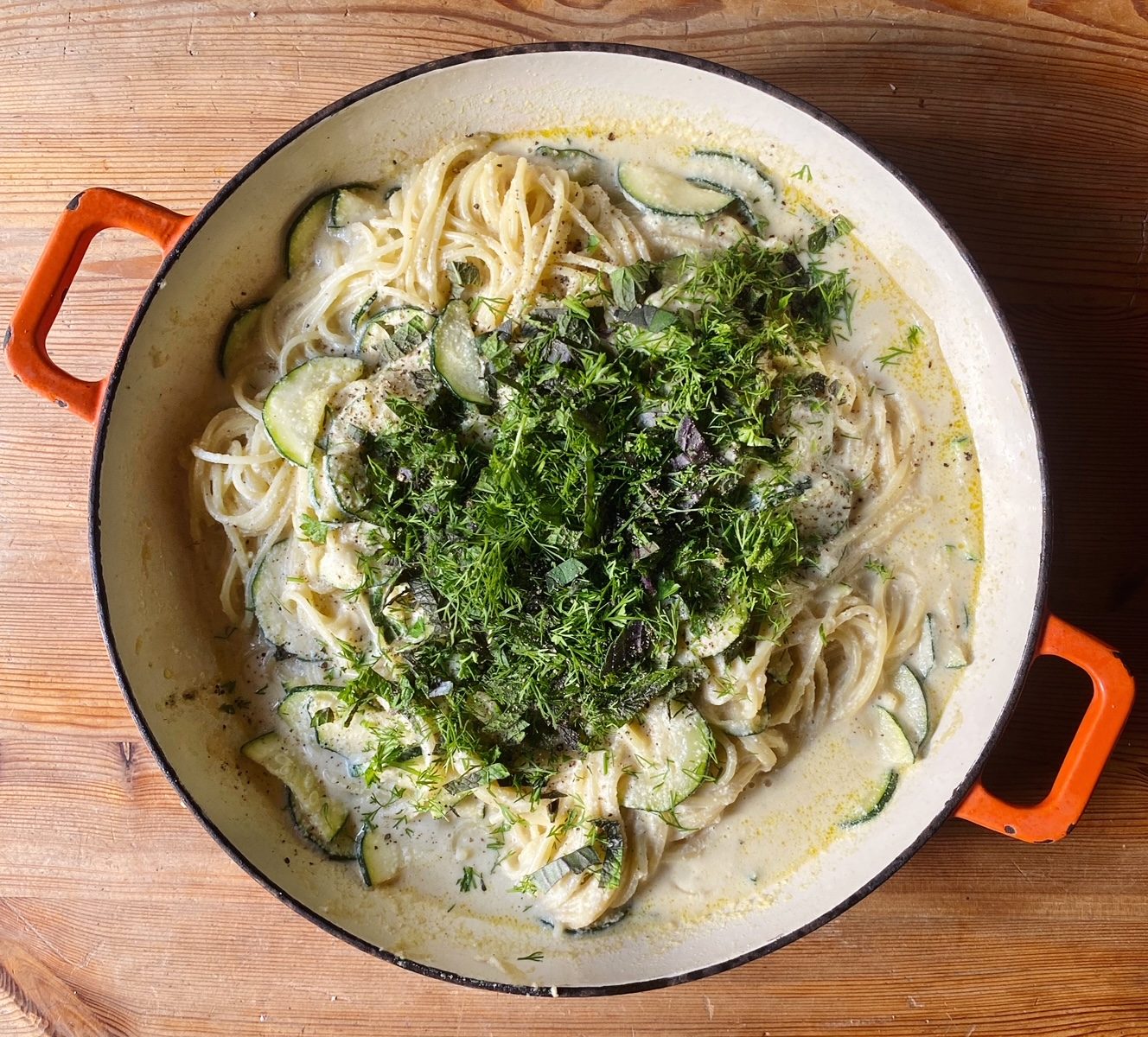
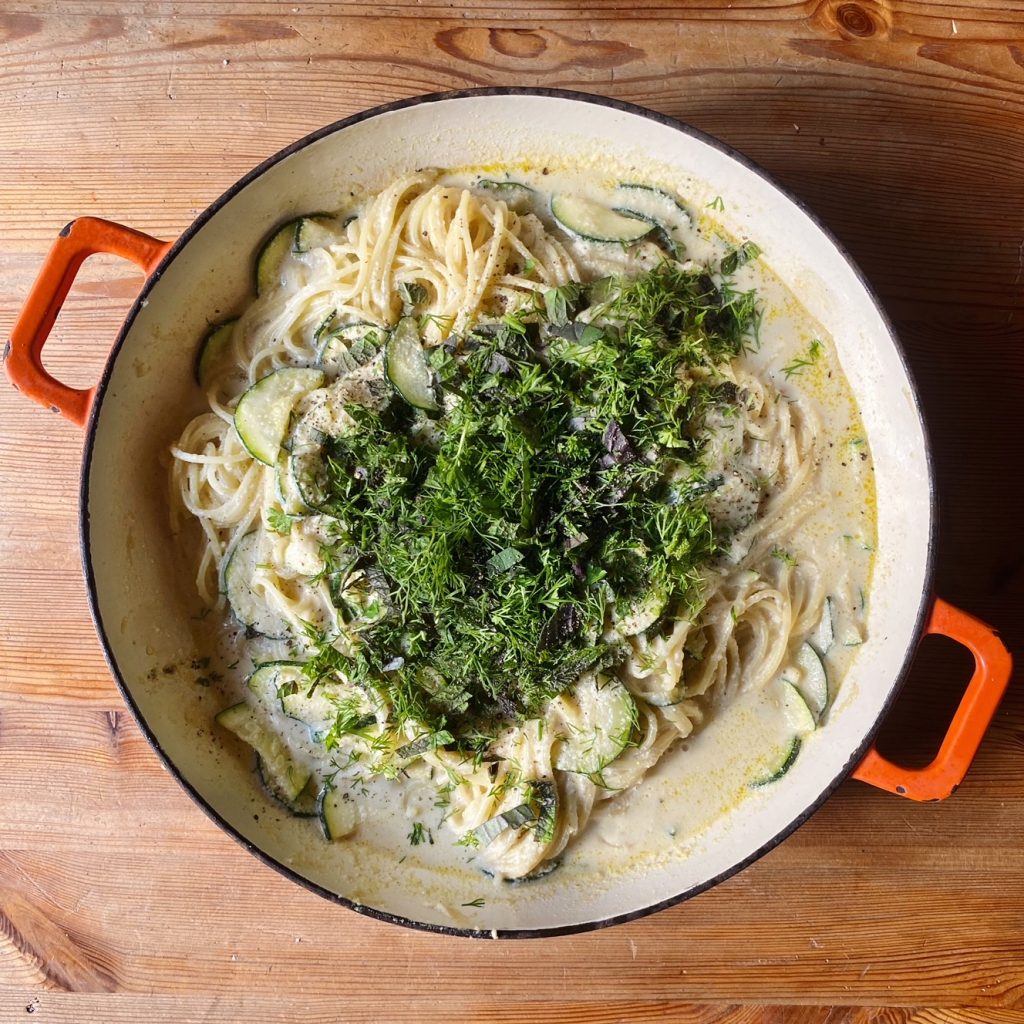
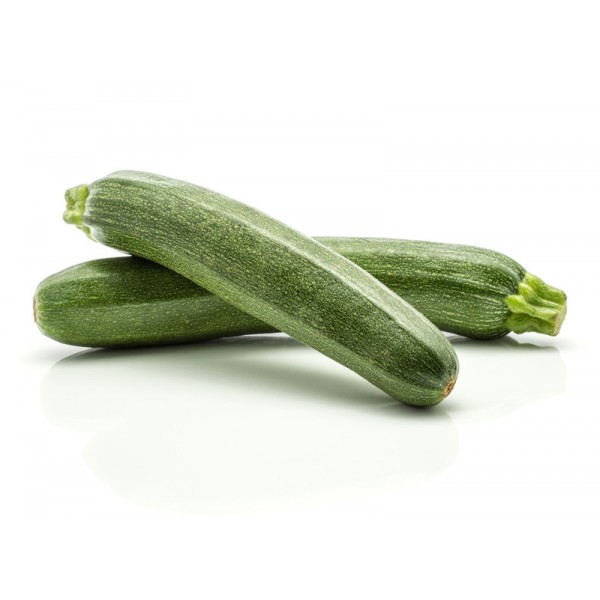
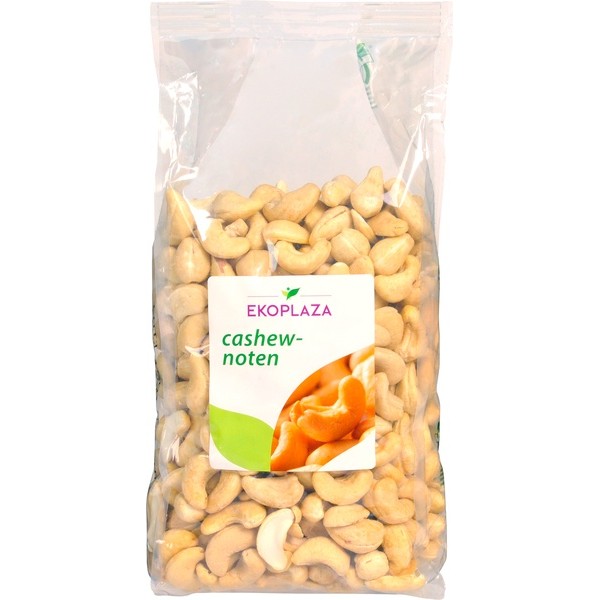
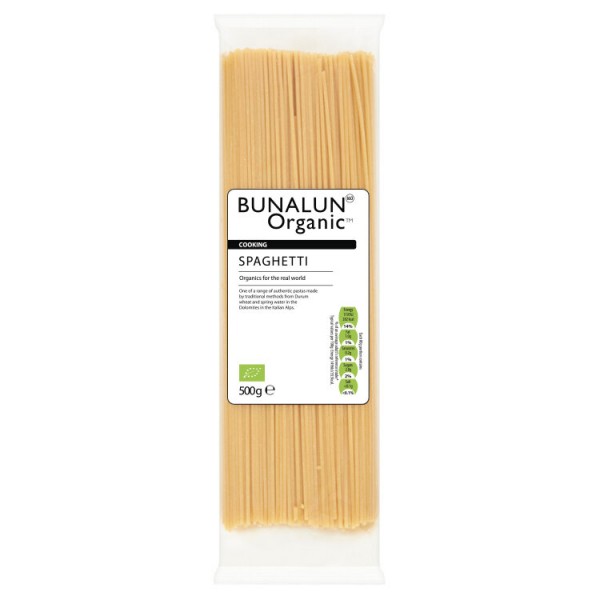
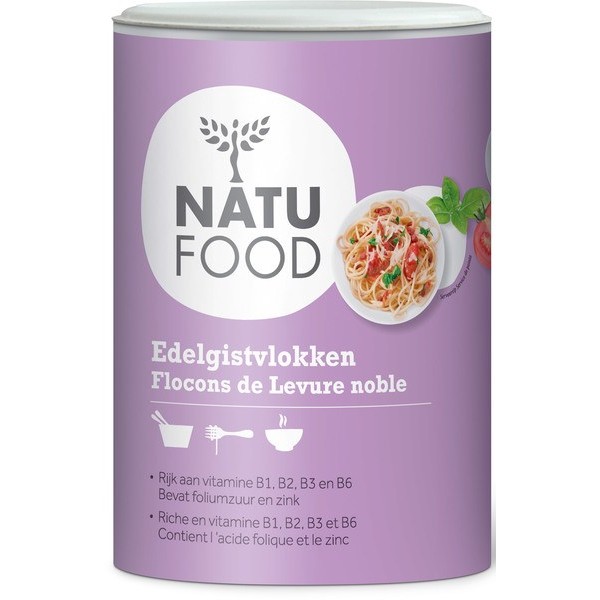
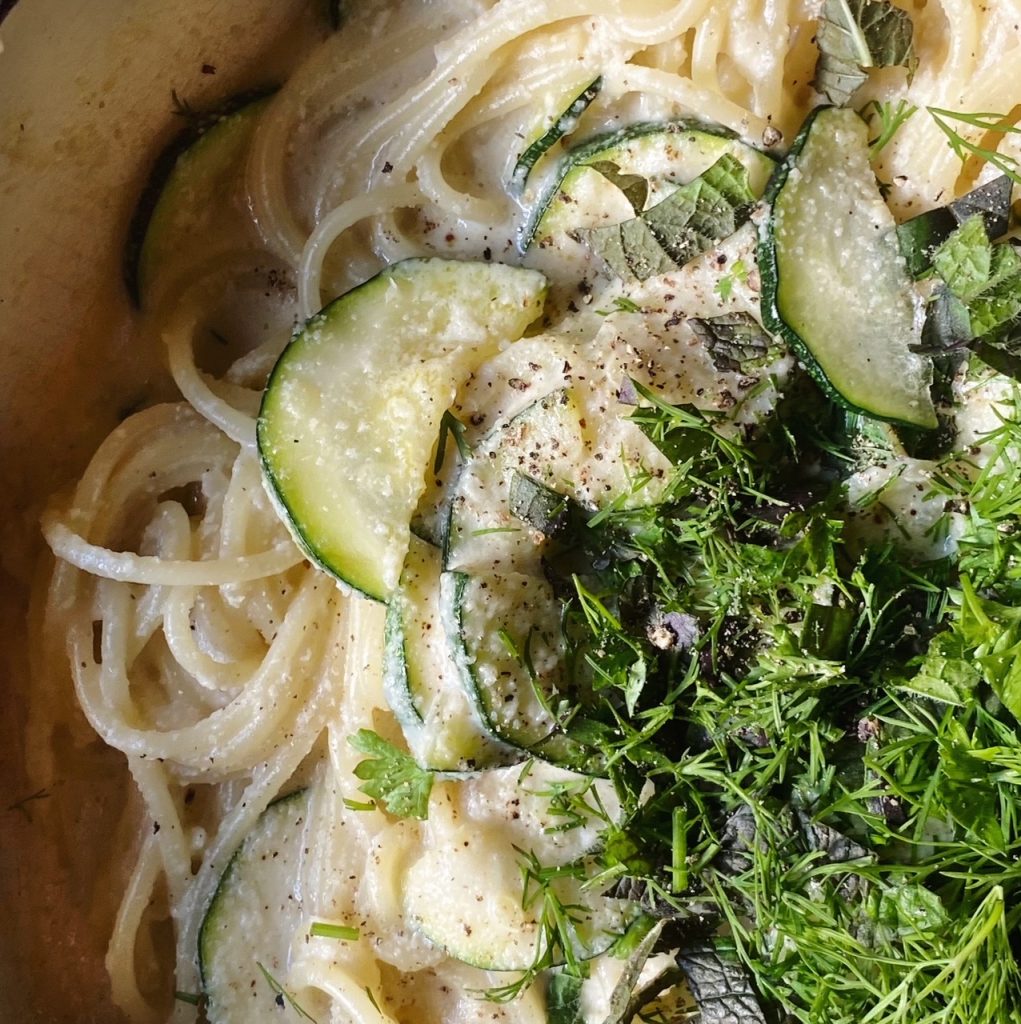
This simple pasta is very fast, very easy and very delicious. The perfect weekday supper. Courgettes are coming in thick and fast now so do enjoy them and use the search bar in the blog to find lots more courgette inspiration. You can substitute the cashew nuts in this recipe for sunflower seeds or any nut/seed you prefer. No need to be too exact with the ingredients, this pasta recipe is very easy-going, as all weekday dinners should be. Enjoy!
Liz x
Ingredients (serves 4)
200g cashews covered in just boiled water
1 heaped tsp Dijon mustard
1 tsp garlic granules
2 heaped tbsp nutritional yeast
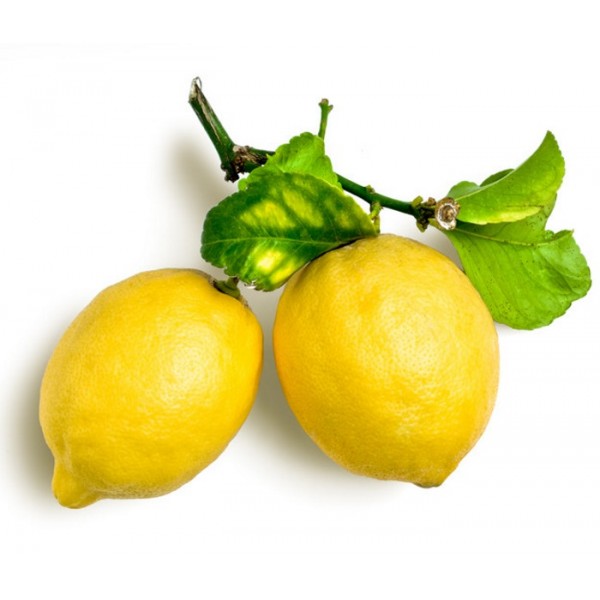
the juice of 1/2 a lemon
salt & pepper to taste
1 tbsp olive oil
1 or 2 courgettes, thinly sliced
4 portions of spaghetti, cooked in salted, boiling water
1 large mug of the starchy water that the pasta was boiled in
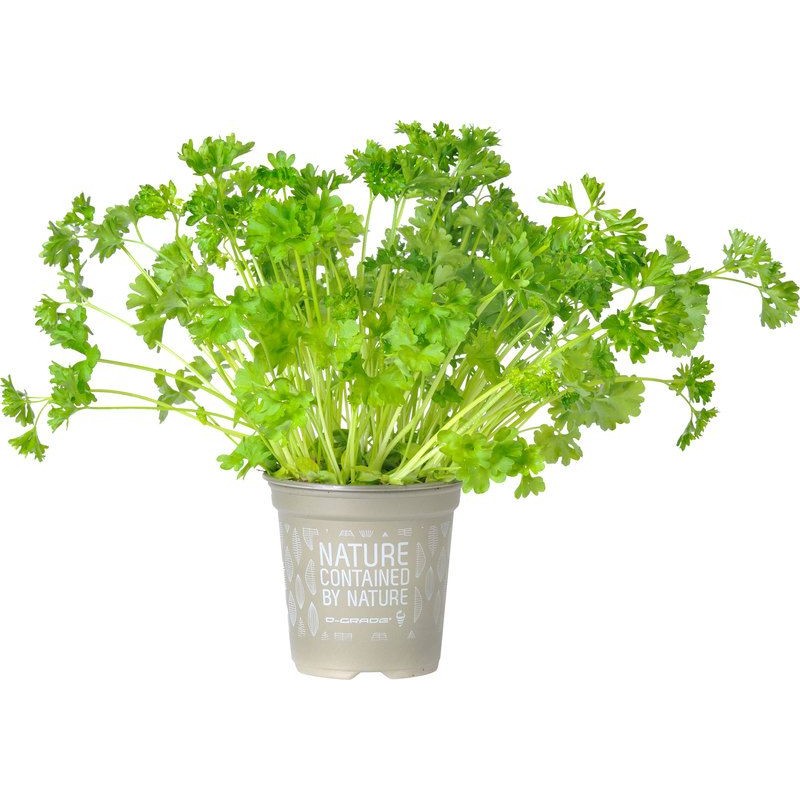
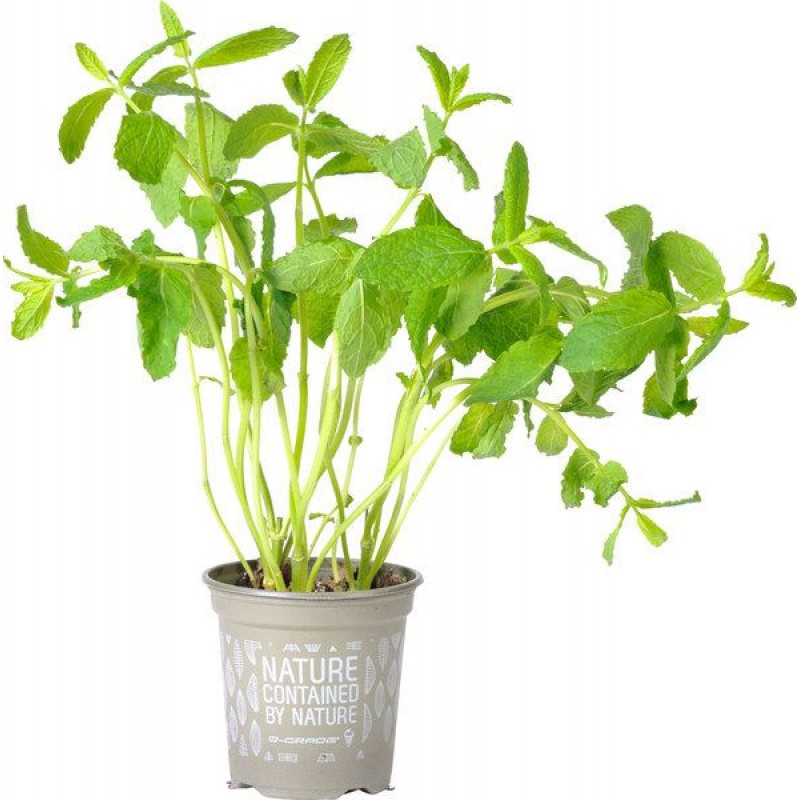
a large handful of chopped herbs eg dill, parsley and mint
Method
Soak your cashews and get a large pot of water on to boil. Thinly slice the courgette and find a wide pan.
When the water is boiling, generously salt it and tip in your spaghetti. While it cooks make the creamy courgette sauce.
Put a large pan onto a medium heat and add the olive oil and sliced courgettes. Season well with salt and pepper then sauté gently to soften and wilt the courgettes.
Blend the soaked cashews in their soaking water with the mustard, garlic granules, nutritional yeast, lemon juice and season to taste with salt and pepper. Scrape the cashew cream into the pan of courgettes and steal a mug of starchy pasta water from the pot. Add it to the courgettes and cashew cream to loosen and simmer into a gently bubbling sauce.
Drain the pasta and toss it through the sauce. Serve with extra black pepper and a sprinkle of fresh herbs.
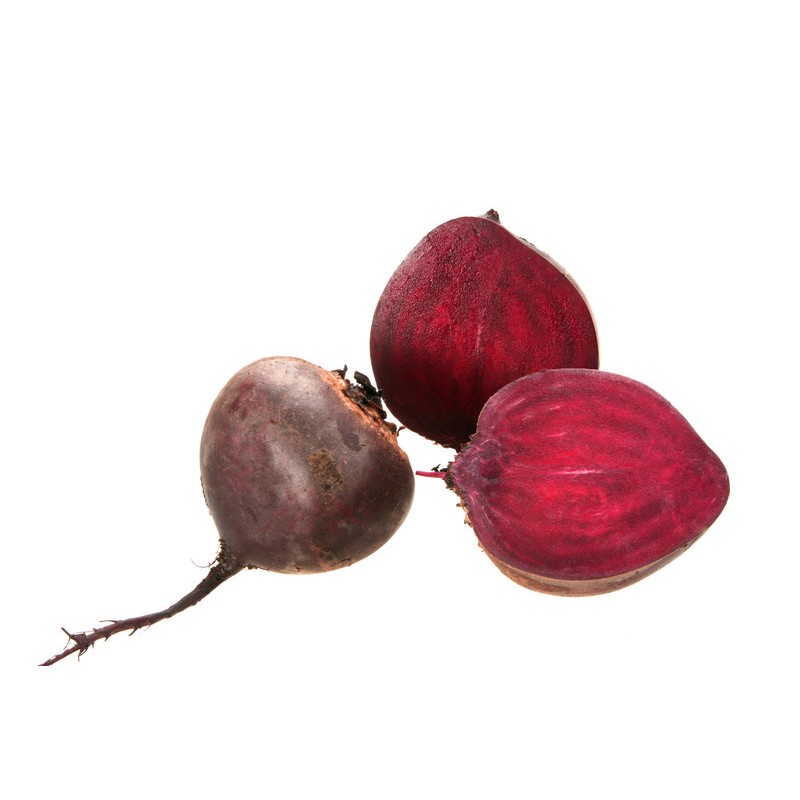
Beetroots grow very happily in Irish soil. They are earthy and sweet and juicy and full of flavour. You can boil, steam or roast them to eat as a wholesome side veg, to make into a puree or beautiful pink hummus. I love to grate them to use raw in a salad or they go perfectly in these tasty fritters accompanied by the grated carrot.
You can whip these fritters up in about 20 minutes. I recommend using the fine side of your box grater, they cook quicker that way. Eat them solo or add some crunchy chickpeas, local leaves and a tahini dressing to make it a meal.
By seasoning with salt and pepper you get the real taste of the vegetables. When you use quality ingredients the natural flavours shine through.
Open the can of chickpea and drain really well. Tip: You can reserve the aqua faba (chickpea juice) to make a sweet dessert like pavlova.
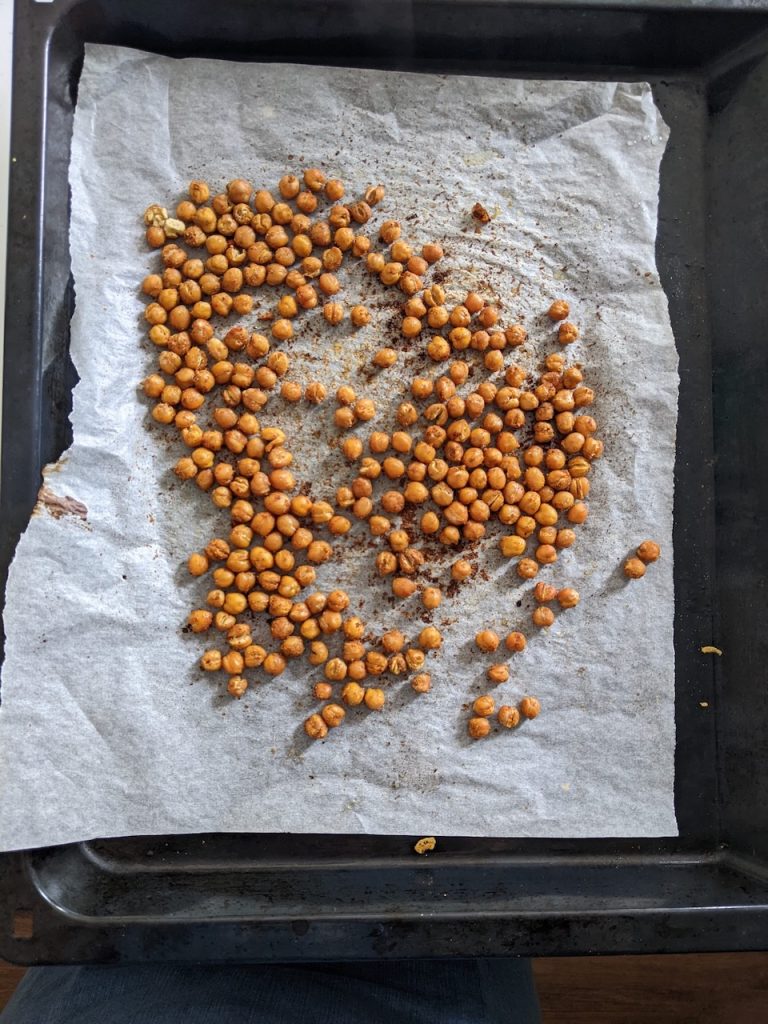
Pour the chickpeas onto a tray lined with parchment paper. Using kitchen paper dry the chickpeas really well.
Make up the spice mix by adding the paprika, cumin, coriander, salt and pepper to a small bowl. Mix with a spoon. Then sprinkle over the chickpeas. You can add more salt later if needed.
Drizzle with oil and roast in the oven for 30-40 minutes. Check and shake the tray every 10 minutes.
The chickpeas will be crunchy when you’ve roasted them. They are best eaten on the day they are roasted but if using the next day pop in the oven again for 10 minutes so they are warm and crunchy. Keep them in an air tight jar in your cupboard.
For the fritters:
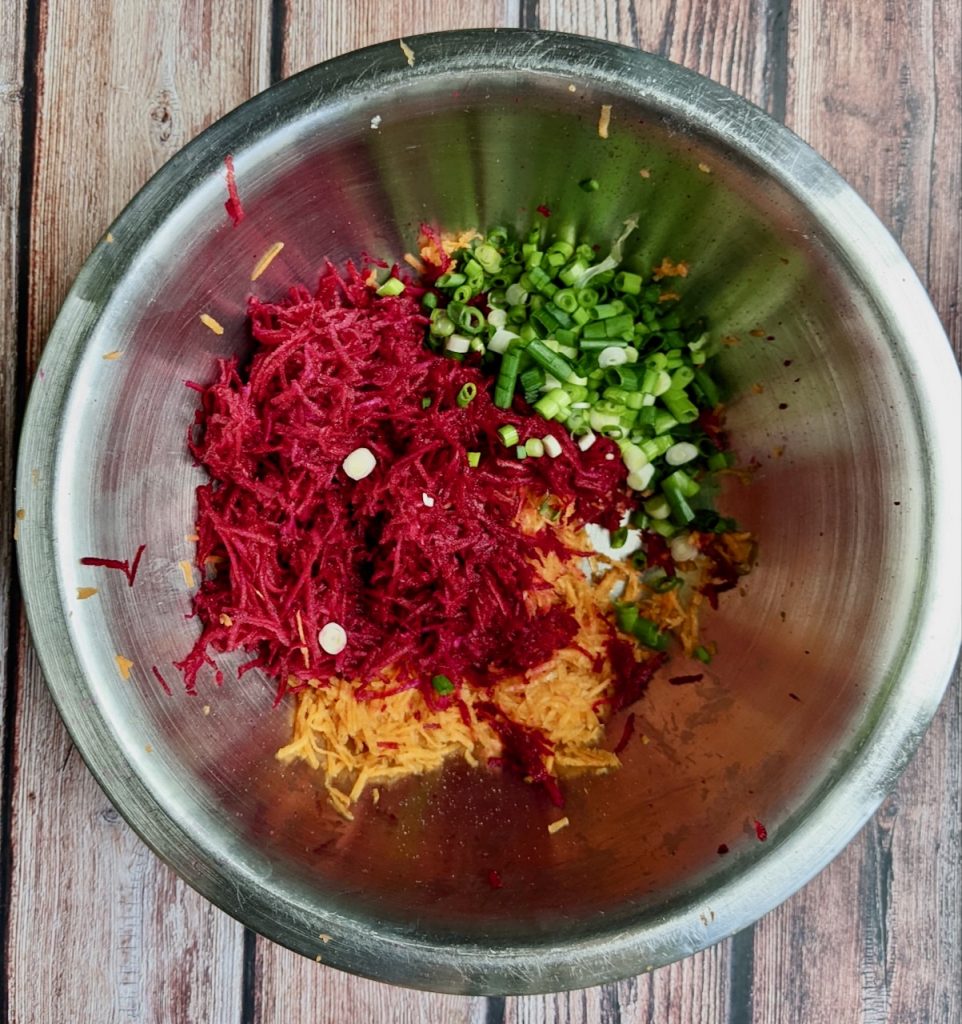
Begin by peeling and grating the beetroot and carrot, use the fine side of the box grater. Tip: Hold the raw beetroot with kitchen paper so your hands don’t turn pink. Add to a mixing bowl.
Finely chop the scallions and add this to the bowl. Crack in the egg, add salt and pepper, sprinkle in the flour. Fold all the ingredients together.
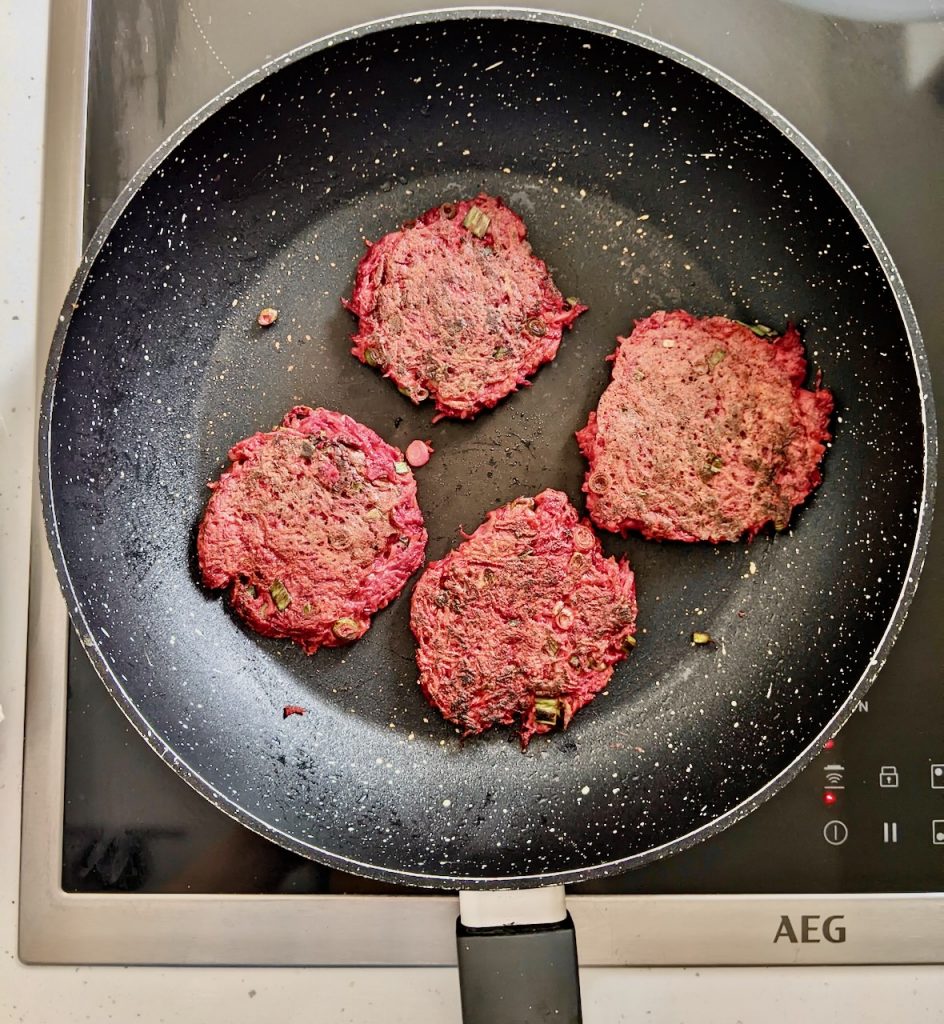
Warm a non stick frying pan on a medium heat, lightly oil. Add a spoon of the beetroot mix and flatten with the back of the spoon, cook 3 fritters at a time. Fry for a couple of minutes and flip and cook for a few minutes more. Remove with a spatula onto a plate lined with kitchen paper. Repeat with the rest of the mix.
For the tahini dressing:
Simply add the yoghurt, tahini, lemon zest and juice, maple syrup or honey, salt and pepper to a bowl and mix well with a spoon.
To serve:
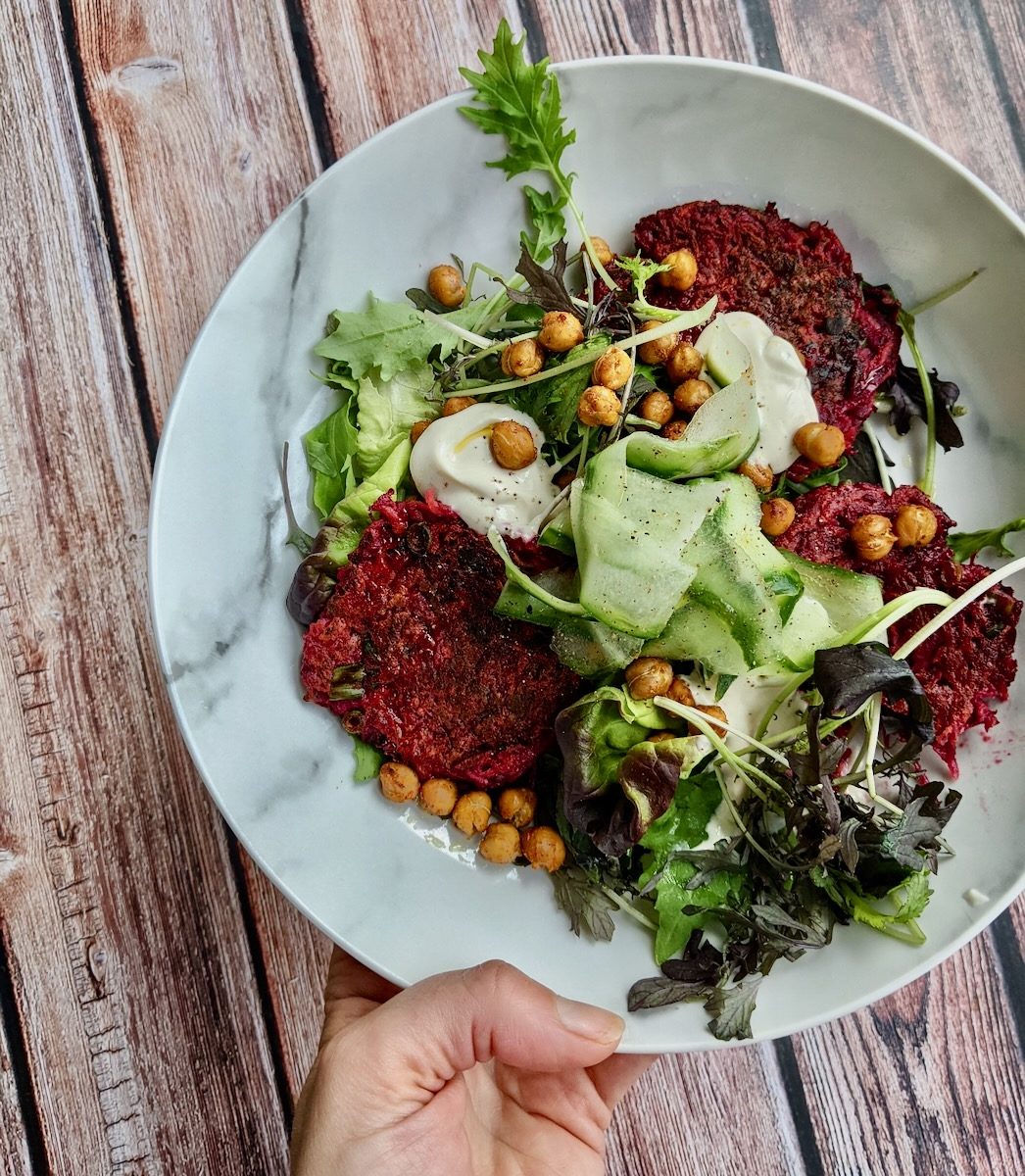
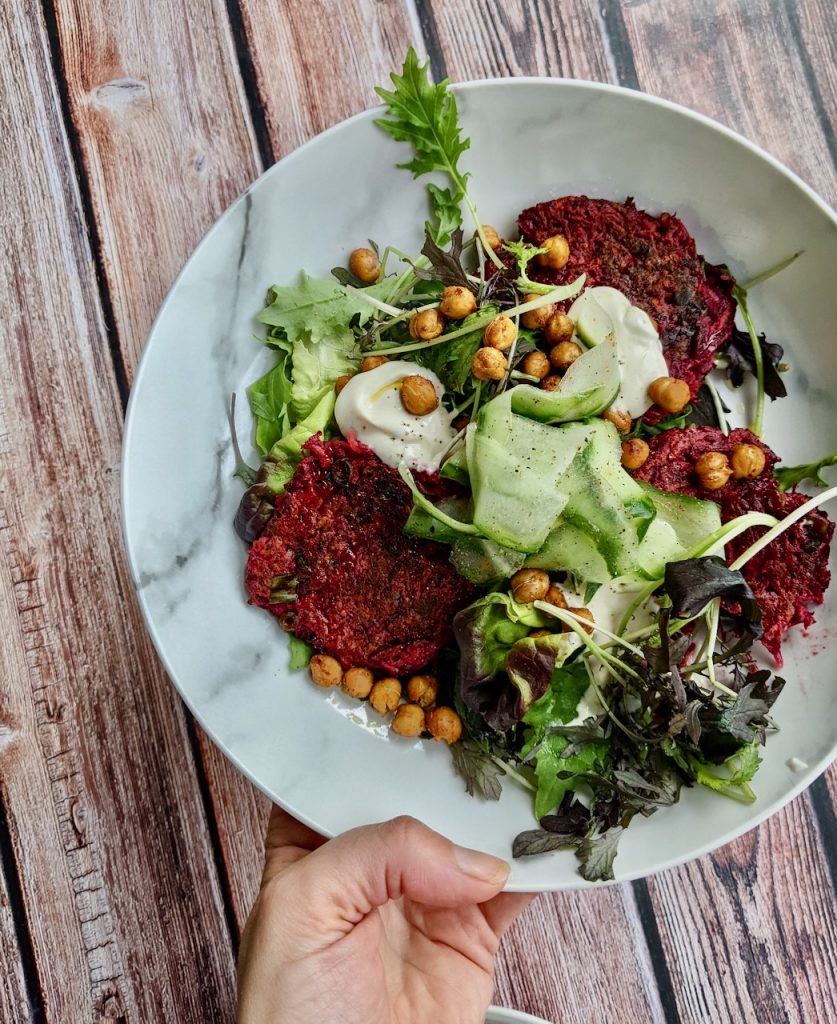
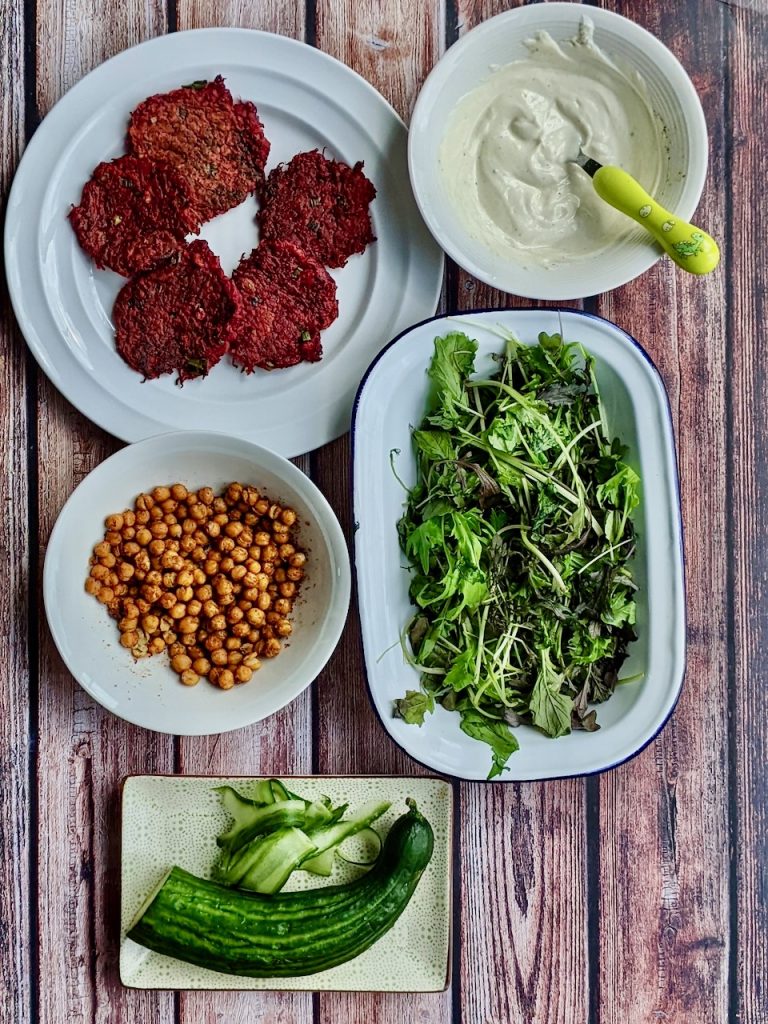
Add some washed green leaves to a serving bowl, add 2-3 fritters per portion. Scatter on the chickpeas, dollop over the tahini dressing, peel some cucumber ribbons and bundle on tip and add a swirl of olive oil.
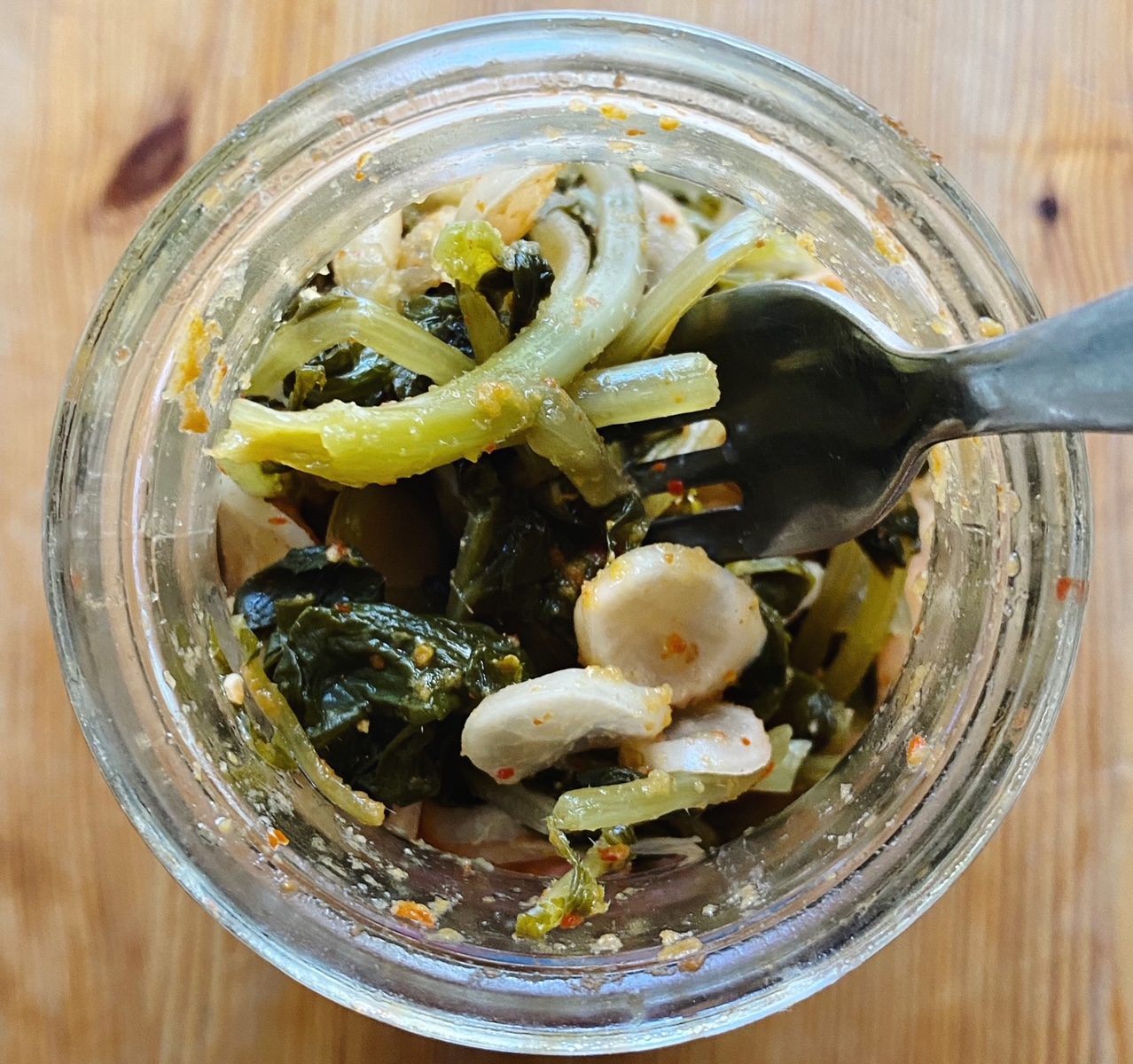
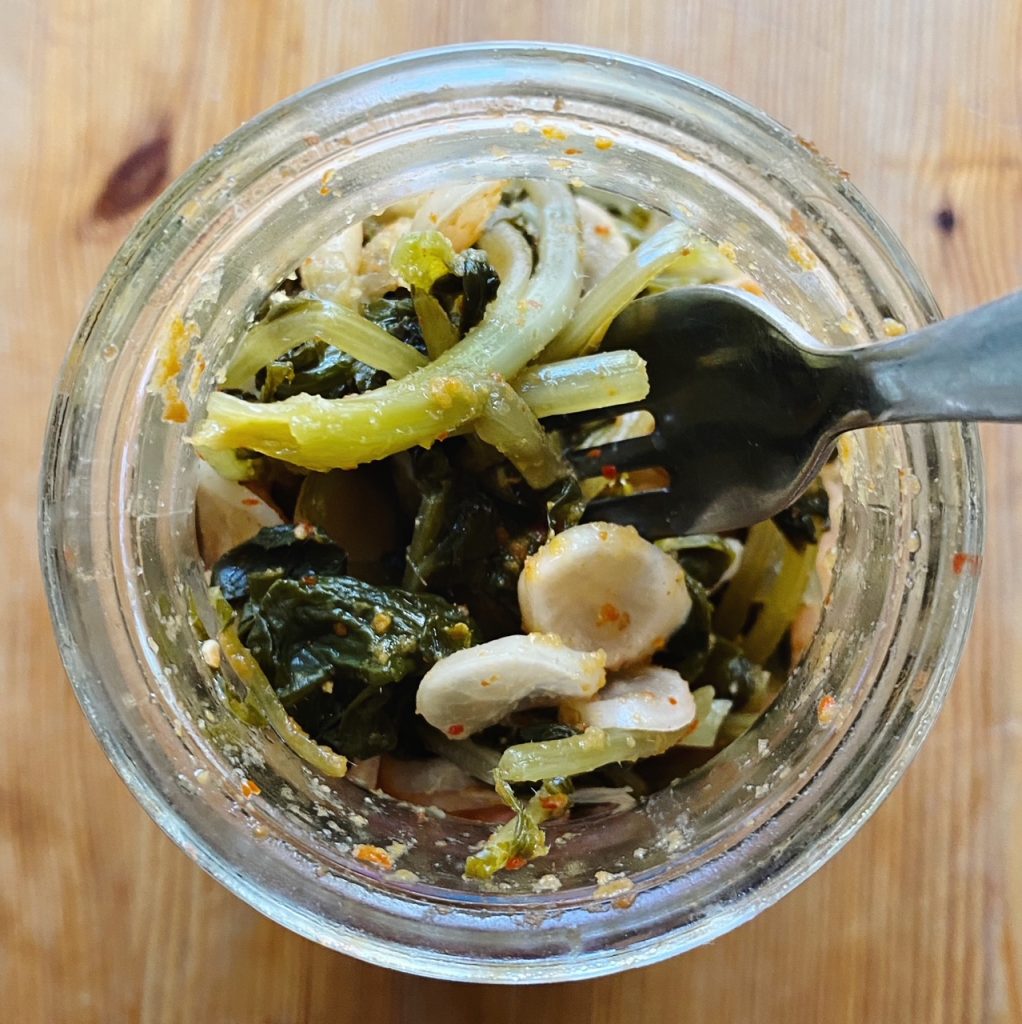
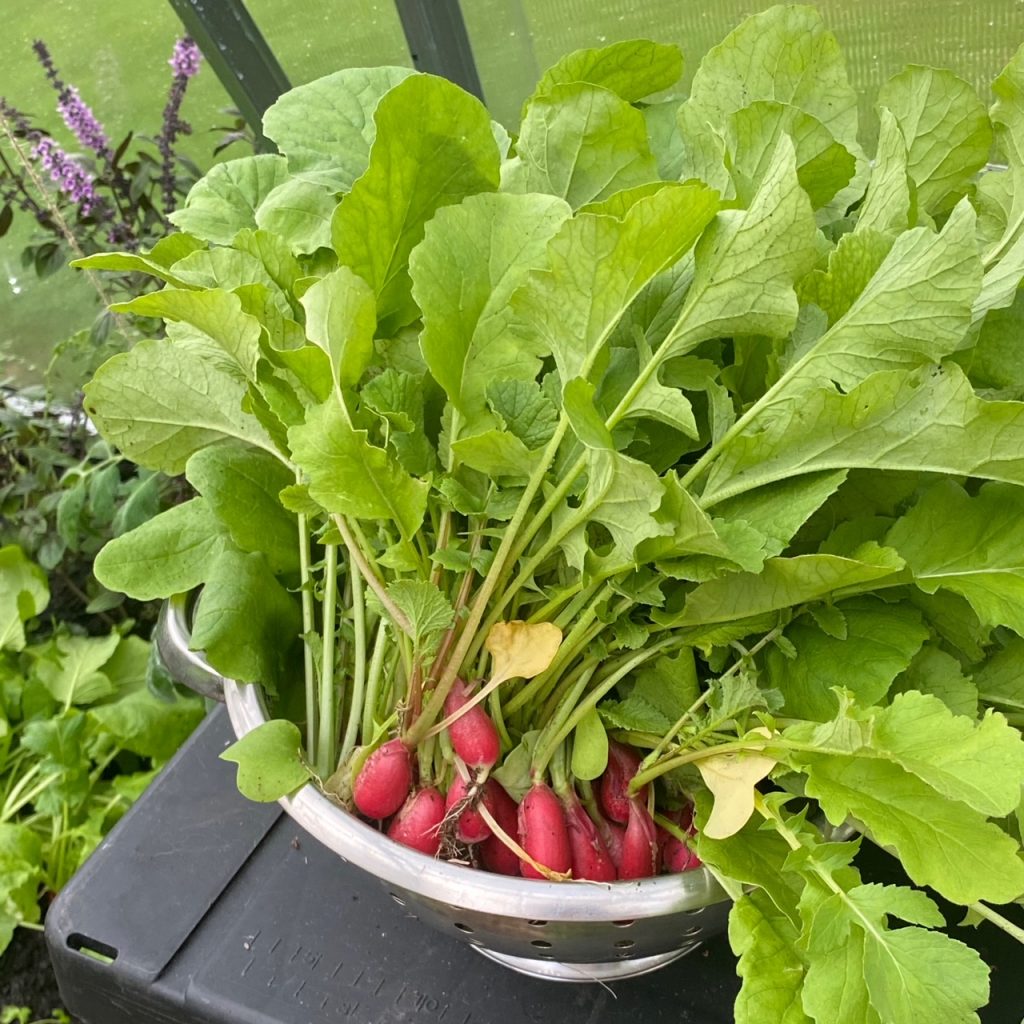
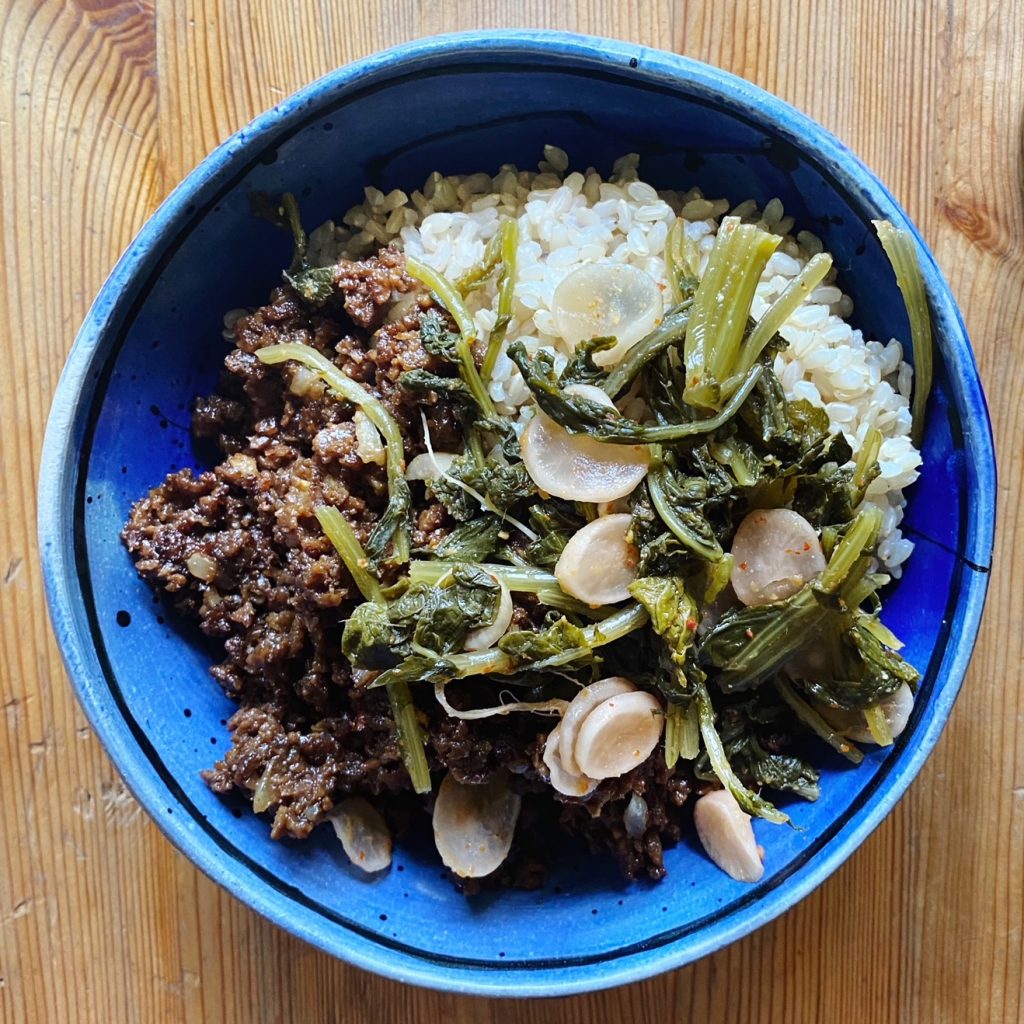
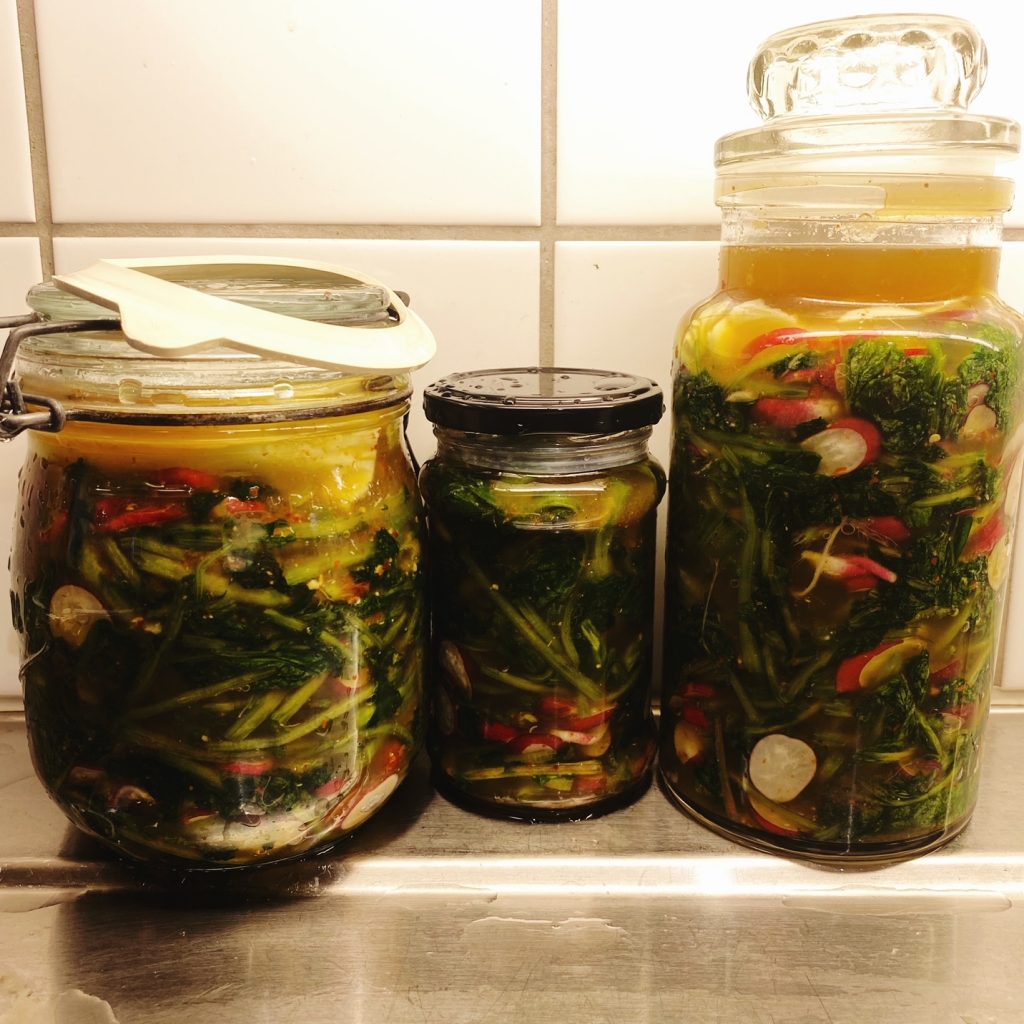
Did you know that radish leaves are edible? Get more bang for your buck (and save food waste) by eating them up! They are delicious and peppery, a little like rocket. Many people are not fans of their slightly bristly texture so, even though they are delicious fresh in a salad, you can also cook them in a soup or stew or as greens in a quiche or as a side dish with garlic. You can also blitz them up with nuts or seeds into a peppery pesto or ferment them as I have done here.
We are a little obsessed with kimchi in our house. We eat a lot of rice (or other grain) bowls and kimchi is just the thing to finish it off. If you’ve not had kimchi before, it is a tangy, spicy fermented condiment – a pickle of sorts – from Korea. Once you get a taste for it, you’ll be hooked, so it’s definitely worth learning to make your own. The health benefits of fermented foods are incredible too. Full of live, gut friendly bacteria to aid your digestion, nutrient absorption, mood and more! We do stock an organic kimchi here if you want to see how it is supposed to taste before you give making your own a go.
Liz x
Ingredients
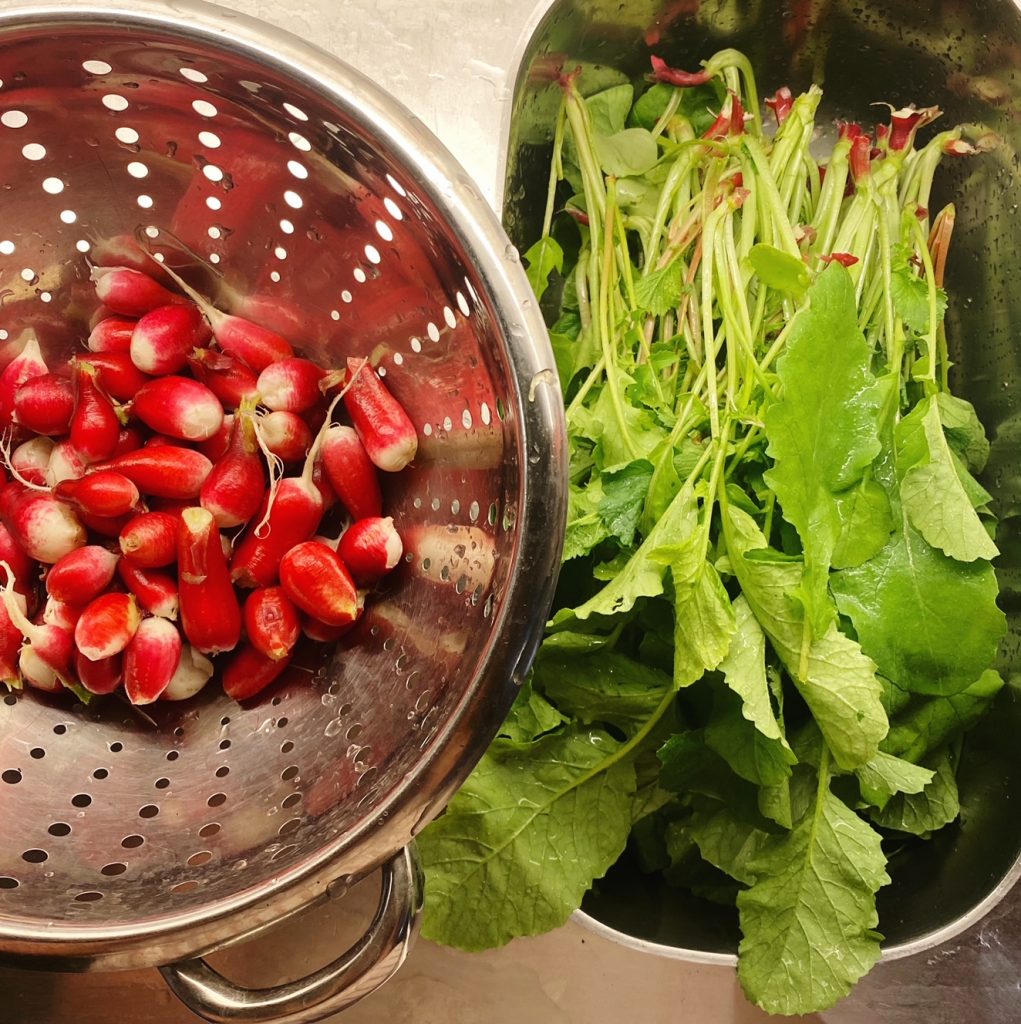
radishes with leaves – washed and separated
salt to taste (or you can weigh your radishes and leaves, work out 2% of the weight and use that amount of salt if you prefer being precise)
garlic, ginger and chillies to taste
a couple of cabbage leaves to use as ‘followers’ which help keep the radishes submerged in brine
You will also need clean jars, a clean chopping board and knife and a large, clean mixing bowl.
Method
Chop the leaves and stems into 3 or 4 cm chunks. Place them in a large bowl and sprinkle with salt – enough to make them taste pleasantly salty. Mix gently with your hands to tumble the salt around and coat each leaf. You will soon notice that the volume of the leaves decreases and they start to look wet as the salt draws the liquid from the leaves and creates a delicious brine.
Thinly slice the radishes – you can leave on their cute tails which are also perfectly edible. Add them to the bowl and mix them in too. Taste a leaf, does it need more salt?
Now make a paste with fresh garlic, ginger and fresh or dried chillies. I use a small smoothie maker and add a good thumb of fresh ginger – sliced but not peeled – the cloves of half a bulb of garlic, peeled, and a good tbsp or two of chilli flakes or a couple of fresh red chillies. Do it to your taste, for example, make it extra garlicky and not so spicy if you like.
Stir the paste through the salted radish and then firmly stuff the mixture into clean jars. Push the mixture in very tightly, you want to avoid any air pockets in the jar. Pour in any brine that has collected in the bottom of the mixing bowl too. Ideally leave a couple of centimetres of head room in the jars. When you push down on the vegetables, brine should cover them.
Now tear a cabbage leaf to be slightly bigger than the surface area of the jar. Push it in over the kimchi mixture and tuck the chopped veg neatly under the brine. Then clean up the jars with a paper towel and loosely replace the lid to allow gases to escape during fermentation.
Place the jars on a plate or in a plastic box somewhere in your kitchen that doesn’t get direct sunlight. Allow the kimchi to ferment at room temperature for a week. Keep an eye on it, If the vegetables rise up above the brine, use a clean spoon to push them back down. Bubbling is normal, as is some of the brine escaping through the loose lids – hence the instruction to place the jars on a plate or in a box. You will undoubtedly notice a tangy, spicy aroma near the jars too – again this is normal and a good sign that things are fermenting as they should be.
Taste the kimchi. It should be tangy and spicy and salty and delicious. Now clean the jars up again and put the lids on tightly. Store in the fridge and enjoy!
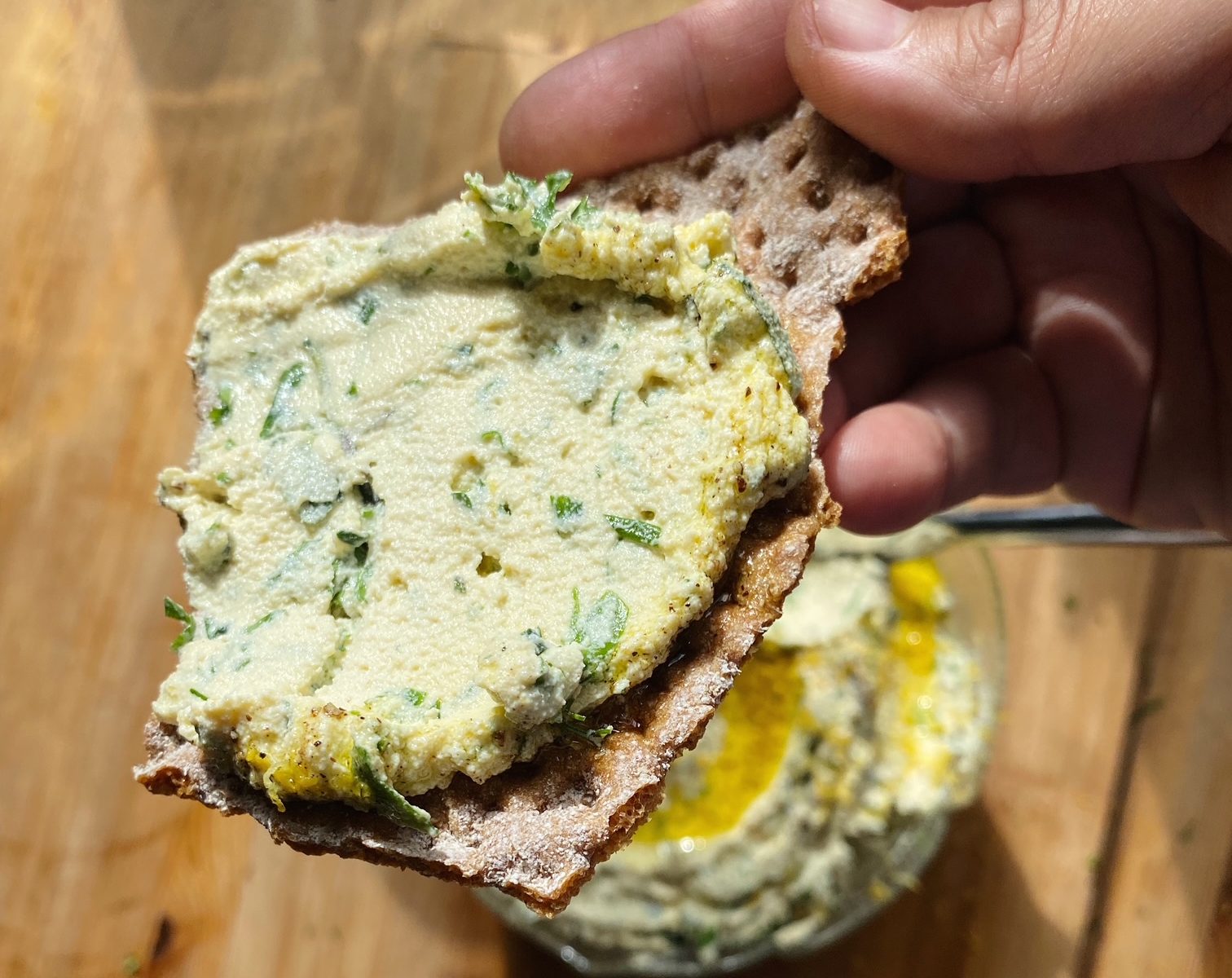
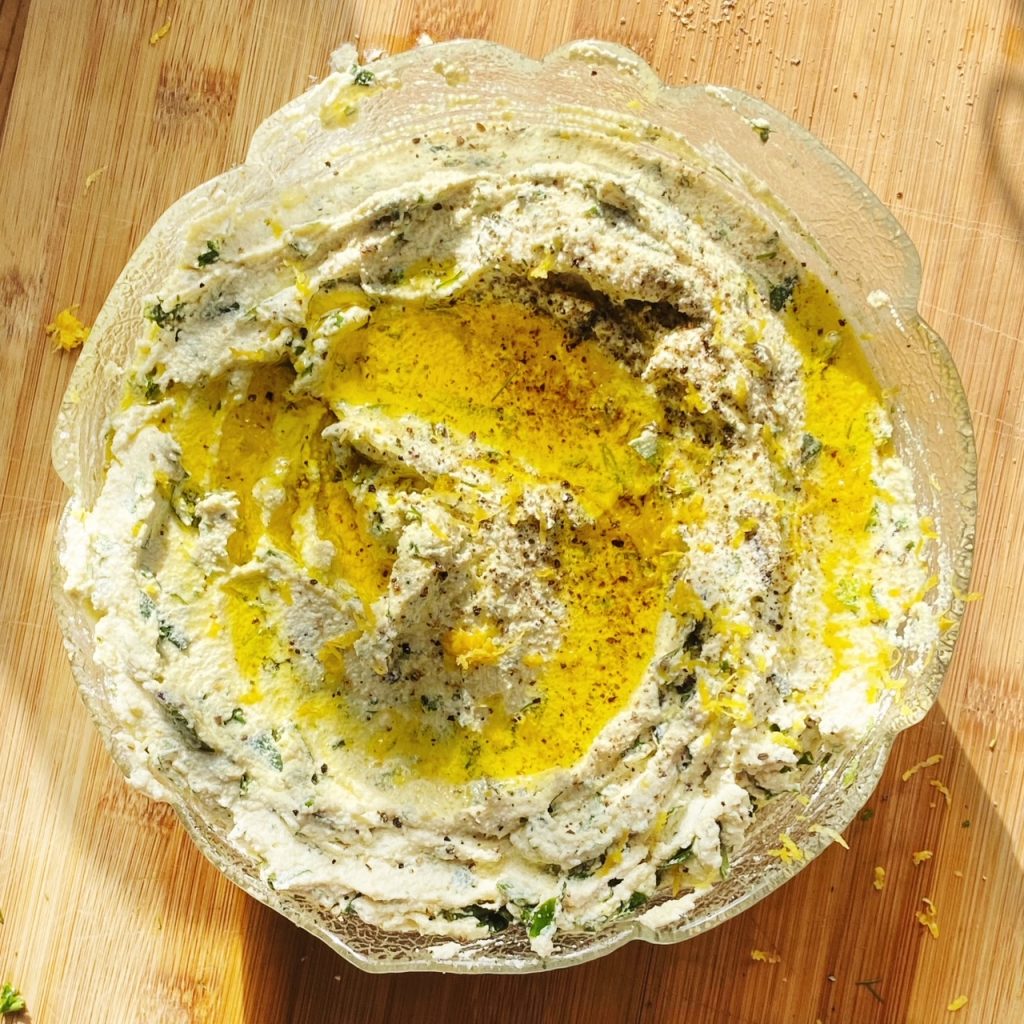
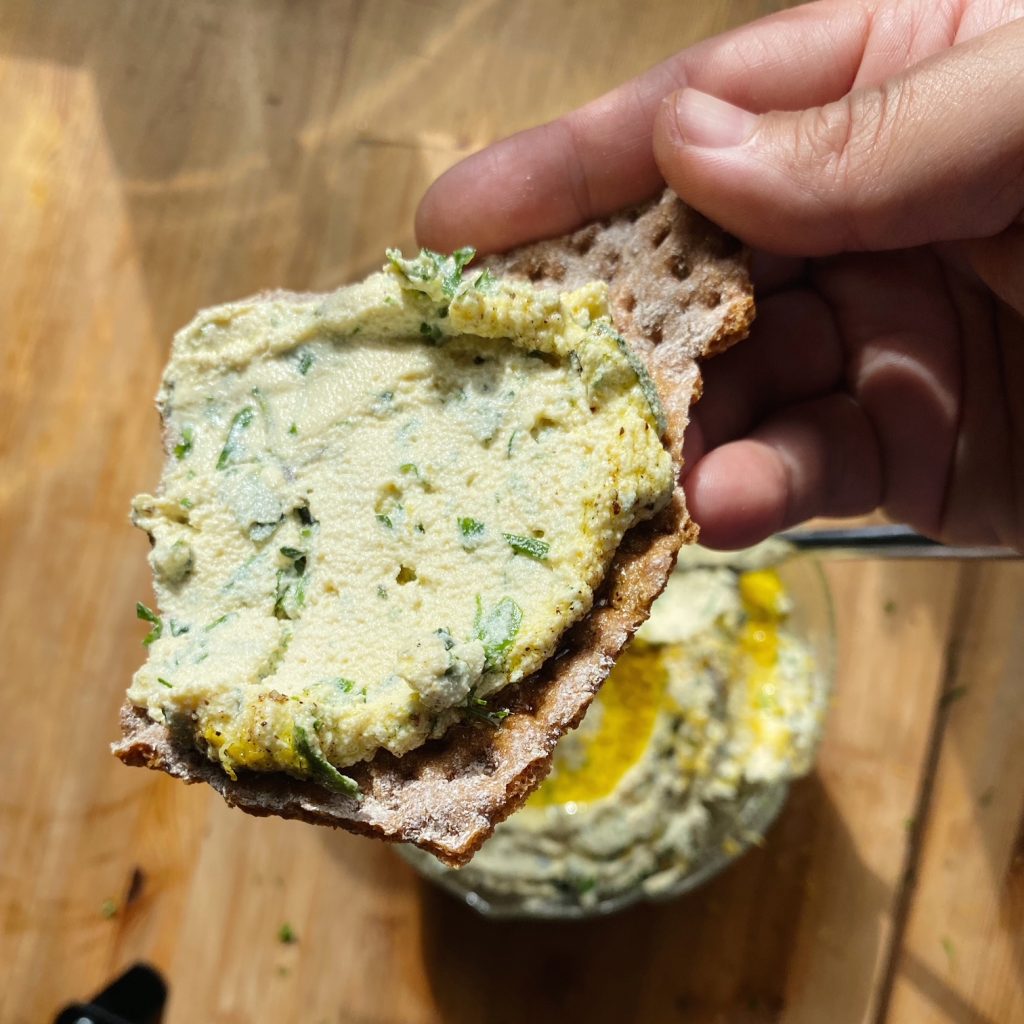
This summery, creamy, cheesey spread is such a useful one to have in your fridge. It is so delicious as a snack or starter with good bread or crackers, some crudités and an ice cold glass of white wine. It is wonderful with pasta – use it to stuff pasta shells, as a layer in a summery lasagne or simply stirred through cooked penne with some wilted spinach or chard. We also use this vegan ricotta rolled up in grilled strips of aubergine or courgette. You’ve got to try it, it’s so much more than the sum of its parts.
Liz x
Ingredients
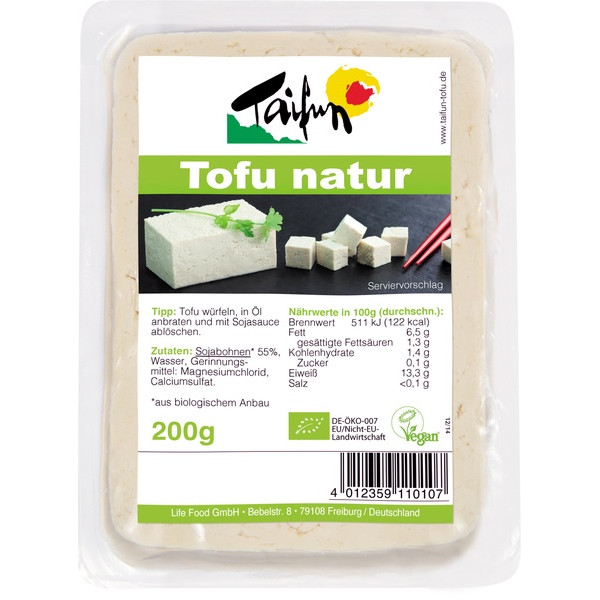
2 packs of extra firm tofu (400g)
1 tbsp garlic granules (or to taste)
the zest of a lemon
the juice of 1/2 a lemon (or more to taste)
8 tbsp extra virgin olive oil (or really good rapeseed oil)
salt and pepper to taste
fresh herbs to taste – finely chopped (I like a lot! A large handful of fresh parsley, a few springs of mint, a few sprigs of fresh oregano and thyme, a handful of chives, a handful of basil… use whatever fresh herbs you like best)
Method
Open the tofu and drain off the liquid. Crumble/tear it into a food processor. Then add the garlic, a large pinch or two of salt, a good grind of black pepper and half the oil. Squeeze in the juice of half the lemon.
Blend until smooth and creamy. Stop the blender a few times to scrape down the sides and taste the mixture. You can add more salt or lemon to your liking as you blend.
When you are happy with the texture and seasoning, transfer the mixture to a bowl. Add the zest of 1/2 the lemon, 2 tbsp of the oil and the finely chopped herbs. Stir to combine. Then dress the top of the bowl with the last of the oil, another sprinkle of lemon zest and some extra black pepper. Enjoy!
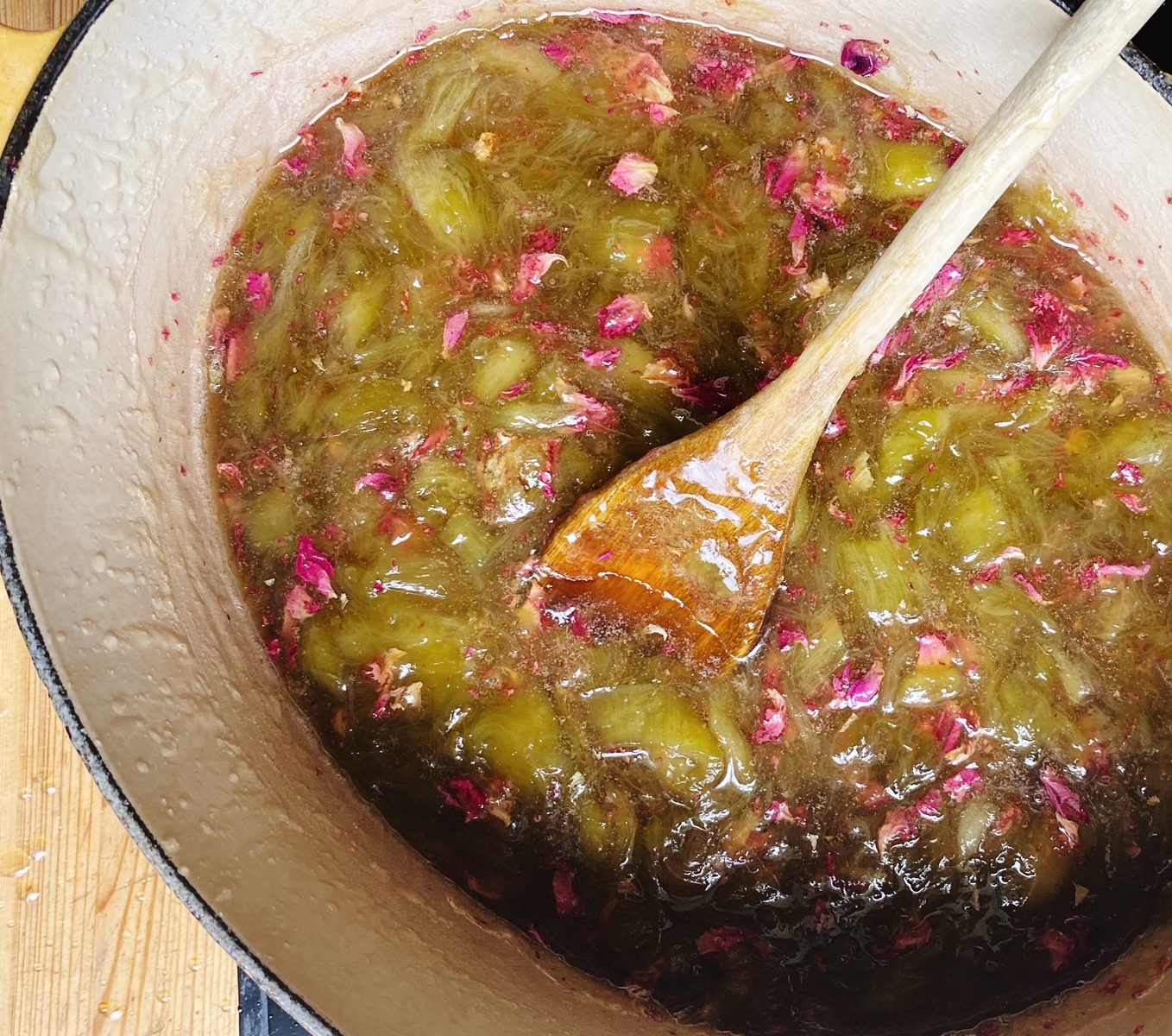
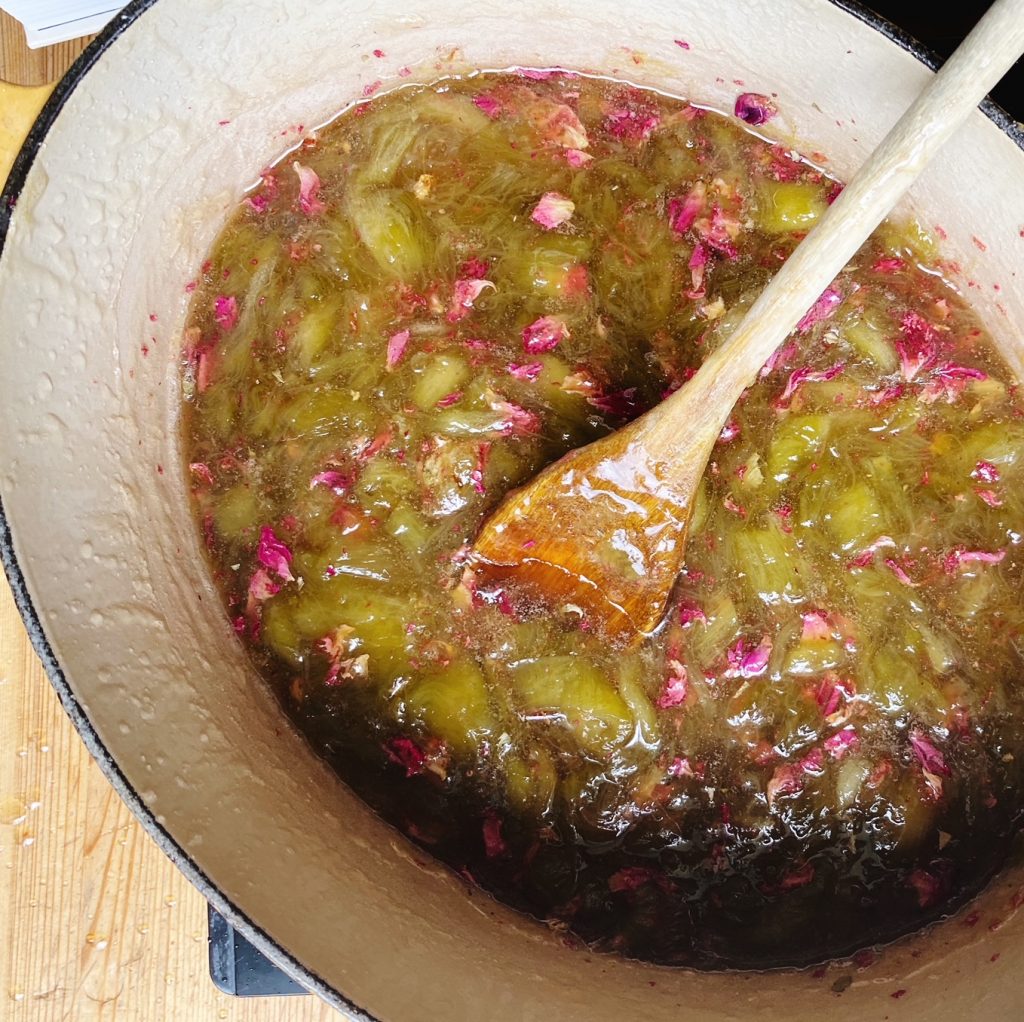
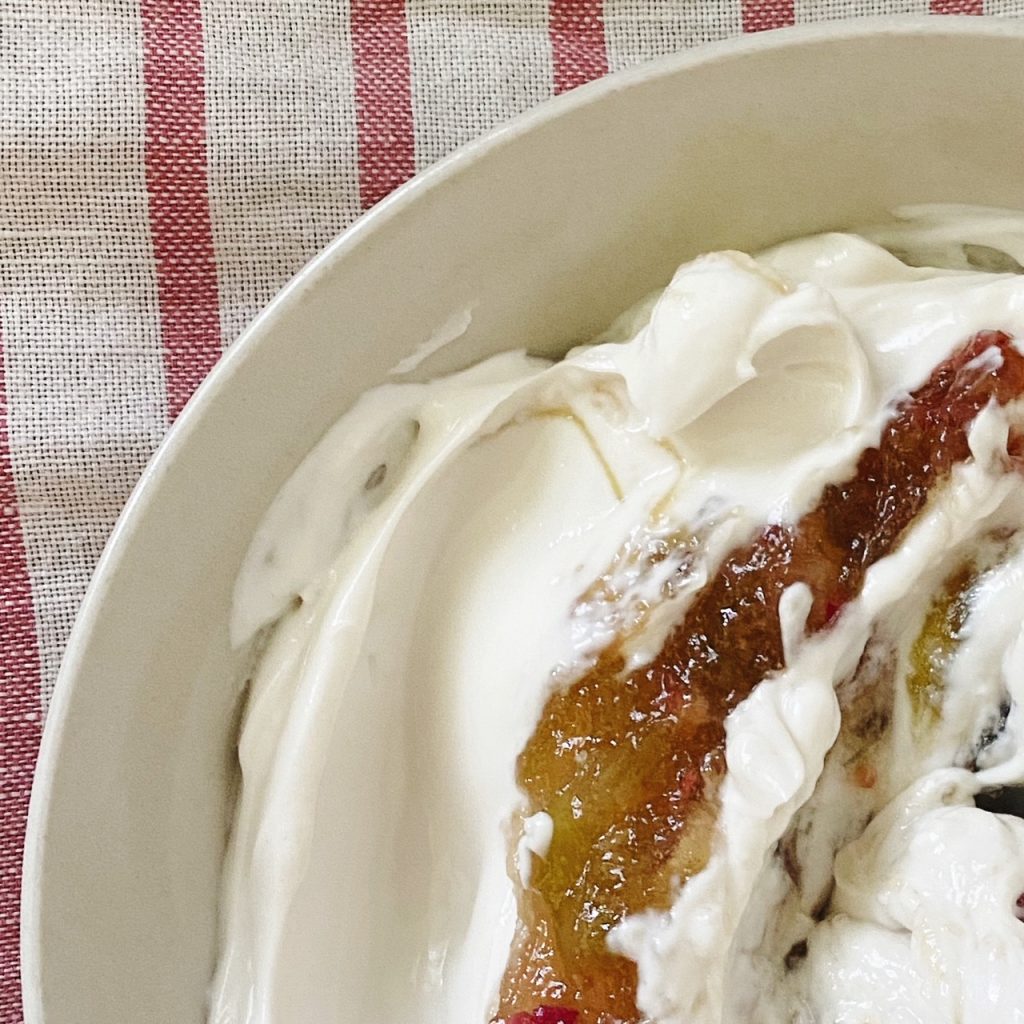
This jam is really special – tangy rhubarb meets delicate, floral rose. Did you know that all roses are edible? You can collect petals from your garden or from wild roses (just make sure they are spray free!), or buy them dried in specialist shops. The roses that smell the best, taste the best so only pick fragrant ones or you will not be able to taste them. You can use preserving sugar which already has pectin in it, or add pectin – 8g for every 1kg of sugar – to make your jam set into a lovely jelly. Serve on toast for breakfast or use in numerous puddings. Jam tarts, a layer in a cake or biscuit, add to sliced apples in a crumble… I’m sure you can think of many more uses for this delicious jam. My favourite way to eat it is swirled into a thick natural yoghurt for breakfast with a sprinkle of granola.
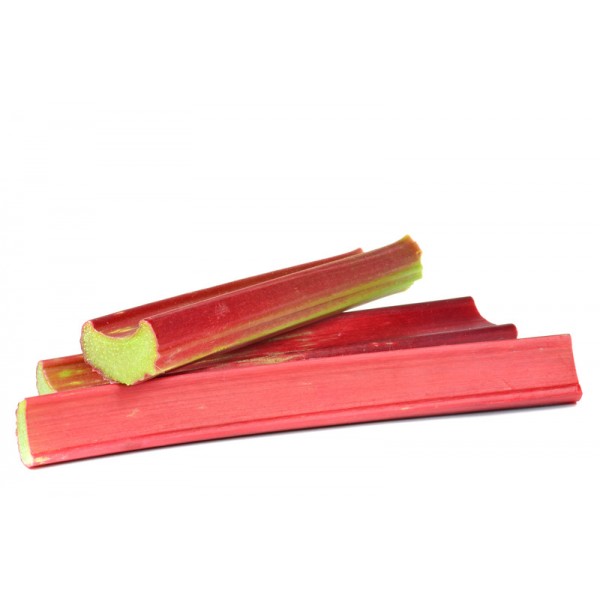
Rinse your rhubarb and slice into centimetre chunks. Place in a large, heavy bottomed pot with the sugar and pectin and stir well.
Turn the heat to medium-low and cook until the sugar is completely dissolved. Add the zest and juice of the lemon and turn the heat up to high.
Boil hard for 5 minutes and give the pot an occasional stir with a wooden spoon. Add the rose petals and continue boiling for another 5 minutes.
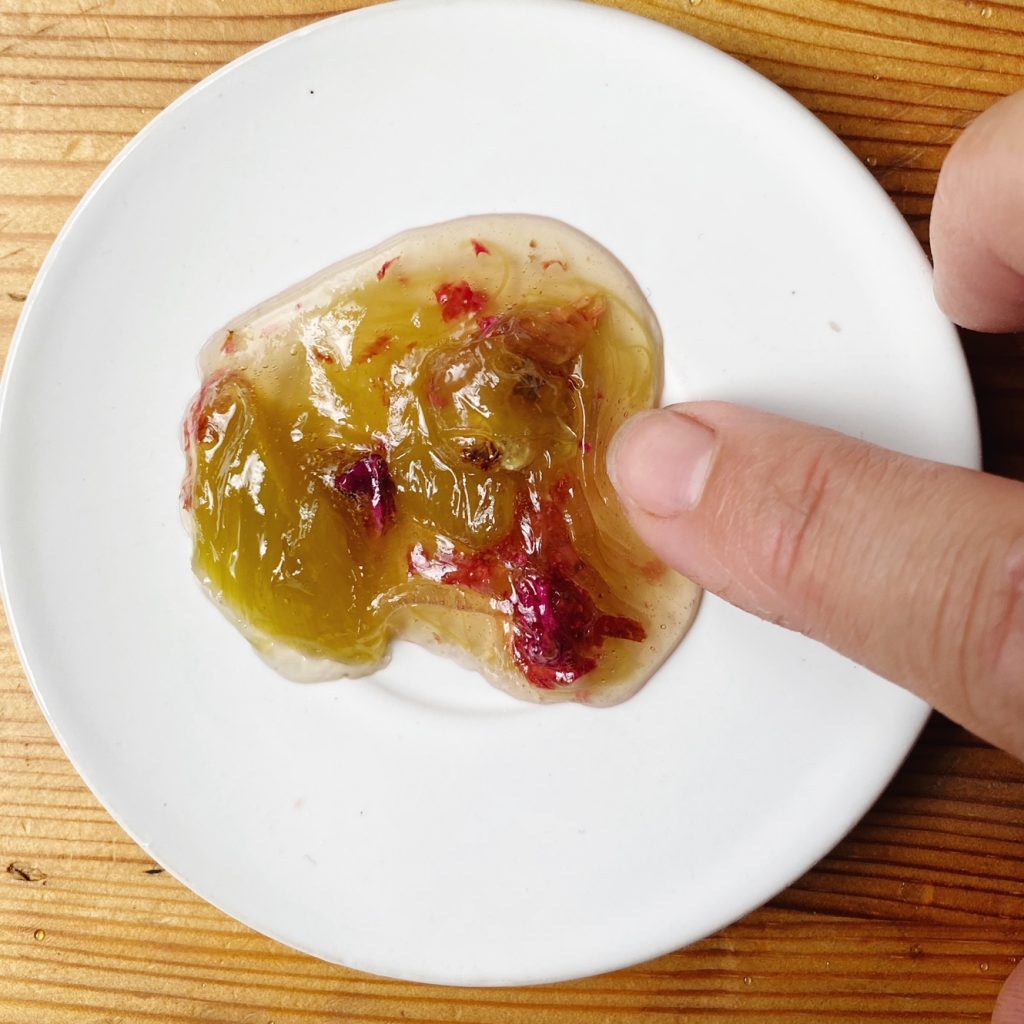
Your jam should be set now but you can test it by adding a teaspoon to the chilled plate you put in the freezer earlier. After a minute the jam should be cool. Drag your finger through it and if it wrinkles it is set, if not, boil for another few minutes and test again. Repeat until the jam is set, then turn off the heat.
Spoon the jam into sterilised jars and pop the lids on while it is still hot. They should keep at room temperature this way for 6 months in a cool, dark place (if your jars and lids were properly sterilised, filled and sealed whilst hot), but as soon as you open the jar, store it in the fridge and use within 3 months.
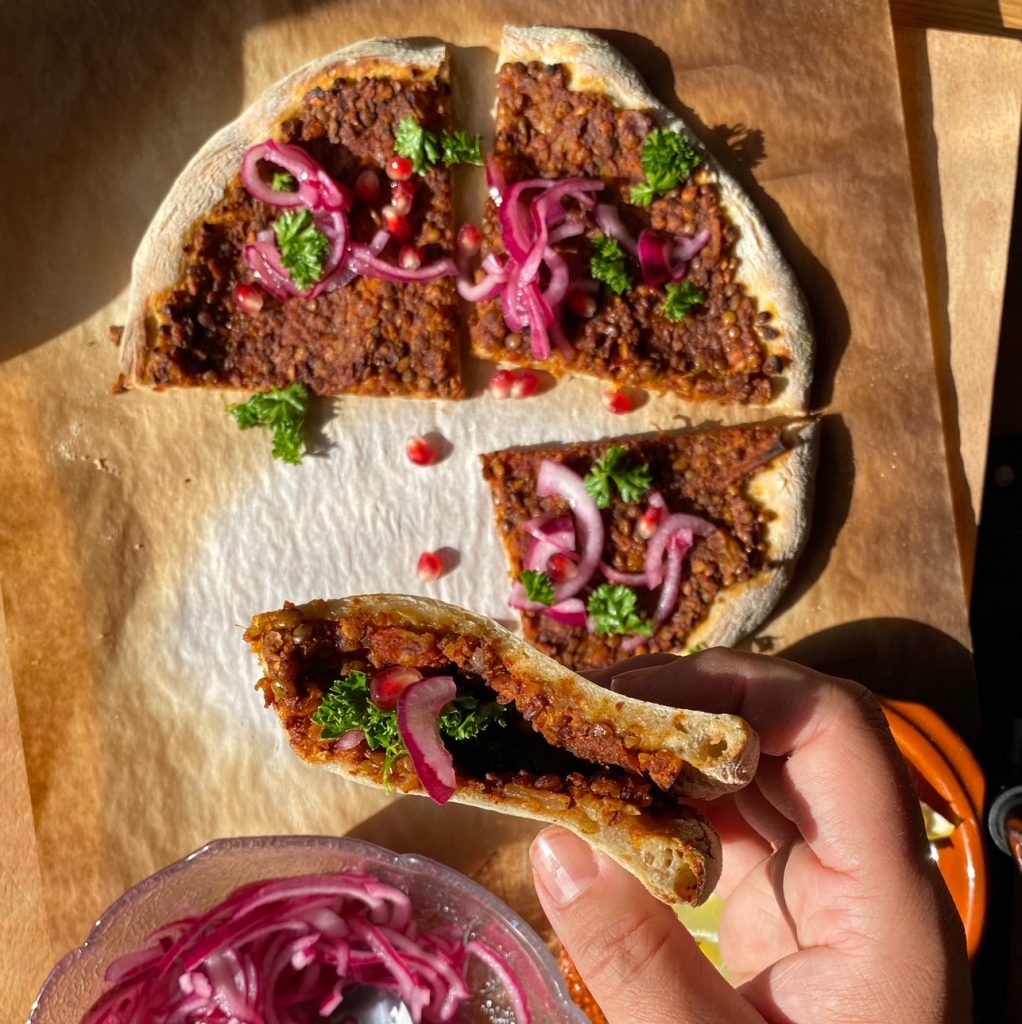
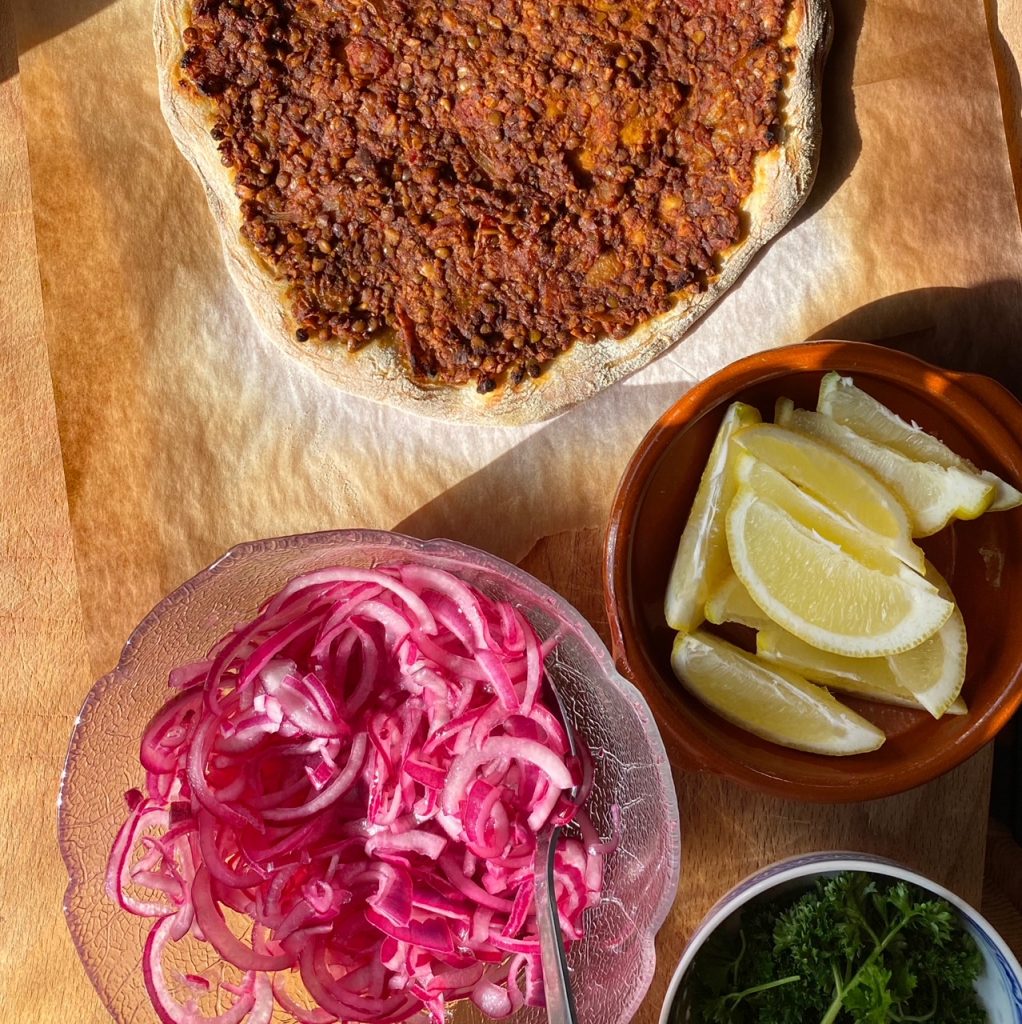
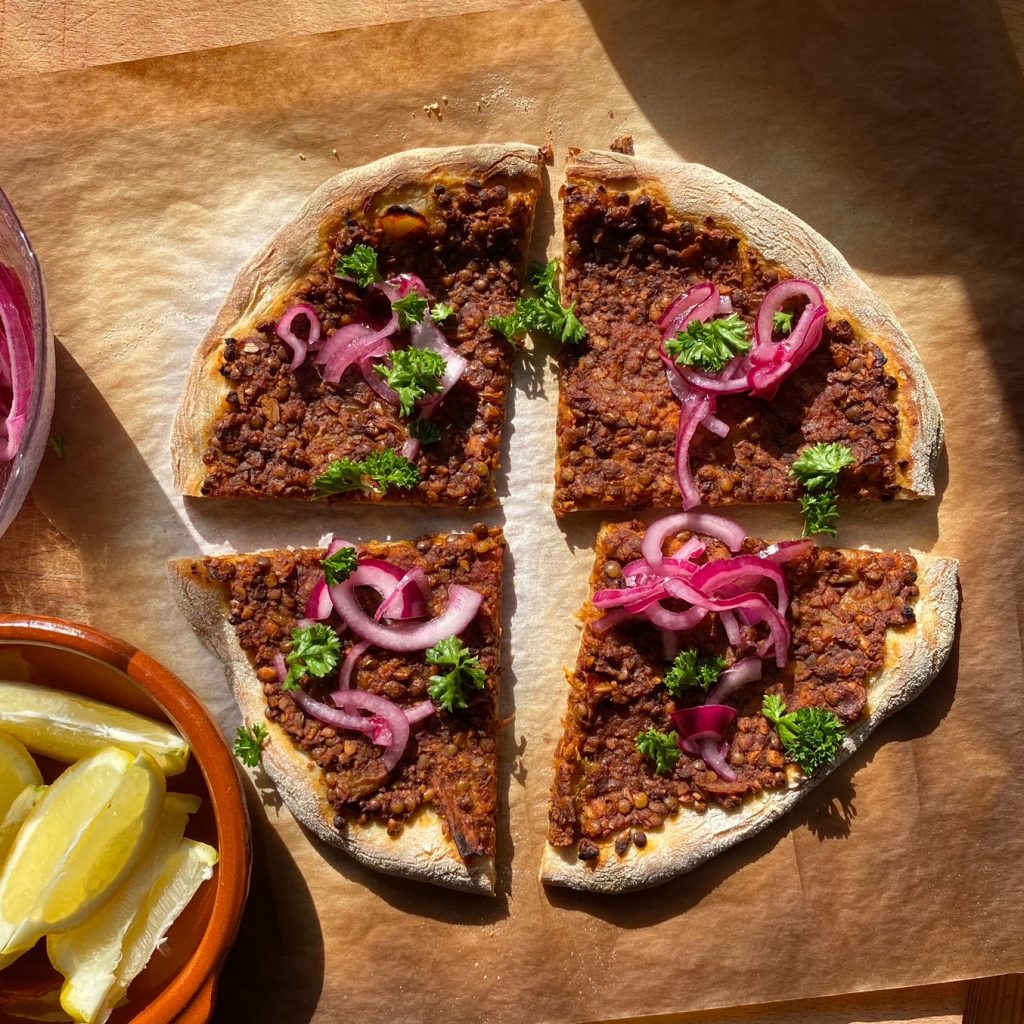
We love this spiced alternative to pizza. You won’t miss the Italian style cheese and oregano, this Middle Eastern style ‘pizza’ is a totally different beast. It’s essentially a pizza topped with a delicately spiced mince mixture (we use nuts and lentils to make a delicious vegan version) which is baked then eaten with a squeeze of lemon, a sprinkle of fresh parsley and some quick pickled pink onions. It’s the perfect summer party food with salads.
Grab all the organic ingredients from our online shop here. We deliver nationwide and are excited to announce we have been able to reduce our delivery charges with our new electric delivery van couriers, Green Way!
Liz x
Ingredients (serves 4)
For the quick pickled onions:
2 red onions
2 tbsp vinegar or lemon juice
a large pinch of salt
a large pinch of sugar
For the mince:
1 white onion, diced
4 cloves of garlic, sliced
2 tbsp olive oil
1 tbsp smoked paprika
1 tbsp ground cumin
1 tsp ground ginger
1 tsp cinnamon
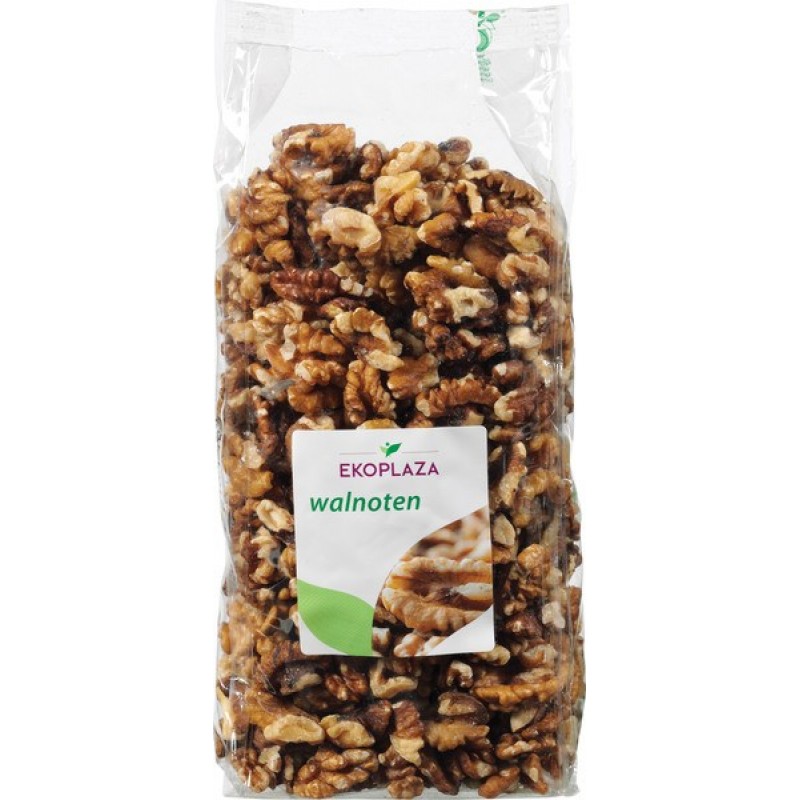
2 large handfuls of walnuts, crushed/finely chopped (or a mix of any nuts or seeds you like)
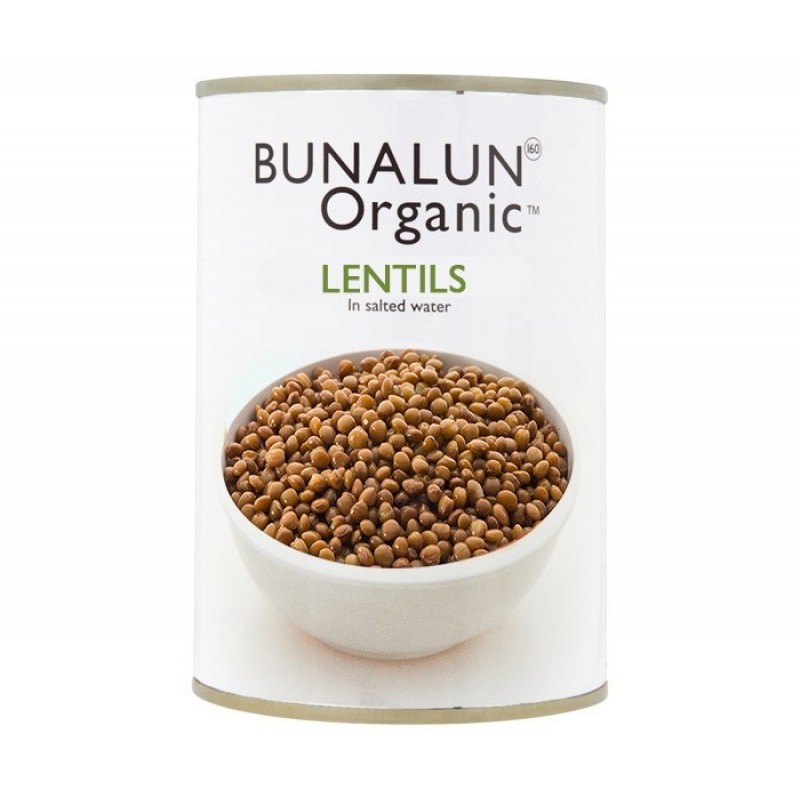
2 tins of cooked green lentils, drained (or a mug of uncooked lentils – see method)
If you are making your own pizza dough, do that first, otherwise you can use ready made bases or even large flatbreads.
Make the quick pickled red onions before you start on the mince to give them time to turn a gorgeous shocking pink colour. It’s easy! Just finely slice the onions and place in a bowl. Sprinkle with a big pinch of salt and sugar then stir in the vinegar or lemon juice. Let it sit at room temperature to one side while you make the mince and bake the pizzas. Give it another stir every now and then to ensure the ingredients are mingling nicely and marvel as the purple onions soften and turn bright pink.
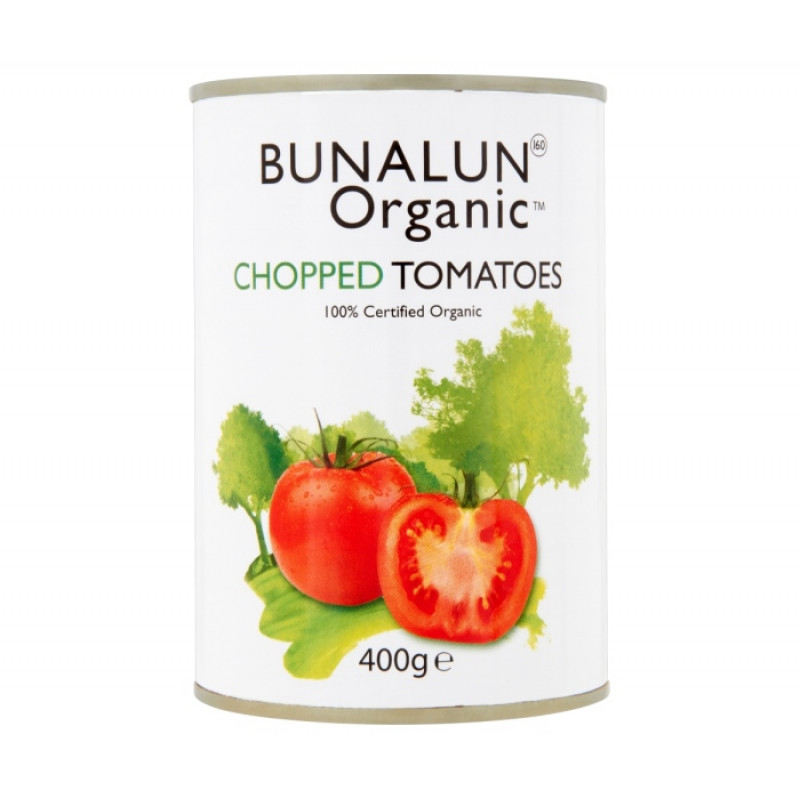
In a heavy bottomed sauce pan, sauté the diced onion with the olive oil until it softens and starts to colour. Add the garlic and spices and stir until fragrant. Then add the chopped nuts, lentils and tomatoes (if you are using uncooked lentils, add 2 mugs of water to the mixture too). Then season to taste with salt and pepper and simmer until the mixture is rich and thick. You may need to add a splash of water every now and then to get the texture right. Simmer for 10 minutes if you are using cooked lentils, and about 20 minutes for uncooked (or until the lentils are cooked through). Taste and tweak the seasoning if needed with more salt or pepper.
Pre-heat the oven to the highest temperature to imitate a pizza oven. Then shape your pizza dough and spread with a thin layer of the mince mixture. Bake until cooked to your liking then serve in slices .
Each slice should be topped with tangy onions, fresh parsley and a good squeeze of lemon. I like to add a sprinkle of pomegranate seeds too and devour with a fresh cucumber and tomato salad. Enjoy!
I hope the week has been good to you. It has been busy here on the farm and a strange week too. Life can be frantic, just this week I was reminded by the fact we are all on a clock, we all have a certain amount of time and that time is short. I was determined not to let this reminder slip, not to let this wake-up call fade away, but it does, life has a habit of coming in at full tilt and disrupting best laid plans.
The determination to savour every moment can at times be a little unrealistic and must I think, be coupled with a dose of realism. There is a need of course to be present (as best we can) to all that is going on around us. But in my experience it can be difficult to maintain a measured approach all the time, and the little annoyances of life can all too soon be elevated quite quickly into full blown emergencies! (Such as Marley our still young puppy coming in covered and muck and jumping up on the sofa which she knows she is not allowed on!) But coming back to ground zero and starting again over and over is I think what it is all about.
This week there was intense the pressure of change on so many different fronts and it made it difficult to maintain a focused outlook. Running through sticky jam (or mud!) is sometimes how it feels, expending loads of energy and feeling like you are going backwards.It can be frustrating but maybe that’s life telling us to let go, ease up, go with the flow, and stop falling into the same hole in the road over and over! At least I know the hole is there now. That’s where little moments like the one in the picture with Molly (my dog sadly no longer with us) are so important.
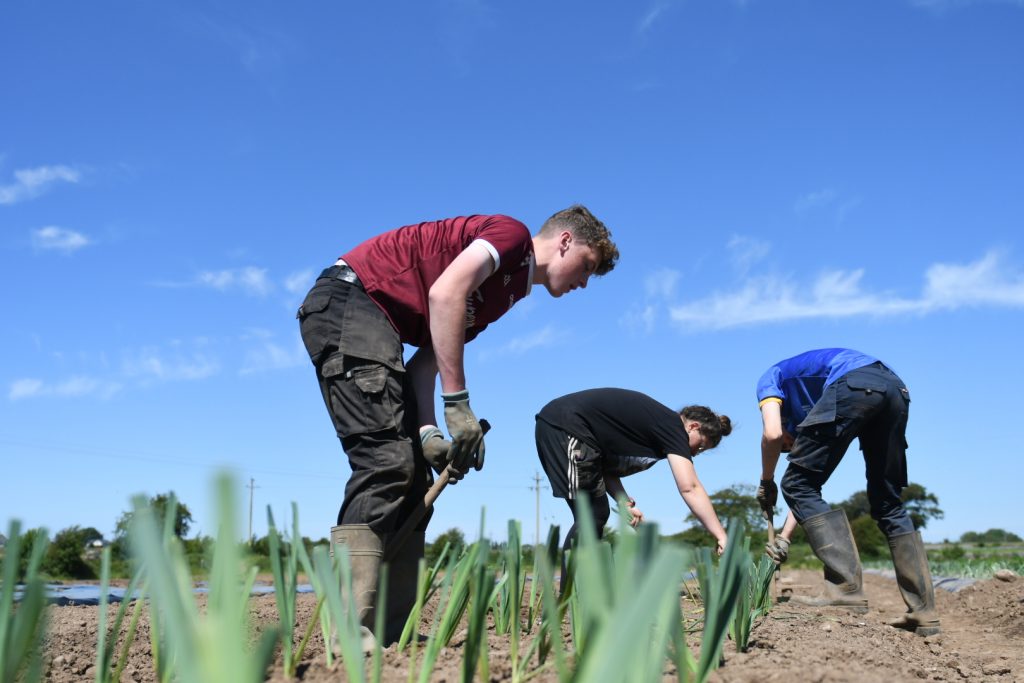
We are busy, very busy, we are planting leeks by hand, we are harvesting, we are weeding, and we are transplanting. It is that cross over time of the year, when the planting is not completely done, the weeding is bearing down on top of us and thankfully the harvest is kicking in full throttle. Just last night we got the final sowing of 6 different types of clover and wild flowers into the ground at 10.45 pm just before the rain came, that is timing for you.
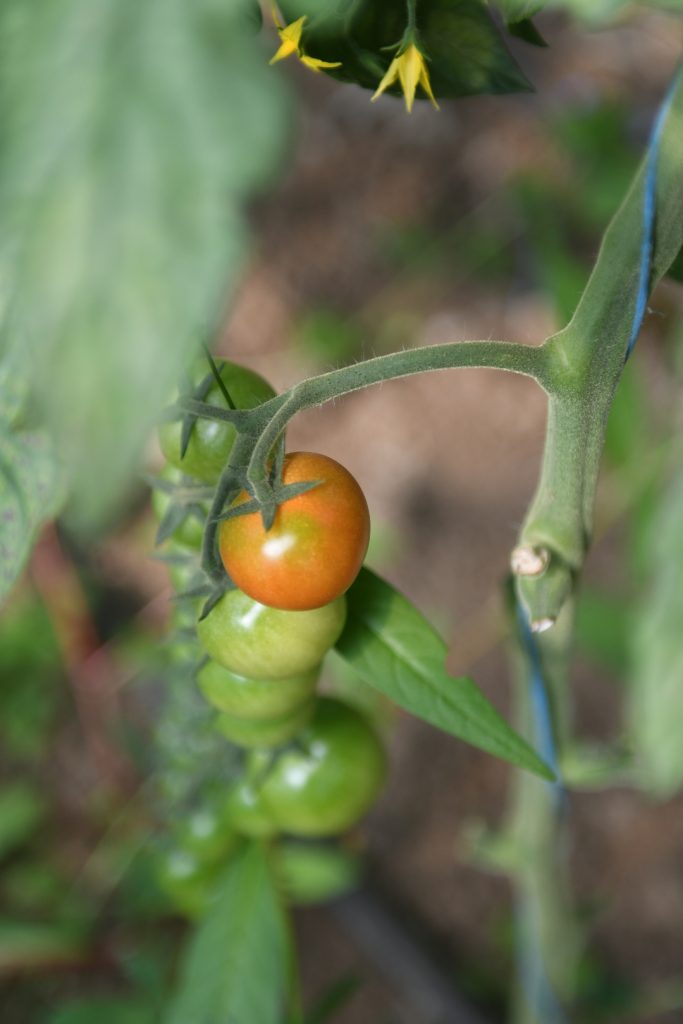
Our first tomatoes are nearly ready and Ella (the younger of my two daughters) has been coming in with full bowls of nearly ripe tomatoes, I hope there will be some left for you guys! Soon very soon we will have plenty for everybody.
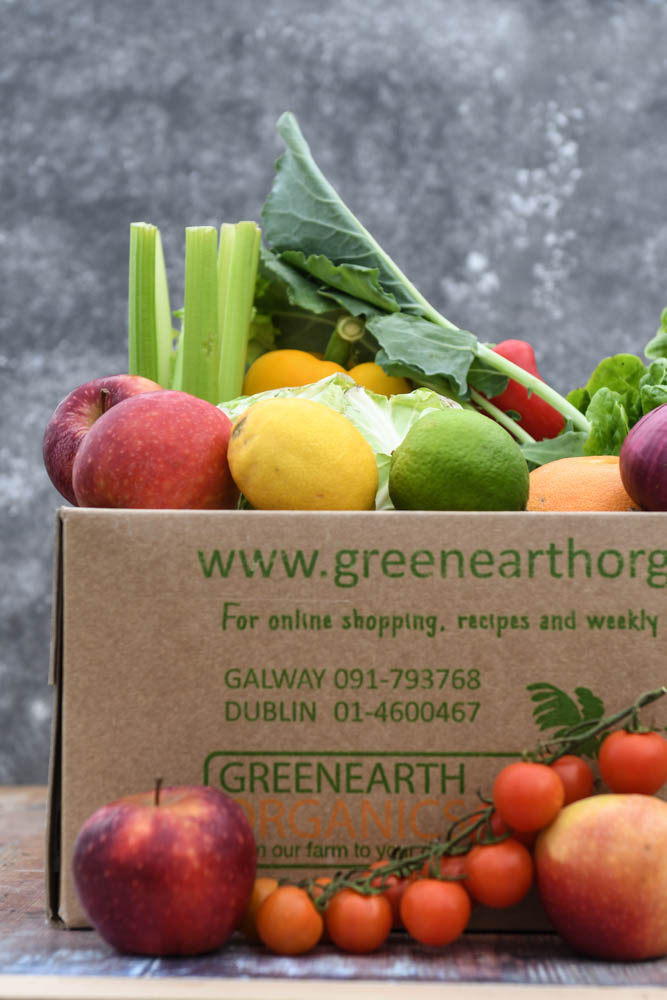
Philosophical ramblings aside, the fields are proving very bountiful now. So, we wanted to say a massive thank you to all of you good people who have been supporting our efforts to protect our planet through growing food by increasing the value in our set boxes. We have made an exceptional effort from next week to give more in all our boxes, to make sustainable food more accessible to everyone, to make our boxes even better value.
You will notice the difference; we have added extra farm produce to all our fixed boxes from next week and they will be overflowing with produce. When everything else is going up we have effectively decided to bring the price of our boxes down by giving you more produce for your money.
Not only that but we have some amazing news, nothing short of sensational news for all our customers who are getting boxes delivered to every corner of Ireland by courier, we are so excited about this one! We have managed to reduce our courier delivery charge to €4.50 by moving from DPD to Greenway, an electric van fleet! So not only will your delivery charges go down, but they will be emission free! AND we can now accept back the courier boxes too, not just our local routes boxes. They can only be accepted back by Greenway if they are neatly flattened so please do flatten and leave them out when you expect your next delivery.
Thanks for your support, please spread the word about our better value and better deliveries to your friends and family all over Ireland.