This vibrant noodle soup is packed with fresh, nutrient-rich, seasonal vegetables such as mushrooms, courgette, and purple sprouting broccoli, all simmered in a light, flavourful stock. Once all the vegetables are prepared, this dish comes together in minutes, making it the perfect meal for busy weeknights or cosy weekends.
Heat the oil in a large saucepan, over a medium heat. Add the mushrooms, onion and courgette. Add the chilli flakes and season with a little salt and pepper. Stir to combine and cook for 3-4 minutes, until the vegetables are beginning to soften.
Stir through the garlic. Add the stock, ketjap manis, noodles and broccoli. Cover with a lid and simmer gently for 10 minutes.
Take from the heat and stir through the scallions. Serve straight away, topped with fresh chilli, scallion, and some sesame seeds.
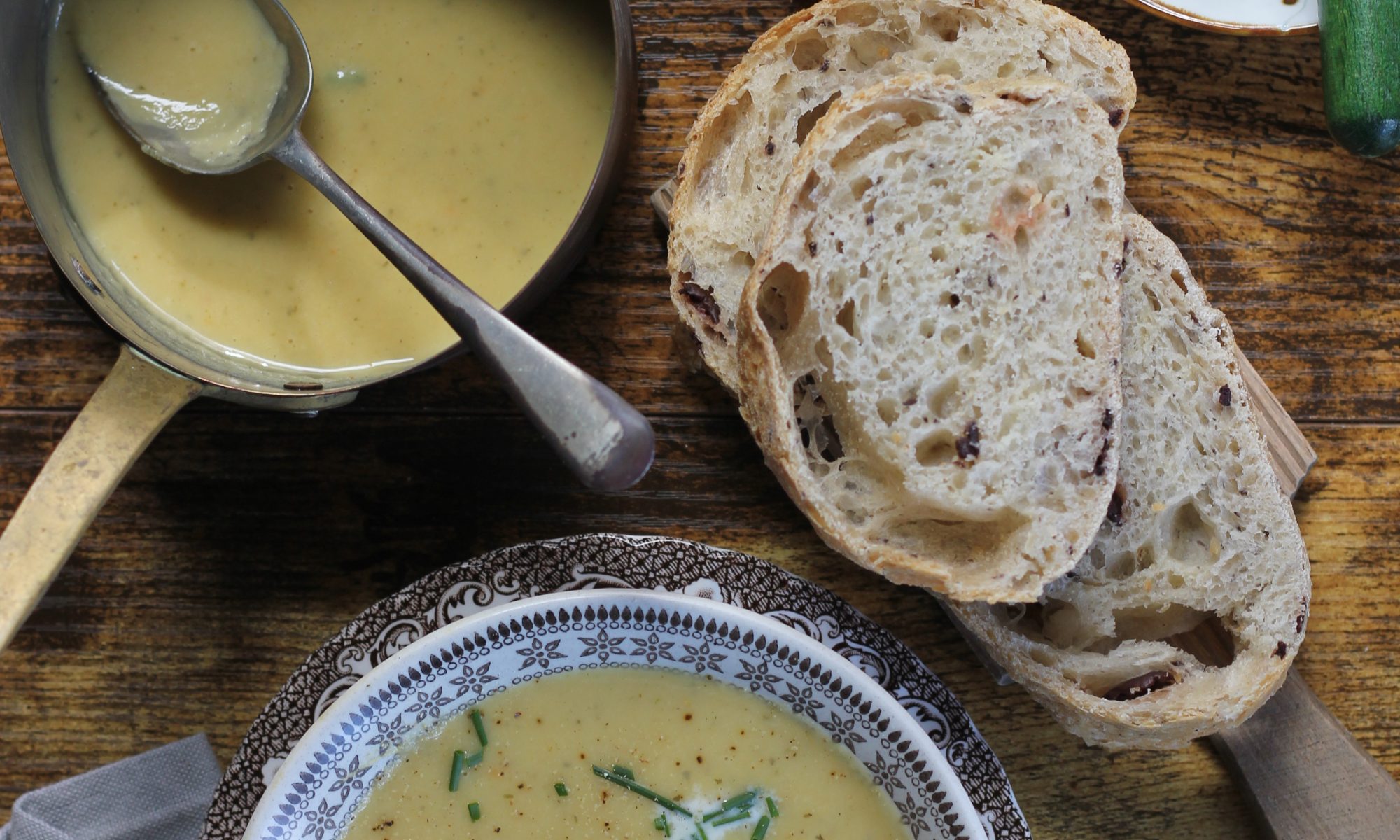
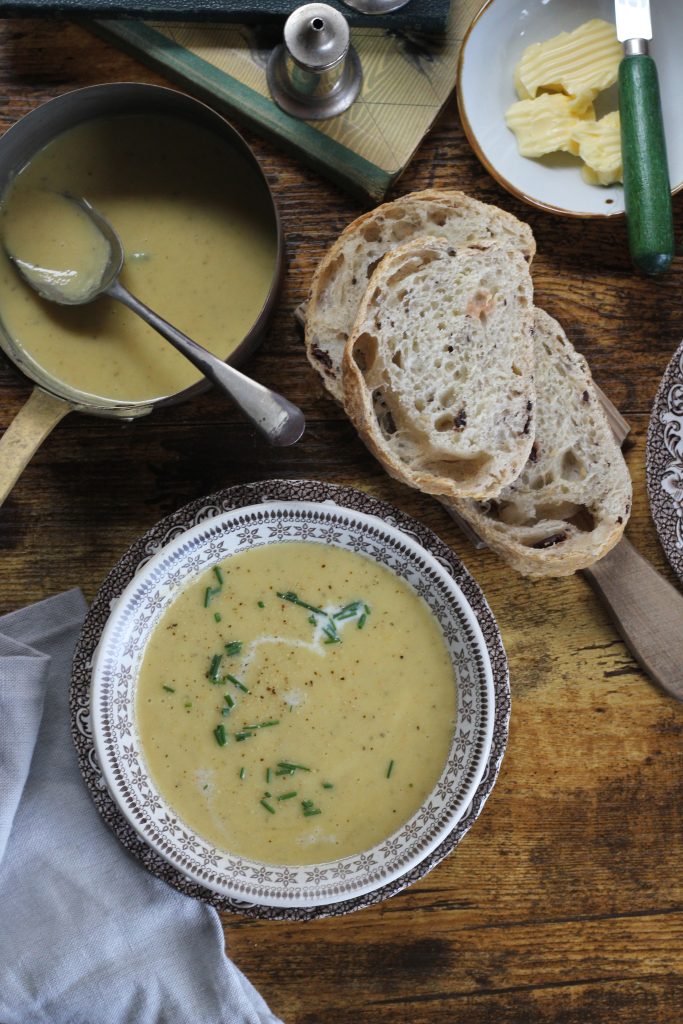
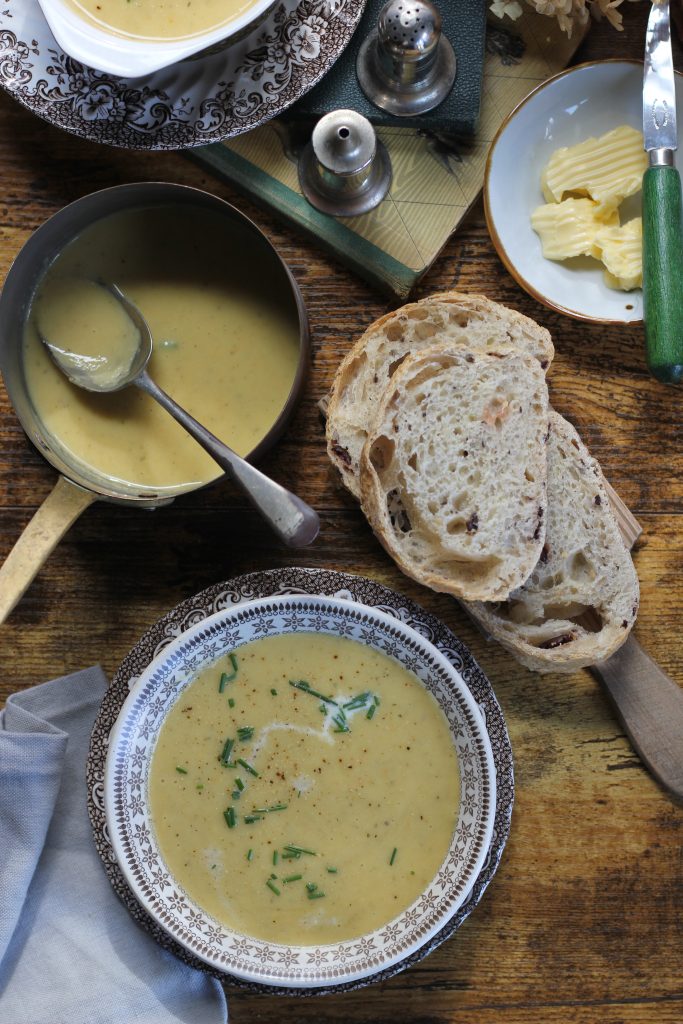
With the weather turning colder and the evenings drawing in, there’s nothing more comforting than a bowl of hot, homemade soup. I’m using freshly harvested parsnips from the farm which are sweet, earthy, and at their peak right now. Both parsnips and apples are in season here in Ireland, making this the perfect time to bring them together in a warming, autumnal dish. The gentle heat of curry spices pairs perfectly with the natural sweetness of the parsnips and apples, creating a soup that’s both nourishing and full of flavour.
Melt the butter in a large saucepan over a low heat. When it begins to foam add the parsnip, onion, apple, and garlic. Season with a little salt and a few grinds of pepper. Stir to combine with the butter.
Place a butter wrapper or a piece of greaseproof paper over the vegetables, to help them sweat. Cover with the lid of the saucepan. Sweat over a low heat for about 10 minutes, making sure the vegetables don’t stick to the bottom of the saucepan.
When the vegetables are soft but not coloured, stir through the curry powder, and add the stock. Turn up the heat a little and continue to cook for another 15 minutes or until the vegetables are soft.
Add the cream and using a hand blender or a food processor purée the soup until it is smooth. Taste and season, if necessary.
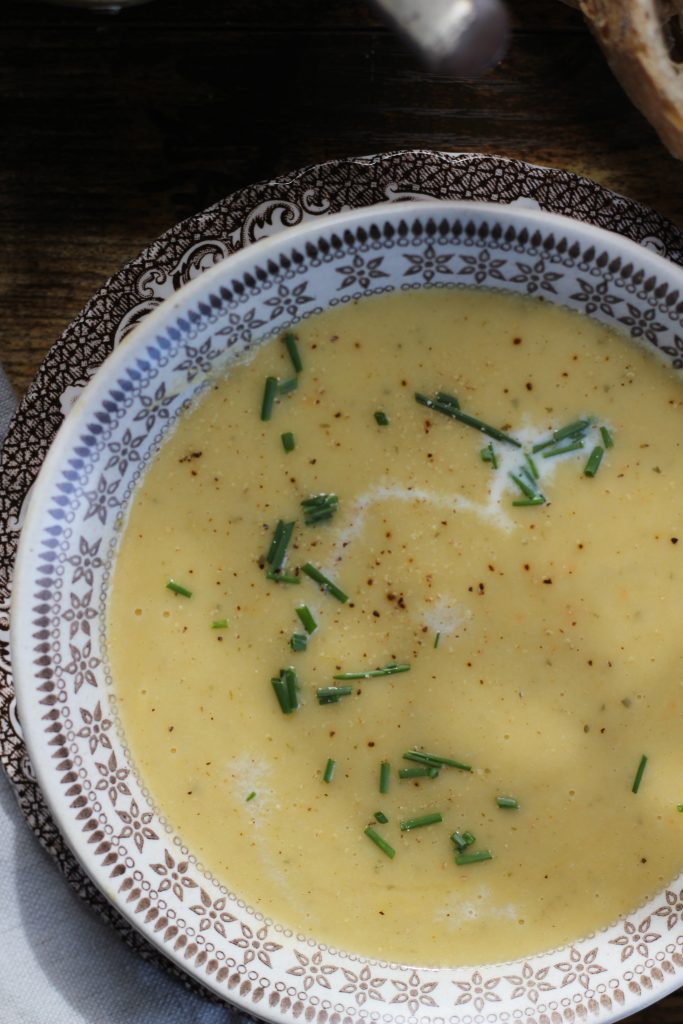
Pour the soup into serving bowls and garnish with a little drizzle of cream and some finely chopped chives.
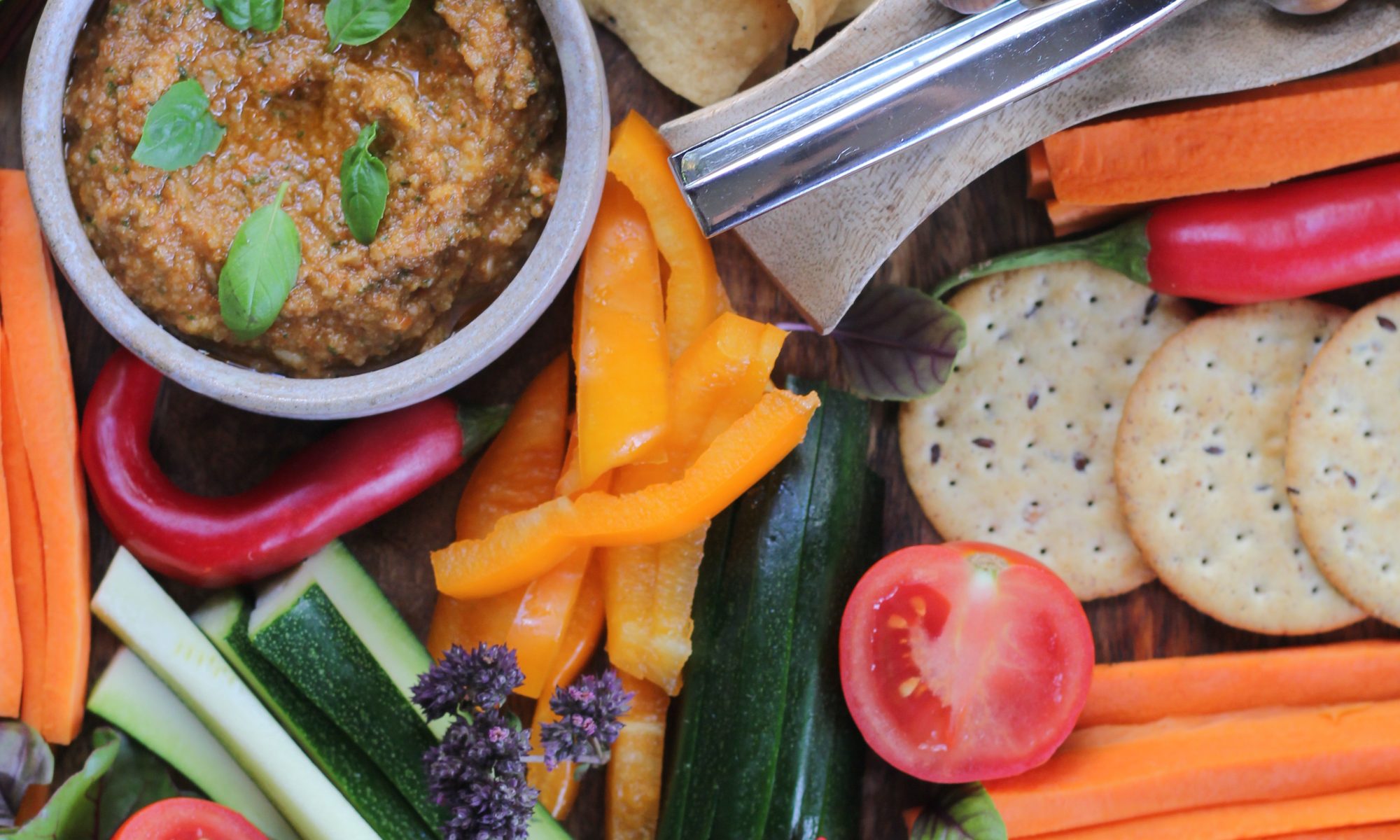
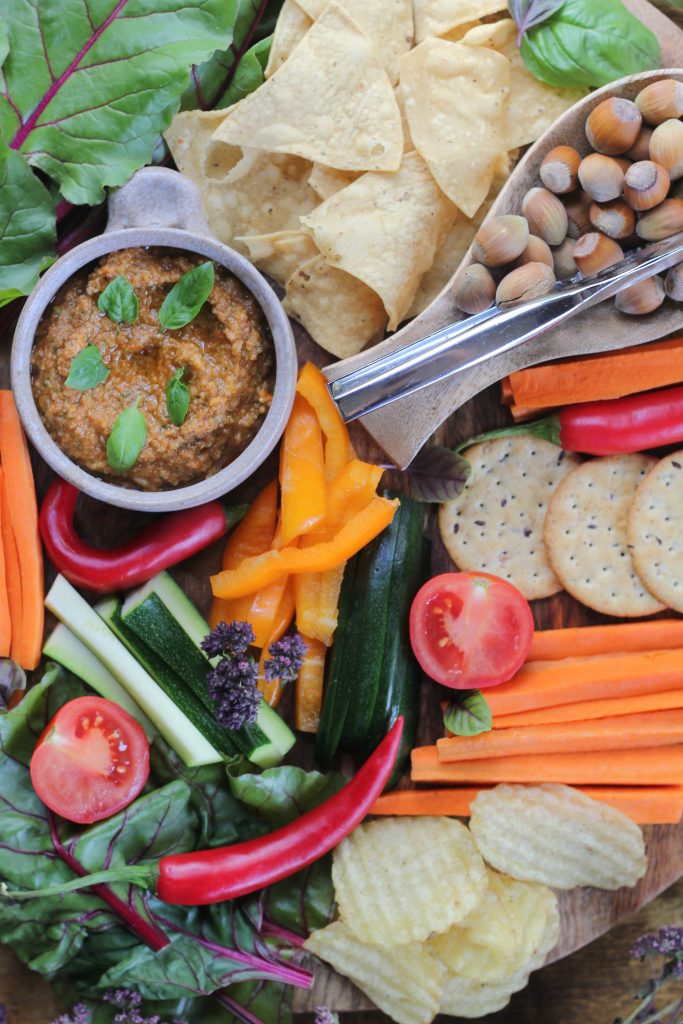
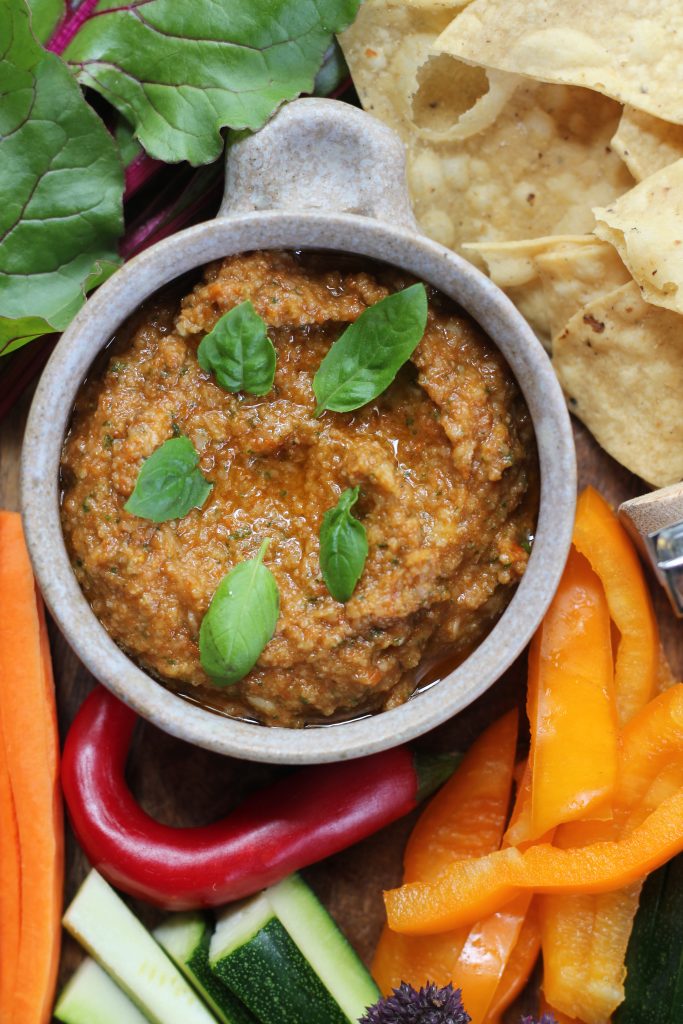
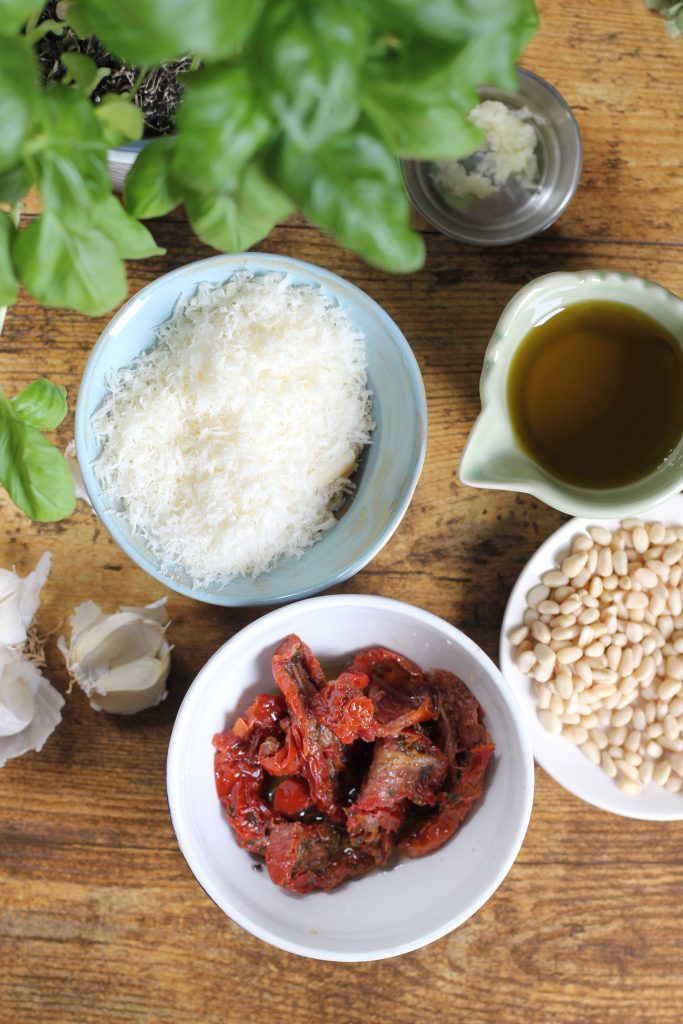
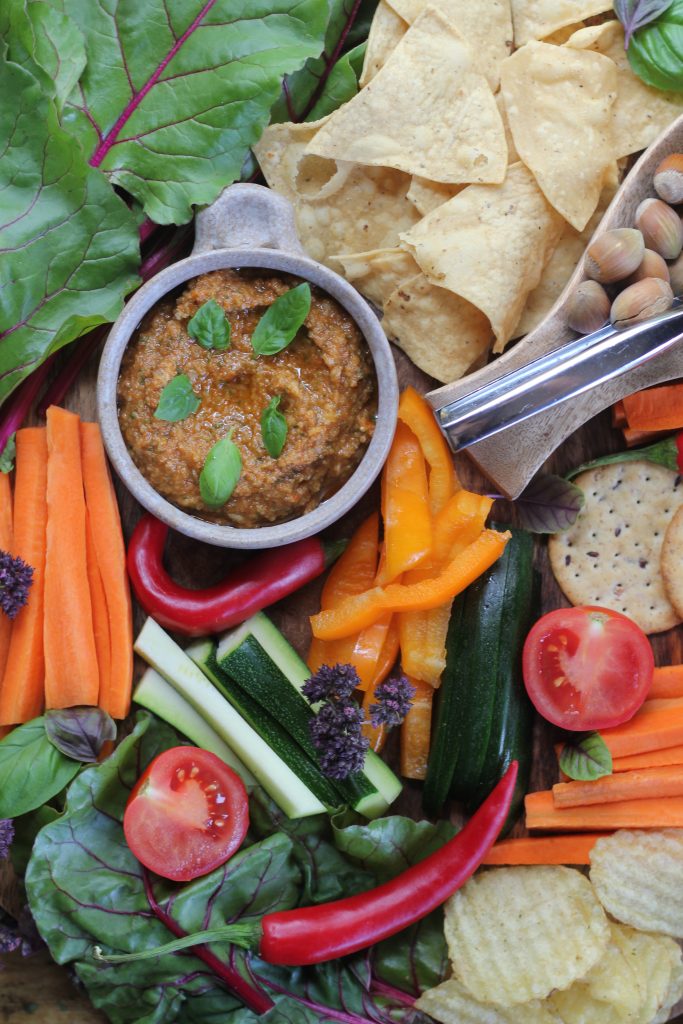
At last week’s farm walk, I set-up a beautiful display in the middle of the farm shop, using the best of fresh produce. Tucked in-between the prepared fruit and vegetables, I included a tray of mini energy balls, and some scrumptious dips. This sun-dried tomato pesto was by far the most requested recipe, and for good reason. It’s rich and flavoursome, and makes for the perfect accompaniment to crudites, but it can also be served with pasta, roasted vegetables, or as a delicious sandwich filler.
To ensure this dish is as tasty as possible, use a good quality jar of sun-dried tomatoes. Some tend to be quite salty and will ruin the overall taste of the pesto. Also, organic garlic will always taste superior too, so seek it out when you can.
We have been harvesting our own lovely bunched fresh organic carrots for a few weeks now and this week we received the first delivery of beautiful organic carrots from Philip Dreaper in Coolnagrower in Offaly just outside Birr.
In the next couple of weeks, we are due our farm organic inspection. This is an inspection we pay for to prove that we are carrying out our farming and business in accordance with organic principles. One key law of course is that we must never use synthetic chemicals. We must be certified organic by law to call our produce ‘organic’.
We would never use toxic pesticides or herbicides anyway, as farming without chemicals is why I started the farm.
But the question is why do we need to prove we are organic? Why isn’t the responsibility on conventional food producer to label the pesticides used in growing certain crops? (don’t get me wrong organic certification is definitely necessary in the world we live in today)
Back in my grandad’s day, there were only ‘carrots’ and all carrots were organic. They just were, because no synthetic chemicals or fertiliser was used in growing them.There were no sprays, no synthetic pesticides, herbicides or fungicides, nothing. That is exactly how we grow them today, we sow seed, and we cover the crop with netting and then we harvest end of story, no spraying at all.
These synthetic pesticides are labelled… “plant protection products” sounds so much better than “pesticide” don’t you think? Making these toxic chemicals sound more benign, even good for the planet and our health. It sounds like spraying these chemicals is doing us all a favour including all the bees and biodiversity the application of these “PPPs” is doing something good for the world in using them. This couldn’t of course be further from the truth, they are hurting our health and destroying biodiversity. In addition did you know it is mostly the manufacturers that produce the safety related data for the chemicals they sell, a conflict of interest there? I would say so. So if your supermarket label listed the following on your conventional carrots, would you still buy them?
Or would you choose organic carrots where the label would say:Ingredients: contains “Organic Carrots”
I know which one I would choose.
As we supply directly to you our customers, it is only through your continued support that we can continue to produce healthy food and spread the message that our food choices can literally change the world.
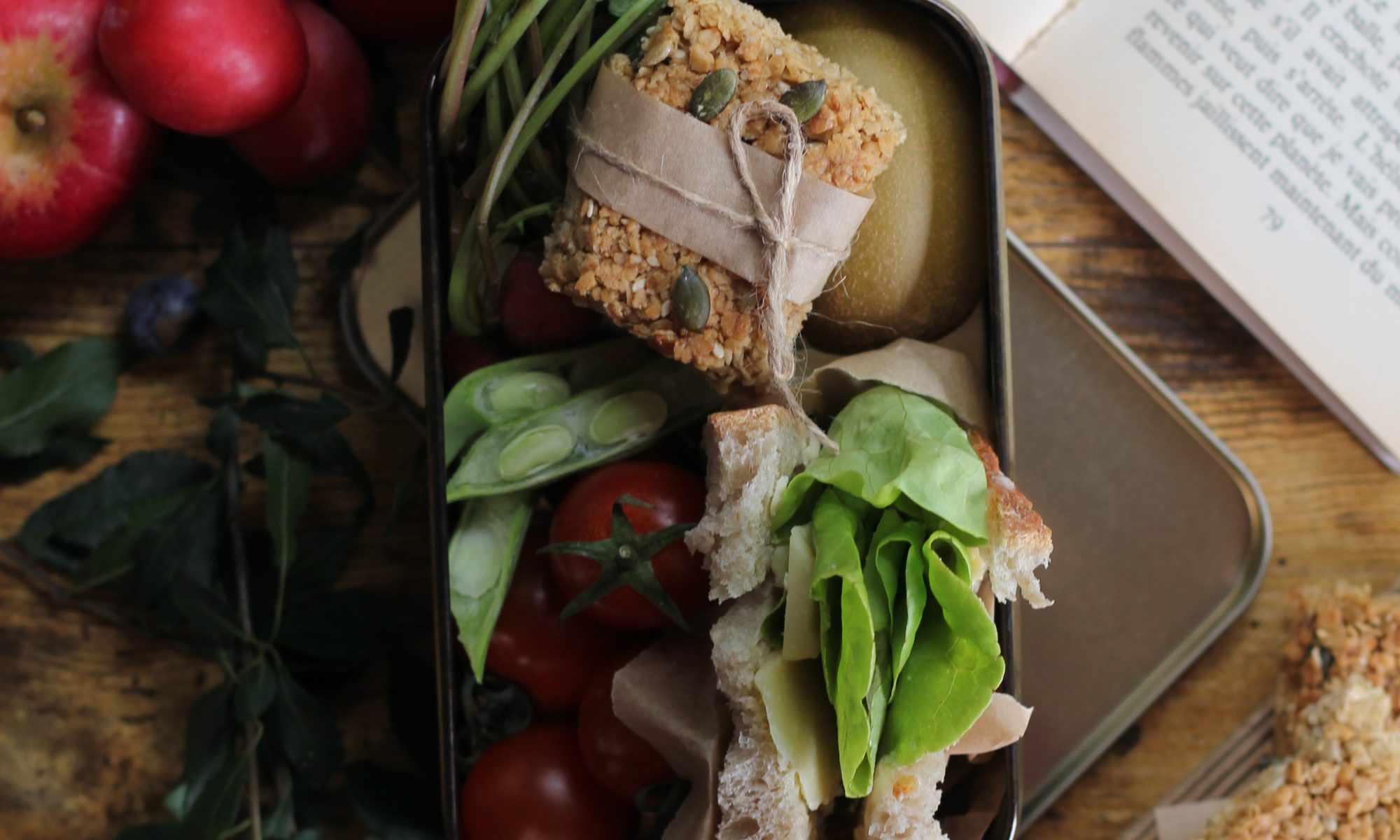
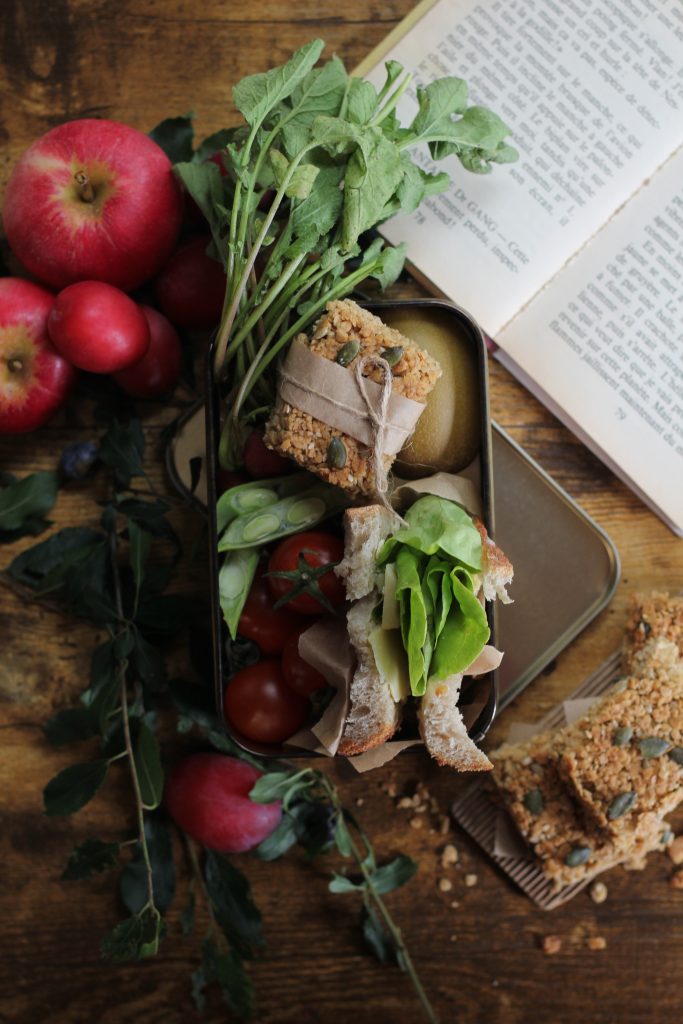
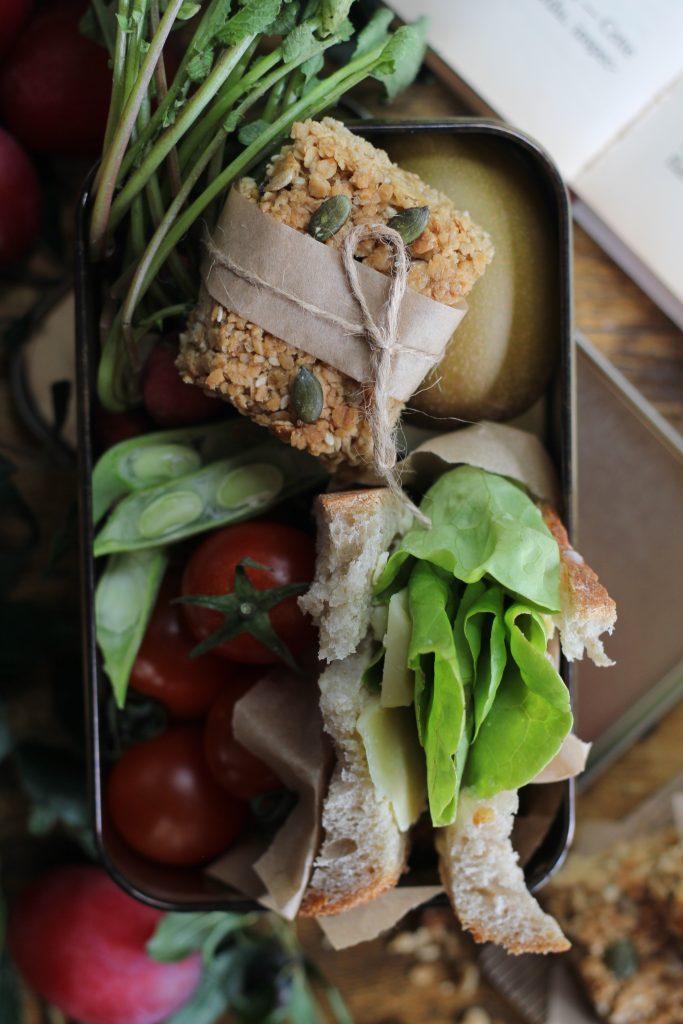
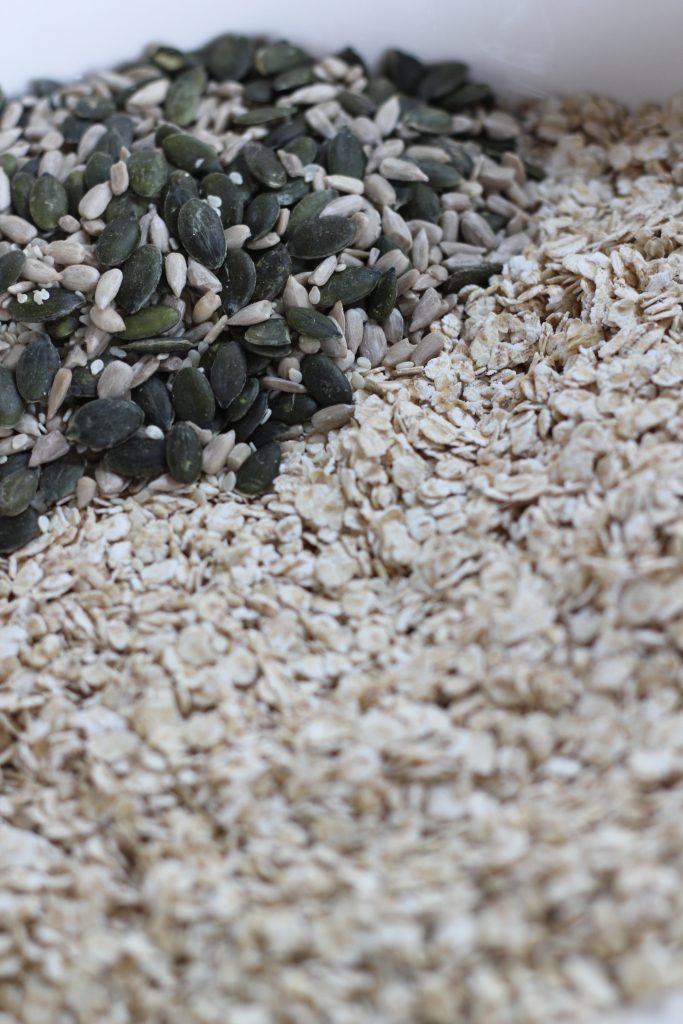
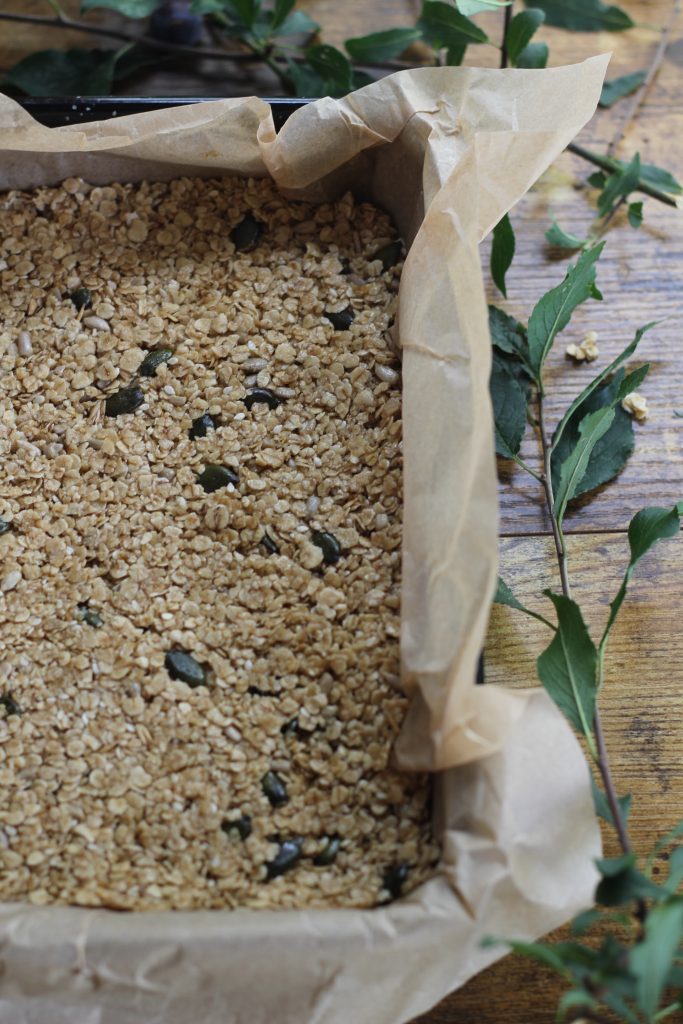
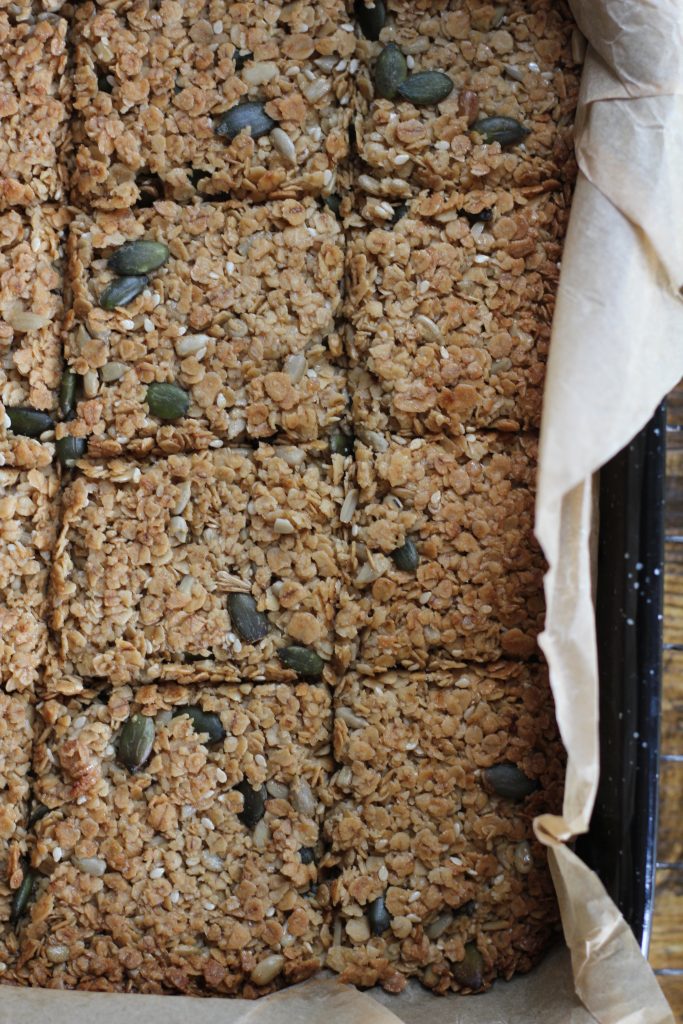
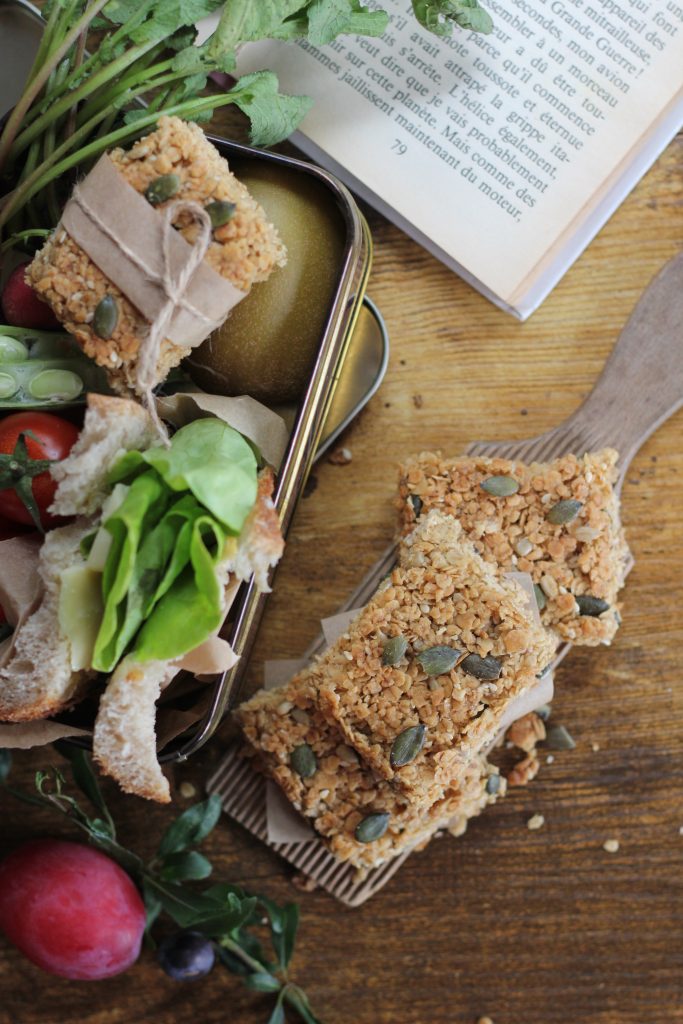
These multi-seed flapjacks make for a delicious addition to any lunchbox. They keep well in an airtight container for up to five days, and they also freeze well too. Once cooled, add to a freezer-proof container, and freeze for up to three months. To defrost, simply take what’s needed from the freezer and defrost overnight at room temperature in an airtight container. I’ve added a mix of pumpkin, sesame, and sunflower seeds, which add extra nutrients, flavour, and texture to the flapjacks.
Preheat the oven to 200°C/fan 180°C/Gas 6. Line a 20cmx20cm baking tin with greaseproof paper
In a small saucepan, over a low heat, melt together the butter, sugar, golden syrup, and vanilla.
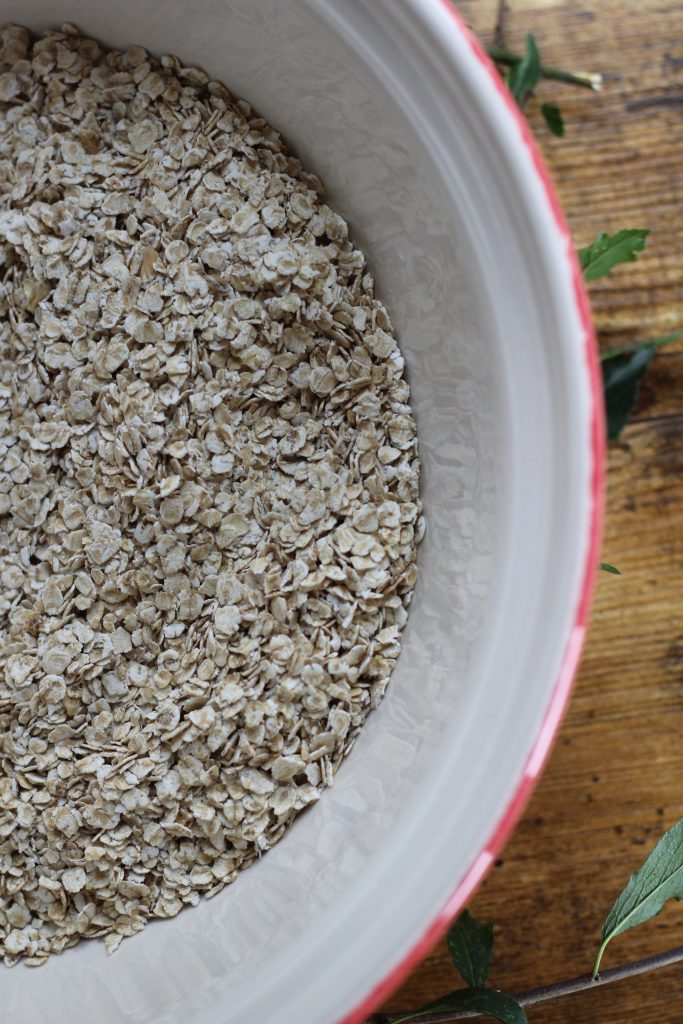
Once melted, take from the heat, stir through the oats and seeds, and stir to combine.
Transfer into the lined tin and press down well. Bake in the preheated oven for 18 minutes.
Take from the oven and place the tin on a wire rack. Carefully score 16 squares. Leave to cool completely in the tin before cutting fully and transferring to an air-tight container for up to five days.
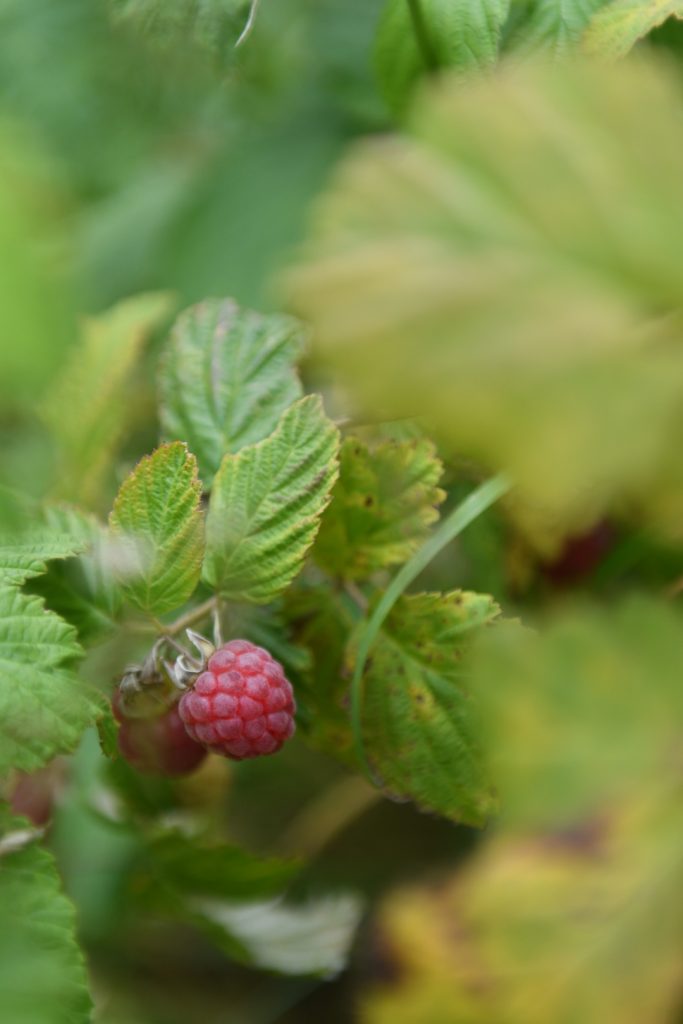
Isn’t it funny that if you or I choose to grow our own food we will always, always choose to grow our own food without chemicals! Funny that this is a criterion in our own gardens but less of a consideration when it comes to choosing in a supermarket. My Grandad grew peas, and turnips, and carrots and potatoes as did my dad. My mum had raspberry bushes, blackcurrants, and goose berries. We were picking and eating our own fruit and vegetables and that was in the 70’s and 80’s. What happened?
Where did all the back garden growing go? Not only that where did all our commercial veg growers go?
In our 20 years we have seen so many changes to our food system we have seen the number of vegetable producers here in Ireland fall dramatically to just 60 commercial field scale producers, down from over 400 in the 90’s. Supermarkets have had a hand in this, squeezing the farmer to the extent that there is just nothing left. The consolidation of the packing and distribution process into the hands of a few middlemen has not helped either. In the space of just one generation, we have become disconnected from our food. Where is our food grown, who grows it, how is it produced, how is it handled? This disconnection is not our fault.
We have had school kids come on to our farm and been completely mesmerised by the fact that carrots come from the ground, having thought they begin their life on supermarket shelves in the plastic packaging. So it is that the shiny plastic packs that line the supermarket shelves give us the impression that our food system is unlimited, vibrant and fair, but of course this is not the case. The problems occur when we try to apply factory type controls to a natural system, but nature is not a factory, and the same rules do not apply.
Covid seemed to rekindle our interest in food. People are really interested again, interested in where our food comes from, what it’s impact on our precious planet is, and interested in how it has been grown. This is a wonderful change. We here on our farm certainly know where our food comes from, and we know that it has been produced without chemicals.
This week we have taken delivery of the first pallet of Irish organic apples from Darragh Donnelly in Dublin he also grows the Irish organic cherries we had earlier in the season. These apples are quite frankly amazing, the flesh is a bright pink, I have never seen apples like this, and the great news is this colour is caused by anthocyanins, which are powerful antioxidant and anti-inflammatory compounds.
But the best part of all is that these apples will take you back in time. They took me back to the orchard my grandad used to have in his back garden, the apples there which I picked as a young lad were full of flavour. I believe there is a distinct flavour and taste to an Irish apple, and Darragh’s apples are that if they are anything.
We have so many crops coming from our own farm, and we certainly know how they were grown, what field they came from, even what part of what field they came from! In fact, we could probably tell you who harvested them and who packed them into your box and who delivered them. Now you would be hard pushed to get that level of traceability and understanding of where your food comes from in a supermarket.
It is exciting to see that our food and our food producers are becoming a revered part of our culture again, thank you so much for being part of that transformation!
20 years ago, myself and my dad were out with two hoes dealing with the weeds on the vegetable ridges. It is worth being mindful this this was probably the height of the ‘Celtic Tiger’ boom and for two people to be out in a field weeding was as far from the reality of the ‘Celtic Tiger’ as you could get.
So it was, that an interested party came up to see what we were doing out there in the middle of the field, such an unusual sight at the time. A funny conversation ensued; it went something along the lines of:
Him: “What are you at there?”
Us: “We are weeding”
Him: “Why in the name of God are you doing that? It is an awful waste of time”
Us: “Well, if we don’t weed the crops, we won’t have any produce”
Him: “But Surely all you need is a TOUCH OF ROUNDUP”
All I can say that after this brief interchange, there was little in the way of mutual understanding shared on that particular day, in the end, in the nicest possible way we had to agree to disagree on our approach to weed control and I asked the man if he was not going to help us, to let us be as we had quite a bit of work to do.
There were many funny incidents in those first early days. We actually had the local Garda visit to investigate what mischievous plants we might be growing in our polytunnel one evening. To be fair to both protagonists above it is worth noting that a polytunnel in the west of Ireland would have been a thing of rare occurrence back in those days. Not so much anymore.
In fact, in the space of 20 years there has been a vigorous interest in growing our own food again, at least in the small-scale regenerative way. It seems sad to me that the opposite has happened to many of the larger conventional vegetable producers. 20 years ago, was just about when supermarkets started to take a very mercenary approach to dealing with many of the larger conventional growers in the country, and supermarkets have been instrumental in bringing the horticultural industry over the last two decades to its knees.
It is even sadder to think that the price of this destruction could be for as little as 5c on a head of celery.
It is funny too how supermarkets will fight for that 5c and squeeze the primary producer and at the same time post billions of euros in annual profit. But maybe we are all a little guilty of seeing food as a commodity that needs to be as cheap as possible?
Either way quite a bit has changed in the last 20 years, there are now only 60 commercial growers of field scale vegetables left in the country down from around 400 in 1998. But it is not all doom and gloom and there have been many new smaller scale organic and regenerative startups which shows that there is still an appetite for growing vegetables and doing it without chemicals.
As always thank you for your support, without which we would not be here today.
Kenneth
PS Thank you to everybody who has supported us through the summer. As we head into September and back to school, this is a time that is just as important for us as we have so many great crops from our farm and from our other farmers, and we need your support, what better time to get back into a routine with the very best Irish organic produce.
PPS We have opening currently for full time packing staff, if you would like to join our team please click here for more details.
When new potatoes are in season, it’s time to let their natural sweetness and creamy texture shine. These Garlic & Herb Smashed Potatoes are golden, crispy, and full of flavour; finished with fragrant herbs and a sprinkle of cheese for that extra indulgence.
By choosing local, in-season produce, you’re not just tasting the best of summer, you’re supporting Irish farmers and making a more sustainable choice. Simple, delicious, and made to share, this is comfort food at its best.
Preheat the oven to 220°C/ fan 200°C / gas mark 7.
Remove the potatoes from the steamer and add to a colander. Allow to cool and dry for a few minutes.
Melt the butter in a saucepan with the garlic, thyme and chives. Once it starts to bubble remove from the heat and add a little salt and black pepper.
Place the potatoes in a large bowl, add the melted butter mixture and coat the potatoes evenly.
Tip the potatoes onto a parchment paper-lined baking tray. Smash them with a flat surface, such as the base of a glass. Drizzle over any remaining butter from the bowl. Place in the preheated oven for 25 minutes. Remove, grate over an even layer of cheese and return to the oven for another 5 minutes.
Now I am going to go out on a limb here, but if you have ever consumed alcohol, you may know that mixing your drinks does not produce a great feeling the next day, the hangover that can ensue can be quite horrendous, (so I have been told….). Truthfully, having experienced a few in my day, it has often been said if you forgot you were drinking the night before and work up feeling like you can feel after mixing your drinks, you might actually think you were dying!
So it is with chemicals, and this is something that cannot be measured and is not very well understood, but picture consuming small amounts of pesticides regularly in our food, nobody actually knows what impact this may have. Some research suggests overtime the results may be quite detrimental to our health.
Certainly, over the last 20 years, the application of chemicals on our food here in the EU has reduced, with many of the more toxic chemicals being banned. This is a great thing, and we can be thankful to the EU for this control, despite chemical company lobbyists issuing misleading information that we could not produce enough food without these chemicals.
The spraying of our food with synthetic chemicals is just not good for us. All the studies in the world, even if they demonstrate that the chemicals are safe, are not going to convince me that it is ok. Filling a giant tractor sprayer and going out into a field on a scale that has never been seen before and spraying everything in sight, is like taking a sledge hammer to put in a pin in a wall. This is what is happening, there is no selective application, it is blanket application of chemicals and everything gets a coating, plants and biodiversity alike.
Now maybe these chemicals are safe in certain doses under certain lab tests, and that may well be the case, and I am not disputing that, I have spent long enough working in a lab to understand that. I also know I wore gloves, and used extraction hoods, and took great care when handling any of these lab-based chemicals. But a field and our food is not a lab.
There have been some studies done on the cocktail effect of chemicals in our food. A 2012 EU-funded project called ACROPOLIS studied cumulative pesticide exposure and concluded that current risk assessment systems may underestimate real-life risks.
A 2021 review in Environmental Research noted that low-dose pesticide mixtures may contribute to hormonal disruption, cancer, and neurodevelopmental issues — particularly in children.
It is hard to know for sure, and probably close to impossible to prove, but if you wish to minimise your exposure the best way is to know your ingredients, to cook from scratch, know who produces your food and know that they are not using chemicals, organic produce is the best way to keep chemicals out of our food chain.
As always thank you for your support.
Kenneth
PS Your support over the summer has meant so much, we have so much great produce and your help makes all the difference to our farm, so if you can continue to support us, it makes a real difference, thank you.
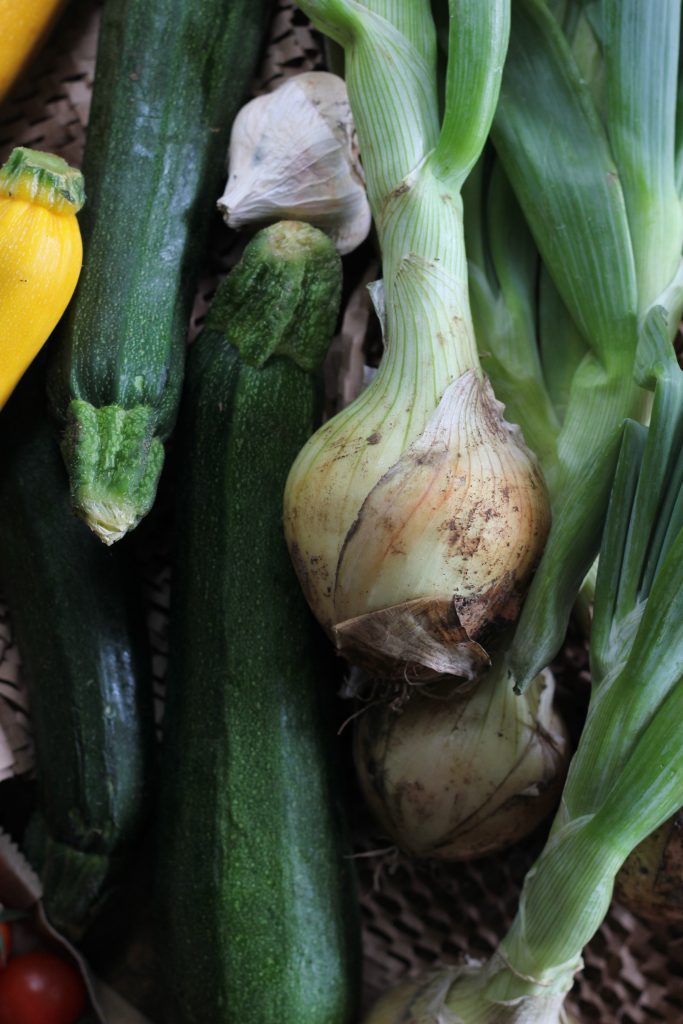
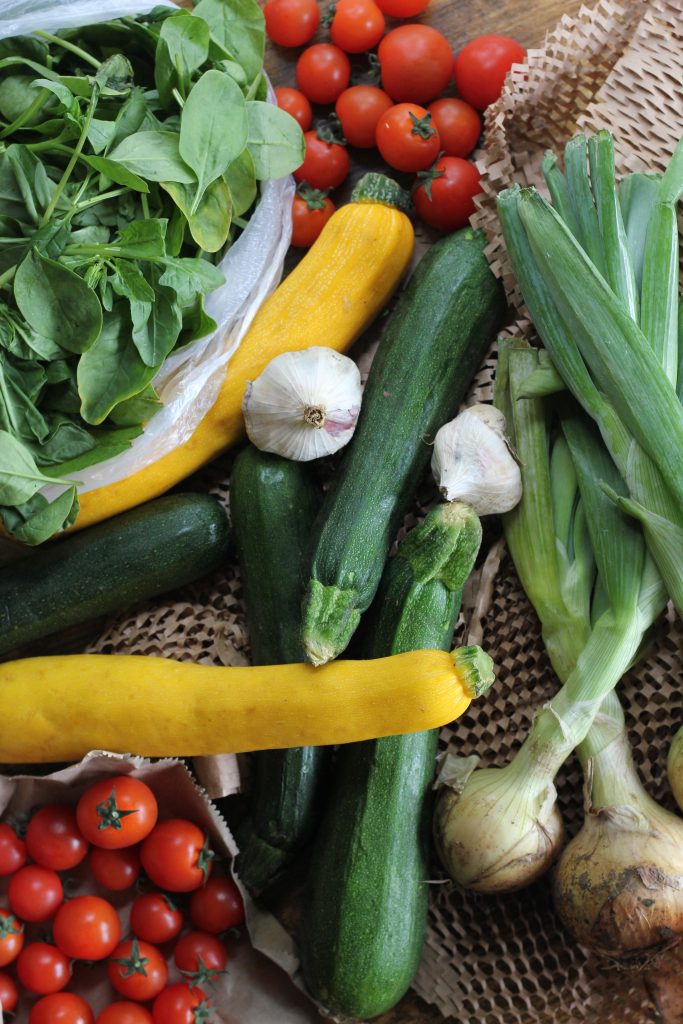
We’ve asked by many for advice on what to do when you’re faced with an abundance of seasonal vegetables. Pickling is a great way to preserve a harvest, or you could turn a bounty into a stash of jams or chutneys. Cake or muffin recipes, using carrot, beetroot, or courgette, such as the recipe we shared last week, can be baked, cooled, and popped in the freezer to enjoy at a later stage. While a tray of roasted vegetables can be enjoyed fresh or added to stock to make a soup, which could then be cooled and refrigerated or saved in the freezer for another time.
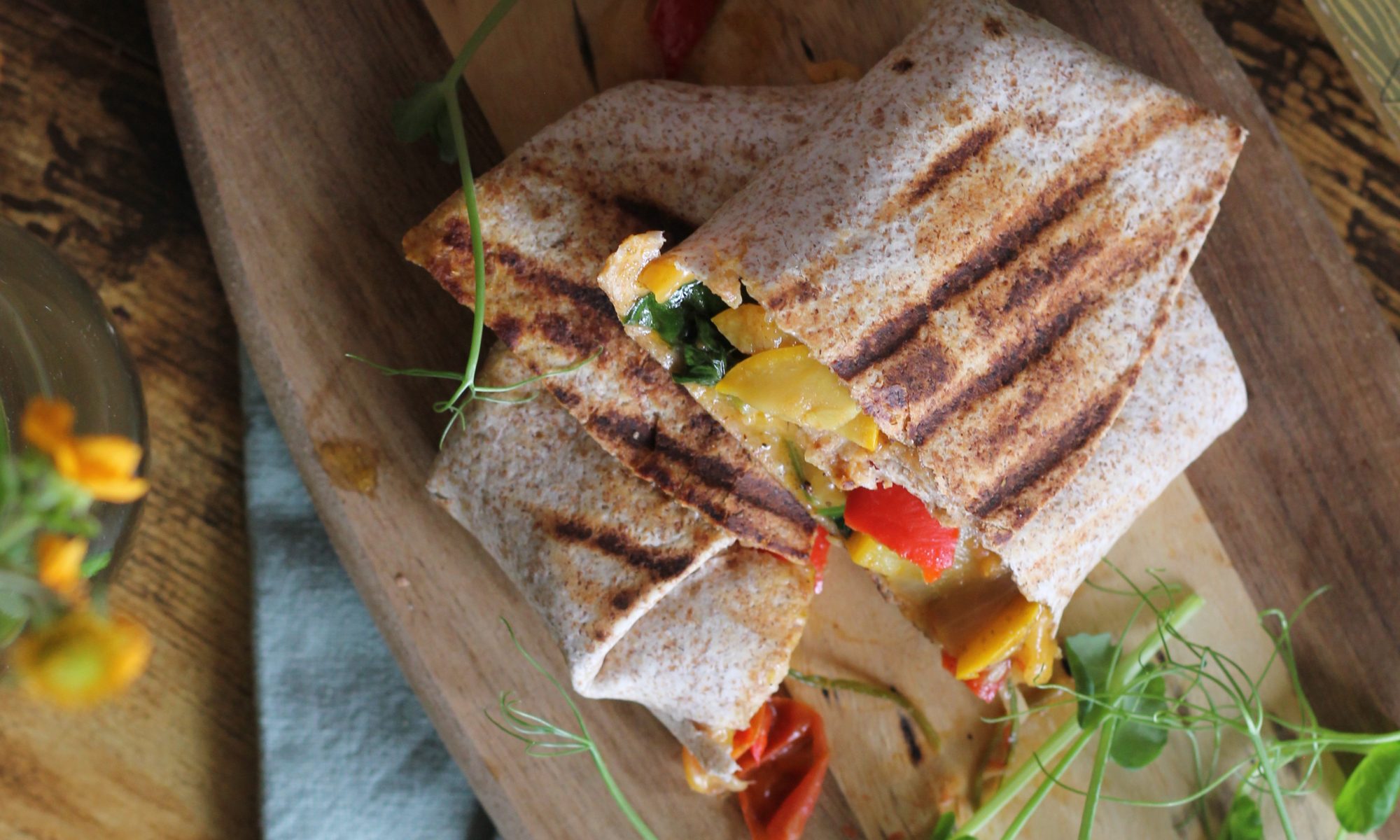
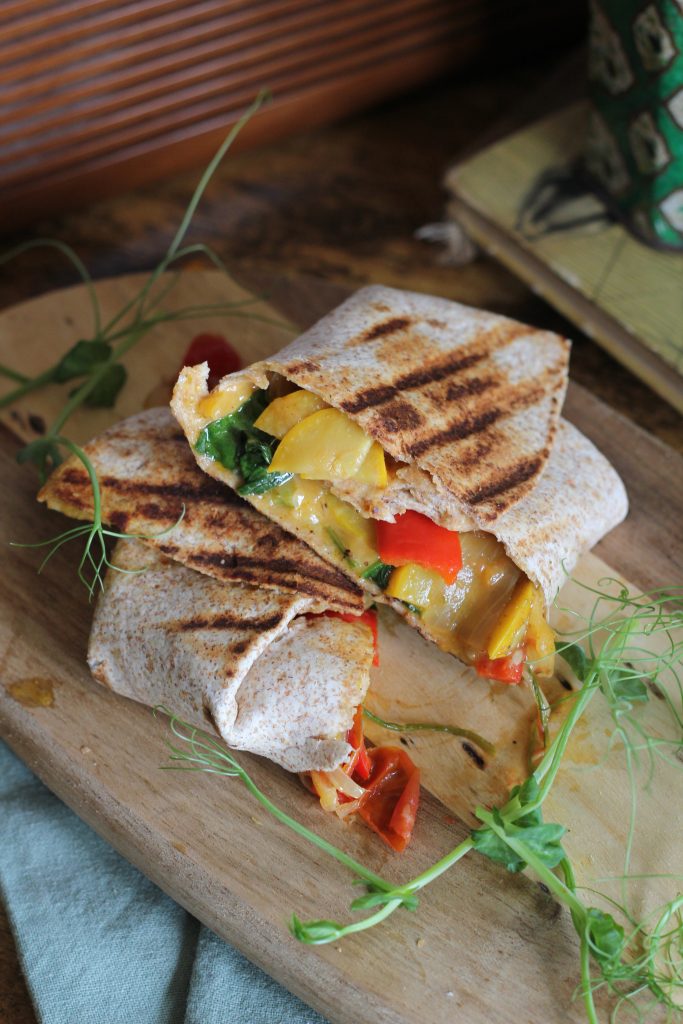
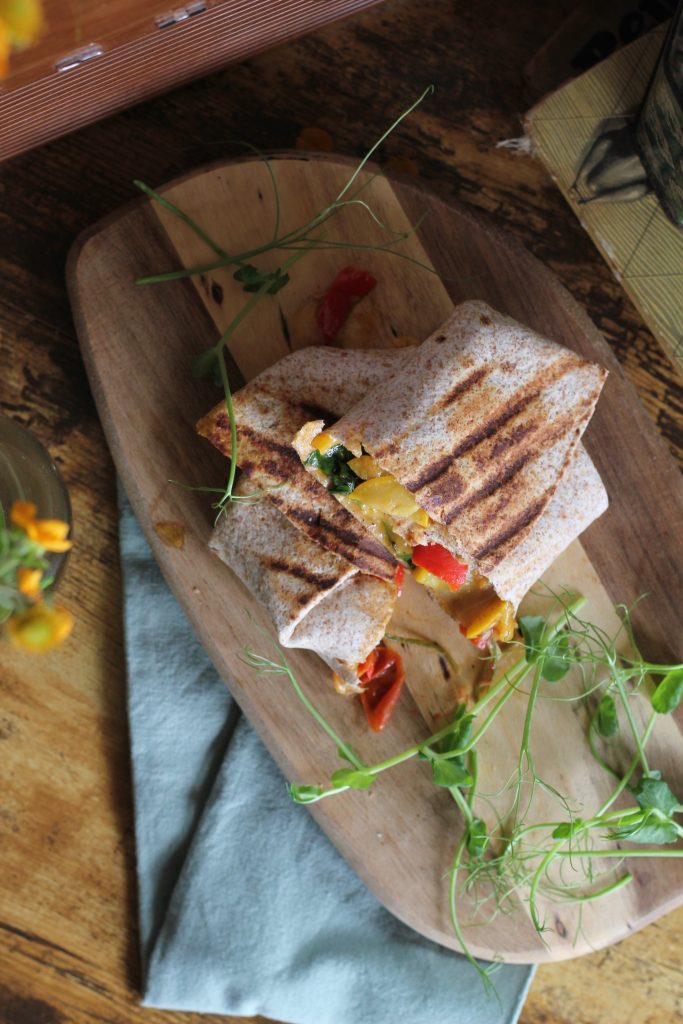
This mixed vegetable stir-fry can be enjoyed with rice or pasta but is particularly tasty when served in a wrap with the addition of pesto and cheese. Either assemble on the cold pan, before turning on the heat under, or assemble on a plate and transfer to the hot pan. Serve alongside a green salad for a delicious seasonal lunch.
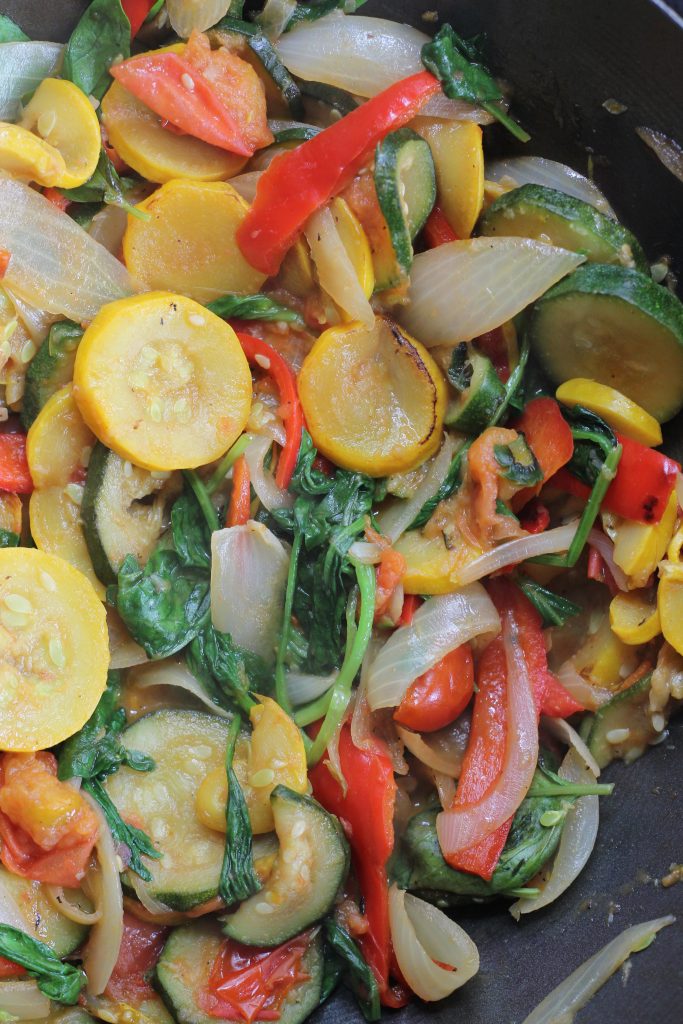
Start by preparing all the vegetables. Add the olive oil to a large frying pan or wok and stir fry the courgette, pepper, and onion for about 5-7 minutes.
Add the tomatoes and garlic. Season with salt and pepper. Stir to combine and continue to cook for another few minutes, until the tomatoes have started to break down. Add the spinach and the roughly torn basil leaves. Stir through and after about a minute take from the heat.
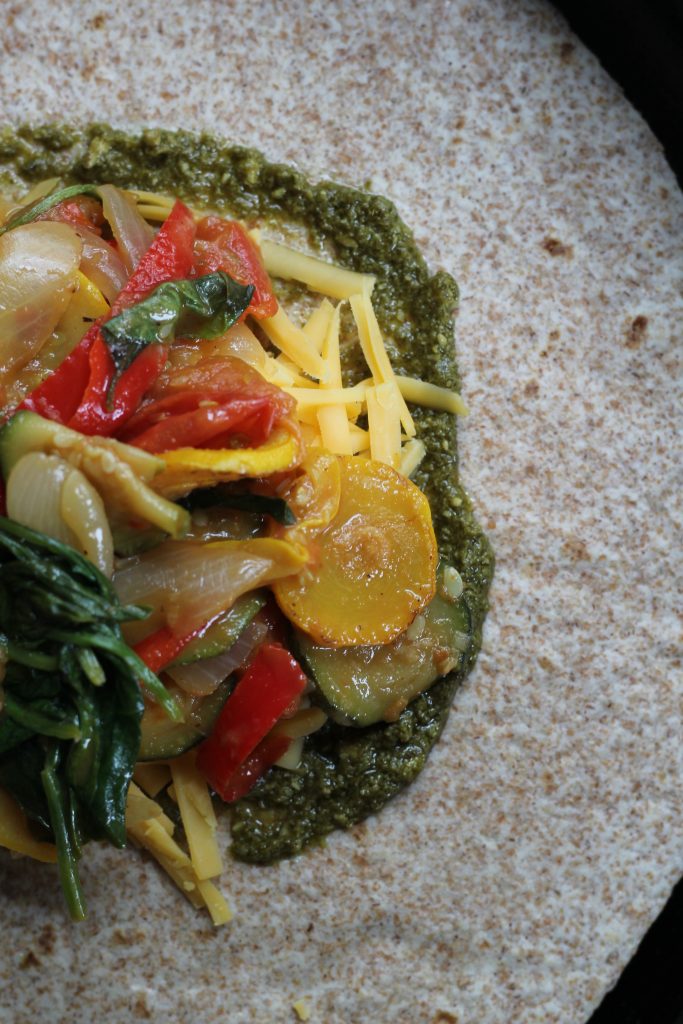
To make the wrap, add a teaspoon of pesto evenly to a wrap, top with a layer of grated cheese and a good serving of the stir-fried vegetables. Fold in the side of the wrap over the filling and roll, tucking in the edges.
Add a little olive oil to a clean pan over a medium heat. Once hot, add the wrap and cook on each side for about 3 minutes. Serve warm and enjoy immediately.