Chive and Cheese Potato Bites

There are several dishes which can be created or elevated with leftover mashed potato; from a salad to a comforting pie-topper, there are so many possibilities for this humble staple. If you’re faced with a bowlful of leftover mash, I would however highly recommend you transform it into these delicious chive and cheese potato bites. They only take minutes to prepare and can be served as a dinner accompaniment or simply enjoyed as a snack. Any hard cheese of choice can be used, dairy or plant-based, but ensure it’s very finely grated, allowing it to incorporate well with the potato. Chives are back in season, and I love to add them wherever a little onion scent is required in a dish, but finely sliced scallions can also be used in their place. I like to mirror the flavours in the bites with a garlic and chive dip, but any dip of choice can be enjoyed alongside these crispy bites. 

Enjoy!

Nessa x

Chive and Cheese Potato Bites

Ingredients

  • 500g leftover mashed potato
  • 90g plain flour
  • 25g hard cheese, finely grated
  • 2tbsp fresh chives, finely chopped

To serve

  • Sea salt
  • Fresh chives
  • Chunk of hard cheese
  • Dip of choice

Method

Add the mashed potato to a large bowl with the flour, finely grated cheese and chopped chives. Stir well to combine. Take a spoonful of the mixture and roll it into a ball. Continue until all the mixture has been used, making about 20 potato bites. Place on a plate and into the fridge to set for a couple of hours.

When ready to cook, place a large frying pan over a medium heat. Add a thin layer of cooking oil, sunflower or olive, and once hot, fry the potato bites for about 5 minutes on each side, turning occasionally while frying. 

Transfer to a paper lined plate, then to a serving plate. Sprinkle with a little sea salt, a grating of hard cheese and some finely chopped chives. Enjoy immediately. 

Chemical carrots, that doesn’t sound right or does it?

Why do we have to call our carrots “organic carrots”, whilst carrots grown with chemicals get to be called “carrots”. We have two organic certification inspections every year to prove that we are doing what we say we are doing.

We must pay for the privilege to demonstrate we are doing the right thing. When you think about it, it doesn’t seem right. And yet as aside it is the world we live in. If you do not know your food producer, then to be sure that your food is chemical free, organic certification is the only way to get food you can trust.

But why is it that chemical usage on our food is the norm and we need to demonstrate we are different because we don’t use chemicals?

I want to call our carrots, just carrots. It changes the narrative, it makes you stop and think, we are farming without chemicals and yet we must prove that we are not using chemicals.How would our mindset change, if when we picked up a pack of carrots in a supermarket they were labelled “chemical carrots”. Well, I would hazard a guess that fewer packs of these carrots would be picked up and more organic carrots would.

Fresh produce did not used to be differentiated, there was just carrots. But the organic label was coined to give people a choice to opt for not consuming toxic chemicals with their food. This only really became an issue as the prevalence of synthetic chemicals in our food chain grew. I am taking here about the generation of pesticides that were developed from the 1960s on and created a whole new multibillion dollar industry built on agrichemical control of our food. Modern synthetic fungicides, pesticides and herbicides are in and on our food, some are systemic in nature, others damage the soil, biodiversity and of course our health.

Although recently things have improved in the conventional world of food production and IPM (integrated pest management) is being used. But chemicals are still the easiest solution, they are less work, and they are still used intensively both here in Ireland and abroad. In 2015, the last date there is reliable data for pesticide use in Ireland by crop, 660 Ha of carrots were grown and they received, 2,856 kilogrammes of pesticides, that is 1.73kg per acre, that is quite a lot of chemicals.

Common chemicals that are used in conventional carrot production are shown below and so if we were to list the chemicals on the produce label, it might look something like this:

Chemical Carrots (may contain/grown with: Lambda-cyhalothrin, Linuron, Metribuzin, Azoxystrobin, Difenoconazole, Pendimethalin, Prothioconazole, Boscalid, Pyraclostrobin, Tebuconazole)

Or you can choose organic carrots which would state:

Carrots (may contain: carrots)

I know which one I would choose.

As always thanks for your support. Kenneth

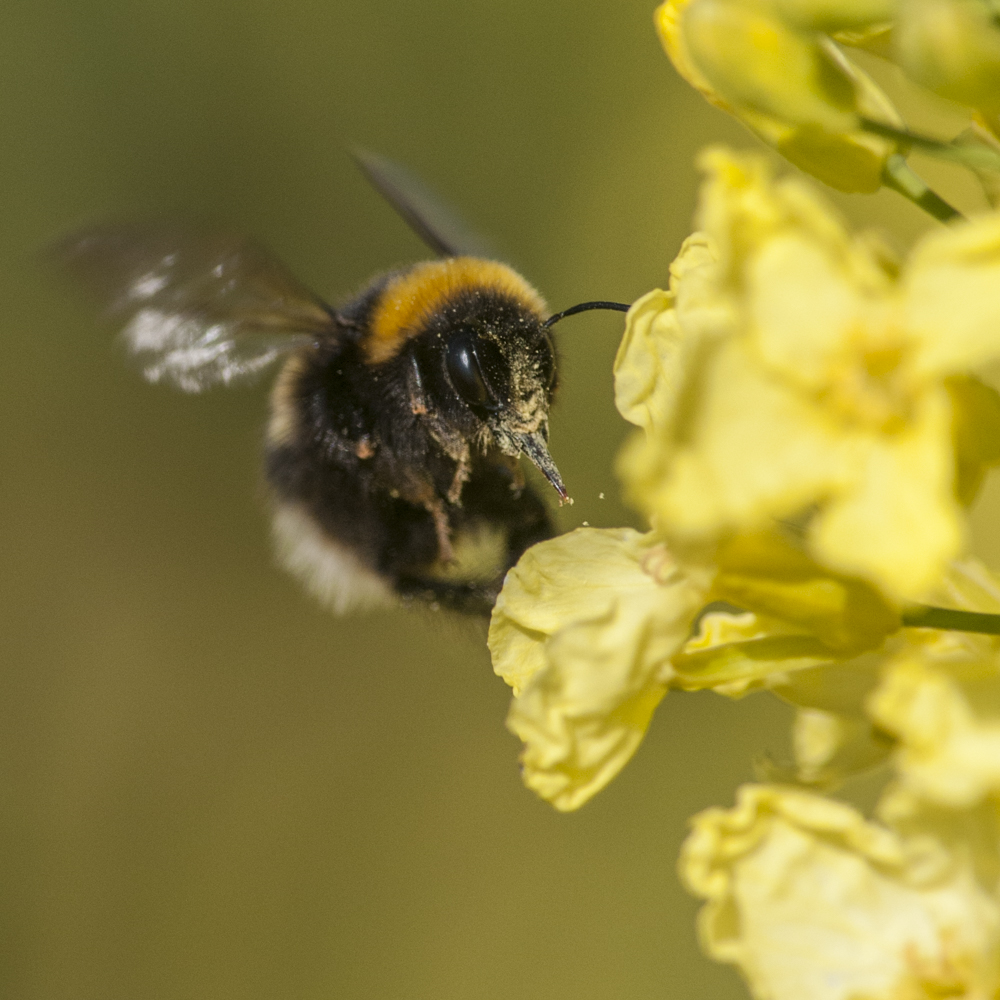
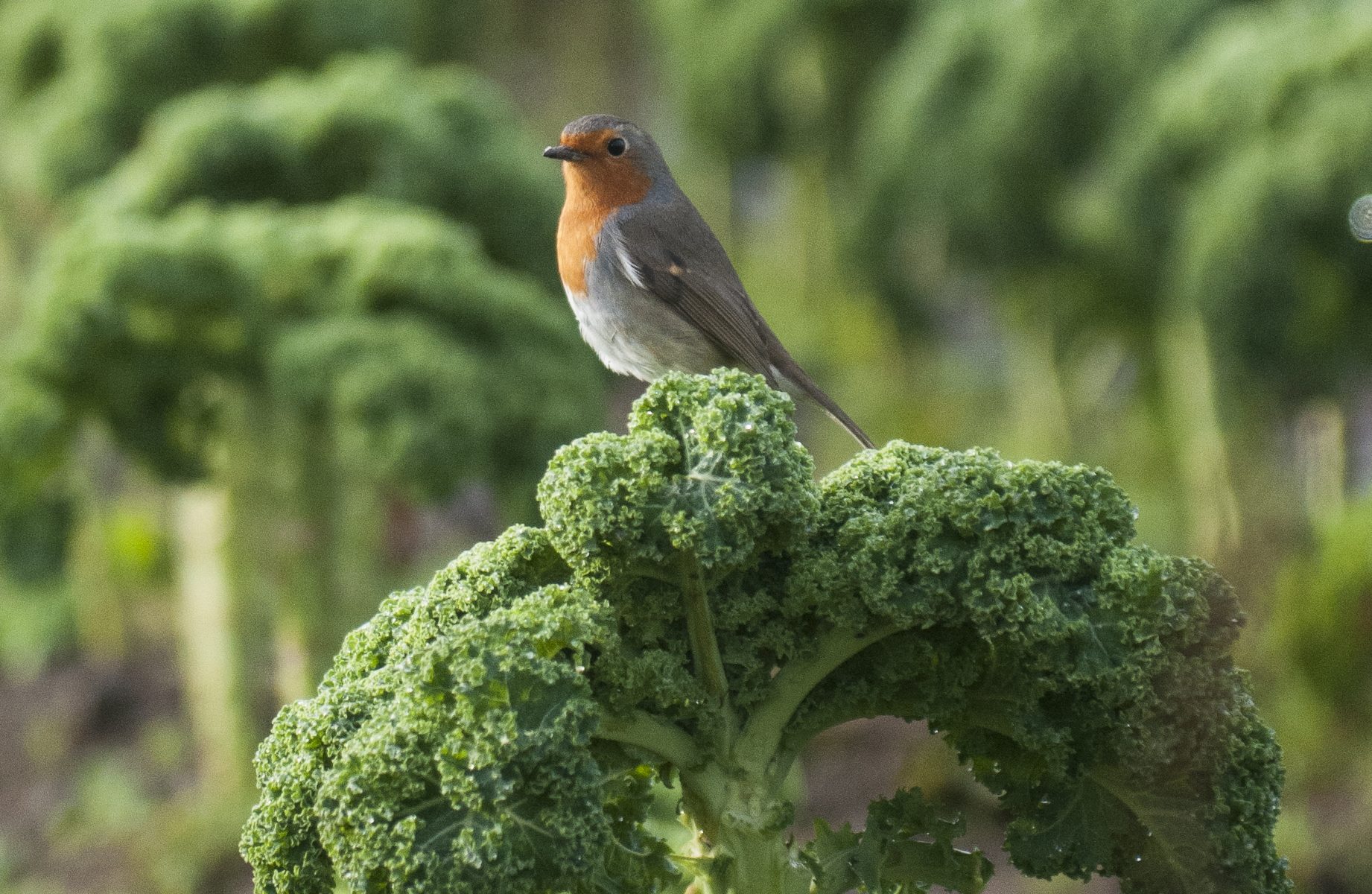
PS check out the little video I made out in our field of kale flowers that are buzzing with bees and insects, it is a haven for biodiversity, it is amazing and beautiful and reminds us that we may be doing something right. This is one of the reasons we do not use chemicals on our food and farm.

Carrot Cake with a Yogurt Frosting

Carrot cake is such a classic dessert, making it an instant crowd-pleaser at any get-together. Even though this carrot cake looks incredibly indulgent it’s rather light. Due to the wet ingredients in the batter, it’s also deliciously moist. I’m using a good-quality Irish yogurt, combined with icing sugar and vanilla extract as the creamy topping, before adding a good sprinkling of chopped pecans for that extra crunch. I’m using a 28 x 18cm brownie tin for the timings below. If using smaller or larger tins, adjust the baking time accordingly.

Wishing you a very Happy Easter.

Nessa x

Carrot Cake with a Yogurt Frosting

For the cake

  • 250g wholemeal fine ground flour
  • 250g light muscovado sugar
  • 2tsp ground cinnamon
  • 1tsp baking powder
  • 250g grated carrot
  • 3 medium-sized free-range eggs
  • 200ml sunflower oil
  • 50g natural yogurt

For Icing

Topping

Method

  1. Pre-heat the oven to 200°C/ fan 180°C/gas mark 6. Line a 28 x 18cm tin with greaseproof paper.
  2. Sieve the flour, sugar, cinnamon, and baking powder into a large bowl.
  3. Add the carrots and stir well with a wooden spoon, until thoroughly combined with the dry ingredients.
  4. Add the eggs with the oil, and yogurt. Stir well until all the ingredients are well combined.
  5. Pour the mixture into the prepared tin and smooth the top with the back of a spoon.
  6. Bake in the preheated oven for 35 minutes, until it is risen and golden. To test if the cake is cooked insert a metal skewer into the cake, and if it comes out clean the cake is ready.
  7. Remove from the oven and leave to cool in the tin for 10 minutes before turning out onto a wire tray.
  8. While the cake is baking, or cooling make the topping by combining the yogurt with the icing sugar and vanilla extract. Place in the fridge to firm up slightly, or until needed.  
  9. When the cake has completely cooled, place on a serving plate and cover with the icing and sprinkle over the chopped pecans. 
  10. Store in the fridge, in an airtight container, for up to three days. Take it out of the fridge and allow to stand at room temperature for 15 minutes before serving. 

where have all the insects gone?

The next time you drive down the motorway, check your windscreen, it will be devoid of insect splatter, only 20-30 short years ago that used to be a completely different story. Here is something different to think about when we think about the disappearing insects, of course the insecticides are destroying whole ecosystems, but what about herbicides?

The dandelions are up in force. But consider this, next time you see a field of grass that is generally being grown to be fed to dairy cows, see how many dandelions you see, or in fact see how much of anything other than grass you see. I think you will find that there is very little. Grassland is produced to be a giant monoculture, and it is considered best practice to remove all diversity from these fields, to feed Ireland’s massive dairy industry.

But it didn’t always used to be like this, dairy cows in a not-too-distant past fed on mixed pasture. The irony of course is that a diverse array of plants access different levels of the soil and so bring up different nutrients and give a more balanced diet to the animals, providing a virtual plant salad bar for animals and supported a whole ecosystem, one a ryegrass-dominated monoculture never will.

The diversity today is removed by spraying herbicides, a typical spraying regime for grassland will involve an array of different chemicals. One that is actively used right here in Ireland goes by the tradename “Thurst” and it contains: 2,4-D + Dicamba. You may have heard of herbicides like 2,4-D before, it is one of the most common chemical weedkillers used in conventional farming. It’s designed to kill broadleaf weeds like dandelions without harming the grass. While it works effectively, it comes with a history and environmental impact that we’re not comfortable with.

👉 Did you know? 2,4-D was one of the ingredients in Agent Orange, the defoliant used in the Vietnam War. While modern formulations don’t contain the toxic contaminants that caused so much harm back then, 2,4-D is still a synthetic chemical. It can linger in soil and waterways, and it’s been classified as “possibly carcinogenic to humans” by the World Health Organization.

This is just one of a handful of chemicals that are used to keep grasslands, green, full of grass, and absent of biodiversity. Giant monocultures whether they be GM soya crops grown in the US or giant fields of grass grown in Ireland are food deserts for insects, there is nothing for them there, no weeds, no flowers, no food. The chemicals themselves that act on the plants are removing a crucial piece of our ecosystem that has a knock-on effect all the way up the food chain. We hear a lot about bees, and bee populations have been devastated over the last 20 years, but the bees are a bell weather for the insect population as a whole. If insects and bees go, well then the omen is not too good for us humans.

But there is hope, farmers more and more are incorporating clover into their grass swards and there is increasing demand for organic food which protects not only our health but biodiversity too. Our food choices matter, keeping chemicals out of our food matters, and they make a huge difference, they send a powerful message and can effect real change.

As always thank you for supporting our farm and business.

Kenneth

p.s We would ask you to support us over Easter week if you can. Thank you to everybody who did this week it made a real difference. And we hope if you ordered bread that you enjoyed the amazing Carraig Rua breads that we will have every week from now on!

After many weeks of planning, we are finally ready to start

Rumi said, “As you start to walk on the way, the way appears” Clarity doesn’t come before action, it comes from action. After many weeks of planning, we are finally ready to start.

This business that we find ourselves in, seems to always be grinding away at one’s soul, it is hard.

Growing vegetables commercially is hard, growing vegetables without chemicals is harder, and selling produce as a small business might even be harder still. But at other times like the week just gone when the sun shines and the birds sing and the bees finally wake up from their winter slumber, it gives back.

Sometimes it is hard to get perspective especially when you are in the thick of things and we all make mistakes. Anyway, amidst the usual weekly turmoil something stuck me, you can’t do it on your own, life, business, relationships, you need help and support.

I am grateful for the team of individuals (and this includes you our customers) that have chosen to pitch in with us, without them it would be a very different affair, but because of them and their dedication we have an amazing, vibrant, sustainable business.

Collaboration is key, it has always been something we have stuck by, and I am not saying I or we are perfect, far from it, and there is plenty of times when stress or general goings on means we miss the boat, we say or do things which would have been better not said or not done. But fair collaboration is what in an ideal world we strive for, whether that be with our customers or suppliers or anybody who touches on our business, collaboration I’d go so far as to say it is the only way.

During the past number of months, I have had the fortunate experience to begin a conversation with Liam Gavin from Drumanilra farm, he also runs Carraig Rua bakery. The aim of our conversations was to get the best most amazing, sustainable, organic, slow fermented over 48 hours bread to you, our customers. There has been much back and forth and trials and finally we have arrived at a place where we are happy and are ready to start.

It is something I have wanted to do for years, but getting fresh bread to you our customers in our business is difficult, but we think we have cracked the art of getting bakery fresh bread delivered to your home. The bread is par-baked and 15 minutes in your oven will finish the bread and give you the most amazing experience of fresh bread right in your own home.

There are all the other amazing bits, it is baked by an expert baker Michael, in Carrick on Shannon, by Liam’s ethical organic business, and it uses only certified organic flour. It has, as bread should have only 4 ingredients and critically the wheat has obviously been grown without pesticides or herbicides and especially without glyphosate.

Our aim has always been to partner and support other small amazing Irish organic farms and businesses, and I think with Carraig Rua we have definitely done that.

As always thanks for your support and joining us in creating a new better sustainable food system.

Kenneth

Easter Energy ‘Eggs’ 

If you are planning on making some tasty treats to gift this Easter, this mixture makes enough for two half dozen cartons of Easter Energy ‘Eggs’. You could use a combination of nuts in place of the pecans and cashews. Nuts and seeds are nutrient-dense foods that offer a variety of health benefits; they’re rich in healthy fats, high in protein and antioxidants, and packed with fibre. A plant-based milk and chocolate can be used to make these chocolatey treats plant-based. 

Enjoy!

Nessa x

Easter Energy ‘Eggs’

Ingredients

Makes 12

200g dates, pitted

4tbsp natural peanut butter

70g pecans

50g unsalted cashew nuts

25g sesame seeds

25g sunflower seeds

2tbsp milk, dairy or plant-based

Topping

200g good quality dark chocolate, melted

Method

You will need two empty egg cartons. Add six cupcake cases to each.

If the dates are dry, soak in warm water for 10 minutes, then drain and pat dry. Add the dates to the processor and blitz for a few seconds, until the pieces are very small.

Add the rest of the ingredients and blitz to combine but be careful not to over process.

Remove the blade from the bowl. Take a spoonful of mixture and careful mould into an egg shape. Repeat this with the remaining mixture, making twelve ‘eggs’. Place on a greaseproof paper-lined tray and place in the fridge for a few hours to set.

Once the ‘eggs’ have firmed, using a skewer, dunk each one into the melted chocolate and place back on the tray and into the fridge. Once fully set place in an airtight container and refrigerate for up to five days. 

loving the fine weather, what an amazing start to the season

The fine weather is a welcome blessing, and we are getting loads done of the farm, including, planting lettuce, spinach, rocket and beetroot. We have all our fields ready for planting now and have been working really hard to make the best use of the sunshine.

The downside of both the good weather and Easter is we will see a large drop off on orders, this affects us very much as nothing much changes for us from the cost side. So, if you can at all especially as we head into Easter, don’t forget about your sustainable food 😊 place an order if you can as it makes a massive difference to our small sustainable organic farm and business.

Monsanto spent millions on deceptive communications strategies to convince the public that the world’s most widely used herbicide, Roundup, is “as safe as table salt.” Yet its main ingredient, glyphosate, was flagged as having the potential to cause cancer as far back as 1984 by a scientist at the U.S. Environmental Protection Agency.

We deserve to know what is on our food. I don’t care that limits are set that are supposed to protect us, these are called MRLs (maximum residue limits). Bear in mind that these limits as with Glyphosate can change over time to allow for more of a chemical to be applied.

In 1990, the U.S. Environmental Protection Agency (EPA) had established the maximum residue limit (MRL), or tolerance, for glyphosate residues in or on soybeans at 6 parts per million (ppm). During the late 1990s, Monsanto lobbied to raise permitted glyphosate levels in soybeans, successfully convincing both the U.S. and UK governments to increase the MRL to 20 milligrams per kilogram (mg/kg), equivalent to 20 ppm. So 6mg/kg was the safe limit we could not exceed in the early 90s, but as the application of the chemical increased the limit was increased nearly 4-fold, and this new level was now the “safe” limit. Of course, this increased limit meant more of the chemical could be sprayed on the crops.

Glyphosate has increased exponentially since the early 90s and it is toxic, does damage our microbiome, and facilitates the production of masses of ultra processed food. The incidence of which would also have rocketed from the 1990s onwards.

But if nothing else, spraying a chemical that kills everything in its path, destroys biodiversity, damages our microbiome, and facilitates large corporations to make billions, whilst contributing to disease in the world, surely that must stop?

As always thanks for your support.

Kenneth

Chocolate Banana Ice Cream with a Pecan Crunch 

This chocolate ice-cream is packed with ingredients your gut is going to love. Potassium, magnesium, and fibre rich bananas are great for the digestive system. Ensure the bananas are fully frozen before you make this dessert, as the creaminess of the blitzed frozen banana is the secret to this ice-cream. Also, to keep the gut happy, ensure the yogurt you’re using has declared it includes ‘live active cultures’. The added cacao is full of antioxidants and gives a delicious chocolate hit.

Enjoy!

Nessa x

Chocolate Banana Ice Cream with a Pecan Crunch 

Ingredients

Topping

  • 50g pecans
  • 1 tbsp honey

Method

1. Peel and slice the bananas. Place in a freezer-proof container and pop in the freezer for at least 6 hours, or preferably overnight.

2. Once the bananas are fully frozen, add them with the yogurt, cacao powder and maple into a blender or food processor and blitz until smooth. 

3. Pour into a freezer-proof dish and place in the freezer for about two hours. 

4. In the meantime, make the pecan crunch. Place a frying pan over a medium heat. Add the pecans and dry fry for about two minutes, tossing regularly. Once the pecans start to brown a little, drizzle over the honey. Stir to combine. Take from the heat, and carefully transfer the sticky pecans to a plate to set. Once completely cooled, break the pecan crunch into pieces.

5. Scoop the chocolate banana ice-cream into bowls, scatter over some pecan crunch and serve.

Peanut Butter Brownie Bars

Sweet treats are synonymous with Easter, so over the coming weeks we are going to share a selection of delicious, sweet recipes with you. These peanut butter brownie bars are a real favourite in our house. The brownie base is dense with a deep chocolate flavour, which is topped with a sweet, peanutty caramel layer, and finally a glossy layer of melted chocolate on top with a sprinkling of chopped peanuts for an extra crunch. These multi-textured treats are both sweet and salty, and a must-try for any peanut-fan. I’ve made these bars in a loaf tin, but for smaller bites use a brownie tray or swiss-roll tin. 

Enjoy!

Nessa x

Peanut Butter Brownie Bars

Ingredients

Base Layer

  • 180g dark chocolate, finely chopped
  • 120g butter
  • 300g porridge oats, blitzed until fine
  • 150g caster sugar
  • 100ml milk

Caramel Layer

Chocolate Layer

  • 150g milk chocolate, finely chopped
  • 1tbsp coconut oil
  • 25g salted peanuts, chopped

Method

Preheat the oven to 200°C/fan 180°C /Gas Mark 6. Line a 2lb loaf tin or a brownie tin with greaseproof paper.

To make the base layer, melt the dark chocolate with the butter in a small saucepan over a low heat. Once melted, take from the heat. In a large bowl combine the blitzed porridge oats, cater sugar and milk. Add the melted chocolate mixture. Stir to combine and transfer to the lined tin. Place in the pre-heated over for 20 minutes. Leave to cool in the tin on a wire rack.

To make the caramel layer, add the peanut butter, maple, and coconut oil to a small saucepan. Place over a low heat. Once the mixture starts to melt, stir to combine. Take from the heat and stir through the peanuts. Pour over the cooled based and place in the fridge for a couple of hours to set.

To make the topping, add the milk chocolate and coconut oil to a microwavable bowl and melt together for about a minute in the microwave. Stir to combine and pour over the set slab. Leave in the fridge for a few hours or overnight to fully set.

Cut into slices or chunks and place in an air-tight container in the fridge for up to five days. Enjoy!

Is there a link between gluten intolerance and glyphosate?

It has been a bright few days and we are thankful for that.  We have ploughed the land and done our first pass tilling. We have our tunnels ready and, in a week, or so we will be filling them with the first amazing crops of spring, the season is in full flow now.

I saw my first bumble bee, or bee of any kind today, and this morning the buzzards that live in the local forest were being chased away from our fresh ploughing by some agitated seagulls.

The first buds on the hawthorn are opening up and are soon to be bursting into life. The first dandelions and daisies have miraculously appeared, and it is hard to know from one day to the next where they came from, they just suddenly appear.

This is nature, and it has its own ebb and flow and intelligence.

Then we come along with our harsh chemicals and try to exert control and power over these natural processes. Chemistry has its place but in the fields with our food and biodiversity is certainly not the place.

I certainly could not fill a tractor sprayer and go out into the fields and unleash these harsh chemicals. Roundup or glyphosate is still the first step for clearing fields, the extension of it’s licence in 2023 by the EU for a further 10 years was a lost opportunity, the reality is if that licence had been rescinded, by now farmers would have adapted to this new landscape and found alternative methods.

In the UK they have seen the first weed resistant to glyphosate and it is only a matter of time before nature adjusts and changes as it always does to render this chemical useless.

It may be a little more than a coincidence, but there have been some correlations drawn between the increased Glyphosate application: it has gone up by 1400% since the early 1990s, and last year alone $10.5 billion was sold and sprayed on our planet and the incidence of chronic disease.   

The above graph shows the correlation between increased glyphosate application and increased incidence of coeliac disease. I am sure there is other factors at play here too, but at the same time this patented antibiotic is in our food and does disrupt our intestinal microbiome, so for sure it certainly is not doing us any good and should be avoided if possible.

The best way to avoid this probably carcinogen chemical, is to choose organic where possible.

There certainly will never be synthetic chemicals like this used on our farm or on any of the organic food we grow or supply. It’s back to the fields now, and the ploughing, tilling and planting!

as always thank you for your support.

Kenneth