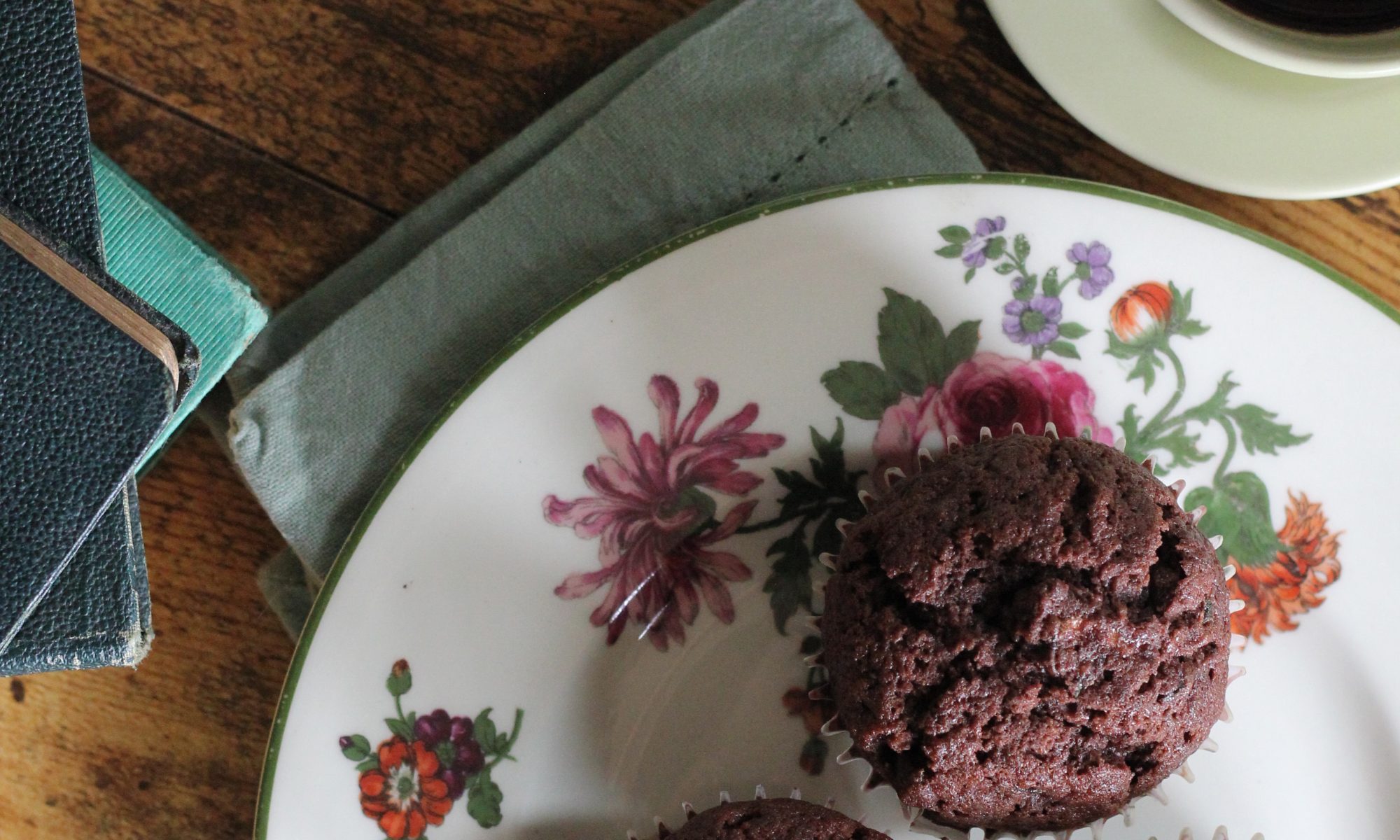
These rich, fudgy chocolate muffins have a secret ingredient—courgette! Baking with seasonal vegetables isn’t just tasty, it’s better for the planet. When you eat what’s in season, you cut down on long-distance transport and reduce your carbon footprint. While choosing pesticide-free produce, helps to protect pollinators, soil health, and our water sources.
So next time courgettes are in abundance, skip the waste and bake something delicious. Small choices, like this, make a big difference.
Pre-heat the oven to 200°C/ fan 180°C/gas mark 6. Line a 12-hole muffin tin with muffin cases.
Sieve the flour, sugar, cocoa powder, and mixed spice into a large bowl.
Add the courgette and stir well with a wooden spoon until thoroughly combined with the dry ingredients.
In a jug, lightly whisk together the eggs with the oil. Add to the dry ingredients and stir well until all the ingredients are well combined. Stir through the chocolate chips.
Divide the mixture between the prepared muffin cases.
Bake in the preheated oven for 20-25 minutes, until risen and golden. To test if the muffins are cooked insert a metal skewer and if it comes out clean the muffins are ready. Remove from the oven and leave to cool in the tin for 10 minutes before turning out onto a wire tray.
Store in an airtight container for up to three days. These muffins also freeze well – on the day they are baked, once fully cooled, store in the freezer in a freezer-proof container for up to three months.
Potatoes are so versatile to cook with and they’re a good source of vitamins, minerals, and fibre. Irish new potatoes are now in season. New potatoes are packed with flavour and are waxy, perfect for potato salads and tortillas, as opposed to the floury winter variety which we associate more with mash.
This potato tortilla, or Tortilla Española as it is more commonly known, can take a little time to prepare, but few ingredients are needed and the result is something truly delicious. It makes for a tasty and nutritious lunch, and serves well alongside some of your favourite salads.
Place the potatoes in a steamer and cook for 15-20 minutes, depending on their size
While the potatoes are cooking, add 1 tablespoon of the olive oil to a deep sided, ovenproof frying pan. Place over a medium heat. Add the onion and turn the heat down low, and sauté the onions for about 15 minutes, until they are soft and golden in colour. Stir occasionally. Once cooked remove to a plate and wipe the pan clean
Add the eggs to a jug. Season with a little salt and pepper and gently whisk together.Peel and thickly slice the cooked potatoes. Season well with salt.
Add the remaining oil to the frying pan and using a pastry brush evenly brush the oil along the side and base of the pan.Place the frying pan back over a medium heat on the stove. Once hot, add a layer of potatoes, about half, followed by an even layer of the onion. Pour over half of the egg mixture, then add the remaining layer of potato. Finish by pouring over the rest of the egg mixture.
Cook the tortilla over a low-medium heat until the top is starting to set, which will take about 15 minutes, Preheat the grill and then transfer the pan to under the grill to cook the top.
Turn out onto a plate or wooden board and cut into four or six slices. The tortilla can be served hot or cold, with a salad on the side.
I guarantee this will be the quickest dinner you will make this week and once you use local tomatoes it will be the most delicious too. It is now Irish tomato season and there are many ways to enjoy tomatoes at their best. Simply sliced with a sprinkling of salt has always been a favourite, but fresh in-season tomatoes are fantastic when lightly cooked and have the ability to instantly elevate a simple pasta dish.
Most fruit and vegetables are more nutritionally beneficial to us in their raw form. However, research has revealed that cooking tomatoes not only increases the level of lycopene, which is a powerful antioxidant in the tomatoes, but it also makes it easier for the body to absorb.
This delicious dish takes minutes to prepare and is packed with nutrients.
Grating of cheese, such as parmesan, grand padano, or a dairy-free alternative
Basil leaves
Black pepper
Garlic bread, optional
Method
To a large bowl, add the chopped tomatoes, basil, olive oil, sugar, chilli flakes, and a little salt and pepper. Stir well to combine. Cover and leave for about 2 hours to allow the flavours to mingle together.
Cook the spaghetti according to the pack’s instructions, in a large saucepan of salted boiling water.
Add the butter to a large frying pan, over a high heat. Once melted pour in the marinaded tomatoes. Stirring all the time, cook for about ten minutes, until the tomatoes are cooked and have become sticky.
Drain the spaghetti, saving about 4 tablespoons of the cooking water. Add the water to the pan. Stir well to combine. Allow to bubble for about a minute before adding the spaghetti. Stir well to completely coat the spaghetti in the sauce.
Serve immediately with a good grating of cheese, a few basil leaves and some freshly grated black pepper.
What a week, we went from having one of our lowest weeks in terms of customers to the highest ever, it was amazing, we couldn’t believe it, and to be completely honest it nearly broke us.
But the team that are working here pulled out all the stops, they were amazing, every single person.It is hard to know where to start to say thank you, for the kind wishes, and thoughts, the orders, the words and energy, every single one meant a great deal.
I can tell you honestly that unless you get big and specialise in one particular crop or two or are really small and it is just you (and neither of those scenarios when it comes to food production are easy either) then it is nigh impossible to make the farming of multiple crops on 20 acres work, and we are not new to this.
So, this year when all the stars aligned and the weather and the farm team and the fertility and the machines and everything worked as will happen every once in a rare while it is fantastic. But then to finally have the crops in the field and to not have a way to sell them it is demoralising. July and August are our toughest months to try and keep sales coming in to keep the farm and the business going.
Thank you for all the suggestions of what to do, we have tried most over the years and our experience with say supply to supermarkets has not been a positive one and I would prefer to close up shop that to go back to that. They do say “never say never” but for me it’s a no.
Ultimately if I have to blame somebody or something for why it is so difficult, it is the supermarkets (Now I know throwing blame around is never a very progressive or useful way to live, I also know we all need and use supermarkets), but our food has ultimately been devalued and fresh produce is classed as something that must be ultra cheap (and I get it that it is hard and the cost of living is real).
But here is the thing, we have the most amazing heads of broccoli grown organically and I am not 100% sure how much each head cost to grow but I do know with all our crops in fine fettle and with the farm in full flow, and with everything aligned and with us charging the prices we are, we find it very difficult to make the proverbial ends meet on the farm. But after the week we have just had and with the farm harvest at least for now looking so promising, I am cautiously hopefully that there is light at the end of the 20-year-old tunnel.
So if you can continue to help us, July and August are the months that we struggle for all the reasons I have said last week, they are the two key months for harvest and it is so important that we have homes for all the lovely veg we and the other Irish organic growers we buy from have in abundance at this time of the year.
So, thank you again, thank you from everybody here, you have made a massive difference, and as always, we would not be able to do what we do without your support.
This raspberry chia pudding feels like you’re having a dessert for breakfast, as it’s so deliciously creamy and luscious. However, this pudding is packed with nutrients. Raspberries are now in season and they’re a fantastic source of fibre and vitamin C, while being rich in antioxidants. Chia seeds are a powerful source of omega-3 fatty acids, which are especially beneficial for our heart health, making them a great addition to our daily diet. While yogurt and milk provide us with protein and bone-supporting calcium. For a little crunch, some granola or chopped nuts would also make for a delicious and nutritious topping.
To make the pudding, add the milk, raspberries, yogurt, and maple to a blender. Blitz until smooth and transfer to a large bowl. Stir though the chia seeds. Cover and refrigerate overnight or for at least 4 hours.
To make the pink yogurt layer, add the yogurt, raspberries, and maple to a blender and blitz until smooth.
To assemble, layer the pudding with the pink yogurt, and some plain yogurt and raspberries, between three bowls or containers. Top with another spoonful of yogurt and raspberries. Enjoy straightaway or cover and refrigerate to enjoy within 3 days.
This summer pasta salad contains ten different plants, which are bursting with nutrients and flavours, and when served this way they mingle so deliciously together. Kale, carrots, onions, garlic, and cucumbers are now in season in Ireland, so it’s a great time to make this salad. The dressing coats everything so perfectly. It’s creamy but also plant based. I’ve topped the finished dish with sesame seeds, but a scattering of fresh herbs would also be delicious and would add even more plants to this scrumptious salad.
Cook the pasta according to the instructions on the pack. Drain, hold the colander under a running cold tap for a minute to cool the pasta quickly and stop it from clumping. Leave to drain fully.
Add 50g of cashew nuts to a hot pan and toast for a couple of minutes. Remove and roughly chop.
To make the dressing, add the 100g of cashew nuts into a heat-proof bowl. Cover with boiling water and leave to soak for 20 minutes. Drain and add to a food processor with the rest of the ingredients for the dressing, and season with salt and pepper. Blitz for a minute or two until smooth. Refrigerate until ready to use.
To a large bowl, add the cold pasta and cashews, kale, carrots, red pepper, onion, and cucumber. Pour over the dressing and combine well. Top with sesame seeds, cover and refrigerate until needed. This salad will keep well for about three days in a sealed container in the fridge.
These maple-glazed crispy sweet potatoes are a dairy-free twist on the viral crispy parmesan potatoes. This recipe went viral for a reason as cooking potatoes this way makes them so deliciously crispy and flavoursome. Sweet potatoes work perfectly in place of white potatoes and add a nice nutrient boost to the dish. Sweet potatoes are packed with goodness, and one potato counts towards one of your five-a-day. They are an excellent source of fibre, even more so when baking them with their skins in place. I’ve paired these crispy potatoes with a simple sauce consisting of dairy-free mayonnaise, garlic, and chives, but any dip of choice can be used in its place.
Preheat the oven to 200°C/fan 180°C /Gas Mark 6. Line a large baking tray with parchment paper.
Wash, dry, and cut the sweet potatoes in half. In a bowl combine the olive oil, maple syrup, and smoked paprika together with some sea salt and a good grinding of black pepper. Add the potatoes and coat well.
Cover the parchment paper lined tray with an even layer of the nutritional yeast.
Place the sweet potatoes, cut side down on the tray. Carefully drizzle over the remaining oil mixture from the bowl over each potato.
Bake in the oven for 35-40 minutes, depending on the size of the potatoes.
While the potatoes are cooking, in a small bowl, combine the mayonnaise with the garlic and chives. Refrigerate until needed.
Once the potatoes are cooked, serve straight away, with an extra scattering of chopped chives and the garlicy dip on the side. Enjoy!
Most farmers whether they be conventional or organic do what they do out of love for the land, because it requires a vocation to continue on the land, we as farmers simply must have a strong desire to produce food, because without it we would quit.
The rules governing food production are tough, prices and specifications and contracts are set by contract supermarket buyers. The supermarket supply chain is mesmerising and staggering and fast, and we can be thankful in one sense for the illusion of a never ending food supply (emphasis on illusion here), but it doesn’t tie in well with the rhythm of nature. The weather is unpredictable and with climate breakdown there is no doubt it is getting more erratic and difficult to plan for. Intensification has taken over, from vegetable production to dairy production it is the first step in our disconnection from the land. If even the farmer is being disconnected from the food, they produce what chance do we as consumers have?
Yet there couldn’t be a more important time for food production and supply to be done ethically and with transparency, without the green washing and false misleading narrative of large multinational retailers, that they in some way care for you and I and the environment, they don’t. But here is the kernel of hope, they change, and they can change rapidly, because of consumer sentiment, this is an amazing thing, and it is your doing, do not underestimate the power you have,. and be reassured change is everywhere.
Yesterday I had an invigorating discussion with a man who is responsible for creating a product right here in Ireland that is helping both us organic horticulture farmers control weeds and conventional farmers use less chemicals. Matt Shine runs Samco, and he with his brother and dad, have developed a compostable biofilm manufactured from corn or potato starch that fully biodegrades in the soil.
This material is not petroleum based, it is not plastic, it is plant based. It means our 500 courgette plants can thrive in the Irish west of Ireland climate where they need all the help they can get. Right now, the first courgettes are nearly ready for harvest, the biofilm coupled with the best spring I can remember on record has helped this but we already have amazing yellow courgettes from Joe Kelly in Mayo.
And that brings me to another story, I had a long conversation with Joe during the week, and he is a grower that has been supplying us for many years, he is an individual with a passion for what he does and is driven by energy and positivity and love for a better food system, he is a true believer in the ethical production of organic food. He is a vocational small scale organic farmer, and he walks the walk, there is no green washing here.
And finally, I also had a chat with Hannah Quinn-Mulligan of Tory Hill house Farm, who is doing something truly revolutionary, bucking the trend and going against the usual dairy intensification, she loves her cows and you can see that, and is producing with the help of her mum and sister organic raw milk, yogurt and kefir.
The thing that struck me about all three people I had a pleasure of talking to this week, is that even though business is hard, and farming is hard, and even though there is all the challenges and the hard conversations, and hard decisions and work hidden from view, they love what they do and they are driven by the desire to make this world a better place though their work.
And you know what they are making a difference, and they are succeeding, and I for now am grateful through your support to have the opportunity to support them.
Thank you.
Kenneth
PS As many of you go off on holidays, we see our orders drop off. It makes it difficult to know how to manage, so if you can at all please support us next week and the weeks ahead. For those of you who received your free amazing lettuce this week I hope you enjoyed it.
These veggie satay skewers are so scrumptious, as the flavour of any finished dish will always be enhanced by the inclusion of seasonal vegetables. Mushrooms, courgette, and peppers work well in this recipe as they’re soft enough to thread onto a skewer, but they also retain the flavour so perfectly from the garlicy marinade. The peanut sauce is quick to make and pairs nicely with the cooked vegetables. To serve, a scattering of chopped scallion, chilli, coriander, and peanuts add a delicious finishing touch. Metal or wooden skewers can be used, but if using wooden skewers soak them in cold water for a couple of hours before threading on the vegetables, to avoid the sticks from burning.
Prepare the vegetables by cutting them into bitesize chunks. In a large bowl, combine the soy sauce, vinegar, olive oil and garlic, along with a little salt and pepper. Whisk to combine, before adding the vegetables. Stir well, cover and place in the fridge for about an hour.
Make the peanut dressing by adding the dressing ingredients to a mini chopper and blitzing gently for a few seconds to combine. Refrigerate until ready to use.
Preheat the oven to 200°C/fan 180°C/Gas 6.
Take the marinaded vegetables from the fridge and thread onto skewers. Cook in the preheated oven for 25-30 minutes.
Once the skewers are cooked, serve with a generous drizzle of the peanut sauce, and a scattering of scallion, red chilli and peanuts.
It was the “green revolution” in the 1950s that changed our agricultural landscape for ever and not in the way you may think when you consider what we understand by the term “Green” today.
Dr. Norman Borlaug, an American agronomist often called the “Father of the Green Revolution” was awarded the Nobel peace prize for his work in 1970, that led to the aversion of famine in many poorer countries.
But where this Green Revolution led, I don’t think anybody could have fully imagined, and it was this very industrialisation of agriculture that led to Rachel Carson publishing “Silent Spring” in 1962 which was a remarkable reflection on the damage that the widespread use of chemicals wrought on our planet.
Today we use chemicals to force nature to behave in the way we want, we have tried to impose factory type controls onto the natural environment that we rely on for our food. But nature is not a factory, and the same rules do not apply, you cannot indiscriminately apply chemicals to our food and not expect a fall out.
I have been pulled up many times for the use of the word “chemicals” and people rightly point out that everything is made of “chemicals”. In fact, I have spent a good portion of my life studying chemicals, having a Ph.D. in organic chemistry. In another twist I left this life to pursue a belief that chemicals do not belong in our food system by becoming an organic farmer.
When I speak about chemicals, I mean synthetic pesticides, herbicides, and fungicides. My purpose in this is not to alarm, and I believe that we are all better off eating more fresh food, organic or otherwise than some of the crap that lines the supermarket shelves, that is an absolute given. But when it comes to fresh produce, I firmly believe that if you can at all organic is the best option for so many reasons, to protect biodiversity, to keep chemicals out of our bodies and to be kinder to animals.
Another point that has been raised recently is that organic farmers use “chemicals” just the same as conventional farmers, well let me put that one to bed straight away. That is nothing short of rubbish.
If I speak for our farm, we don’t use any “synthetic chemicals”, we may use natural products at times, such as sulfur or magnesium, or boron, all of which are chemicals, but not pesticides, or herbicides, they are also not systemic meaning they are not absorbed into the plant, like many of those used in conventional agriculture.
Something we do use is biological controls at times, and we see more and more of this being adopted by our conventional farming brethren. Right now we are doing very interesting trial working with William Deasy in Teagasc as part of their “Growing organics programme”, using a mite to eat the red spider mite (if you grow cucumbers this little red guy can be devastating). We release a predator mite to eat the pest mite, not a chemical in sight, and by all accounts the trial looks really promising.
As we head into Holiday season now, we also head into harvest season, so if you can at all please support us, right now over the next few weeks we need your support more than ever.