“Out of sight out of mind” and a mini plea……

I was asked to give my opinion the other day on why organic food is better for us and our planet and why it is a little more expensive.

And here’s a question for you: if you have a garden at home do you or would you spray your food with chemicals, then harvest and eat it?

Much of our food system today manages and survives because of the ‘out of sight is out of mind’ principle. The giant ultra processed food factories, where vats of sludge are transformed into irresistible snacks, the giant inhumane animal factory farms, the massive intensive conventional vegetable farms that spray and coat our food in chemicals, we see none of this and if we were to, I think it would leave an implacable lasting impression that could change our food habits forever.

Supermarkets want to make the highest possible margin on as many products as possible, but they also want to entice the greatest number of people to shop with them. To do this they often loss lead with fresh produce. Now from the point of view of the consumer this may seem like a win-win, but it may not always be as good as it seems, and as they say there is no such thing as a free lunch.

Inevitably the supermarket will have put pressure on the farmer to supply at lower costs, and whilst again you may say that’s the rules of the marketplace, it can have more serious consequences for us the consumers. Setting aside the fact that for local producers it means many will go out of business and this will have an impact on our ability to source local produce in the future, leading to more imports, and less food security, it has other serious financial implications that we pay for indirectly. These costs are externalised as they say.

Low prices, always have a cost, and this cost will be factored in somewhere along the food chain. Look at the kick back of farmers against the green deal that the European parliament is trying to get over the line at the moment. Farmers do not want to bear the pressure for the environmental costs, as they will make it more difficult for them to compete against cheap imports. But, if they were paid a fair price for their food then they would be more likely to accept a deal.So right here we see the cost that is borne by the planet, by the land, by the environment, by biodiversity. We end up with polluted water ways due to high intensity pesticide and fertiliser application, leading to algal blooms that kill the fish, look at lough Neagh last year.

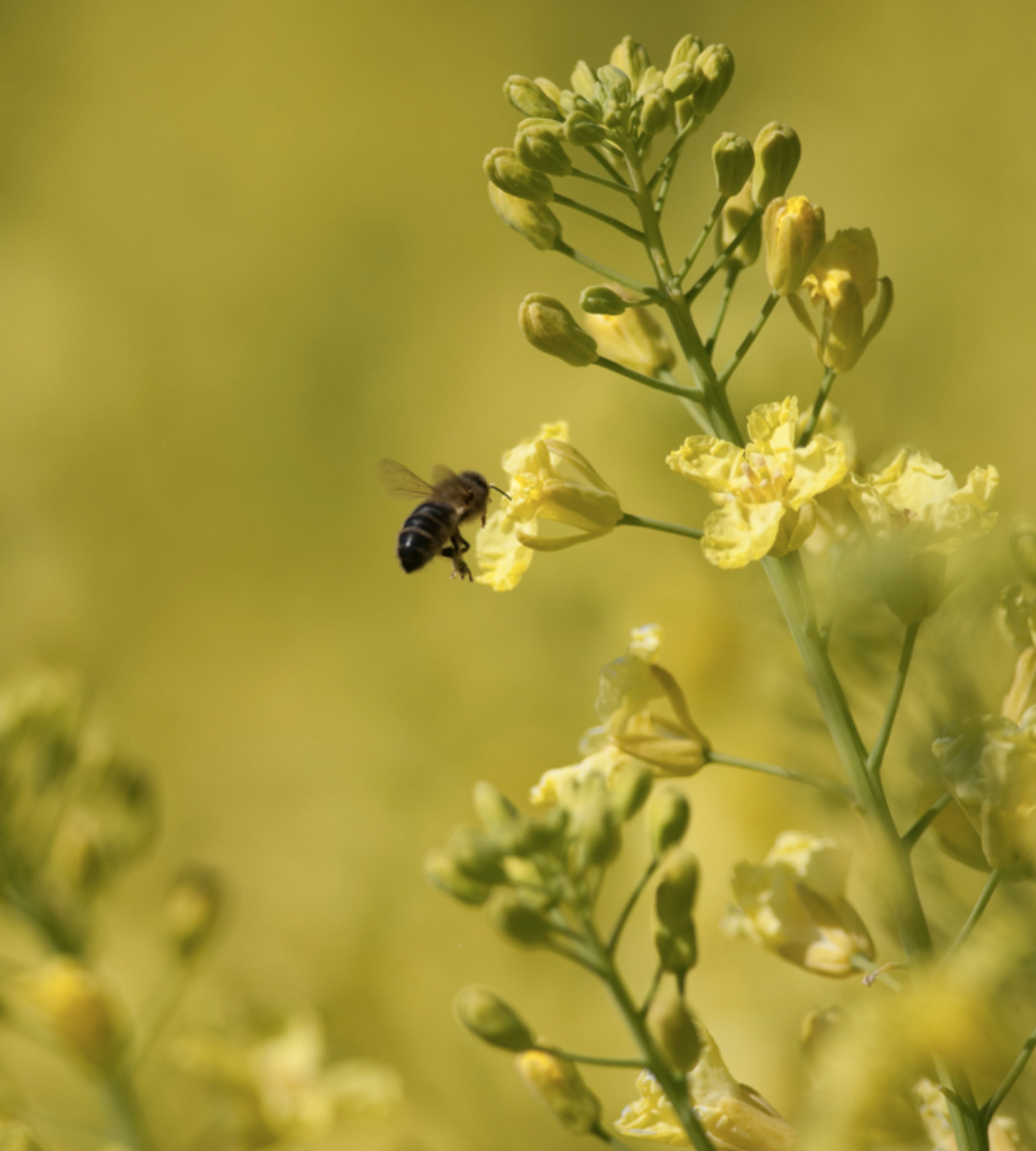
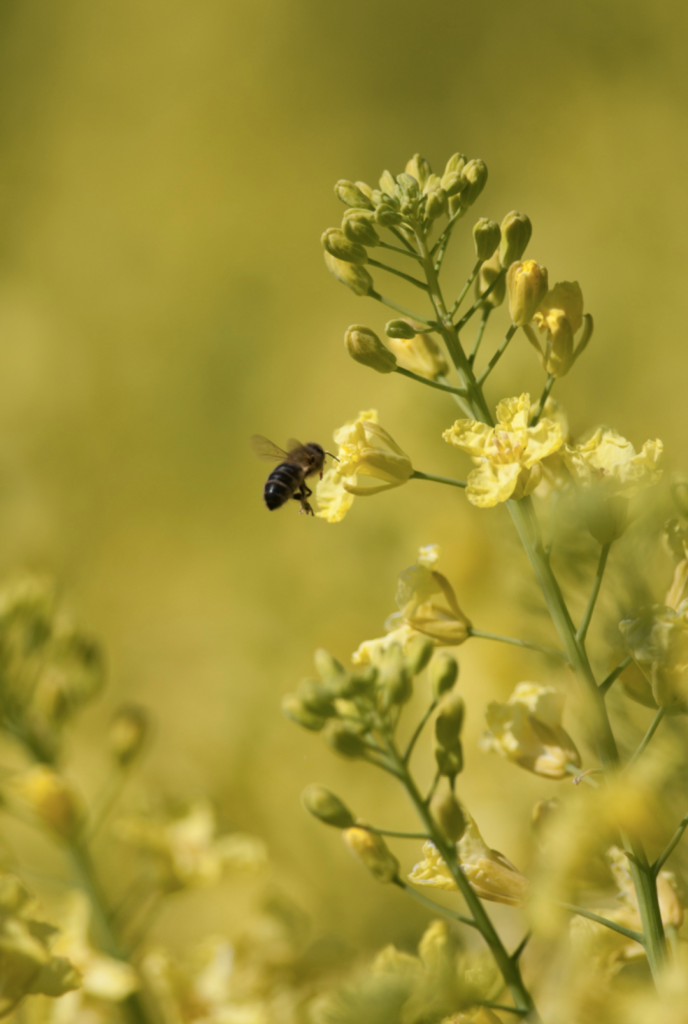
Conversely if there is money in the pot, to plant trees, and hedgerows, and tend to bees and plant tracts of wildflowers and leave areas to go back to nature, and not use single use plastic, as we do, on our farm then that is what can happen. It has been estimated that over half a trillion dollars of food production relies on pollinators annually, without them we would be in real trouble.

Then there is the application of chemicals in our food system, remember our kale was tested for 870 chemicals, that means a possible 870 toxic chemicals could be used on conventional food.

I cannot overstate the impact not using chemicals has in the production of our food and I know a thing or two about chemicals. Without chemicals there are weeds, and biodiversity depends on weeds for survival, just look at the decimation of the Monarch butterfly in the Americas, a major contributing factor is the use of Roundup. When chemicals are used, they get into the food and they destroy all diversity, leaving vast monocultures, that require more and more chemicals to control, weeds, bugs and fungi. The more chemicals in our food system, the less life in our food system it is as simple as that. There are now 44,000 species on the IUCN red list.

We need biodiversity. As farmers we are given the responsibility of producing food but also of protecting the land we were given, my dad and granddad believed that. What has happened to modern agriculture that we have strayed so far from this path?

As always with help from people like you we are creating a better fairer food system, thank you.

Kenneth

PS Since we have introduced our new website we have suffered a substantial loss of customers, if you are one of those customers that is grappling with resetting your password or are not familiar with the way the new system works, please, please give it a try, we the 38 people who work here rely on those orders each week, as does our farm and our network of Irish suppliers. So please if you can have another look. Once you get set up it is actually much much better and we have some exciting offers to help out with the cost too. Keep an eye on your inbox this weekend for some fantastic offers.

CLICK HERE www.greenearthorganics.ie TO PLACE YOUR ORDER FOR DELIVERY NEXT WEEK 🙂 We really need and value each order.

i nearly didn’t write this one…

Finally there seems to be a glimmer of light at the end of our IT tunnel and the weather has finally improved. Our new IT system will allow us to do so much more and offer you our customers a much better service, we are starting to get excited now for our new website, and in the days and weeks to come you will start to see some amazing changes there too.

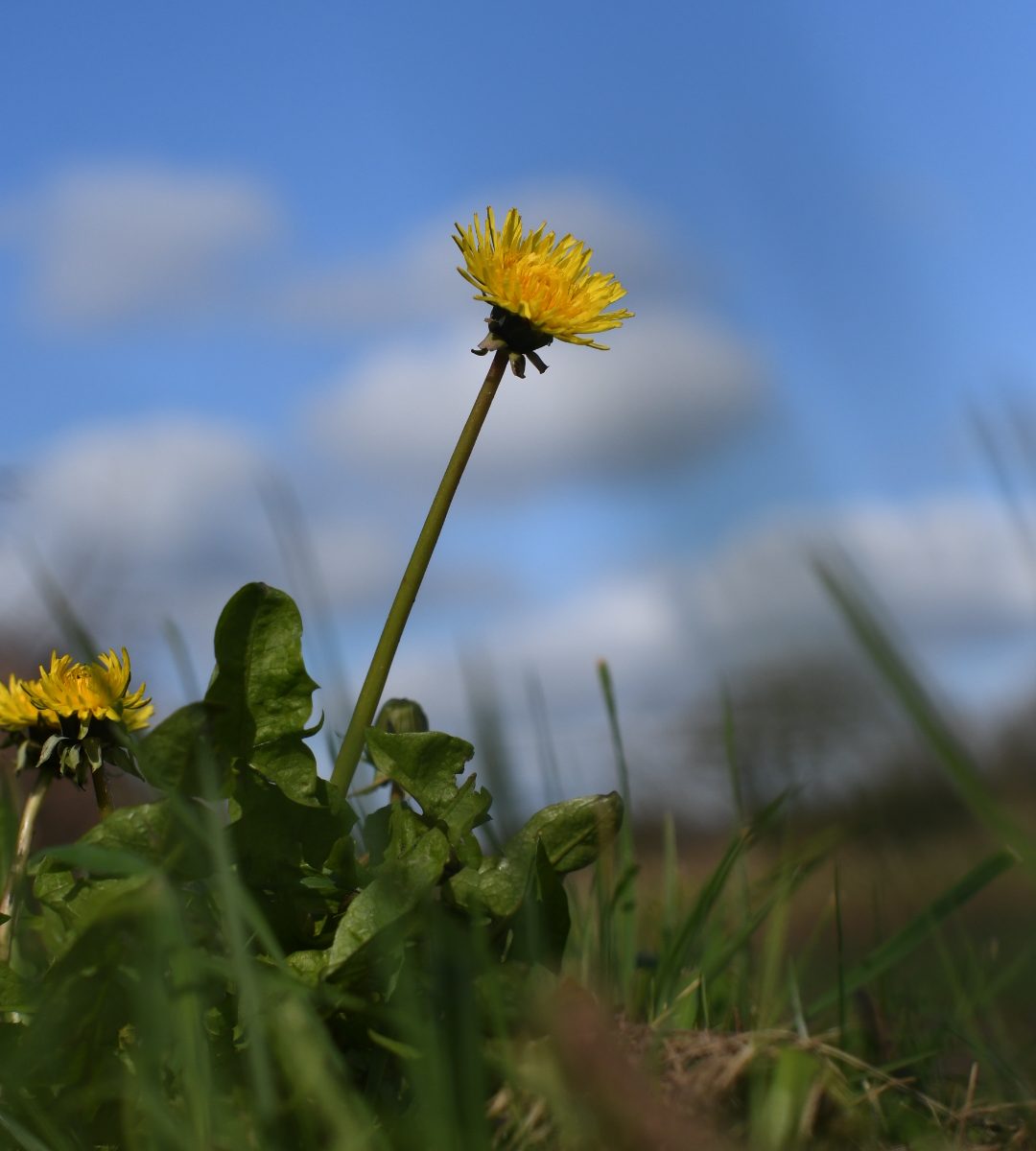
But today as I spotted a single beautiful cowslip on our farm, (Watch the little video here), flowers that were so amazing and ubiquitous in my grandad’s time, I decided it was time to get back to talking about what matters. Wild flowers and mushrooms were once commonplace in fields of grass around our lovely country, not so anymore. I don’t know about you, but the sight of a cowslip flower transports me back in time, to a time when the fields next to our family home were full of these beautiful flowers. Sadly, today, these flowers are not to be found in most farm grasslands, they have all but disappeared (as have the button mushrooms that also used to be commonly found in meadows).

The intensity and frequency of use of artificial fertilisers and herbicides is why diversity is disappearing. Even grass is sprayed to remove anything that is not grass, depriving the land of variety, variety being the cornerstone of all life. Such is the way of much of our production systems these days, large monocultures, engineered to produce at all costs. The one common theme that can be found in all of these food systems generally starts with an application of the chemical glyphosate which as a molecule looks benign enough, but is far from benign. (My years studying and working with chemicals has thought be that simple molecules are not necessarily harmless)

“Glyphosate is an essential component of integrated weed management and a resistance management tool. We must protect its efficacy to ensure we can continue to control critical grass weeds in the future”. Government agency

Integrated weed management like plant protection products is a term used by government agencies to allow us to feel more comfortable with the use of toxic chemicals in our food system. Glyphosate/Roundup is toxic, but the real issue with glyphosate is it’s prevalence, it is everywhere, in all of us, on all our food (not organic food though), it is the most sprayed chemical ever. The active ingredient in Roundup: glyphosate is the most widely used herbicide in human history, nearly 10 billion kg have been used globally. It is a probable-carcinogen and it now contaminates most non-organic food stuffs. It is systemic in nature which means if it is sprayed on a crop then it gets absorbed and sits inside it. It destroys all life, and leaves fields barren and dead.

Using chemicals to fight nature will never work. In the short term it may give a temporary reprieve from a certain disease or pest, but that pest will come back stronger and more resistant next time. It is in a way a self-perpetuating industry.The advent of superweeds now require higher concentrations of glyphosate and mixtures of glyphosate and other toxic chemicals to control their spread.

Surely the production of food in a way that contributes to our health and the health of the planet, a way that enhances and protects biodiversity, a way that encourages working with nature rather than against it must be the best way to grow food?

Thank you for your support,

Kenneth

NEW WEBSITE LAUNCHED

Hi everyone,

I am very excited to announce that our new website is now live and ready to accept orders!

Aesthetically, the website looks very similar to our old one and much of the functionality is the same as you would be used to with ours and other e-commerce websites.

That being said, there are a few very important changes to how our products and offers are presented to you and how you complete your order that you should familiarise yourself with:

Guest Checkout

One of the major changes introduced with this new website is the ability to place an order without creating an account. With our old website, before you added your first item to cart, you needed to create an account or log in to your existing account. This is no longer required.

Please note if you already have an account with us, you will need to reset your password and create a new password for the new website. We suggest you do this right away as it will ensure that, moving forward, ordering on our website will be seamless for you. Here are the steps to recent your password:

1. On the homepage, click on the ‘Account’ button.

2. Under the ‘Sign in’ button click the ‘Forgot Password?’ link.

3. Enter your email address. You will immediately receive an email with a link to reset your password.

Then, to begin creating your order, simply add items to your cart and proceed to checkout. If you previously had an account with us, once you enter your email address at checkout you will be prompted to log in to your account. You can use the same email address as before and the new password you just created.

If you have never created an account with us, you can place your order by simply adding your email address and delivery details and proceeding to payment.

Please note that on our new website, for payments using a credit or debit card, after you click the ‘place order’ button you will be redirected to a Stripe payment page to add your card details and finalise your order.

Savings on Bulk Orders & Twinpacks

Previously, our Bulk Order deals and Twinpacks were presented on our website as separate products. These separate products are no longer available, and you can now find bulk order deals and make savings when adding items to your cart.

For example, if you are adding Oranges 3pc to your cart, you will see the option to ‘Order 1’, ‘Order 2+’, ‘Order 5+’ and ‘Order 6+.’ You will see that the cost per piece decreases with the more items you buy and the savings are presented as a % of the original price. In this example, a packet of 3 oranges costs €3.49 but if you order 5 packets, they only cost you €3.32 each.  All items with savings for bulk purchases will be presented this way.

Build Your Own Box

On our old website, when using the ‘Build Your Own Box’ functionality, you were given the option to add 3 replacements in case of one of your 11 chosen items being out of stock. This was extremely difficult for our packing and procurement teams to manage and it left more customers disappointed then happy.

We have made the decision replace functionality from the BYOB on our new website. Our new systems will mean that a product you chose being out of stock is very unlikely but, in the event that it is, this item will be removed from your order and the out of stock item will be automatically refunded to you at the value you would pay for that item if purchased individually.

New Mini Cart

When you click on the cart icon on our website, a new mini cart will be opened that gives you an easy overview of all the items in your cart. From here you can remove items from your cart using the small rubbish bin item and any new items added to your cart will appear here. If you would like to view your cart as a full screen like you would have on our old website, you can still do this by clicking the ‘View Cart’ button.

Repeat Orders

There are two pieces of exciting new functionalities for repeat orders.

Firstly, you can now view your repeat order up to 6 weeks in advance. This means that if you are going on holidays during the summer or need to take a break from your repeat order for a few weeks, you can simply log into your account and easily pause future orders.

Secondly, you can now have specific items on weekly cycles, other items on fortnightly cycles and once off items all in the same repeat order. For example, you might only need to receive certain grocery items every two weeks, want your fresh produce to arrive weekly and for one week only want to add a seasonal item. This is now all possible with the new repeat order system!

The remainder of the repeat order functionality is the same as the old website for existing customers. Your current repeat order will be available to view on our new website, along with all your account information. We would encourage you to double check it this week to make sure everything you have ordered is correct.

You can always refer to our repeat order FAQs section if you have any questions about how to make changes to your repeat order. You can find this in the dropdown from the ‘About Us’ section on our homepage.

Things that have stayed the same….

Everything else remains the same. There are no changes to your order deadlines or delivery days, our organic fresh produce and grocery offering is as large as ever and our mission as a business has not changed. We are as committed as ever to be the voice of a more sustainable Irish food system, rooted in the principles of organic agriculture.

Thank you so much for being part of this mission and we hope all these positive changes will make it even easier for you to support Irish farmers, to support local produce and to support an organic food system!

Thanks

Kenneth & team

This is a longer one than usual I am afraid.

During the week somebody raised a valid point, how can we speak about climate change with any conviction when we import food. I have been considering this since and felt it was a point worth addressing.

We do import food and especially now it is more prevalent than at other times during the year, this is the hungry gap and we simply do not have Irish produce in abundance.

We do import food during other times of the year also and yes that food arrives here on the island of Ireland by truck.  It is important to note that we never import food by plane as do many supermarkets. We also have other sourcing policies that some may find contentious such as never buying produce from Israel.

There is in fact no other option if we want to eat tomatoes or peppers or carrots at present but to import, there simply is no commercial Irish supply. This has been particularly exacerbated by the horrendous growing season last year and the equally disastrous start to spring. We are not a market garden, and we need to grow in scale to have the necessary produce to fill our boxes each week, we are commercial organic vegetable farm. I think it is equally important to point out that there are very few of our type of farm at our scale in the country, a handful maybe.

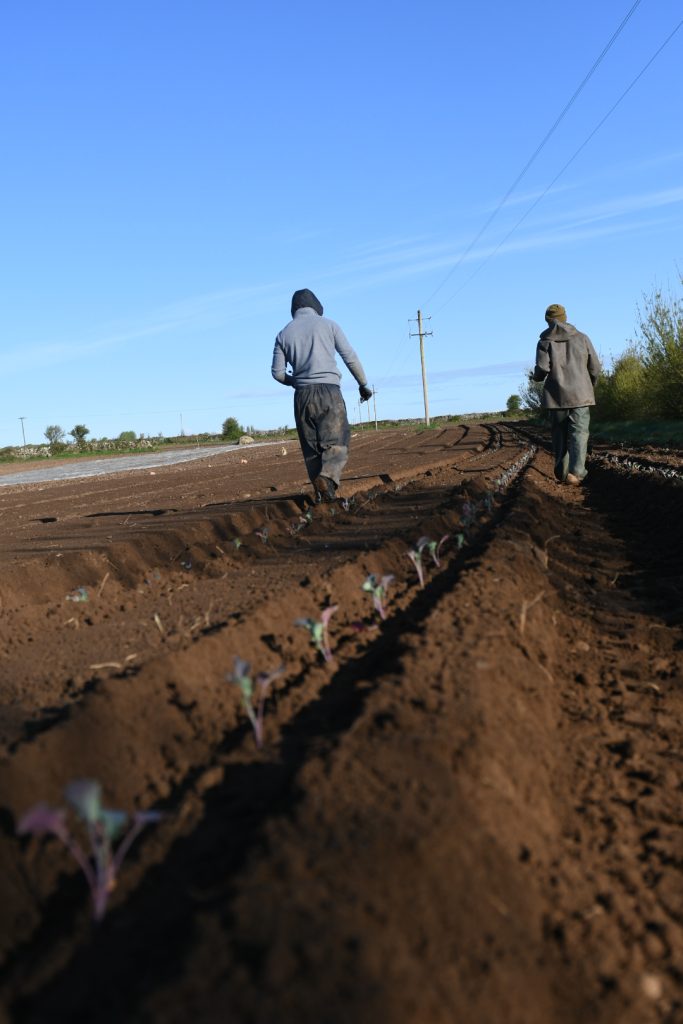
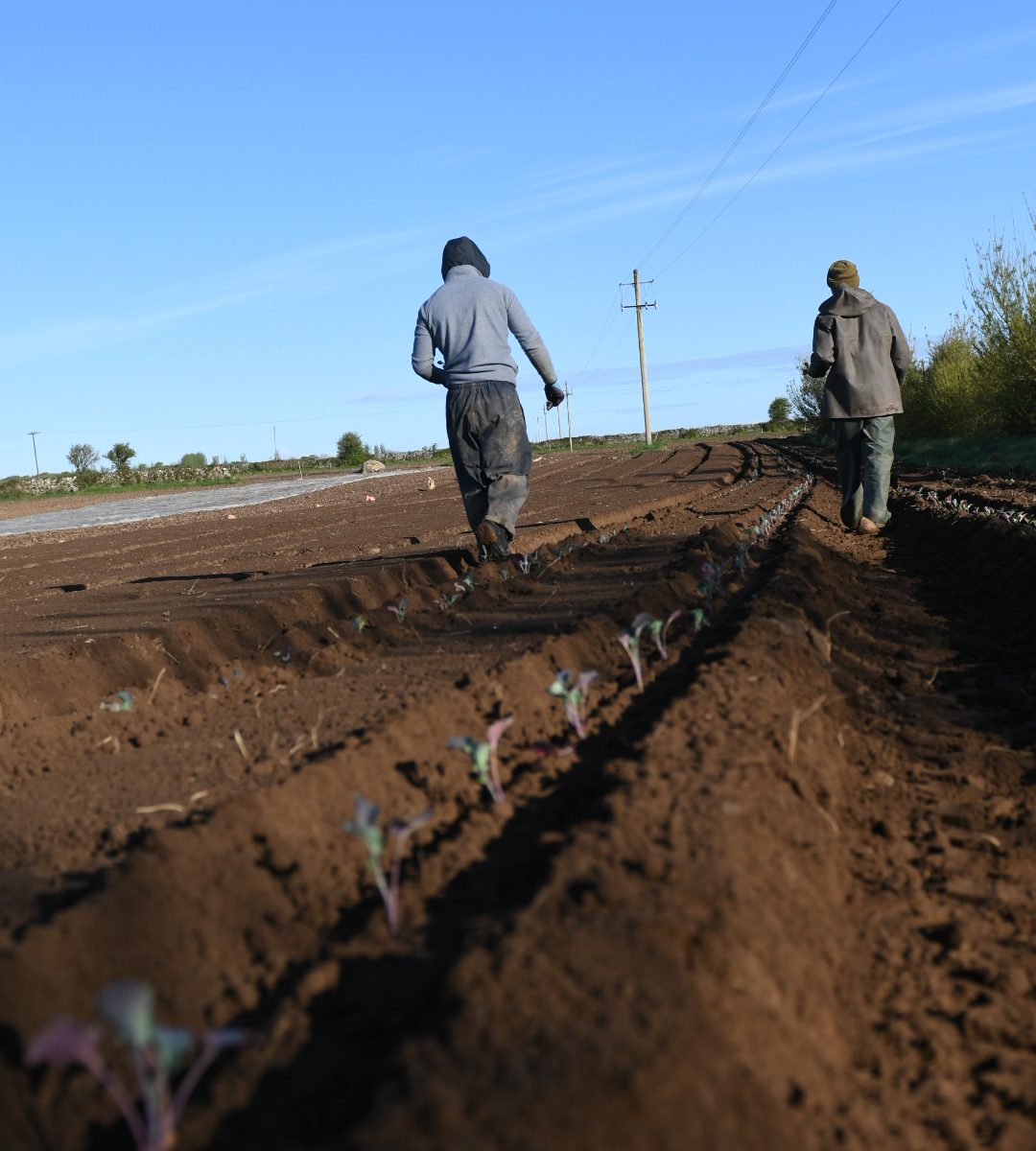
Right now we are preparing fields we have planted some of our polytunnels and have just put our first plants in the ground this week. This will mean if the weather plays ball and these days that is a big if, we will be harvesting the first kale say in July.

Can we as a result of the issues above talk about climate breakdown and how it effects our farming? Can we voice our opinions on why we think large scale factory farming is horrendous and wrong? Can we say we disagree with deforestation in the amazon to feed the animal industries voracious appetite for GM soya? Can we offer an opinion on the fact that we think trees and hedgerows should be an integral part of the farming landscape in Ireland? Can we state the fact that if there was less meat consumed and more plants that less land would be required for agriculture, irrespective whether you eat meat or not, this is simply a fact?

Our intention is to shine a light on these issues whilst being mindful of people’s preferences for food, which is deeply personal, it is a delicate balance. Whilst also acknowledging that there are phenomenal hardworking farmers of all types in Ireland. Farming is a tremendously precarious industry and that government led encouragement to intensification means many farmers have few choices to change the way they farm.

The idea of the “Green Deal” in Europe being abandoned deeply upsets me and I feel it is a sad day in European evolution, the basic principle that we look after the land and set aside more for nature is exactly what we need to do. But how can farmers who to an extent have been encouraged by certain political parties be expected to foot the bill for these changes at least to a degree, when the price of food is so remarkably low, it is not the farmers and it never is that win from inflation led food price increases or indeed the smaller retailers. It is the large corporates and giant retailers they are the only winners, and they always win. 

The bottom line again of course comes back to the system that we now function within, our food system is inherently broken, and it needs to change.

So, whilst we import produce, we also grow 11 acres of vegetables plus 7 polytunnels worth on a farm of nearly 20 acres, some of which is left to forestry, hedgerows and general rewilding. We have agreements with several organic vegetable growers across Ireland to supply crops that we do not grow, such as potatoes, and carrots, and scallions and cucumbers and many more. All grown organically and in Ireland when in season.

I started this business because my fundamental belief to change our food system and protect our planet are dear to me. We are a small farm by any one’s reckoning but we absolutely do what we can.

We will continue to talk about things that will be disagreeable to some, to many maybe, we hope too to encourage others to think that maybe there is another way, that may provide a small ray of light and that leads to a path of change, after all, we all have power and choices to make change real.

And of course, as I say each week and it is something I mean wholeheartedly, without you spending your money with us and buying the produce we sell whether it is grown by us, or some other Irish organic farmer, or an organic farmer in Spain, we would not  be able to run our farm here, and support the other sustainable ethical farmers we buy produce from and we would not have this forum to say what we believe and what we hope some of you believe too.

So, I hope to that person that raised the issue that this has helped address some of your points.

Thank you for your support you make all this possible.

Kenneth

Would you do this in your garden?

What I can’t understand is why the conventional approach to growing food has changed so much since my Grandad’s day. Why are we now so much more interested in pushing the land beyond its natural limits, the results of which are evident everywhere. Look at our rivers and lakes, look at the algal blooms that starve the water of its oxygen turning the water to a putrid green in our summers. This was not always the case. The excessive application of fertilisers including liquid manure must end up somewhere.


My granddads farm was a mixed farm, and he grew his own vegetables in his garden. What has happened to our food system since his time, that now as farmers we are actively encouraged to concentrate on monocultures for the sake of efficiency. What has happened to the idea that diversity is the very route to true health on a farm and only through diversity can biodiversity thrive.

Without diversity our planet will start to turn in on itself and we see this globally now, but we also see it in the intensification of the farming practices here in Ireland which are leading to bigger more industrial farming that feed our export driven model of food production.


But what happens to all the little things that are supposed to share the land with us on farms when we continually intensify, all the little things that make all the difference, the little worms in the ground, the little bees and insects that feed the birds, the little fish in the lakes, and the myriad of bacteria in the soil? They disappear.


The increasing application of chemicals on our food destroys biodiversity. We now even have a new name for some of these additions that are added to the sprays, ‘forever chemicals’, as if a systemic carcinogen like glyphosate wasn’t bad enough now we need to package it up in something that never goes away. Are we mad, have we lost the run of ourselves?


Why on earth would we ever consider spraying any of these things on our food. Would you eat out of your garden, having coated your food in an array of chemical insecticides?
The food system is becoming more and more concentrated in the hands of a few, and the whole system is a giant integrated money-making machine: the chemicals, the patents on the seeds we sow, the byproducts from the mass production of crops which in turn has led to the proliferation of the ultra-processed food industry and this feeds an ever-voracious food retail industry ruled by the gatekeepers the giant supermarkets themselves. Where is the place for biodiversity there?


Certainly, when I remember the colour and vibrancy in my grandad’s garden and the way he farmed it was a million miles away from how agriculture looks today. That is what we need to get back to, we need to get back to growing our own food and understanding what goes into that, and why it is so important to keep connected to our how our food is produced.
So as always thank you for your support.


You make our mission possible and thank you for your support.
Kenneth

The greatest danger to our future is apathy……

“What you do makes a difference, and you have to decide what kind of difference you want to make. The greatest danger to our future is apathy. You cannot get through a single day without having an impact on the world around you.” Jane Goodall.

We know what we need to do to reverse climate change and stop biodiversity loss. We need to Stop polluting our atmosphere with gases that are leading to a warmer climate, and changing what we are using our limited resources for will be critical. We need to grow different crops; we need to reduce our consumption and we need to change what we consume and what we eat. The large corporations may want us to think all is well and we have little power to influence change, but both statements could not be further from the truth. Each one of us has the power to change, the power to make change happen, because we all have choices.

The enormity of the task can seem overwhelming, and this can lead to apathy, to lack of action, to a feeling of what’s the point, what difference can I make anyway? and that is understandable.

But the truth is that business as usual is not working, and we are destroying our planet and the biodiversity that we share this world with. We are making a mark on the planet that we may look back on with regret. We are leaving a legacy to our children that I imagine one day they will point to and say, ‘what were they doing, were they of sound mind?’

But the path to a brighter future is right there before us and there is hope, we can take back our power and make a difference. It can start with our reconnection with nature, seeing the beauty in the natural world and seeing that our choices really matter and can protect our planet and the creatures we share this planet with.

When we make choices that help us to live in harmony with nature then we are most definitely on the right path, and these can be small simple changes like leaving wild areas of our gardens, or cutting down on meat consumption, or choosing non factory farmed meat, or not always jumping in the car, or planting a tree, or picking up a piece of plastic waste, or choosing loose produce in the supermarket, or not choosing ultraprocessed foods, or planting a little vegetable garden, or if we can choosing green electricity, or choosing food that hasn’t been growing with chemicals, or kindly encouraging others to pick up the mantle, now imagine if we were all doing this, wouldn’t that make a difference, wouldn’t it send a message to institutions and corporations and governments that enough is enough?

‘Thinking somebody else will do what needs to be done is the greatest threat to our planet’ Robert Swan

But the opposite is also true. What if we say ‘no’ to business as usual, we leave the corporations to their greed and selfishness. We can choose differently, we can change our relationship with the natural world and instead of seeing it as something we can take and use as we want, we can begin again to treat it with the respect it deserves, and this amazingly beautiful living interconnected organism will thrive again.

Then we have a chance, we have a chance to repair the damage, to reduce our emissions to stop treating animals in the horrendous conditions of factory farms, of taking little steps to stand up to the business-as-usual demagogs, to fight for change, to say no to the vested corporate interests all around us that are pushing us to unlimited consumption.

We can all be the change we want to see in the world as Gandhi said and it is not too late.

Every single day we can do something positive and life affirming all we need is to choose to do it.You make our mission possible and thank you for your support.

Kenneth

PS, Without doubt it has been the wettest spring in our 18 years of growing organic veg, but we still have a good selection of Irish organic produce at least for now! find it all here.

a million tonnes, that is a lot…

Just under 1 million tonnes of fresh fruit and vegetables are imported into Ireland every year. Right now, we are in the hungry gap the period between the end of old crops and the start of the first new season crops.

We are lucky and still have a fair supply of Irish vegetables but it’s a tough time to source Irish produce. We have a clear sourcing policy from our own farm, from other local organic farms, from Irish organic farms, from European organic farms and finally from further afield but never airfreighted and generally plastic free.Even so the figure above is shocking because it wasn’t always the case there has been a 42% increase in the amount of fresh produce imported since 1992 as Irish production has collapsed. It’s a tough industry to be in and farmers are opting out with good reason.

This represents the loss of a valuable craft, once it is gone it is gone for good, because even though growing food requires a modern scientific approach it also requires understanding for what will and will not work, this comes with time and experience. It is very difficult to bring back a farming industry like commercial veg growing once it is gone. It is sad then that now mostly we grow grass to feed an export led intensive meat and dairy industry. There is little time given to the humble veg grower be it organic or otherwise, given that government and lobbying bodies are focused on beef and dairy. Couple that with weather which makes the complex nature of veg growing even more challenging and loss leading by supermarkets, and you have a perfect storm for the decimation of our veg industry.

It is interesting and not really any surprise then, that organic carrots and even organic potatoes from a well-known large supermarket chain may hail from Israel, check out their website.

We openly acknowledge that we import where necessary and as we have just finished our Irish organic carrot crop from our amazing Irish organic carrot grower, Philip Dreaper from Coolnagrower organic produce in county Offaly our organic carrots are now coming from Spain. We have a partnership with Cameron in Battlemountain organic farm who grows organic potatoes for us and will keep us supplied for the year. So, whatever you think about the madness that has beset the world right now, it seems unreasonable and unjust to me that we can’t have more veg grown right here in Ireland and not only that but more sustainable organic vegetables. Our grandparents did it that’s one generation maybe two ago and it was clearly possible.

On that note I am delighted that Emmanuel and his farm team have started the real and rewarding work of planting the first new season crops in our Polytunnel and that we are still harvesting crops from our own farm.

As always thank you for your support

Kenneth

A reluctant piece of news…

It’s been a wet, dark, cold start to the year, we are starting to get a little edgy now as we are behind in our field preparation work, and we will have plants due to go out into the fields in April.

Thankfully we have been busy preparing our tunnels and the first plants went into the ground two weeks ago. We are also continuing to harvest last years crops from the fields which is keeping us busy.

But the main challenge this year is the cost of keeping our business afloat. We have had two major shocks and increases to our cost base; one is in cost of staffing and the other is in transport. There is nothing we can do about either and they are causing concern about how to make the ends meet at the end of each month.

Two weeks ago, one of our logistic partners who we have worked with for several years informed us that they had no choice but to increase their transport costs to us by 57%. To be fair their rates had been well below market cost and their service is first class, but this is still a very sudden and significant increase in cost.  DPD last week informed us of a 4% increase, our Dublin delivery partner just before Christmas announced a 6% increase. All added up we are facing at an increase in transportation costs of over €46k this year. 

Due to the minimum wage increases and other necessary wage related changes, we have also seen our wage cost base for the people we employ here increase by nearly €70k per year! 

Not only that but the price of the produce we source from other farmers is going up as well. We believe this is fair and just, they need to survive just as we do.

Through no fault of our own and totally out of our control, our cost base has increased by €116k over the course of this year, for a business of our size this is a large new burden to bear.

With the backdrop of primary horticultural food producers not being able to stay in business and us not having the deep pockets of the supermarkets or bigger businesses to shoulder these costs out of non existent profit margins, we are left with a difficult decision to make. 

All things being equal how will we pay for these two hefty price increases, this is the question we have been grappling with for the last while?

It’s always with a great degree of reluctance that we introduce any price rise, we are very conscious of putting any more undue pressure on households that are choosing to shop sustainably, it is difficult we know, and it your choices and support that keeps us in business. 

At the same time, we will not be good to anybody if we can’t cover our costs and aim to make a modest profit to reinvest back into the business and farm here. 

We don’t feel we have any choice but to increase our delivery charge by €1, out of which we get an extra €.81c once we pay the government their VAT. 

This will not cover our increase in costs, the costs of the compostable non plastic packaging, the cost of the time and effort that goes into packing the orders (we need a lot of people to pack all your orders, to handle and care and quality check all the fresh produce, to sow, plant and harvest the produce, it all requires people), the delivery to your doorstep and the recollection of the boxes and returning them to our farm. This increase will contribute but we will need to do much more and find efficiencies in our business to keep the show on the road.

I hope you can understand why reluctantly we have had to make this increase and we hope that you will still think that the service the quality and the sustainability of which we aim to always go above and beyond on are worth continuing to give your support to. We would love to hear your thoughts on this matter.

This new change from €5.50 to €6.50 will take effect for orders delivered the week beginning the 15th of April which is in two weeks’ time. Remember you can still get free deliveries on all order over €100.

Thank you for your on-going support.

Kenneth.

We won an award, thank you!

Yesterday evening after a very busy day of work, I went out the door on top of my head to an awards ceremony in Westport. We had been nominated for the “local food hero” award at the Irish restuarants awards, and we won! Thanks to all of you who nominated us for the award, we were delighted and touched to have our work and the work of the team here acknowledged in such a way.

It can be very hard to keep the focus on the things that matter when you are under pressure, and we as food producers have certainly felt and continue to feel that pain over the last number of years. From the outside it can often seem that all is great, but sometimes if you scratch just beneath the surface, you can see all the hard work it takes to keep the ball rolling by the amazing people that work here.  Scratch a little deeper and all the pressures and strains that we face everyday to get produce out the door become evident, and it can be a lot.  

There have been so many challenges over the last 5 years and it has gotten more and more difficult to keep farming doors open, we have seen in our industry farm after farm getting out of growing vegetables in this country, the reason can generally be traced back to one root cause. Costs have skyrocketed whilst in real terms the rates paid for primary produce by supermarkets to veg growers here in Ireland between 2010 and 2021 has decreased by 8.5%.  

So, it was poignant to be acknowledged and reminded that what we do is valued, that protection of biodiversity whilst producing sustainable food is seen as something that does matter. We know it matters we have banging this drum for nigh on 20 years now and our message has never deviated one iota from day one.

From the days when our neighbours were encouraging us to use a “touch of Roundup”, we were on a mission and chemicals and destruction of biodiversity were not in our handbook.

Having beehives, and rehoming mad not so miniature pigs, growing thousands of trees, planting wild flower strips, growing acres of green manures, and hundreds of meters of hedgerows, of collecting and reusing our cardboard boxes (how many supermarket do that!), of saying no to plastic, being the first ones delivering veg boxes in electric vans, having solar panels on our farm packing shed and rain watering harvesting before it was a thing that everybody was doing (And thankfully everybody is doing it now) and of course growing (and sourcing where possible from other Irish organic growers) organic chemical free sustainable produce. That was and continues to be our path.

So thank you for the nomination and thank you to the judges for choosing us as the winner in our category.

And with that it is back to the work of growing, sourcing, and delivering good healthy food to your tables all over the island of Ireland.

Thank you as always for your support!

Kenneth

It’s about time don’t you think?

Back in 2011, we were paying our farm the same price we are paying our farm today for parsnips, and yet our cost of production has over doubled. 

The nature restoration law as it is called, is set to be one of Europe’s biggest pieces of environmental legislation, requiring countries to introduce measures restoring nature on a fifth of their land and sea by 2030. This is an amazing and ambitious commitment and here’s the thing, these environmental measures are critical to our health, our ability to produce food and the health of our planet. Ref a

However there has been fierce resistance to this new law and earlier this month, the European Commission withdrew a proposed law to reduce pesticide use and delayed the obligation for farmers to set aside more land for nature.

There is ample evidence that the pesticide industry lobby has acted as irresponsibly as fossil fuel corporations with regards to our common future on this planet. Stopping harm to biodiversity and ecosystems and addressing the climate crisis are one and the same thing. The lack of action is causing despair among scientists. “We know that ecosystems are collapsing, with major risks to us as well,” said Guy Pe’er, an ecologist at the German Center for Integrative Biodiversity Research. 

In the EU, pesticides are a lucrative business worth more than 12 billion euro annually. The market is concentrated in the hands of four major producers – Bayer, BASF, Syngenta and Corteva – that invest not only in pesticides but also in PR, spin and lobbying to make sure their profits remain high, and the ambitions of the Green Deal stay low. Ref 1

But why does it seem so hard to move away from intensive farming practices in the first place?

One: because our food system has become conditioned and reliant on chemicals as  result of pressure from big agribusinesses and two because it means more variety, more rotations, more complexity for farmers. And that means as farmers we need more skills, more time and more resource to manage it all. We grow over 20 different crops and it takes time.  

Some anti green deal protestors say green policies are not the problem, and instead it is cheap food imports that are the problem.

Farmers can’t bear all the responsibility for the increased cost of production.  The retail chain (aka the supermarkets) must share the responsibility, and this means paying a fair price for the food we eat.  Supermarkets must pay a fair price for the food they buy.

While all other items have increased in price, the price paid by supermarkets to veg growers here in Ireland between 2010 and 2021 has decreased by 8.5%. (see page 13) The sums don’t add up. 

So in my view the answer to get initiatives like the green deal over the line require fair prices to be paid to farmers for the food they produce and for the agri-companies with massive profits at stake linked to destructive chemicals to be silenced. Then we have a fighting chance.

We have a fighting chance to radically transform our food production system to something that really works with nature and provides us with amazing food to boot.

As always thanks for your support

Kenneth

PS, Happy St. Patrick’s day and thank you, we value each and every one of you our readers and customers, without whose encouragement and support we would have quit long ago.