Beneath our Feet

One teaspoon of soil contains more living organisms than there are people in the world!

They are the hardworking, unsung heroes of farming. I always knew these creatures were spectacular, but I had no idea they lived for so long or could do so much. I would go so far as to say that they are as important to our food production as the bees, we ignore their welfare at our peril. Charles Darwin thought they were important enough to spend 40 years studying them! You don’t hear so much about them, you don’t see them and I suppose they aren’t quite as photogenic as the honey bee, but they are extremely important and I love them. What am I talking about?
 If you haven’t guessed already, it is the humble earthworm. Earthworms live for about 7 years, and in their lifetime will compost about 7 tonnes of organic matter! These amazing little creatures take organic matter in the soil and convert it into food and nutrients for plants, by way of the worm castings they leave behind. They help aerate the soil, which allows for better water filtration and oxygenation of the soil for other microbes to thrive. This aeration prevents water logging and increases fertility. In a nutshell we would be in a pretty bad place without our underground friends. The soil beneath our feet is thriving with a beautiful complex interconnected myriad of life.  It is a shame, that many of the methods used to grow food in today’s large industrial agricultural system end up destroying the very biological organisms we rely on to sustain our environment.
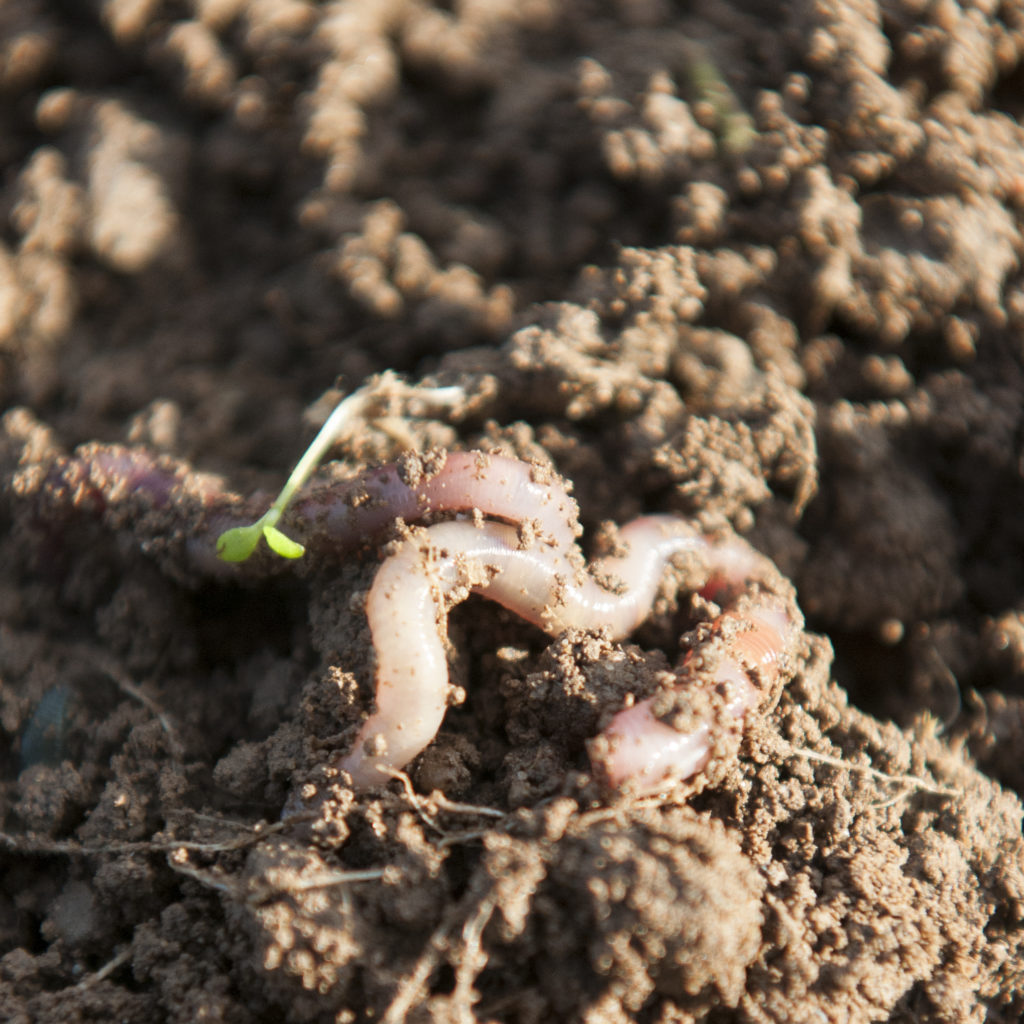
It is hard not to bring the debate back to glyphosate. It is everywhere and in everything e.g. in non-organic food, wine, beer, in tap water, in urine and it has even been recorded in breastmilk. So much of the stuff is used and with such frequency that it is compromising our health and the health of our food chain and ultimately our planet. Glyphosate is toxic not only to the plants it kills, and the humans which consume the plants but also to earthworms. At least 6 studies have shown that glyphosate is damaging to earthworms, reducing their reproductive rates and reducing the rate at which they turn soil over. Earthworms have chemoreceptors and sensory turbercles on their skin giving them a high degree of sensitivity to chemicals and they avoid soil contaminated with glyphosate.
We can learn a lot from these little creatures. They quietly go about their work, improving our soil, helping us grow food and they know instinctively that glyphosate is something to be avoided. Maybe society should take a leaf out the earthworm’s book and avoid glyphosate too. The good news though is that organic farming does not use glyphosate (or any chemicals) so by buying our produce, you are not only helping the environment, but your own health too! 

Kenneth

PS Thank you for your continued support, we really appreciate it! All our boxes are organic and plastic free and we also have a great range of organic groceries that you can add to your fruit and vegetable order here.
Waterlogged but Never Wavering

When it rains look for rainbows, when it’s dark look for stars.

Oscar Wilde

I came out of my office last week, I had no inspiration, I didn’t have anything to write about, I definitely wasn’t in the right space and I was getting frustrated.

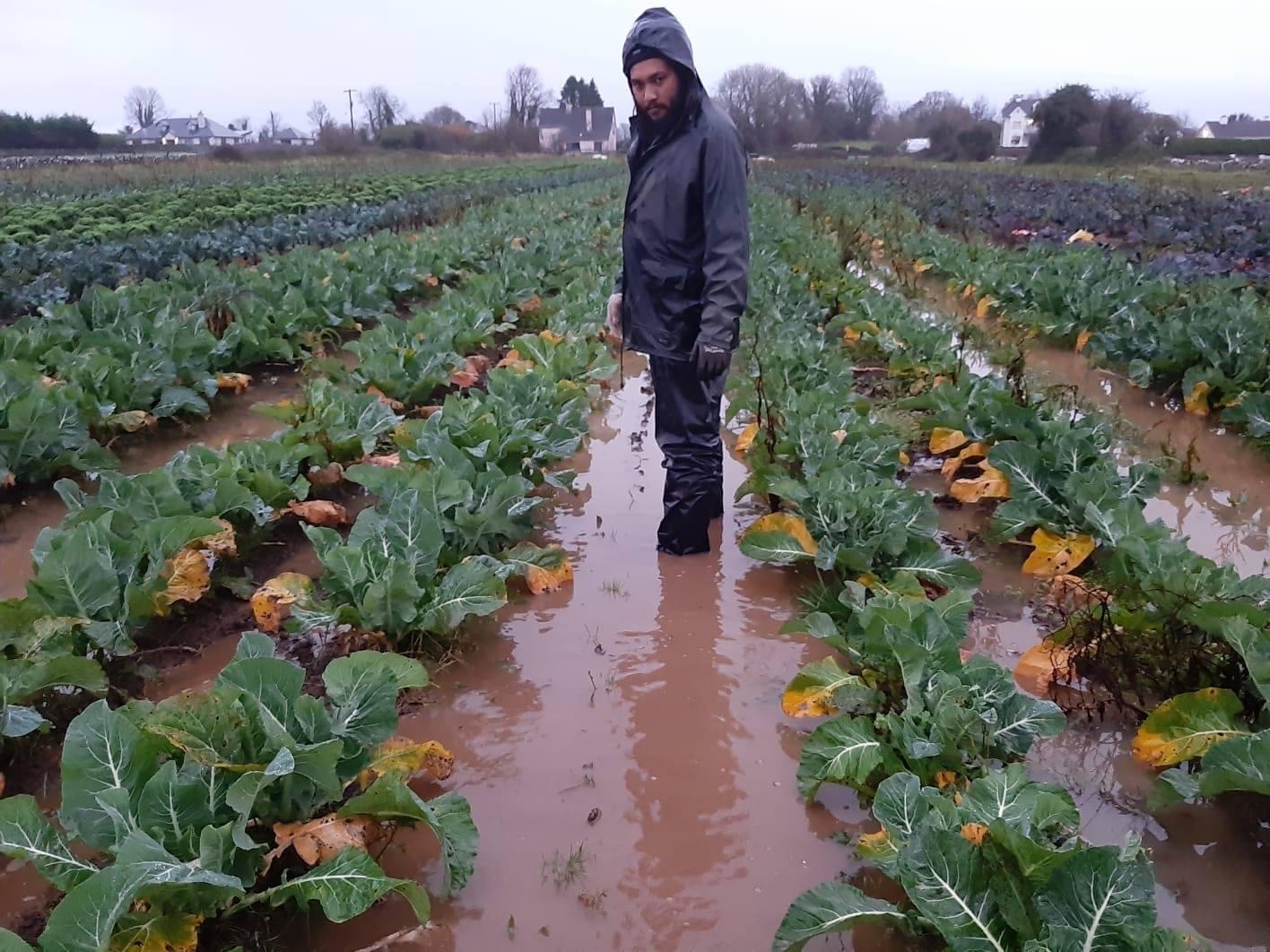
I decided to see what was going on out on the farm and I bumped into Emmanuel and shared my woes. Write about “Muck and rain, and mud, and clay and rain, and water because that about sums up the week just past” he said.

That was it, he had hit the nail on the head, it was wet.

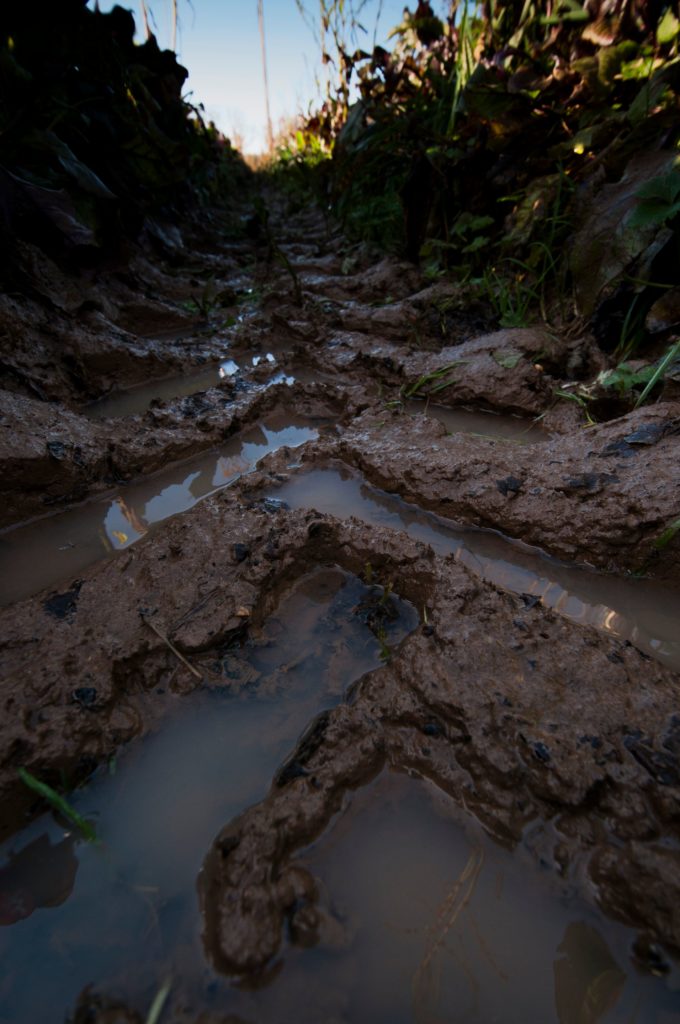
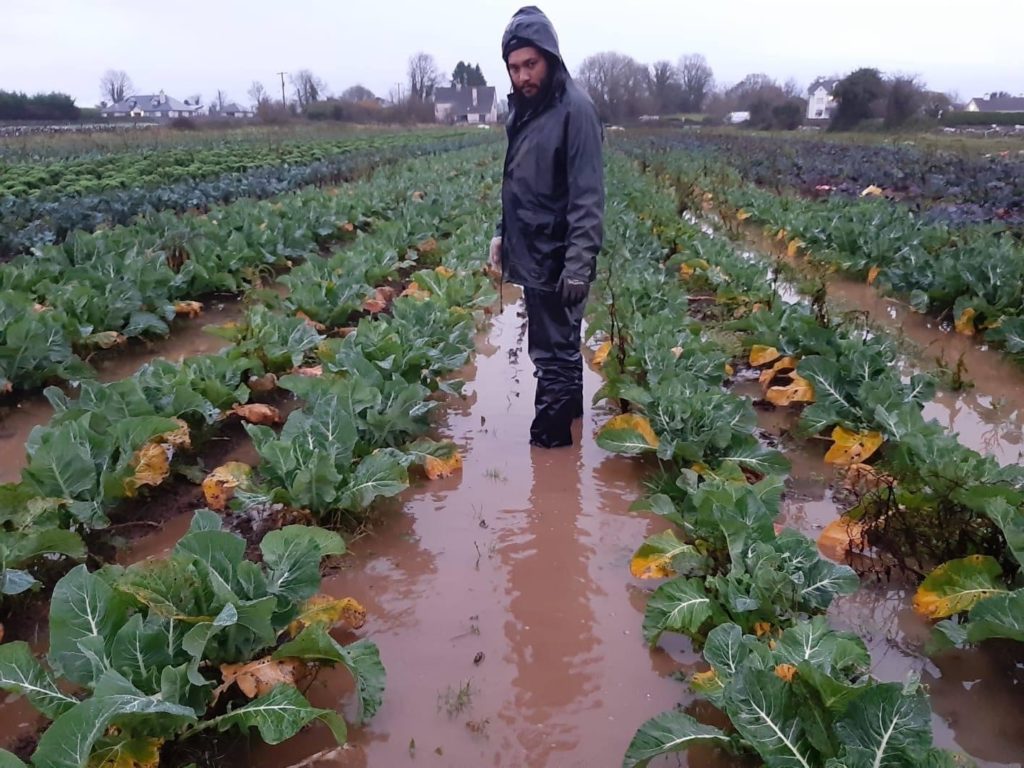
Some places in the fields the water is a foot deep. The beds we planted on in the summer are submerged, the plants with waterlogged roots struggle to breath. It is ok for a few days but if there is prolonged water, then they die.

Walking up a sticky, muddy field with a bag of kale on your back must be one of the very best work outs you can get. If you have ever had a young child wrap themselves around your foot and not let you go, well that is what the field does.

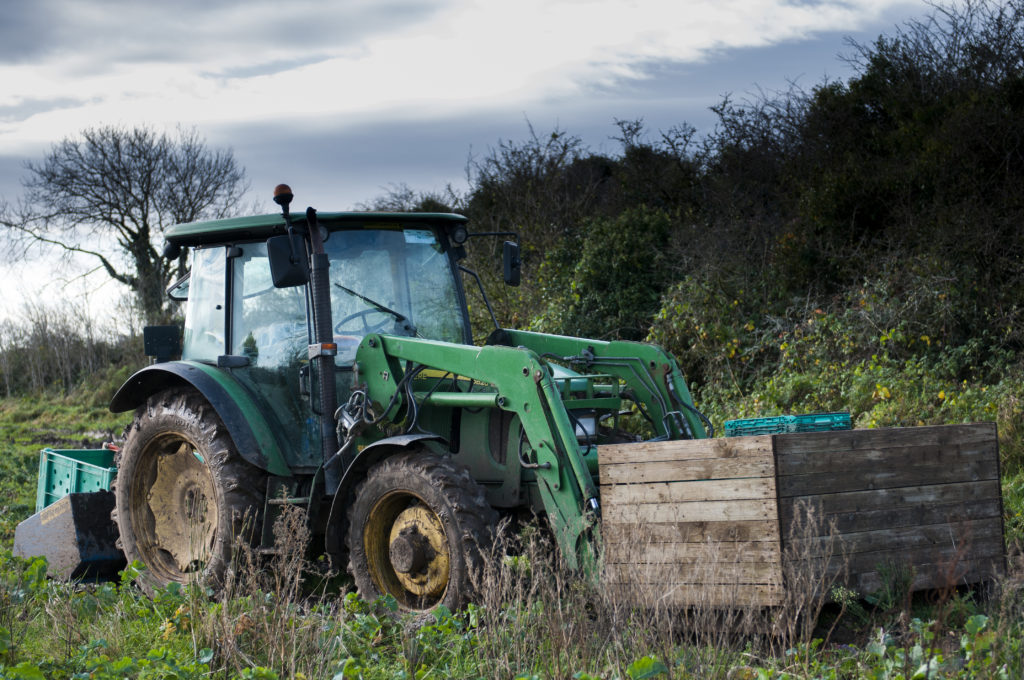
I got the impression last week that even our poor tractor was not happy.

The ruts from the tractor wheeling’s are deep and although Joe (My seven year old son loves them, in fact he would actually disappear into some of them) it does not make for easy navigation when it comes to driving with a tonne of parsnips on the front of the tractor.

In the cold wet weather, you often find yourself with three or four layers of clothes on and waterproofs and wellies and sweating even though it is freezing and wet. This I think is one of my least favourite ways to pass the time.

But the sun is always there, we may not always be able to see it, but it is always up there over the clouds. It is only because of the clouds and the rain that you see the most beautiful skylines, the most stunning sunrises, and the most fantastic evening sunsets. These skyscapes are more striking at this time of the year that in high summer by a long way.

Then of course there is the food.

We are doing, I think, our bit for the planet. We are growing sustainable food on a scale that supports thousands of people each week. When I first wrote this, I thought it could not be true, but then I did the maths. If we do an average of 1500 deliveries per week and each household has an average of 3 people then that is 4500 people, that is a lot of mouths to feed, that is a large responsibility to do things right. That is a lot of trust put in us by you.

I shocked myself with that revelation, a far cry from the first 26 deliveries we did in May 2006.

So, we will get stuck in again on Monday, harvest more food, deal with the mud and the rain, do our bit for sustainable food, do our bit for climate change, because we have to.

Can you sustain a path such as this without being either clinically insane (and that could be the case) or having a belief in something bigger? For us I like to think it is the latter (but who is to say really). Our big “WHY” is the planet, nature, biodiversity, and every living creature we share this earth with deserving a chance. This is what drives us on. Have a look at our 5 Pledges for the Planet to see our promises as a business.

As always thanks for your support, it’s what keeps us going.

Kenneth

PS Don’t forget to place your order for next week here.

Our Choices Matter

Never doubt that a small group of thoughtful, committed citizens can change the world. Indeed, it is the only thing that ever has.

– Margaret Mead

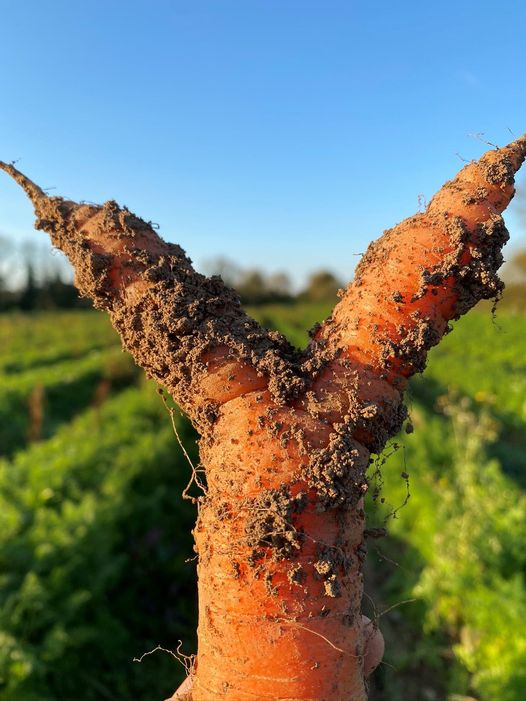
At the fork, which path will you take?

I remember as a child picking peas in my Grandad’s garden. He had apple trees, he grew his own veg. I remember sitting on his lap drinking a mug of turnip juice, (I cannot imagine trying to get my kids to do that today!) most of the food was grown on his farm. Things have changed so much in a generation…

When was the last time you tasted a freshly harvested carrot, can you remember what it should taste like? There can be such pleasure in the simple foods, and there are of course remarkable ways to cook these amazing seasonal gems.

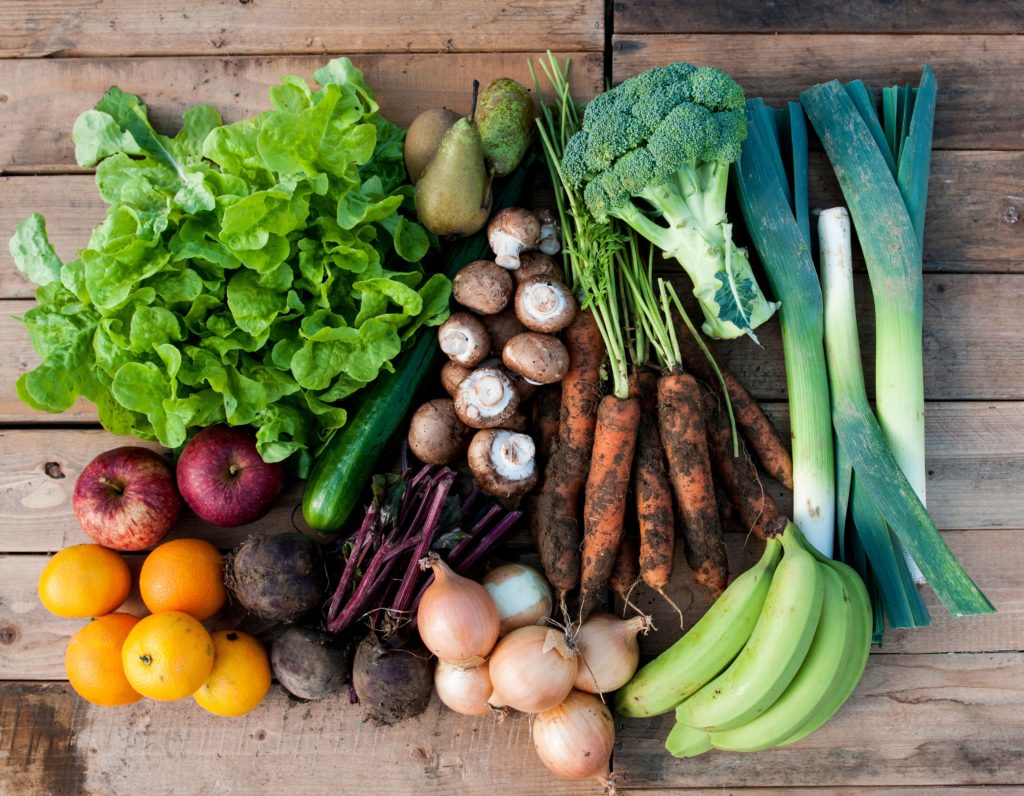
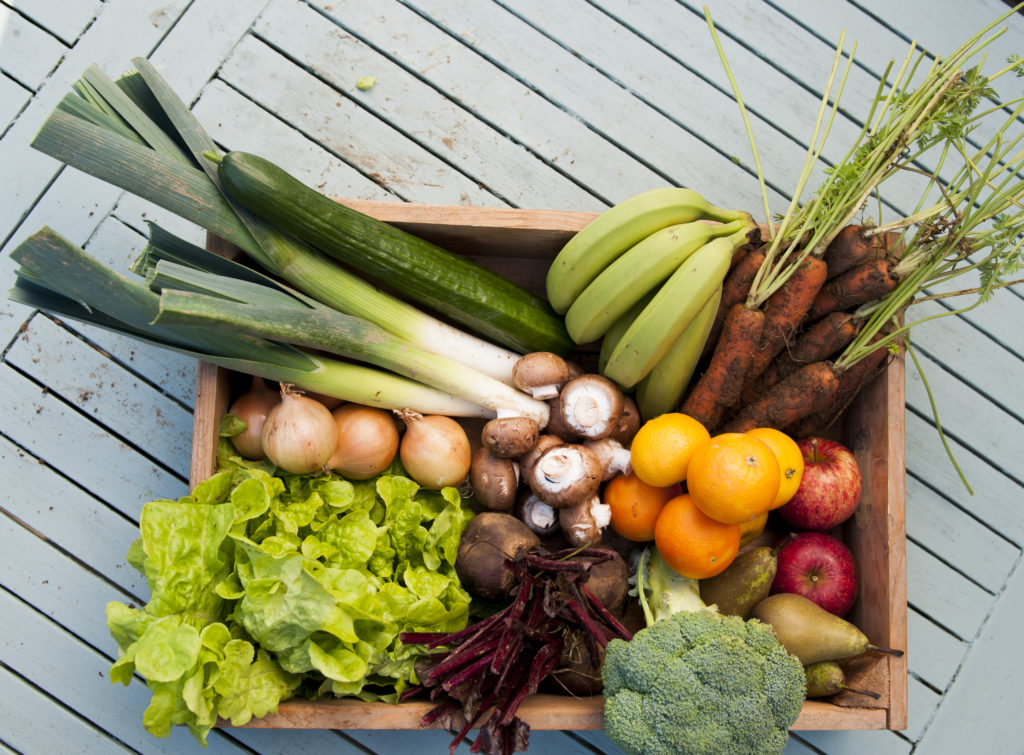
November is still a month of local seasonal plenty. It is now that the real Irish vegetables come into their own, leeks, parsnips, swedes, kales, winter cabbage, carrots, beetroot, broccoli, romanesco and cauliflower.

As an organic farmer, the arrival of November allows a sigh of relief. The relentless pressure of the summer is finally winding down and we are settling into a routine of harvest.

The trees are turning, the wild-flowers have gone to seed, the hedgerows are full of berries, the bees are getting ready to hibernate, even the birds are relaxing a little, everything seems to slow down. Something we could all do a little bit more of.

November too can be a time for reflection. As a farmer the simple things like tree planting, growing hedgerows and leaving wild patches can give immense pleasure. This is easy stuff that pays the most amazing dividends for the person and the planet, but in modern food systems it is often dismissed as nonsensical and left to one side in favour of production. The irony of course is that food production is facilitated and improved by all these positive things.

The impact of our food choices has far reaching and sometimes unimagined consequences.

Imagine clearance of pristine forests (by burning) to facilitate increased cropping land to produce GM (genetically modified) soya destined for the global animal feed supply chain that will end up on Irish consumers plates. This is a sad reflection of our times.

 Cheap food has a price and a story. The real stories are hidden behind the glitzy shiny wrappers, there is always a story and usually not a good one.

The truth ironically can be hard to swallow, but it doesn’t have to be like this.

There are amazing and positive alternatives. Our parents chose well, they ate seasonally and locally, they ate less meat. Who doesn’t remember cabbage and turnip and the endless ways to cook potatoes!

Maybe what we eat deserves a little more consideration because our food choices matter a lot and without the planet and the food none of the other stuff matters.

We have more power than we realise, which path will you choose?

As always thanks for your support, we really appreciate it. Stay safe and look after each other.  

Kenneth & Jenny 

PS We cannot wait to tell you all about our Christmas delivery schedule and our new gifting options – stay tuned!

Support us by signing up for a regular veg box delivery here.