This is such a great way to make and serve salad this summer. Your choice of roast veggies, chickpeas, halloumi and seeds on a tray then on the same tray toss through green leaves and dressing and serve into a big salad bowl! I think these roast and serve salads will be very popular this summer.
You can roast up any root veg you have in your veg box, parsnip, carrot, beets, even potatoes, cauliflower or broccoli, add some cheese if you wish and a delicious dressing to finish.
Step 1: Preheat the oven 180ºC fan. Line a large baking tray with parchment paper. Put the sweet potato, chickpeas, red onion and diced pepper on the tray. Drizzle with salt, pepper and oil, shake or rub to coat everything. Roast in the oven for 20 minutes, checking half way through. After this time add the diced halloumi and roast for a further 15-20 minutes.
Step 2: Put the pumpkin seeds on a separate tray and toast in the oven, along with the veg, for about 10 minutes, check half way through- they may need more or less time.
Step 3:Make the dressing, add all the ingredients except the oil to a bowl, whisk well, then slowly pour the oil in while whisking to emulsify the dressing. Taste it and adjust if needed.
Step 4: Let the veg cool for 20 minutes then top with the green leaves, pour over the dressing, gently toss together. Lift the parchment paper and tip into a serving dish.
I was asked to give my opinion the other day on why organic food is better for us and our planet and why it is a little more expensive.
And here’s a question for you: if you have a garden at home do you or would you spray your food with chemicals, then harvest and eat it?
Much of our food system today manages and survives because of the ‘out of sight is out of mind’ principle. The giant ultra processed food factories, where vats of sludge are transformed into irresistible snacks, the giant inhumane animal factory farms, the massive intensive conventional vegetable farms that spray and coat our food in chemicals, we see none of this and if we were to, I think it would leave an implacable lasting impression that could change our food habits forever.
Supermarkets want to make the highest possible margin on as many products as possible, but they also want to entice the greatest number of people to shop with them. To do this they often loss lead with fresh produce. Now from the point of view of the consumer this may seem like a win-win, but it may not always be as good as it seems, and as they say there is no such thing as a free lunch.
Inevitably the supermarket will have put pressure on the farmer to supply at lower costs, and whilst again you may say that’s the rules of the marketplace, it can have more serious consequences for us the consumers. Setting aside the fact that for local producers it means many will go out of business and this will have an impact on our ability to source local produce in the future, leading to more imports, and less food security, it has other serious financial implications that we pay for indirectly. These costs are externalised as they say.
Low prices, always have a cost, and this cost will be factored in somewhere along the food chain. Look at the kick back of farmers against the green deal that the European parliament is trying to get over the line at the moment. Farmers do not want to bear the pressure for the environmental costs, as they will make it more difficult for them to compete against cheap imports. But, if they were paid a fair price for their food then they would be more likely to accept a deal.So right here we see the cost that is borne by the planet, by the land, by the environment, by biodiversity. We end up with polluted water ways due to high intensity pesticide and fertiliser application, leading to algal blooms that kill the fish, look at lough Neagh last year.
Conversely if there is money in the pot, to plant trees, and hedgerows, and tend to bees and plant tracts of wildflowers and leave areas to go back to nature, and not use single use plastic, as we do, on our farm then that is what can happen. It has been estimated that over half a trillion dollars of food production relies on pollinators annually, without them we would be in real trouble.
Then there is the application of chemicals in our food system, remember our kale was tested for 870 chemicals, that means a possible 870 toxic chemicals could be used on conventional food.
I cannot overstate the impact not using chemicals has in the production of our food and I know a thing or two about chemicals. Without chemicals there are weeds, and biodiversity depends on weeds for survival, just look at the decimation of the Monarch butterfly in the Americas, a major contributing factor is the use of Roundup. When chemicals are used, they get into the food and they destroy all diversity, leaving vast monocultures, that require more and more chemicals to control, weeds, bugs and fungi. The more chemicals in our food system, the less life in our food system it is as simple as that. There are now 44,000 species on the IUCN red list.
We need biodiversity. As farmers we are given the responsibility of producing food but also of protecting the land we were given, my dad and granddad believed that. What has happened to modern agriculture that we have strayed so far from this path?
As always with help from people like you we are creating a better fairer food system, thank you.
Kenneth
PS Since we have introduced our new website we have suffered a substantial loss of customers, if you are one of those customers that is grappling with resetting your password or are not familiar with the way the new system works, please, please give it a try, we the 38 people who work here rely on those orders each week, as does our farm and our network of Irish suppliers. So please if you can have another look. Once you get set up it is actually much much better and we have some exciting offers to help out with the cost too. Keep an eye on your inbox this weekend for some fantastic offers.
CLICK HERE www.greenearthorganics.ie TO PLACE YOUR ORDER FOR DELIVERY NEXT WEEK 🙂 We really need and value each order.
Jam packed full of goodness and flavour! These chickpea patties are delicious and so easy to put together.. we know you’ll love them. This week I got some organic pointed cabbage, cucumber and onions fresh from the farm in my veg box. I ordered tinned chickpeas and some spices and whipped these up for our mid week dinner and the whole family tucked in.
Summer eating should be fresh and tasty with added goodness. We really hope you give these a go!
Lou x
Ingredients: makes 10 approx
For the Chickpea Patties:
1 x 400 g tin of chickpeas – drained and the liquid (aquafaba) reserved
Step 1: Begin by adding the chickpeas, red onion, coriander, spices, carrot and salt to a food processor. Process until the mixture is combined, but still has some texture. Transfer into a bowl and mix through the oats, chia seeds, aquafaba and lemon zest. Take a small amount of mixture in your hand to check that it will form a patty.
Step 2: Line a baking tray with parchment paper. Use an ice cream scoop to evenly measure the patties. Add the scoops of the mixture to the tray, if you have a cookie cutter use it to shape the patties into rounds about 2 inches wide, push the mix down with the back of a spoon, this will make the patties compact. Place the patties into the freezer or fridge to chill for 20 minutes.
Step 3: In a frying pan, heat the olive oil over medium heat until it is hot but not smoking.Add the patties and fry for 2-3 minutes until golden brown, then carefully turn and cook the other side for 2-3 minutes.The patties are fragile, so it is best not to move them too much – let them firm up from cooking before turning them. Ideally, turn them once only.
If cooking in batches, drain on a plate lined with paper towel. To keep the patties warm while cooking the remainder, place the plate in a 100ºc oven.Repeat with the remaining patties, adding extra oil if needed.
For the Herbed Garlic Yoghurt Sauce and cabbage slaw:
Step 4: In a small bowl, combine all of the ingredients and mix well. Check that the seasoning is to your liking. Stir through the finely chopped cabbage. Chill until you are ready to serve.
Plate up: on a small tortilla wrap add a spoon of the cabbage slaw, top with a chickpea pattie, some cucumber ribbons, shaved red onion.
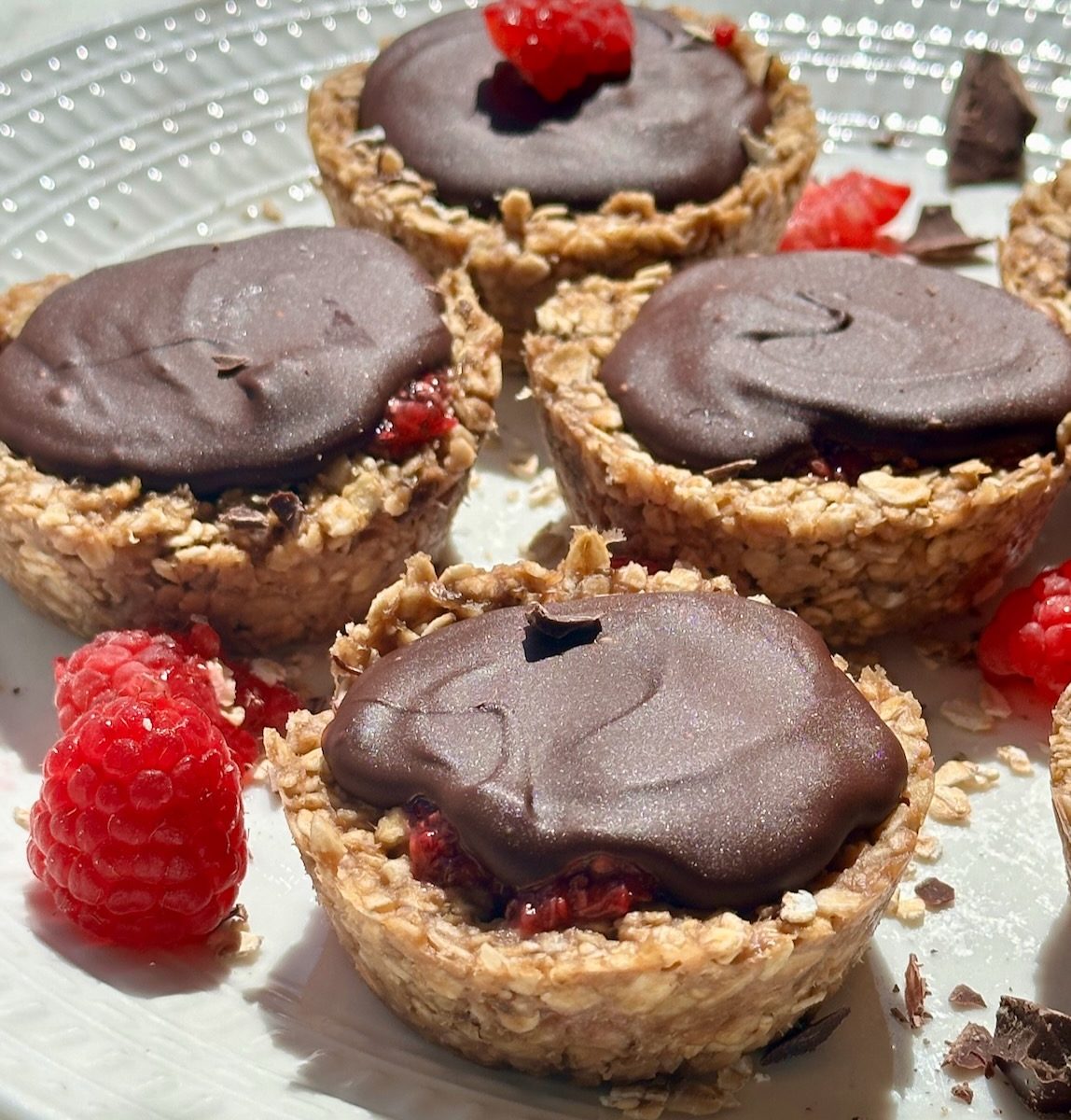
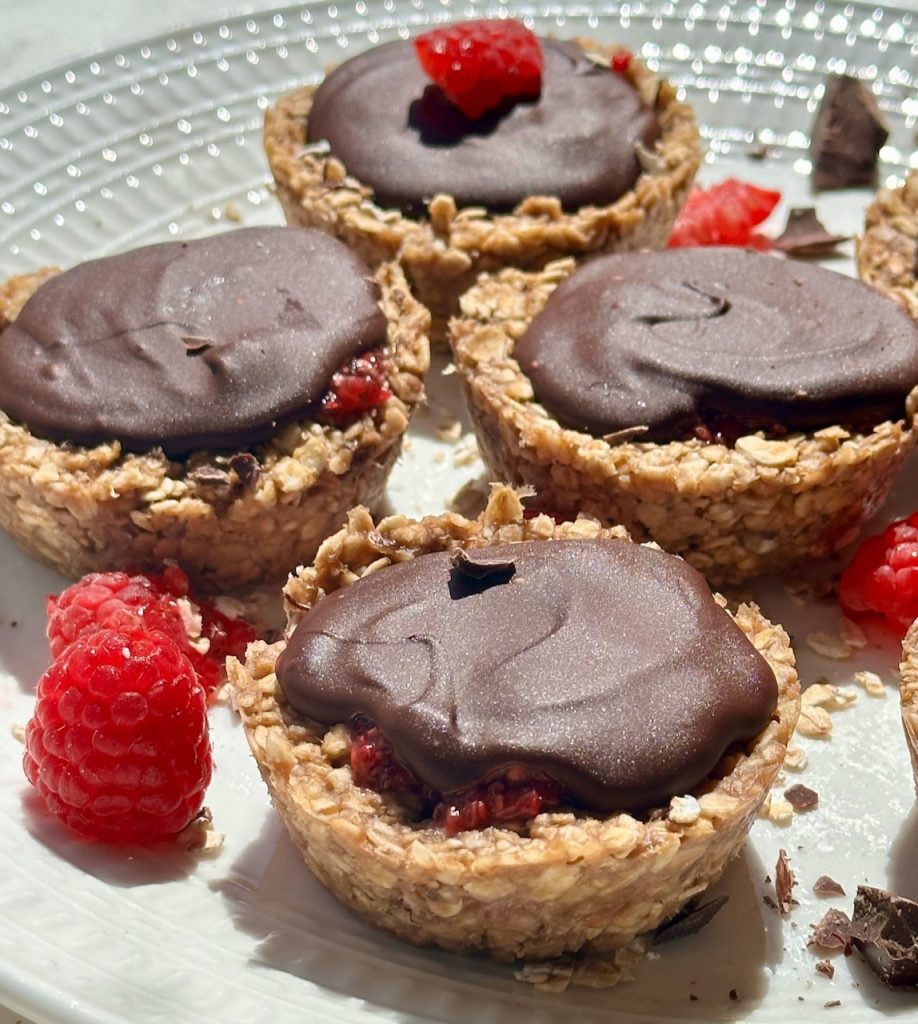
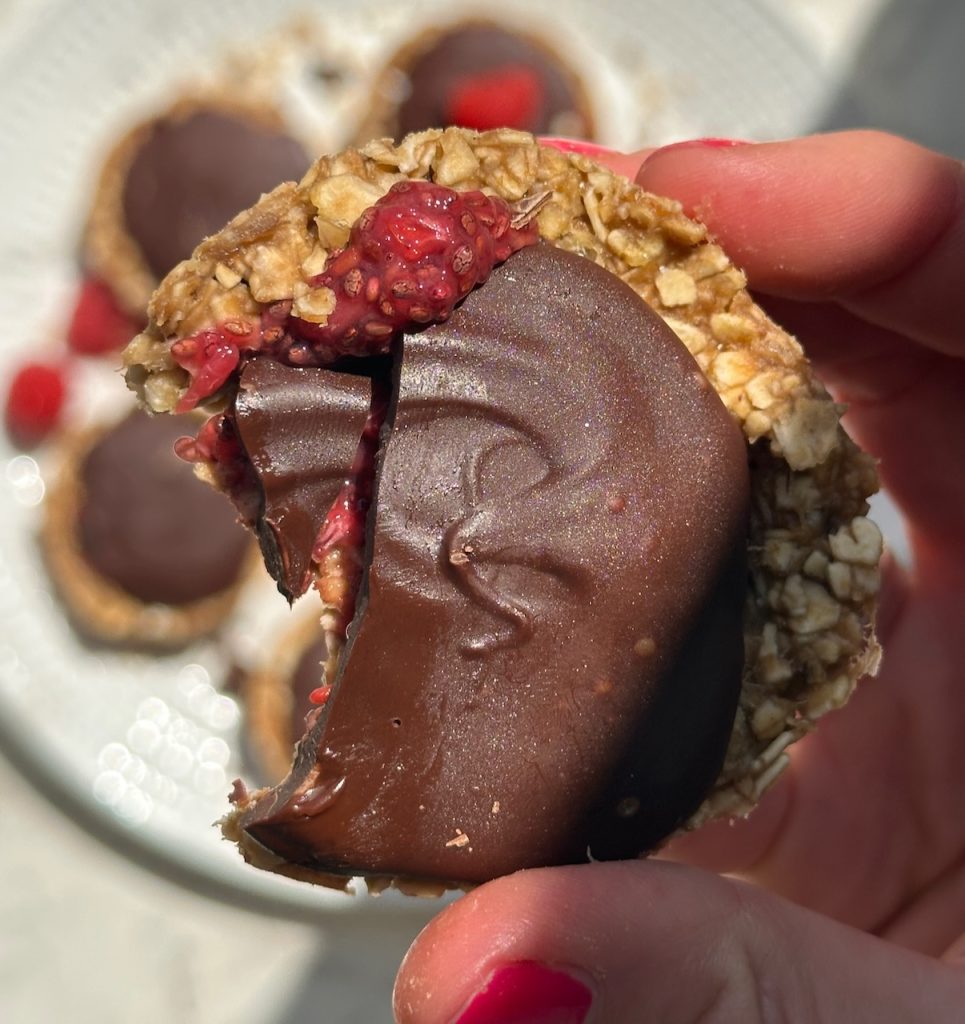
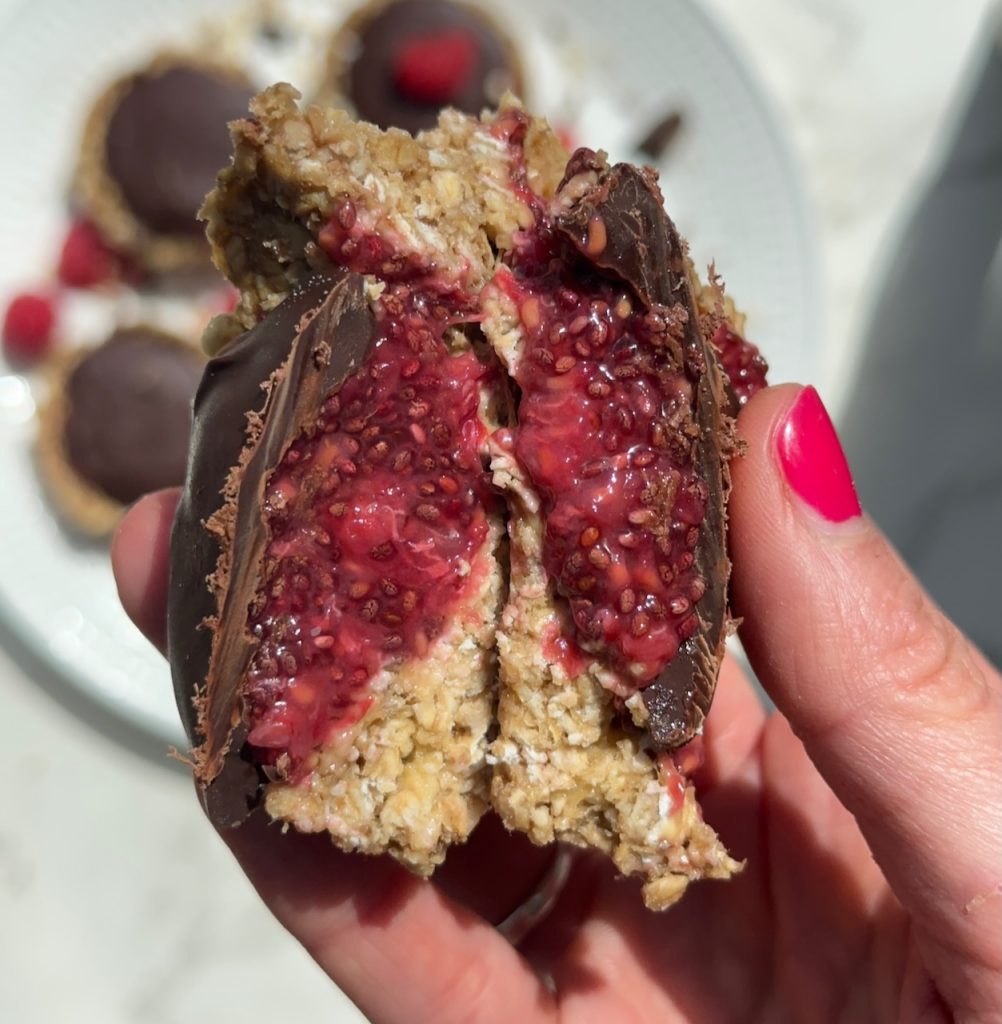
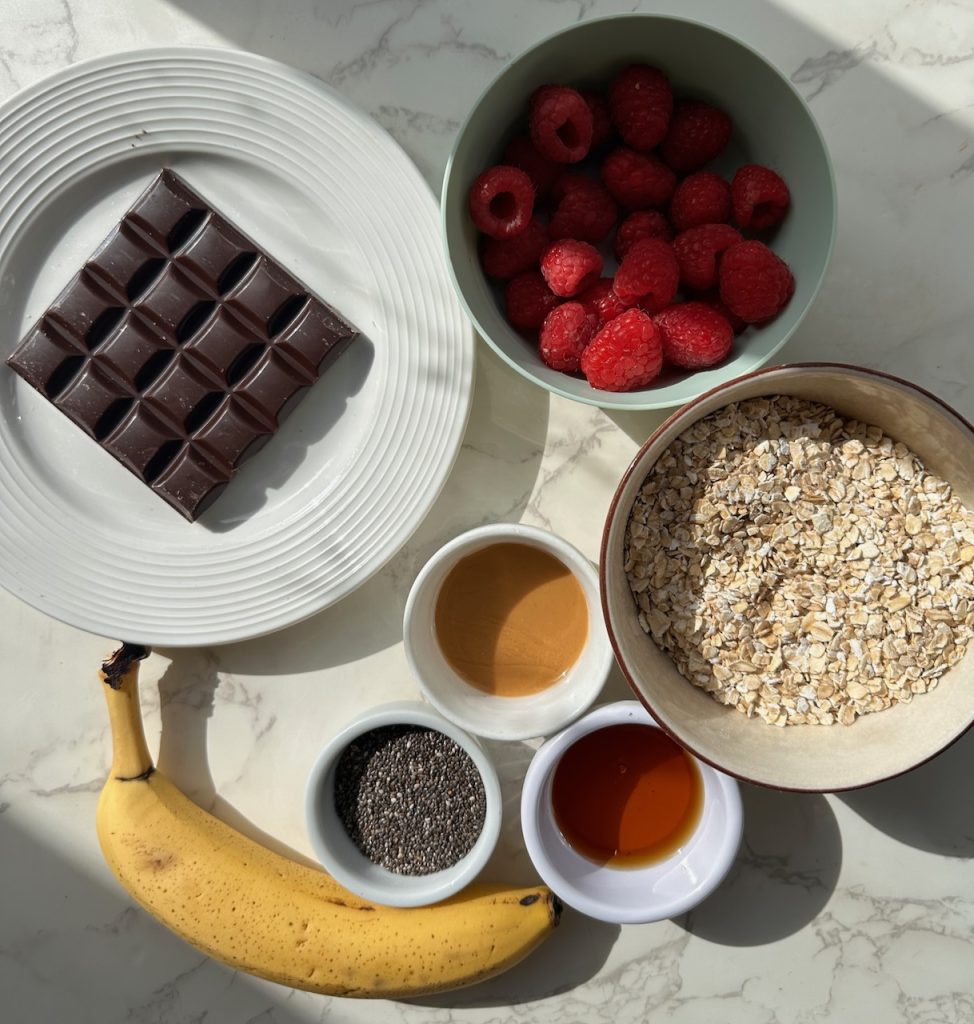
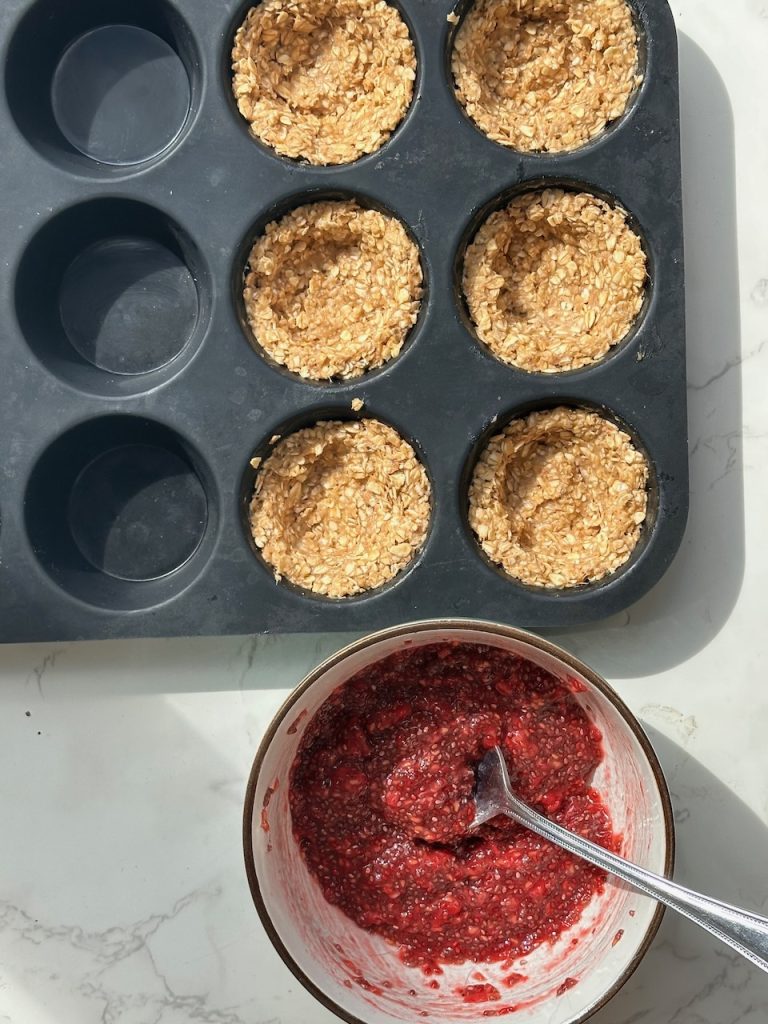
I’ve been on a mission to get my fussy eater (he’s 5) to eat more peanut butter and these have that perfect balance, disguised slightly by the banana. I make raspberry and chia jam all the time for extra protein so its the perfect filler for these too.
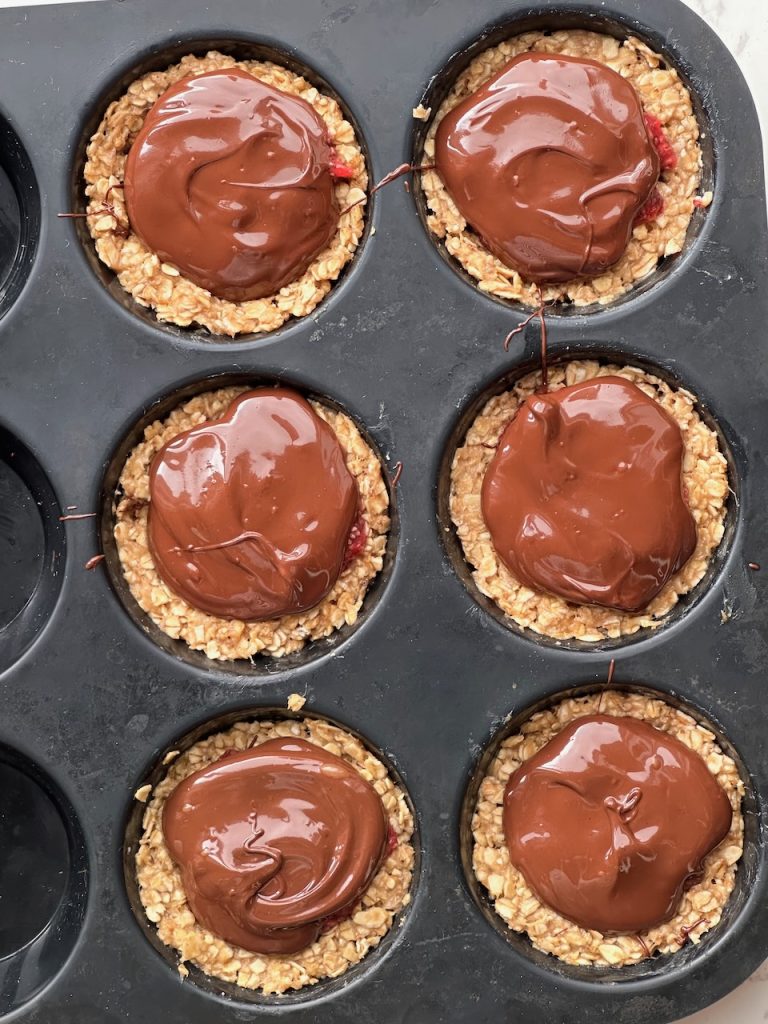
The chocolate is optional but delicious. Lots of yummy organic ingredients in these sweet cups! We love a no bake snack thats tasty and nutritious. Just perfect for that mid morning or late afternoon slump and super for kids after school too!
Find almost all the lovely organic ingredients you need to make these in our groceries.
100g (1 cup) raspberries (fresh or frozen) 2 tbsp chia seeds 2 tbsp maple syrup 100g melted dark chocolate chopped
Method:
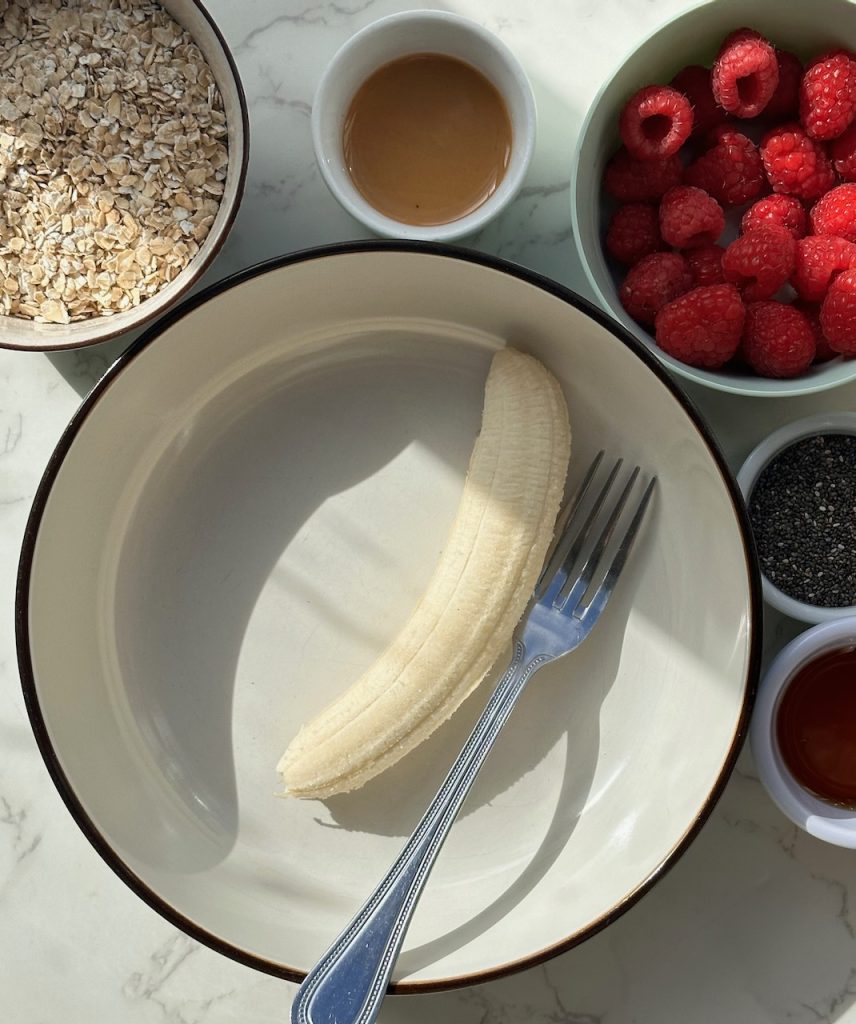
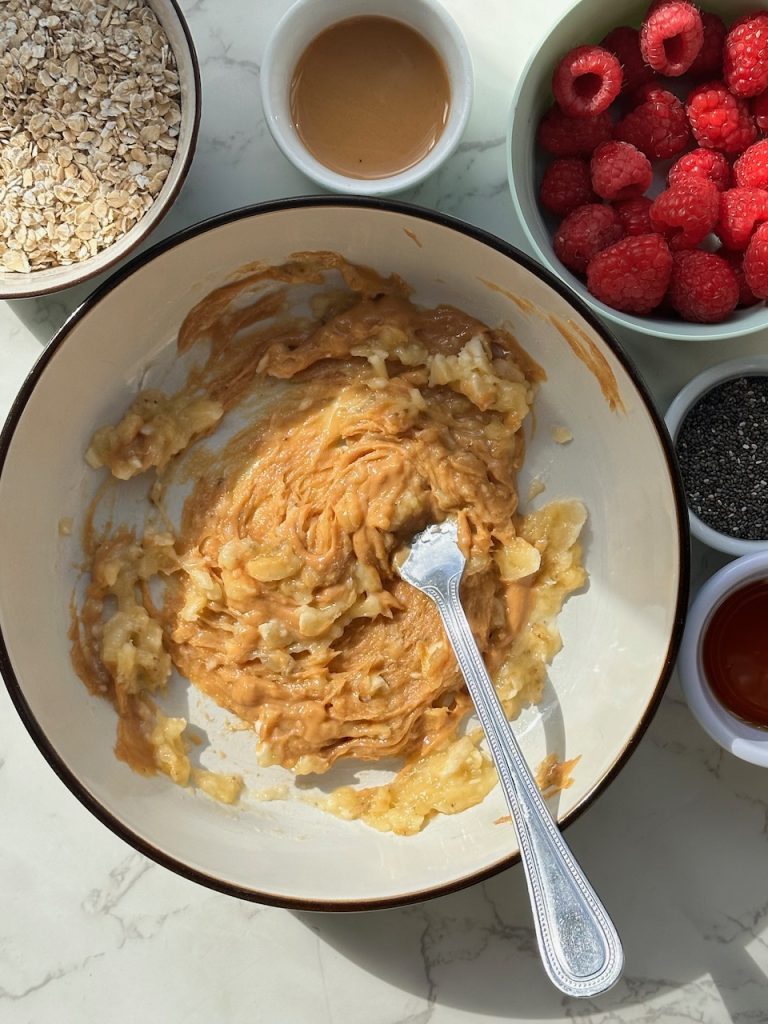
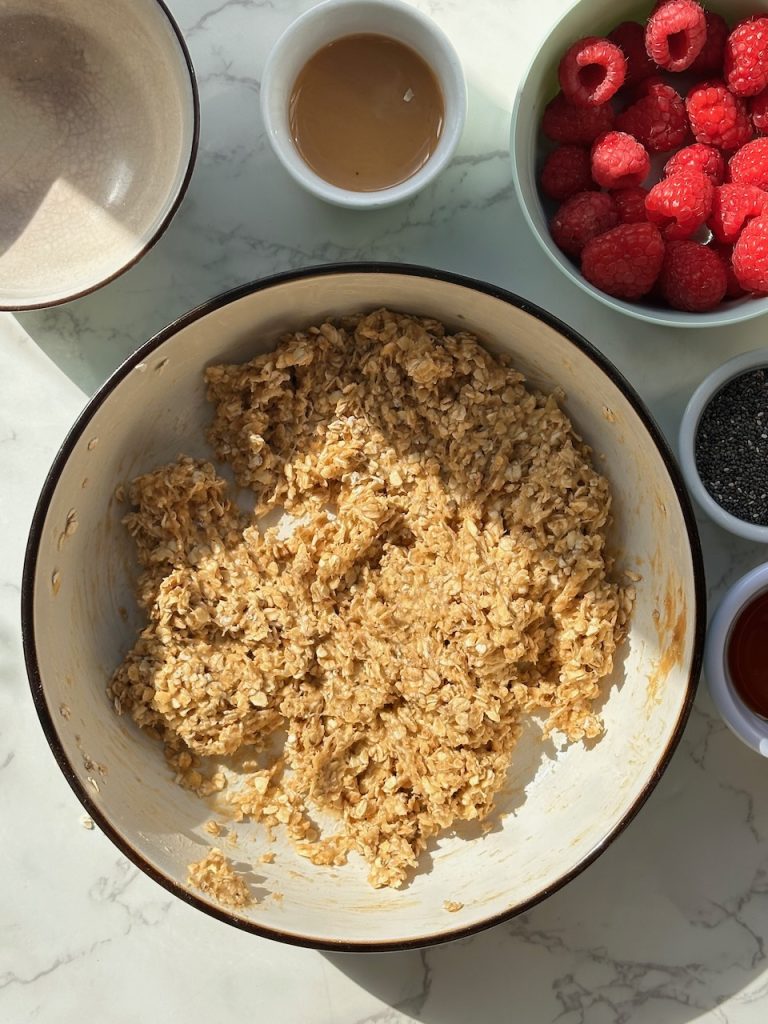
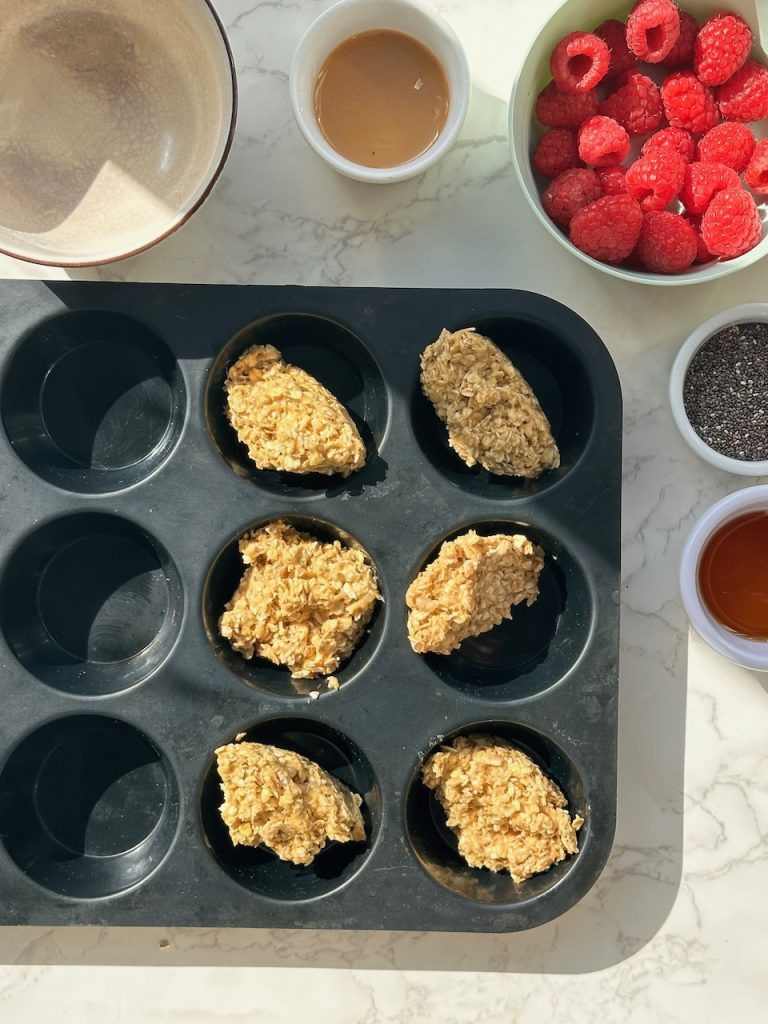
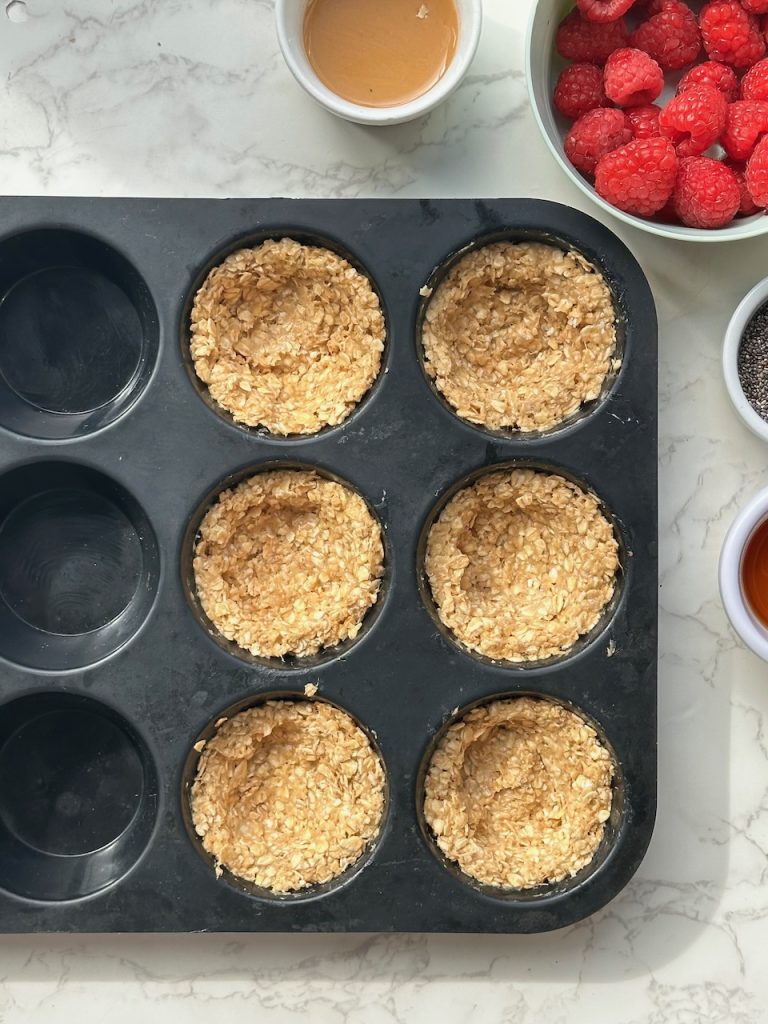
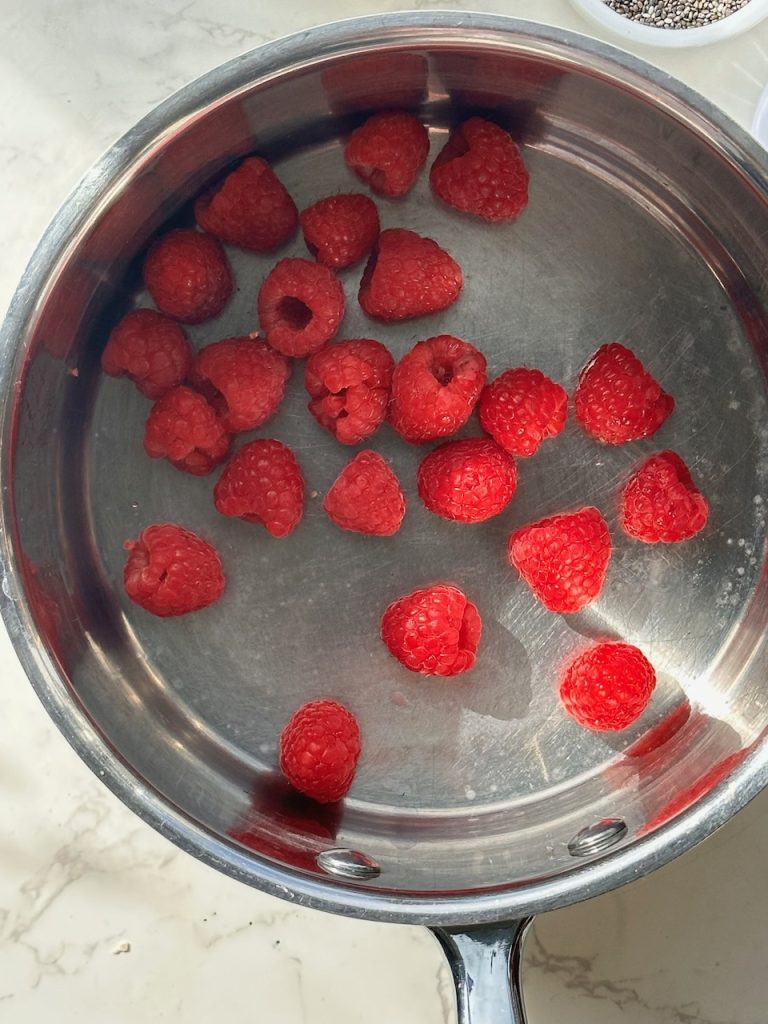
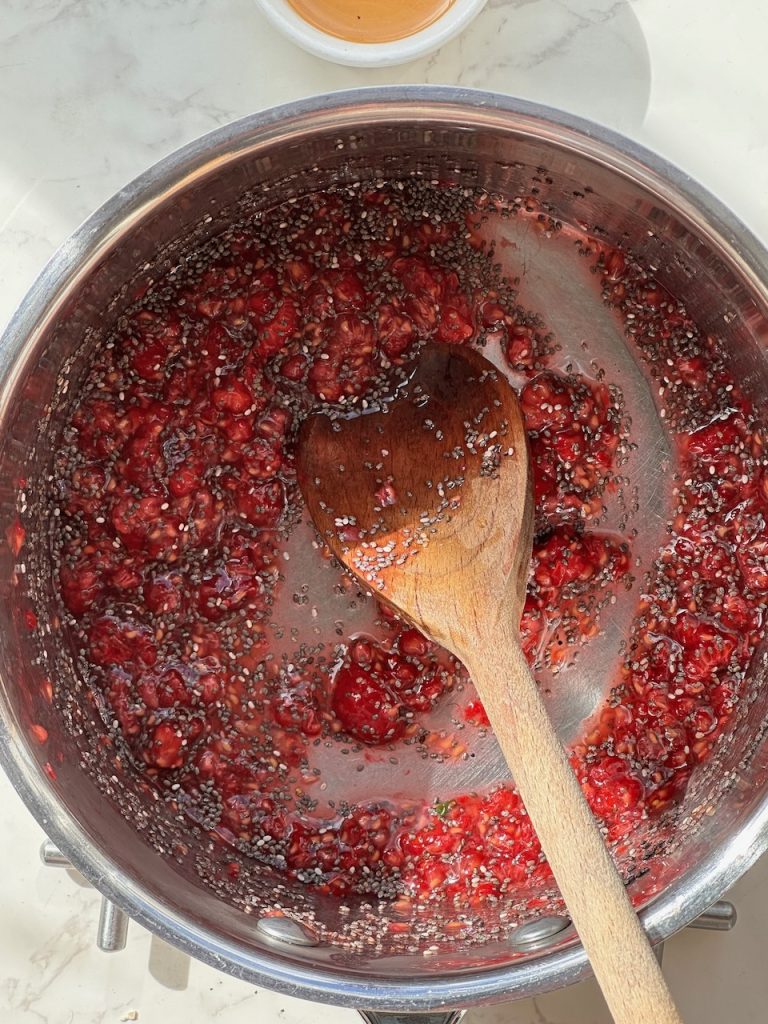
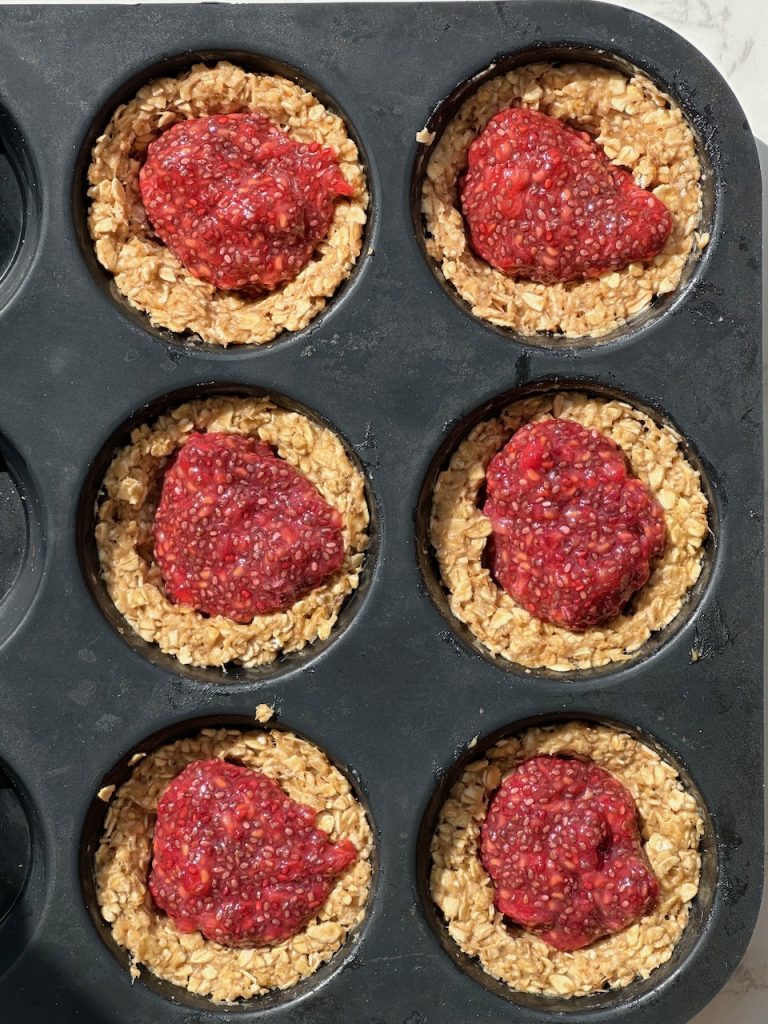
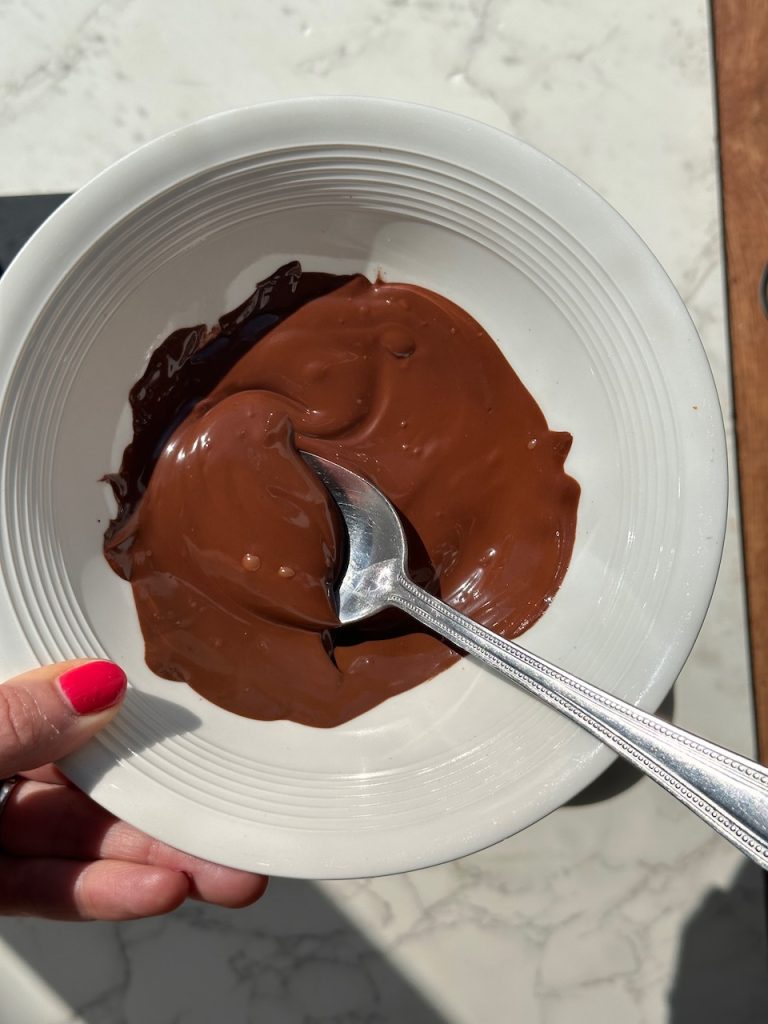
1. Begin by mixing the oats, mashed banana and peanut butter. Spoon into silicone muffin moulds or a muffin tin lined with 6 muffin cases. Use a spoon to shape them into muffin cups. 2. In a pan heat the raspberries, chia seeds and maple syrup and let it cool for 10 mins. Pop 1 tbsp of your jam into each cup. 3. Melt the chocolate in the microwave or in a bowl over simmering water. Spoon on top of the cups and place in the fridge to let the chocolate set.
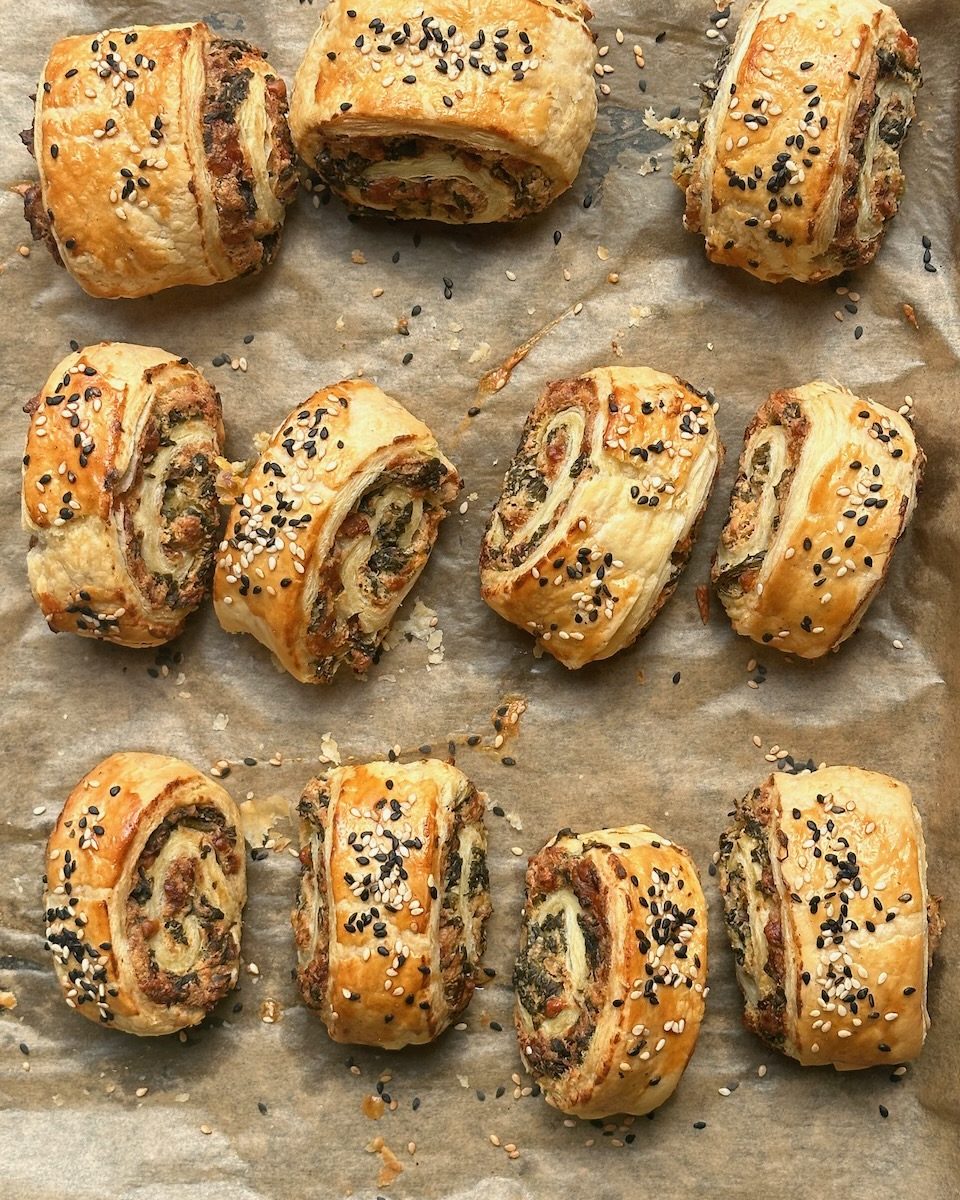
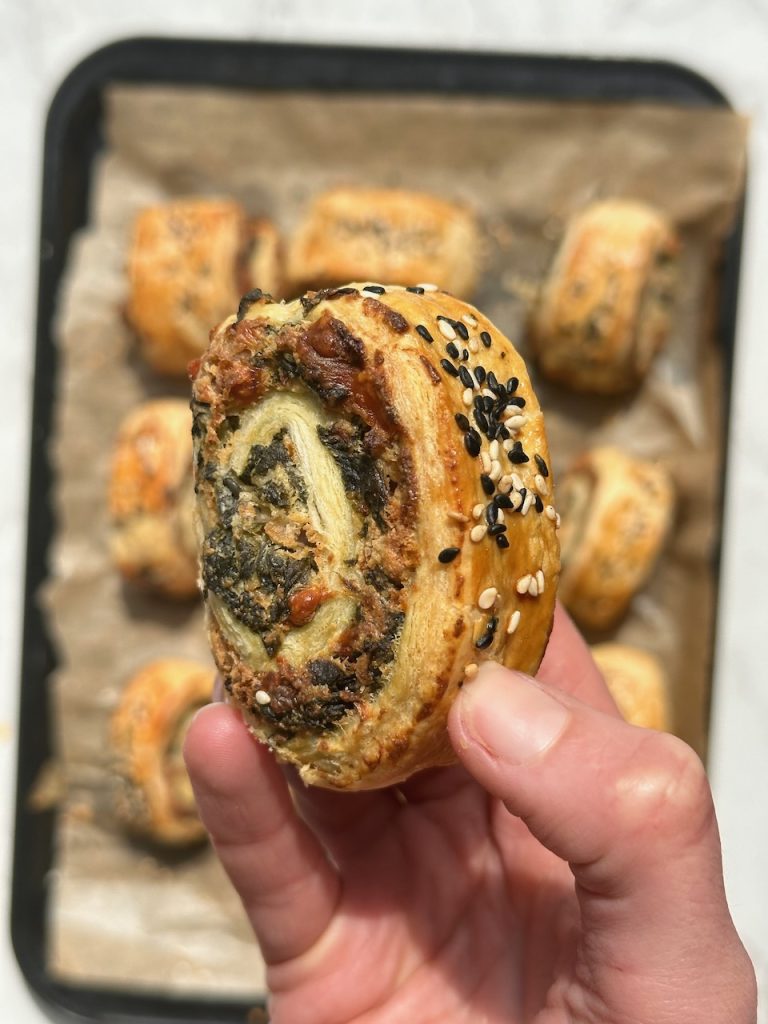
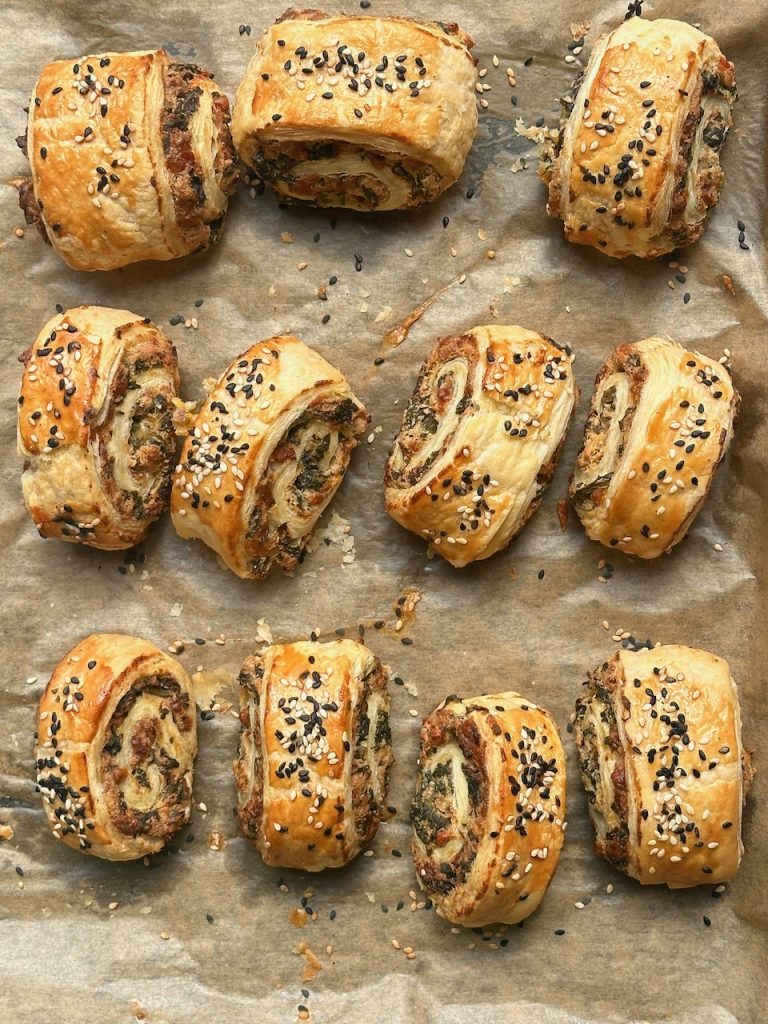
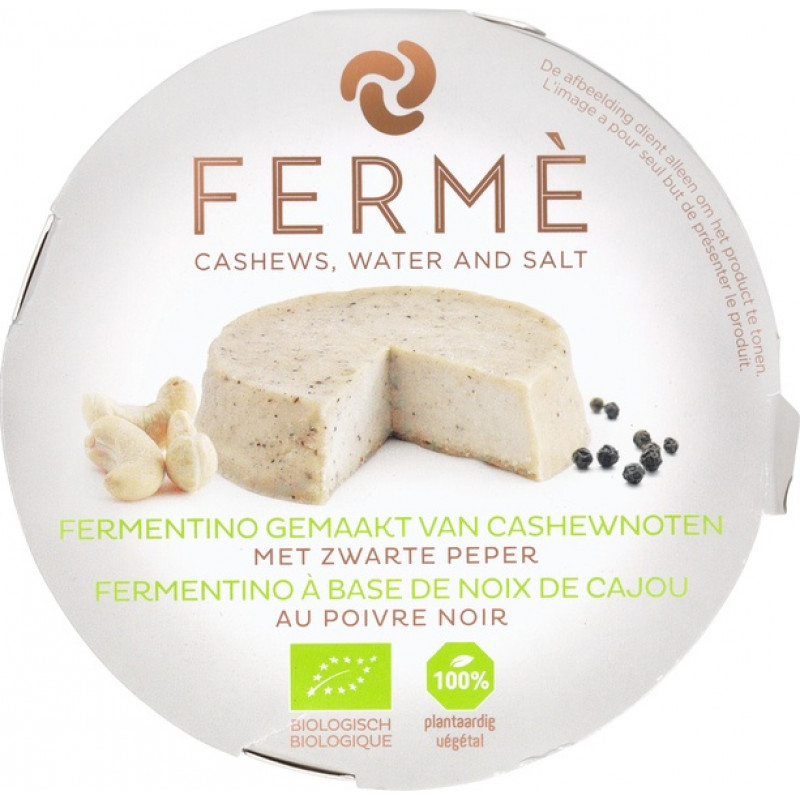
Summer is well on the way, soon we’ll be reaching for the picnic blanket. These tasty little rolls are just perfect to pack for a beach day or a day out in the fields. Spinach is the hero vegetable in these. We’ve chopped and sautéed it and mixed through some cheese including cashew cheese for more nutty protein!
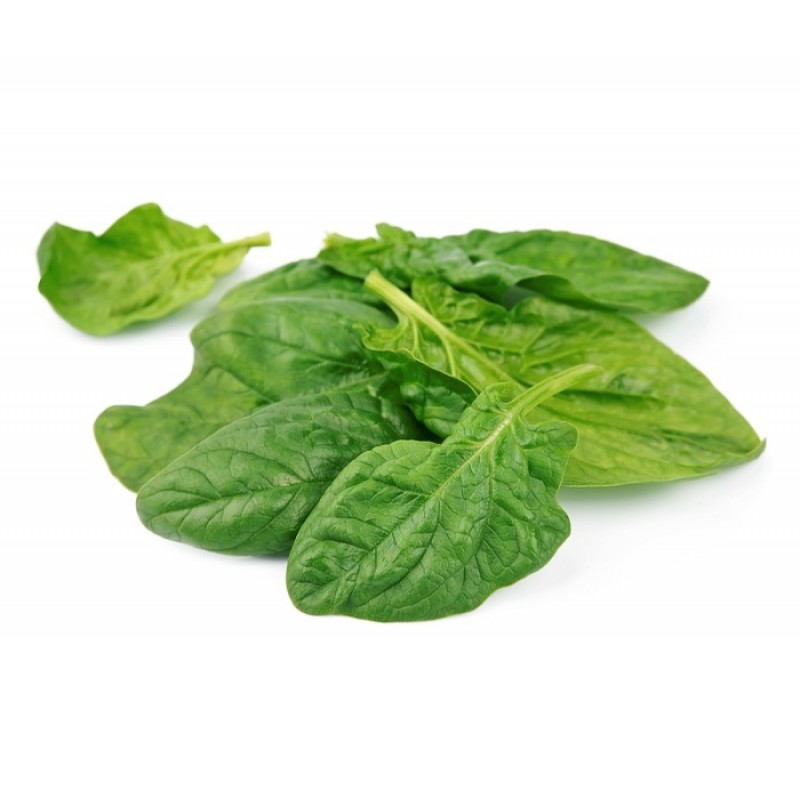
Pop some of our organic Irish spinach in your basket this week and make sure to try these. Eat them warm with a salad or cold from your hand either way they are a delight to eat.
Lou x
Ingredients: makes 10 or 12 small rolls
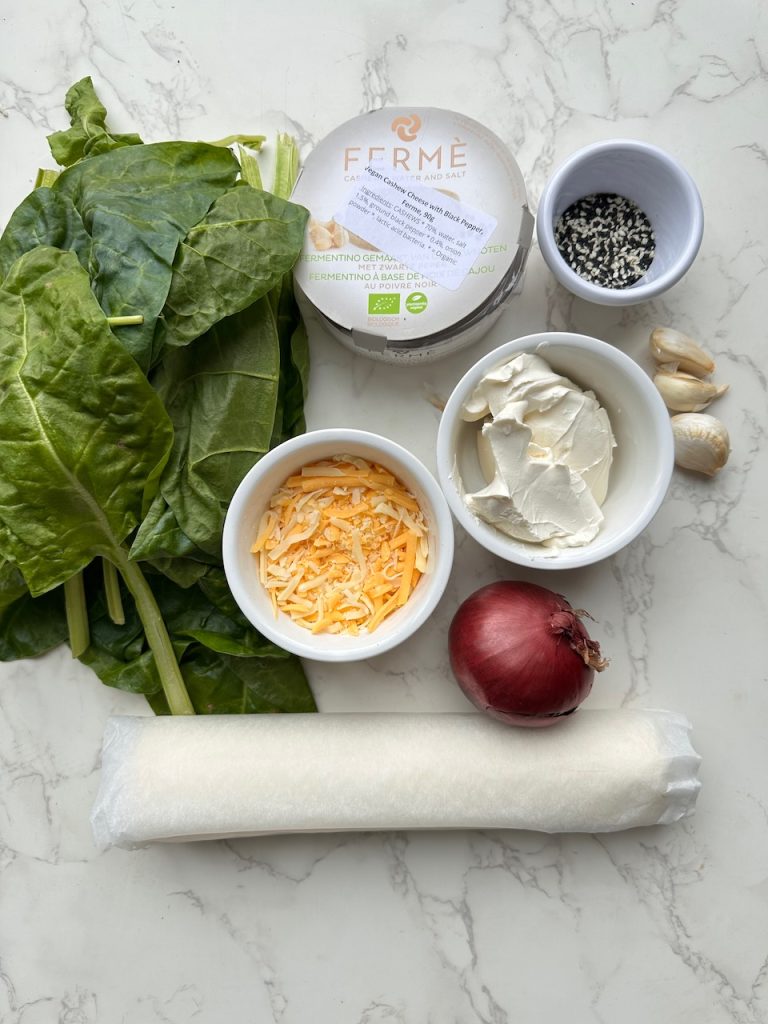
1 pack ready rolled puff pastry (395g approx)
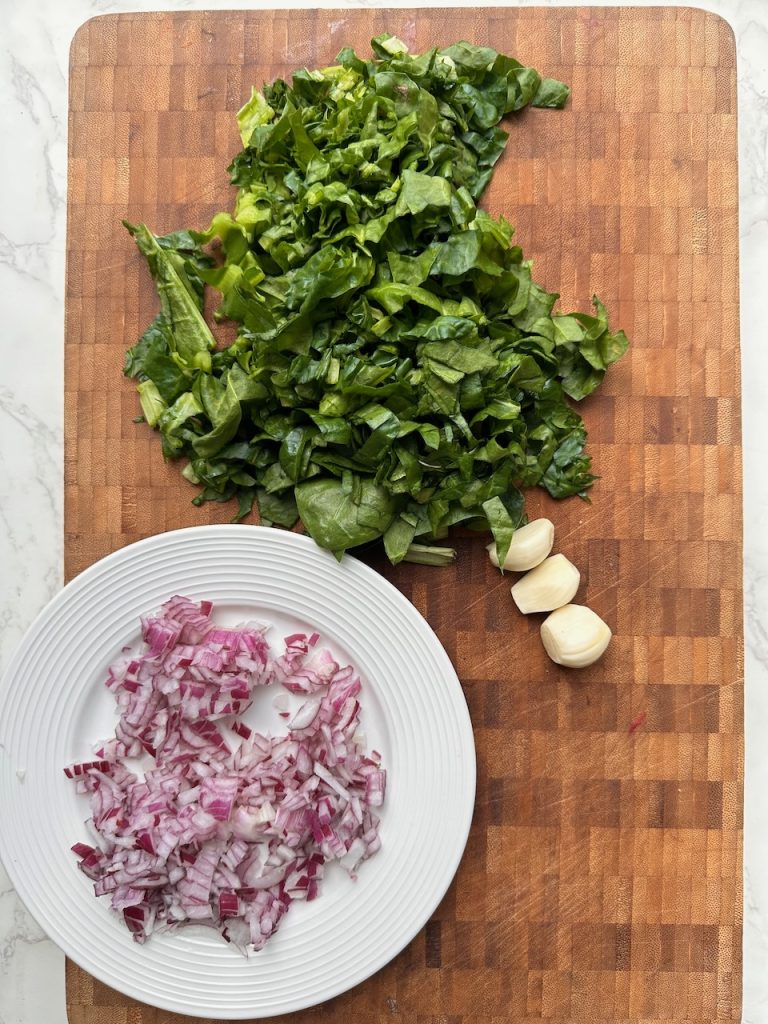
Filling: 120g fresh spinach, washed and chopped stalks and all 1 red onion, finely diced 3 garlic cloves, finely chopped or grated salt & pepper to taste 30ml water
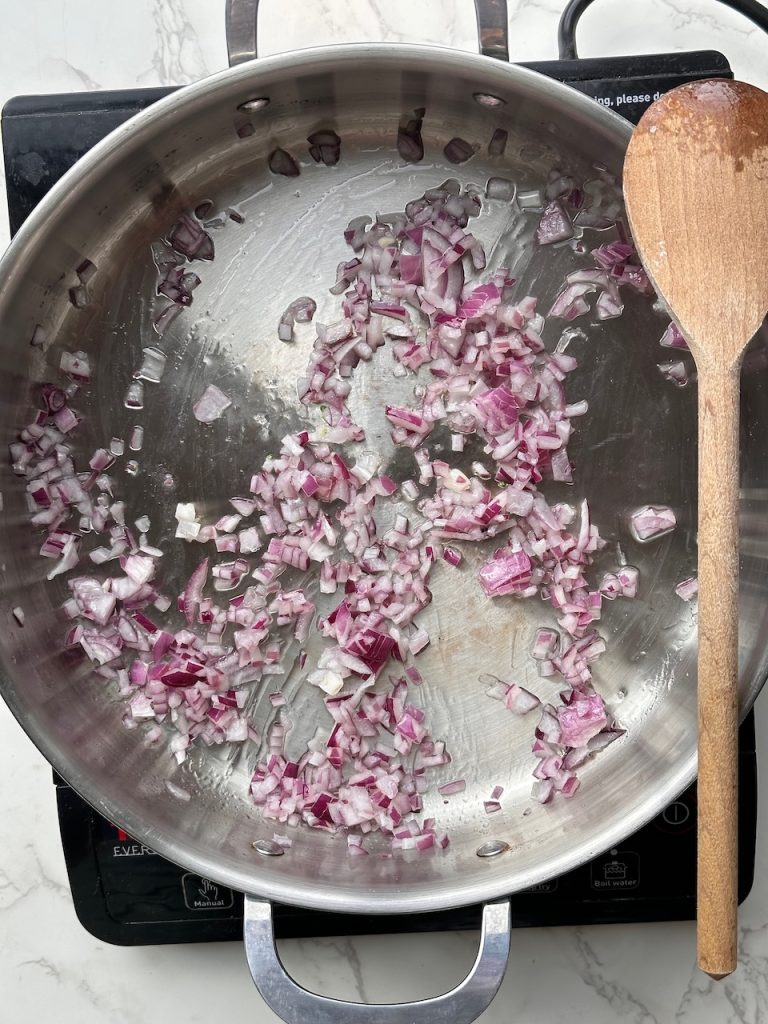
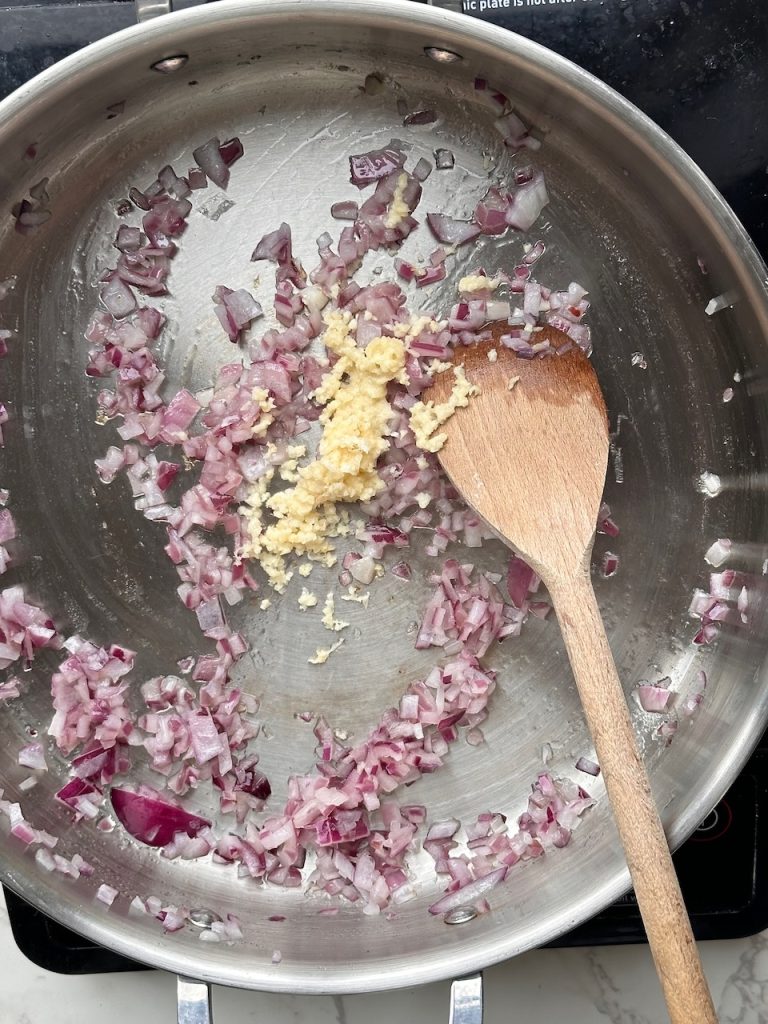
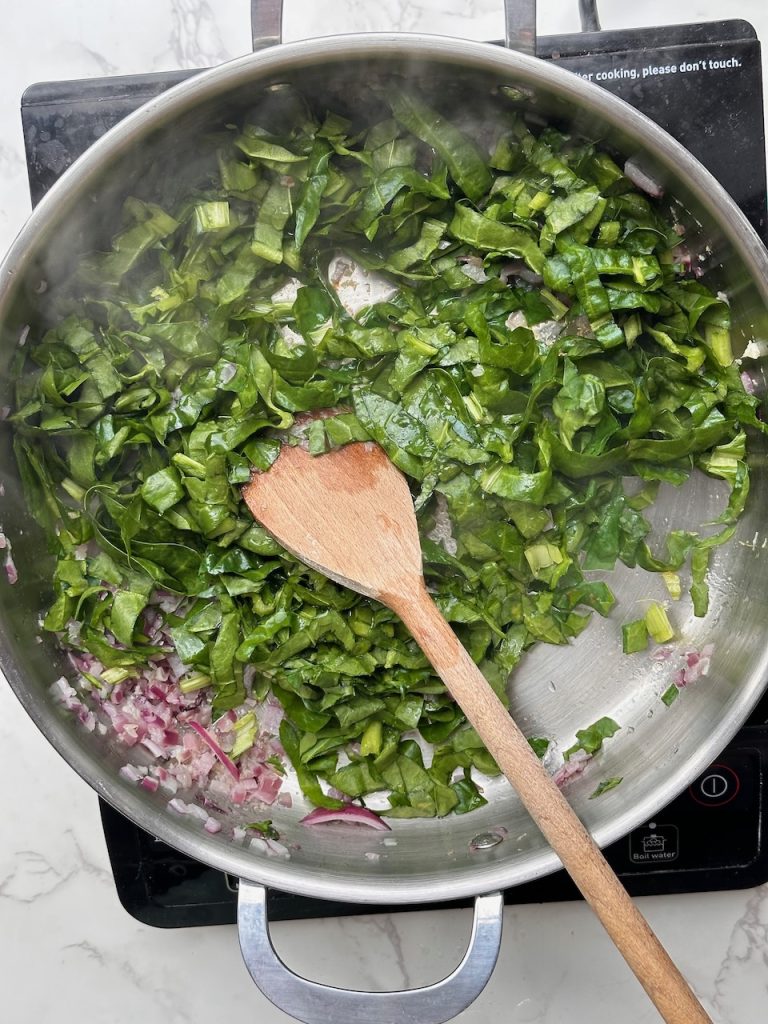
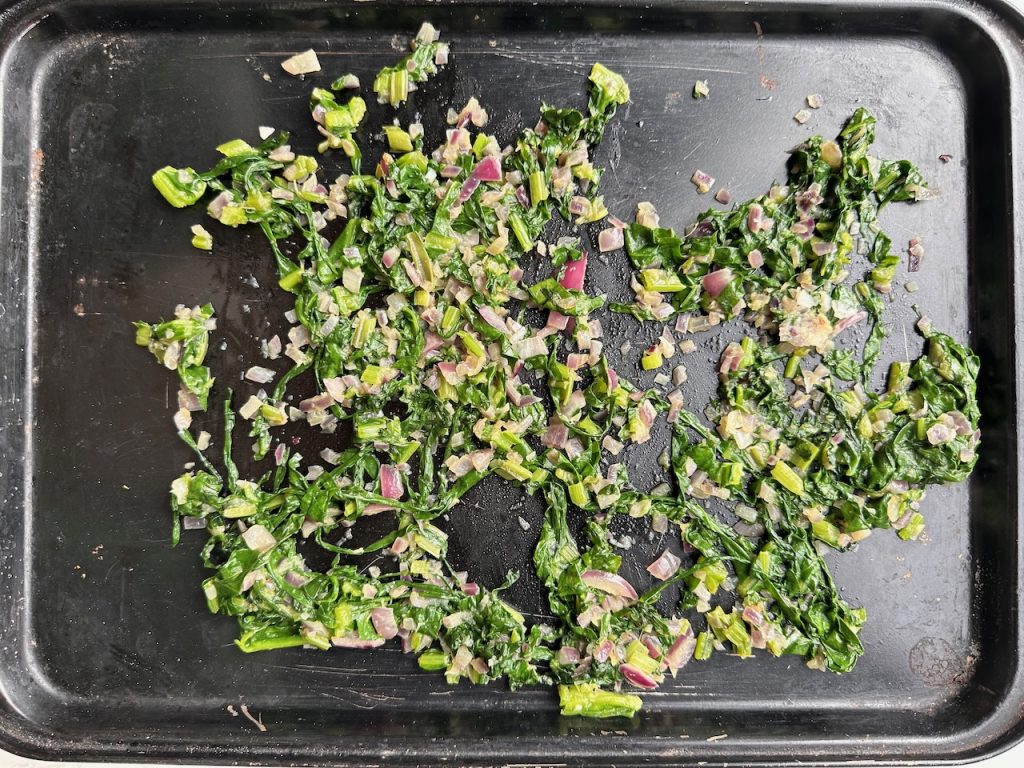
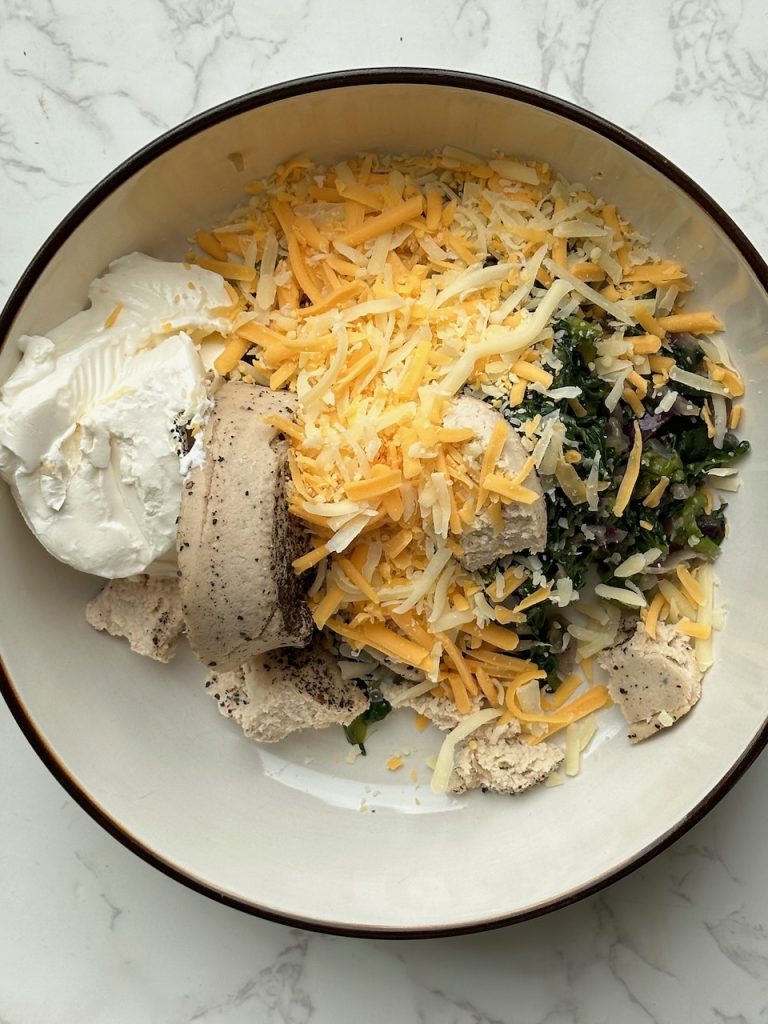
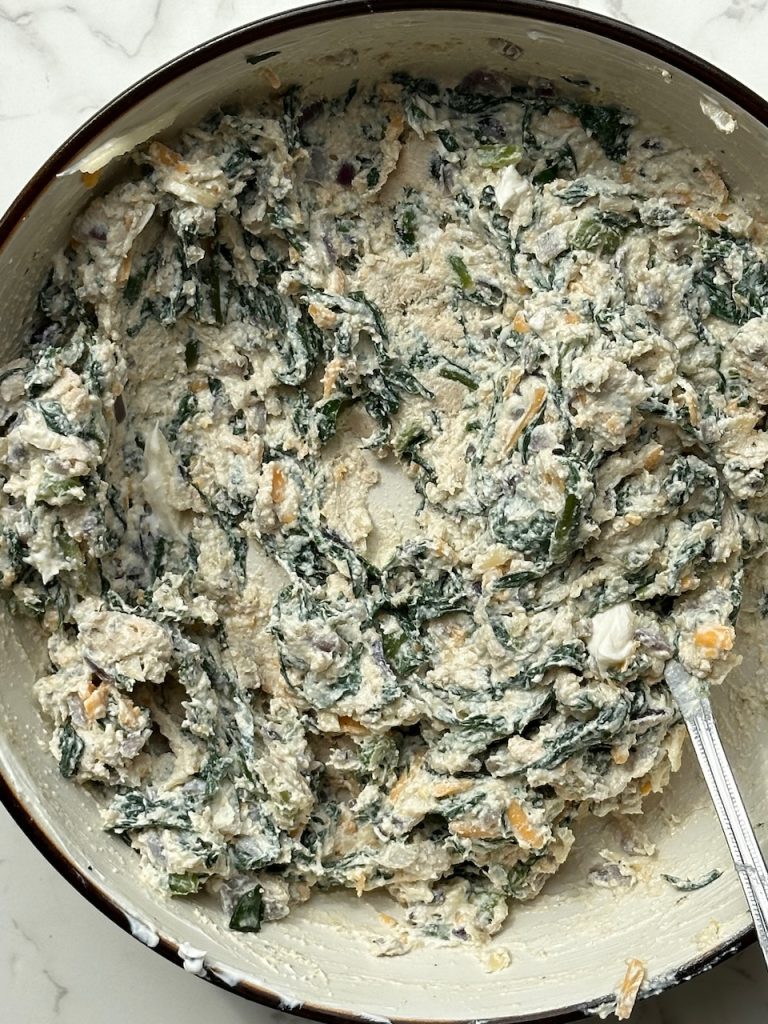
Step 1: Begin by frying the onion and garlic for a few minutes till soft, add in the spinach, a small pinch of salt and pepper and the water and fry until the water has evaporated. Cool down, for quickest cooling spread on a large tray. Once cooled add in the cashew cheese, cream cheese and mozzarella and mix well.
Step 2: Preheat the oven 180ºC. Line a tray with parchment paper
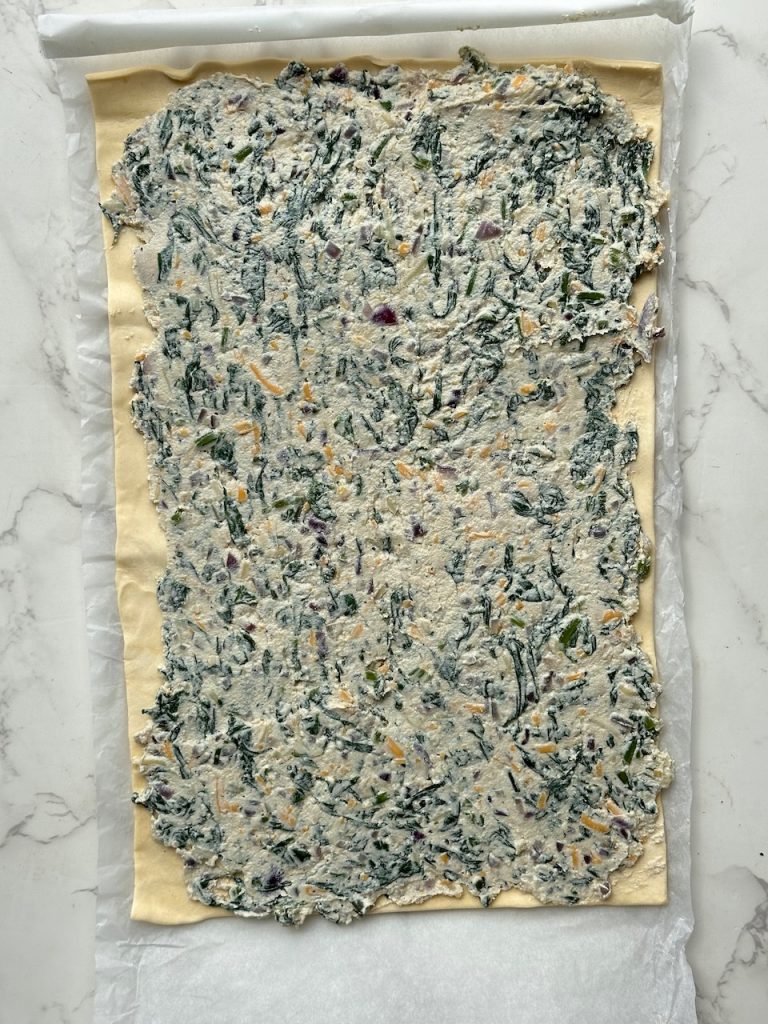
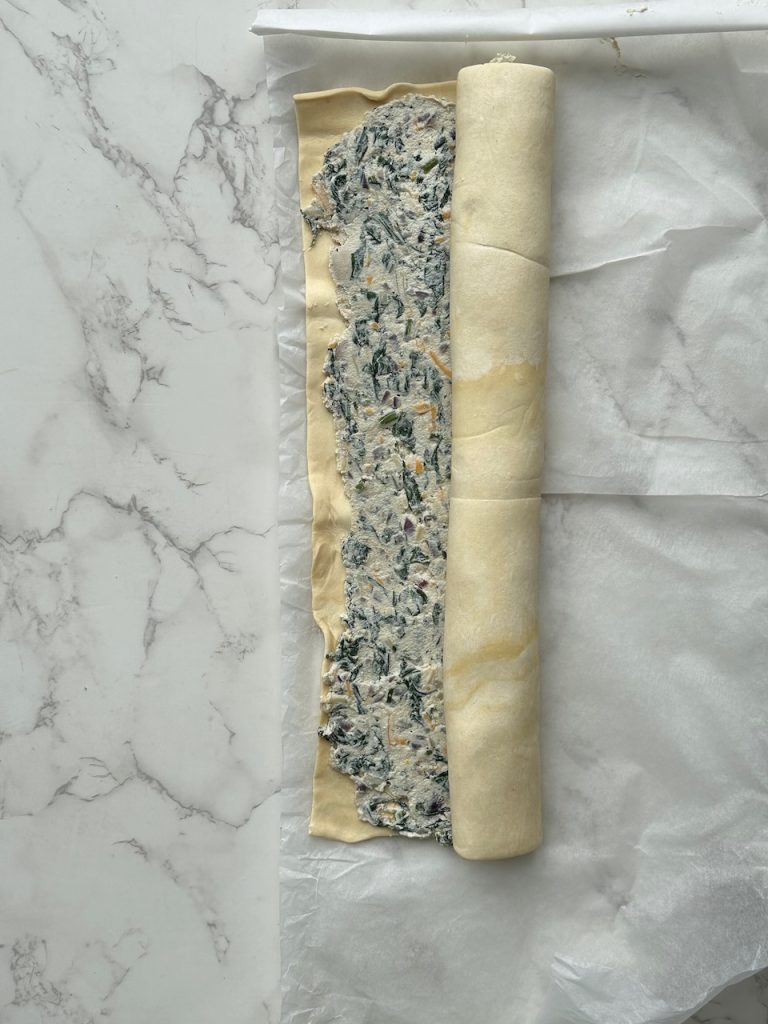
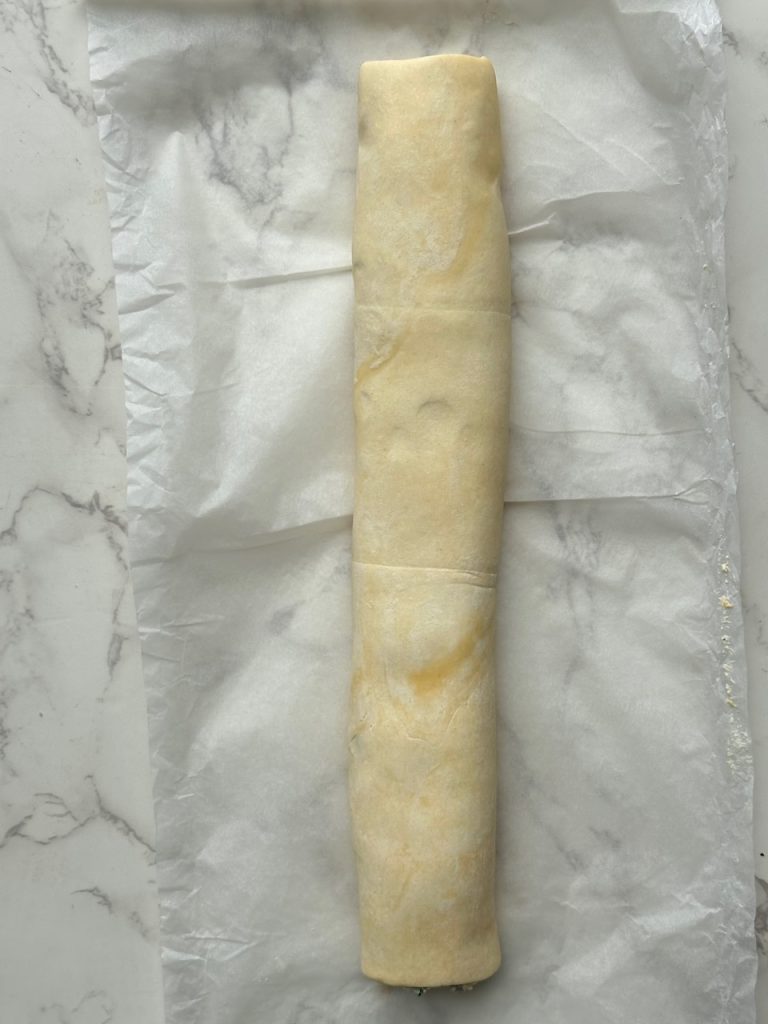
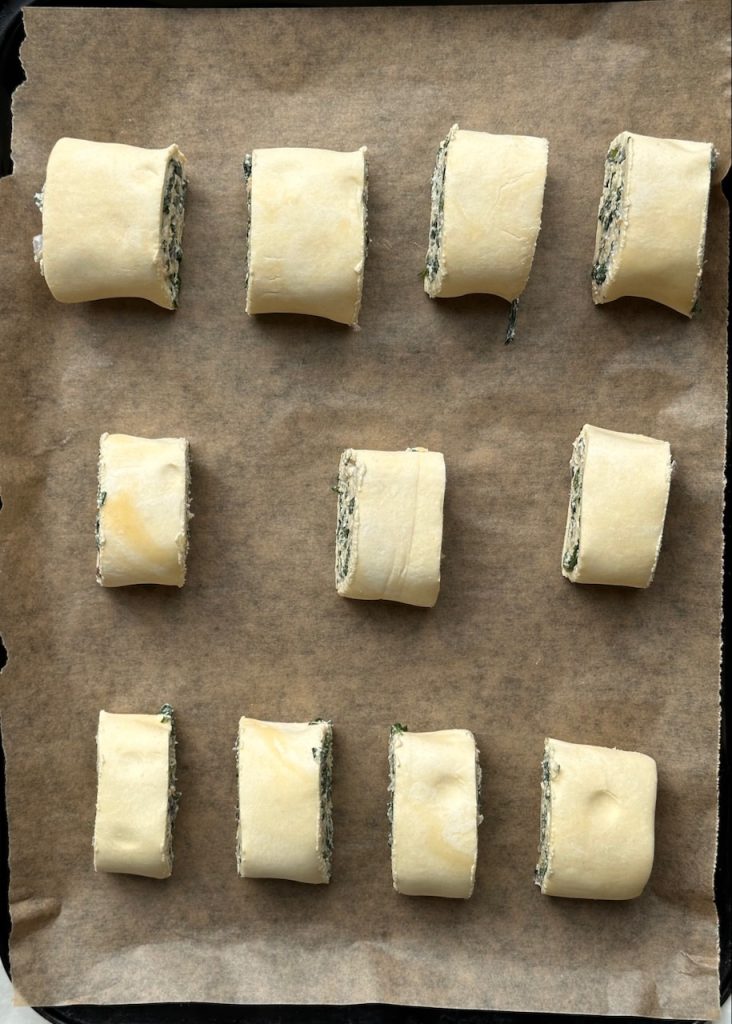
Step 3: Spread the mixed filling over the pastry sheet and roll it up, once rolled press down to flatten slightly and slice into 10 or 12 even pieces. A serrated knife works best for slicing.
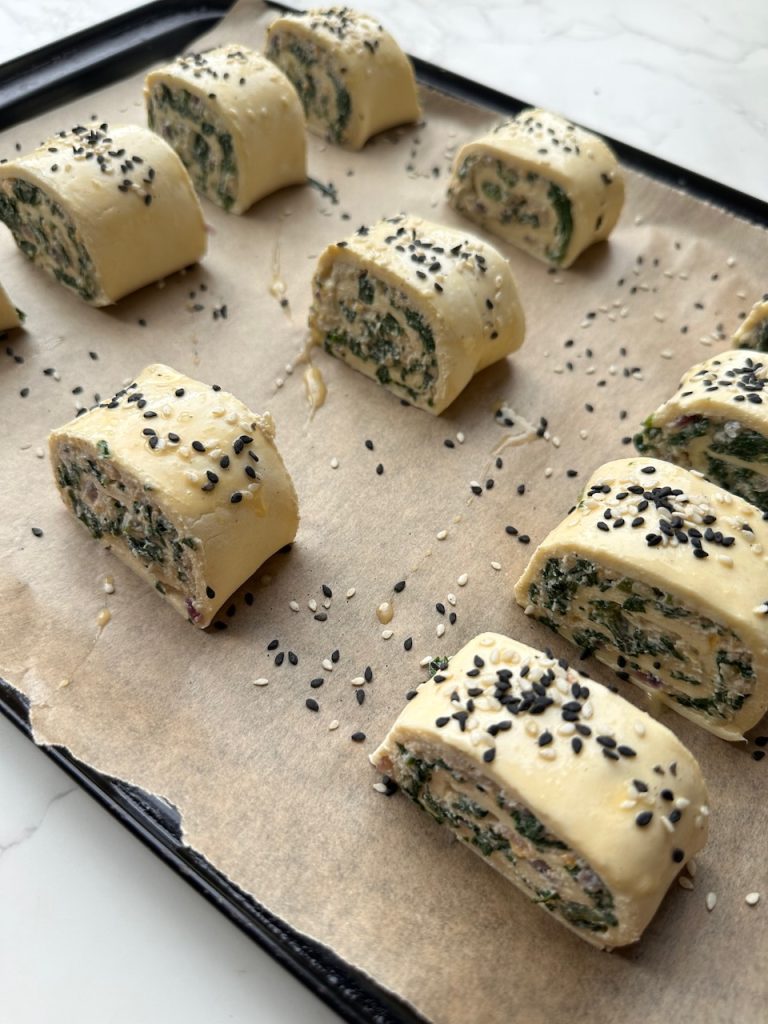
Step 4: Glaze with a beaten egg or milk, sprinkle with sesame seeds and bake for approximately 40 minutes. They should be golden brown and cooked all the way through. Leave to cool for 5-10 min. They can be eaten warm or cold.
During the week somebody raised a valid point, how can we speak about climate change with any conviction when we import food. I have been considering this since and felt it was a point worth addressing.
We do import food and especially now it is more prevalent than at other times during the year, this is the hungry gap and we simply do not have Irish produce in abundance.
We do import food during other times of the year also and yes that food arrives here on the island of Ireland by truck. It is important to note that we never import food by plane as do many supermarkets. We also have other sourcing policies that some may find contentious such as never buying produce from Israel.
There is in fact no other option if we want to eat tomatoes or peppers or carrots at present but to import, there simply is no commercial Irish supply. This has been particularly exacerbated by the horrendous growing season last year and the equally disastrous start to spring. We are not a market garden, and we need to grow in scale to have the necessary produce to fill our boxes each week, we are commercial organic vegetable farm. I think it is equally important to point out that there are very few of our type of farm at our scale in the country, a handful maybe.
Right now we are preparing fields we have planted some of our polytunnels and have just put our first plants in the ground this week. This will mean if the weather plays ball and these days that is a big if, we will be harvesting the first kale say in July.
Can we as a result of the issues above talk about climate breakdown and how it effects our farming? Can we voice our opinions on why we think large scale factory farming is horrendous and wrong? Can we say we disagree with deforestation in the amazon to feed the animal industries voracious appetite for GM soya? Can we offer an opinion on the fact that we think trees and hedgerows should be an integral part of the farming landscape in Ireland? Can we state the fact that if there was less meat consumed and more plants that less land would be required for agriculture, irrespective whether you eat meat or not, this is simply a fact?
Our intention is to shine a light on these issues whilst being mindful of people’s preferences for food, which is deeply personal, it is a delicate balance. Whilst also acknowledging that there are phenomenal hardworking farmers of all types in Ireland. Farming is a tremendously precarious industry and that government led encouragement to intensification means many farmers have few choices to change the way they farm.
The idea of the “Green Deal” in Europe being abandoned deeply upsets me and I feel it is a sad day in European evolution, the basic principle that we look after the land and set aside more for nature is exactly what we need to do. But how can farmers who to an extent have been encouraged by certain political parties be expected to foot the bill for these changes at least to a degree, when the price of food is so remarkably low, it is not the farmers and it never is that win from inflation led food price increases or indeed the smaller retailers. It is the large corporates and giant retailers they are the only winners, and they always win.
The bottom line again of course comes back to the system that we now function within, our food system is inherently broken, and it needs to change.
So, whilst we import produce, we also grow 11 acres of vegetables plus 7 polytunnels worth on a farm of nearly 20 acres, some of which is left to forestry, hedgerows and general rewilding. We have agreements with several organic vegetable growers across Ireland to supply crops that we do not grow, such as potatoes, and carrots, and scallions and cucumbers and many more. All grown organically and in Ireland when in season.
I started this business because my fundamental belief to change our food system and protect our planet are dear to me. We are a small farm by any one’s reckoning but we absolutely do what we can.
We will continue to talk about things that will be disagreeable to some, to many maybe, we hope too to encourage others to think that maybe there is another way, that may provide a small ray of light and that leads to a path of change, after all, we all have power and choices to make change real.
And of course, as I say each week and it is something I mean wholeheartedly, without you spending your money with us and buying the produce we sell whether it is grown by us, or some other Irish organic farmer, or an organic farmer in Spain, we would not be able to run our farm here, and support the other sustainable ethical farmers we buy produce from and we would not have this forum to say what we believe and what we hope some of you believe too.
So, I hope to that person that raised the issue that this has helped address some of your points.
Thank you for your support you make all this possible.
Summer is on the way and so is salad season! We are always on the look out for new trends and couldn’t wait to make this viral crispy potato salad. It is so easy to make and tastes amazing. Our Irish organic spuds are just the best to use, keep the skins on for extra fibre, nutrition, zero food waste and extra crispiness!
Keep it plant based with vegan mayo and yoghurt – find most of what you need in our groceries.
We hope you enjoy making this one,
Lou x
Ingredients: feeds 4
1kg potatoes, washed and diced 1inch cubes 1/2 cucumber, finely diced 1 small bunch parsley, finely chopped 1 small bunch dill, finely chopped 1/2 cup (120g) vegan yogurt 1/2 cup (120g)vegan mayo 1/2 red onion, finely diced zest and juice of 1/2 lemon 1 teaspoon dijon mustard
Salt and pepper to taste
Method:
Step 1: To speed up the cooking time its best to steam the potato cubes first until soft this will take about 30 minutes.
Step 2: Preheat the oven 220ºC fan. Transfer the cooked potatoes onto a baking tray lined with parchment paper, drizzle with oil, salt and pepper toss to coat and roast in the oven for about 30 minutes or until golden- they may need more or less time, keep a close eye on them. They are ready when they are golden and crispy around the edges.
Step 3: Grab a large serving bowl, measure in the yoghurt, mayonnaise, mustard, lemon juice, salt and pepper and stir. Next add the chopped herbs, cucumber, red onion and stir once more. Taste and adjust the seasoning if needed.
Step 4: Tumble in the cooked crispy potatoes while warm, stir to coat in the dressing and serve up.
Celebrate all the lovely root vegetables in your box this week!
Delicious layers of organic root vegetables – mostly Irish vegetables apart from the sweet potato. This is a real celebration of root vegetables and its delicious as each layer adds a different delicious flavour.
If you have a mandoline it is ideal for slicing the root vegetables. We’ve made this with a vegan bechamel but feel free to use a milk one if you wish. Garnish with toasted hazelnuts and a side of wild garlic pesto pasta for extra deliciousness!!
Step 1: To make the suede puree, steam and boil the cubed swede. Once soft blend with a stick blender or blender with butter, salt and pepper. Set aside.
Step 2: To make the cashew bechamel, pour boiling water over the cashews, leave to soften for 30 minutes. Saute the onion and garlic until translucent and soft. Drain the cashews then blend with the cooked onions and garlic, lemon juice or vinegar, salt and pepper and water.
Step 3: Peel and slice the root veg ideally using a mandoline, the slices should be 1/4 cm thick. Keep each of the vegetable slices separate.
Step 4: Preheat the oven 180ºC. Assemble the gratin add the swede puree to the baking tray first (mine is 13inc x 9inc) , and smooth with a spatula or the back of a spoon. Layer on the beetroot slices, sprinkle with salt and pepper. Layer on the sweet potato and add a layer of the cashew bechamel. Next add the potato, salt, pepper and a drizzle of oil. Add another layer of cashew bechamel and finish with the sliced celeriac, salt, pepper and oil. Cover with a layer of parchment paper, tin foil and bake in the oven for 1 hour.
Step 5: Check its cooked be piercing with a small sharp knife. Leave to cool for at least 30 minutes before slicing. Ideally cook and put in the fridge overnight to slice, heat through and serve the next day.
It’s been a wet, dark, cold start to the year, we are starting to get a little edgy now as we are behind in our field preparation work, and we will have plants due to go out into the fields in April.
Thankfully we have been busy preparing our tunnels and the first plants went into the ground two weeks ago. We are also continuing to harvest last years crops from the fields which is keeping us busy.
But the main challenge this year is the cost of keeping our business afloat. We have had two major shocks and increases to our cost base; one is in cost of staffing and the other is in transport. There is nothing we can do about either and they are causing concern about how to make the ends meet at the end of each month.
Two weeks ago, one of our logistic partners who we have worked with for several years informed us that they had no choice but to increase their transport costs to us by 57%. To be fair their rates had been well below market cost and their service is first class, but this is still a very sudden and significant increase in cost. DPD last week informed us of a 4% increase, our Dublin delivery partner just before Christmas announced a 6% increase. All added up we are facing at an increase in transportation costs of over €46k this year.
Due to the minimum wage increases and other necessary wage related changes, we have also seen our wage cost base for the people we employ here increase by nearly €70k per year!
Not only that but the price of the produce we source from other farmers is going up as well. We believe this is fair and just, they need to survive just as we do.
Through no fault of our own and totally out of our control, our cost base has increased by €116k over the course of this year, for a business of our size this is a large new burden to bear.
With the backdrop of primary horticultural food producers not being able to stay in business and us not having the deep pockets of the supermarkets or bigger businesses to shoulder these costs out of non existent profit margins, we are left with a difficult decision to make.
All things being equal how will we pay for these two hefty price increases, this is the question we have been grappling with for the last while?
It’s always with a great degree of reluctance that we introduce any price rise, we are very conscious of putting any more undue pressure on households that are choosing to shop sustainably, it is difficult we know, and it your choices and support that keeps us in business.
At the same time, we will not be good to anybody if we can’t cover our costs and aim to make a modest profit to reinvest back into the business and farm here.
We don’t feel we have any choice but to increase our delivery charge by €1, out of which we get an extra €.81c once we pay the government their VAT.
This will not cover our increase in costs, the costs of the compostable non plastic packaging, the cost of the time and effort that goes into packing the orders (we need a lot of people to pack all your orders, to handle and care and quality check all the fresh produce, to sow, plant and harvest the produce, it all requires people), the delivery to your doorstep and the recollection of the boxes and returning them to our farm. This increase will contribute but we will need to do much more and find efficiencies in our business to keep the show on the road.
I hope you can understand why reluctantly we have had to make this increase and we hope that you will still think that the service the quality and the sustainability of which we aim to always go above and beyond on are worth continuing to give your support to. We would love to hear your thoughts on this matter.
This new change from €5.50 to €6.50 will take effect for orders delivered the week beginning the 15th of April which is in two weeks’ time. Remember you can still get free deliveries on all order over €100.
Homemade chocolate treats that are made with lots of good organic stuff.. .yes please! These are rich and decadent and give a great boost of energy. I ordered some lovely organic medjool dates and walnuts and organic dark chocolate to make these. Perfect with that mid morning coffee.
They are a no bake treat so no ovens needed just a bit of time to set in the fridge. Grab all you need for these tasty snacks in our online shop.
We hope you try them.
Lou X
Ingredients: makes 16 squares
-150g – 1 cup medjool dates, stone removed – 60g – 1/3 cup walnuts, chopped – 40g- 1/3 cup ground almonds – 40g – 1/3 cup cocoa powder – 40g – 1/2 cup oats – 110g – 1/3 cup smooth peanut butter – 2-4 tbsp boiled water – 150g Dark chocolate bar plus 1 tablespoon coconut oil
**Taste the mix -feel free to add a dash of maple syrup or honey if it tastes bitter.
Method:
Step 1: Line a 8inch square tin with parchment paper.
Step 2: If using medjool dates, remove the stone and add them straight to the blender. If using regular dried dates, soak in boiling water for 5 minutes, then discard the water.
Step 3: Add the dates, ground almonds, cocoa powder, oats and peanut butter to a blender. Blend until smooth. Add a tablespoon or 2 of boiled water if the mix is dry. Then add the walnuts and pulse. Check the texture with a spoon, if it sticks its ready, if its dry add a bit more water.
Step 4: Pour the brownie mix into the tin and press down with the back of a spoon. Try smooth it as best you can. Melt the chocolate and coconut oil in the microwave in short bursts (or in a pot over simmering water), then pour over the base and transfer to the fridge to set for an hour.
Take from the fridge and slice into squares.
This will keep in the fridge for 1 week or in the freezer for 3 months.