An Organic diet cuts pesticide levels in our bodies

There is little question that an organic diet cuts pesticides levels in our bodies. It has to, there is no synthetic pesticides sprayed on organic food. A study in 2020 of 4 families that were put on an organic diet for 6 days, had a marked decrease in pesticides in their urine including levels of Glyphosate which decreased by 70.93% while AMPA (a chemical added to make glyphosate more effective) levels decreased by 76.71%. The authors concluded that diet is a primary source of glyphosate exposure. 
The same families showed decreases in levels of 40 of the most commonly used agricultural pesticides. 

Although there is safe levels set for all pesticide exposure in our food called MRLs (maximum residue limits), the two things that have not and would be very difficult to assess is the cumulative effect over time if we are consistently consuming small amounts of these chemicals, and the second thing is the cocktail effect of having a number of these different chemicals in our body at the same time. 

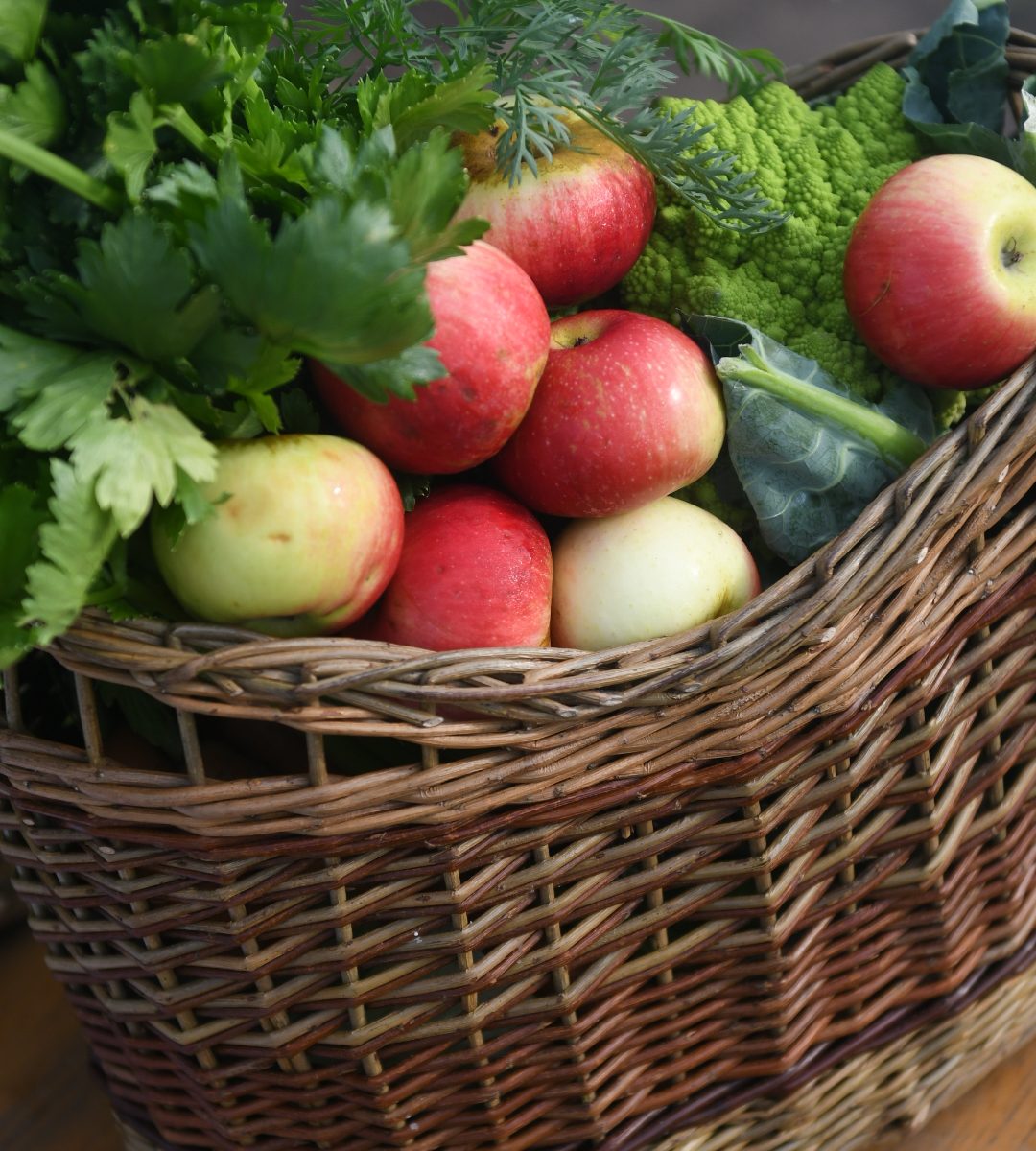
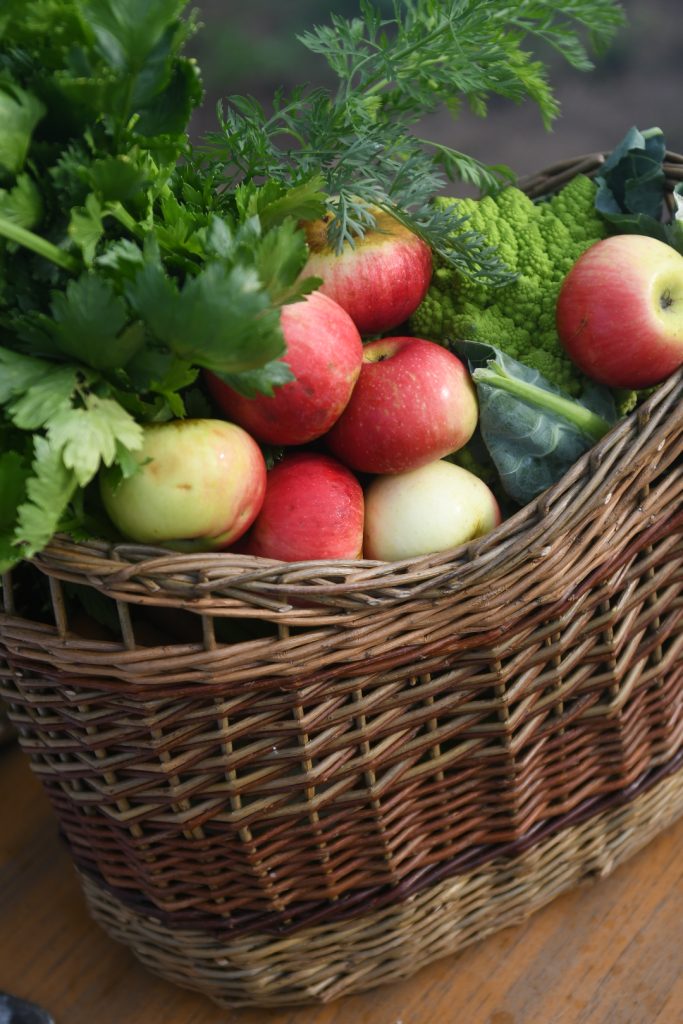
Take apples for instance. It is Irish apple season right now, and apples are one of the most sprayed fruits on supermarket shelves, the average apple gets sprayed on average 30 TIMES in a season. In a recent EU study, the most toxic pesticides contaminated 71% of the samples, while 64% of the samples contained at least one PFAS pesticide. Neurotoxic pesticides were found on 36% of the samples. Link to source here.

We are very lucky to not only have amazing organic apples from a Fairtrade Coop in France, but also fantastic Irish organic apples from Richard Galvin in Waterford. 

This brings me to our humble spinach and the little holes we find on it. It may not be the mostly slightly, but once you cook, blend or freeze it who would know, and more importantly it is a clear indication that the spinach in question has never seen a pesticide. Spinach frequently features on the dirty dozen list (US based info) but it is also sprayed here in the EU. 

The EU samples spinach at random every three years under its coordinated control programme. The most recent published round is 2022 and here is what they found: 

51.4% of samples had no quantifiable residues, 47% had residues within legal limits, and 1.6% exceeded the maximum residue level (MRL). So bottom line, half had pesticides and half did not. 

We are at the height of harvest at the moment, and we have loads of our own produce and produce from other organic farmers right now. Can you support us next week? I asked last week what we can do to make things easier and many of you responded with some brilliant ideas so thank you for that, we will look at them all and see what we can put in place. Please remember us in your weekly shop next week if you can. 

As always thank you so much for your support, it means so much.

Kenneth

PS thank you to everybody who came to our festival and supported our celebration of 20 years a couple of weeks ago, it was so nice to meet so many of you. The fact you took the time and made the effort to travel to our farm was truly amazing, thank you

Simplicity is the ultimate sophistication

Recently on a well-known Radio Talk show a nutritionist claimed that “it is a myth that organic produce does not have pesticides on them….. and some studies show that organic produce has higher levels of pesticides.” in addition she claimed that there was no benefit to eating organic produce. I have to say having dedicated 20 years to growing organically and having come out of a career in chemistry I would like to dispute both facts and there are clear scientific studies that demonstrate that both statements are false.

It was Leondardo Da Vinci who said: “Simplicity is the ultimate sophistication” and farming organically is simplicity in action, and a key principle is working with nature without the use of “pesticides” to treat weeds, or the little critters that eat our vegetables every now and then.

That being said, there is a list of approved substances that can be used in organic farming if an issue persists. But on this list, you will find things like neem oil, beeswax, mineral oils, paraffin, soap, mint oil, clove oil, and an insecticide, pyrethrum (which is extracted from the chrysanthemum flower) and such natural elements as sulphur and copper, the latter both used as traditional methods to control fungus. It is important to highlight that generally a derogation must be requested to use any of the last three on the list, and they will only be used where there is little other choice.

In 2021 the Department of agriculture tested 1,039 fruit and vegetable samples for a staggering 474 chemicals (synthetic chemicals manufactured in a chemical plant, with labels such as toxic, irritant, carcinogen and more)

For fruit, of the 528 tested, 63.8% had pesticide residues detected, 5.5% had residues detected above the MRL (the maximum residue limit, this is the limit that is deemed safe for human consumption, personally and this is my opinion I would prefer to avoid these chemicals in my food entirely if possible).

3 fruits contained a cocktail of 9 different pesticides in them.

For veg, of the 511 tested, 43.6% had residues detected, 5.1% had residues detected above the MRL. A cocktail of 15 pesticides were found in one sample.

And if you were still unsure about whether non-organic produce is no different to conventional go and visit Tesco’s website and check out fresh oranges with the following details:

NOT SUITABLE FOR VEGANS Post Harvest Treatments & wax by Country of Origin: Spain: Imazalil/Thiabendazole/Pyrimethanil & Wax E914, E904 Israel: Imazalil/Thiabendazole/Orthophenylphenol & Wax E914, E904 Morocco: Propiconazole/Pyrimethanil/Imazalil & Wax E914, E904 Egypt: Imazalil/Thiabendazole & Wax E904, E914 Peru: Imazalil/Orthophenylphenol/Thiabendazole & Wax E903, E904 RSA: 2,4 D/Imazalil/Thiabendazole & Wax E914, E904 Chile: Imazalil/Fludioxonil/Pirimethanyl & Wax E903, E904

I get it though and the fact remains that it is certainly better to be eating fresh fruit and vegetables that much of the Ultra processed food that line supermarket shelves.

But if you wish to limit your exposure to pesticides in your fresh food which were found in over 50% of veg and over 60% of fruit then organic is the clear choice.

And finally in 2015 one of the most comprehensively undertaken studies showed

“……that the evidence from this study is overwhelming – that organic food is higher in antioxidants and lower in toxic metals and pesticides.

So please if you are going to make general sweeping comments such as “there is more pesticides found in organic produce, and it is no better for you” on national radio please get your facts straight.

As always thank you for your support.

Kenneth