Pay the farmer or pay the pharma

Michael Pollan once said “eat food. not too much. mostly plants.” – good advice it would seem. I would add to that maybe do not eat ingredients you cannot pronounce. 

Toxic chemicals are on our plants, are in our food chain and are in our soil. Just this week Bayer agreed to pay out $7.5 billion to settle weedkiller cancer cases against them for not telling people Roundup potentially causes cancer, crucially they are not admitting liability or that Roundup causes cancer. 

There, is a theory that the large food corporations, large agribusiness and the pharma industry are in cahoots, I would surmise that this is not too far from the actual truth. This intersection is characterized by shared financial interests, joint lobbying efforts, and, in some cases, overlapping ownership between food companies, nutrition groups, and pharmaceutical firms. It is also worth noting that Bayer have a very significant health care division. 

There is little doubt that modern food is making us sick. 

On one hand we have an industry that manufacturers calorie rich fake food, that is designed to be highly addictive. These ultra processed products make us sick. Then you have an industry that creates drugs that help manage the symptoms of the disease this artificial food creates. It would seem like the perfect business model, make people sick, profit off that, then profit again from treating the sickness. 

Both business models are driven by greed (Altruism in the pharmaceutical and agribusiness died a long time ago), the mantra now is profit above all else. 

I am not so naive to think that profit is not important (we have spent many years struggling to survive and I can tell you first hand this is no fun) of course profit is important, but if that is all that is important then we have a problem. 

In fact, this single ideology is the root cause of the devastation of our planet and our health, and both are closely interwoven. 

Just this week scientists were making peace with the fact that we are on track to have to accept 3C of global warming, this will essentially make our world unliveable. The basic underlying reason for this, greed. 

Today our bodies must contend with toxic chemicals that have been sprayed on our food, and toxic chemicals being added to our processed food, we are sick and by all accounts getting sicker. 

There may be one simple solution, and it goes back to Michael Pollan’s maxim “eat food, not too much, mainly plants”. Eat fresh food, grown without toxic chemicals. Eat more home cooked food. Eat ingredients you know and recognise (Or as one person said, ingredients your grandmother would recognise). If we do this most of the time or at least some of the time and put our money into our food, then we will have to pay out much less to the Pharma’s of the world. 

With your support we are changing the food system, so thank you.

Kenneth

PS I would like to thank Jacinta Dalton from the Atlantic Technological University Galway City for the title inspiration here.
A cocktail of chemicals on your conventional supermarket apples

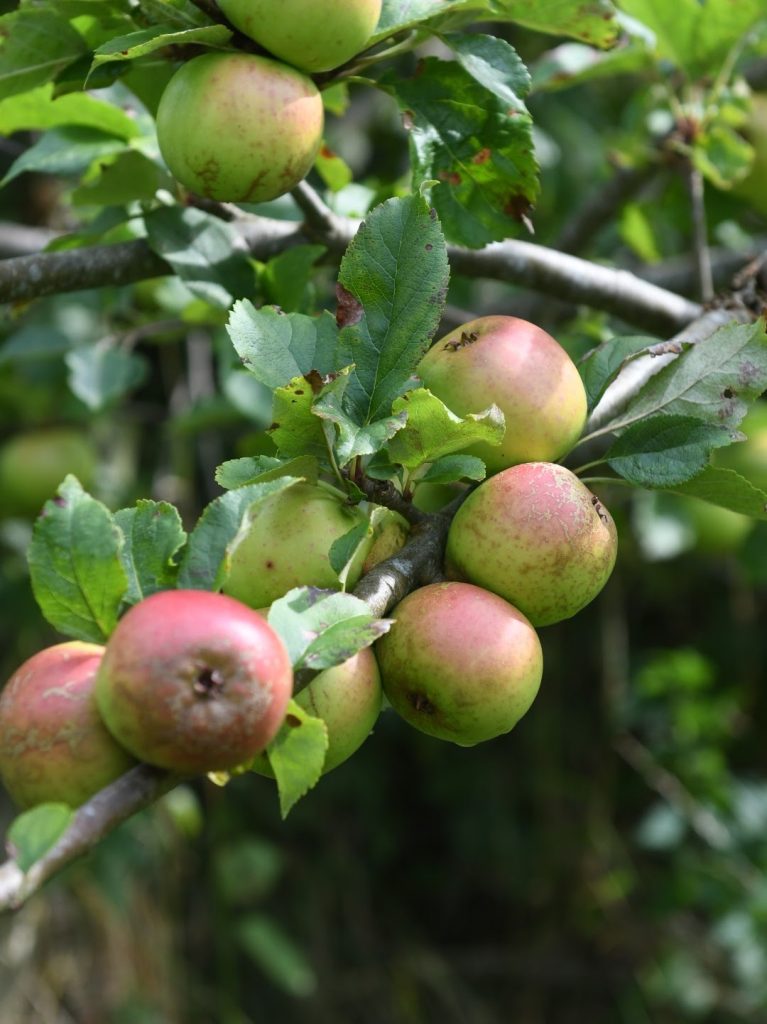
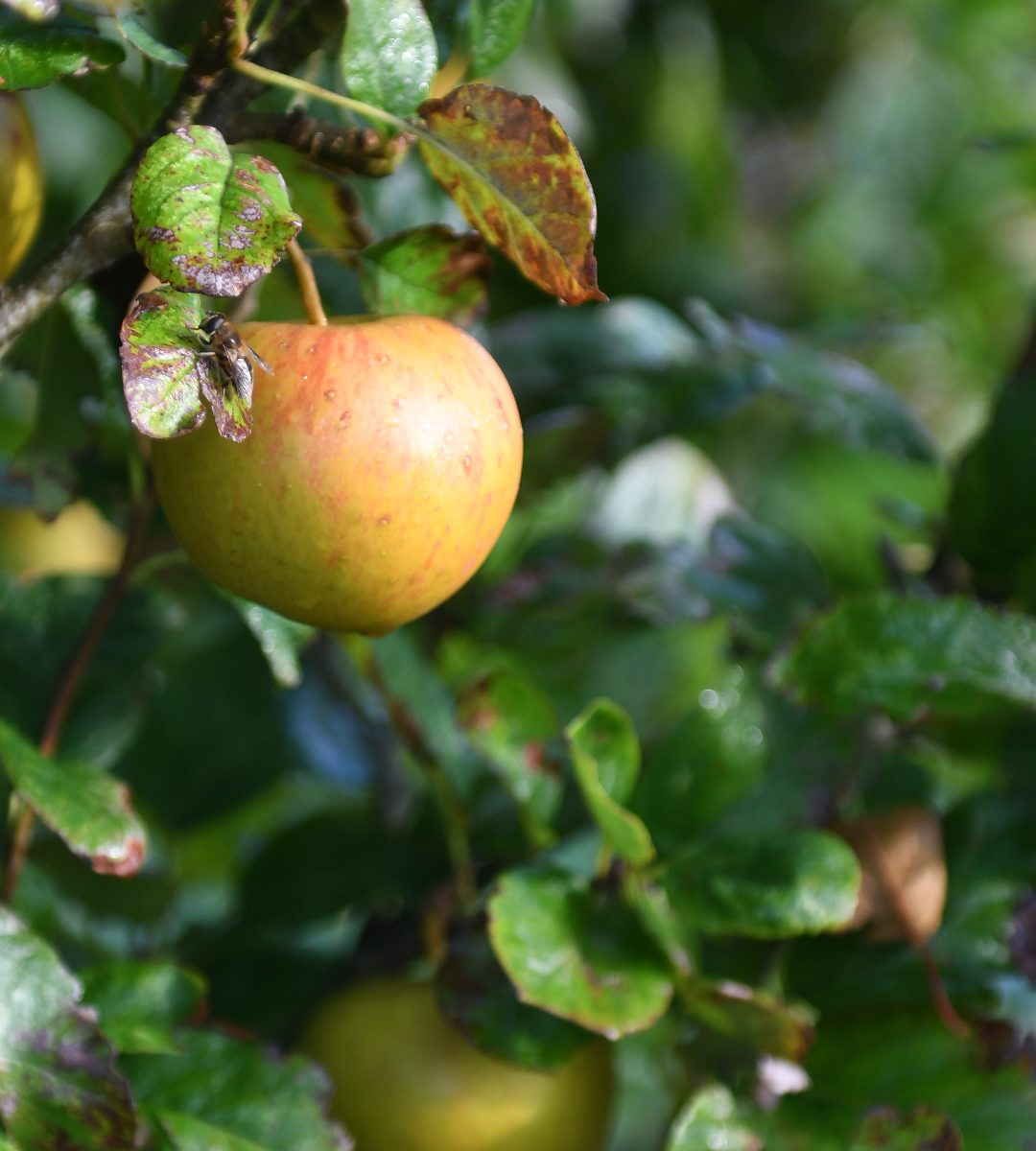
Did you know we have the most amazing Irish organic apples, they have been grown in country Waterford by Richard Galvin and they have been sprayed with nothing. 

A recent study by PAN UK (pesticide action network UK) found that nearly all the samples of conventional apples they tested had at least one pesticide residue and over 85% had a cocktail of up to seven pesticide residues. In some countries every single apple they tested recorded pesticide residues. 

Many of these chemicals are systemic in nature and get absorbed into the flesh of the apple. 

In a 2022 study carried out by the Irish Department of Agriculture 79% of sampled apples were found to have detectable pesticide residues. Conventional apples are among the most heavily sprayed fruits, often treated with fungicides to prevent scab. 

To maintain freshness and improve appearance, many supermarket apples also are coated with artificial food-grade waxes, such as shellac or carnauba wax, to replace natural waxes stripped away during cleaning. 

Apples are sprayed on average 30 times in a year with a host of pesticides, these toxic chemicals can include neurotoxins which were in this study was found on over 30% of samples. 

The apples we receive from Richard Galvin are amazing, they are Irish and organic, the season is sadly ending soon, but we will continue to have the most delicious organic apples from a Fairtrade organic co-op from the South of France. 

When I was a young lad I used to help my Grandad pick the apples at the end of the summer, he had maybe 10 large old apple trees and it was my job to climb the trees to put up the jars with the water and jam to trap the wasps, and stop them from eating the sweet apples. It was also my job to pick the apples. We used to then store the apples on galvanise sheets in one of the old cow sheds. We would have apples until Christmas, after that they wouldn’t be great. They certainly were never sprayed with chemicals. 

These days with cold storage and special bins that exclude air the apples last until February and much longer and you can be the judge of the quality of our Irish apples yourself. They may not be quite as fresh and crisp as they were back in October, but they are still bursting with flavour. 

As always it is only through your support that we continue to be able to grow food without chemicals and support other Irish organic farmers that share our values, which helps protect nature and our health. 

Thank you

Kenneth

PS Nearly 95% of the apples sold in Ireland are imported.

I can’t believe it has been 20 years…

This time 20 years ago I had just quit my job in the pharma industry and had started Green Earth Organics. My grandad’s farm was sitting here, my dad was unsure what to do with it, it is a small farm, and it was very hard to conceive how anybody could make a living off 25 acres. 

I passionately believed we should be growing our food without chemicals, and I wanted our food and the food for our family to be free from toxic pesticides. I cannot convey how strongly I believed that farming without chemicals was the right thing to do. I was coming at this with a Ph.D in Chemistry from Cambridge University and nearly 10 years’ experience working in the pharma industry, chemicals do belong in a lab, but definitely do not belong on our food. 

This was at a time before it was fashionable or trendy to grow local organic food. I believed wholeheartedly that our food and our land should be free from chemicals. We believed that our land deserved to be treated with respect, that trees should be planted and wild areas left, that biodiversity should be protected, and that all the other living creatures we share this earth with should be protected and not exploited. Nothing about this belief has changed in 20 years. 

The idea of growing vegetables without Roundup, and in the west of Ireland, without having a clue was deemed in a word “Madness”. Maybe an element of madness was necessary, and it was this madness and the eternal optimism of youth that got us off the ground. So yes, we were mad, totally mad, everybody was leaving agriculture, not getting into it. 

It was the maddest and best thing Jenny and I ever did, we sold our house in the UK, moved back to Ireland, scraped together as much funds as possible, with loans from our parents, credit card debt and the bit of cash we had ourselves, we ploughed it all into the farm. We were broke and didn’t/couldn’t take an income from the farm for the first five years. We lived off Jenny’s wages. 20 years of madness have passed now. 

The founding principles of the business never changed and have never been compromised. Creating a fairer chemical free food system and making this food accessible to all has been our charter and continues to be. We continue to farm, to grow good wholesome chemical free food but priorities changed at least for me from growing food to managing a business. 

At the beginning we had nothing and that was hard, now we have a team of people, we have, loans, tractors, sheds, machinery and a small smattering of experience and knowledge, it is still hard, but the challenges have changed. Since its very modest beginnings in 2006 GEO has grown into the biggest home delivery business of organic 

food in the country with our own farm and a network of other Irish organic farms that we support and buy from each week. 

It has kept on growing (which is positively amazing) and after 20 years I have come to realise that there are no quick fixes to a broken food system. But there is hope, and a growing desire by you our loyal supporters to see a better food system take shape. You are helping turn that into a reality, so thank you for sticking by our side, we hope we can continue on this path for many years to come. 

Kenneth.

Feeling a little disillusioned today…

You know I discovered something this week, you can be very happy or at least have
a reasonably amount of happiness (whatever that is) doing what you do, but when
you enter financial considerations into the mix, it can change very rapidly.


A lady here at work said to me ‘retail destroys your soul’, and there is a point in that,
it is so hard to compete in the marketplace, especially when it comes to food. If the
truth be told I would be much happier down in an isolated corner of our farm doing
my own thing. That unfortunately will not pay the bills, the fact is farming does not
pay the bills.


This is exactly the truth we seem to have uncovered again this year, after what has
been without doubt the most rewarding growing season of our nearly 20 years of
growing vegetables. Rain when you want it, the best farm team you could hope for,
the best machinery, heat and light when you needed it, the right fertility, it has just
been 85% perfect, we have realised another loss on our farm.
Now let me explain, our farm is like an independent business it needs to be able to


“wash its own face” as it were, and it sells the produce we produce to our retail
business that then sells it on to you, our customers. We pay our farm fairly; it would
certainly be like shooting ourselves in the foot if we didn’t (and then trying to dig our
own parsnips with one foot). We don’t pay silly prices; we keep it in line with what we
would pay to other Irish suppliers. The reality is this though, that even with this
special treatment we lose money.


I am not highlighting this to be a ‘Moaning Michael’ but to outline what I see as a
bigger problem in our industry. We must at least try to compete with supermarkets,
and supermarkets have made it their model to devalue fresh food to entice
customers into their giant stores by making fresh produce dirt (no pun intended)
cheap. Just the other day I saw Irish carrots in a supermarket for 69c.
So how in the name of all that is Holy is this possible, there is an equation hidden in
there, and it goes a little like this. Either the farmer loses or the supermarket loses
and guess what? The supermarket never loses.


So, I have been racking my brains and a solution to our farming loss might look a
little like.
A. We specialise in one or two crops and sell wholesale.
B. We increase our farm prices beyond what the market allows and then end up
with our retail business losing.
C. We stop growing altogether.
D. We continue as we are and subsidise our farm with our retail business.
The only valid solution in my mind is a combination of B and D, it is sad that this is
the state of affairs, shouldn’t sustainable farming be profitable in its own right? We

are not alone, many farms over the years have closed up shop, there are only 60
field scale vegetable growers left in Ireland, we are one of them.
So, we will keep going, and we look to the next year with hope (Farming can have
this strange hold on you, that you always think things are going to be better next
year…).


Thanks for supporting us
Kenneth

PS The irony of all of this is we feel we need to reduce our prices on key staples to
bring better value to you our customers, because we value you and without you our
farm would not survive. Check out specials here.
PPS Your support this Christmas will make all the difference so please support us if
you can. The supermarkets I guarantee won’t miss you, but if you order with us it
will make all the difference, you can order one of our boxes or and get all your
groceries with us too, we have nearly 800 in stock that you can order for Christmas.

A serious question, and a great bunch of people…


It’s been an interesting week. On Sunday I went with a group of Irish organic farmers to the UK to see a bunch of British organic farmers, it was a great trip some truly lovely people so open and willing to share. The highlight was a visit to Riverford farm and packing facility, an inspiring operation centred on sustainable food and fairness.


The reality of this fair equitable and sustainable approach to business, one we also have embedded in our own farm and operation here in Galway is the struggle to be profitable. Profitability is an essential facet of any business that wants to survive and reinvest.


I spoke to one farmer who farms over 100 acres of potatoes and carrots, he is lucky he is a Riverford supplier and so has protection from the outside forces of supermarket buyers, but even in this relatively protected environment he struggles.


So how if a farmer like that or like our own farm which gets preferential treatment and pricing and is using all the latest equipment and mechanisation but is trying to farm sustainably cannot make ends meet, what chance does a supermarket farmer supplier have?


This is a serious question, and as long as I have been banging on about it here, there is little real progress being made. The fundamental problem is that fresh food is classed as valueless, it is used as loss leader fodder, something that is used as a ploy to get consumers in the door, and once in, the supermarket machine gets us to spend on ultra processed rubbish that has higher margins. It is wrong.
If we want a fair world, a world where we can eat well, a world where veg producers can continue in business, a world where farmers are rewarded for protecting the environment, paying fairly, and growing chemical free food, then we need to vote with our wallets, it is plain and simple I am afraid.


We have been doing all of the above for 20 years, and this may be the first year where we will not have ended the year further in debt. Ironically it looks very much like our farm again this year will not be profitable, or at the very best at a stretch we may break even. This after the very best growing season we have ever had.
The reality is wages have gone up and up, costs of production have gone up and up, delivery, packaging, all the other stuff Whilst veg prices have not. Sure food inflation is absolutely real and yes the supermarket shop has gone up, but not fresh food, no this has remained relatively static, it’s all the other processed products that have increased in price, hence the decimation of the Irish horticultural industry over the last 20 years.


And here is the other bugbear of mine, we from next week will only have Irish apples on sale, from Richard Galvin in County Waterford, we pay much more than imported for these but will support him over imported, the same as we do for Irish onions from Beechlawn organic farm. (See how many Irish onions and apples you see on supermarket shelves).

I went into a supermarket yesterday and all I saw was imported apples on the shelf. The reason: they are cheaper to buy, we know as we import produce also, we know the pricing and how it works. (We will always grow/buy or support Irish over imported when Irish is available)
So, I would like to say the outlook is hopeful, the future is bright, and God knows we need hope and a positive outlook now more than ever with all the issues in the world.


There was a definite sense of positivity on our trip to the UK earlier this week, hopefully the positive energy will keep flowing.


As always thank you for your support, without it we would definitely have gone by the wayside a long time ago.
Kenneth

Fake Farms, what do you think…

What do “Egan’s” and “Farrell’s” have in common?

They are all brand names used on supermarket packed own label fruit and veg. They give you the impression that they are family farms, BUT THEY ARE NOT.  They are marketing mechanisms, to make us feel warm and happy that we are supporting these assumed lovely family farms.

We are working hard on our Real farm to get the autumn harvest out and the conditions are favourable; this is the same in the remaining Irish vegetable farms up and down the country the likes of Beechlawn Organic farm, or McCormacks Family farm, or Philip Dreaper’s farm in Offaly where we get our Irish carrots, or Richard Galvin in Clashganny organic farm who supplies our organic Irish apples, and many, many more.

These family names used in some supermarkets give the impression there is a real farm with a family name behind the carrots, or tomatoes on their shelf. I recently went to check this out in a large Retailer.

In their fruit and veg section I was convinced that “Farrell’s” which was labelled on much of their Irish produce was a family farm and this family were producing a wealth of produce. At least at first glance that was my impression. I’m in the veg growing business I am a grower and understand a little of how these things work and I was taken in by the misleading advertising.

As I looked a little closer it seemed that my original assumption was not at all correct. “Farrell’s” is not a real farm; it is a marketing tool created by the supermarket to give the consumer that warm homely glow of things being done right.

Does it matter?

Well, I think it does, firstly, this is misleading, you are led to believe the produce is coming from “Farrell’s”, and it is not.  

The second interesting point that is worth considering is that this brand allows supermarkets or more frequently large pack houses and distribution centres, to take in produce from multiple farms and blend it into packs, so the carrots may be coming from multiple suppliers and you or I will never know.  This practice is now frequently called “blending”.

This is very helpful for large retailers as it gives it them the balance of power when it comes to price negotiation, and the ultimate flexibility to choose whose carrots or apples to put into their bag.

When the grower is hidden, he has less power to negotiate a fair price and as with all own branded products on supermarket shelves they are cheaper. It is this pricing structure that has done the damage to growers all over Ireland over the last twenty years.

As always with your support our real Farm continues to grow and our support for other REAL growers can be fair and transparent.

Thank you.

Kenneth

PS Thank you to everybody who donated to our Gaza appeal during the week, I am waiting on final confirmation but the total donated is looking like it was €2380, so thank you so much to everybody, we will be topping this up with the 50% of €1190 making the total donation we will make to the UNICEF Gaza appeal €3570. We will confirm this early next week and be making the donation straight away.

Irish organic apples….. There are only 35 commercial apple growers left in Ireland

Some 95 per cent of apples eaten in Ireland were grown elsewhere. Today there are only 35 full-time commercial apple growers in Ireland, down from 50 in 2017. And 40 per cent of all the apples grown here are Bramley cooking apples. (link to Irish Times article https://www.irishtimes.com/food/2025/09/06/the-secret-world-of-irish-apples-why-are-they-so-juicy-and-why-do-we-import-most-of-those-we-buy).

There were over 400 Irish commercial veg growers in the 90s, today that number is just 60, and we are one of those. We have just had the first delivery of Organic Irish Elstar apples from Richard Galvin in Waterford, and I have to say they are some of the finest apples we have ever received, they are amazing, well-done Richard.

We are serious about supporting Irish suppliers, as you may know we grow loads of our own organic veg, but we also support a wide range of other Irish organic growers. We I believe have the distinct advantage of being both a grower and a retailer, we get to see both sides of the field (no pun intended, oh dear..) so to speak. In fact, it can seem quite weird some days sitting in a meeting with our main fresh buyer Anna and our farm manager Emmanuel, and discovering that nobody will end up happy, not enough for the farm and not enough to run the retail business, and not enough to compete with the crazy discounted prices of supermarkets.

But the key difference between us and the general run of the mill supermarkets is that we actually do what we say. So instead of putting smiling Irish farmers all over their lovely supermarket walls maybe they should back that up by actually properly supporting Irish producers and paying fair prices and buying more Irish produce when it is available at a fair price.

We will always buy Irish first and foremost, always, and we always do. To be honest even when it is more of a pain than a gain and that sometimes too can have an impact on perceived value, because it is always, always more expensive to buy. One thing I know for sure is this, we have tonnes and tonnes of Irish organic produce right now, quite literally and we certainly have Irish apples and not only from one Irish organic farmer but two. I could list out all the other Irish farmers that we partner with or buy from, but that might be boring, but do you know what? I think I will anyway, because it annoys and upsets me that we work so hard, and supermarkets get to do whatever they want and present this idea of being the biggest Irish supporters when it just is not true, and they get away with it because they have all the power, (I think we have seen enough of what people with power do in the world today and how much havoc that can wreck on our people and planet, you know who I am talking about here)

So here goes in no particular order: (So these growers are not only Irish, but also all organic too) in total 18 Irish organic farmers.

Joe Kelly, Mayo – cucumbers, yellow courgettes, radishes, lettuce, coriander, parsley, French beans

Philip Dreaper, Offaly – carrots, beetroot

Cameron – Battlemount organic farm, Kildare, potatoes and apples juice.

Richard Galvin, Waterford – apples, apple juice, apple cider vinegar

Audrey and Mick, Galway – parsley, chard, salad mix, rocket, spinach

Padraigh and Una, Beechlawn, Galway – fennel, spinach, onions, cabbages, celery, leeks, beetroot, scallions.

Darragh Donnelly, Dublin – cherries, apples

Banner Berries, Clare – blueberries

Culinary Microherbs, Dublin – MicrogreensGarryhinch, Offaly – exotic mushrooms

McArdle, Antrim – chestnut, portobello mushrooms

Roy Little – leeks

Alison, Slieve Bloom organics, scallions, radish.

Oranmore Farm, Raman – occasionally, French beans, salad mix

Sloe hill Farm – occasionally, herbs (basil, parsley)

Paul Brophy, Kildare, Broccoli

Emmett Dunne, Carrots

Green Earth Organics farm, Kale, broccoli, bunched carrots, parsnips, swede, leeks, spinach, lettuce, salad, onions, celeriac, celery, beetroot, courgettes, cucumbers, tomatoes and more.

So, you see, your support makes a very real difference to us, to Richard (our apple grower) to Emmanuel (our farm manager), to the planet and to all the other farmers that depend on your orders to keep the produce rolling in off organic Irish fields.

As always thank you for continuing to support us.

Kenneth.

Irish apples, picking apples, and the Dirty Dozen…

I remember as a young lad having to climb trees to pick apples in my grandad’s orchard. Having been pruned and tended to over the years they had grown to to a very decent height (you needed a tall ladder to get to the top apples) these apples were never ever sprayed, and when they were picked they were stored on galvanised sheets in a cool shed, providing apples until nearly Christmas. Any those that had blemishes were used first.

During the week I was speaking to Richard Galvin who has been our Irish organic apple supplier for nearly 10 years. His apples are wonderful; they are Irish and organic and crucially are not sprayed with any synthetic chemicals. We have been receiving excellent organic apples from a Fairtrade co-op in France and from Darragh Donnelly in Dublin, and there have been some issues, at least if you were a supermarket there would be an issue.

The issue if you would call it an issue is that some of these apples are not perfect, they have slight blemishes on the skin, some of the blemishes are not ok to send out and as a result we need to grade and examine every single organic apple by hand. We do this and that is ok, but it takes time and people.

Now contrast this with the perfect apples that grace your average supermarket shelf. How do they end up so perfect and end up lasting for so long?

There is a reason that they look the way they look, and a big part of that is the synthetic chemicals that are used in their production.

Apples nearly always feature in the Dirty Dozen, and although this is a US survey, there is plenty of research demonstrating that European apples, or in fact many of the apples imported into Europe from further afield have plenty of pesticide residues on them. Apples are one of the most sprayed fresh products you can buy. A recent survey in the Netherlands found chemicals in every single sample they tested (1 click here for the article). Some had a cocktail of residues.

In Ireland in 2022 the department of agriculture tested 70 different samples of apples, 55 (or 79%!) had pesticide residues and over 4% had residues deemed as unsafe. If you would prefer not to have pesticides on your food (whether they were deemed to be below the safe limit or not) the fact that nearly 80% of all samples tested right here in Ireland had recorded pesticides is enough to make up my mind. (2 click here for the data and go to page 138)

There may be an argument to be had that these chemicals help reduce food waste, and that has a certain validity, but on the other hand, if supermarkets were happy to sell apples that did not need to look like shiny plastic apples, then maybe there would be less need for these chemicals.

Either way, my grandad would certainly not have agreed with spraying his apples, and certainly Richard and Darragh do not agree with using synthetic pesticides either, and we are grateful to be able to share their apples with you.

As always thank you for your support.

Kenneth

Just a ‘Touch of Roundup” and you will be grand…

20 years ago, myself and my dad were out with two hoes dealing with the weeds on the vegetable ridges. It is worth being mindful this this was probably the height of the ‘Celtic Tiger’ boom and for two people to be out in a field weeding was as far from the reality of the ‘Celtic Tiger’ as you could get.

So it was, that an interested party came up to see what we were doing out there in the middle of the field, such an unusual sight at the time. A funny conversation ensued; it went something along the lines of:

Him: “What are you at there?”

Us: “We are weeding”

Him: “Why in the name of God are you doing that? It is an awful waste of time”

Us: “Well, if we don’t weed the crops, we won’t have any produce”

Him: “But Surely all you need is a TOUCH OF ROUNDUP”

All I can say that after this brief interchange, there was little in the way of mutual understanding shared on that particular day, in the end, in the nicest possible way we had to agree to disagree on our approach to weed control and I asked the man if he was not going to help us, to let us be as we had quite a bit of work to do.

There were many funny incidents in those first early days. We actually had the local Garda visit to investigate what mischievous plants we might be growing in our polytunnel one evening. To be fair to both protagonists above it is worth noting that a polytunnel in the west of Ireland would have been a thing of rare occurrence back in those days. Not so much anymore.

In fact, in the space of 20 years there has been a vigorous interest in growing our own food again, at least in the small-scale regenerative way. It seems sad to me that the opposite has happened to many of the larger conventional vegetable producers. 20 years ago, was just about when supermarkets started to take a very mercenary approach to dealing with many of the larger conventional growers in the country, and supermarkets have been instrumental in bringing the horticultural industry over the last two decades to its knees.

It is even sadder to think that the price of this destruction could be for as little as 5c on a head of celery.

It is funny too how supermarkets will fight for that 5c and squeeze the primary producer and at the same time post billions of euros in annual profit. But maybe we are all a little guilty of seeing food as a commodity that needs to be as cheap as possible?

Either way quite a bit has changed in the last 20 years, there are now only 60 commercial growers of field scale vegetables left in the country down from around 400 in 1998. But it is not all doom and gloom and there have been many new smaller scale organic and regenerative startups which shows that there is still an appetite for growing vegetables and doing it without chemicals.

As always thank you for your support, without which we would not be here today.

Kenneth

PS Thank you to everybody who has supported us through the summer. As we head into September and back to school, this is a time that is just as important for us as we have so many great crops from our farm and from our other farmers, and we need your support, what better time to get back into a routine with the very best Irish organic produce.

PPS We have opening currently for full time packing staff, if you would like to join our team please click here for more details.

Why is kale on the dirty dozen every single time?

We were out spraying our crops this week, we were having problems with our sprayer, so I was out there with Brenda fixing the machine and ensuring it was working well. It struck me as I was down near the crops checking to ensure we were getting good leaf coverage with our spray that this is exactly what happens with toxic chemical sprays, they are applied, and they are sprayed directly onto the crops and are in some cases absorbed into the plants.

It was visually striking and although I have known this for years, it really hit me there in the field. We sprayed all our brassica plants that day with a mix of seaweed, boron, Epsoms salts and an herbal tonic.

At the time we were spraying black kale, funny thing is kale is a regular feature on the dirty dozen list, mindful that this is an American compiled list and there are so many more chemicals applied there compared to here in the EU, that doesn’t give us Europeans a free pass though.

Even so, for the life of me, why? Why spray kale? It used to be grown for cattle and is as hardy as vegetables come. We have been growing kale for 20 years and never had a disease problem. The only time we have an issue is with aphids, and that is after we leave the plants to go to flower, and they are exhausted at the end of a long season.

Chemicals that are absorbed into the food are called systemic, that means they penetrate the skin of the plant and get into its circulatory system, washing or rinsing does nothing to remove these chemicals.

You may note from the video that there are plenty of weeds in our fields, one of the most notable differences between organic and conventional agriculture is the absence of weeds. Weeds in conventional systems are managed generally starting with the ubiquitous spray of roundup followed by herbicides applied once the plants are in the ground. Then there is the fungicide and insecticide applications. All in all, whilst it is better in Ireland, the best way to avoid ingesting synthetic chemicals is to choose organic.

If you would like to know the chemical concoction you might find on your kale read on. Fungicides like, Difenoconazole, Boscalid, and Fludioxonil, insecticides such as Lamda-cyhalothrin, herbicides such as metazahlor, pendimethalin may be used, if you are in the US I am sure you can add a whole batch of more toxic chemicals to that list.

As the day went on, we got all our brassicas sprayed, I can only imagine the good the mix we applied is doing the plants, and I hope you can taste it in the flavour, freshness and richness of the produce coming off our fields and the fields of the other farmers that supply us.

Not only that, but I Saw a few bees fly though the spray and of course they flew on, no issue there, maybe it even did them some good, don’t think you could say the same for any synthetic chemical that might be sprayed.

As always thank you for your support.

Kenneth

PS Don’t forget to support our organic farm at this time of the year it makes all the difference to us and all the other organic farms and farmers that supply into us. Thank you. Kenneth