The Pesticide, the Darkside and the cover up

We thought we were finally emerging from a relentlessly wet spring. I don’t know why but I am always surprised by rain, you would imagine at this stage after 20 years of farming and living in the West of Ireland it wouldn’t come as such a shock!
This week we had rain that can only be described as monsoon like, giant water droplets that have again saturated the ground and delayed further progress on the farm. There is little doubt now that climate chang is impacting food production globally.

We are right in the middle of the hungry gap, and we import fruit and more veg at this time of the year, and we can see form talking to other farmers in Spain, France and Holland that the weather has put massive pressure on growing systems in these countries as well as our own and has delayed and reduced harvest, it is proving difficult to get produce at present from anywhere.

This, I think makes it even more urgent to have the discussion around our own food security especially with the closure of one of our largest carrot growers two weeks ago.

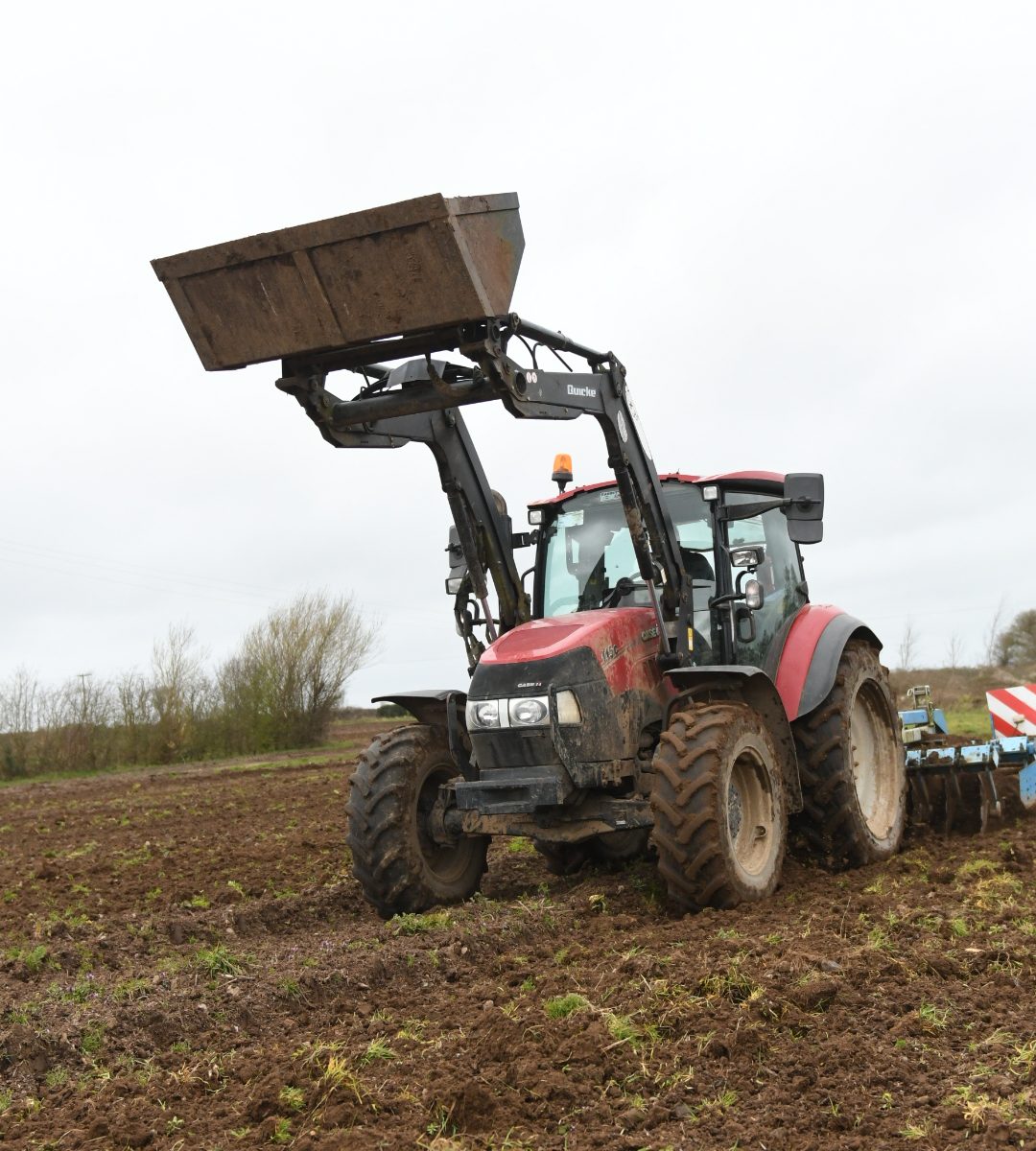
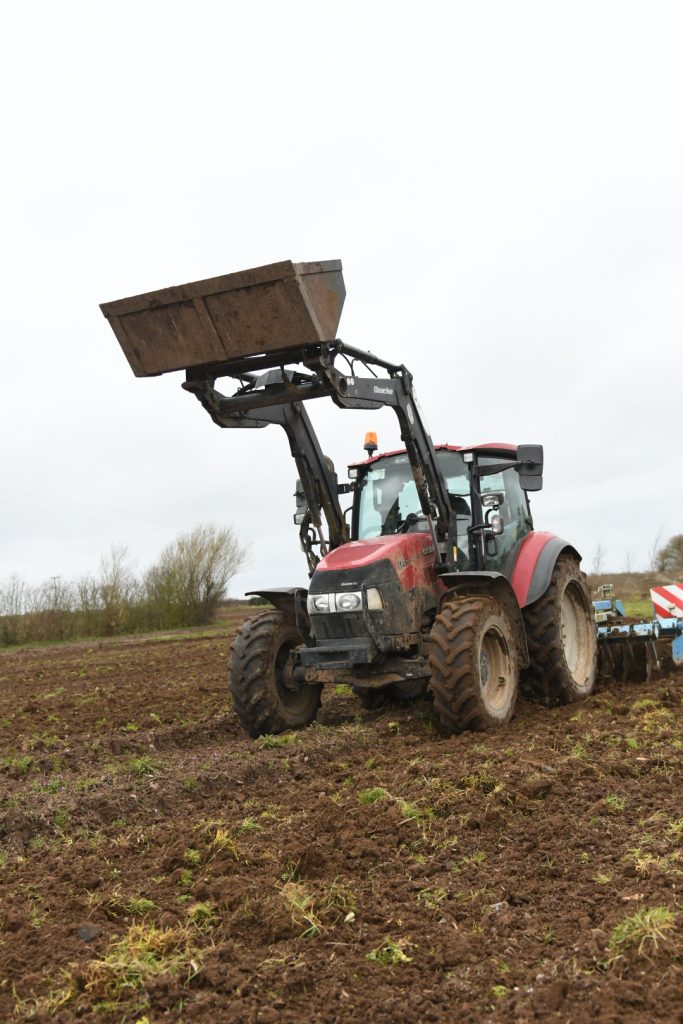
But back on the farm we have had a few days of sunshine and the three days of fine weather we got last weekend we took full advantage of. We have spread all our compost, ploughed the land and tilled some of it.

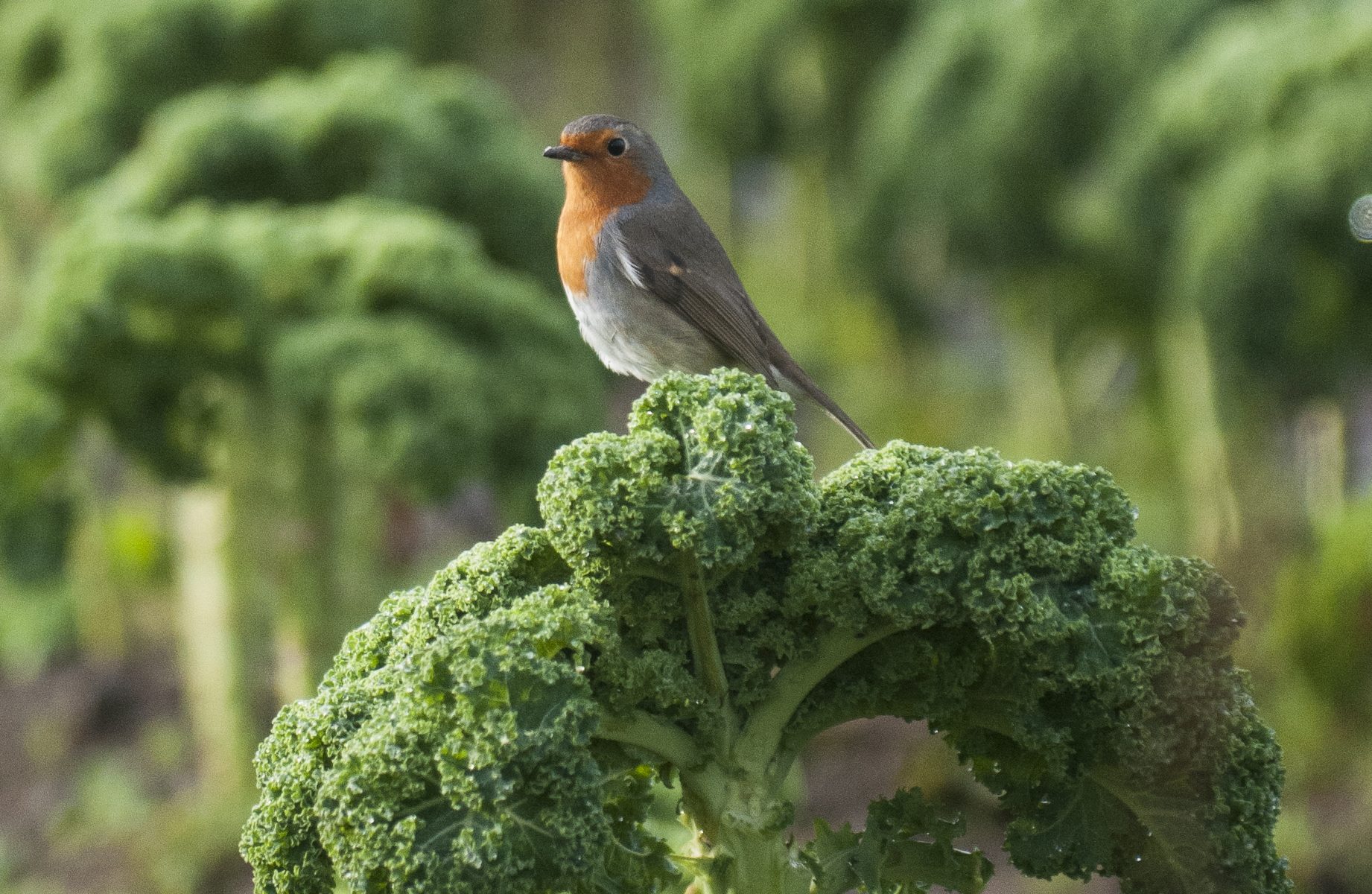
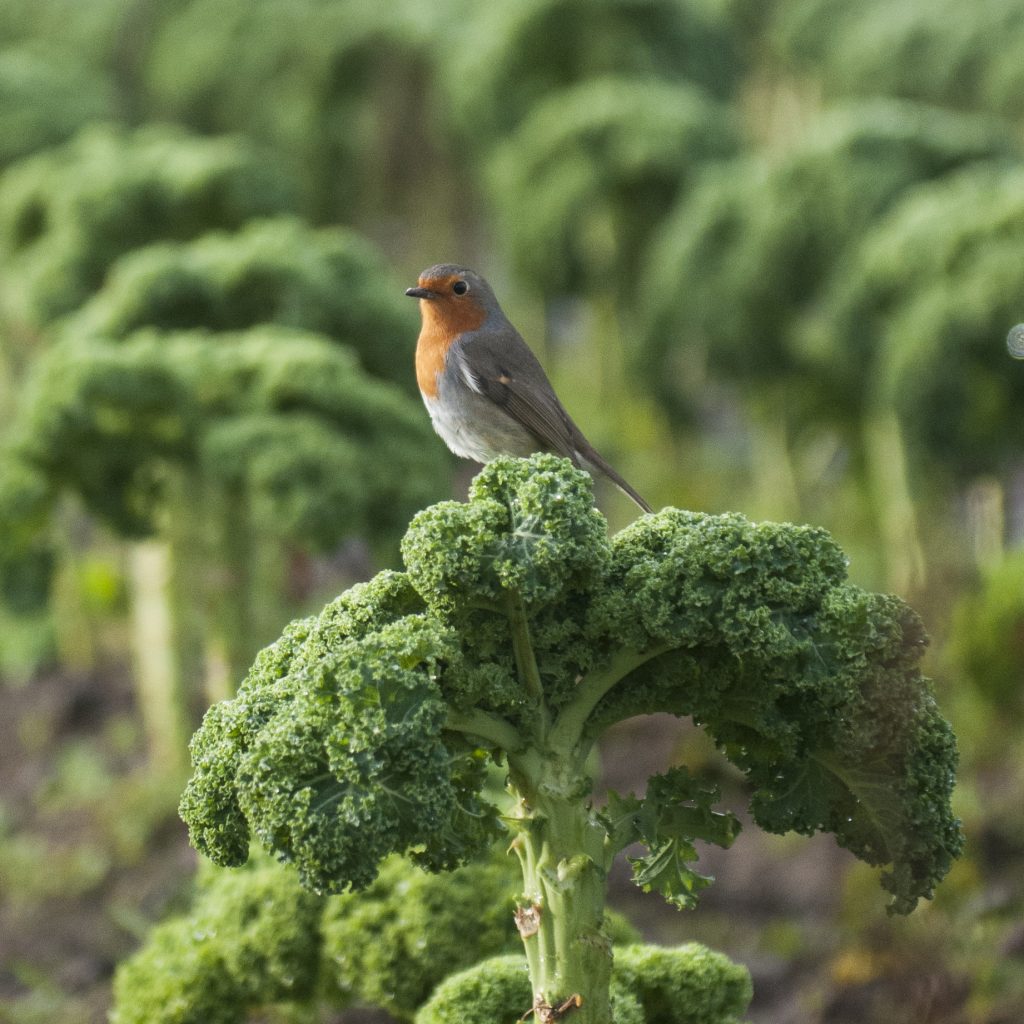
We are still harvesting on the farm too. The last of our own farm parsnips are still available, we are harvesting our own leeks and from the tunnels a bumper crop of rocket and spinach and chard, we will also be harvesting loads of green kale this week and this is the crop I wanted to talk about.

Some of the green kale is on the cusp of going to flower and if the temperature gets back to over 12C then we will have our native Irish honeybees flying all over the farm. The first place they will go is to these beautiful flowers, which we will leave until the first aphid infestation begins.

But here is a couple of facts you may be interested in. In conventional systems up until relatively recently many brassica plants were sprayed with neonicotinoid pesticides to destroy amongst other things, aphids.

These chemicals are thankfully now banned in the EU. 1 teaspoon of Thiamethoxam alone can decimate over 1.25 billion bees. But this is not the end of the story. These chemicals and this one in particular is still manufactured in the EU, in Belgium by Syngenta and is exported all over the world, it is hard to get accurate data but somewhere in the region of 10,000 tonnes of the stuff is exported to other countries. If you assume that one teaspoon is 3g, then is a lot of teaspoons, it is enough to wipe out the global population of honeybees and wild bees 10 times over.

Not only that, and here is the real dark side of this (as if it was not already dark enough) Syngenta knew and did not release data that their chemicals decimated bee population, they kept this from regulators knowing the damage these chemicals did.

So, when we are told by the companies that manufacture pesticides that they are safe, and where they stand to earn billions of dollars in profit. I error on the side of caution and tend not to put too much trust in what they say.

As always, your support, protects and supports a way of farming that keeps these toxic chemicals out of our food chain and helps protect biodiversity and in this instance our native Irish honey bee too.

Thank you.

Kenneth
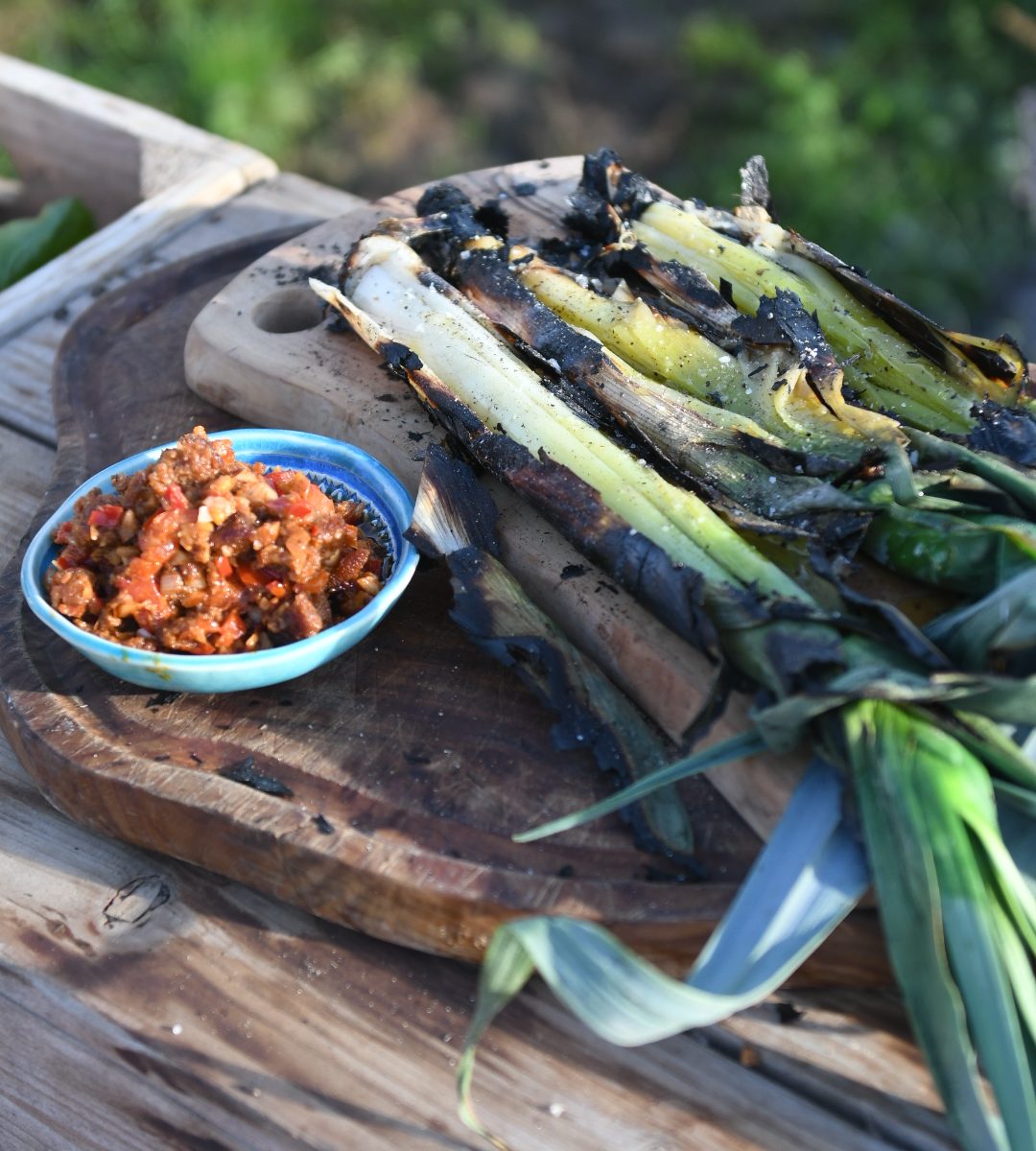
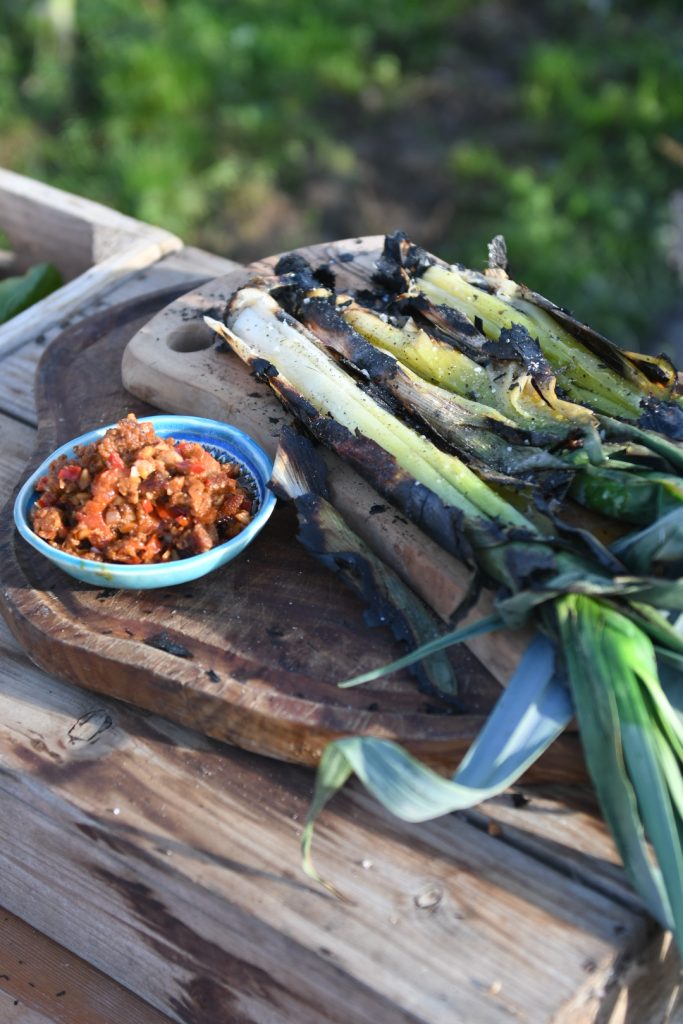
Cooking without Chemicals with Tom Hunt – Blackened Leeks with Romesco Sauce

This smoky Catalan-style dish is all about the contrast of charred, sweet alliums and nutty, tangy romesco. Traditionally served with calçots, the sauce works beautifully with blackened leeks too – or with almost any grilled vegetable or fish. It’s so moreish you’ll want to spread it on toast.

Tom Hunt is an award-winning chef, food educator, writer, climate change activist and author. This recipe was first published in his book Eating for Pleasure, People & Planethttps://www.tomsfeast.com

Ingredients – serves 4

4–6 leeks (about 1 large or 2 small per person), trimmed

Light olive oil

Sea salt and black pepper

Romesco sauce

2 cloves garlic, finely chopped

1 red chilli, chopped and deseeded

50g almonds or other nuts

50g stale or dry bread, torn

1 shallot or ½ an onion, finely diced

1 tbsp smoked paprika

350g roasted red peppers (from a jar or freshly roasted)

1 tbsp sherry or red wine vinegar

100ml olive oil

Method

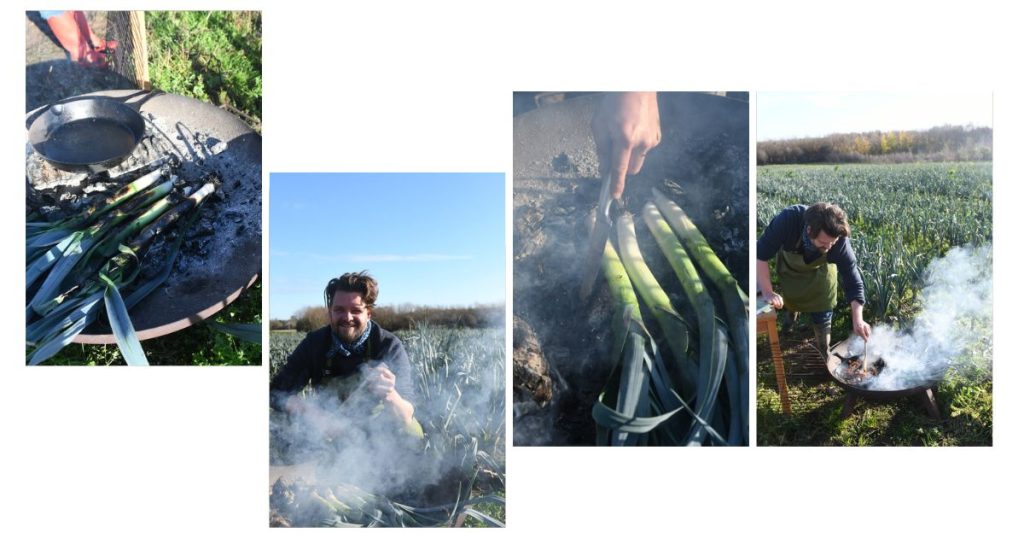
To cook the leeks, preheat a barbecue or grill to high. Rub the leeks lightly with olive oil and season.

Place them directly over the coals or under the grill, turning occasionally, until the outer layers are blackened and the insides are soft – about 10–15 minutes depending on their size. If cooking directly on the coals, brush off any ash before serving.

You can also roast them in a hot oven at 220C until tender and charred at the tips. Meanwhile, make the romesco sauce.

Warm a splash of olive oil in a frying pan and fry the. bread and almonds for a few minutes until golden. Add the garlic, chilli and onion and cook for another couple of minutes until fragrant, then stir in the smoked paprika.

Transfer the mixture to a blender with the roasted peppers and vinegar, then blend to a coarse paste. With the motor running, drizzle in the olive oil until you have a thick, spoonable sauce. Season with salt and pepper to taste.

Serve the hot blackened leeks piled on a platter with the romesco spooned generously over the top or served alongside.

Storage

The sauce will keep well in the fridge for up to a week, or longer if pasteurised in the jar.

Where have all the vegetable growers gone?

Bordering our farm on all sides are fields of grass, there are no crops, no vegetables, but there are cows and there is grass. But where have all the vegetable growers gone? It used to be part of our culture and our heritage and more important than that we used to produce our own food, today over 70% of our fruit and veg is imported and some reports put it as high as 83%. There are approximately 60 commercial field scale vegetable producers left in Ireland

That means the majority of the fruit and veg we eat here in Ireland is now grown abroad. What happened to cause this? 

There are many reasons most probably. But one reason stands out above all others, the constant race to the bottom to give the cheapest possible price to the consumer by supermarkets has had a big part to play. Loss leading of fresh Irish produce over the years has not been kind to the vegetable farmer and you can’t really blame farmers for getting out of the business. 

It is a labour intensive business and it is difficult to attract people into a job that typically cannot compete with wages that other industries offer, and yet we must but the sad fact is that the end product, the fresh carrot or parsnip, does not pay the bills. 

This is something we have seen on our farm for many years. Our farm loses money and if it was not for you our customers and our retail business we would not survive as an independent entity. 

I still figure we need to keep going, need to keep growing, need to persist, it may well be the definition of madness and certainly doing the same thing and expecting different results is definitely that. 

It is a fraught endeavour to be involved in, and these days there is also the added uncertainty of climate change, which is bearing down hard and fast on all of us. But when you are out in the fields and your product is at the mercy of the weather you have much less control. 

All in all, it doesn’t paint a very positive picture, and yet, I love growing organic food, growing local food, and supporting other local organic farmers. There are certain glimmers of hope all round, your support for us, is one massive beacon. Younger people 

So, we will keep banging the drum and keep marching on, to what end I am not sure, but as we embark on our 20th growing season, I am hopeful for the future of local organic produce. 

As always thank you for your support it makes every difference. 

Kenneth

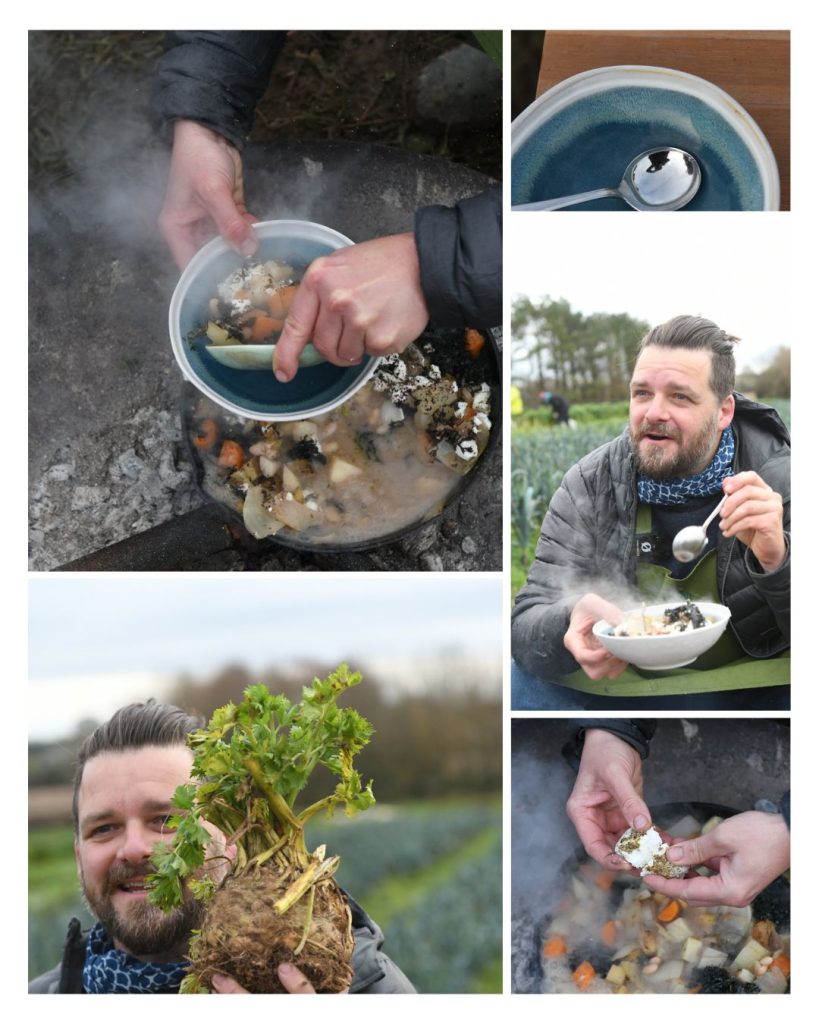
Farm to Table Soup – Cooking without Chemicals with Chef Tom Hunt

Tom Hunt is an award-winning chef, food educator, writer, climate change activist and author. This recipe was first published in his book Eating for Pleasure, People & Planet. https://www.tomsfeast.com

This soup is the farm in a bowl. Adapt the ingredients to use what you have, what’s in season and what’s in your veg box.

Serves 4

2 tbsp ghee or olive oil, plus extra to serve

1 celeriac, trimmed, cleaned, diced – skin left on

3 carrots, roughly chopped – skin left on

1 onion, very roughly chopped

4-6 cloves garlic, peeled

3 sprigs thyme

Sea salt and pepper, to taste

Pinch of dulce seaweed, optional

100-150g kale, stalks finely chopped, leaves roughly chopped

1 can white beans, including the aquafaba

Method

Heat a thick based pan over a medium heat with the fat. Add the onion and whole cloves of garlic. Cook for a few minutes then stir in the celeriac and carrot. Sauce for a few more minutes. Season with plenty of sea salt and freshly cracked black pepper and optional dulce seaweed flakes. Cover with water and bring to a simmer. Add the kale and white beans including their liquor. Once tender serve topped with optional crumbled goat’s cheese and extra ghee or olive oil. Enjoy!

Cooking without Chemicals with Tom Hunt – Beer-battered Kale

Tom Hunt is an award-winning chef, food educator, writer, climate change activist and author. This recipe was first published in his book Eating for Pleasure, People & Planet. https://www.tomsfeast.com

Beer-Battered Kale

Beer is a nifty ingredient for making any number of dishes. Just a drop will transform a slow braise, stew or hotpot, adding notes of bitter caramel, yeast and hops that elevate the recipe while lessening the need for stock. Beer batter is quick to make and deeply satisfying to eat. The bubbles help it puff up when fried, turning wonderfully crisp and flavourful. Here I’ve battered a variety of whole kale leaves, which are magically moreish served with a squeeze of lemon and a dollop of curried mayonnaise. Any leftover beer can be stored in a sealed container in the fridge for up to a month, or frozen indefinitely until needed.

Serves 2

100g wholemeal spelt flour, plus extra for dusting

1 tsp baking powder

A pinch of salt and pepper

130ml beer and/or water

Light olive oil, for frying

200g Kale (green, purple, or black or a mix of all three), whole leaves (but you can also try nettles, halved mushrooms, batons of squash, fennel or turnip, chicory leaves, etc.)

To serve: lemon wedges, curried mayonnaise, or tamari

In a bowl, mix the flour, baking powder, salt, pepper, beer and/or water, and beat out any lumps. Add a little more beer, water or flour if necessary to reach the consistency of double cream.

Fill a saucepan less than one-third full with oil and place on a medium heat. When hot (test by dropping in a little batter – if it bubbles and rises to the surface, it’s ready) dust the kale leaves lightly in flour, shake off the excess, then dip into the batter.

Shake again to remove any excess batter and carefully lower into the hot oil. Fry for about five minutes, or until golden brown.

Remove with a slotted spoon and place on kitchen towel to drain. Serve hot with lemon wedges and your favourite condiment.

Cooking without Chemicals with Tom Hunt – the Pulp Fiction Burger

Tom Hunt is an award-winning chef, food educator, writer, climate change activist and author. This recipe was first published in his book Eating for Pleasure, People & Planet. www.tomsfeast.com,

The pulp fiction burger

Root to fruit eating is an holistic approach to food that considers all aspects of its production, its impact on the planet and our health. To eat in this way means basing the bulk of our meals on local-seasonal foods and eating them whole, including the parts we usually throw away, like peelings, root greens and other by-products. Whenever possible my recipes include the whole ingredient but sometimes the usually discarded, odds and ends becomean invaluable ingredient in their own right. Like spent lemon rinds which make the most incredible marmalade or ‘aquafaba’ the liquid leftover from cooking pulses, a practically cost-free egg replacement that makes perfect mayonnaise, pastry or meringues. This recipe calls for leftover juice pulp – plant-fibre that’s a vital macronutrient and huge waste if left unused. It turns out juice pulp is perfect for making a delicious textural veggie burger, especially when it contains lots of delicious, blood red beetroot. If you plan to make a juice, plan to make a burger, it’s a rather tasty bonus.

Makes 2 patties

100g juice pulp (about two small juices worth, preferably containing beetroot) or finely

chopped cooked mushrooms

100g tempeh, shredded, or finely chopped cooked mushrooms

2 tbsp tamari

1 tsp vinegar (cider or other)

1 tsp smoked paprika

1/2 large red onion, grated

1 clove garlic, grated

1 tbsp miso,

2 tbsp vital wheat gluten flour or chickpea flour

25g walnuts

Virgin or light olive oil for frying

Serving suggestion

Bun, winter leaves, onion, pickles, ketchup, mayonnaise (recipe below!)

Preheat the oven to 220C

Mix all the burger ingredients together well and season with pepper. Do not add salt as the tamari and miso are salty. Form into two firm round patties and place them on parchment paper. If you have time place in the fridge for at least thirty minutes or even overnight if you want to make them the day before. Fry the patties gently on the parchment pieces, in a lightly oiled, ovenproof frying pan on a medium low heat. Risk the temptation to move the burger, watch the base and when it starts to brown and form a crust (after about five minutes) carefully flip the burger with a fish slice. Put the burger in the oven for five to ten minutes while you prepare the trimmings. Serve how you like in a bun or lettuce leaf with your favourite sauces.

Whole egg mayonnaise

1 whole egg

Mustard, to taste (we used a heaped tsp of whole grain mustard)

Apple cider vinegar or fresh lemon juice, to taste (about 1-3 tsps)

Extra virgin olive oil

Crack a whole egg into a large bowl. Add the mustard, vinegar or lemon and a pinch of sea salt and black pepper. Slowly drizzle in the oil while whisking continuously until the mayonnaise thickens. This will take 3-5 minutes.

Maybe we are not as smart as we think we are…

Honestly my grandad walked these fields, he farmed here with two farm horses one called Snowball, and he did not use chemicals. The idea struck me just before Christmas that we are the only species on the planet that will actively go out and cover our food with toxic chemicals to stop other living creatures from eating it and then eat it ourselves. That is an amazing forward jump for civilisation, don’t you think?

Using chemicals to ward off disease is as old as organised agriculture, and up until recently bluestone and washing soda, that is Cupper Sulphate and washing soda was used to help prevent blight on potatoes here in Ireland. This is now restricted under organic rules. My Grandad may have used it in the 1950s, and had it been available in the mid-1800s it may have saved millions of people from starvation during the great potato famine, using it would have been the right thing to do.

The key difference today is the scale, the toxicity and the ubiquity of pesticide use. Yes, the EU have been restricting the use of certain pesticides, but it very much looks like their ambition to clean up chemicals in our food will be put on hold for now.

There is also the argument that the dose makes the poison and for something like copper of course if you consume too much of it is toxic, in fact it is more toxic than Glyphosate, this may seem surprising.

But here are two key differences.

1. The use of Glyphosate worldwide is estimated to be 800,000 tonnes annually. For Copper sulphate reliable date does not exist but use is probably around the 10,000-50,000 tonnes mark. (note it is now severely restricted under EU organic standards). Glyphosate is everywhere.

2. Glyphosate is systemic, Cupper is not. Glyphosate gets into the plant and stays there; Copper sits as a barrier on the outside and is easily washed off.

Things are never as black and white as we may want them to be, the famine and the use of copper to protect the potato crop is a good example, if the option was there at the time it would have been the right thing to do to use it.

But today there are clear alternatives to chemical use in vegetable production. For weeding, mechanical and flame weeding are clear chemical free ways to control weeds. Using crops that are more disease resistant is a no brainer, and new varieties are constantly being bred (not GMO, but using natural techniques), take the potato “Connect” which has exceptional blight resistance and tastes great (the earlier Sarpo varieties had great blight resistance, but nobody wanted to eat them!).

For pests, well some crops will succumb that is the nature of nature!

We are often asked how we deal with slugs on our farm, and whilst at times we do use an organic approved slug pellet it is rare and we have virtually no problems. The ecosystem on our farm may be in balance and provides natural protection, as with any balanced system it just works.

So as always without your support we would not be able to continue to fight the good fight, so thank you for standing by us, and Happy New Year.

Kenneth

Cooking without chemicals with Tom Hunt – A Swede Pretending to Be Ham

Swede might be an unlikely candidate for a centrepiece, but roasted whole, glazed with mustard and sugar, and studded with cloves, it transforms into something deeply savoury, smoky-sweet and satisfyingly ham-like. The result is a gloriously bronzed root that carves beautifully, whether served hot from the oven or cold in thick slices the next day, tucked into sourdough with extra mustard and a handful of peppery watercress.

Enjoy!

Tom Hunt is an award-winning chef, food educator, writer, climate change activist and author of the new book Eating for Pleasure, People & Planet.

Ingredients – serves 4–6

  • 1 swede (about 800g–1kg)
  • Glug of virgin or light olive oil
  • Sea salt
  • 60g muscovado sugar
  • 40g wholegrain mustard (or to taste)
  • 8–10 cloves

To serve

  • Thick slices of sourdough
  • Extra mustard
  • Watercress
  • Sauerkraut (optional)

Method

Preheat the oven to 180C. Wash the swede well, scrubbing especially around the root end. Trim any rough patches and cut out any soily nooks or blemishes with a small knife.

Rub the swede lightly with olive oil and a pinch of salt, then wrap it in unbleached parchment and place it in a small ovenproof dish. Roast for 1 hour.

Remove from the oven and unwrap.

Using a sharp knife, score the surface of the swede in a shallow criss-cross pattern, cutting about 5mm deep, as you would a ham. Stud the intersections with cloves, drizzle with a little more oil, and return to the oven uncovered for another hour, or until golden, soft and slightly shrunken.

Meanwhile, mix the sugar and mustard together in a small bowl. Lower the oven to 120C. Brush the hot swede all over with the mustard glaze and return to the oven for 20–30 minutes, until sticky, burnished and aromatic.

Carve at the table into thick slices, or let cool and slice thinly for sandwiches with sourdough, extra mustard and watercress. A spoonful of sauerkraut alongside works beautifully too.

Storage: Keeps well in the fridge for up to 4 days. Delicious served cold.

Chemicals in OUR kale, no chance…and a chemical free Christmas

So, we had our usual annual organic farm inspection again this year, and our produce was once again spot-checked. A sample of our kale was taken away and tested for…., now I must preface this with even I was shocked this time.

The last time our produce was tested it was tested for 870 chemicals. This time it was tested for 1200 different chemicals.

Now to be fair, some of these chemicals are banned in the EU, some are banned in the EU and are still used in other parts of the world and are still found on conventional imported food, many that are banned in the EU are still used in the US.

Whatever way you look at it, it is a lot of chemicals.

In total the most recent estimate puts the sales of these toxic chemicals at between 60-€80 billion per annum.

All of this brings me back to the idea, that we as organic farmers and producers must prove our chemical free nature! We must demonstrate that we are following the rules, that we are complying with the organic regulations, that we are not using synthetic pesticides, not using artificial fertilisers, amongst other things. This in our current food environment is fair as it protects us the consumer, and certified organic produce is a crucial way to ensure these chemicals are kept out of our food chain and for us as consumers to know we are getting chemical free food.

But, what if the shoe was on the other foot so to speak, what if we still demonstrated that we were pesticide free, but conventional produce had to list all the chemicals used in its production.

If you go into any supermarket now and check any pack of oranges, or grapefruit, lemons or limes, in fact any citrus fruit you will see the list of chemicals that have been coated onto the skin of the produce. It is clear for everybody who looks to see, one of the most common chemicals applied is one called “Imazalil” this is a probable human carcinogen, and it is applied to nearly every single piece of conventional citrus fruit you will find in a supermarket that is not certified organic.

Now this is not to cause alarm, and there is a justified argument that these compounds reduce food waste by preventing food from rotting. But here is the thing, is it worth it? Would you choose it?

Now at least in the case of citrus fruit it is clear, it is labelled and there to see, but what if all those other pesticides, we have been tested for 1200 different chemicals, what if all of the compounds that were used in the growing of our food was labelled, what then?

It may cause us to at least stop and think, and maybe consider the implications for our health and the health of the planet.

As always thank you for your support, without which we would not be here.

Kenneth

PS As Christmas draws closer, we have had challenges this week getting parsnips harvested as it has been so wet, planning our harvest and harvest from other Irish organic farms can be tricky at this time of year. If you can get your order in now it helps us plan and understand how much produce we will need, remember the deadline for Christmas is less than 2 weeks away now, and we have a finite number of products and produce, so please if you can support us this Christmas, even if you get one or two extra organic groceries from us as well as your fresh produce, it will make a huge difference, the supermarkets wont miss you but we will. Support us to help support you in making it a chemical free Christmas. The little red hat on our products indicates which products you can order for Christmas

Feeling a little disillusioned today…

You know I discovered something this week, you can be very happy or at least have
a reasonably amount of happiness (whatever that is) doing what you do, but when
you enter financial considerations into the mix, it can change very rapidly.


A lady here at work said to me ‘retail destroys your soul’, and there is a point in that,
it is so hard to compete in the marketplace, especially when it comes to food. If the
truth be told I would be much happier down in an isolated corner of our farm doing
my own thing. That unfortunately will not pay the bills, the fact is farming does not
pay the bills.


This is exactly the truth we seem to have uncovered again this year, after what has
been without doubt the most rewarding growing season of our nearly 20 years of
growing vegetables. Rain when you want it, the best farm team you could hope for,
the best machinery, heat and light when you needed it, the right fertility, it has just
been 85% perfect, we have realised another loss on our farm.
Now let me explain, our farm is like an independent business it needs to be able to


“wash its own face” as it were, and it sells the produce we produce to our retail
business that then sells it on to you, our customers. We pay our farm fairly; it would
certainly be like shooting ourselves in the foot if we didn’t (and then trying to dig our
own parsnips with one foot). We don’t pay silly prices; we keep it in line with what we
would pay to other Irish suppliers. The reality is this though, that even with this
special treatment we lose money.


I am not highlighting this to be a ‘Moaning Michael’ but to outline what I see as a
bigger problem in our industry. We must at least try to compete with supermarkets,
and supermarkets have made it their model to devalue fresh food to entice
customers into their giant stores by making fresh produce dirt (no pun intended)
cheap. Just the other day I saw Irish carrots in a supermarket for 69c.
So how in the name of all that is Holy is this possible, there is an equation hidden in
there, and it goes a little like this. Either the farmer loses or the supermarket loses
and guess what? The supermarket never loses.


So, I have been racking my brains and a solution to our farming loss might look a
little like.
A. We specialise in one or two crops and sell wholesale.
B. We increase our farm prices beyond what the market allows and then end up
with our retail business losing.
C. We stop growing altogether.
D. We continue as we are and subsidise our farm with our retail business.
The only valid solution in my mind is a combination of B and D, it is sad that this is
the state of affairs, shouldn’t sustainable farming be profitable in its own right? We

are not alone, many farms over the years have closed up shop, there are only 60
field scale vegetable growers left in Ireland, we are one of them.
So, we will keep going, and we look to the next year with hope (Farming can have
this strange hold on you, that you always think things are going to be better next
year…).


Thanks for supporting us
Kenneth

PS The irony of all of this is we feel we need to reduce our prices on key staples to
bring better value to you our customers, because we value you and without you our
farm would not survive. Check out specials here.
PPS Your support this Christmas will make all the difference so please support us if
you can. The supermarkets I guarantee won’t miss you, but if you order with us it
will make all the difference, you can order one of our boxes or and get all your
groceries with us too, we have nearly 800 in stock that you can order for Christmas.