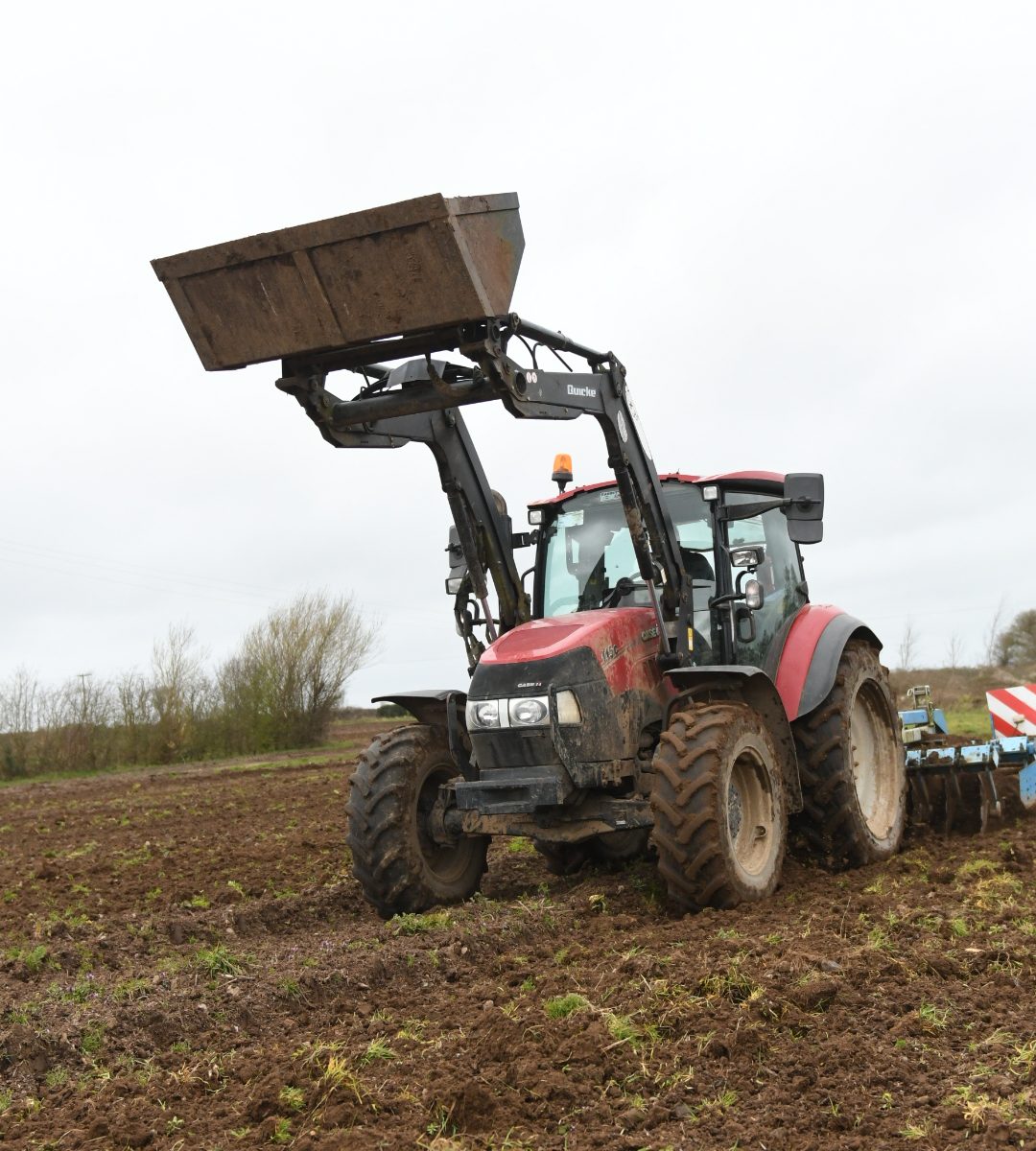
Feeling a little disillusioned today…

You know I discovered something this week, you can be very happy or at least have
a reasonably amount of happiness (whatever that is) doing what you do, but when
you enter financial considerations into the mix, it can change very rapidly.


A lady here at work said to me ‘retail destroys your soul’, and there is a point in that,
it is so hard to compete in the marketplace, especially when it comes to food. If the
truth be told I would be much happier down in an isolated corner of our farm doing
my own thing. That unfortunately will not pay the bills, the fact is farming does not
pay the bills.


This is exactly the truth we seem to have uncovered again this year, after what has
been without doubt the most rewarding growing season of our nearly 20 years of
growing vegetables. Rain when you want it, the best farm team you could hope for,
the best machinery, heat and light when you needed it, the right fertility, it has just
been 85% perfect, we have realised another loss on our farm.
Now let me explain, our farm is like an independent business it needs to be able to


“wash its own face” as it were, and it sells the produce we produce to our retail
business that then sells it on to you, our customers. We pay our farm fairly; it would
certainly be like shooting ourselves in the foot if we didn’t (and then trying to dig our
own parsnips with one foot). We don’t pay silly prices; we keep it in line with what we
would pay to other Irish suppliers. The reality is this though, that even with this
special treatment we lose money.


I am not highlighting this to be a ‘Moaning Michael’ but to outline what I see as a
bigger problem in our industry. We must at least try to compete with supermarkets,
and supermarkets have made it their model to devalue fresh food to entice
customers into their giant stores by making fresh produce dirt (no pun intended)
cheap. Just the other day I saw Irish carrots in a supermarket for 69c.
So how in the name of all that is Holy is this possible, there is an equation hidden in
there, and it goes a little like this. Either the farmer loses or the supermarket loses
and guess what? The supermarket never loses.


So, I have been racking my brains and a solution to our farming loss might look a
little like.
A. We specialise in one or two crops and sell wholesale.
B. We increase our farm prices beyond what the market allows and then end up
with our retail business losing.
C. We stop growing altogether.
D. We continue as we are and subsidise our farm with our retail business.
The only valid solution in my mind is a combination of B and D, it is sad that this is
the state of affairs, shouldn’t sustainable farming be profitable in its own right? We

are not alone, many farms over the years have closed up shop, there are only 60
field scale vegetable growers left in Ireland, we are one of them.
So, we will keep going, and we look to the next year with hope (Farming can have
this strange hold on you, that you always think things are going to be better next
year…).


Thanks for supporting us
Kenneth

PS The irony of all of this is we feel we need to reduce our prices on key staples to
bring better value to you our customers, because we value you and without you our
farm would not survive. Check out specials here.
PPS Your support this Christmas will make all the difference so please support us if
you can. The supermarkets I guarantee won’t miss you, but if you order with us it
will make all the difference, you can order one of our boxes or and get all your
groceries with us too, we have nearly 800 in stock that you can order for Christmas.

Can a bite of an apple transport you back in time….?

Isn’t it funny that if you or I choose to grow our own food we will always, always choose to grow our own food without chemicals! Funny that this is a criterion in our own gardens but less of a consideration when it comes to choosing in a supermarket. My Grandad grew peas, and turnips, and carrots and potatoes as did my dad. My mum had raspberry bushes, blackcurrants, and goose berries. We were picking and eating our own fruit and vegetables and that was in the 70’s and 80’s. What happened?

Where did all the back garden growing go? Not only that where did all our commercial veg growers go?

In our 20 years we have seen so many changes to our food system we have seen the number of vegetable producers here in Ireland fall dramatically to just 60 commercial field scale producers, down from over 400 in the 90’s. Supermarkets have had a hand in this, squeezing the farmer to the extent that there is just nothing left. The consolidation of the packing and distribution process into the hands of a few middlemen has not helped either. In the space of just one generation, we have become disconnected from our food. Where is our food grown, who grows it, how is it produced, how is it handled? This disconnection is not our fault.

We have had school kids come on to our farm and been completely mesmerised by the fact that carrots come from the ground, having thought they begin their life on supermarket shelves in the plastic packaging. So it is that the shiny plastic packs that line the supermarket shelves give us the impression that our food system is unlimited, vibrant and fair, but of course this is not the case. The problems occur when we try to apply factory type controls to a natural system, but nature is not a factory, and the same rules do not apply.

Covid seemed to rekindle our interest in food. People are really interested again, interested in where our food comes from, what it’s impact on our precious planet is, and interested in how it has been grown. This is a wonderful change. We here on our farm certainly know where our food comes from, and we know that it has been produced without chemicals.

This week we have taken delivery of the first pallet of Irish organic apples from Darragh Donnelly in Dublin he also grows the Irish organic cherries we had earlier in the season. These apples are quite frankly amazing, the flesh is a bright pink, I have never seen apples like this, and the great news is this colour is caused by anthocyanins, which are powerful antioxidant and anti-inflammatory compounds.

But the best part of all is that these apples will take you back in time. They took me back to the orchard my grandad used to have in his back garden, the apples there which I picked as a young lad were full of flavour. I believe there is a distinct flavour and taste to an Irish apple, and Darragh’s apples are that if they are anything.

We have so many crops coming from our own farm, and we certainly know how they were grown, what field they came from, even what part of what field they came from! In fact, we could probably tell you who harvested them and who packed them into your box and who delivered them. Now you would be hard pushed to get that level of traceability and understanding of where your food comes from in a supermarket.

It is exciting to see that our food and our food producers are becoming a revered part of our culture again, thank you so much for being part of that transformation!

Kenneth

You can have double the helping of Roundup in your porridge than in your toast.

I remember many years ago meeting two brothers who were growing oats for Flahavans for their porridge. One brother was growing it organically and one was growing it conventionally (With chemicals) The organic farmer tilled the ground, sowed the oats, did some mechanical weed control, and essentially left the oat crop to its own devices.

The other brother was in and out with his sprayer at regular intervals to control, weeds, and fungal infections, using chemicals such as Inatreq ™ (fenpicoxamid) another systemic chemical, Prothioconazole, azoles, and folpet.

Next time you drive past a field of cereal, have a look for tractor wheelings called tramlines up and down the field. This is where the farmer drives up and down spraying the field, and will use the same wheelings for multiple applications to reduce damage to the crop.

At the end of the day although the organic farmer may have had a slightly lesser yield they came out with the same profit due to the cost of the chemicals. Of course, what was not factored in was the cost of the chemicals to our environment and our health, so the question remains why even bother?

While the EU extended the licence for Glyphosate for a further 10 years in 2023, it banned its use as a crop desiccant.

This is the use of a chemical to “dry out a crop”, it is used to reduce the moisture level in cereal crops like wheat. Drier kernals are required by the processors for milling. Even though there is a ban on the use of Glyphosate for desiccation, farmers can still use Roundup for late control of weeds in wheat, so it seems it is still possible to use this toxic systemic chemical for control of weeds in wheat, meaning of course it ends up in our food and in our bread.

I wonder how many farmers are using this loophole to effectively continue to apply roundup prior to harvest?

Roundup is systemic, it gets absorbed into the plant and stays there, classified as a probable carcinogen by the WHO, it is the most used herbicide in the world ever, sales in 2023 reached $10.3 billion.

The funny fact when it comes to roundup is we are allowed to have twice the amount of roundup in our porridge that we are in our wheat. It makes no sense you can’t possibly say the same chemical is twice as safe in a different crop and essentially tell people it is safe to consume twice as much, this of course is rubbish.

But that is the way it is, let me frame this for you, you can have double the helping of roundup in your porridge than you can have in your toast, does that make sense to you? Well, it doesn’t make any sense to me.

I’ll be going with the organic porridge and toast thank you very much.

As always thank you for your support

Kenneth

PS Please remember supermarkets wont miss your custom, but we are completely dependent on your custom to keep our farm running, and every order makes a massive difference, there has never been a better time to get the most amazing seasonal local Irish organic produce as now, thank you.

A Plea, can you help?

We have had the best spring and start to summer that I remember in our 20 years of growing organic vegetables, it has been exceptional and I think we are in for a bumper harvest. I certainly feel we were due a break after the two dismal and depressing years just gone.

It is with some depression then that we face into mid July with the all too familiar vista of loads of produce and so few orders. We rely completely on individual orders each week and when our orders drop dramatically as they have done in the last couple of weeks it leaves us struggling.   

It is completely understandable, the weather has been good and we all deserve a break from our routines, couple that with many people taking a well deserved holiday and we have the perfect storm.

We have all the same costs week in week out, from packing to harvest -and the crops simply must be harvested when they are ready. We also have commitments to other Irish organic growers and when we don’t have orders this leaves us with difficult decisions.

The worst case is that our crops simply are left in the field to rot and this can be a very sad and real reality. This year we took a different approach to avoid this, in the hope that it might stimulate orders, we have given away over one thousand free freshly harvested farm harvested items over the last three week but it seems it has done very little, and the sad fact is we cannot afford to continue doing this.

There is the double depressing fact that we have spent the last six months working so hard to produce this amazing local Irish organic food that now we can’t sell it.

The farm this year so far is operating at a loss, the first six months of the year we incur most of the costs, and the latter six months are when you need to recoup the costs to keep the farm rolling. Last year we never recovered the costs, it was the worst year we have had, one bad year you can just about take, but two, that’s too much of a stretch.   

So this year, is the year to steady the ship to make enough to reinvest back in the farm to keep it running, and maybe if we are very lucky cover some of the losses from last year, it really is as simple as that.

With only 60 commercial vegetable farmers left in Ireland and against the continued loss leading of fresh produce by supermarkets you start to question whether after all the hard work it is worth it?

From my perspective this has always been a resounding yes because I believe in local food and growing food without chemicals and protecting biodiversity and paying people fairly, so it is a double depression to be facing this struggle of having the produce but not having the orders. Year by year it erodes my sense of commitment that earlier on was buffered by the endless energy of youth. I am tired.

We have I believe a decent business that promotes a positive and vital link to our food and our land.  I would ask you now if you can at all to support us and crucially over the next few weeks of the summer holidays as our pivotal harvest rolls in from our fields and the fields of other farmers to place an order and maybe avoid that odd supermarket purchase in favour of buying from us.

If you can I thank you. If you cannot I thank you for reading, engaging and spreading the word to others that may be able to support and help us, and I thank you for your good wishes and words and energy of encouragement which keeps us going through the tough and lean times.

Thank you.

Kenneth

Woes and Wonders…

Do you ever feel like you are wading through thick treacle? And it seems like everywhere you look there is a problem waiting to be discovered? Welcome to this week on the farm, up and down we go with the waves of life, this week has been one giant wave, and I am wondering if we have reached the crest yet, I think we may have.

By all accounts we should be delighted, and to an extent I know that delight is there, I just can’t seem to access it right at the moment of writing this (we all know the blue sky is always there but mostly at least in this country we can’t see it!), as all those newly discovered problems seem to be overshadowing the good stuff and there actually is plenty of good stuff.

But before that the challenges. So let me start by saying I consistently make the mistake of reading comments by different people that organic farmers use chemicals, I think if I hear that “misinformation” again I will go out of my mind.

Of course we use chemicals. We use soil and water and air, all of which are made up of atoms and molecules that constitute chemicals, and there are natural elements in the soil, my Ph.D. in chemistry seems to be coming in useful at last. I think the insinuation is though we also use synthetic pesticides and insecticides and fungicides.

So how can I be any clearer, we don’t use synthetic man-made toxic chemicals, we simply don’t. Copper Sulphate may be used at times as a preventative for potato blight, but even if this was used, it is not systemic it is not absorbed into the plant, it is not on the potato.

Whereas Roundup is systemic, it gets absorbed into the plants when it is sprayed on them, like it is on cereals in certain countries, it stays in them, and it is toxic. Brand new research has shown that even at levels previously deemed safe it has been shown to cause cancer in animals. (link here https://ehjournal.biomedcentral.com/articles/10.1186/s12940-025-01187-2)

Then there have been the practical challenges, with system malfunctions, and breakdowns of cold-rooms, and poor plants that we can’t transplant, and having fewer orders due to holidays and loads of harvest and not being able to sell it to support the farm, and general this and that issues.  When all these challenges come all together, they can on some days be too much.

On the other hand, we have in fact got amazing crops this year, the best cucumbers I have ever seen on our farm, and so much more besides. So much so that we are giving away 500 free portions of something next week, a surprise to 500 people chosen at random, so keep an eye out it will say “free from our farm”.

We get to work on the land doing something that is truly worthwhile, producing and selling good quality healthy organic food that is improving our planet and hopefully helping humankind be just a little bit better.  We cannot do that without you, your support keeps us in business, keeps the tractors rolling and the bees buzzing, so as always, a heartfelt thank you.

I hope this pouring forth of my woes for the week was not too much.

As always thank you for your ongoing help and support.

Kenneth

PS Every week you order with us over the summer makes a big difference as many people are taking a well-deserved holiday and this makes keeping all the plates spinning that bit harder here.

There is no difference between organic and conventional produce!?

It was the “green revolution” in the 1950s that changed our agricultural landscape for ever and not in the way you may think when you consider what we understand by the term “Green” today.

Dr. Norman Borlaug, an American agronomist often called the “Father of the Green Revolution” was awarded the Nobel peace prize for his work in 1970, that led to the aversion of famine in many poorer countries.

But where this Green Revolution led, I don’t think anybody could have fully imagined, and it was this very industrialisation of agriculture that led to Rachel Carson publishing “Silent Spring” in 1962 which was a remarkable reflection on the damage that the widespread use of chemicals wrought on our planet. 

Today we use chemicals to force nature to behave in the way we want, we have tried to impose factory type controls onto the natural environment that we rely on for our food. But nature is not a factory, and the same rules do not apply, you cannot indiscriminately apply chemicals to our food and not expect a fall out.

I have been pulled up many times for the use of the word “chemicals” and people rightly point out that everything is made of “chemicals”.  In fact, I have spent a good portion of my life studying chemicals, having a Ph.D. in organic chemistry. In another twist I left this life to pursue a belief that chemicals do not belong in our food system by becoming an organic farmer.

When I speak about chemicals, I mean synthetic pesticides, herbicides, and fungicides. My purpose in this is not to alarm, and I believe that we are all better off eating more fresh food, organic or otherwise than some of the crap that lines the supermarket shelves, that is an absolute given. But when it comes to fresh produce, I firmly believe that if you can at all organic is the best option for so many reasons, to protect biodiversity, to keep chemicals out of our bodies and to be kinder to animals. 

Another point that has been raised recently is that organic farmers use “chemicals” just the same as conventional farmers, well let me put that one to bed straight away. That is nothing short of rubbish. 

If I speak for our farm, we don’t use any “synthetic chemicals”, we may use natural products at times, such as sulfur or magnesium, or boron, all of which are chemicals, but not pesticides, or herbicides, they are also not systemic meaning they are not absorbed into the plant, like many of those used in conventional agriculture.

Something we do use is biological controls at times, and we see more and more of this being adopted by our conventional farming brethren. Right now we are doing very interesting trial working with William Deasy in Teagasc as part of their “Growing organics programme”, using a mite to eat the red spider mite (if you grow cucumbers this little red guy can be devastating). We release a predator mite to eat the pest mite, not a chemical in sight, and by all accounts the trial looks really promising.  

As we head into Holiday season now, we also head into harvest season, so if you can at all please support us, right now over the next few weeks we need your support more than ever.

Thank you 

Kenneth

Rain at last, and we didn’t ask for it 

Rain at last. We never asked for it, we have definitely learned our lesson there. But we couldn’t have asked for a better run of it. Between the amazing sunshine and rain just when we needed it, it has been a miraculous start to the season and for once we are absolutely delighted with progress on the farm. We are so busy at the moment, as the three main tasks are starting to coalesce. We are planting, harvesting and the big one, weeding has just started too.


Our first sowing of carrots and parsnips have just poked their little heads through the soil, which was earlier than expected, but they look good. You know what we will do between now and harvest? We will weed with machines and by hand and we will cover them with nets to exclude the carrot root fly, and that’s it.


In my view, it would make a remarkable difference to how we perceive the value of food if we knew how it was produced, what if the list of chemicals used on the produce were mentioned on the pack, how would that influence our decisions I wonder?
For conventional carrot production right here in Europe and in the UK, here are some of the lovely hidden extras you may be getting. Behind the bright orange crunch is a complex spraying programme involving herbicides, insecticides, and fungicides – some systemic, some not – all used to ensure a blemish-free, marketable crop.
Carrots are sprayed with herbicides, usually starting with Glyphosate prior to planting, then a couple of other stars Pendimethalin and Aclonifen. They can be sprayed 2-3 times per season.
Then it is over to insect control, expect possibly Cyantraniliprole (Benevia), which is systemic (goes into the plant) and Lambda-cyhalothrin (Karate Zeon) which is toxic to bees and aquatic organisms.


It wouldn’t be right to leave out a whole group of chemicals, so not be missed next it is the turn of the fungicides, the likes of Prothioconazole and Azoxystrobin + Difenoconazole (Amistar Top), both are systemic and the last one is an endocrine disruptor, not good for us.
In 2023 the UK found chemicals in 43% of carrots tested, so nearly half.


It is so hard these days to connect how our food has been produced, what has been sprayed on it, and how those in our food system, humans and pollinators alike, have been treated, it seems to me that supermarket led cheap food comes at great cost.
The best way to avoid chemicals and the damage they do to biodiversity is if possible, to choose organic.


Growing some of your own food is an amazing way to connect us with the miracle of nature and the true value of our food.


As always thank you for your support

Kenneth

Has the sun gone to my head? Possibly…

With the sun beating down and the tractor leaving plumes of dust in its wake, you would be forgiven for thinking we are in Spain, or some other such hot country. But no, this is the west of Ireland, the weather is better in the last few weeks than cumulatively over the last two years, or maybe I have just been traumatised by all the rain and cannot remember the rare glimpses of sunshine we must have had.

We are for the first time in our near 20 years of veg production ahead of schedule, the amazing farm team and the fantastic weather and thankfully for once the machines obeying the rule of man are all working nicely together. I am not naive enough to think this synergy will last, but maybe it will.  I will embrace the poor me a little here, we are due a break. I think this could finally be our year, or maybe it takes 20 years to learn how to do it, how to grow 20 different types of vegetables on a commercial scale and do it organically.

2 weeks ago, I spoke with Nina Carberry an MEP and Darina Allen, and we had a conversation about food and our future. Here is one of the fundamental facts in relation to our global food system, of which we are but a tiny piece, (In terms of general agricultural exports we are definitely punching above our weight, but this is a terminal, short term outlook. When it comes to sustainability, we are sacrificing the good of our land for agricultural intensification and beef and dairy exports)

But here is the thing, the way we farm must change, global agriculture is the leading driver of biodiversity loss on our planet, it contributes 30% of all global greenhouse gas emissions. The science is clear, burning fossil fuels and cutting down rainforests to grow more soya to feed cows is going to burn our planet, it also consumes 70% of all our fresh water supplies.

This needs to change, but here is the thing, global government agricultural subsidies are now standing a staggering $540 billion, and are on track to soar to $1.8 trillion by 2030. Not only that but the majority of these subsidies fund agricultural practices and therefore food products that are laying our land bare. Think also of the intensive use of pesticides in GMO crops to grow the feed that ultimately funds this huge factory farmed animal industry.

So effectively our taxes go toward subsidising a food system, that keeps unhealthy food cheap (think ultraprocessed products) and therefore fresh food more expensive. If more of these subsidises were funnelled toward fresh local organic production, then this would certainly even the playing field when it comes to price.

You might think that all the sun has gone to my head, well that may well be the case, and madness was probably creeping in many years ago for who in their right mind would have embarked on this endeavour otherwise, but things are moving in the right direction.

So, the question remains what can we do about it? Well as it turns out we can do a lot, we really can, and this is the best part about all of this, when it comes to our food, we as consumers have power, real power, the power to choose wisely, the power to decide what food to purchase and where to purchase it.  Our decisions and choices really do matter, and they send a powerful message and can effect real change.

We can take definite action for change today; Visit a farmer’s market, support us, grow a little yourself, look at the country of origin in the supermarket, choose fresh local organic produce where you can, add more vegetables and less meat to your plate. It is all within our power.

As always thank you for your support

Kenneth

A note from Kenneth

Supermarkets won’t miss you, but we will! Our orders always drop off over Easter and school holidays, but we still have the same costs to bear for running the farm and the business. Your order means a lot to us and makes all the difference. It allows us to keep doing what we are doing and developing a more sustainable food network and farming approach to food in Ireland.

Please if you can at all support us over the next three weeks through the Easter break. To help you on this journey we have some very special and gorgeous hand-made organic chocolate to give away for free when you purchase and spend over €80. You will receive an email this Sunday 6th April with details of the offer.

Easter is without a doubt the biggest and most consistent downturn we see in the business each year and we need to do whatever we can to ensure we do try to mitigate it.

Thank you from all of us here at Green Earth Organics.

The hidden cost of our food

We are lucky living in Europe we have some of the best laws protecting our lands and our food from pesticide contamination. But it’s worth bearing in mind a couple of things, even though these laws are stronger than in many parts of the planet, chemicals and pesticides are still used regularly on our fresh food and veg. A report by the dept of Agriculture right here in Ireland showed that over 64% of 500 fruit samples tested in 2021 had pesticide residues in them.

But the thing that really gets me is the hidden contribution our food choices here in Ireland make to pesticide use all around the world. Just this March the environmental protection agency in Brazil banned the use of thiamethoxam, this is a pesticide of the class of neonicotinoid, and 1 teaspoon of this insidious chemical can kill over 1 billion bees. The bees are the sentinels, and if the bees are dying so are all the other insects. The companies that manufacture this, denied for years, that it was dangerous to pollinators, but they knew.

This chemical continues to be manufactured right here in the EU and shipped to other countries, making billions, knowing that these chemicals are wrecking destruction on our natural environment. Making profit is the only driver when it comes to large food companies and large Agri companies. Our health and the health of the planet are always secondary to the bottom line.

But an often-overlooked fact, the feed fed to Chickens, cows, and pigs that are processed for meat right here in this country will be partly fed on soya grown in Brazil. 100,000s of tonnes of GMO (Genetically modified) soya-based feed is imported into Ireland every year. (Read more here) Our massive agricultural industry is fed on a diet of Roundup drenched, neonicotinoid-soaked soya pellets that feed the animals.

If you would like to know more, please have a look at this video

This feed of course is also coming from massive monocultural food deserts that have been created by the relentless destruction of the most diverse and amazing part of our planet: the Amazon rainforest. This also contributes to the most defining catastrophe of our age: the climate crisis.

It’s estimated that over 20 million hectares of Brazil’s forest cover as a whole have been lost to soy production in the last three decades.  Irish supermarkets have not ruled out using controversially sourced soy that is linked to activity driving forest loss in South America, including the Amazon.

But when it comes to our food we as consumers have power, real power and our decisions and choices can have a massive impact, and can send a real message and can effect real change.

Choosing organic will prohibit the use of these bee harming chemicals and it will also ensure we are not consuming GMOs.

As always thank you for your support.

Kenneth

It’s time to stop treating soil as if it was dirt…

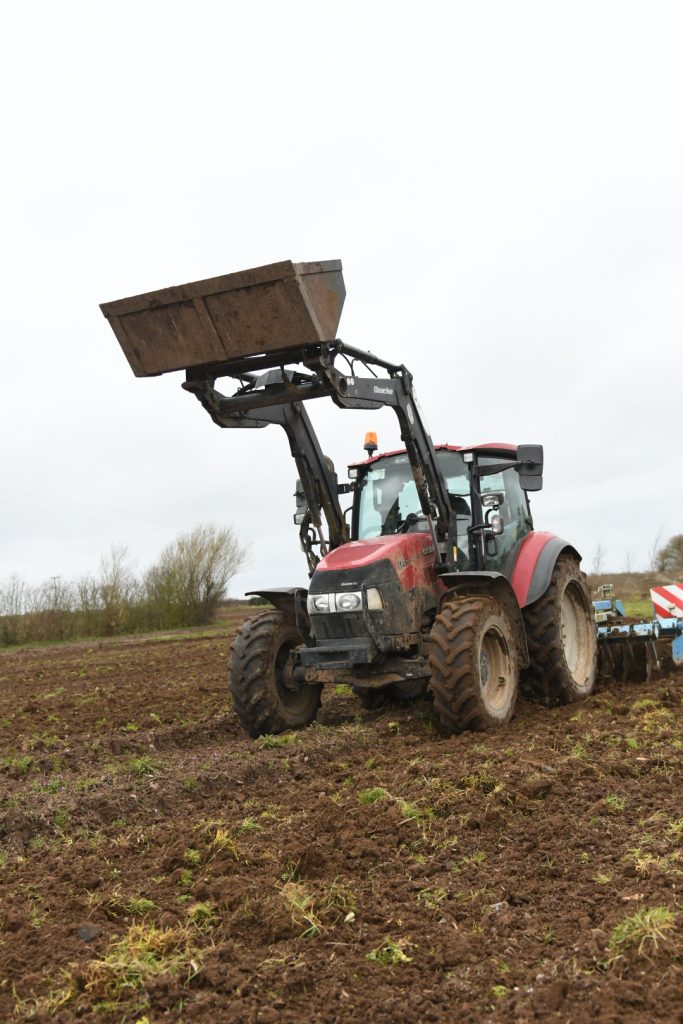
We have just finished ploughing our fields. This act truly symbolises the start of the season, the soil, freshly turned over, the lengthening days, the increased light, the presence of hope as a new season unfurls.

We have been busy clearing tunnels too and we are getting ready to transplant our first plants soon. The tunnels for the tomatoes are already getting prepared so that when our plants are ready for transplant, we can get them into the ground quickly and get the season off to a great start.

We have assembled an amazing team this year on the farm, with the most recent recruit being confirmed this week as part of an OGI (organic growers of Ireland) internship, we also have two other amazing individuals that are very experienced growers working under the guidance of our farm manager Emmanuel. Of course, we will be taking on several students over the summer holidays and we are taking applications now. (e-mail: farm@greenearthorganics.ie)

A couple of the fields we have ploughed had cover crops of clover and phacelia last year and it is clear without any doubt the difference these cover crops make to the soil. Of course, these cover crops provide an amazing biodiversity haven for pollinators (Gerry who keeps bees here tells us he has never seen the volume or the quality of the honey as he sees here on our farm) but the often overlooked benefit: they allow the soil microbiome to flourish.

They are a tonic; you can see it in the soil. The soil is fluffy and gorgeous, it is alive with earthworms and the millions of microbes you cannot see, who are instrumental in growing our food and cycling nutrients. This is where great food starts; you simply must start with healthy soil.

In our globalised extended food system, it is time to stop treating soil as if it was dirt. If you have ever put your hands in healthy soil, you will know it, it is soft, fluffy and malleable, a living soil. This is in stark contrast to the dead overworked medium, supplemented with chemistry that is used to produce most conventional food.

Did you know that Roundup, or its constituent glyphosate has been patented as an antimicrobial, i.e. a chemical that kills bacteria. That is very unfortunate since there are more microbes in a teaspoon of soil than there are people on the planet, and roundup is sprayed everywhere. We are spraying out most valuable natural resource with a chemical that damages the underlying life we need for healthy food.

Glyphosate disrupts microbial diversity: Long-term glyphosate use can lead to reduced microbial diversity, affecting soil health and fertility.

It has been shown to reduce beneficial bacteria: Studies suggest that glyphosate can suppress beneficial soil bacteria such as Pseudomonas and Bacillus, which play essential roles in nutrient cycling and disease suppression.

It also promotes harmful microbes: Some research indicates that glyphosate can create an imbalance by favouring pathogenic fungi (e.g., Fusarium) and harmful bacteria that are more resistant to its effects.

But not only does it disrupt the bacterial microbiome it also has been shown to upset our human microbiome unsurprisingly,

1. Studies suggest that glyphosate can reduce beneficial gut bacteria such as Lactobacillus and Bifidobacterium, which are essential for digestion, immunity, and mental health.

2. Allows Opportunistic Pathogens to Thrive: Glyphosate exposure has been linked to an increase in harmful bacteria like Clostridium and Salmonella, which may contribute to digestive issues and inflammatory conditions such as dysbiosis and inflammatory bowel disease (IBD).

Isn’t it time we stopped treating our soil like it was dirt and start treating it like the crucial beautiful resource that it is, without which we will have no food.

As always thank you for your support.

Kenneth

PS I have been asked to do a Ted talk which has stopped me in my tracks. I am delighted, humbled and honoured, excited and nervous, all rolled into one. We in the Irish language have a great word to describe this feeling: “sceitimíní” I will be talking with seven other excellent speakers for about 15 minutes on our broken food system and what we can do to fix it on the 21st of March at Trinity University auditorium my talk is at 4.30pm, if you can come you can get tickets here. GET TICKETS

I will also be doing a practice run through of the talk at our farm shop on Saturday the 15th and if you can come and help put a little pressure on me that would be appreciated………so please come along at 11am on Saturday 15th if you would like to help me out and hear the talk too!

https://www.frontiersin.org/journals/environmental-science/articles/10.3389/fenvs.2017.00034/full?utm_source=chatgpt.com https://pmc.ncbi.nlm.nih.gov/articles/PMC7602795/?utm_source=chatgpt.com https://www.soilassociation.org/media/7229/glyphosate-and-soil-health-a-summary1docx.pdf?utm_source=chatgpt.com