It made me feel a little nervous.

We woke to a winter wonderland here on Monday morning, a landscape of beauty and crispness, shimmering cobwebs and orange red leaves, bright light and blue sky. And just like that it was gone, 8 hours later we were immersed in a full-on West of Ireland storm and the weather we are more familiar with reasserted itself, wind rain, and greyness.
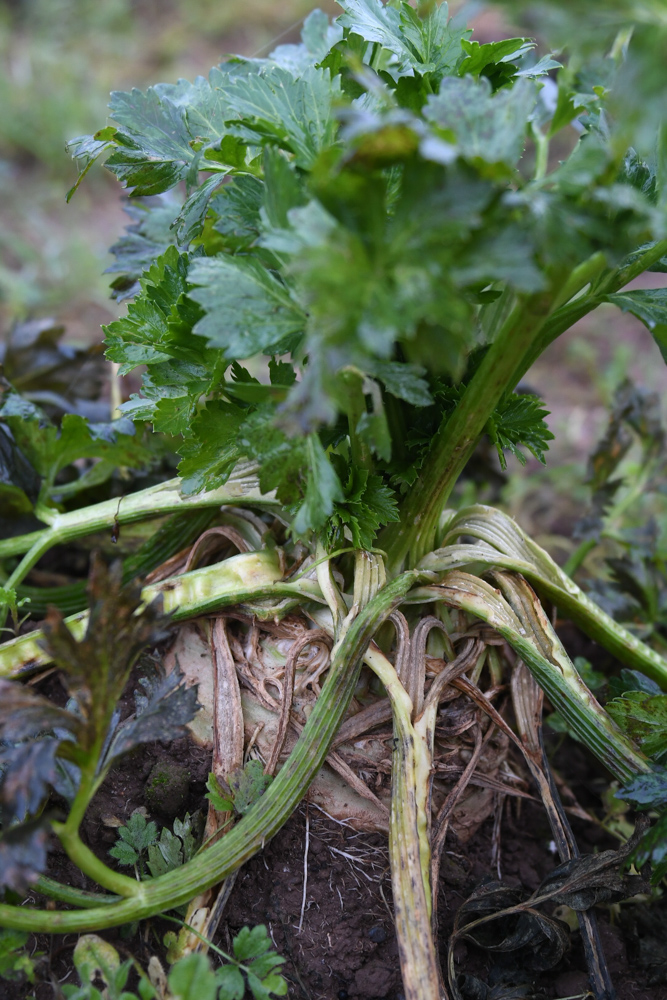
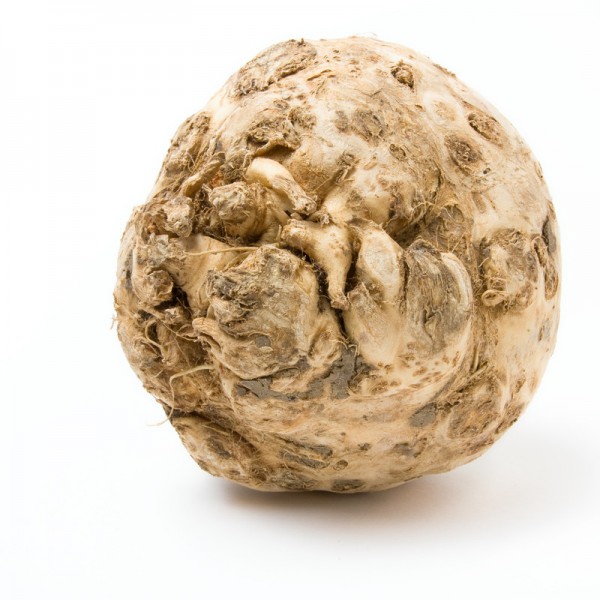
The freezing temperatures of Sunday night made me a little nervous though as we still had several thousand celeriac in the fields they were planned for our Christmas boxes. The prognosis was not good, out of all the veg in the fields, these are the least frost hardy and for one reason or another we had not gotten around to covering them or harvesting them.

The first test yielded news that was disheartening, we had lost the crop. At times I have been known to jump to conclusions and make hasty impulsive decisions (to be fair it has gotten me this far, but in a jerky stressful sort of necessary way, sometimes it was the only way of moving forward), so I yielded to my celeriac moulded depression and wallowed in it for a bit. But I guess if that is the worst you have to worry about it is small potatoes, it was time to put the celeriac bereavement behind me, more on this later.

A few weeks earlier we had a similar experience with our freshly bunched carrots. If you grow carrots, you may or may not know about a little colourful insect called the carrot root fly, he lays eggs and the larvae burrow into the carrots making them unsaleable. In organic systems there are a couple of ways to deal with him, there is a nematode that eats the larvae or you cover the crop with fleeces to prevent our colourful little friend from laying his eggs in an area close to the carrot crop.  We thought we had escaped a carrot root fly infestation, but we took the risk of not covering the crop and we mostly got away with it apart from our last two beds.

Conventional chemical carrot wisdom would see a host of not so nice chemicals (such as Lambda-cyhalothrin, Deltamethrin, Tefluthrin, Chlorantraniliprole, the list goes on) used to control these little fellas. Here is the interesting thing in all of this, there is a common industry acronym for these nasty chemicals, and it also covers pesticides, herbicides and fungicides, are you ready? 

They are called “Plant Protection Products” what does this conjure up to you? Do you visualise toxic chemicals, or cuddly teddy bears, in my case it is the latter. 

Maybe a better name would be “Pesticides, poisons, pollutants” what do you think?

You have to admit it is brilliant; it covers the whole cocktail of toxic chemicals that are used on food crops, and tells the average unsuspecting person that they are indeed good things, after all they are there to provide protection, what could be wrong with that?

Anyway, back to our celeriac, just today, Enda and Emmanuel took another look, and we are quietly confident that maybe our first pass assessment was too hasty, and we may in fact still have a mostly intact celeriac crop. Happyish days ahead perhaps? 

The final word.   I have been out and about at two public events over the last couple of weekends, one speaking at the Samhain festival in Kells (amazing festival) and at the climate march in Dublin (finally got to wear my activist hat for something I passionately believe we need to address). Along the way I met several customers and I was quite frankly blown away, thank you so much for your kind words and for supporting our farm and business. You will never know how much of a difference you are making, it is uplifting and amazing, so thank you to all for your continued support.

Kenneth 

PS We have a few customers tell us you have been spreading the word in What’s App groups and for that we are very grateful, we have decided if you want and if you think it is appropriate we will give out some voucher codes to give to your networks. Just e-mail Simone@greenearthorganics.ie and she will organise them for you. 

PPS Our Christmas shop is open, and we have a definite cap on orders this year as we stretched ourselves a little too thin last year and it was nearly too much, so please if you want a Christmas delivery get your order in early. It also helps us so much with harvest and getting our fresh produce in order. 
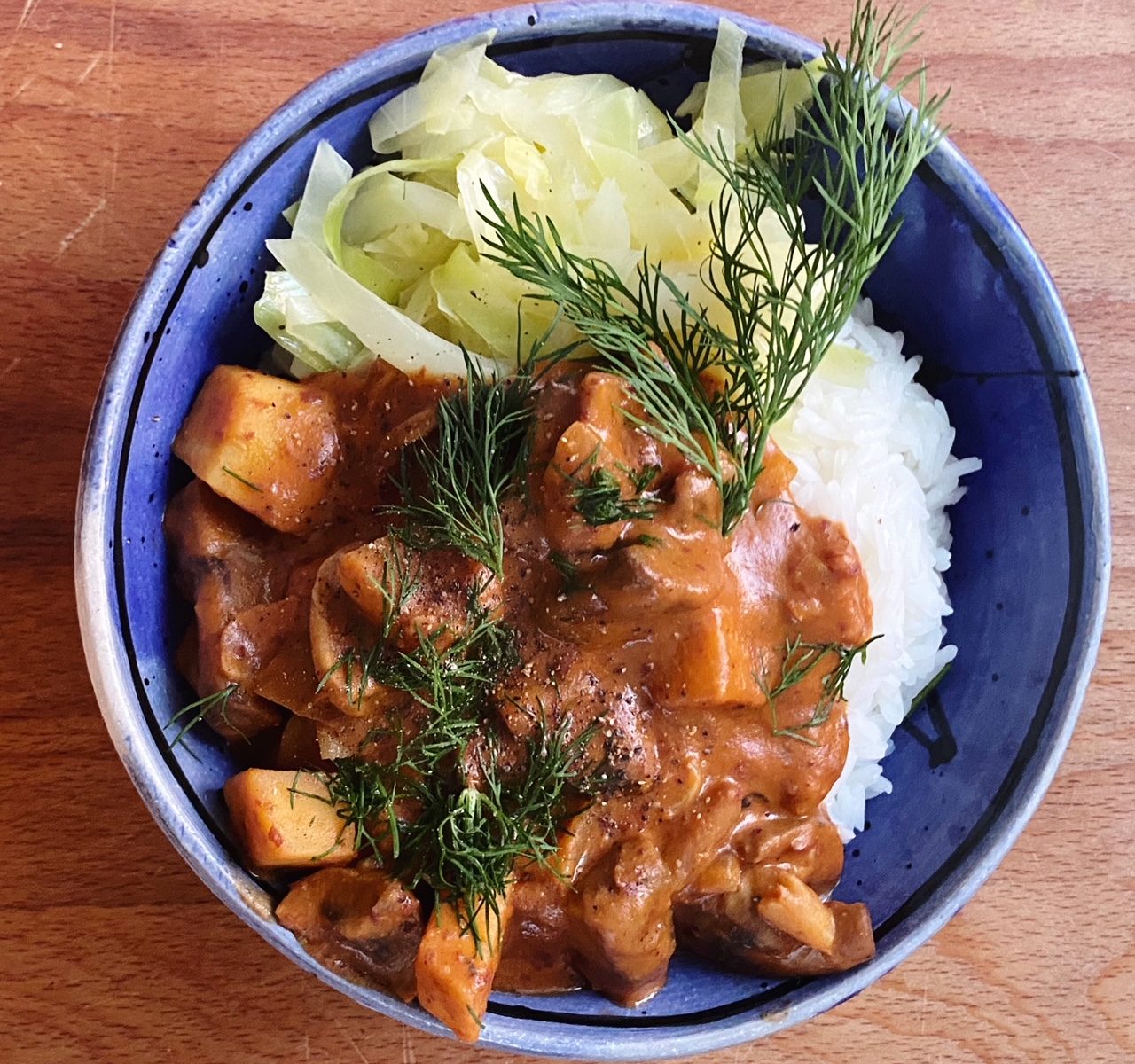
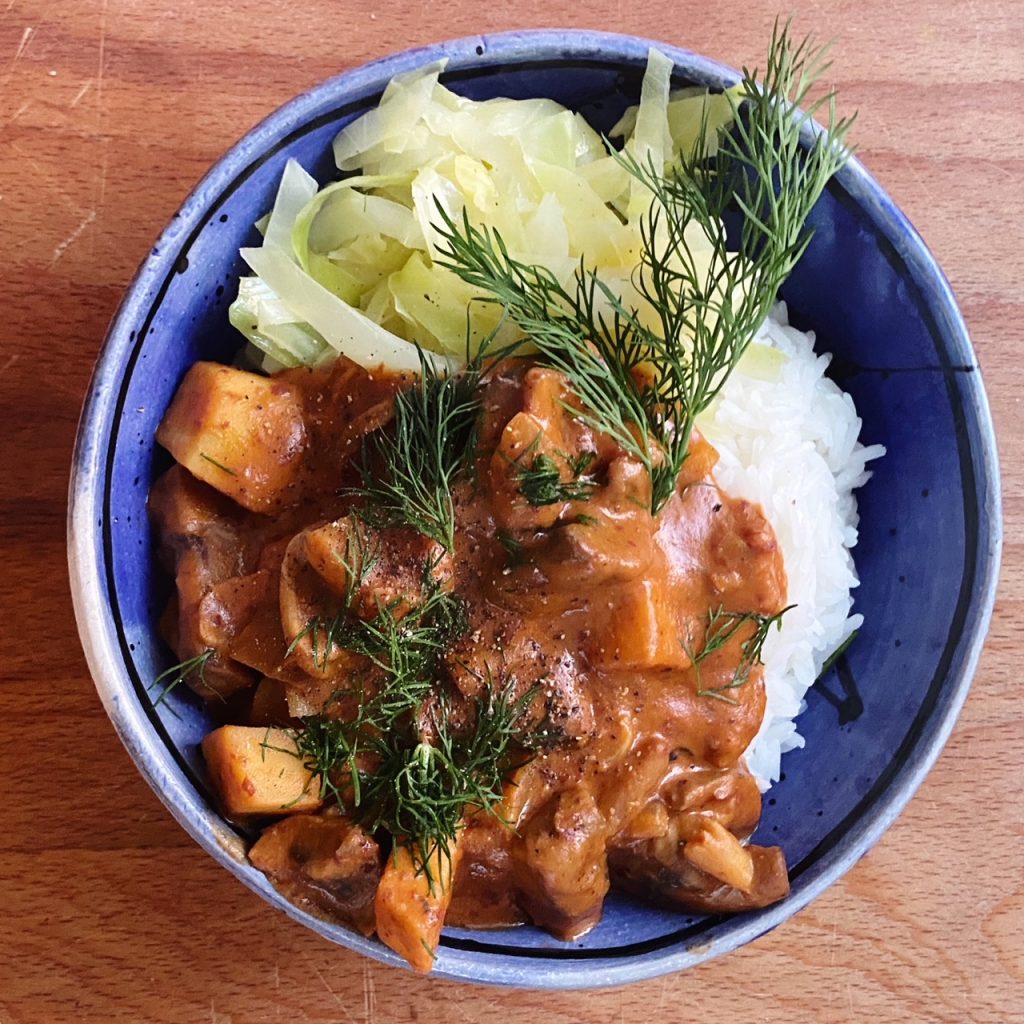
Mushroom & Celeriac Stew

This stroganoff-inspired stew uses a not-so-secret ingredient that we are currently obsessed with. Blended beans! For a shortcut to a creamy, luscious, perfect-textured sauce, try blending beans! We have even started blending beans into our pasta sauces for extra creamy texture and nutrients. Beans are thrifty and so incredibly healthy. They are a great crop for the planet too, a real win win. Meaty mushrooms and tasty cubes of celeriac are simmered with this simple sauce to create a satisfying stew with complex flavours and the perfect silky texture, usually only achieved by low, slow cooking. This is wonderful winter food which will warm you up from the inside. Enjoy with rice or mashed potatoes and a side of winter greens.

Liz x

Ingredients (serves 4)

  • 2 tbsp olive oil
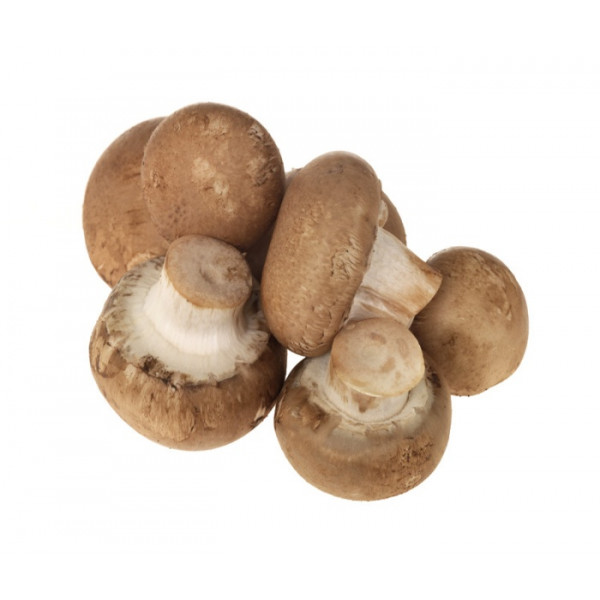
  • about 20 chestnut mushrooms, halved
  • 1/2 a celeriac, peeled and cut into bite sized cubes
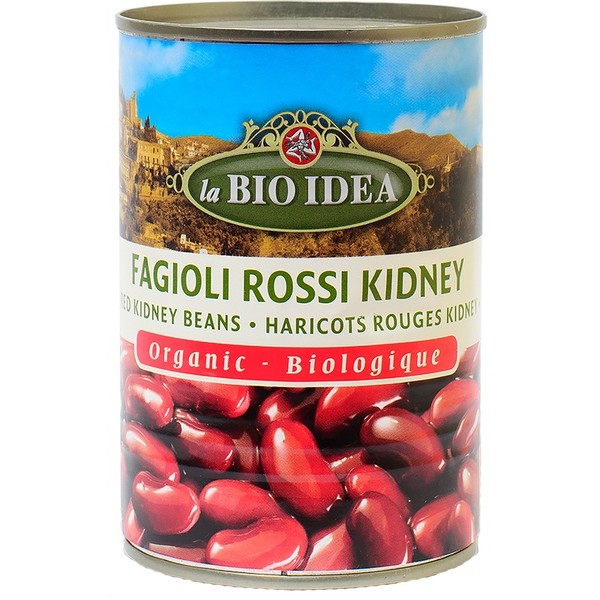
  • 1 tin of kidney beans, drained
  • 1 tbsp bouillon powder
  • 1 tsp garlic powder
  • 1 tbsp smoked paprika
  • 1 tbsp tomato puree
  • 1 tbsp Dijon mustard
  • approx 300ml of cream or milk
  • salt and pepper to taste
  • fresh dill, cooked rice/potatoes & wilted greens to serve

Method

  1. In a heavy bottomed pot, sauté the mushrooms and celeriac with the oil and a sprinkle of salt and pepper. Cook over a medium heat, stirring often, until the vegetables are softened and have taken on a lovely golden colour. Alternatively, you could do this in the oven or airfryer.
  2. Place the beans, bouillon, paprika, garlic, tomato puree, mustard and milk/cream in a blender. Add salt and pepper to your taste and blend into a smooth cream.
  3. when your mushrooms and celeriac are cooked through, pour the kidney bean cream over them and simmer and stir to warm through. Taste and adjust the seasoning if needed.
  4. Serve over cooked rice or mashed potatoes and scatter over freshly torn dill and a good grind of black pepper. Enjoy!

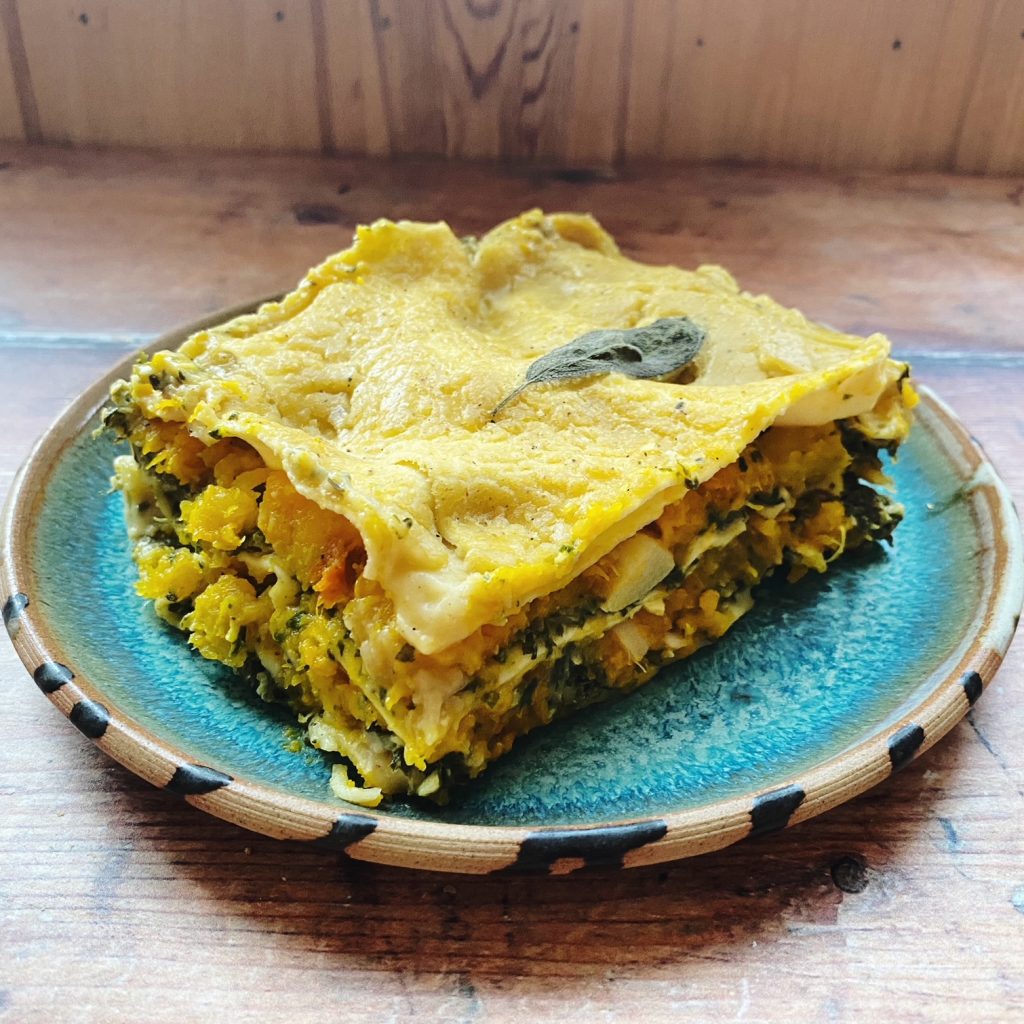
Squash & Spinach Lasagne

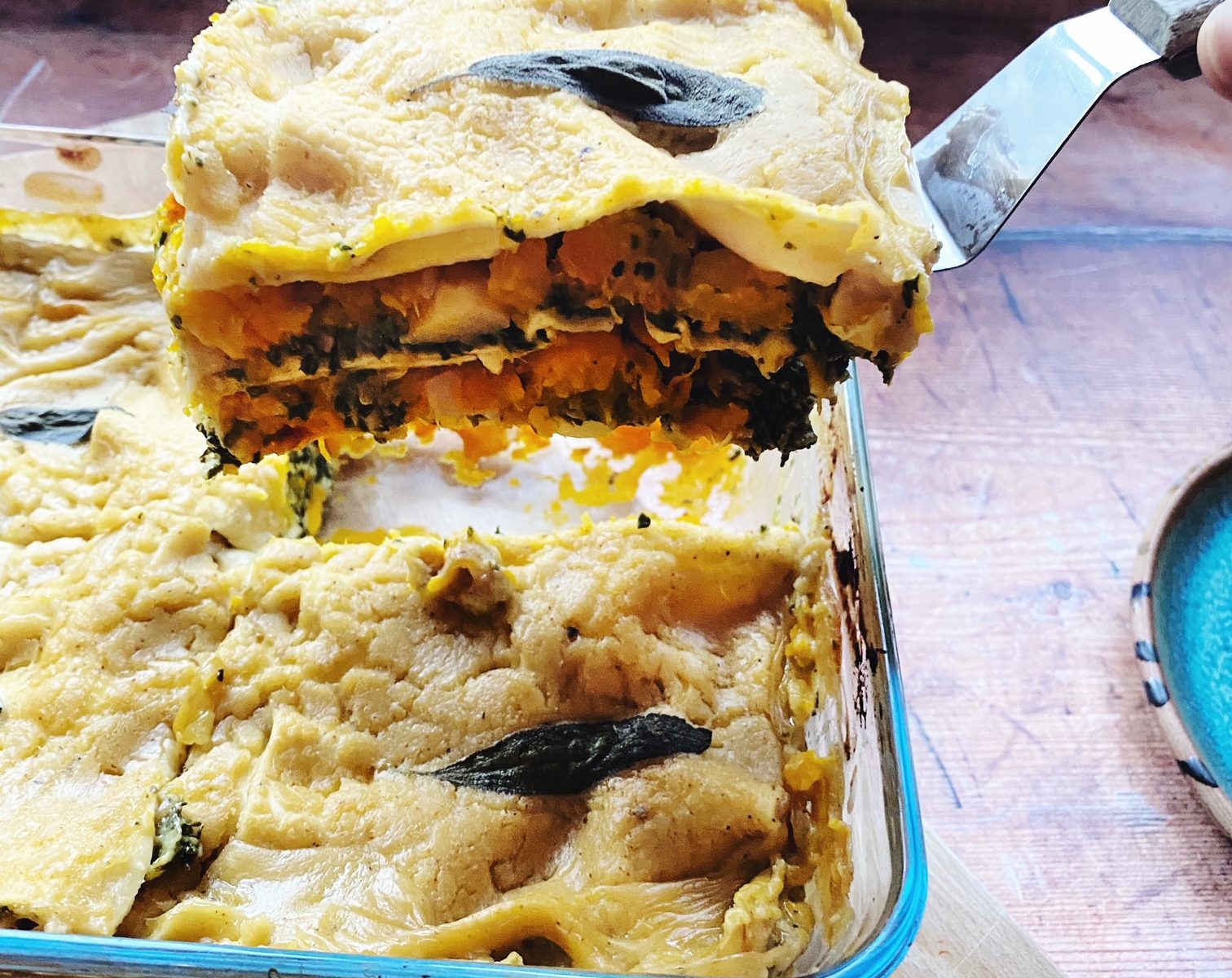
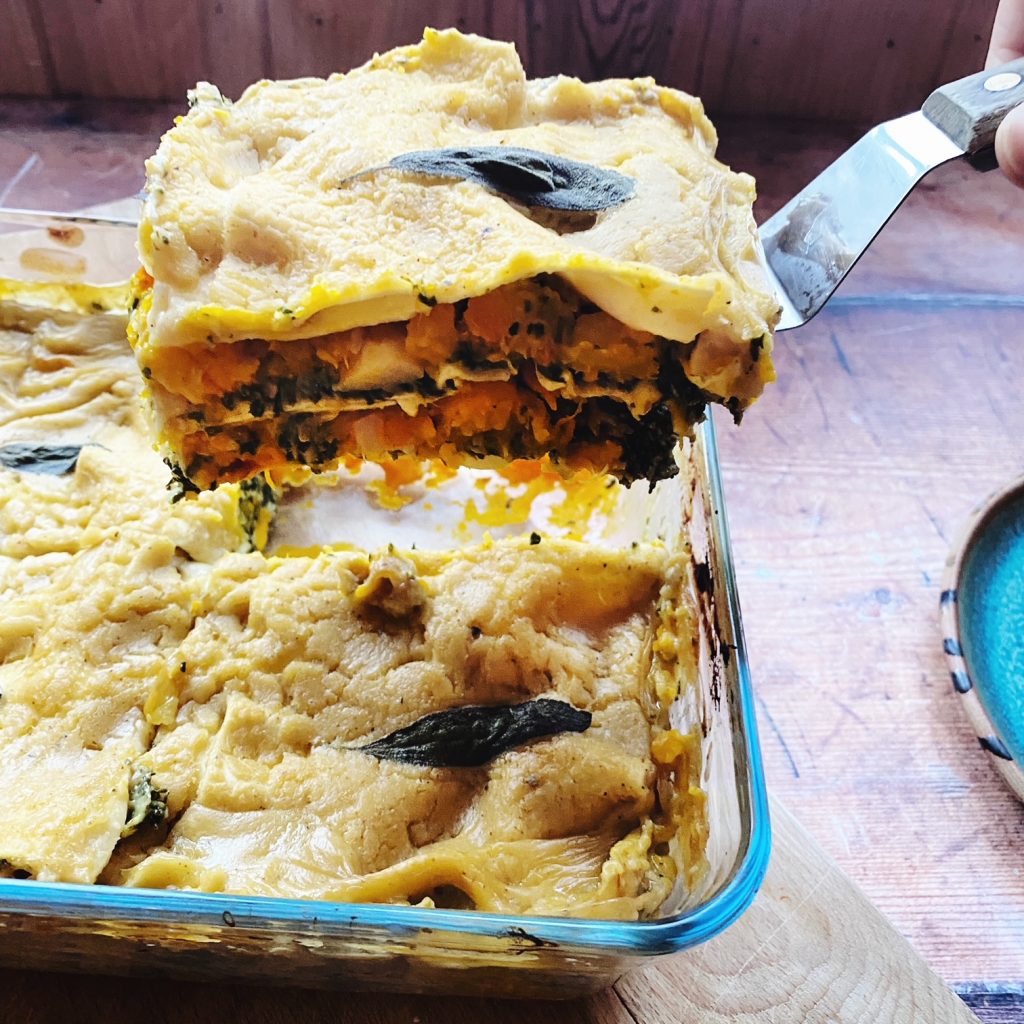
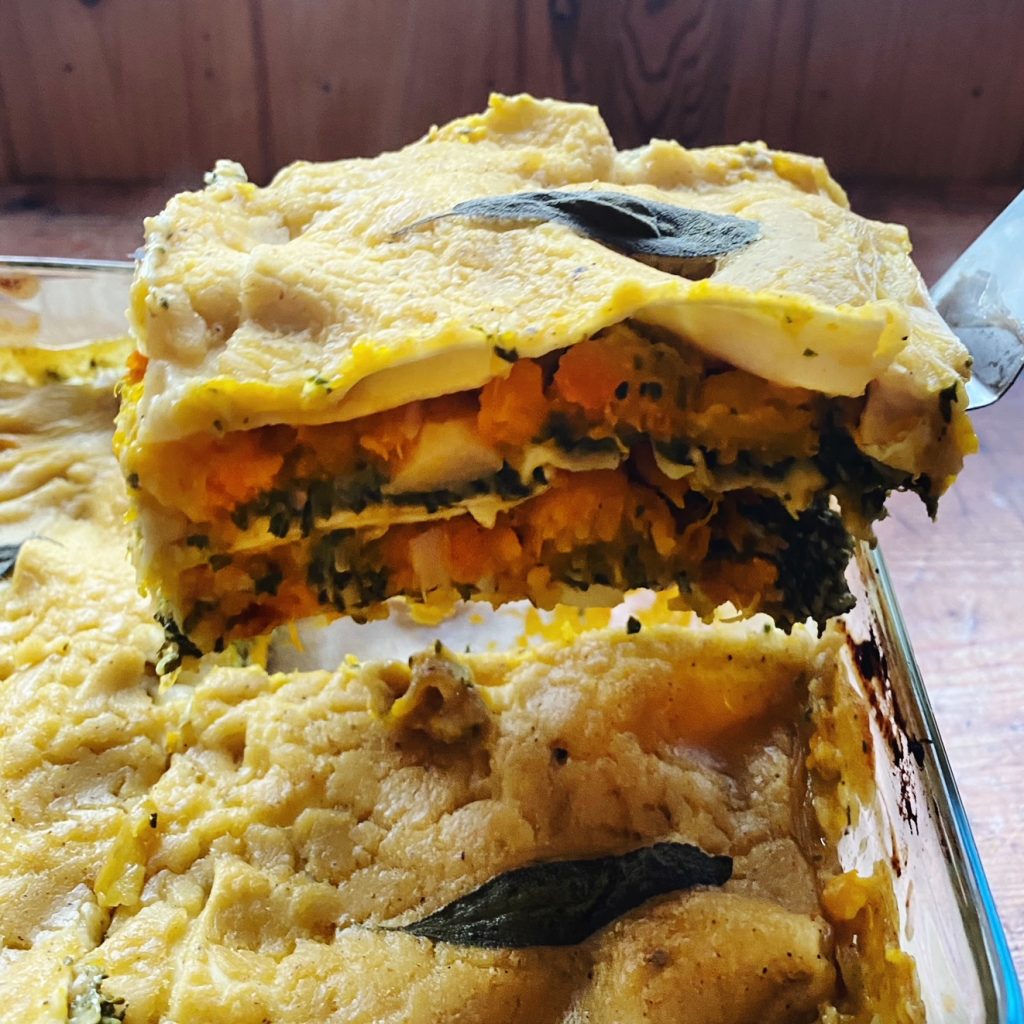
Lasagne is always a good idea for dinner. I always make two while I’m making one, it’s not much extra work and then there’s one in the freezer for a rainy day. This version is an autumn/winter favourite. Layers of roasted squash and garlic, spinach and pumpkin seed pesto, pasta sheets and plant based béchamel. Delicious!

Liz x

Ingredients (serves 6)

Squash Layer:

  • 1 kg squash, cubed
  • 1 bulb of garlic, minus 1 clove
  • 6 sage leaves
  • olive oil, salt and pepper

Spinach & Pumpkin Seed Pesto Layer:

  • 400g spinach, wilted
  • 150g pumpkin seeds, toasted
  • 1 clove of garlic, saved from the bulb above
  • the juice of half a lemon
  • 6 tbsp olive oil
  • 10g nutritional yeast
  • salt and pepper

Plant Based Béchamel Layer:

  • 150g plain flour (gluten free works too)
  • 20g nutritional yeast
  • 4 tbsp olive oil
  • 1 tsp ground nutmeg
  • 2 tbsp Dijon mustard
  • 1 litre oat milk (get a gluten free one if you are avoiding gluten)
  • salt and pepper

Other Ingredients:

  • 250g lasagne sheets (we stock regular and gluten free)
  • extra sage leaves to decorate

Method

  1. Turn the oven on to 200C and cut a kg of winter squash (like kuri or butternut) into cubes, tumble them into a large baking tray. Peel a whole bulb of garlic and add the cloves to the dish, but put one aside for the pesto.
  2. Toss the squash and garlic with 6 torn sage leaves and a generous drizzle of olive oil. Season to taste with salt and pepper then pop the dish in the oven to bake until soft. Meanwhile prepare the pesto and béchamel.
  3. Put the spinach in a colander and pour over hot water to wilt the leaves. Squeeze the water out of the wilted spinach and put the bright, green lump in a food processor. Add the pumpkin seeds, nutritional yeast, lemon juice, olive oil and garlic. Blend into a rough sauce, taste and season with salt and pepper. Blend again briefly to bring the pesto together. Then make the béchamel.
  4. In a cold pot, whisk the flour, nutritional yeast, mustard, nutmeg, olive oil and oat milk together. Then put the pot on a medium heat and whisk and cook until the sauce thickens and can coat the back of a spoon. Season well with salt and pepper then put to one side and check on the roasting squash and garlic.
  5. When the squash and garlic is cooked though, mash it roughly, leaving some texture. Taste and adjust the seasoning if needed, then it is time to assemble the lasagne.
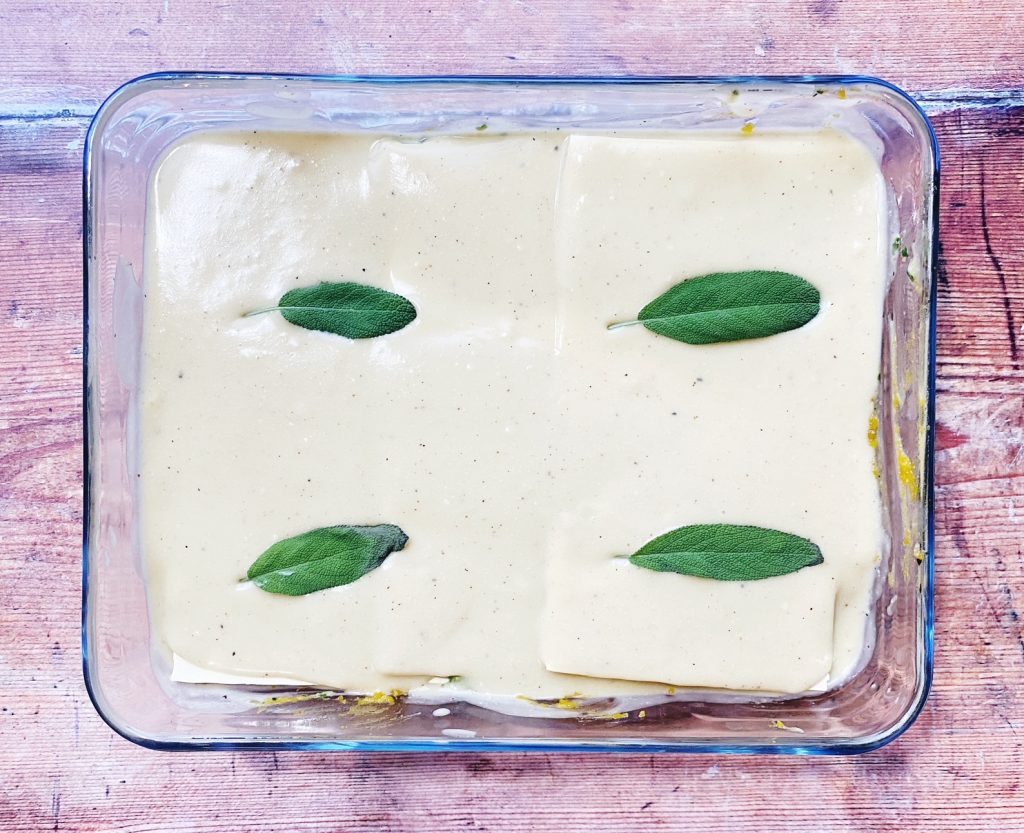
  6. In a deep baking dish, add a 1/2 cm layer of the squash purée. Add a layer of pasta sheets, then a couple of ladles of the béchamel. Spread two or three heaped tbsp of spinach pesto over the béchamel, don’t worry if it mixes in. Then repeat until you’ve used all the ingredients. Squash, pasta, béchamel, pesto… Ensure you finish up with a thick layer of béchamel.
  7. Decorate the top of the lasagne with some fresh sage leaves then pop it into the oven to bake until bubbling. After about 20-30 minutes, the pasta should be cooked through and the top should be golden. Test with a small sharp knife. Then cut and serve with a side salad or steamed greens.