I know I bang on about this a lot but…

I know I bang on about Glyphosate a lot, in fact I get a bit tired of talking about it. But it just keeps raising its ugly head everywhere I look, and I mean that quite literally.

Thankfully after a year of not being out cycling I am back cycling again, and I see a lot of the local countryside. I don’t know if it is in the budget or something, like the local councils using up their financial budgets before the end of the year, so it is not cut for the next year, of if there are just loads of half empty Roundup cans lying around the place and people feel they need to use them, but there seems to be a proliferation in the use of Roundup on the side of the roads here in Galway. Is it the same where you are? Is this an Irish tradition (one we need to drop may I add) or does it happen in your country too?

Anyway, recently on a relatively long cycle I came across a patch of roadway, up until this point I was really enjoying the countryside, the boreen I was on was beautiful, wild green and just all round lovely, but then all of a sudden, bang, everything was dead, everything. Iridescent horrible yellow, dead grass, trees, bushes, flowers all dead or dying and this wasn’t just a patch in a gate this was I would reckon a good kilometre of roadway maybe more on both sides. It was nothing short of devastating.

So, I ask you why in the name of God, would you do this? I could maybe half understand the logic of trying to increase visibility around a dangerous bend (but surely strimming would be a much more effective method, certainly would be much more environmentally sustainable, and you are much less likely to get cancer) but why on a straight road? Why?

There is no reason on the planet that I can think of to do this, it is just something I cannot get my head round. This is public property so what right does anybody have to go out and spread a probable carcinogenic chemical on our land?

Glyphosate is toxic to land, it is still being pushed by its manufacturers (it is worth billions), it is still being used as standard in tillage and non-organic horticulture, it clears the land prior to planting. This is not ok.

Did you know up until 2023 this systemic (this means it gets absorbed into the plant and stays in the plant) probable carcinogen was sprayed on wheat prior to harvest, prior to milling wheat into flour, prior to using flour in our bread. Thankfully this desiccation of wheat crops has been banned by the EU, thank the EU for that one. This practice is still commonplace in the UK, thank Brexit for that one.

Roundup or Glyphosate is sprayed on Soya, in fact 82% of the worlds soya crop is GMO, and get this, and this is mind blowing, it is genetically engineered to be more resistant to roundup, so more and more glyphosate is sprayed on soya, and guess where all this soya ends up, and no the answer is not vegans!

No, it ends up as animal feed mainly to feed cows, and Irish cows are not immune to munching on GMO, glyphosate drenched soya pellets either. Unbelievably all the packs of nuts for cow’s state if the product is GMO or not, as they say it pays to always read the label, it’s a pity the cows can’t read I guess.

Anyway, on that note if it wasn’t getting too dark (the evening not the blog that is) I would be off for another cycle, but maybe it would be better in the dark, and I wouldn’t see any of those Roundup destroyed verges, and my mind could find peace! 😊

As always thank you supporting our organic family farm and others like us.

Kenneth

When you go down to the supermarket today, read these labels..

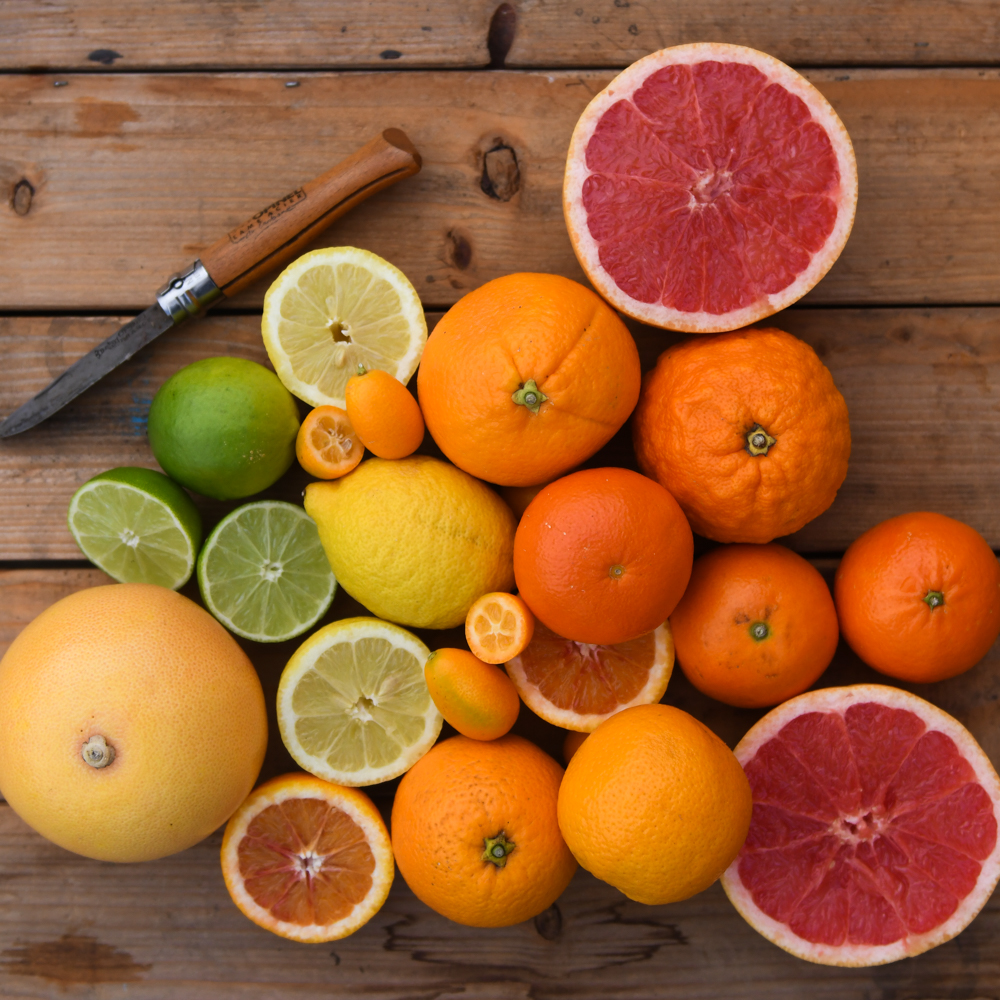
I had a remarkable revelation in the supermarket the other day. As I was browsing the fresh produce aisle as I always do when in a supermarket, I noticed something that really caught my eye.

It was actually quiet refreshing for a change. Reviewing each of the labels on the citrus products, they were clearly marked with the chemicals/fungicides that had been applied to the skin of the oranges, lemons, limes and mandarins. A few weeks back I was wondering if the pesticides that were used in growing carrots were highlighted on the pack would we change our behaviour?

And how is it that it comes down to the organic farmer to prove his/her produce is chemical free, why doesn’t the conventional produce list all the chemicals used in the growing of the crop? Well at least with citrus fruit we have the post-harvest treatments clearly outlined, this is the law in the EU.

It was quite a timely consideration as during the week we had one of our annual organic inspections and we were informed a sample of our produce will be sent away for screening for a mind-blowing list of chemicals (870 last time), more on that at a later date.

Anyway, back to the oranges. I am not sure that many people notice the chemicals though as it is hidden away in small print, nevertheless showing all these postharvest fungicides and wax treatments is a very good thing, as we can make more informed choices about our food. It is also worth noting that it is stated on all the labels that the skin is not suitable for eating!!

Here are some of the chemicals I found on the labels and their scientifically linked safety considerations. Also this is for an individual chemical most of the fruit I examined at up to 4 different treatments per piece of fruit.

1) Imazalil: Possible endocrine effects. The EFSA (European food safety authority) has evaluated imazalil repeatedly; the substance has raised endocrine/ecotoxicity questions in the past. Carcinogenicity concerns: possible/likely carcinogen based on animal data.

2) Thiabendazole EFSA peer-review concluded thiabendazole can affect thyroid hormone systems in animals. That is an important regulatory finding. Carcinogenicity/reprotoxicity: animal studies have shown some reproductive/developmental effects at high doses.

3) Pyrimethanil: Some experimental studies show reproductive or developmental effects in animals at high doses.

4) Fludioxonil: EFSA identified fludioxonil for endocrine-related effects.

5) Boscalid: It can be persistent in the environment

6) Azoxystrobin: Some studies indicate potential for oxidative stress and endocrine-related effects in experimental systems.

I am sure there are more, and this excludes the waxes that are also used to coat most conventional citrus fruit.

Not an entirely benign concoction, and not a cocktail of chemicals that I would particularly like to have on my food, thank you very much. I am sure you are wondering how an orange is not suitable for vegans. Well, one of the waxes that can sometimes be used, in particular E904 or Shellac (this is a resin secreted by a bug!), make the fruit unsuitable for vegans!

So, if you do buy conventional citrus fruit, please note again that it is advised that the skin is basically inedible or unsafe due to these chemicals (read the labels it actually states it there) so please don’t use the zest for cooking, much better to choose organic, and if you want to steer clear of these and other chemicals better where you can to choose organic entirely.

As always thank you for your support

Kenneth

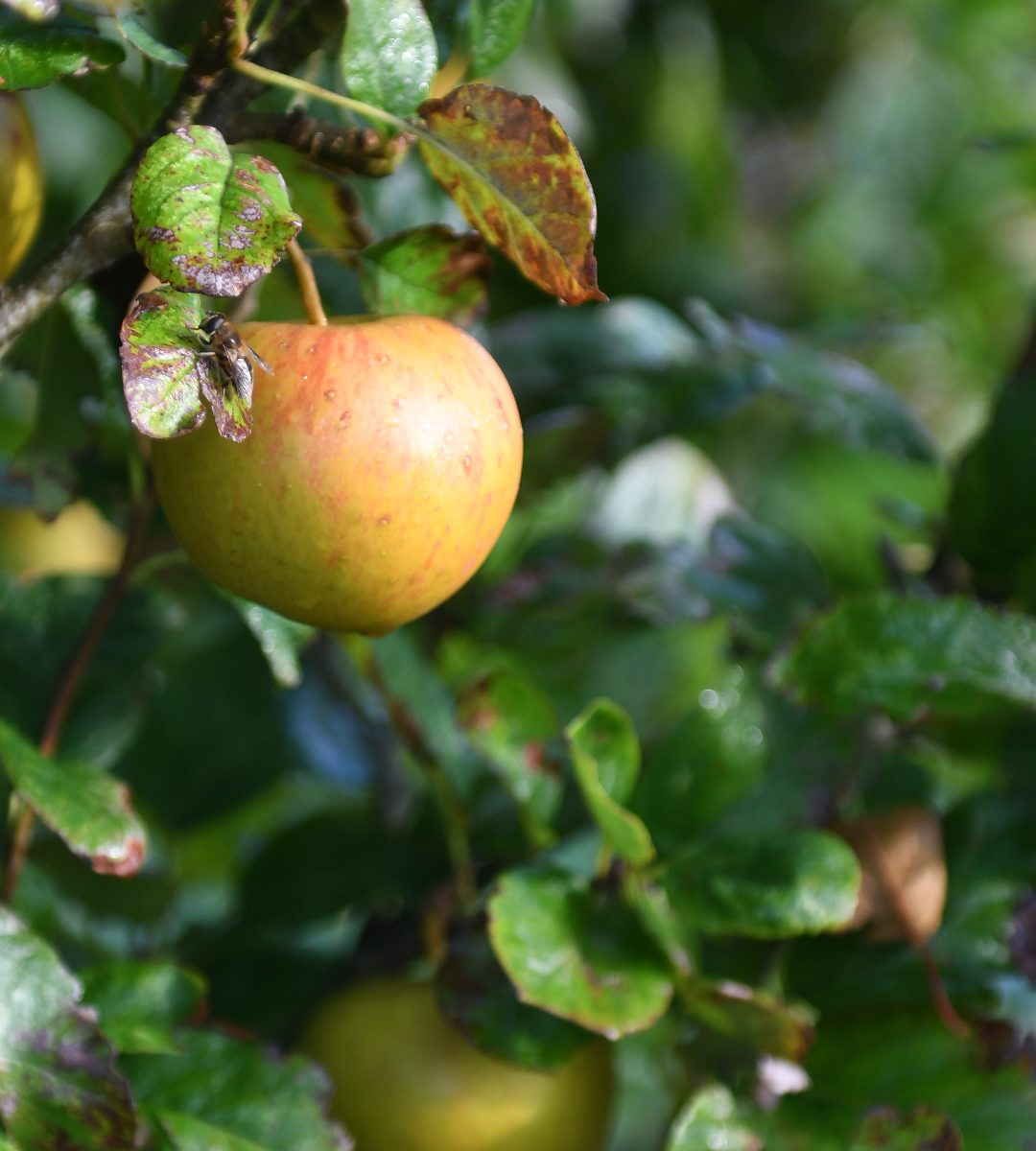
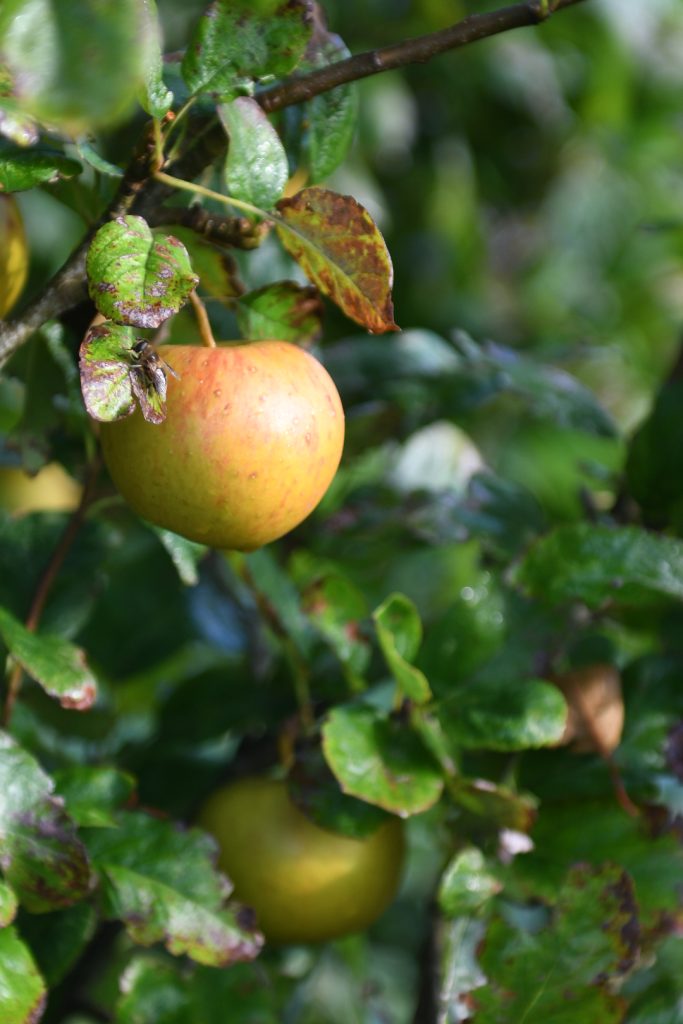
Irish apples, picking apples, and the Dirty Dozen…

I remember as a young lad having to climb trees to pick apples in my grandad’s orchard. Having been pruned and tended to over the years they had grown to to a very decent height (you needed a tall ladder to get to the top apples) these apples were never ever sprayed, and when they were picked they were stored on galvanised sheets in a cool shed, providing apples until nearly Christmas. Any those that had blemishes were used first.

During the week I was speaking to Richard Galvin who has been our Irish organic apple supplier for nearly 10 years. His apples are wonderful; they are Irish and organic and crucially are not sprayed with any synthetic chemicals. We have been receiving excellent organic apples from a Fairtrade co-op in France and from Darragh Donnelly in Dublin, and there have been some issues, at least if you were a supermarket there would be an issue.

The issue if you would call it an issue is that some of these apples are not perfect, they have slight blemishes on the skin, some of the blemishes are not ok to send out and as a result we need to grade and examine every single organic apple by hand. We do this and that is ok, but it takes time and people.

Now contrast this with the perfect apples that grace your average supermarket shelf. How do they end up so perfect and end up lasting for so long?

There is a reason that they look the way they look, and a big part of that is the synthetic chemicals that are used in their production.

Apples nearly always feature in the Dirty Dozen, and although this is a US survey, there is plenty of research demonstrating that European apples, or in fact many of the apples imported into Europe from further afield have plenty of pesticide residues on them. Apples are one of the most sprayed fresh products you can buy. A recent survey in the Netherlands found chemicals in every single sample they tested (1 click here for the article). Some had a cocktail of residues.

In Ireland in 2022 the department of agriculture tested 70 different samples of apples, 55 (or 79%!) had pesticide residues and over 4% had residues deemed as unsafe. If you would prefer not to have pesticides on your food (whether they were deemed to be below the safe limit or not) the fact that nearly 80% of all samples tested right here in Ireland had recorded pesticides is enough to make up my mind. (2 click here for the data and go to page 138)

There may be an argument to be had that these chemicals help reduce food waste, and that has a certain validity, but on the other hand, if supermarkets were happy to sell apples that did not need to look like shiny plastic apples, then maybe there would be less need for these chemicals.

Either way, my grandad would certainly not have agreed with spraying his apples, and certainly Richard and Darragh do not agree with using synthetic pesticides either, and we are grateful to be able to share their apples with you.

As always thank you for your support.

Kenneth

Chemical Carrots, you might be surprised…

We have been harvesting our own lovely bunched fresh organic carrots for a few weeks now and this week we received the first delivery of beautiful organic carrots from Philip Dreaper in Coolnagrower in Offaly just outside Birr.

In the next couple of weeks, we are due our farm organic inspection. This is an inspection we pay for to prove that we are carrying out our farming and business in accordance with organic principles. One key law of course is that we must never use synthetic chemicals. We must be certified organic by law to call our produce ‘organic’.

We would never use toxic pesticides or herbicides anyway, as farming without chemicals is why I started the farm.

But the question is why do we need to prove we are organic? Why isn’t the responsibility on conventional food producer to label the pesticides used in growing certain crops? (don’t get me wrong organic certification is definitely necessary in the world we live in today)

Back in my grandad’s day, there were only ‘carrots’ and all carrots were organic. They just were, because no synthetic chemicals or fertiliser was used in growing them.There were no sprays, no synthetic pesticides, herbicides or fungicides, nothing. That is exactly how we grow them today, we sow seed, and we cover the crop with netting and then we harvest end of story, no spraying at all.

These synthetic pesticides are labelled… “plant protection products” sounds so much better than “pesticide” don’t you think? Making these toxic chemicals sound more benign, even good for the planet and our health. It sounds like spraying these chemicals is doing us all a favour including all the bees and biodiversity the application of these “PPPs” is doing something good for the world in using them. This couldn’t of course be further from the truth, they are hurting our health and destroying biodiversity. In addition did you know it is mostly the manufacturers that produce the safety related data for the chemicals they sell, a conflict of interest there? I would say so. So if your supermarket label listed the following on your conventional carrots, would you still buy them?

Ingredients: may contain,“Carrots, Glyphosate, aclonifen, prosulfocarb, clomazone, prosulfocarb/stomp, fluazifop-P-butyl, propaquizafop, quizalofop-P-ethyl, fluazifop-P-butyl, azoxystrobin, fluazinam, cyprodinil+fludioxonil, boscalid+pyraclostrobin, tebuconazole/trifloxystrobin mixes”

Or would you choose organic carrots where the label would say:Ingredients: contains “Organic Carrots”

I know which one I would choose.

As we supply directly to you our customers, it is only through your continued support that we can continue to produce healthy food and spread the message that our food choices can literally change the world.

Thank you

Kenneth

You can have double the helping of Roundup in your porridge than in your toast.

I remember many years ago meeting two brothers who were growing oats for Flahavans for their porridge. One brother was growing it organically and one was growing it conventionally (With chemicals) The organic farmer tilled the ground, sowed the oats, did some mechanical weed control, and essentially left the oat crop to its own devices.

The other brother was in and out with his sprayer at regular intervals to control, weeds, and fungal infections, using chemicals such as Inatreq ™ (fenpicoxamid) another systemic chemical, Prothioconazole, azoles, and folpet.

Next time you drive past a field of cereal, have a look for tractor wheelings called tramlines up and down the field. This is where the farmer drives up and down spraying the field, and will use the same wheelings for multiple applications to reduce damage to the crop.

At the end of the day although the organic farmer may have had a slightly lesser yield they came out with the same profit due to the cost of the chemicals. Of course, what was not factored in was the cost of the chemicals to our environment and our health, so the question remains why even bother?

While the EU extended the licence for Glyphosate for a further 10 years in 2023, it banned its use as a crop desiccant.

This is the use of a chemical to “dry out a crop”, it is used to reduce the moisture level in cereal crops like wheat. Drier kernals are required by the processors for milling. Even though there is a ban on the use of Glyphosate for desiccation, farmers can still use Roundup for late control of weeds in wheat, so it seems it is still possible to use this toxic systemic chemical for control of weeds in wheat, meaning of course it ends up in our food and in our bread.

I wonder how many farmers are using this loophole to effectively continue to apply roundup prior to harvest?

Roundup is systemic, it gets absorbed into the plant and stays there, classified as a probable carcinogen by the WHO, it is the most used herbicide in the world ever, sales in 2023 reached $10.3 billion.

The funny fact when it comes to roundup is we are allowed to have twice the amount of roundup in our porridge that we are in our wheat. It makes no sense you can’t possibly say the same chemical is twice as safe in a different crop and essentially tell people it is safe to consume twice as much, this of course is rubbish.

But that is the way it is, let me frame this for you, you can have double the helping of roundup in your porridge than you can have in your toast, does that make sense to you? Well, it doesn’t make any sense to me.

I’ll be going with the organic porridge and toast thank you very much.

As always thank you for your support

Kenneth

PS Please remember supermarkets wont miss your custom, but we are completely dependent on your custom to keep our farm running, and every order makes a massive difference, there has never been a better time to get the most amazing seasonal local Irish organic produce as now, thank you.

Rain at last, and we didn’t ask for it 

Rain at last. We never asked for it, we have definitely learned our lesson there. But we couldn’t have asked for a better run of it. Between the amazing sunshine and rain just when we needed it, it has been a miraculous start to the season and for once we are absolutely delighted with progress on the farm. We are so busy at the moment, as the three main tasks are starting to coalesce. We are planting, harvesting and the big one, weeding has just started too.


Our first sowing of carrots and parsnips have just poked their little heads through the soil, which was earlier than expected, but they look good. You know what we will do between now and harvest? We will weed with machines and by hand and we will cover them with nets to exclude the carrot root fly, and that’s it.


In my view, it would make a remarkable difference to how we perceive the value of food if we knew how it was produced, what if the list of chemicals used on the produce were mentioned on the pack, how would that influence our decisions I wonder?
For conventional carrot production right here in Europe and in the UK, here are some of the lovely hidden extras you may be getting. Behind the bright orange crunch is a complex spraying programme involving herbicides, insecticides, and fungicides – some systemic, some not – all used to ensure a blemish-free, marketable crop.
Carrots are sprayed with herbicides, usually starting with Glyphosate prior to planting, then a couple of other stars Pendimethalin and Aclonifen. They can be sprayed 2-3 times per season.
Then it is over to insect control, expect possibly Cyantraniliprole (Benevia), which is systemic (goes into the plant) and Lambda-cyhalothrin (Karate Zeon) which is toxic to bees and aquatic organisms.


It wouldn’t be right to leave out a whole group of chemicals, so not be missed next it is the turn of the fungicides, the likes of Prothioconazole and Azoxystrobin + Difenoconazole (Amistar Top), both are systemic and the last one is an endocrine disruptor, not good for us.
In 2023 the UK found chemicals in 43% of carrots tested, so nearly half.


It is so hard these days to connect how our food has been produced, what has been sprayed on it, and how those in our food system, humans and pollinators alike, have been treated, it seems to me that supermarket led cheap food comes at great cost.
The best way to avoid chemicals and the damage they do to biodiversity is if possible, to choose organic.


Growing some of your own food is an amazing way to connect us with the miracle of nature and the true value of our food.


As always thank you for your support

Kenneth

What is the most valuable item you will ever purchase?

My feeling when it comes to pesticide residues in our food is that the only safe limit is a zero limit. If I were to tell you that 50% of the food you eat contains pesticide residues, how would you feel?

My Grandad farmed on this piece of land that we now farm organically. He had a mixed family farm and grew much of his own food as did many in the locality back then. This food was more nutritious, it tasted better, it was fresher than food today, it was free from chemicals, and it was local and seasonal.

Today our food system is a complex web of producers, processors and logistics.  When we walk into a supermarket, we don’t have time to think too much about where our food comes from our how it was produced, the shiny plastic packs of produce give us the impression that our food system is limitless, vibrant and fair. Indeed, this very supermarket system and the global food corporations that supply it have disconnected us from our food and have been complicit in devaluing our most valuable commodity:  food.

Since my grandad’s time in the early 1950’s agriculture and food have changed unrecognisably. It has undergone a green revolution. Ironically this “green revolution” has left our current food system broken. GMOs, giant monocultures, pesticides, herbicides, artificial fertilisers and factory farms dominate our global food supply system, all hidden behind those shiny plastic packs on the supermarket shelves.

The term “green revolution” was always something that struck me as a bit odd, especially when you consider what green means today, this was a revolution that switched our agricultural system from a natural approach to a chemistry centred approach.

I am an organic farmer, but I wasn’t always. In fact, and again ironically, I was an organic chemist, I have a Ph. D in chemistry from Cambridge University. I spent nearly 15 years working with chemicals, pharmaceuticals and in the biotech industry, so I know a thing or two about chemicals.

Today chemicals are used to force nature to behave in the way they want, they have tried to impose factory type controls onto the natural environment that we rely on for our food.  But nature is not a factory, and the same rules do not apply, you cannot indiscriminately apply chemicals to our food and not expect a fall out. 

A report by the European Food Safety Authority (EFSA) has found that nearly half the food they tested from almost 81,000 food samples had pesticides in them. Strawberries and lettuce are the most likely to exceed safe limits, the agency found. They are especially sensitive to fungus and bugs and so undergo considerable spraying with pesticides.

More than one in four (27.3%) of the food samples contained traces of more than one pesticide. 

The food we put into our bodies is one of the most valuable investments we can ever make. The simple fact is you can taste value, and if you have ever tasted a freshly harvested tomato, warm from the vine, free from chemicals, full of life and nutrition, then you will know what I am talking about here, that is real value. I think my grandad instinctively knew that, but then again that was all there was back then.

Here is to the best value food in the world.

As always thank you for your support.

Kenneth

Link to report below.

A new report by the European Food Safety Authority (EFSA) has found that more than 97% of foods contain pesticide residue levels that fall within legal limits. Strawberries are the most likely to exceed safe limits, the agency found.

About 55% of the samples evaluated by EFSA were free of detectable traces of these chemicals, the agency said.

This means nearly half of food products in Europe contain residues of pesticides.

The highest rate of exceeding safety limits was for strawberries (2.5% of the sample), followed by lettuce (2.3%). They are especially sensitive to fungus and bugs and so undergo considerable spraying with pesticides.

‘Cocktail’ effects

More than one in four (27.3%) of the food samples contained traces of more than one pesticide. 

Chemical kale, and some amazing news….

Our food is probably one of the most valuable investments we can make, and our decisions affect us deeply, and over time they take their toll. Look at the rise of obesity, diabetes, and other chronic inflammatory disease.

The long-term impact of consuming too much sugar, or ultra processed foods is clear, but what is less clear is the cumulative impact of the pesticides and herbicides that are endemic in our food, the hidden extras that we never see.

What is the impact of the small amounts of pesticides we consume in our food daily, the cocktail effect of these chemicals over a period of years can be profound.

What if our organic kale was just kale, and the conventional chemical sprayed kale had to be called “chemical kale” ? Our impression of food would change our realisation that our food is grown with chemicals would be clear.  We may then consider their impact on our health, or how our food choices impact biodiversity.

At the moment our kale fields are bursting with flowers, and bees and biodiversity.  They are also covered in aphids, as the kale is at the end of the season they are doing little harm. These aphids in conventional systems only a few years ago would have been treated with neonicotinoid chemicals, these systemic chemicals were shown to kill bees.  The chemical industry denied and lobbied against groups that wanted them banned, knowing full well they were killing the bees. Thankfully these chemicals are now banned.

We have just been designated as a conservation area for the native Irish honey bee, the bee hives that Gerry manages on our farm are native Irish honey bees and these bees are, as all bees are under threat from habitat destruction, the relentless intensification of agriculture, the loss of biodiversity and the overuse of chemicals in our food chain. The Irish honey bee is unique to Ireland and it needs to be protected. Our food choices directly impact Gerry’s honey bees, in this case in a very positive way, and they are thriving on our farm.

Not only do our food choices, impact our food, but it seems they also impact the quality of our drinking water. Irish water this week announced that they have found 66 exceedances of what they deem is the safe limit of pesticides in our water. I would argue that the only safe limit is a zero-tolerance limit. A senior manager said:

“We want to remind users to be mindful of water sources when using pesticides, as one drop of pesticide can be detected in a stream up to 30km away.”

Chemicals found included MCPA (used to kill rushes),   2,4-D (this was a chemical found in the notorious agent orange concoction sprayed to defoliate forests during the Vietnam war).  And of course glyphosate, the main ingredient in all-purpose Roundup makes a star appearance, which is no surprise.

But as with Gerry’s bees, our food choices really do matter, they drive a different type of food production, they change the laws of the land, they get chemicals banned. So, the next time you are choosing food, if there is an organic option, maybe if you can choose that, it really matters.

As always thank you for your support,

Kenneth

A note from Kenneth

Supermarkets won’t miss you, but we will! Our orders always drop off over Easter and school holidays, but we still have the same costs to bear for running the farm and the business. Your order means a lot to us and makes all the difference. It allows us to keep doing what we are doing and developing a more sustainable food network and farming approach to food in Ireland.

Please if you can at all support us over the next three weeks through the Easter break. To help you on this journey we have some very special and gorgeous hand-made organic chocolate to give away for free when you purchase and spend over €80. You will receive an email this Sunday 6th April with details of the offer.

Easter is without a doubt the biggest and most consistent downturn we see in the business each year and we need to do whatever we can to ensure we do try to mitigate it.

Thank you from all of us here at Green Earth Organics.

The hidden cost of our food

We are lucky living in Europe we have some of the best laws protecting our lands and our food from pesticide contamination. But it’s worth bearing in mind a couple of things, even though these laws are stronger than in many parts of the planet, chemicals and pesticides are still used regularly on our fresh food and veg. A report by the dept of Agriculture right here in Ireland showed that over 64% of 500 fruit samples tested in 2021 had pesticide residues in them.

But the thing that really gets me is the hidden contribution our food choices here in Ireland make to pesticide use all around the world. Just this March the environmental protection agency in Brazil banned the use of thiamethoxam, this is a pesticide of the class of neonicotinoid, and 1 teaspoon of this insidious chemical can kill over 1 billion bees. The bees are the sentinels, and if the bees are dying so are all the other insects. The companies that manufacture this, denied for years, that it was dangerous to pollinators, but they knew.

This chemical continues to be manufactured right here in the EU and shipped to other countries, making billions, knowing that these chemicals are wrecking destruction on our natural environment. Making profit is the only driver when it comes to large food companies and large Agri companies. Our health and the health of the planet are always secondary to the bottom line.

But an often-overlooked fact, the feed fed to Chickens, cows, and pigs that are processed for meat right here in this country will be partly fed on soya grown in Brazil. 100,000s of tonnes of GMO (Genetically modified) soya-based feed is imported into Ireland every year. (Read more here) Our massive agricultural industry is fed on a diet of Roundup drenched, neonicotinoid-soaked soya pellets that feed the animals.

If you would like to know more, please have a look at this video

This feed of course is also coming from massive monocultural food deserts that have been created by the relentless destruction of the most diverse and amazing part of our planet: the Amazon rainforest. This also contributes to the most defining catastrophe of our age: the climate crisis.

It’s estimated that over 20 million hectares of Brazil’s forest cover as a whole have been lost to soy production in the last three decades.  Irish supermarkets have not ruled out using controversially sourced soy that is linked to activity driving forest loss in South America, including the Amazon.

But when it comes to our food we as consumers have power, real power and our decisions and choices can have a massive impact, and can send a real message and can effect real change.

Choosing organic will prohibit the use of these bee harming chemicals and it will also ensure we are not consuming GMOs.

As always thank you for your support.

Kenneth

Is there a link between gluten intolerance and glyphosate?

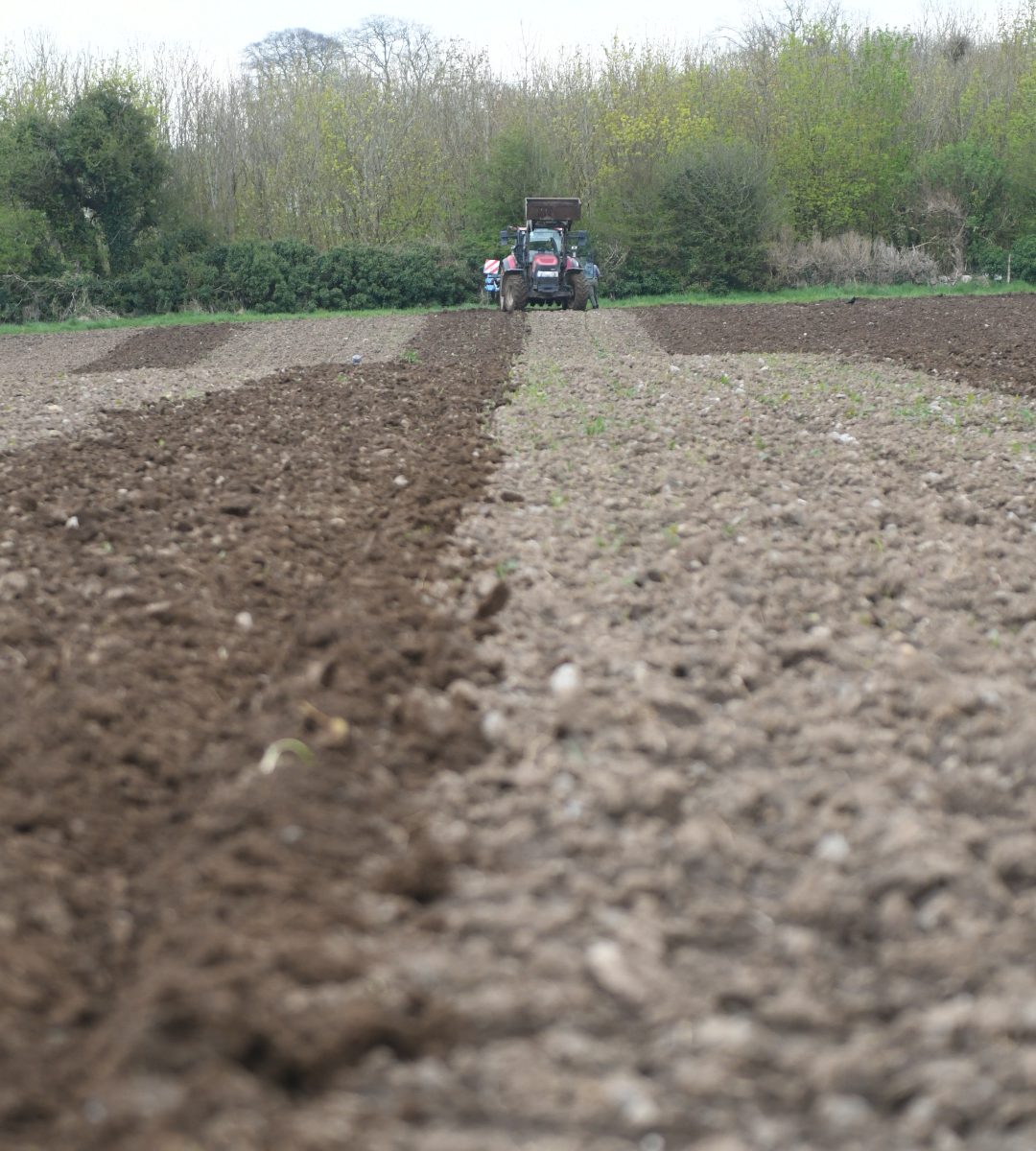
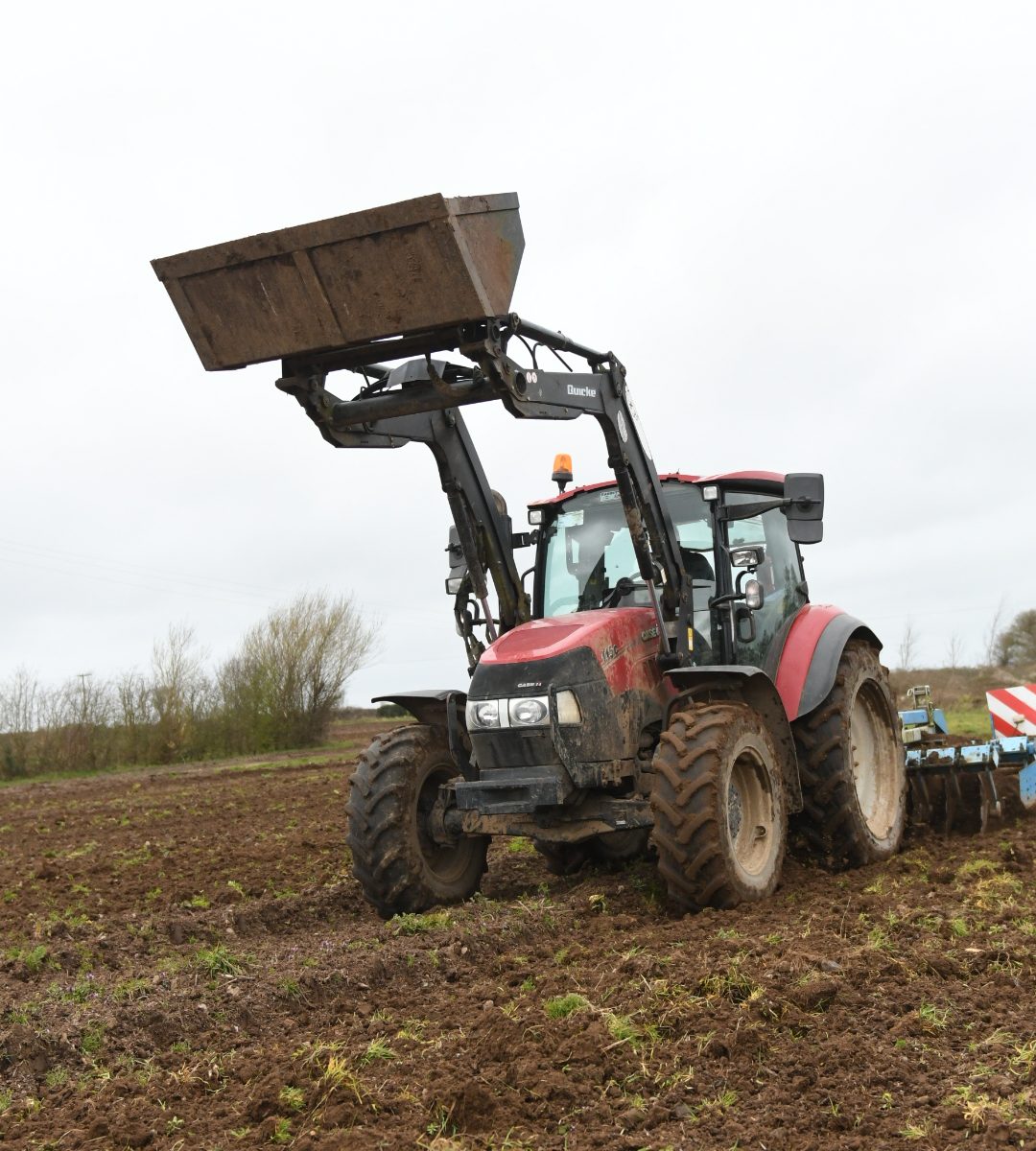
It has been a bright few days and we are thankful for that.  We have ploughed the land and done our first pass tilling. We have our tunnels ready and, in a week, or so we will be filling them with the first amazing crops of spring, the season is in full flow now.

I saw my first bumble bee, or bee of any kind today, and this morning the buzzards that live in the local forest were being chased away from our fresh ploughing by some agitated seagulls.

The first buds on the hawthorn are opening up and are soon to be bursting into life. The first dandelions and daisies have miraculously appeared, and it is hard to know from one day to the next where they came from, they just suddenly appear.

This is nature, and it has its own ebb and flow and intelligence.

Then we come along with our harsh chemicals and try to exert control and power over these natural processes. Chemistry has its place but in the fields with our food and biodiversity is certainly not the place.

I certainly could not fill a tractor sprayer and go out into the fields and unleash these harsh chemicals. Roundup or glyphosate is still the first step for clearing fields, the extension of it’s licence in 2023 by the EU for a further 10 years was a lost opportunity, the reality is if that licence had been rescinded, by now farmers would have adapted to this new landscape and found alternative methods.

In the UK they have seen the first weed resistant to glyphosate and it is only a matter of time before nature adjusts and changes as it always does to render this chemical useless.

It may be a little more than a coincidence, but there have been some correlations drawn between the increased Glyphosate application: it has gone up by 1400% since the early 1990s, and last year alone $10.5 billion was sold and sprayed on our planet and the incidence of chronic disease.   

The above graph shows the correlation between increased glyphosate application and increased incidence of coeliac disease. I am sure there is other factors at play here too, but at the same time this patented antibiotic is in our food and does disrupt our intestinal microbiome, so for sure it certainly is not doing us any good and should be avoided if possible.

The best way to avoid this probably carcinogen chemical, is to choose organic where possible.

There certainly will never be synthetic chemicals like this used on our farm or on any of the organic food we grow or supply. It’s back to the fields now, and the ploughing, tilling and planting!

as always thank you for your support.

Kenneth