I know I bang on about this a lot but…

I know I bang on about Glyphosate a lot, in fact I get a bit tired of talking about it. But it just keeps raising its ugly head everywhere I look, and I mean that quite literally.

Thankfully after a year of not being out cycling I am back cycling again, and I see a lot of the local countryside. I don’t know if it is in the budget or something, like the local councils using up their financial budgets before the end of the year, so it is not cut for the next year, of if there are just loads of half empty Roundup cans lying around the place and people feel they need to use them, but there seems to be a proliferation in the use of Roundup on the side of the roads here in Galway. Is it the same where you are? Is this an Irish tradition (one we need to drop may I add) or does it happen in your country too?

Anyway, recently on a relatively long cycle I came across a patch of roadway, up until this point I was really enjoying the countryside, the boreen I was on was beautiful, wild green and just all round lovely, but then all of a sudden, bang, everything was dead, everything. Iridescent horrible yellow, dead grass, trees, bushes, flowers all dead or dying and this wasn’t just a patch in a gate this was I would reckon a good kilometre of roadway maybe more on both sides. It was nothing short of devastating.

So, I ask you why in the name of God, would you do this? I could maybe half understand the logic of trying to increase visibility around a dangerous bend (but surely strimming would be a much more effective method, certainly would be much more environmentally sustainable, and you are much less likely to get cancer) but why on a straight road? Why?

There is no reason on the planet that I can think of to do this, it is just something I cannot get my head round. This is public property so what right does anybody have to go out and spread a probable carcinogenic chemical on our land?

Glyphosate is toxic to land, it is still being pushed by its manufacturers (it is worth billions), it is still being used as standard in tillage and non-organic horticulture, it clears the land prior to planting. This is not ok.

Did you know up until 2023 this systemic (this means it gets absorbed into the plant and stays in the plant) probable carcinogen was sprayed on wheat prior to harvest, prior to milling wheat into flour, prior to using flour in our bread. Thankfully this desiccation of wheat crops has been banned by the EU, thank the EU for that one. This practice is still commonplace in the UK, thank Brexit for that one.

Roundup or Glyphosate is sprayed on Soya, in fact 82% of the worlds soya crop is GMO, and get this, and this is mind blowing, it is genetically engineered to be more resistant to roundup, so more and more glyphosate is sprayed on soya, and guess where all this soya ends up, and no the answer is not vegans!

No, it ends up as animal feed mainly to feed cows, and Irish cows are not immune to munching on GMO, glyphosate drenched soya pellets either. Unbelievably all the packs of nuts for cow’s state if the product is GMO or not, as they say it pays to always read the label, it’s a pity the cows can’t read I guess.

Anyway, on that note if it wasn’t getting too dark (the evening not the blog that is) I would be off for another cycle, but maybe it would be better in the dark, and I wouldn’t see any of those Roundup destroyed verges, and my mind could find peace! 😊

As always thank you supporting our organic family farm and others like us.

Kenneth

You can have double the helping of Roundup in your porridge than in your toast.

I remember many years ago meeting two brothers who were growing oats for Flahavans for their porridge. One brother was growing it organically and one was growing it conventionally (With chemicals) The organic farmer tilled the ground, sowed the oats, did some mechanical weed control, and essentially left the oat crop to its own devices.

The other brother was in and out with his sprayer at regular intervals to control, weeds, and fungal infections, using chemicals such as Inatreq ™ (fenpicoxamid) another systemic chemical, Prothioconazole, azoles, and folpet.

Next time you drive past a field of cereal, have a look for tractor wheelings called tramlines up and down the field. This is where the farmer drives up and down spraying the field, and will use the same wheelings for multiple applications to reduce damage to the crop.

At the end of the day although the organic farmer may have had a slightly lesser yield they came out with the same profit due to the cost of the chemicals. Of course, what was not factored in was the cost of the chemicals to our environment and our health, so the question remains why even bother?

While the EU extended the licence for Glyphosate for a further 10 years in 2023, it banned its use as a crop desiccant.

This is the use of a chemical to “dry out a crop”, it is used to reduce the moisture level in cereal crops like wheat. Drier kernals are required by the processors for milling. Even though there is a ban on the use of Glyphosate for desiccation, farmers can still use Roundup for late control of weeds in wheat, so it seems it is still possible to use this toxic systemic chemical for control of weeds in wheat, meaning of course it ends up in our food and in our bread.

I wonder how many farmers are using this loophole to effectively continue to apply roundup prior to harvest?

Roundup is systemic, it gets absorbed into the plant and stays there, classified as a probable carcinogen by the WHO, it is the most used herbicide in the world ever, sales in 2023 reached $10.3 billion.

The funny fact when it comes to roundup is we are allowed to have twice the amount of roundup in our porridge that we are in our wheat. It makes no sense you can’t possibly say the same chemical is twice as safe in a different crop and essentially tell people it is safe to consume twice as much, this of course is rubbish.

But that is the way it is, let me frame this for you, you can have double the helping of roundup in your porridge than you can have in your toast, does that make sense to you? Well, it doesn’t make any sense to me.

I’ll be going with the organic porridge and toast thank you very much.

As always thank you for your support

Kenneth

PS Please remember supermarkets wont miss your custom, but we are completely dependent on your custom to keep our farm running, and every order makes a massive difference, there has never been a better time to get the most amazing seasonal local Irish organic produce as now, thank you.

Is there a link between gluten intolerance and glyphosate?

It has been a bright few days and we are thankful for that.  We have ploughed the land and done our first pass tilling. We have our tunnels ready and, in a week, or so we will be filling them with the first amazing crops of spring, the season is in full flow now.

I saw my first bumble bee, or bee of any kind today, and this morning the buzzards that live in the local forest were being chased away from our fresh ploughing by some agitated seagulls.

The first buds on the hawthorn are opening up and are soon to be bursting into life. The first dandelions and daisies have miraculously appeared, and it is hard to know from one day to the next where they came from, they just suddenly appear.

This is nature, and it has its own ebb and flow and intelligence.

Then we come along with our harsh chemicals and try to exert control and power over these natural processes. Chemistry has its place but in the fields with our food and biodiversity is certainly not the place.

I certainly could not fill a tractor sprayer and go out into the fields and unleash these harsh chemicals. Roundup or glyphosate is still the first step for clearing fields, the extension of it’s licence in 2023 by the EU for a further 10 years was a lost opportunity, the reality is if that licence had been rescinded, by now farmers would have adapted to this new landscape and found alternative methods.

In the UK they have seen the first weed resistant to glyphosate and it is only a matter of time before nature adjusts and changes as it always does to render this chemical useless.

It may be a little more than a coincidence, but there have been some correlations drawn between the increased Glyphosate application: it has gone up by 1400% since the early 1990s, and last year alone $10.5 billion was sold and sprayed on our planet and the incidence of chronic disease.   

The above graph shows the correlation between increased glyphosate application and increased incidence of coeliac disease. I am sure there is other factors at play here too, but at the same time this patented antibiotic is in our food and does disrupt our intestinal microbiome, so for sure it certainly is not doing us any good and should be avoided if possible.

The best way to avoid this probably carcinogen chemical, is to choose organic where possible.

There certainly will never be synthetic chemicals like this used on our farm or on any of the organic food we grow or supply. It’s back to the fields now, and the ploughing, tilling and planting!

as always thank you for your support.

Kenneth

It’s time to stop treating soil as if it was dirt…

We have just finished ploughing our fields. This act truly symbolises the start of the season, the soil, freshly turned over, the lengthening days, the increased light, the presence of hope as a new season unfurls.

We have been busy clearing tunnels too and we are getting ready to transplant our first plants soon. The tunnels for the tomatoes are already getting prepared so that when our plants are ready for transplant, we can get them into the ground quickly and get the season off to a great start.

We have assembled an amazing team this year on the farm, with the most recent recruit being confirmed this week as part of an OGI (organic growers of Ireland) internship, we also have two other amazing individuals that are very experienced growers working under the guidance of our farm manager Emmanuel. Of course, we will be taking on several students over the summer holidays and we are taking applications now. (e-mail: farm@greenearthorganics.ie)

A couple of the fields we have ploughed had cover crops of clover and phacelia last year and it is clear without any doubt the difference these cover crops make to the soil. Of course, these cover crops provide an amazing biodiversity haven for pollinators (Gerry who keeps bees here tells us he has never seen the volume or the quality of the honey as he sees here on our farm) but the often overlooked benefit: they allow the soil microbiome to flourish.

They are a tonic; you can see it in the soil. The soil is fluffy and gorgeous, it is alive with earthworms and the millions of microbes you cannot see, who are instrumental in growing our food and cycling nutrients. This is where great food starts; you simply must start with healthy soil.

In our globalised extended food system, it is time to stop treating soil as if it was dirt. If you have ever put your hands in healthy soil, you will know it, it is soft, fluffy and malleable, a living soil. This is in stark contrast to the dead overworked medium, supplemented with chemistry that is used to produce most conventional food.

Did you know that Roundup, or its constituent glyphosate has been patented as an antimicrobial, i.e. a chemical that kills bacteria. That is very unfortunate since there are more microbes in a teaspoon of soil than there are people on the planet, and roundup is sprayed everywhere. We are spraying out most valuable natural resource with a chemical that damages the underlying life we need for healthy food.

Glyphosate disrupts microbial diversity: Long-term glyphosate use can lead to reduced microbial diversity, affecting soil health and fertility.

It has been shown to reduce beneficial bacteria: Studies suggest that glyphosate can suppress beneficial soil bacteria such as Pseudomonas and Bacillus, which play essential roles in nutrient cycling and disease suppression.

It also promotes harmful microbes: Some research indicates that glyphosate can create an imbalance by favouring pathogenic fungi (e.g., Fusarium) and harmful bacteria that are more resistant to its effects.

But not only does it disrupt the bacterial microbiome it also has been shown to upset our human microbiome unsurprisingly,

1. Studies suggest that glyphosate can reduce beneficial gut bacteria such as Lactobacillus and Bifidobacterium, which are essential for digestion, immunity, and mental health.

2. Allows Opportunistic Pathogens to Thrive: Glyphosate exposure has been linked to an increase in harmful bacteria like Clostridium and Salmonella, which may contribute to digestive issues and inflammatory conditions such as dysbiosis and inflammatory bowel disease (IBD).

Isn’t it time we stopped treating our soil like it was dirt and start treating it like the crucial beautiful resource that it is, without which we will have no food.

As always thank you for your support.

Kenneth

PS I have been asked to do a Ted talk which has stopped me in my tracks. I am delighted, humbled and honoured, excited and nervous, all rolled into one. We in the Irish language have a great word to describe this feeling: “sceitimíní” I will be talking with seven other excellent speakers for about 15 minutes on our broken food system and what we can do to fix it on the 21st of March at Trinity University auditorium my talk is at 4.30pm, if you can come you can get tickets here. GET TICKETS

I will also be doing a practice run through of the talk at our farm shop on Saturday the 15th and if you can come and help put a little pressure on me that would be appreciated………so please come along at 11am on Saturday 15th if you would like to help me out and hear the talk too!

https://www.frontiersin.org/journals/environmental-science/articles/10.3389/fenvs.2017.00034/full?utm_source=chatgpt.com https://pmc.ncbi.nlm.nih.gov/articles/PMC7602795/?utm_source=chatgpt.com https://www.soilassociation.org/media/7229/glyphosate-and-soil-health-a-summary1docx.pdf?utm_source=chatgpt.com

 Storm Éowyn, fallen trees and plastic bags

Storm Éowyn brought many things to our shores. One of those things it brought into our fields was plastic. One plastic bag caught my attention as I was gathering some out of our fields the other day. It was an empty bag of feed for cattle and sheep.

This bag listed its ingredients, the majority of which were genetically modified.

So here were some things I learned.

Fact No 1. This feed contained amongst other things, Maize and soya, both of which came from genetically modified crops.

Fact No 2. These crops have been genetically modified so that they can withstand the increased application of glyphosate.

Fact No 3. Glyphosate is the active ingredient in the branded Roundup weedkiller.

Fact No 4. This chemical has been labelled as a potential carcinogen by the WHO (World Health Organisation).

Fact no 5. This feed will have been grown in countries outside of the EU, mainly in the US and Brazil, where the application of Roundup is not controlled as well as it is in the EU. The MRL (maximum residue limit for glyphosate in the US is 5mg/kg for corn and for soya it is a whopping 20mg/kg.)

Fact no 6. Although cows, sheep and lambs in Ireland are fed mainly a grass diet, there is an increasing reliance on imported feed such as this to feed animals especially during winter.)

So, the key take away here is lots of roundup is sprayed on these genetically modified crops and the process of desiccation (using roundup prior to harvest meaning loads of the chemical gets sprayed on the crop just before harvest, this is banned in the EU although there are loopholes) is still a thing outside of the EU. These crops are primarily used for animal feed which makes its way around the world and right here to our shores in Ireland

Fact No 7. In Brazil, massive swaths of the Amazon rain forest are and have been cleared to plant these crops to feed animals mainly in the US and in Brazil.

It is poignant that the increasing ferocity of these powerful storms that we now must be ready for (that caused such chaos and damage here on our shores only two weeks ago), are in part created by the agricultural system we rely on. This very system is destroying the ecology which is essential to maintain biodiversity that we need to produce healthy food and clean air.

I cannot understand ever, how we can observe nature and at times be in awe of the beauty and the bounty that it provides and yet by our choices and systems destroy this very system we need to survive. (the stories hidden in our food by our modern retail/agricultural system facilitate this)

But we have power to make choices that will have an immediate positive impact on our planet and on our health. Maybe, we can be more aware of what we eat, we can eat organic where we can and if possible, reduce our consumption so much conventional meat and dairy.

We have been at this for 19 years now and our message has never changed, “our food choices matter, and they can help make our world a better place” and although it is hard I think in these recent times it is more important now than ever before.

We will with your support, fight on, thanks for being with us on this journey.

Kenneth

The EU has granted a further 10 years to Glyphosate…

On Thursday 16th of November, The EU commission decided to extend the licence for the use of Glyphosate for a further 10 years.

Using chemicals to fight nature will never work. In the short term it may give a temporary reprieve from a certain disease or pest, but that pest will come back stronger and more resistant next time. It is in a way a self-perpetuating industry. It is not the way to produce food and IT IS CERTAINLY NOT OUR WAY.

I imagine that lobbying bodies and Bayer will be rubbing their hands together in glee at the thought of another ten years of sales.

In the meantime, you and I must be content with ingesting glyphosate in the food we eat.   A recent study showed that more than 80% of urine samples drawn from children and adults in a US contained glyphosate, a finding scientists have called “disturbing” and “concerning”.

Right here in Galway another analysis showed glyphosate was detectable in 26% of samples, AMPA the byproduct when glyphosate is broken down was detectable in 59% of samples. 

The Agri industry will stipulate that the chemical is safe and provide evidence to corroborate this, of course they design and pay for these studies, so the results generally will cast their products in a favourable light.

Aside from the obvious health related issues of continuously consuming a chemical we do not want in our food and the destruction of habitats and all the associated biodiversity, there is the key question of why, why use this stuff, we didn’t always need it so why now? There is the argument by the agroindustry that banning glyphosate would introduce a whole host of food production problems, including further increases in prices of food.

There is no denying that as with any major change a transition period would be necessary but as organic farmers have demonstrated the world over there are alternatives to the use of chemicals in our food system and these alternatives are better for our health and for biodiversity.

This year our work apart from one or two mishaps has kept pace with the weeds. But our approach to weed control is not one of total dominance, quite frequently once you get the crops to a certain size the weeds are no longer a problem.

In fact, they can provide a basis for a wide variety of life: flowering weeds that bees come to, the lush green undergrowth, a haven for a myriad of tiny creatures that would not be there otherwise.

Thus, in turn providing food for the birds, and at times, the necessary predators such as ladybirds and hoverflies that feed on aphids. A natural ecosystem living below the giant shading leaves of the broccoli plants or cabbages develop. Each plant brings something different to the fray and generally none are unwelcome.

Now please do not misunderstand me, if we did not take a pragmatic approach to weed control and utilise all the tools at our disposal there would be no crops, no food, and no farm. We have worked extremely hard to ensure the crops are healthy and weed control is part of the process. No, our approach is just different, less harsh and embraces the idea that yes, we can work with these other plants, and they too have a place on our farm.  

Organic agriculture is much more than saying no to the use of chemicals, it represents a holistic approach to working with nature, to our land and to our food. It means no chemicals, but it also means no artificial fertiliser, it means tree planting, it means hedge planting, it means allowing nature its place to thrive while also producing food. It means taking care of the soil and it means producing food that tastes fresh and good and crucially is good for us and for the environment.

Here’s to fresh organic chemical and glyphosate free food.

Kenneth

Beneath our Feet

One teaspoon of soil contains more living organisms than there are people in the world!

They are the hardworking, unsung heroes of farming. I always knew these creatures were spectacular, but I had no idea they lived for so long or could do so much. I would go so far as to say that they are as important to our food production as the bees, we ignore their welfare at our peril. Charles Darwin thought they were important enough to spend 40 years studying them! You don’t hear so much about them, you don’t see them and I suppose they aren’t quite as photogenic as the honey bee, but they are extremely important and I love them. What am I talking about?

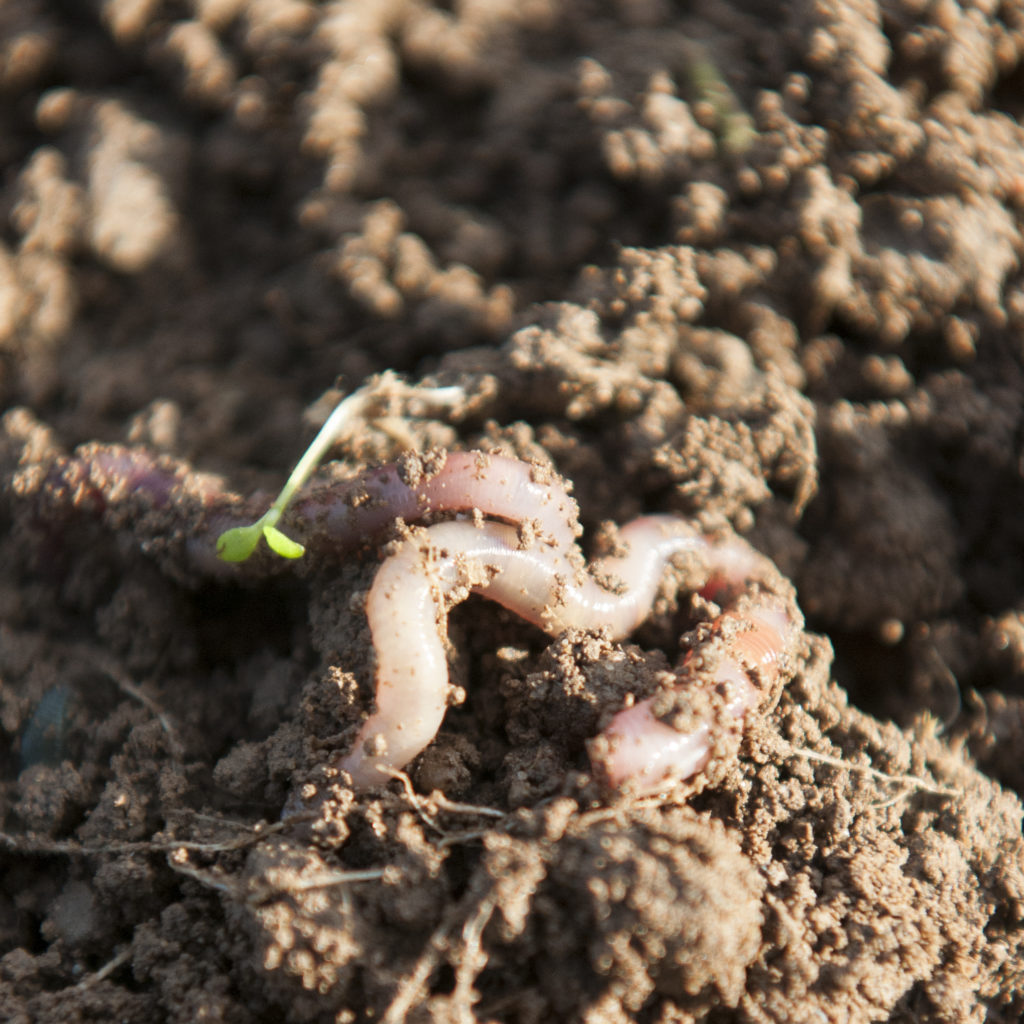
 If you haven’t guessed already, it is the humble earthworm. Earthworms live for about 7 years, and in their lifetime will compost about 7 tonnes of organic matter! These amazing little creatures take organic matter in the soil and convert it into food and nutrients for plants, by way of the worm castings they leave behind. They help aerate the soil, which allows for better water filtration and oxygenation of the soil for other microbes to thrive. This aeration prevents water logging and increases fertility. In a nutshell we would be in a pretty bad place without our underground friends. The soil beneath our feet is thriving with a beautiful complex interconnected myriad of life.  It is a shame, that many of the methods used to grow food in today’s large industrial agricultural system end up destroying the very biological organisms we rely on to sustain our environment.

It is hard not to bring the debate back to glyphosate. It is everywhere and in everything e.g. in non-organic food, wine, beer, in tap water, in urine and it has even been recorded in breastmilk. So much of the stuff is used and with such frequency that it is compromising our health and the health of our food chain and ultimately our planet. Glyphosate is toxic not only to the plants it kills, and the humans which consume the plants but also to earthworms. At least 6 studies have shown that glyphosate is damaging to earthworms, reducing their reproductive rates and reducing the rate at which they turn soil over. Earthworms have chemoreceptors and sensory turbercles on their skin giving them a high degree of sensitivity to chemicals and they avoid soil contaminated with glyphosate.

We can learn a lot from these little creatures. They quietly go about their work, improving our soil, helping us grow food and they know instinctively that glyphosate is something to be avoided. Maybe society should take a leaf out the earthworm’s book and avoid glyphosate too. The good news though is that organic farming does not use glyphosate (or any chemicals) so by buying our produce, you are not only helping the environment, but your own health too! 

Kenneth

PS Thank you for your continued support, we really appreciate it! All our boxes are organic and plastic free and we also have a great range of organic groceries that you can add to your fruit and vegetable order here.