Cooking without Chemicals with Tom Hunt – Biodiversity-boosting Kale Kimchi

Tom Hunt is an award-winning chef, food educator, writer, climate change activist and author. This recipe was first published in his book Eating for Pleasure, People & Planethttps://www.tomsfeast.com

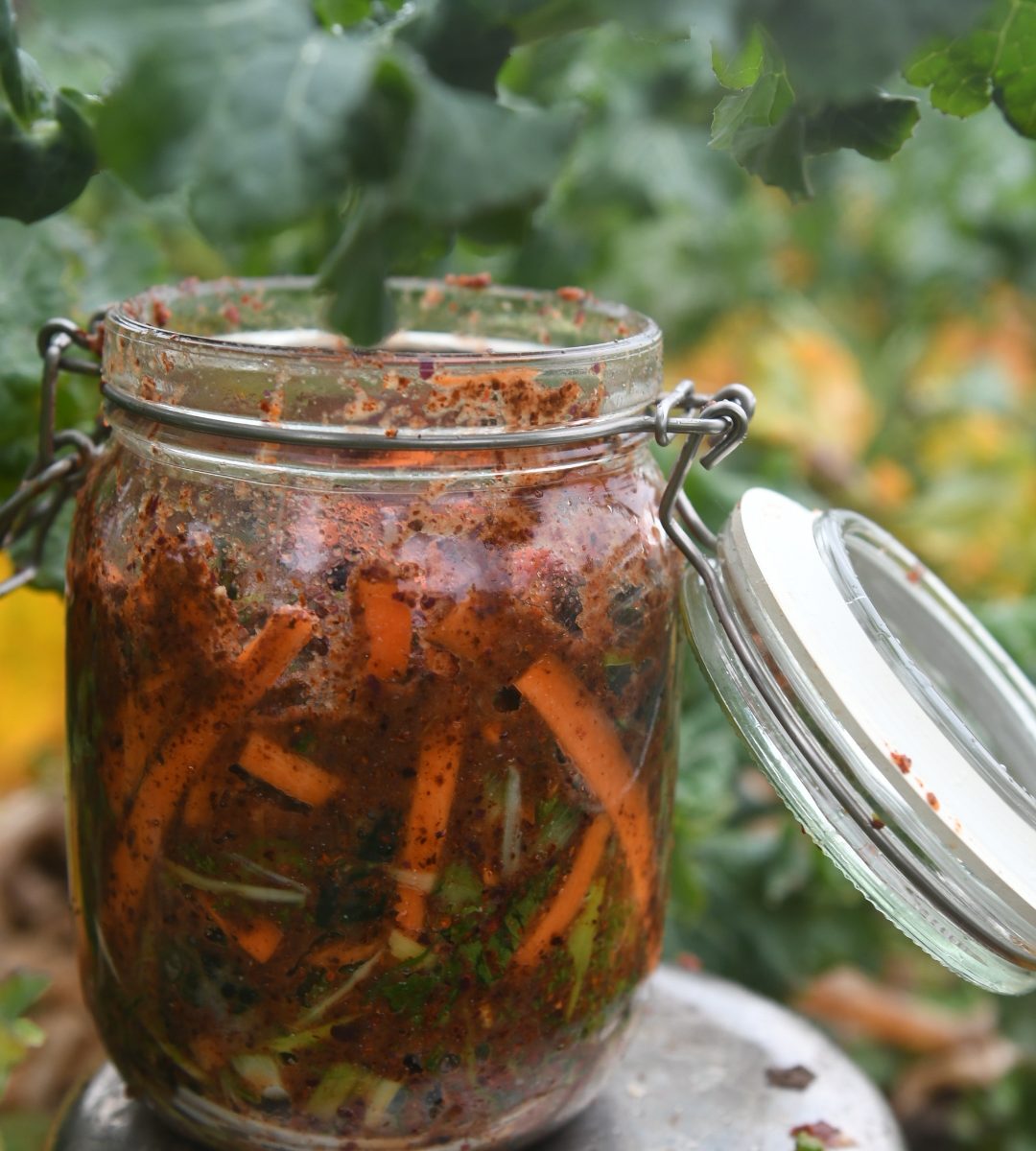
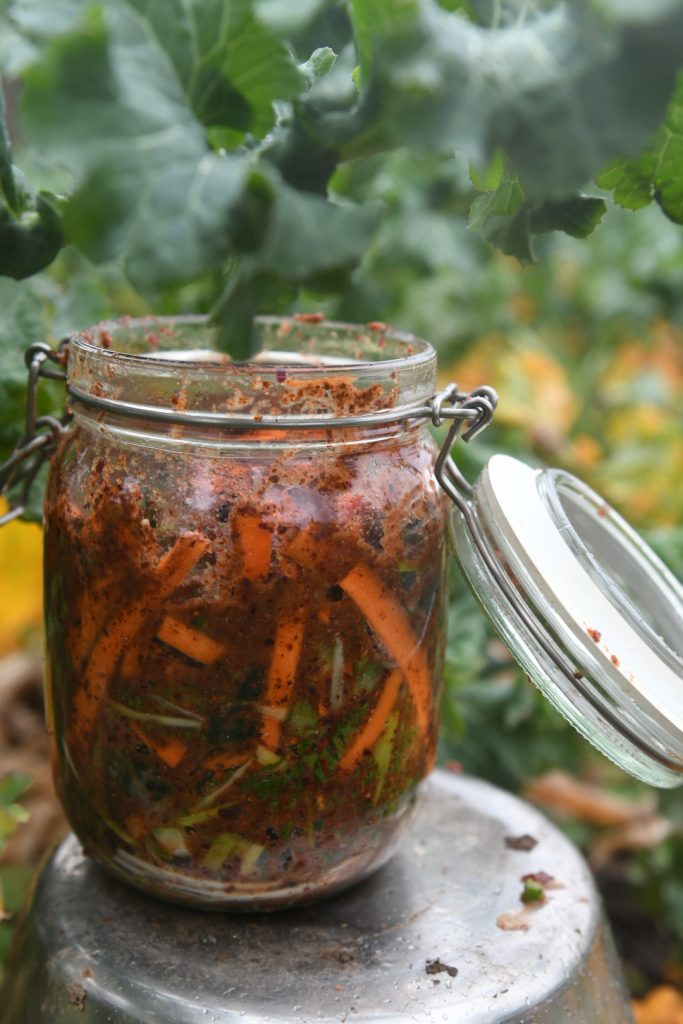
We all know how good fermented foods are for us. Bursting with beneficial bacteria and so so good for our gut microbiome. But did you know that by making this stunning farm fresh vegan kale kimchi you’re not only supporting your health, but also supporting biodiversity? Organic farms boast up to 50% more biodiversity compared to conventional farming setups. And by supporting small farmers who do their part in protecting our environment such as not using pesticides, growing hedgerows and leaving the kale to flower in the spring, your gut-healing kimchi is much more than the sum of it’s parts.
Ingredients
300g mixed colourful kale and greens
65g carrot, cut into thin batons
50g spring onions, cut into thin batons
30g cloves garlic, peeled
50g onion, peeled, roughly chopped
150g apple
6 tablespoons Korean chilli powder or other to taste
Pinch hijiki seaweed

Method
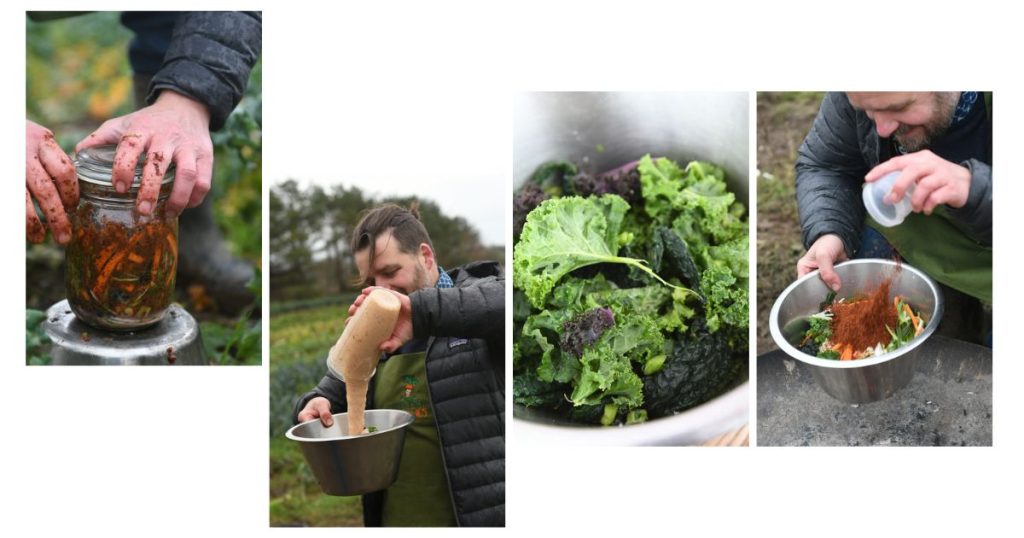
Gather 250g of raw vegetables, the majority of which should be leafy greens.
Cut hard vegetables, leafy green stalks and brassica stalks into matchsticks, cut brassica florets into bite sized pieces and rip leafy greens into large pieces.
Wash everything well and drain in a colander.
Massage one teaspoon of sea salt into the mixture.
Leave for 30 minutes then pour off any excess liquid.
Blend the garlic, onion, apple, pear and chilli powder to a puree with 120ml of water.
Pour the garlic mixture over the greens, add the hijiki seaweed and mix thoroughly.
Pour into a clean jar and press down, packing it in tightly.
Why is kale on the dirty dozen every single time?

We were out spraying our crops this week, we were having problems with our sprayer, so I was out there with Brenda fixing the machine and ensuring it was working well. It struck me as I was down near the crops checking to ensure we were getting good leaf coverage with our spray that this is exactly what happens with toxic chemical sprays, they are applied, and they are sprayed directly onto the crops and are in some cases absorbed into the plants.

It was visually striking and although I have known this for years, it really hit me there in the field. We sprayed all our brassica plants that day with a mix of seaweed, boron, Epsoms salts and an herbal tonic.

At the time we were spraying black kale, funny thing is kale is a regular feature on the dirty dozen list, mindful that this is an American compiled list and there are so many more chemicals applied there compared to here in the EU, that doesn’t give us Europeans a free pass though.

Even so, for the life of me, why? Why spray kale? It used to be grown for cattle and is as hardy as vegetables come. We have been growing kale for 20 years and never had a disease problem. The only time we have an issue is with aphids, and that is after we leave the plants to go to flower, and they are exhausted at the end of a long season.

Chemicals that are absorbed into the food are called systemic, that means they penetrate the skin of the plant and get into its circulatory system, washing or rinsing does nothing to remove these chemicals.

You may note from the video that there are plenty of weeds in our fields, one of the most notable differences between organic and conventional agriculture is the absence of weeds. Weeds in conventional systems are managed generally starting with the ubiquitous spray of roundup followed by herbicides applied once the plants are in the ground. Then there is the fungicide and insecticide applications. All in all, whilst it is better in Ireland, the best way to avoid ingesting synthetic chemicals is to choose organic.

If you would like to know the chemical concoction you might find on your kale read on. Fungicides like, Difenoconazole, Boscalid, and Fludioxonil, insecticides such as Lamda-cyhalothrin, herbicides such as metazahlor, pendimethalin may be used, if you are in the US I am sure you can add a whole batch of more toxic chemicals to that list.

As the day went on, we got all our brassicas sprayed, I can only imagine the good the mix we applied is doing the plants, and I hope you can taste it in the flavour, freshness and richness of the produce coming off our fields and the fields of the other farmers that supply us.

Not only that, but I Saw a few bees fly though the spray and of course they flew on, no issue there, maybe it even did them some good, don’t think you could say the same for any synthetic chemical that might be sprayed.

As always thank you for your support.

Kenneth

PS Don’t forget to support our organic farm at this time of the year it makes all the difference to us and all the other organic farms and farmers that supply into us. Thank you. Kenneth