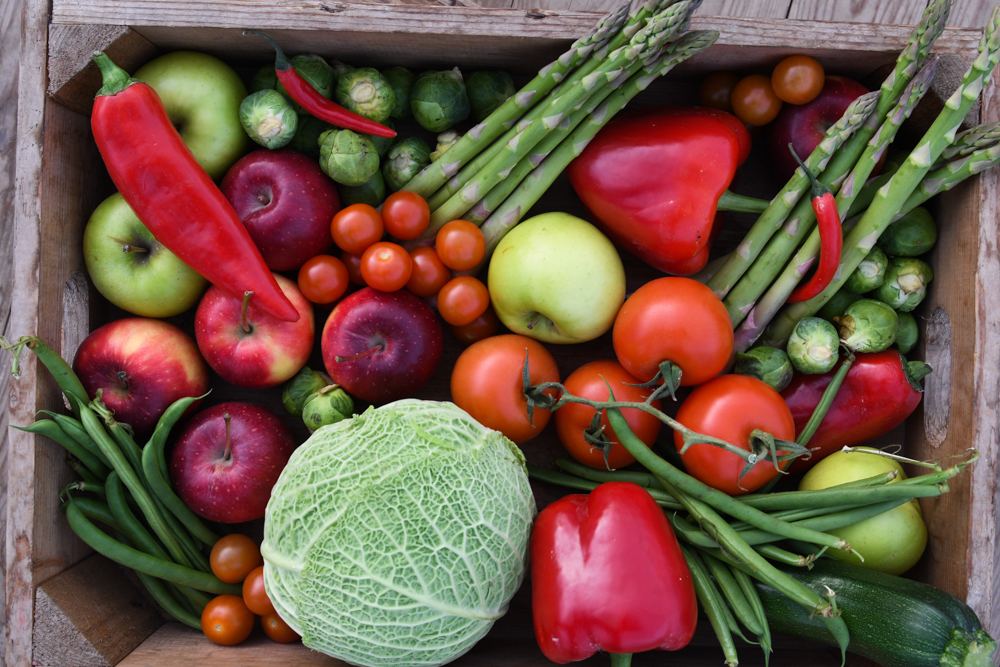

I remember as a young lad having to climb trees to pick apples in my grandad’s orchard. Having been pruned and tended to over the years they had grown to to a very decent height (you needed a tall ladder to get to the top apples) these apples were never ever sprayed, and when they were picked they were stored on galvanised sheets in a cool shed, providing apples until nearly Christmas. Any those that had blemishes were used first.

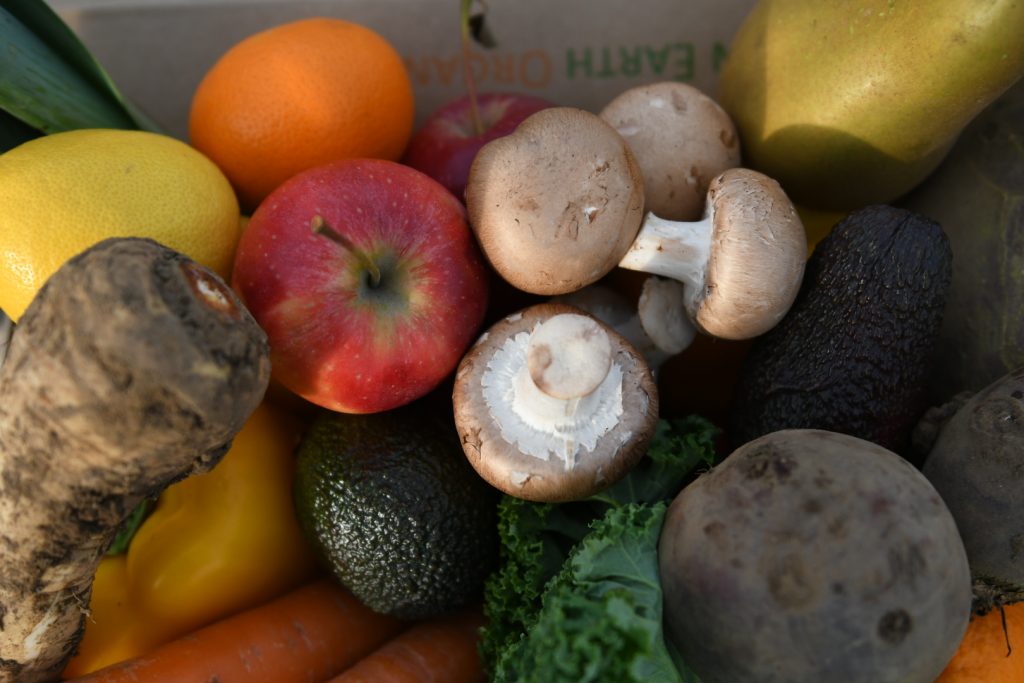
During the week I was speaking to Richard Galvin who has been our Irish organic apple supplier for nearly 10 years. His apples are wonderful; they are Irish and organic and crucially are not sprayed with any synthetic chemicals. We have been receiving excellent organic apples from a Fairtrade co-op in France and from Darragh Donnelly in Dublin, and there have been some issues, at least if you were a supermarket there would be an issue.
The issue if you would call it an issue is that some of these apples are not perfect, they have slight blemishes on the skin, some of the blemishes are not ok to send out and as a result we need to grade and examine every single organic apple by hand. We do this and that is ok, but it takes time and people.
Now contrast this with the perfect apples that grace your average supermarket shelf. How do they end up so perfect and end up lasting for so long?

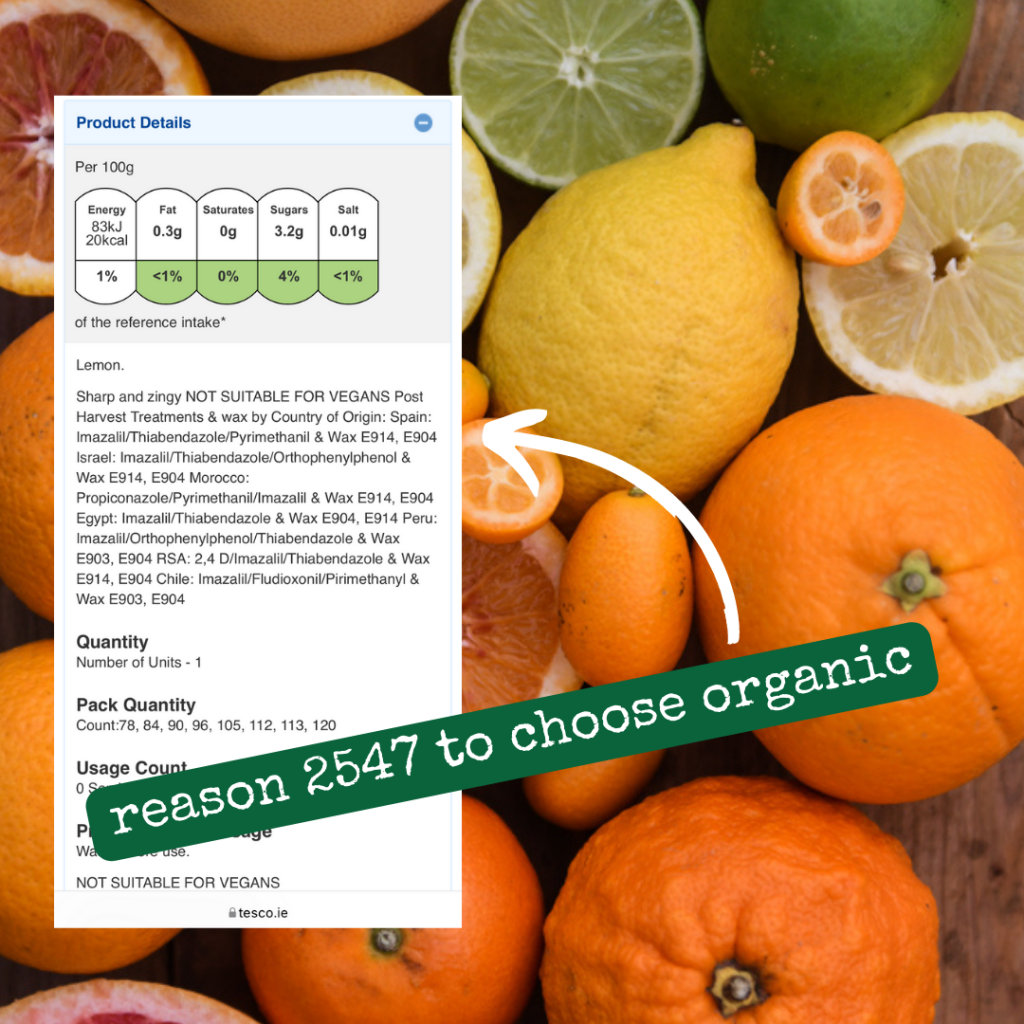
There is a reason that they look the way they look, and a big part of that is the synthetic chemicals that are used in their production.
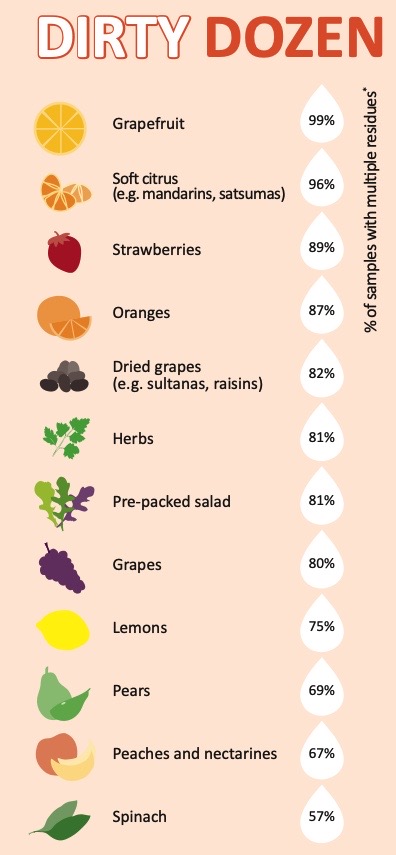
Apples nearly always feature in the Dirty Dozen, and although this is a US survey, there is plenty of research demonstrating that European apples, or in fact many of the apples imported into Europe from further afield have plenty of pesticide residues on them. Apples are one of the most sprayed fresh products you can buy. A recent survey in the Netherlands found chemicals in every single sample they tested (1 click here for the article). Some had a cocktail of residues.
In Ireland in 2022 the department of agriculture tested 70 different samples of apples, 55 (or 79%!) had pesticide residues and over 4% had residues deemed as unsafe. If you would prefer not to have pesticides on your food (whether they were deemed to be below the safe limit or not) the fact that nearly 80% of all samples tested right here in Ireland had recorded pesticides is enough to make up my mind. (2 click here for the data and go to page 138)
There may be an argument to be had that these chemicals help reduce food waste, and that has a certain validity, but on the other hand, if supermarkets were happy to sell apples that did not need to look like shiny plastic apples, then maybe there would be less need for these chemicals.
Either way, my grandad would certainly not have agreed with spraying his apples, and certainly Richard and Darragh do not agree with using synthetic pesticides either, and we are grateful to be able to share their apples with you.
As always thank you for your support.
Kenneth