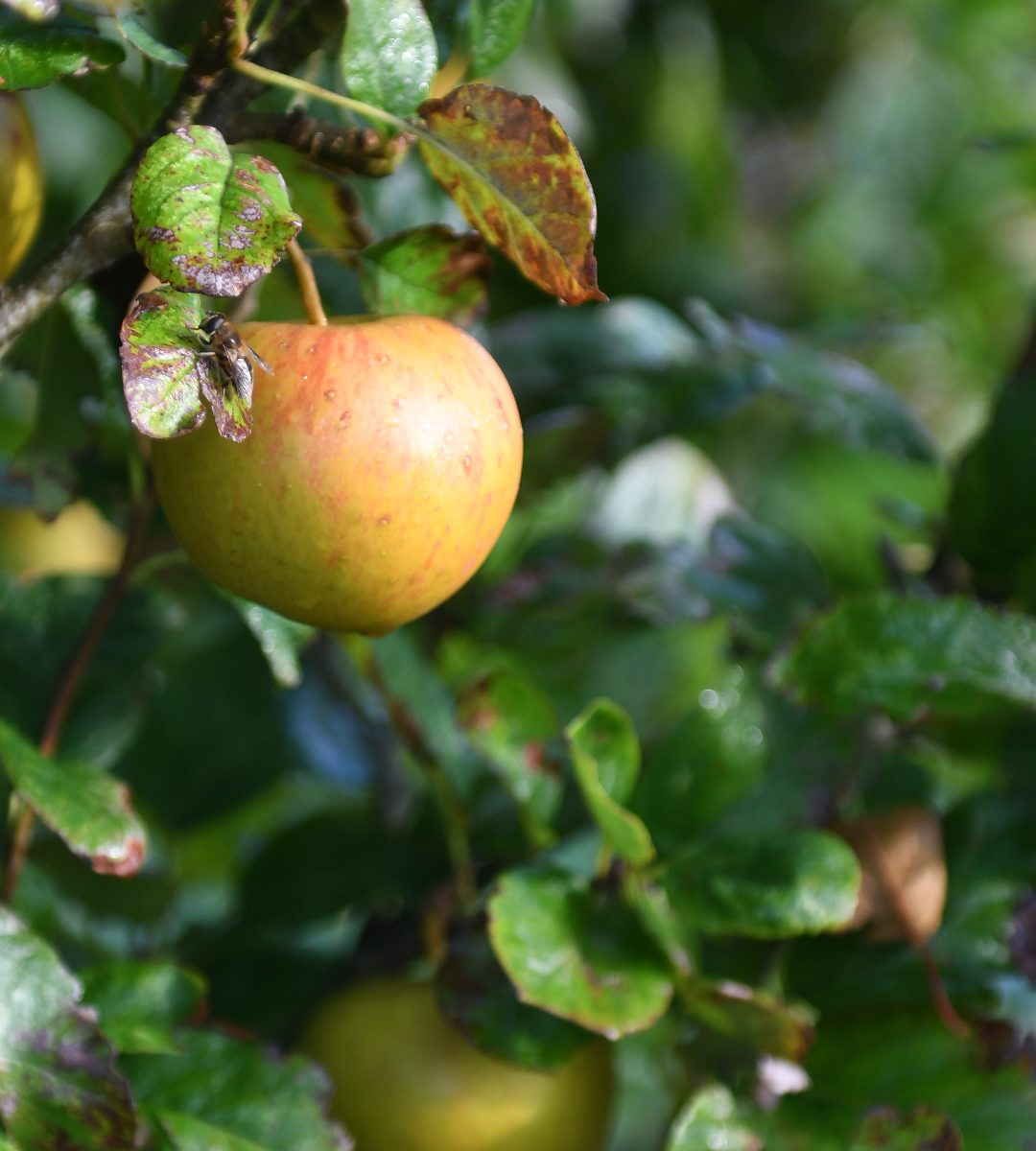
A cocktail of chemicals on your conventional supermarket apples

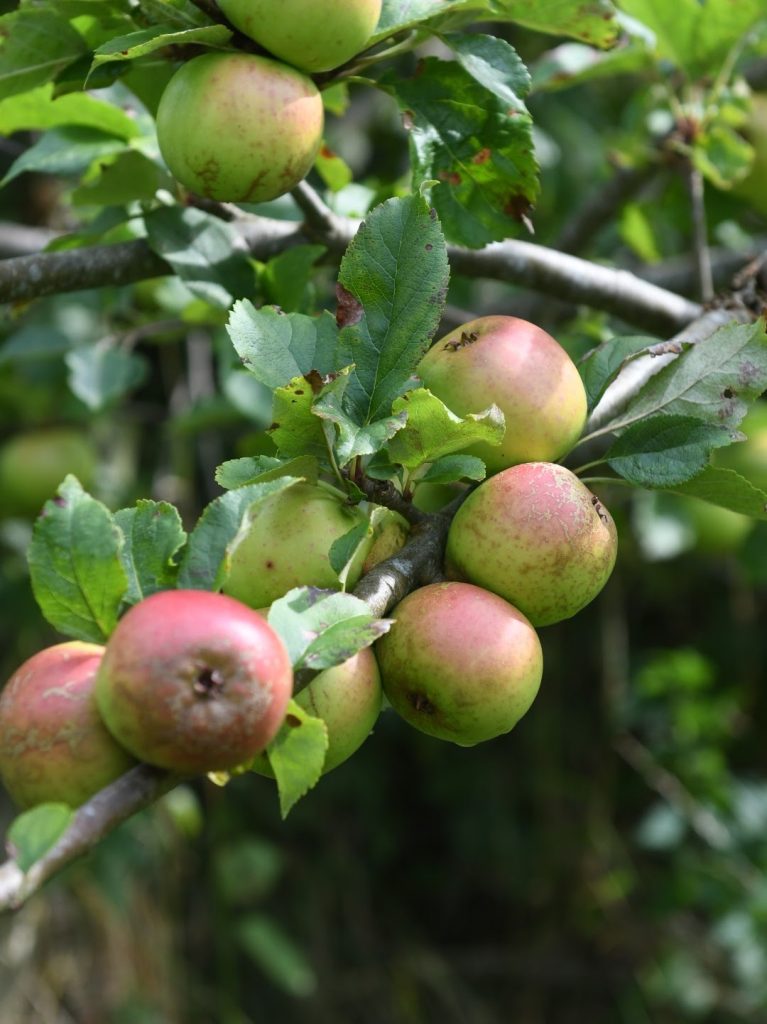
Did you know we have the most amazing Irish organic apples, they have been grown in country Waterford by Richard Galvin and they have been sprayed with nothing. 
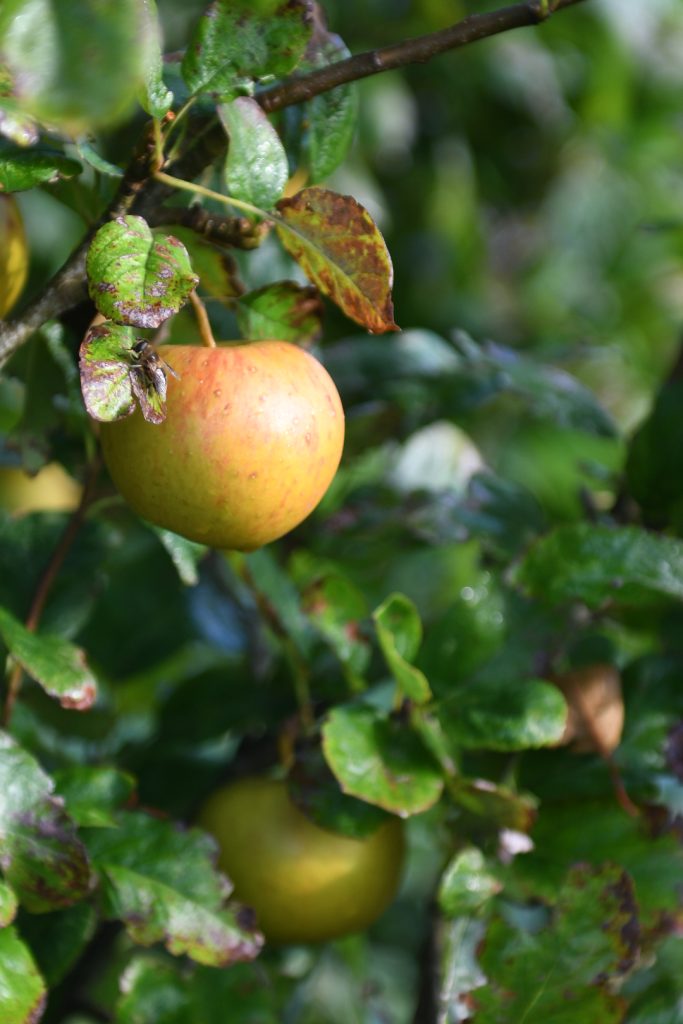
A recent study by PAN UK (pesticide action network UK) found that nearly all the samples of conventional apples they tested had at least one pesticide residue and over 85% had a cocktail of up to seven pesticide residues. In some countries every single apple they tested recorded pesticide residues. 

Many of these chemicals are systemic in nature and get absorbed into the flesh of the apple. 

In a 2022 study carried out by the Irish Department of Agriculture 79% of sampled apples were found to have detectable pesticide residues. Conventional apples are among the most heavily sprayed fruits, often treated with fungicides to prevent scab. 

To maintain freshness and improve appearance, many supermarket apples also are coated with artificial food-grade waxes, such as shellac or carnauba wax, to replace natural waxes stripped away during cleaning. 

Apples are sprayed on average 30 times in a year with a host of pesticides, these toxic chemicals can include neurotoxins which were in this study was found on over 30% of samples. 

The apples we receive from Richard Galvin are amazing, they are Irish and organic, the season is sadly ending soon, but we will continue to have the most delicious organic apples from a Fairtrade organic co-op from the South of France. 

When I was a young lad I used to help my Grandad pick the apples at the end of the summer, he had maybe 10 large old apple trees and it was my job to climb the trees to put up the jars with the water and jam to trap the wasps, and stop them from eating the sweet apples. It was also my job to pick the apples. We used to then store the apples on galvanise sheets in one of the old cow sheds. We would have apples until Christmas, after that they wouldn’t be great. They certainly were never sprayed with chemicals. 

These days with cold storage and special bins that exclude air the apples last until February and much longer and you can be the judge of the quality of our Irish apples yourself. They may not be quite as fresh and crisp as they were back in October, but they are still bursting with flavour. 

As always it is only through your support that we continue to be able to grow food without chemicals and support other Irish organic farmers that share our values, which helps protect nature and our health. 

Thank you

Kenneth

PS Nearly 95% of the apples sold in Ireland are imported.

A serious question, and a great bunch of people…


It’s been an interesting week. On Sunday I went with a group of Irish organic farmers to the UK to see a bunch of British organic farmers, it was a great trip some truly lovely people so open and willing to share. The highlight was a visit to Riverford farm and packing facility, an inspiring operation centred on sustainable food and fairness.


The reality of this fair equitable and sustainable approach to business, one we also have embedded in our own farm and operation here in Galway is the struggle to be profitable. Profitability is an essential facet of any business that wants to survive and reinvest.


I spoke to one farmer who farms over 100 acres of potatoes and carrots, he is lucky he is a Riverford supplier and so has protection from the outside forces of supermarket buyers, but even in this relatively protected environment he struggles.


So how if a farmer like that or like our own farm which gets preferential treatment and pricing and is using all the latest equipment and mechanisation but is trying to farm sustainably cannot make ends meet, what chance does a supermarket farmer supplier have?


This is a serious question, and as long as I have been banging on about it here, there is little real progress being made. The fundamental problem is that fresh food is classed as valueless, it is used as loss leader fodder, something that is used as a ploy to get consumers in the door, and once in, the supermarket machine gets us to spend on ultra processed rubbish that has higher margins. It is wrong.
If we want a fair world, a world where we can eat well, a world where veg producers can continue in business, a world where farmers are rewarded for protecting the environment, paying fairly, and growing chemical free food, then we need to vote with our wallets, it is plain and simple I am afraid.


We have been doing all of the above for 20 years, and this may be the first year where we will not have ended the year further in debt. Ironically it looks very much like our farm again this year will not be profitable, or at the very best at a stretch we may break even. This after the very best growing season we have ever had.
The reality is wages have gone up and up, costs of production have gone up and up, delivery, packaging, all the other stuff Whilst veg prices have not. Sure food inflation is absolutely real and yes the supermarket shop has gone up, but not fresh food, no this has remained relatively static, it’s all the other processed products that have increased in price, hence the decimation of the Irish horticultural industry over the last 20 years.


And here is the other bugbear of mine, we from next week will only have Irish apples on sale, from Richard Galvin in County Waterford, we pay much more than imported for these but will support him over imported, the same as we do for Irish onions from Beechlawn organic farm. (See how many Irish onions and apples you see on supermarket shelves).

I went into a supermarket yesterday and all I saw was imported apples on the shelf. The reason: they are cheaper to buy, we know as we import produce also, we know the pricing and how it works. (We will always grow/buy or support Irish over imported when Irish is available)
So, I would like to say the outlook is hopeful, the future is bright, and God knows we need hope and a positive outlook now more than ever with all the issues in the world.


There was a definite sense of positivity on our trip to the UK earlier this week, hopefully the positive energy will keep flowing.


As always thank you for your support, without it we would definitely have gone by the wayside a long time ago.
Kenneth

Irish apples, picking apples, and the Dirty Dozen…

I remember as a young lad having to climb trees to pick apples in my grandad’s orchard. Having been pruned and tended to over the years they had grown to to a very decent height (you needed a tall ladder to get to the top apples) these apples were never ever sprayed, and when they were picked they were stored on galvanised sheets in a cool shed, providing apples until nearly Christmas. Any those that had blemishes were used first.

During the week I was speaking to Richard Galvin who has been our Irish organic apple supplier for nearly 10 years. His apples are wonderful; they are Irish and organic and crucially are not sprayed with any synthetic chemicals. We have been receiving excellent organic apples from a Fairtrade co-op in France and from Darragh Donnelly in Dublin, and there have been some issues, at least if you were a supermarket there would be an issue.

The issue if you would call it an issue is that some of these apples are not perfect, they have slight blemishes on the skin, some of the blemishes are not ok to send out and as a result we need to grade and examine every single organic apple by hand. We do this and that is ok, but it takes time and people.

Now contrast this with the perfect apples that grace your average supermarket shelf. How do they end up so perfect and end up lasting for so long?

There is a reason that they look the way they look, and a big part of that is the synthetic chemicals that are used in their production.

Apples nearly always feature in the Dirty Dozen, and although this is a US survey, there is plenty of research demonstrating that European apples, or in fact many of the apples imported into Europe from further afield have plenty of pesticide residues on them. Apples are one of the most sprayed fresh products you can buy. A recent survey in the Netherlands found chemicals in every single sample they tested (1 click here for the article). Some had a cocktail of residues.

In Ireland in 2022 the department of agriculture tested 70 different samples of apples, 55 (or 79%!) had pesticide residues and over 4% had residues deemed as unsafe. If you would prefer not to have pesticides on your food (whether they were deemed to be below the safe limit or not) the fact that nearly 80% of all samples tested right here in Ireland had recorded pesticides is enough to make up my mind. (2 click here for the data and go to page 138)

There may be an argument to be had that these chemicals help reduce food waste, and that has a certain validity, but on the other hand, if supermarkets were happy to sell apples that did not need to look like shiny plastic apples, then maybe there would be less need for these chemicals.

Either way, my grandad would certainly not have agreed with spraying his apples, and certainly Richard and Darragh do not agree with using synthetic pesticides either, and we are grateful to be able to share their apples with you.

As always thank you for your support.

Kenneth

Can a bite of an apple transport you back in time….?

Isn’t it funny that if you or I choose to grow our own food we will always, always choose to grow our own food without chemicals! Funny that this is a criterion in our own gardens but less of a consideration when it comes to choosing in a supermarket. My Grandad grew peas, and turnips, and carrots and potatoes as did my dad. My mum had raspberry bushes, blackcurrants, and goose berries. We were picking and eating our own fruit and vegetables and that was in the 70’s and 80’s. What happened?

Where did all the back garden growing go? Not only that where did all our commercial veg growers go?

In our 20 years we have seen so many changes to our food system we have seen the number of vegetable producers here in Ireland fall dramatically to just 60 commercial field scale producers, down from over 400 in the 90’s. Supermarkets have had a hand in this, squeezing the farmer to the extent that there is just nothing left. The consolidation of the packing and distribution process into the hands of a few middlemen has not helped either. In the space of just one generation, we have become disconnected from our food. Where is our food grown, who grows it, how is it produced, how is it handled? This disconnection is not our fault.

We have had school kids come on to our farm and been completely mesmerised by the fact that carrots come from the ground, having thought they begin their life on supermarket shelves in the plastic packaging. So it is that the shiny plastic packs that line the supermarket shelves give us the impression that our food system is unlimited, vibrant and fair, but of course this is not the case. The problems occur when we try to apply factory type controls to a natural system, but nature is not a factory, and the same rules do not apply.

Covid seemed to rekindle our interest in food. People are really interested again, interested in where our food comes from, what it’s impact on our precious planet is, and interested in how it has been grown. This is a wonderful change. We here on our farm certainly know where our food comes from, and we know that it has been produced without chemicals.

This week we have taken delivery of the first pallet of Irish organic apples from Darragh Donnelly in Dublin he also grows the Irish organic cherries we had earlier in the season. These apples are quite frankly amazing, the flesh is a bright pink, I have never seen apples like this, and the great news is this colour is caused by anthocyanins, which are powerful antioxidant and anti-inflammatory compounds.

But the best part of all is that these apples will take you back in time. They took me back to the orchard my grandad used to have in his back garden, the apples there which I picked as a young lad were full of flavour. I believe there is a distinct flavour and taste to an Irish apple, and Darragh’s apples are that if they are anything.

We have so many crops coming from our own farm, and we certainly know how they were grown, what field they came from, even what part of what field they came from! In fact, we could probably tell you who harvested them and who packed them into your box and who delivered them. Now you would be hard pushed to get that level of traceability and understanding of where your food comes from in a supermarket.

It is exciting to see that our food and our food producers are becoming a revered part of our culture again, thank you so much for being part of that transformation!

Kenneth