Cooking without Chemicals with Tom Hunt – Blackened Leeks with Romesco Sauce

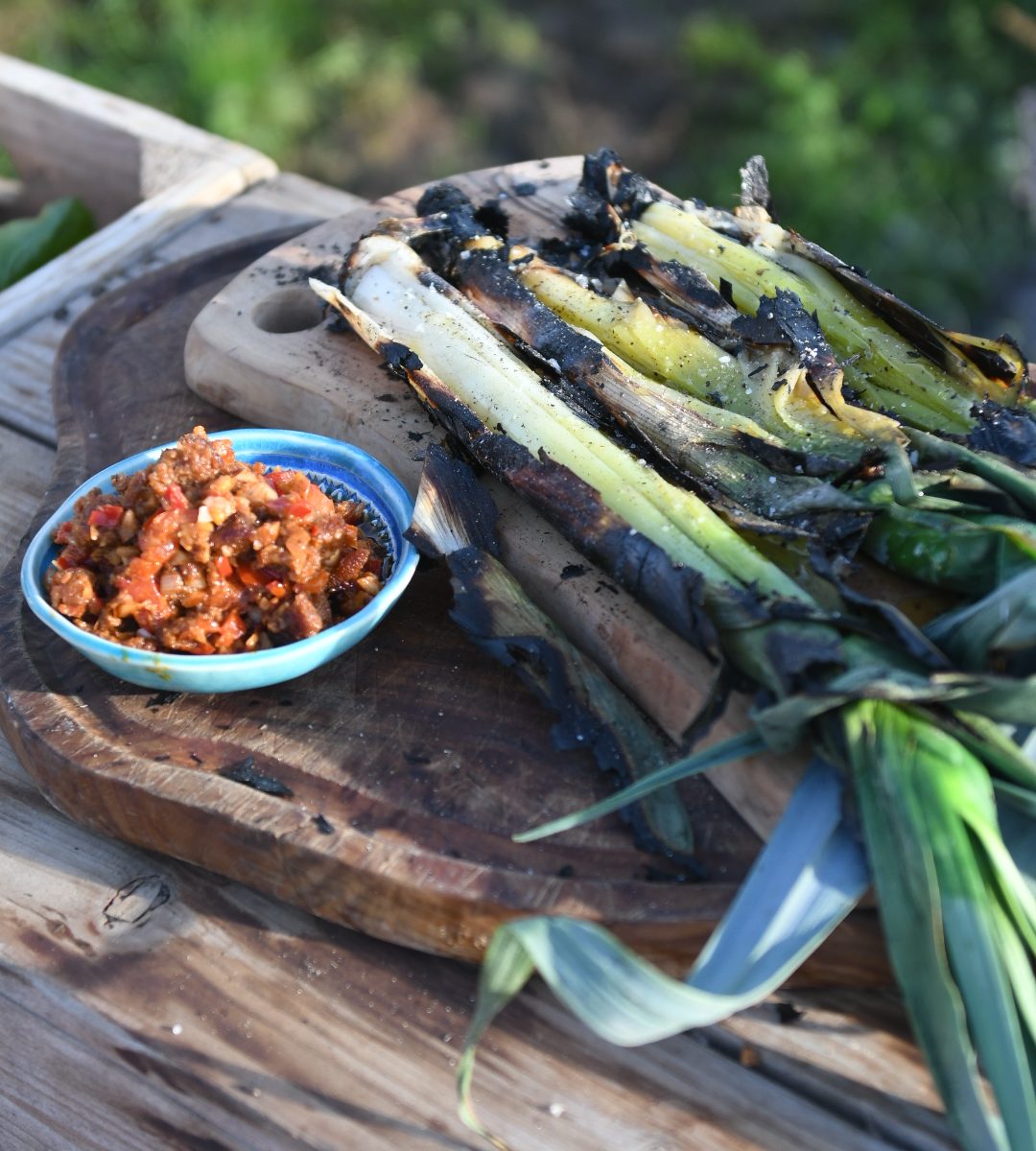
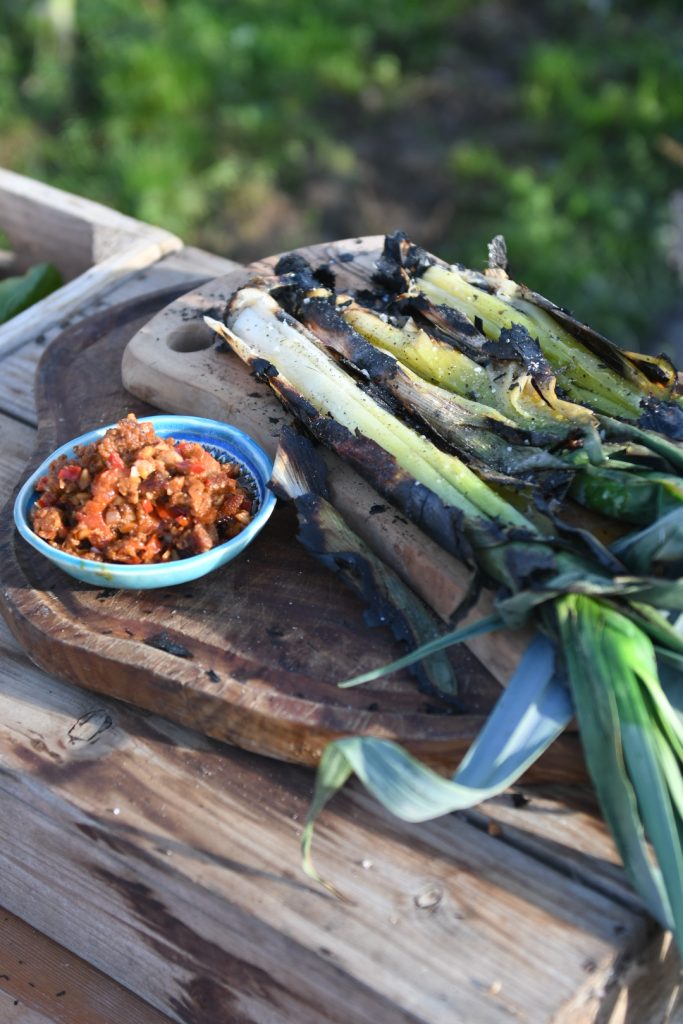
This smoky Catalan-style dish is all about the contrast of charred, sweet alliums and nutty, tangy romesco. Traditionally served with calçots, the sauce works beautifully with blackened leeks too – or with almost any grilled vegetable or fish. It’s so moreish you’ll want to spread it on toast.

Tom Hunt is an award-winning chef, food educator, writer, climate change activist and author. This recipe was first published in his book Eating for Pleasure, People & Planethttps://www.tomsfeast.com

Ingredients – serves 4

4–6 leeks (about 1 large or 2 small per person), trimmed

Light olive oil

Sea salt and black pepper

Romesco sauce

2 cloves garlic, finely chopped

1 red chilli, chopped and deseeded

50g almonds or other nuts

50g stale or dry bread, torn

1 shallot or ½ an onion, finely diced

1 tbsp smoked paprika

350g roasted red peppers (from a jar or freshly roasted)

1 tbsp sherry or red wine vinegar

100ml olive oil

Method

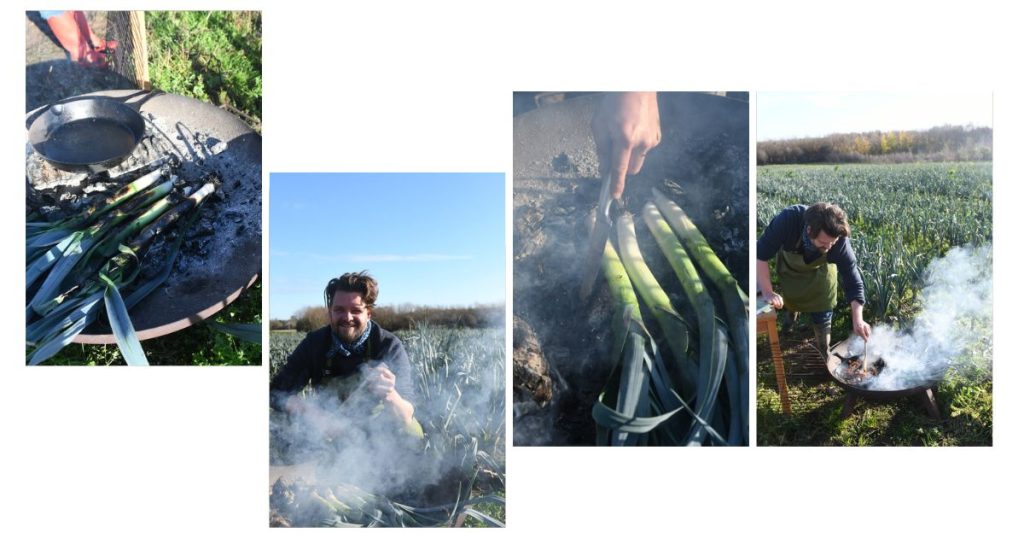
To cook the leeks, preheat a barbecue or grill to high. Rub the leeks lightly with olive oil and season.

Place them directly over the coals or under the grill, turning occasionally, until the outer layers are blackened and the insides are soft – about 10–15 minutes depending on their size. If cooking directly on the coals, brush off any ash before serving.

You can also roast them in a hot oven at 220C until tender and charred at the tips. Meanwhile, make the romesco sauce.

Warm a splash of olive oil in a frying pan and fry the. bread and almonds for a few minutes until golden. Add the garlic, chilli and onion and cook for another couple of minutes until fragrant, then stir in the smoked paprika.

Transfer the mixture to a blender with the roasted peppers and vinegar, then blend to a coarse paste. With the motor running, drizzle in the olive oil until you have a thick, spoonable sauce. Season with salt and pepper to taste.

Serve the hot blackened leeks piled on a platter with the romesco spooned generously over the top or served alongside.

Storage

The sauce will keep well in the fridge for up to a week, or longer if pasteurised in the jar.

Cooking without Chemicals with Tom Hunt – Biodiversity-boosting Kale Kimchi

Tom Hunt is an award-winning chef, food educator, writer, climate change activist and author. This recipe was first published in his book Eating for Pleasure, People & Planethttps://www.tomsfeast.com

We all know how good fermented foods are for us. Bursting with beneficial bacteria and so so good for our gut microbiome. But did you know that by making this stunning farm fresh vegan kale kimchi you’re not only supporting your health, but also supporting biodiversity? Organic farms boast up to 50% more biodiversity compared to conventional farming setups. And by supporting small farmers who do their part in protecting our environment such as not using pesticides, growing hedgerows and leaving the kale to flower in the spring, your gut-healing kimchi is much more than the sum of it’s parts.

Ingredients
300g mixed colourful kale and greens
65g carrot, cut into thin batons
50g spring onions, cut into thin batons
30g cloves garlic, peeled
50g onion, peeled, roughly chopped
150g apple
6 tablespoons Korean chilli powder or other to taste
Pinch hijiki seaweed

Method
Gather 250g of raw vegetables, the majority of which should be leafy greens.
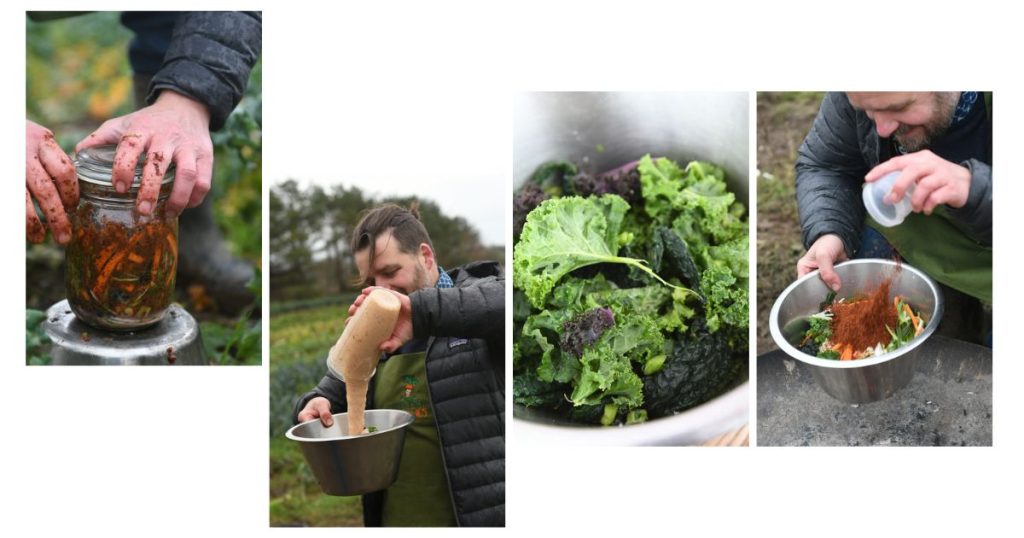
Cut hard vegetables, leafy green stalks and brassica stalks into matchsticks, cut brassica florets into bite sized pieces and rip leafy greens into large pieces.
Wash everything well and drain in a colander.
Massage one teaspoon of sea salt into the mixture.
Leave for 30 minutes then pour off any excess liquid.
Blend the garlic, onion, apple, pear and chilli powder to a puree with 120ml of water.
Pour the garlic mixture over the greens, add the hijiki seaweed and mix thoroughly.
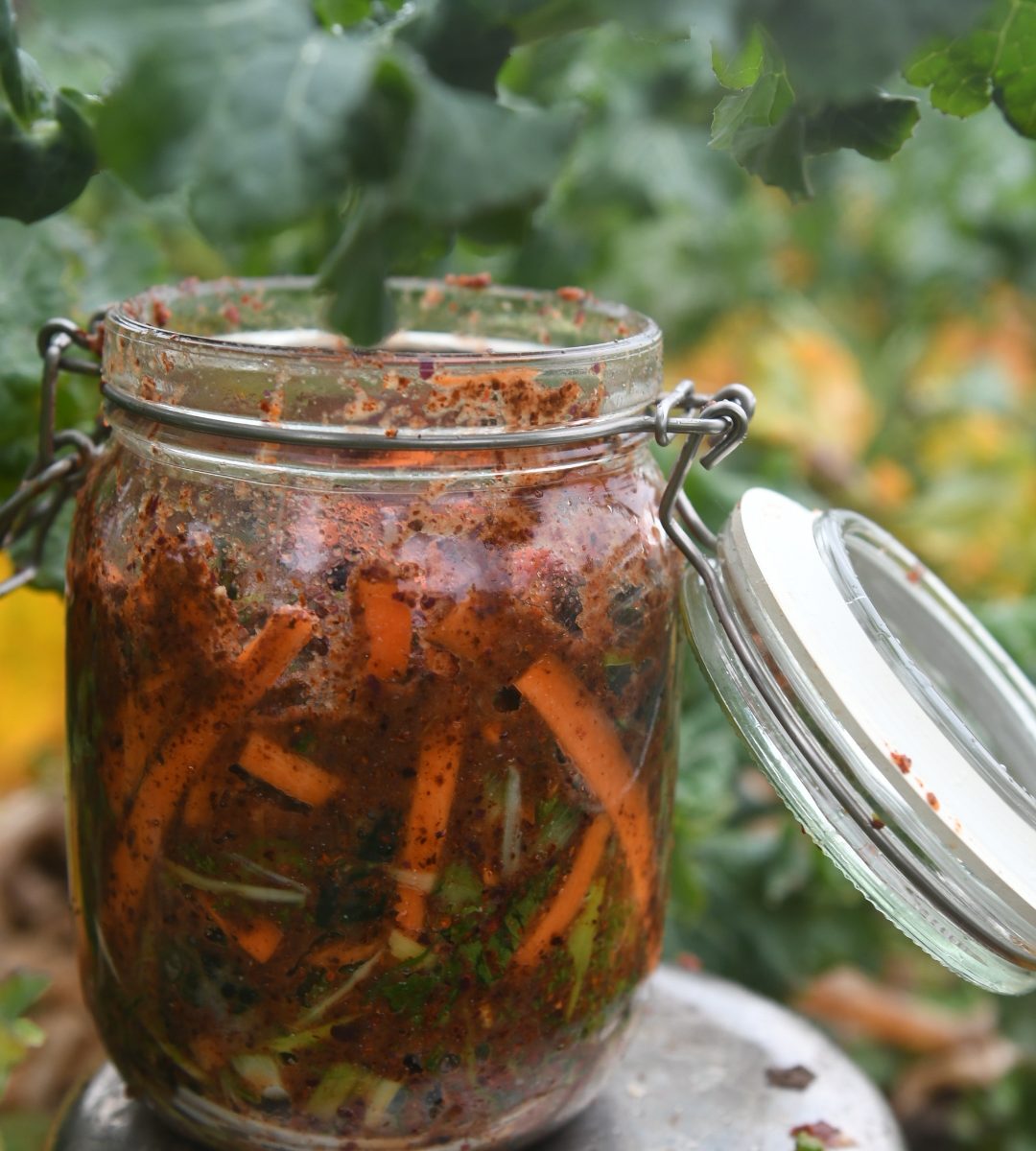
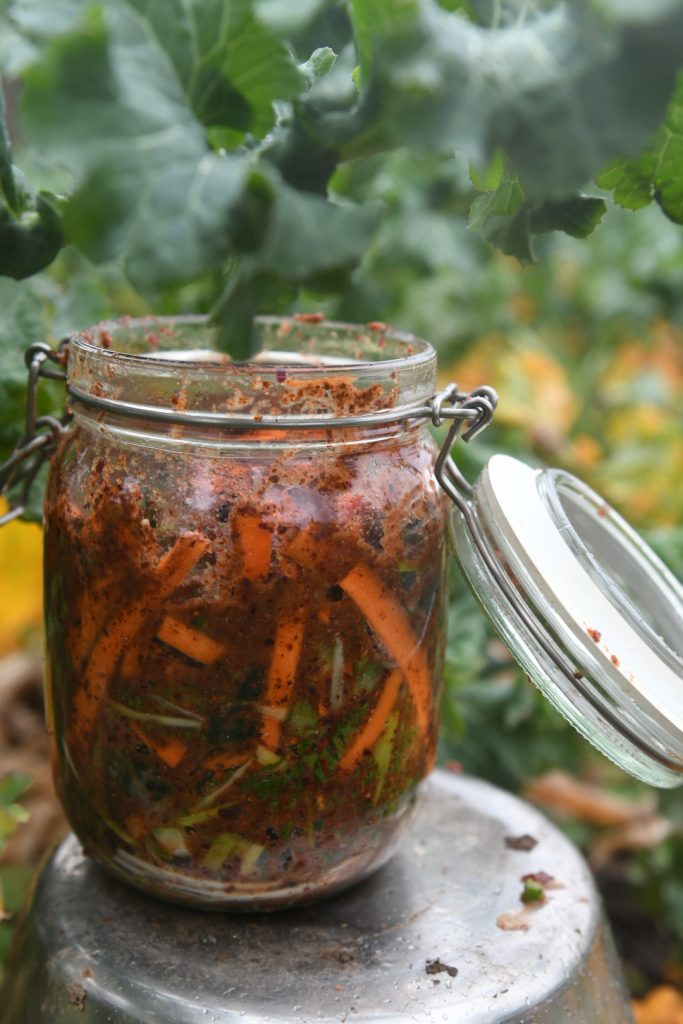
Pour into a clean jar and press down, packing it in tightly.

Cooking Without Chemicals with Tom Hunt – Ghee-spiced roasted root vegetables with fresh coriander

Tom Hunt is an award-winning chef, food educator, writer, climate change activist and author. This recipe was first published in his book Eating for Pleasure, People & Planet. https://www.tomsfeast.com
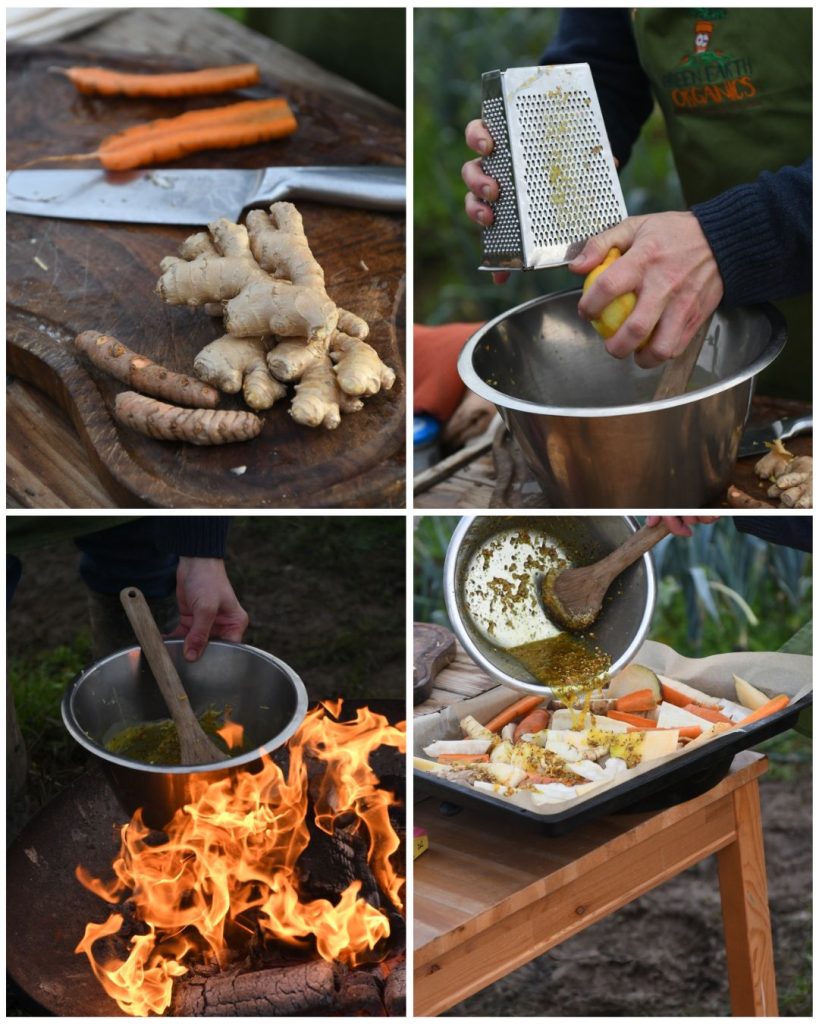
Ghee is thought of as sacred in India. And it’s easy to see why. Whilst it bubbles on the stove it gives off the most delicious aromas of caramel and toasty nutty-ness. Once clarified the ghee looks like nectar, golden yellow in colour. Ghee is thought to be purifying and vital for our health within ayurveda – India’s holistic medicine. It has a high smoke point which means it can be used for roasting, sautéing or even deep fat frying. The warm spices in this recipe combined with the ghee create a comforting dish, delicious served alongside other plain vegetables or as part of an alternative roast dinner.

– Serves 4 as a side dish

50ml organic ghee

1tsp cumin seeds

2tsp coriander seeds

1 level tsp turmeric or ideally turmeric root to grate

2cm piece ginger, finely grated

1 tbsp honey

200g parsnips, cut in half or quarters lengthways

200g carrots, cut in half or quarters lengthways

250g turnips or Jerusalem artichokes (or a mix of both), cut into halves or quarters

2 shallots, cut in half lengthways

6 sprigs fresh coriander and/or mint, leaves roughly chopped, stalks finely chopped

Yoghurt to serve (optional)

To roast the root vegetables: preheat the oven to 180c. Mix 50ml of ghee with the

cumin, coriander, turmeric, grated ginger, honey and a teaspoon of salt. Place the root

vegetables in a roasting tray and pour the spiced ghee mixture over the top. Turn the

vegetables in the mixture until evenly coated. Cover with a piece of parchment or foil and

place in the oven for 20 minutes. Remove the foil or parchment and return to the oven for a

further 25 minutes or until the vegetables are soft and slightly caramelised. Finish with the

fresh coriander and/or mint and blob of yoghurt on the side if you fancy.

Farm to Table Soup – Cooking without Chemicals with Chef Tom Hunt

Tom Hunt is an award-winning chef, food educator, writer, climate change activist and author. This recipe was first published in his book Eating for Pleasure, People & Planet. https://www.tomsfeast.com

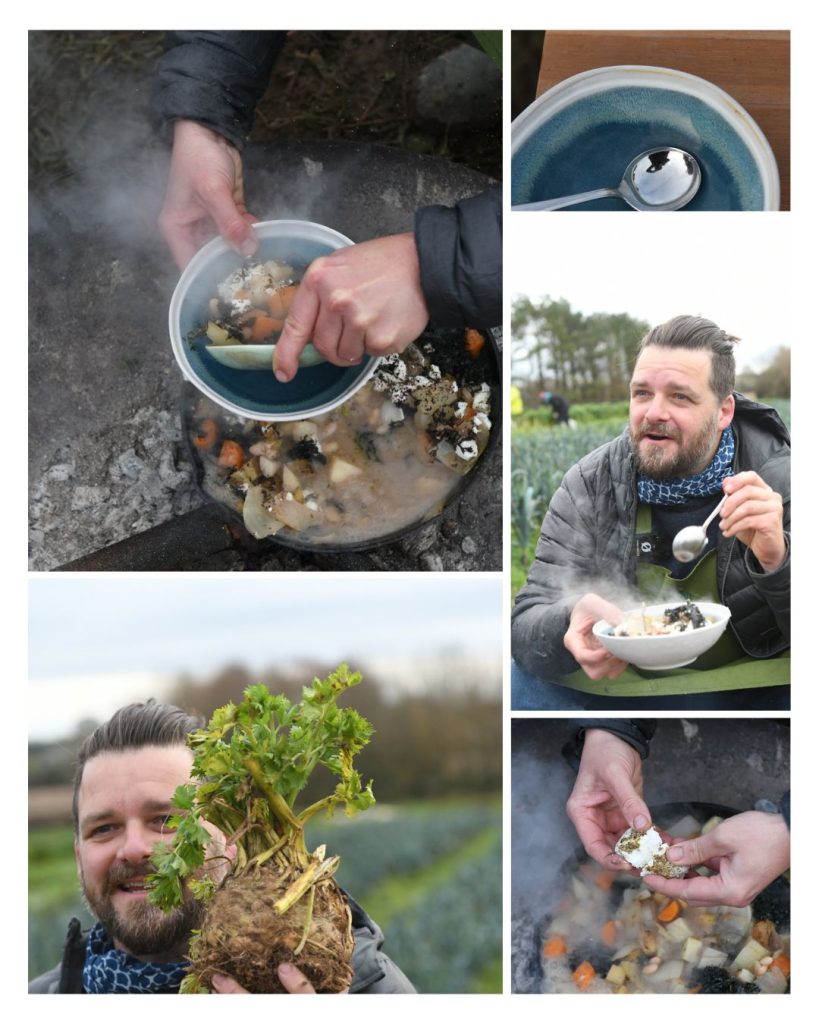
This soup is the farm in a bowl. Adapt the ingredients to use what you have, what’s in season and what’s in your veg box.

Serves 4

2 tbsp ghee or olive oil, plus extra to serve

1 celeriac, trimmed, cleaned, diced – skin left on

3 carrots, roughly chopped – skin left on

1 onion, very roughly chopped

4-6 cloves garlic, peeled

3 sprigs thyme

Sea salt and pepper, to taste

Pinch of dulce seaweed, optional

100-150g kale, stalks finely chopped, leaves roughly chopped

1 can white beans, including the aquafaba

Method

Heat a thick based pan over a medium heat with the fat. Add the onion and whole cloves of garlic. Cook for a few minutes then stir in the celeriac and carrot. Sauce for a few more minutes. Season with plenty of sea salt and freshly cracked black pepper and optional dulce seaweed flakes. Cover with water and bring to a simmer. Add the kale and white beans including their liquor. Once tender serve topped with optional crumbled goat’s cheese and extra ghee or olive oil. Enjoy!

Cooking without Chemicals with Tom Hunt – Beer-battered Kale

Tom Hunt is an award-winning chef, food educator, writer, climate change activist and author. This recipe was first published in his book Eating for Pleasure, People & Planet. https://www.tomsfeast.com

Beer-Battered Kale

Beer is a nifty ingredient for making any number of dishes. Just a drop will transform a slow braise, stew or hotpot, adding notes of bitter caramel, yeast and hops that elevate the recipe while lessening the need for stock. Beer batter is quick to make and deeply satisfying to eat. The bubbles help it puff up when fried, turning wonderfully crisp and flavourful. Here I’ve battered a variety of whole kale leaves, which are magically moreish served with a squeeze of lemon and a dollop of curried mayonnaise. Any leftover beer can be stored in a sealed container in the fridge for up to a month, or frozen indefinitely until needed.

Serves 2

100g wholemeal spelt flour, plus extra for dusting

1 tsp baking powder

A pinch of salt and pepper

130ml beer and/or water

Light olive oil, for frying

200g Kale (green, purple, or black or a mix of all three), whole leaves (but you can also try nettles, halved mushrooms, batons of squash, fennel or turnip, chicory leaves, etc.)

To serve: lemon wedges, curried mayonnaise, or tamari

In a bowl, mix the flour, baking powder, salt, pepper, beer and/or water, and beat out any lumps. Add a little more beer, water or flour if necessary to reach the consistency of double cream.

Fill a saucepan less than one-third full with oil and place on a medium heat. When hot (test by dropping in a little batter – if it bubbles and rises to the surface, it’s ready) dust the kale leaves lightly in flour, shake off the excess, then dip into the batter.

Shake again to remove any excess batter and carefully lower into the hot oil. Fry for about five minutes, or until golden brown.

Remove with a slotted spoon and place on kitchen towel to drain. Serve hot with lemon wedges and your favourite condiment.

Cooking without Chemicals with Tom Hunt – Whole Egg Mayonnaise

https://www.tomsfeast.com Tom Hunt is an award-winning chef, food educator, writer, climate change activist and author. This recipe was first published in his book Eating for Pleasure, People & Planet.

Whole egg mayonnaise

1 whole egg

Mustard, to taste (we used a heaped tsp of whole grain mustard)

Apple cider vinegar or fresh lemon juice, to taste (about 1-3 tsps)

Extra virgin olive oil

Crack a whole egg into a large bowl. Add the mustard, vinegar or lemon and a pinch of sea salt and black pepper. Slowly drizzle in the oil while whisking continuously until the mayonnaise thickens. This will take 3-5 minutes.

Cooking without Chemicals with Tom Hunt – the Pulp Fiction Burger

Tom Hunt is an award-winning chef, food educator, writer, climate change activist and author. This recipe was first published in his book Eating for Pleasure, People & Planet. www.tomsfeast.com,

The pulp fiction burger

Root to fruit eating is an holistic approach to food that considers all aspects of its production, its impact on the planet and our health. To eat in this way means basing the bulk of our meals on local-seasonal foods and eating them whole, including the parts we usually throw away, like peelings, root greens and other by-products. Whenever possible my recipes include the whole ingredient but sometimes the usually discarded, odds and ends becomean invaluable ingredient in their own right. Like spent lemon rinds which make the most incredible marmalade or ‘aquafaba’ the liquid leftover from cooking pulses, a practically cost-free egg replacement that makes perfect mayonnaise, pastry or meringues. This recipe calls for leftover juice pulp – plant-fibre that’s a vital macronutrient and huge waste if left unused. It turns out juice pulp is perfect for making a delicious textural veggie burger, especially when it contains lots of delicious, blood red beetroot. If you plan to make a juice, plan to make a burger, it’s a rather tasty bonus.

Makes 2 patties

100g juice pulp (about two small juices worth, preferably containing beetroot) or finely

chopped cooked mushrooms

100g tempeh, shredded, or finely chopped cooked mushrooms

2 tbsp tamari

1 tsp vinegar (cider or other)

1 tsp smoked paprika

1/2 large red onion, grated

1 clove garlic, grated

1 tbsp miso,

2 tbsp vital wheat gluten flour or chickpea flour

25g walnuts

Virgin or light olive oil for frying

Serving suggestion

Bun, winter leaves, onion, pickles, ketchup, mayonnaise (recipe below!)

Preheat the oven to 220C

Mix all the burger ingredients together well and season with pepper. Do not add salt as the tamari and miso are salty. Form into two firm round patties and place them on parchment paper. If you have time place in the fridge for at least thirty minutes or even overnight if you want to make them the day before. Fry the patties gently on the parchment pieces, in a lightly oiled, ovenproof frying pan on a medium low heat. Risk the temptation to move the burger, watch the base and when it starts to brown and form a crust (after about five minutes) carefully flip the burger with a fish slice. Put the burger in the oven for five to ten minutes while you prepare the trimmings. Serve how you like in a bun or lettuce leaf with your favourite sauces.

Whole egg mayonnaise

1 whole egg

Mustard, to taste (we used a heaped tsp of whole grain mustard)

Apple cider vinegar or fresh lemon juice, to taste (about 1-3 tsps)

Extra virgin olive oil

Crack a whole egg into a large bowl. Add the mustard, vinegar or lemon and a pinch of sea salt and black pepper. Slowly drizzle in the oil while whisking continuously until the mayonnaise thickens. This will take 3-5 minutes.

Cooking without chemicals with Tom Hunt – A Swede Pretending to Be Ham

Swede might be an unlikely candidate for a centrepiece, but roasted whole, glazed with mustard and sugar, and studded with cloves, it transforms into something deeply savoury, smoky-sweet and satisfyingly ham-like. The result is a gloriously bronzed root that carves beautifully, whether served hot from the oven or cold in thick slices the next day, tucked into sourdough with extra mustard and a handful of peppery watercress.

Enjoy!

Tom Hunt is an award-winning chef, food educator, writer, climate change activist and author of the new book Eating for Pleasure, People & Planet.

Ingredients – serves 4–6

  • 1 swede (about 800g–1kg)
  • Glug of virgin or light olive oil
  • Sea salt
  • 60g muscovado sugar
  • 40g wholegrain mustard (or to taste)
  • 8–10 cloves

To serve

  • Thick slices of sourdough
  • Extra mustard
  • Watercress
  • Sauerkraut (optional)

Method

Preheat the oven to 180C. Wash the swede well, scrubbing especially around the root end. Trim any rough patches and cut out any soily nooks or blemishes with a small knife.

Rub the swede lightly with olive oil and a pinch of salt, then wrap it in unbleached parchment and place it in a small ovenproof dish. Roast for 1 hour.

Remove from the oven and unwrap.

Using a sharp knife, score the surface of the swede in a shallow criss-cross pattern, cutting about 5mm deep, as you would a ham. Stud the intersections with cloves, drizzle with a little more oil, and return to the oven uncovered for another hour, or until golden, soft and slightly shrunken.

Meanwhile, mix the sugar and mustard together in a small bowl. Lower the oven to 120C. Brush the hot swede all over with the mustard glaze and return to the oven for 20–30 minutes, until sticky, burnished and aromatic.

Carve at the table into thick slices, or let cool and slice thinly for sandwiches with sourdough, extra mustard and watercress. A spoonful of sauerkraut alongside works beautifully too.

Storage: Keeps well in the fridge for up to 4 days. Delicious served cold.